





To think of engaging the viewer in a performance where the medium is silent motionless by slowly raising her gaze toward him and thereby transmitting an energy that makes that space a temenos, a sacred enclosure: this is a rather primitive idea, which contrary to what one might suppose belongs to Marina Abramović because of her Serbian-Montenegrin origin. But this “theater” where the flow of thought in action is transformed into perception of a telepathic energy, bordering on hypnosis itself, falls fatally on its reduction to a “method.” It all began in New York in an action that immediately took on iconic value: a table, two chairs, designed by the artist herself. On one side is she, the medium, in a sort of red dress-tunic, opposite an empty chair, which is occupied in turn by the spectators: there is a strict prohibition against physical contact with the artist who, in absolute silence, secretly insinuates herself into the feeling faculty of the individuals who take turns on the chair (the “cocreators of the action”) and transfers to them an energy, one does not know what kind, that should renew their relationship with art: not a thing to be seen, standing mute before the viewer, but the sharing of the magnetism that should make us feel different. And the audience generally enjoys it.
In the spring of 2010, Marina Abramović, the queen of performance internationally, the heir to a long history linking the artist, her acting in reality, and the audience (from primitive rituals, to Greek singers reciting epic poems, to Renaissance and Baroque theater - Shakespeare’s Globe), all the way to the twentieth-century avant-garde, from Cabaret Voltaire onward), stages a work that is still incensed by critics and audiences above all: The Artist is Present. Of course, she refuses to be treated as a theatrical “person,” she says she is just being herself: “the only theater I do is my own, my life is the only one I can act,” she declared in 2015 to Sarah Thornton(33 Artists in Three Acts, Feltrinelli: the book cover is an image of that New York performance). Already in that performance one can feel that something is creaking, one gets the impression that the priestess of ritual is “entertaining” the spectator, who probably in most cases suffers from exhibitionism, one of the plagues of our time. Success, of course, is great, but doubts also increase when one questions what the point, or purpose, of that “show” actually is. Among the forerunners of the genre is John Cage and his “feeling,” in the silence that dominates his silent performance at the piano, the noises in the space that bind him to the listeners in the hall, because-he would say-art should not be different from life, but something that happens within it. It is an old leitmotif of symbolism that transforming itself into avant-garde praxis extends toward us at least as far as Joseph Beuys.
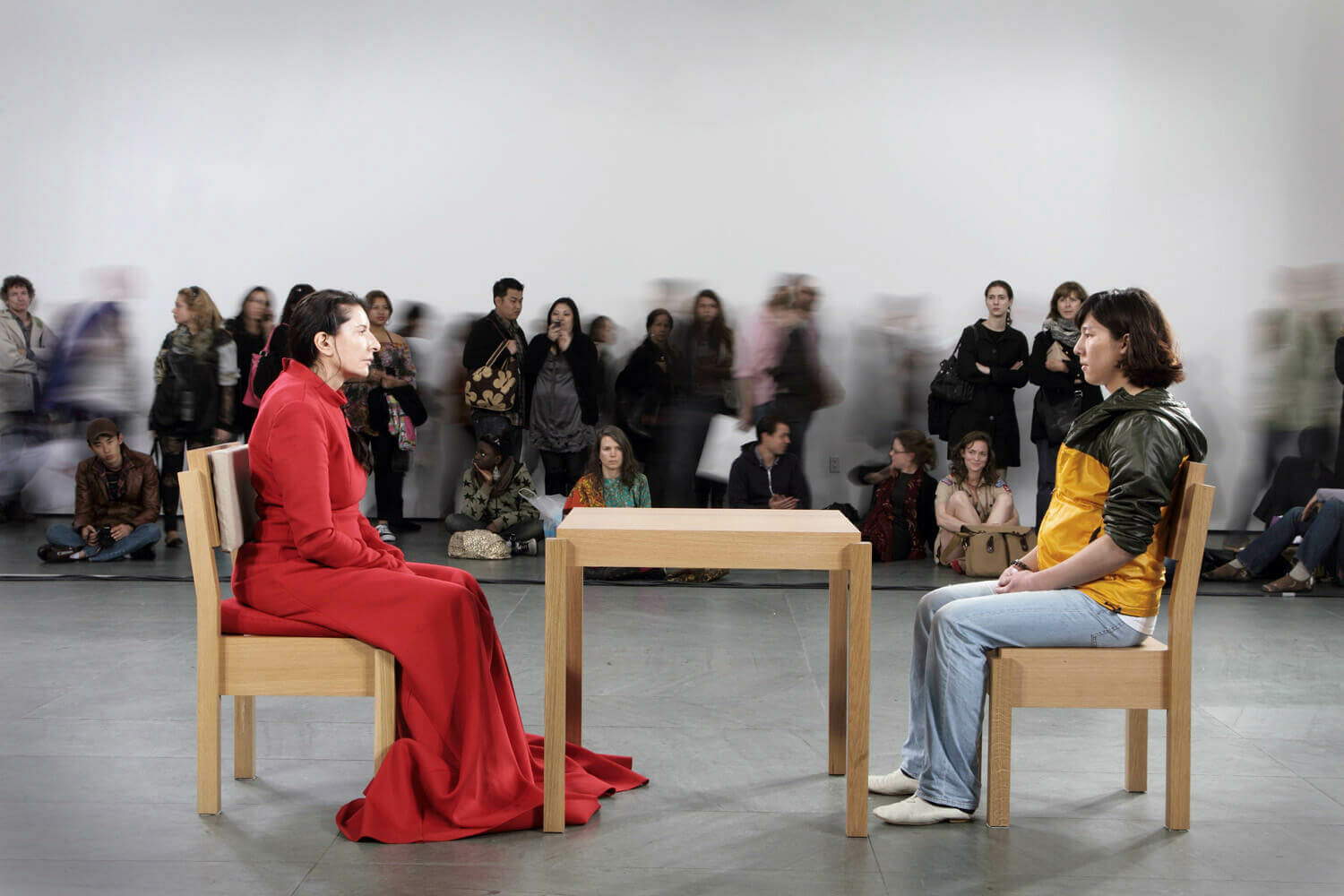
The performance that Marina Abramović gives at MoMA in 2010 is not a form of chance that governs the relationship between artists and museums, and their programming, because that work is staged the year after the New York museum set up 100 Years of Performance Art where dozens of monitors, one for each year, trace the history of performance art beginning with the Futurist Manifesto of 1909 and landing, of course, on a preview of Abramović’s next performance. A nice marketing coordination: the action, she has known for a long time, would not be successful if it were not accompanied by the communication machine that prepares the event.
Let’s take a step back. Interaction with the viewer has always been Marina Abramović’s artistic goal. Distance tended to be shortened to the participatory involvement of the bystander (which etymologically is the one who “stands by,” that is, “who is present”). However, without physical contact with the artist. This was also the case at the 1997 Venice Biennale. The century of art closed three years ahead of the iconic date, Duemila, the source of countless suggestions and prophecies, while the 21st century received its baptism of fire on Sept. 11, 2001, when for quite some time the phrase-mantra, “Nothing will ever be the same again,” began to be said. And it has been: between the last twenty-five years and the twentieth century, the epochal leap has been there, all right, but we may not yet be able to truly understand what has happened and is still happening. The vacant time, the four years between the early end of the last century and the beginning of the new in art have been like a kind of echo of the apocalypse that was revealed in Germano Celant’s Venice Biennale with thework Balkan Baroque by Marina Abramović, the opera-performance in which the Serbian mater, seated on a mound of ox bones, spent hours and hours cleaning them, one by one, with dull, myopic fidelity to the task assigned to her by inauspicious fate. At that precise moment, history as a homogeneous evolution dictated by the victors, according to Benjamin was the “time of now,” the decisive, revolutionary instant, the Jetztzeit, an idea that in a perspective that rejects the philosophical evolutionism of the progressive vision, can even go all the way back to the archaic that enters like the shrapnel of a fragmentation bomb into our way of being in the world.
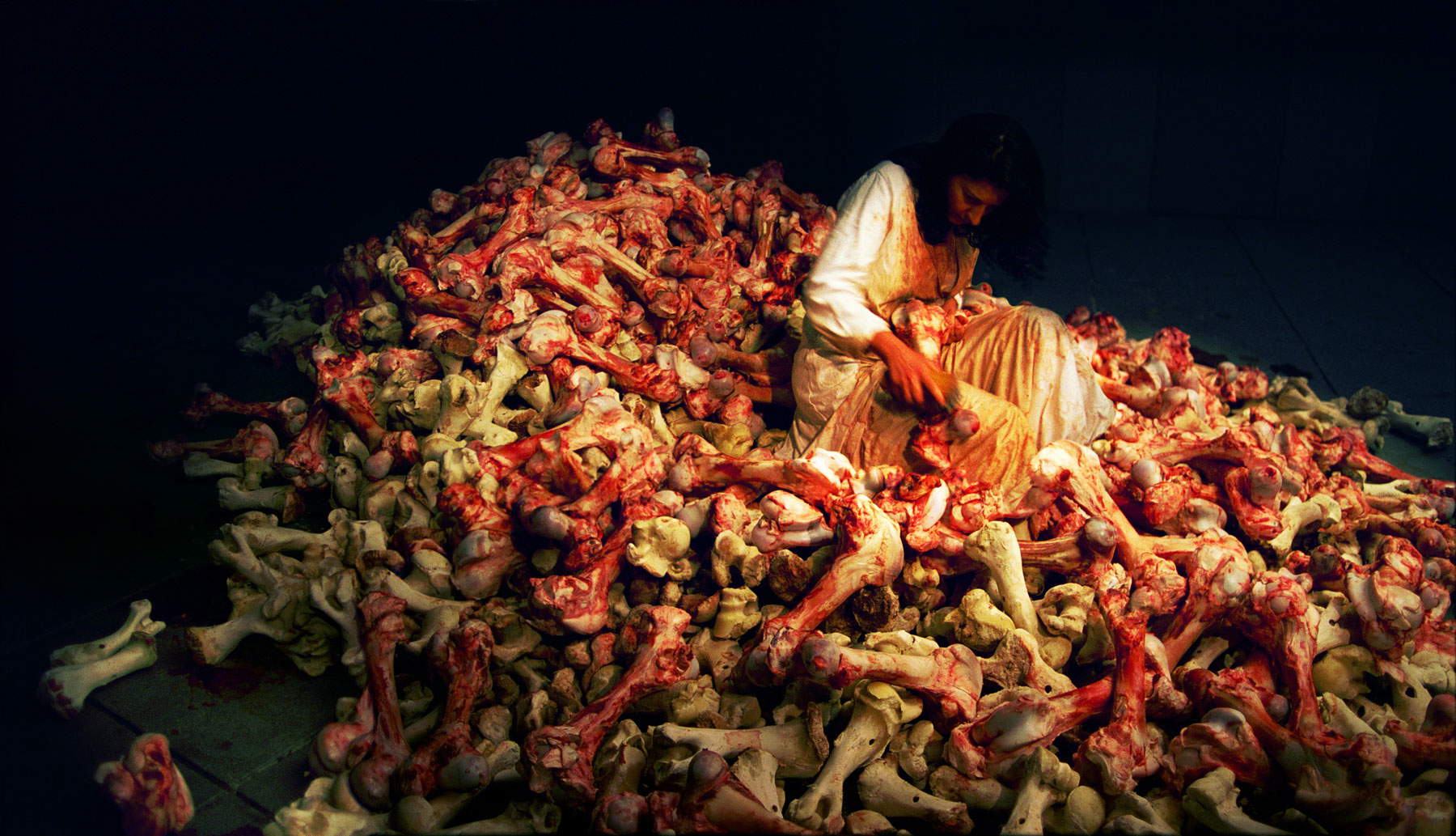
The magnetism of that staging, in the “crypt” of the Palazzina dei Giardini, in an all-black space and stifling air from the heat; the humidity emanating from the large water-filled bins placed there to make breathing bearable, and the sweetish stench of rotten flesh produced by those bones did not prevent the audience from stretching, as if seeking contact with a shaman, to see the temple janitor blindly repeating her gesture of polishing what that became a truthful image of her wounded land, Bosnia, where the discovery of mass graves was the order of the day on the world’s news, where executioners displayed the severed heads of the enemy, and cities were being ravaged by snipers firing on civilians, even children, as if they were having fun at a carnival shooting gallery (what about those from abroad, even from Italy, who paid large sums of money to be able to “play” a kind of safari, where they would score on the desperate people who were running in every direction, just for the fun of it?). That work became the “holy mountain” of a modernity that closed that century of a guilt-laden Europe in the sign of defeat, and that was precisely because on the other side of the scale was a progress that was never the totem of a better world where human dignity was the first inviolable commandment.
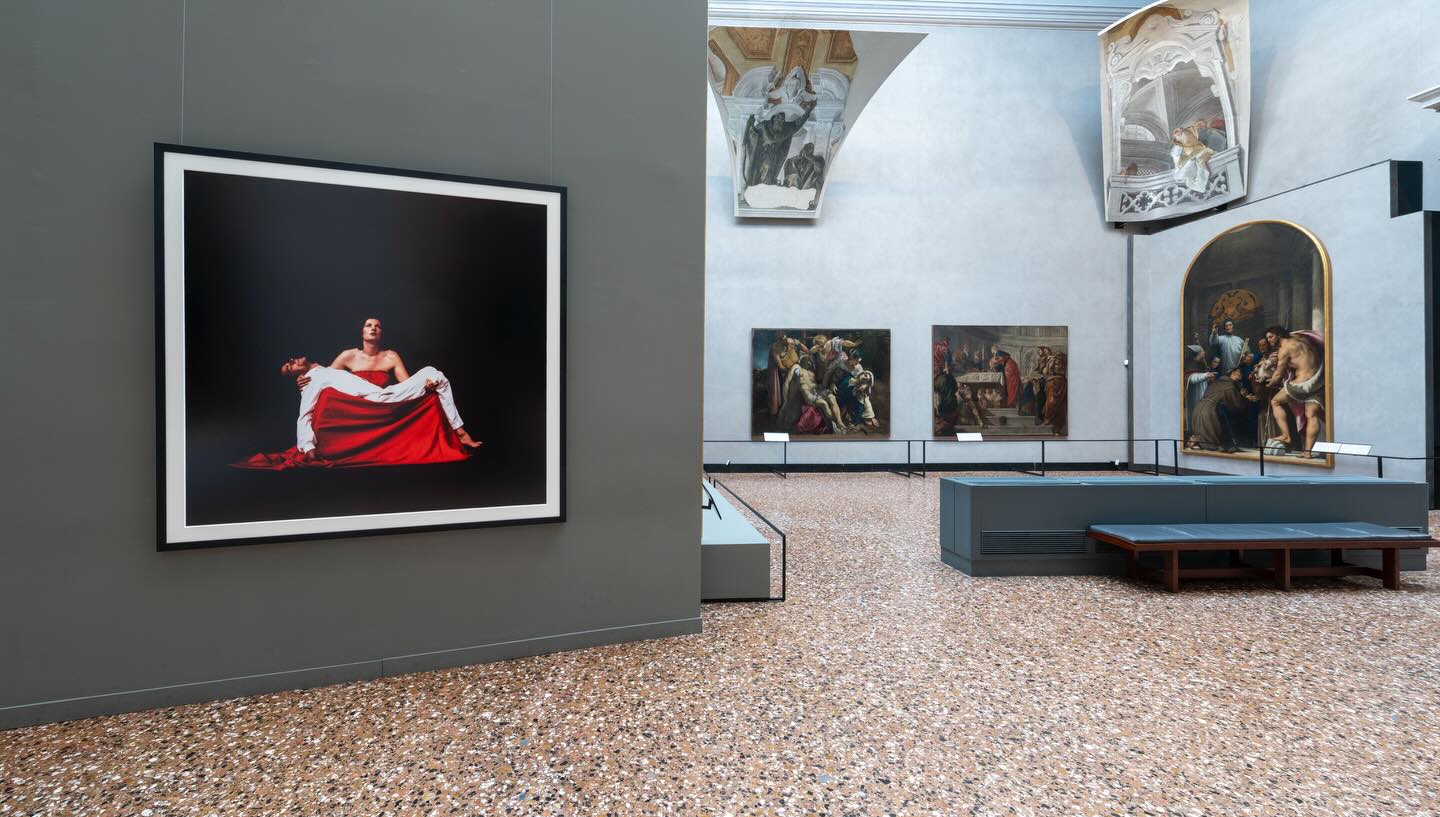
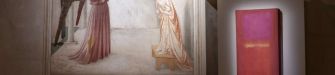
As with Mother Courage, it all ended with a heartbreaking lullaby as she cradled the bodies of her dead children. Marina had already demonstrated this bitter compassion in a 1983 work, Pieta (with Ulay), in which the mother holds her dead son on her lap (in reality Ulay became the companion and colleague of a lifetime of performances): the image, which is now displayed in front of Titian’s last Pieta inside the Accademia Galleries, is a kind of premonition of the punishment to be served after the Fall of that Wall which, while it was a Katechon founded on the opposition between the Western and Eastern blocs, from thatinstant unleashed the destructive charge held in check for a few decades, a poisoned symbol of a peace founded on war, which was supposed to stem a greater evil (if we were to look back and compare the second twentieth century and the first quarter of the twenty-first century, with what feigned recklessness could we claim that the latter was a period of peace, what was sensibly but unhealthily said of the period before the Fall of the Wall?).
Less than a decade after that performance that closed the twentieth century, Marina Abramović presented at Hangar Bicocca an exhibition with perhaps a “tribal” and ethno-ancestral flavor. The exhibition began again where we had left off in Venice, with that work fixed in the memory, despite the fall of the two Towers in New York (which a hapless German composer had called the greatest work of art of the twentieth century); and the Hangar exhibition was s’not coincidentally titled Balkan epic, having as its final parenthesis a work from 2005 that is a tribute to his father, who was a partisan in Tito’s time, and an unpublished work, Balkan Erotic Epic, which takes up some Balkan customs by addressing the theme of the body, sexuality, and death in the popular culture of his homeland.
According to Walter Benjamin, the task of historians is to brush history against the grain. And experience teaches that if you brush against the grain the animal may turn around and bite you. In fact, this happens because, as Benjamin himself says elsewhere, we must not forget that our history is a bastard product, an amalgam of culture and barbarism, where the two terms should not be ascribed a moral bias (good and evil, what what builds and what destroys, in short, an existential dualism), because history is full of civilizers who looted and killed, as well as barbarians who gave the West the antibodies it needed to withstand certain epochal crises. The apocalyptic instant that awakens the past and sets in motion again the dark forces that can take over historical time (see theAngelus Novus) that covers the victors’ faults, was embodied in the bloody Balkan war where the West satiated and pacified by the fall of communism was a spectator to the resurgence of vicious practices, unheard-of cruelties, infamous cowardice. In a number of essays that revealed him to the Italian public in the late 1990s, Yugoslav philosopher Slavoj Žižek protested against the cliché that attributed to the Balkan peoples a particular cruelty making them immediately “barbaric” in the eyes of therespectable West, which when it wants to set a good example puts on its gloves being very careful not to cross the border of tribality (a scruple now largely disavowed by the torture practices that the chronicle has brought to light in so many war situations of the last two decades, to which a “reasonable” explanation is given by so-called democratic countries: fighting terrorism).
The constant reference to the polarization of Eros and Thanatos in Marina Abramović’s works does not tie these performances documented through video to a Freudian background: this would immediately make them “uncanny,” that is, available to a psychoanalytic discourse, but not incisive enough. These are, in any case, works that must be viewed with a maturity capable of tracing back to the expressive reasons that, in a more explicit dictate (as may be precisely the filmic shot of human bodies performing rituals of fecundity), is not, however, only a pagan memory, since, albeit to a limited extent, it is a symbolic figure also present in the iconography of medieval Christianity, which sometimes even displayed it on the facades of its churches: I mean theostentatio genitalium, which also recurs in various miniatures of that era, and refers precisely to the fecund and sacred celebration of life, on which the display of the pudenda invoked the blessing of heaven (in its own way it is a Christian reinterpretation, as Clement Alexandrinus noted, of the story of Demeter and Baubo). Seeing these installations by Marina Abramović, one understood, even before reading their motivations, how much the artist’s critique of today’s world (for this must be considered at the source, unless one falls back on gratuitous Freudian allusions that would bring these works back to the prurience of the old “bourgeois alcoves”), steps precisely from a rising of the archaic that marks our nature and today camouflages itself behind the “mirrors” of an aestheticizing technological idolatry, to reappear as soon as the will to power makes room for the stigma of Cain.
Sexuality, thus, becomes in these installations the witness of opposing instincts that confront each other in all their vital aggressiveness and bring us back with our memory to the iconography of mothers who show their chests against their executioners to defend their innocent children, or to the Homeric warrior who in the Iliad expresses, from time to time, belligerent ferocity, fraternal weeping or the sexual power that preserves the species. These are attitudes of all time, with their antinomies from the moral point of view, which we see again in these images of Abramović expressed with a “tragic and satirical” will, as Steven Henry Madoff has keenly observed. For, after all, showing genitals was already accompanied in the Middle Ages by a certain goliardia (see Bachtin’s now classic analyses) as a mockery against the powerful; on the other hand, even in the epic lies the double register of tragedy and comedy. And it is up to the skill of the artist to make a work tragic and lashing out, that is, to make it a “dissonant moment.”
Abramović, as we have seen, has for the past few years been working on her “method” to make performances more interactive, staging as a collective ritual the direct relationship with the audience; the artist - a priestess of the post-Freudian cult - manipulates the viewer by involving them in a flow of energy that she governs with gestures and signs as if we were inside a hypnotic session: a kind of illusionism of feeling involved and seated at the table of a mediumistic séance that plays on the registers of imagination. But in this way the performance gradually lost its charm, that strange musicality, Jankélévitch would say, that in silence unites the artist with his “community” of followers, nevertheless reaching moments of very low artistic significance and a parodic form in the ways contrived. The exhibition inaugurated at the Gallerie dell’Accademia in Venice, heralded as an epochal event, is actually perhaps the greatest failure of an intention, of a method even, that appears as a kind of sweetened pranotherapy: art becomes a pharmakon for people’s neuroses and the artist its thaumaturge. The polysemy of the Greek word has its own oscillation here according to context and can be either a remedy that cures and heals or a poison that intoxicates (and it is not clear, however, how this poison can act as an antidote).
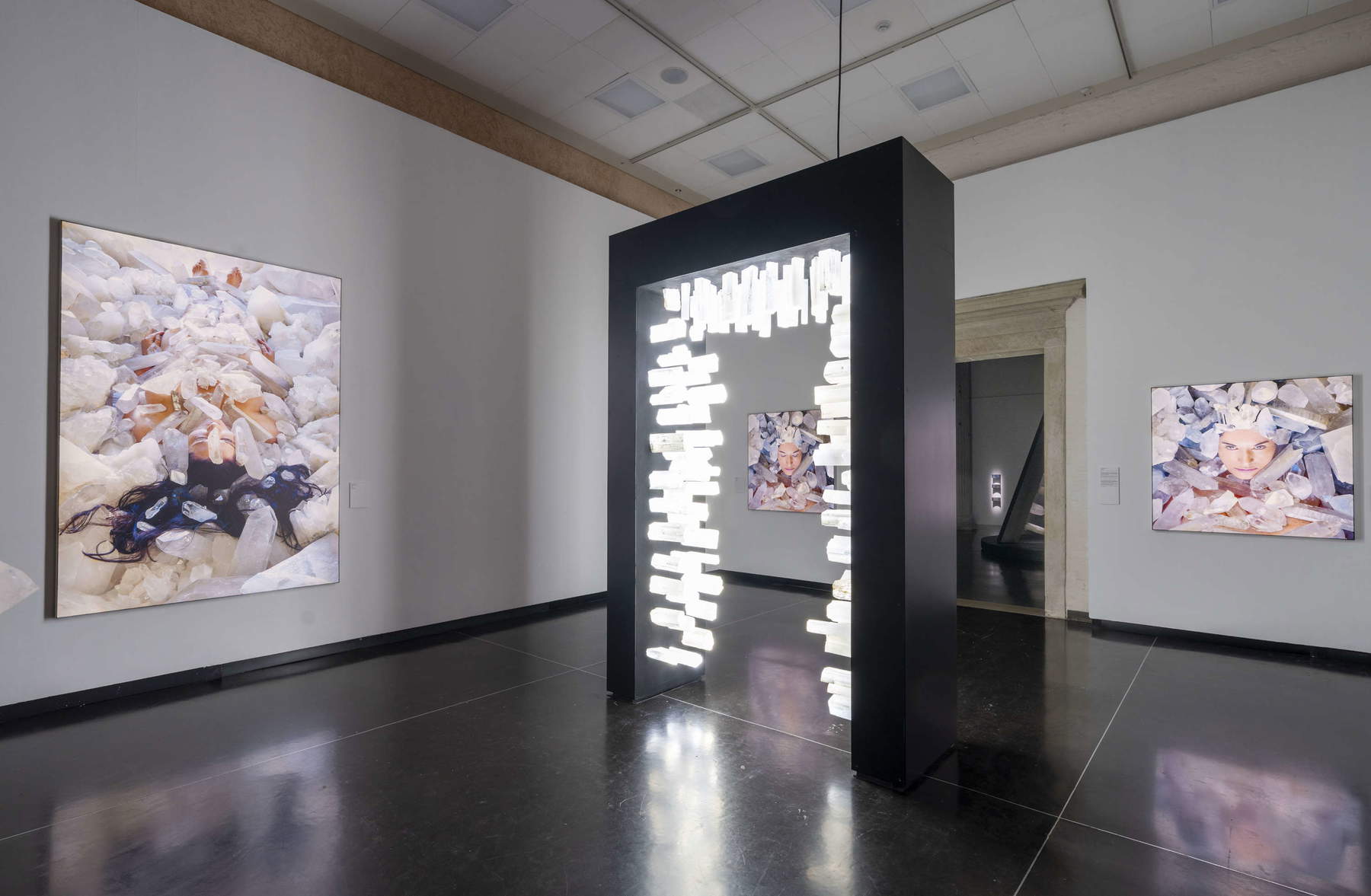
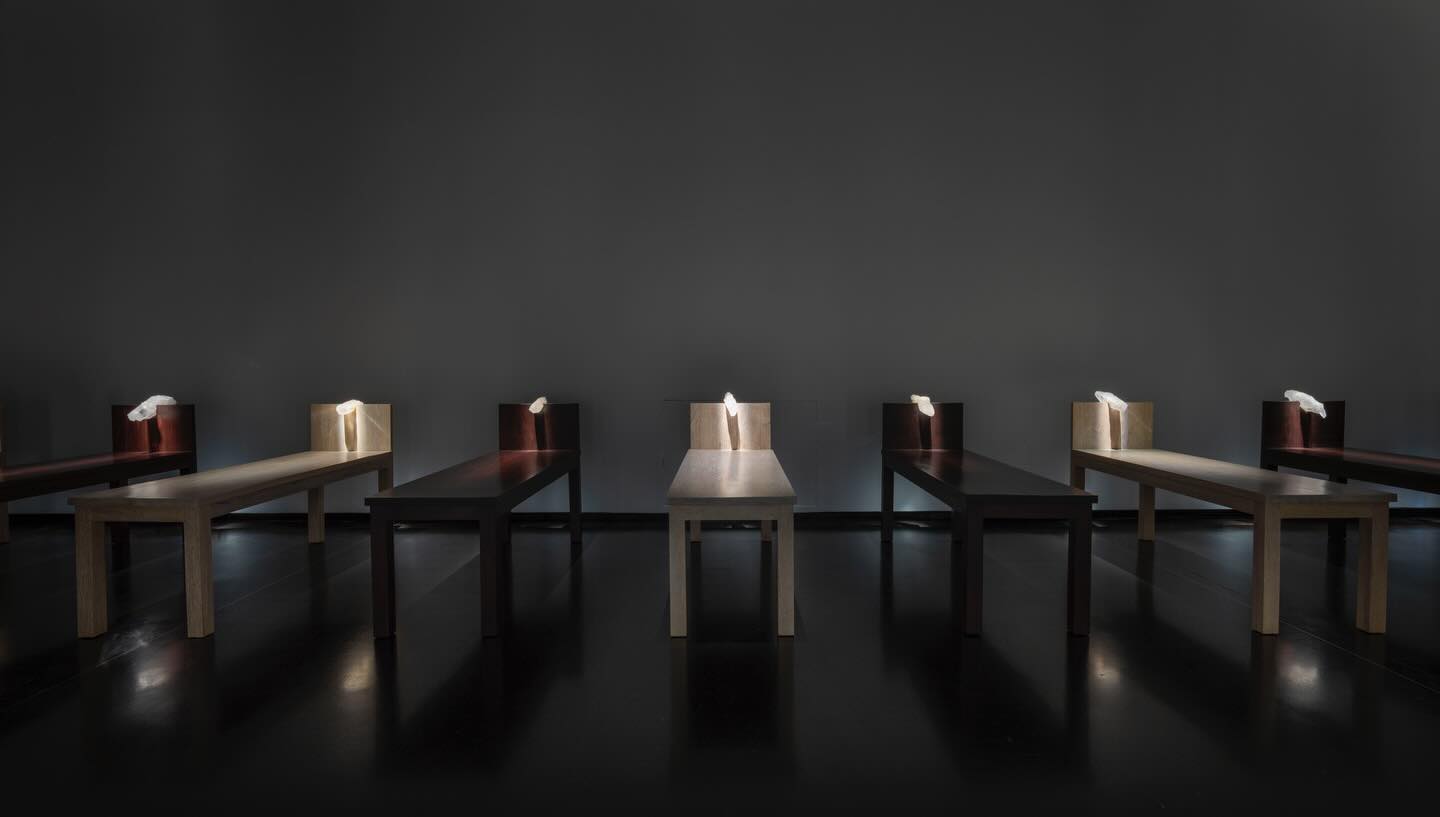
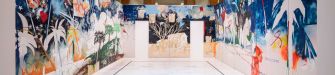
In the first days of opening, kilometer-long lines at the Venetian museum’s ticket offices, a two-hour wait to enter the exhibition, everyone wants to experience Marina’s arcana. At the entrance, an assistant to the artist “catechizes” the visitor, hands him a headset of those stereophonic ones, which will isolate him from the context and help him to stay focused on the ritual, then begs him not to speak during the path, to walk very slowly, making silence within himself, and to prove docile in doing what he will be asked. The press release explains why: “By placing the visitor’s body at the center of the work, the exhibition invites a form of ’prolonged’ observation, less passive and more oriented toward presence, participation and the possibility of inner change.” The exhibition is titled Transforming Energy and aims to unite the experience of past and present, material and immaterial, body and spirit: “Visitors are invited to experience a series of interactive ’Transitory Objects’ - stone beds and structures with quartz and crystals - by lying, sitting or standing on them, activating what Abramović calls ’energy transmission.’”
Turning eighty years old, Marina Abramović interprets well the contemporary mainstream where whenever a woman enters the art theater stage she has to prove that she is the witch or magician who breaks the mold, like a female trickster who disrupts the rules of the game. Considering the determination with which Marina has always “played” her own works, the cliché that makes every woman a genius capable of subverting gender issues and the conventional narrative of art--from the woke to the queer--may well suit her, but she, as she has continually demonstrated, has varying percentages of masculine and feminine depending on the work she is performing. She panders to the confidence of the viewer who wants to set out on the path of purification, anticipating their entry into the exhibition with a few maxims that baffle in their obviousness: “An artist should not lie to himself or to others”; “an artist should not steal ideas from other artists”; “an artist should not compromise for the art market”; “an artist should not kill other human beings”; “an artist should not turn himself into an idol”; “an artist should look deeply within himself to find inspiration.”
It is surprising that a woman capable of thinking works of such high aesthetic and moral coefficient as Balkan Baroque could have written such platitudes to prepare viewers for the washing that should prepare their souls to receive those energies that cleanse and liberate the inner self. Yet, what would normally make anyone willing to experience this “postmodern” anabasis skeptical, on stage Marina succeeds in exerting on many spectators an attraction devoid of critical sense (some resist, but it is a tiny fraction). We observe them as they cross thresholds with closed eyes and receptive souls with illuminated crystals as if performing their cathartic gesture, or lying next to each other on beds that dispose them to the transfusion of energy as if they were automatons performing an impulse, that is, as if they themselves became manipulable matter by the artist’s thought, and we realize that Marina has created a widespread community that indulges her every time she appears in public.
Illusionism or credulity, what remains, even after leaving the “sanctuary” into which the Academy Galleries have been transformed, is an aftertaste of teasing and the doubt of how big Marina’s ego can be, that is, to what extent her “method” is a conscious exercise of “bad conscience.” An issue that, sooner or later, will have to be addressed in judging some dominant forms of international art supported by the world’s major capitalists.


The author of this article: Maurizio Cecchetti
Maurizio Cecchetti è nato a Cesena il 13 ottobre 1960. Critico d'arte, scrittore ed editore. Per molti anni è stato critico d'arte del quotidiano "Avvenire". Ora collabora con "Tuttolibri" della "Stampa". Tra i suoi libri si ricordano: Edgar Degas. La vita e l'opera (1998), Le valigie di Ingres (2003), I cerchi delle betulle (2007). Tra i suoi libri recenti: Pedinamenti. Esercizi di critica d'arte (2018), Fuori servizio. Note per la manutenzione di Marcel Duchamp (2019) e Gli anni di Fancello. Una meteora nell'arte italiana tra le due guerre (2023).
Warning: the translation into English of the original Italian article was created using automatic tools. We undertake to review all articles, but we do not guarantee the total absence of inaccuracies in the translation due to the program. You can find the original by clicking on the ITA button. If you find any mistake,please contact us.


















 IT
IT FR
FR DE
DE ES
ES CN
CN