





Walpurga Night, still celebrated between April 30 and May 1, represents one of the most persistent and fascinating themes in European culture, a meeting point of folk tradition, religious imagery and artistic reworking. Among the many European traditions, Walpurga Night occupies a central role. Celebrated in Germany (and beyond), it is described as the main gathering of witches. The figure after whom the occasion is named is that of St. Walpurga (or Walburga), a Benedictine woman originally from Wessex, who was born around 710 and died in 779 in Heidenheim, Germany. A religious in the monastery of Wimborne, Dorset, England, she was called by St. Villibald (or Winebald as theEncyclopedia Britannica reports) to lead the nuns of the double monastery of Heidenheim, one of the rare mixed communities in Germany. Upon the founder’s death, he assumed its overall leadership. After the saint’s death, the body was initially buried in Heidenheim and later transferred to Eichstätt, in the Church of the Holy Cross. Her memory soon became linked with ancient local beliefs, eventually becoming confused with pagan figures related to fertility, such as Waldborg. Among the names by which she is remembered appear Waldburg, Walpurgis, Vaubourg and Gauburge. The coincidence between the translation of the relics and May 1 helped fix the idea of Walpurgis Night as a liminal moment when witches were believed to gather in the Harz mountains.
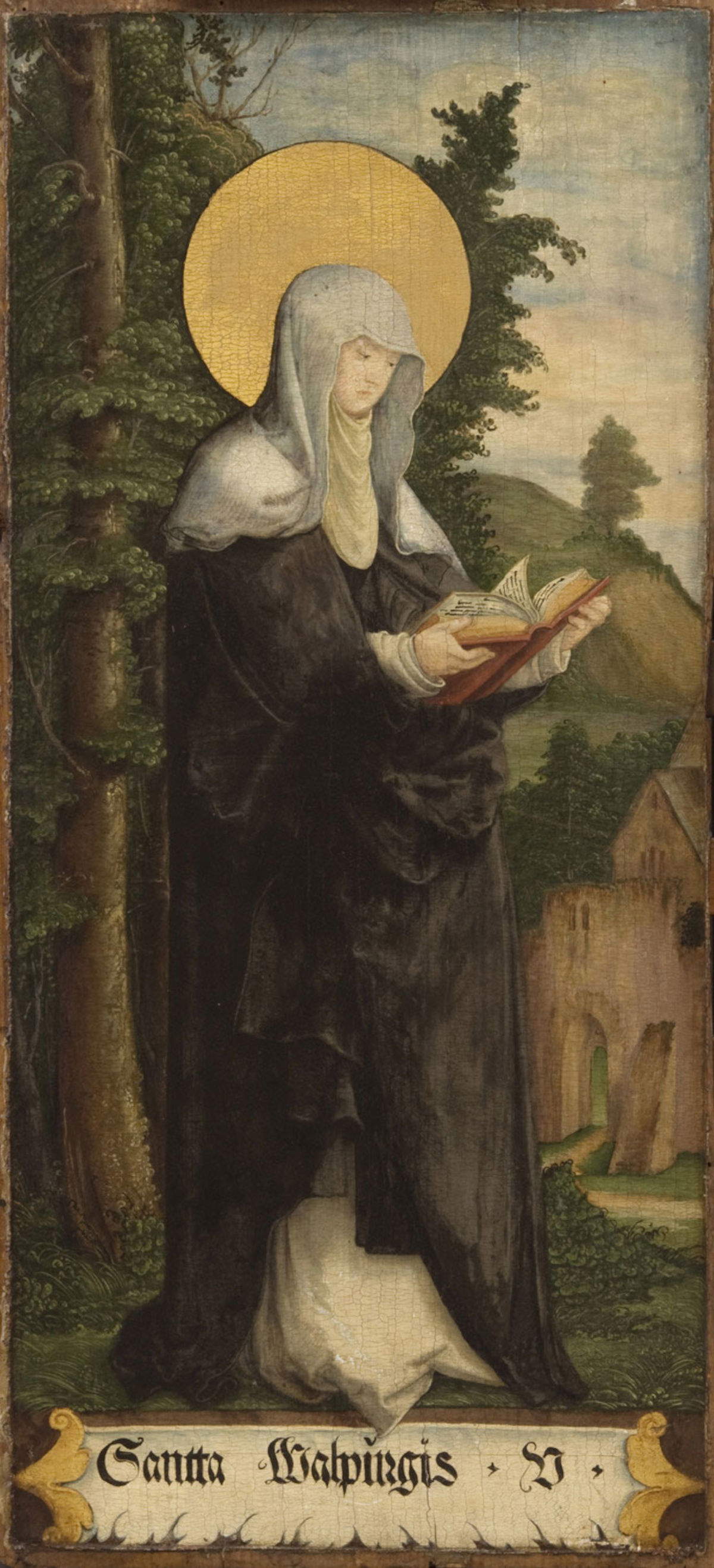
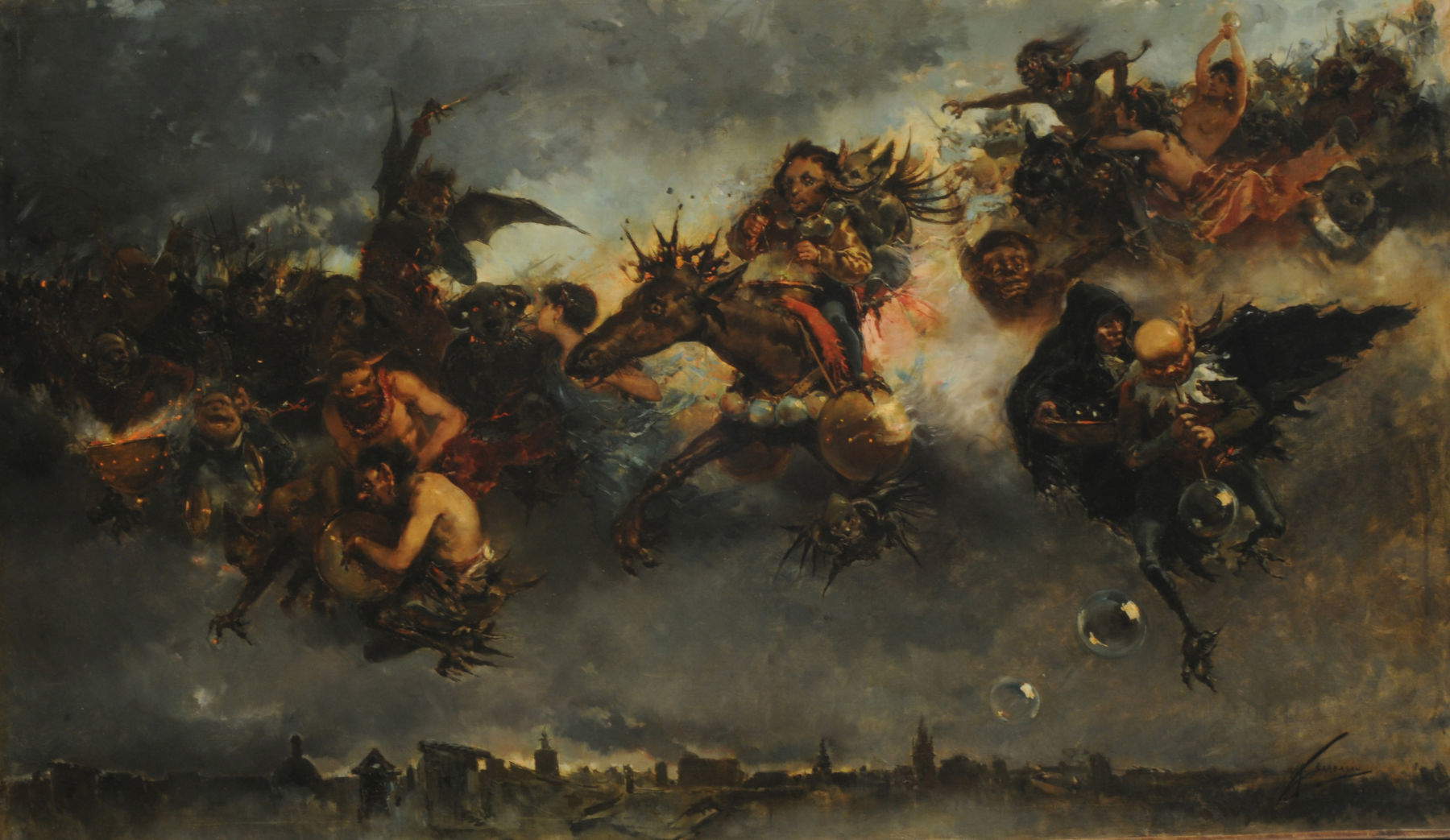
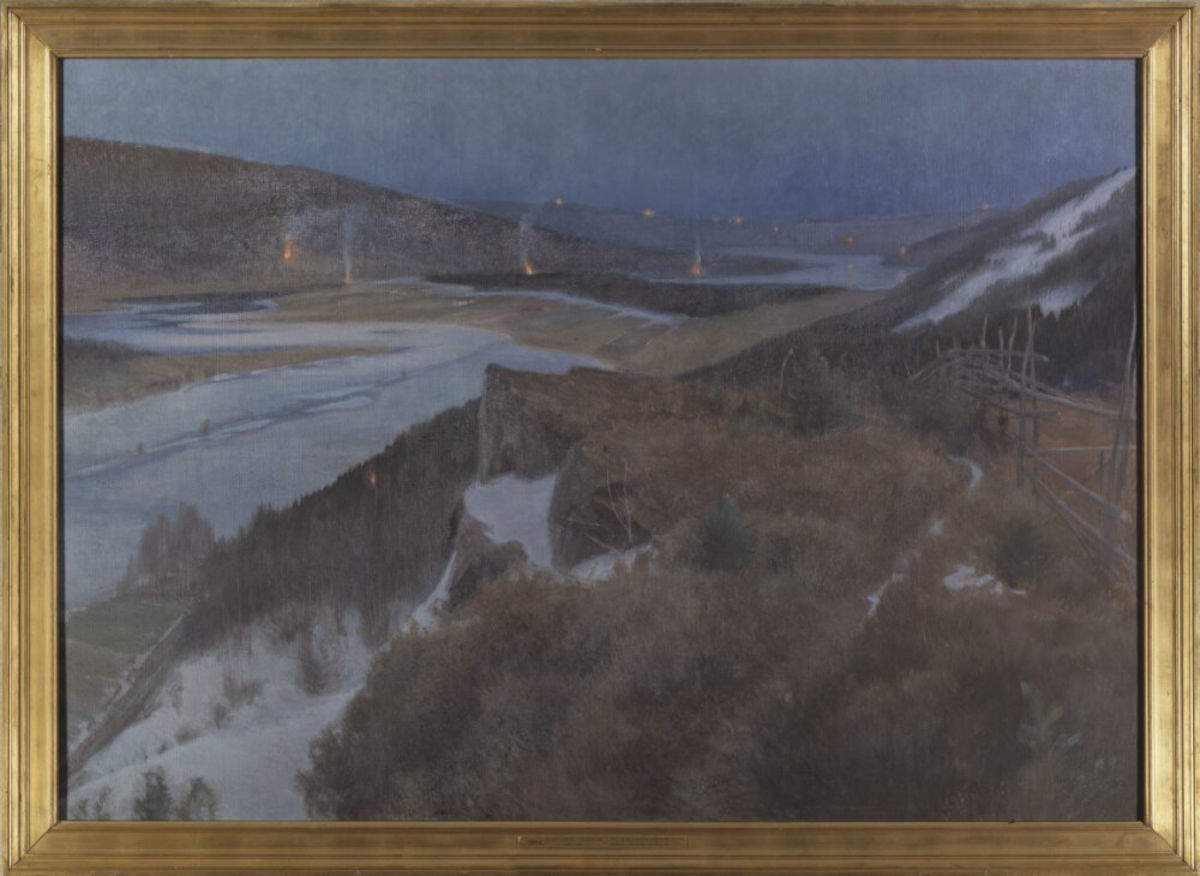
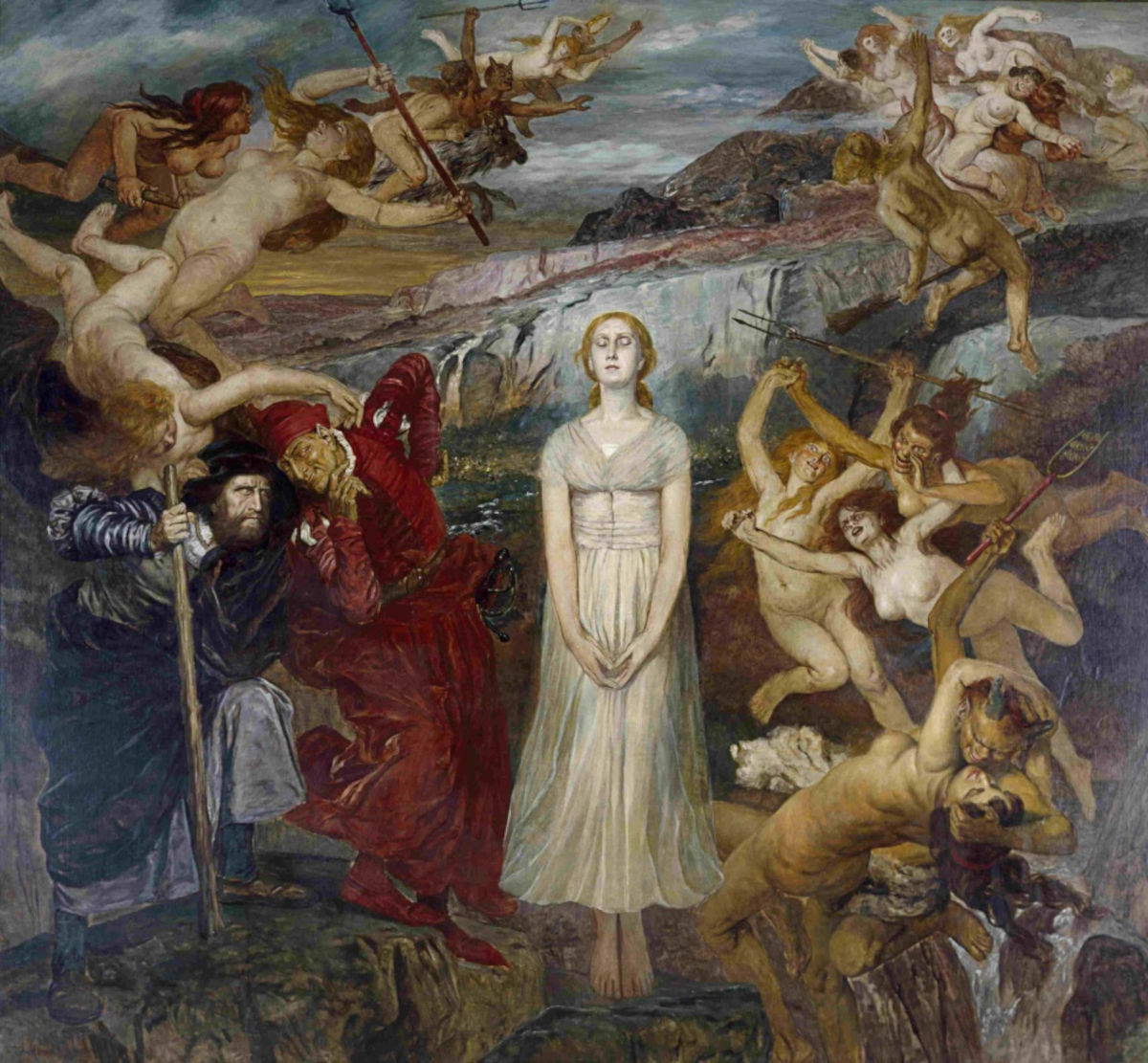
The interweaving of Christian hagiography and pagan layers fed a powerful communal imagination over the centuries. In the Germanic world and later in Romantic Europe, the Night of Walpurga became the main Sabbath scene, a meeting place for witches, demons, and ambiguous forces of nature. The theme also found one of its most famous elaborations in Johann Wolfgang von Goethe’s Faust, where night is transformed into a hallucinated vision of desire, disorder and loss of moral direction. It is this literary dimension that profoundly influenced European painting between the nineteenth and twentieth centuries, transforming the sabbath into a theater of passions, bodies and apparitions. This path includes representations that traverse different languages: from theSabbath ofthe witches by Frans Francken the Younger, to the literary dimension of Richard Westall in Faust and Lilith, to the nineteenth-century visions of Mariano Barbasán Lagueruela and Anshelm Schultzberg. In the twentieth century, the theme then takes on more theatrical and symbolic tones with Fritz Roeber, while examples such as Albert Zimmermann and Cesare Viazzi testify to the spread of the subject in Romantic and post-Romantic painting.
For this reason, Finestre sull’Arte offers a reading through five works, with the aim of following the iconographic evolution of the Night of Walpurga, the Sabbaths and observing how each era has reinterpreted magic and superstition between fear and fascination.
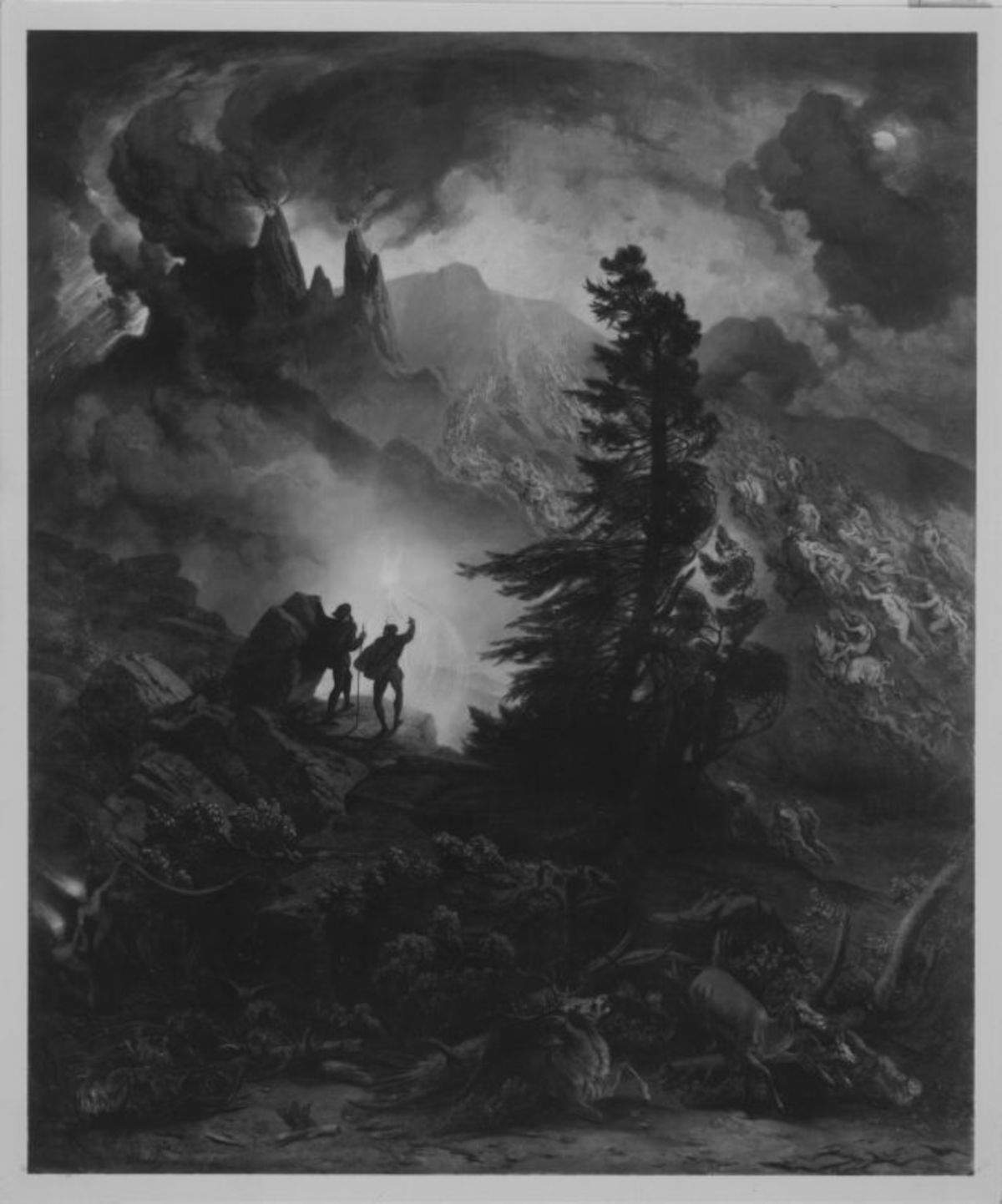
Frans Francken the Younger, the best known of a family of Flemish artists, was one of the leading figures in seventeenth-century Antwerp painting. The 1606 painting The Witches’ Sabbath, oil on oak panel, represents one of his best-known examples devoted to the theme of witchcraft. The scene takes up the traditional iconography of the Sabbath, where witches move between fascination and horror, sensuality and desire. Set at night, the ritual emphasizes the illicit and mysterious nature of the action: female figures, esoteric symbols and eerie presences build an atmosphere of chaos and disturbance, but also of transformation and rebirth, alluding to the magical power attributed to witches in the culture of the time.
Probably trained with his father, Frans Francken the Elder, the artist entered the Antwerp guild of St. Luke in 1605 and developed a large workshop capable of producing numerous replicas of his works. Famous for his inventive imagination, he was also the originator of the scenes known as monkey kitchens, later popularized by David Teniers the younger.
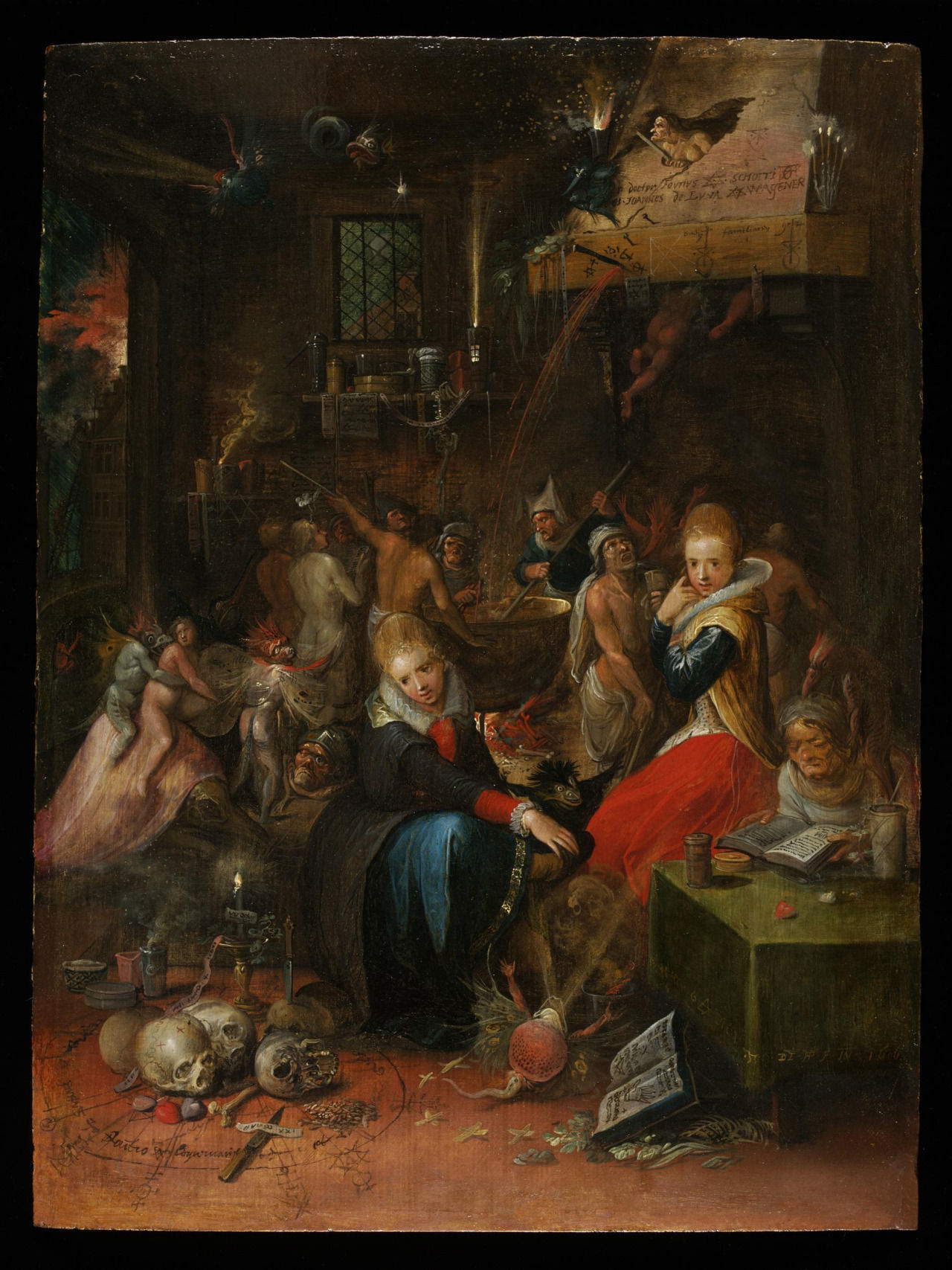
English painter Richard Westall created Faust and Lilith, a large oil on canvas exhibited at the Royal Academy of Arts in London in 1831. The exhibition catalog described the scene as Faust intent on preparing to dance with a young witch during the wizards’ and witches’ festival in the Harz Mountains, recalling an episode from Johann Wolfgang von Goethe’s Faust. Published in 1808 and translated into English by Lord Leveson Gower in 1823, the text enjoyed wide circulation, also reinforced by the famous French edition illustrated with lithographs by Eugène Delacroix in 1828. It was precisely Delacroix’s interpretation that seems to have influenced Westall’s vision, while the figure of Lilith could recall Titian’sAndromeda. In the same year, the artist also presented another Faust-inspired painting, now lost, titled Margaret in Church.
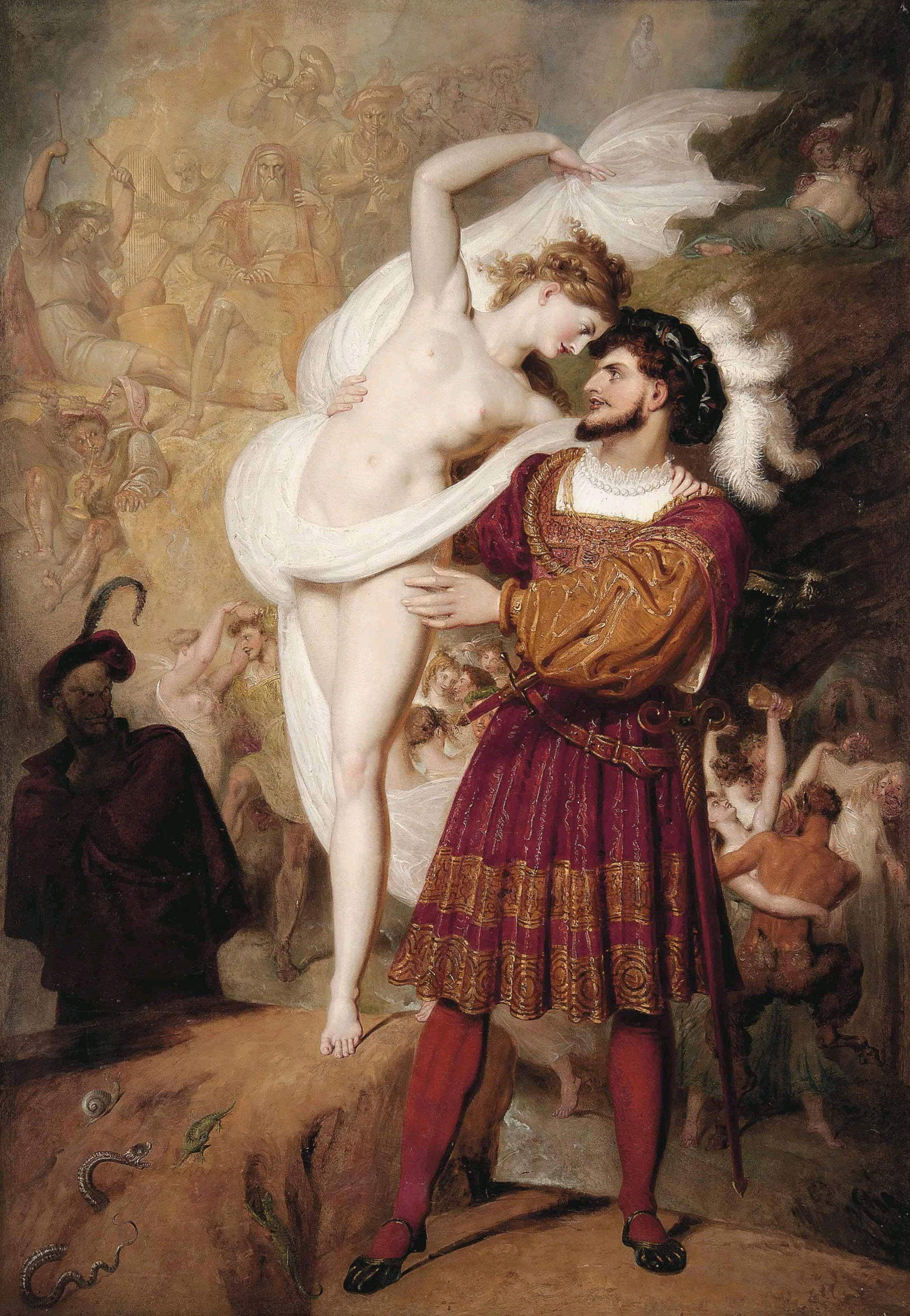
Mariano Barbasán Lagueruela, a Spanish painter, made Night of Valpurga (Noche de Walpurgis) in 1887, an oil on canvas inspired by Johann Wolfgang von Goethe’s Faust. Trained in the late 19th-century Valencian school and linked to artists such as Joaquín Sorolla and Salvador Abril, Barbasán tackled the famous witches’ sabbath with a spectacular and theatrical vision. In the center of the scene he placed a donkey ridden by a demonic figure, around which are arranged witches, demons, griffins, sphinxes and fantastic creatures, while in the background appear the naked young witches described by Goethe and the nocturnal outline of a modern city. The work was shown at theNational Exhibition of Fine Arts in Madrid that same year in a large version, now lost. In contrast to Francisco Goya’s somber imagery, Barbasán chose an atmosphere closer to a bacchanalian feast, offering one of the most outstanding examples of late 19th-century Spanish literary painting.
Swedish painter Anshelm Schultzberg created Night of Valpurga in Bergslagen, Grangärde in Dalarna (Valborgsmässoafton i Bergslagen) in 1896, a large oil on canvas celebrating one of the most heartfelt traditions of Nordic culture. The idea was born during a stay in Italy between 1891 and 1892, but the subject and atmosphere remain deeply Swedish. The scene depicts the evening of Valpurga in the Bergslagen region of Sweden, where spring bonfires illuminate the landscape as points of warmth in the coldness of twilight. The blue dominant and the suspended light create an almost symbolist atmosphere, close to Eugène Jansson’s sensibility. Rather than a witches’ Sabbath, here Valpurga Night becomes a communal seasonal rite of passage, linked to fire, the rebirth of nature, and folk memory. The work was exhibited in 1897 at the great General Exhibition of Art and Industry in Stockholm.
German artist Fritz Roeber created around 1910 Valpurga Night(Walpurgisnacht), a large monumental painting inspired by Goethe’s Faust. Among the leading exponents of monumental painting in Düsseldorf, Roeber depicted the famous Sabbath scene with a strong theatrical edge. In the left foreground appear Faust and Mephistopheles surrounded by naked witches and demonic figures immersed in an orgiastic atmosphere. In the center emerges the apparition of the dead Marguerite: her pale face, white robe and closed eyes make her appear as an exposed body, while a thin red line on her neck alludes to the wound of decapitation. The detail recalls both Goethe’s text and Charles Gounod’s opera Marguerite, popular at the time. The work, closer to the theatricality of opera than to the literary page, remains one of the most intense examples of the symbolic and dramatic vision of Valpurga Night.


The author of this article: Noemi Capoccia
Originaria di Lecce, classe 1995, ha conseguito la laurea presso l'Accademia di Belle Arti di Carrara nel 2021. Le sue passioni sono l'arte antica e l'archeologia. Dal 2024 lavora in Finestre sull'Arte.Warning: the translation into English of the original Italian article was created using automatic tools. We undertake to review all articles, but we do not guarantee the total absence of inaccuracies in the translation due to the program. You can find the original by clicking on the ITA button. If you find any mistake,please contact us.























 IT
IT FR
FR DE
DE ES
ES CN
CN


