



by Redazione 27/05/2026



Categories: Ancient art / Disclaimer
A precious and rare sheet bringing together a drawing and an autograph letter by Peter Paul Rubens goes to enrich the collection of the Rubenshuis.
The King Baudouin Foundation acquired, on the occasion of the TEFAF art fair in Maastricht, a rare work by Peter Paul Rubens from September 1607. It is a precious sheet that brings together a drawing and an autograph letter by the artist, made when Rubens was residing in Rome, which the Foundation acquired at the request of the Rubenshuis.
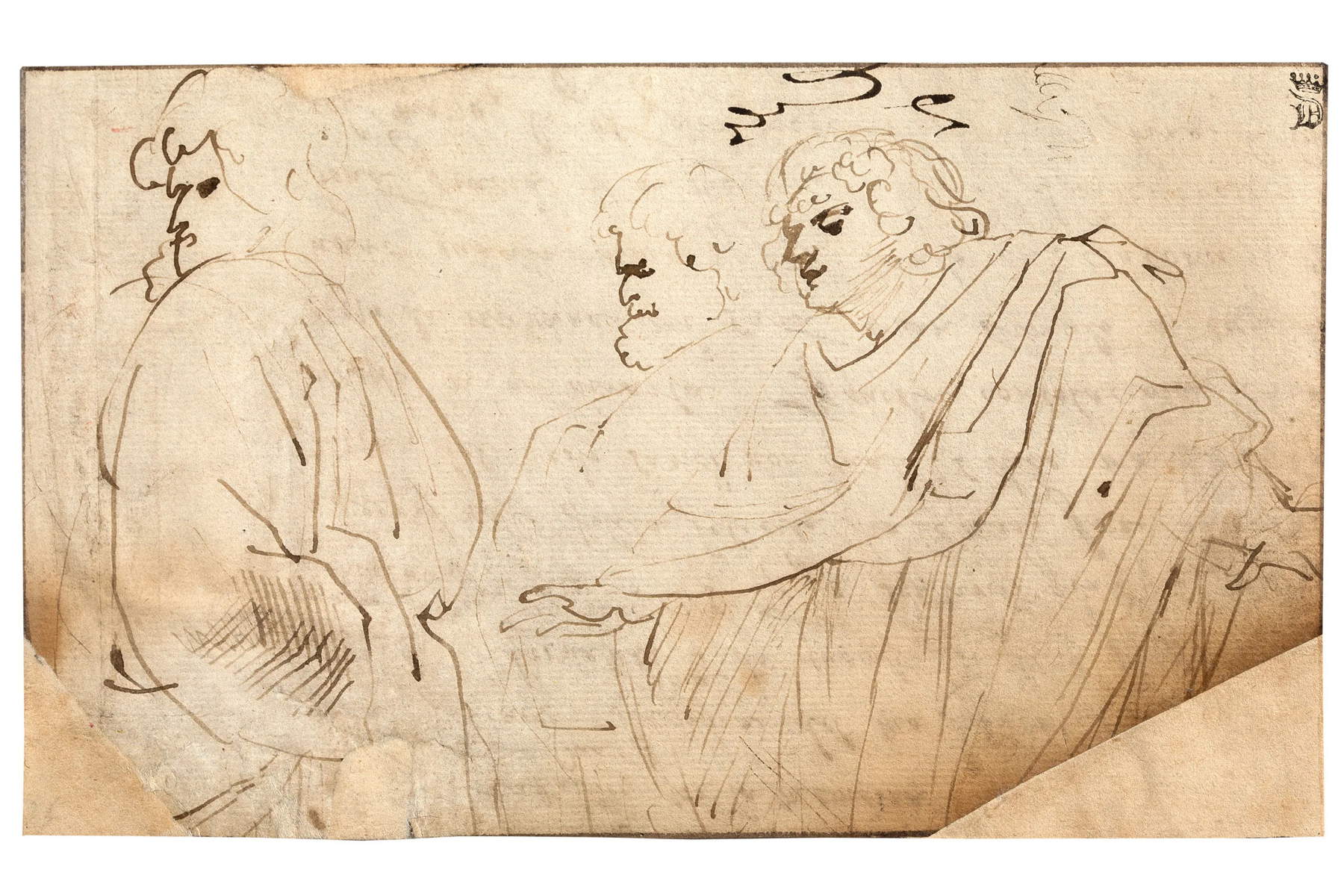
A work thus adds to the Rubenshuis’ collection dedicated to the most celebrated Flemish master, thanks to a long-term loan from the King Baudouin Foundation. Although the artist’s historic home is closed for restoration work, the public will be able to get to know the work through the Rubens Experience, the interactive exhibition route inaugurated by the museum in 2024. As of May 19, 2026, the recto of the folio was initially displayed here, while the verso will be presented three months later. After the reopening of the Rubenshuis, which is not expected until 2030 at the earliest, the folio will permanently enter the collection’s new display, which will also devote special attention to themes such as the role of patrons in Rubens’ work. The work will also be digitized and made accessible online for scholars and enthusiasts around the world.


On the recto of the sheet Rubens has traced, with rapid mark making, three male figures in classical dress, probably preparatory studies of apostles. The free, confident stroke directly renders the artist’s creative process. The marked ink lines at the top also seem to suggest trials made with the quill pen used for the drawing. On the verso appears instead a draft letter in Italian addressed to the painter Cristoforo Roncalli, known as the Pomarancio. The letter offers a significant insight into Rubens’ role as a mediator and consultant within the artistic networks of his time. The text makes reference to Eleonora de’ Medici, duchess of Mantua and important patron of both Rubens and Roncalli. It was precisely at the Mantuan court that Rubens worked as court painter between 1600 and 1608.
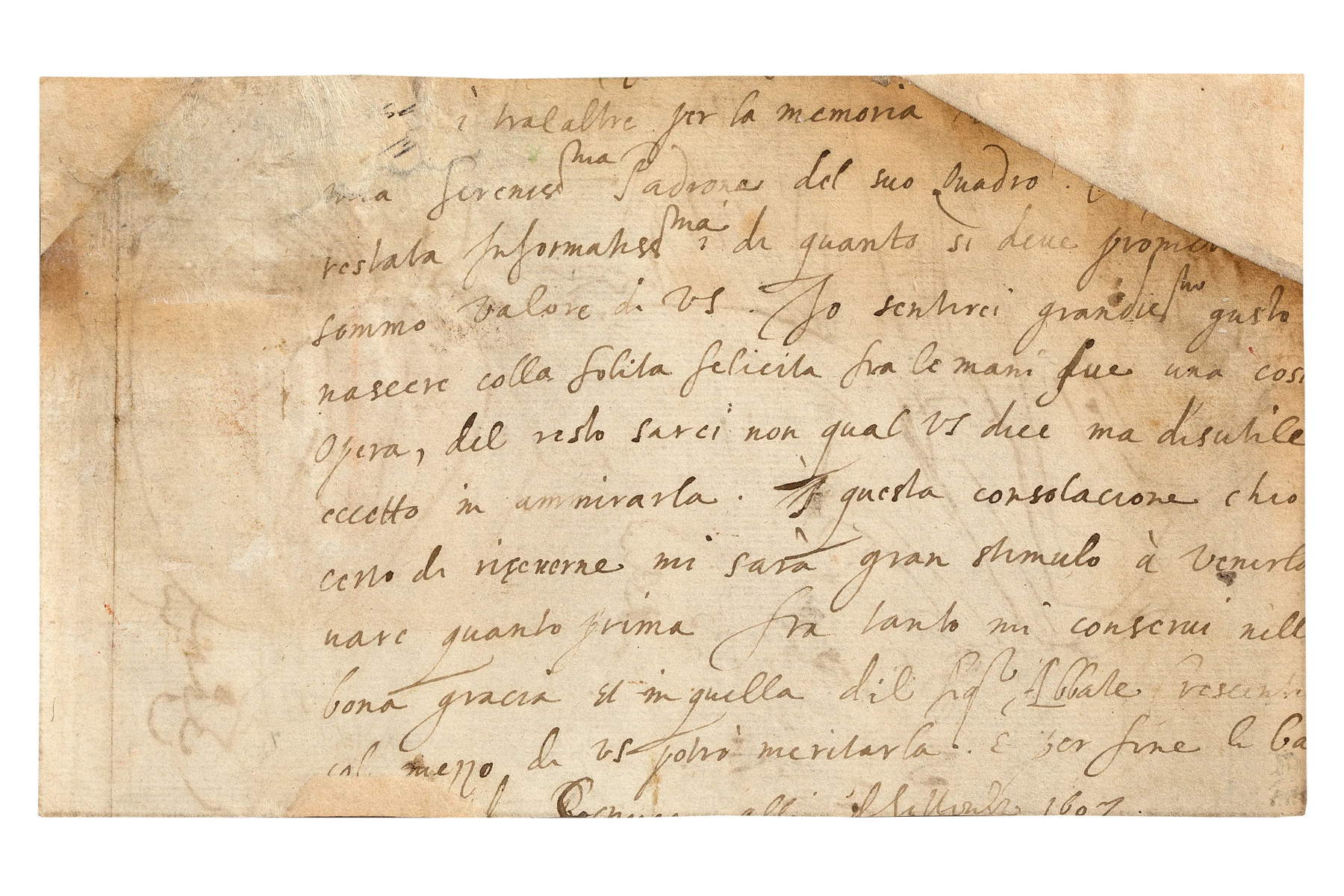
Drawings and autograph letters by Rubens are extremely rare on the market, and this sheet takes on even more exceptional value because it brings together both accounts in the same medium. Even rarer is the fact that the document dates from the artist’s Italian period, a key phase in the definition of his pictorial language and his diplomatic and cultural network. Indeed, the sheet helps to fill in some gaps regarding Rubens’ activity around 1607, when he was also working as an artistic adviser in Rome. The sheet thus allows us to delve not only into the Flemish master’s creative process, but also into international relations and the role played by the great patrons of the seventeenth century, such as Eleonora de’ Medici, in the artistic production of the time.
With this acquisition, an important artistic and historical document returns to Belgium. Belgian public collections currently hold only a limited number of Rubens’ drawings, and for the Rubenshuis, the new entry represents a particularly significant enrichment: in fact, the museum possesses only two autograph drawings and ten letters by the artist from a later period. The acquired sheet thus makes an essential contribution to the study of Rubens’ early creative phase and his network of international contacts.
|
| A rare Rubens folio enters the Rubenshuis collections: drawing and handwritten letter acquired at TEFAF |
Warning: the translation into English of the original Italian article was created using automatic tools. We undertake to review all articles, but we do not guarantee the total absence of inaccuracies in the translation due to the program. You can find the original by clicking on the ITA button. If you find any mistake,please contact us.