





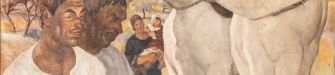
After more than two centuries of oblivion, Faith Galicia ’sAdoration of the Magi (1610) finally enters the halls of the Reggia di Capodimonte. Although it belongs to the Bourbon collection, the heritage of the Capodimonte Museum and Royal Woods, the work had never been on public display in the palace. The work will also be on view during the Easter holidays, with free admission on Easter Day and special opening on Easter Monday, albeit limited to the second floor, which was reopened for the occasion after the work.
“We welcome to Capodimonte the ’admirable pittoressa’ Fede Galizia,” says Eike Schmidt, director of the Capodimonte Museum and Royal Woods, “who joins in the tale of female painting her colleagues Artemisia Gentileschi, Sofonisba Anguissola, Elisabetta Sirani, Teresa Del Po, Lavinia Fontana, Angelica Kauffmann, and Elisabetta Louise Vigee Lebrun, just to name the most celebrated women artists between the sixteenth and eighteenth centuries in our collections, each with an extraordinary story that is also social and civic and that we want to enhance more and more. We thank the Church of San Pasquale a Chiaia and the Franciscan Order (Province of St. John Joseph of the Cross of the Order of Friars Minor, ed.) that has kept the work, identified only in 2021: we hope for new collaborations for the celebrations of the 800th anniversary of the Patron Saint of Italy.”
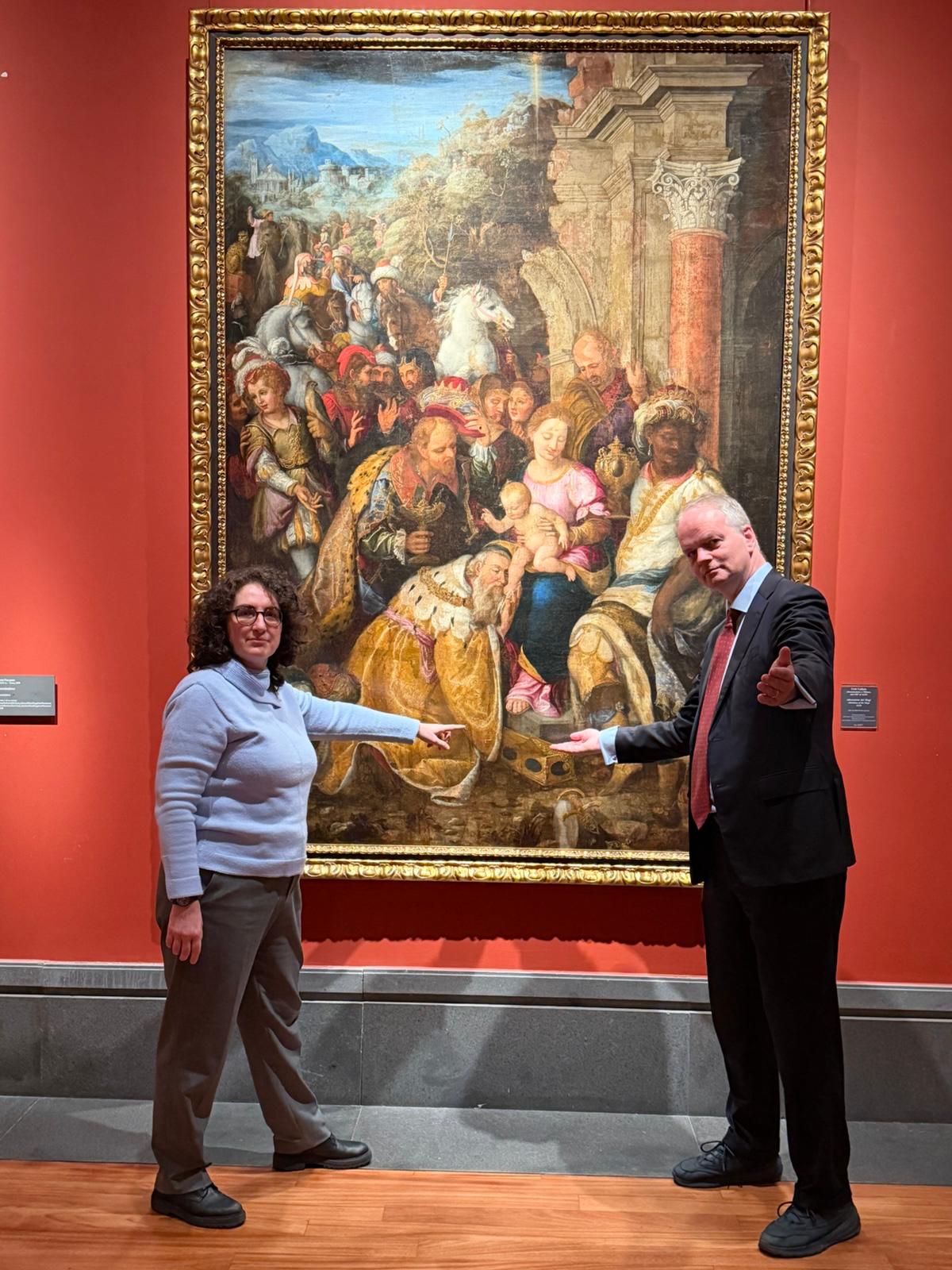
Fede Galizia, documented in Milan between 1587 and 1630, is known for her work as a portrait painter and for still lifes preserved in Italian and international collections. With theAdoration of the Magi, the artist confronts the tradition of the 16th-century masters, recalling Leonardo da Vinci in the composition around the Madonna and showing references to Raphael and Correggio. The presence of the altarpiece in the Bourbon collection offers visitors a piece of Neapolitan art history between the late 16th and early 17th centuries, enriching the reading of the coeval works preserved at Capodimonte.
The commission for the altarpiece goes back to Baldassare Noirot, a Flemish merchant responsible for the Chapel of the Magi in the Church of Sant’Anna dei Lombardi in Naples, built in 1581. After the church’s ceiling collapsed in 1798, the works were moved to Santa Maria di Monteoliveto as a precaution, avoiding damage in the 1805 earthquake that also destroyed Caravaggio’s Resurrection. The altarpiece arrived at the Royal Bourbon Museum between 1816 and 1821, with the signature clearly visible, an expedient adopted by women painters to assert their identity in a male-dominated artistic context.
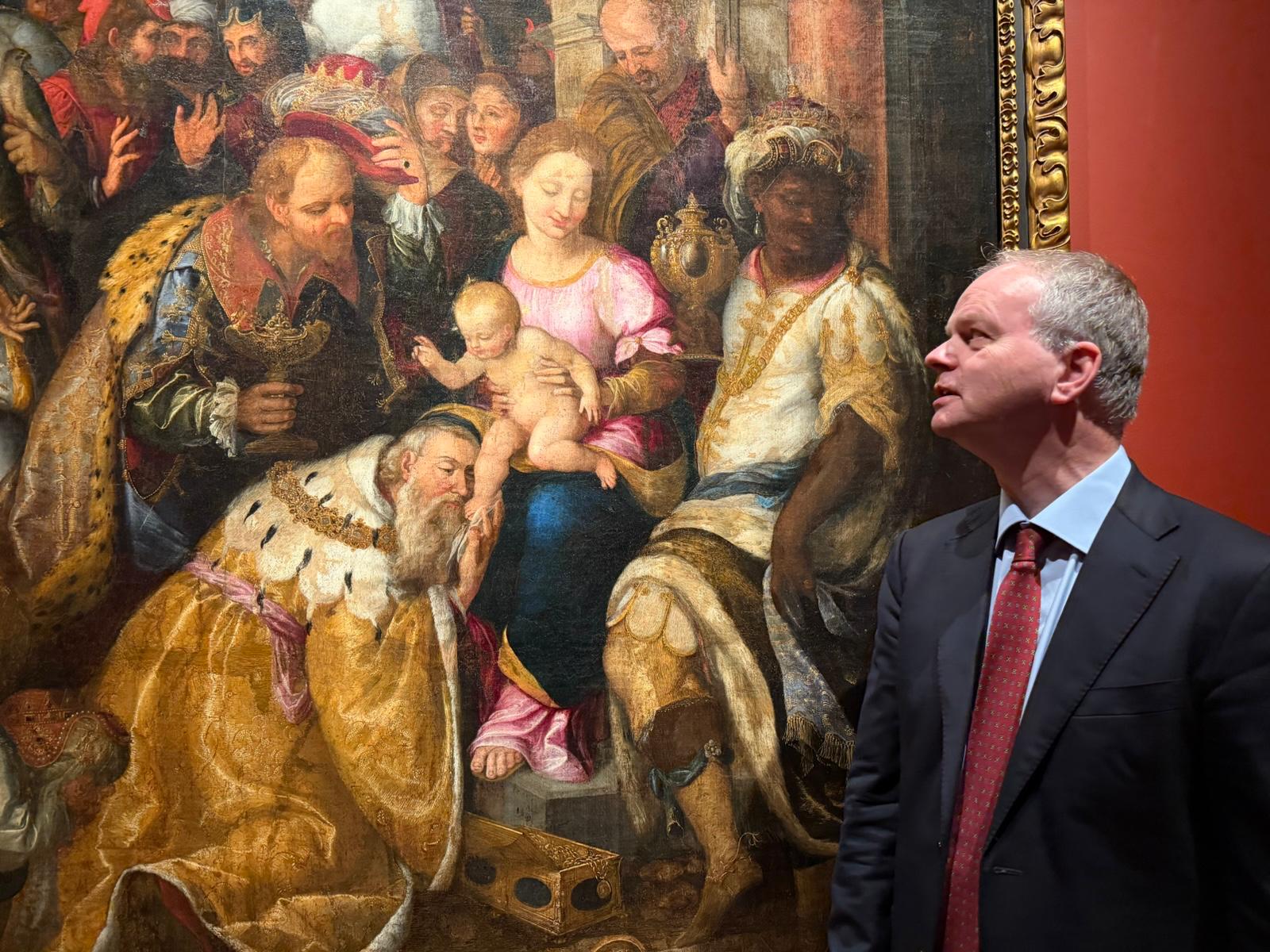
In 1937, with the transformation of the Museum into a national headquarters, the painting was attributed to anunknown 16th-century Florentine and transferred to the Church of San Giuseppe in the Luzzatti district. World War II resulted in the destruction of the church and the dispersal of the works. Only in 2021, thanks to research published in the catalog of the exhibition Fede Galizia Mirabile Pittoressa in Trento and the contribution of scholar Federico Maria Giani, was it possible to confirm the presence of theAdoration at the Convent of San Pasquale a Chiaia, Naples. The work had previously opened the exhibition devoted to women painters of the 17th century at the Gallerie d’Italia in Naples.
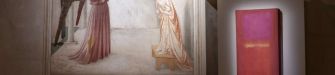
Placed between the two Annunciations by Scipione Pulzone and Francesco Curia, and opposite Santafede’sAdoration of the Shepherds, Galizia’s altarpiece highlights the artistic variety produced in Naples and the Kingdom in the transition between Mannerism and early Caravaggio influences. Its exhibition at Capodimonte allows us to observe the role of women artists in the seventeenth century and their presence in the most important collections. In Naples, Fede Galizia’s production is also evidenced by the altarpiece San Carlo in Estasi in the church of San Carlo alle Mortelle.
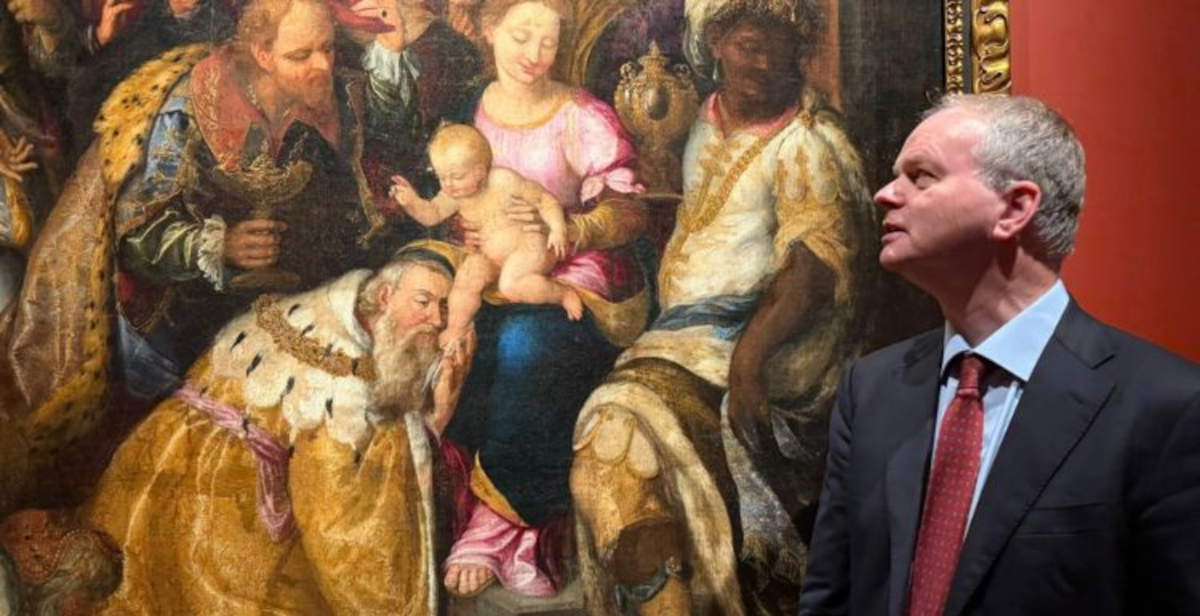 |
| Faith Galicia's Adoration of the Magi exhibited for the first time at Capodimonte |

Warning: the translation into English of the original Italian article was created using automatic tools. We undertake to review all articles, but we do not guarantee the total absence of inaccuracies in the translation due to the program. You can find the original by clicking on the ITA button. If you find any mistake,please contact us.















 IT
IT FR
FR DE
DE ES
ES CN
CN