





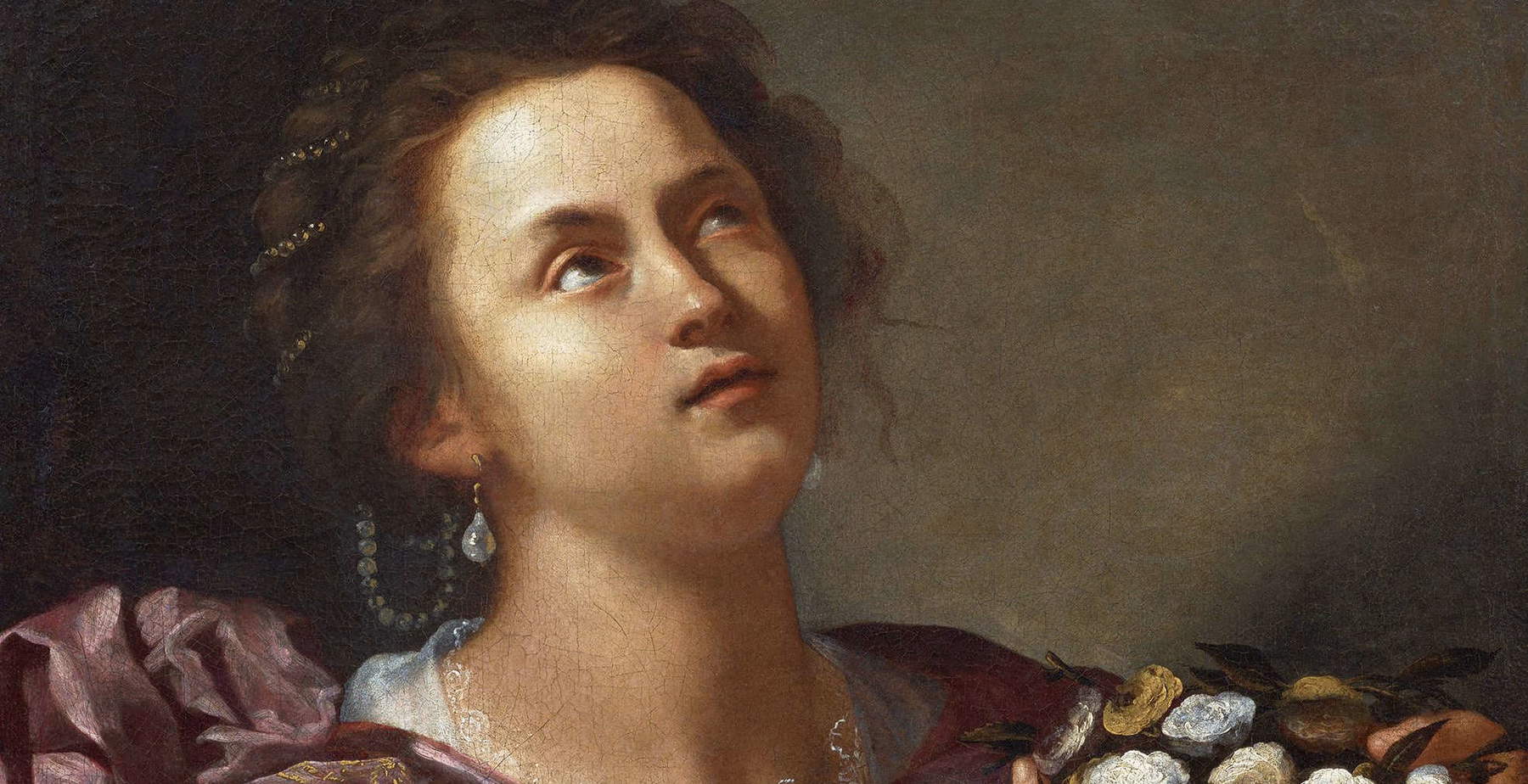
An unpublished painting to be attributed to Artemisia Gentileschi? That’s what the French auction house Rouillac is convinced of, which next June 7, at the Château de Villandry in the Loire Valley, will present a Saint Dorothy associated with the lofty name of the seventeenth-century painter, with a consequent estimate: between 200 and 300 thousand euros. The attribution to Artemisia, the auction house reports, was confirmed by Keith Christiansen, a noted art historian and expert on the early 17th century, particularly Caravaggio and the Caravaggesque milieu. The work, an oil on canvas measuring 74 by 62 centimeters, can be dated to the artist’s Neapolitan years between 1630 and 1654, according to the auction house, and represents a new addition to the corpus of one of the most studied and celebrated figures of seventeenth-century Europe.
The painting’s discovery is linked to a family affair. The owner of the work, the great-granddaughter of a French general engineer of the French Marine Corps and graduate of the Polytechnic, Georges Raclot, still kept the manuscript of the speech he delivered at his grandfather’s funeral in 1957. Those pages recalled the pleasure the man found in staying in his home in Burgundy surrounded by the paintings he loved most. Among those works was the canvas now attributed to Artemisia Gentileschi. In late summer 2024, the current owner decided to contact Aymeric Rouillac, owner of the auction house, after seeing a video of him on Instagram (Rouillac is indeed very active on social media).
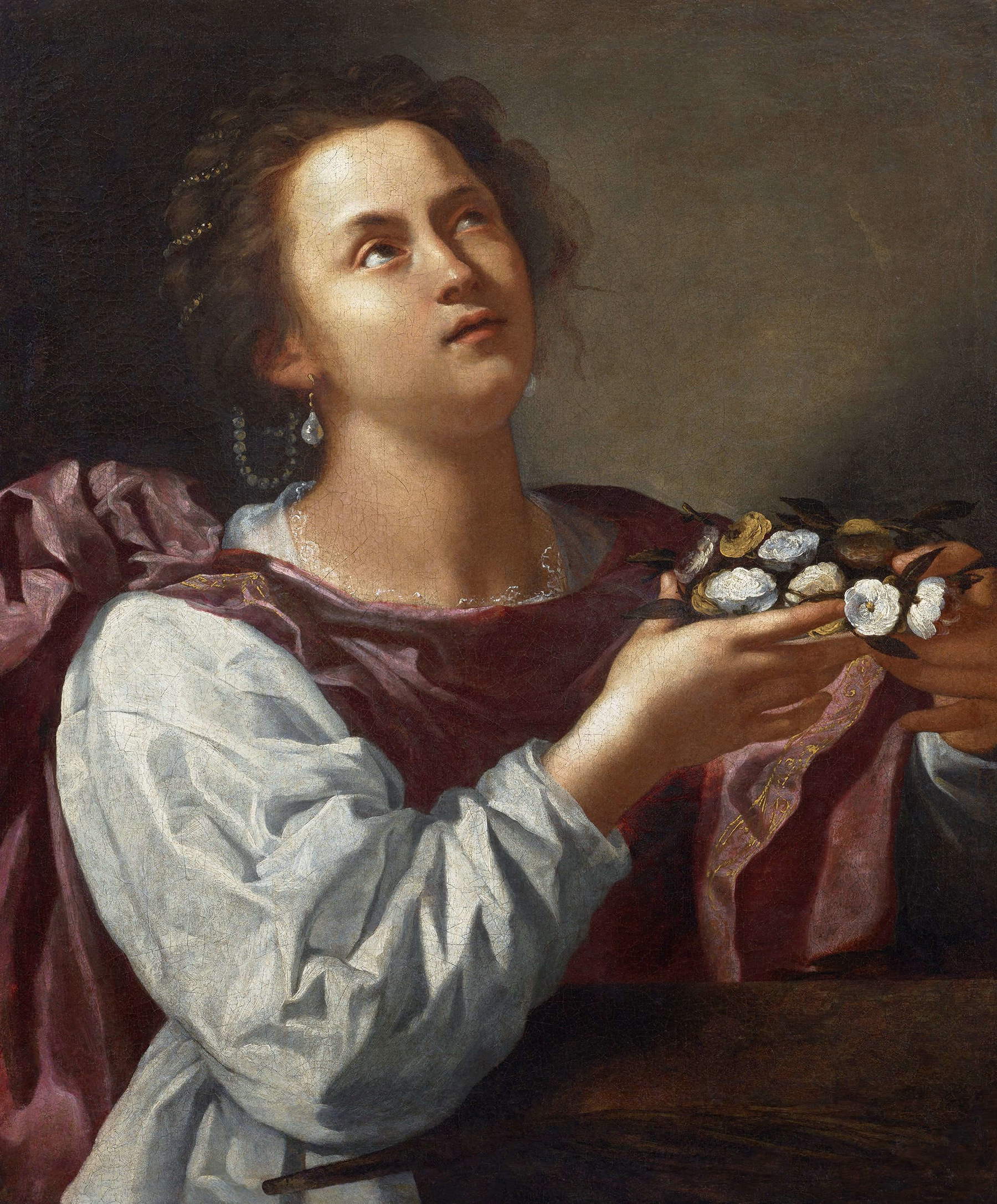
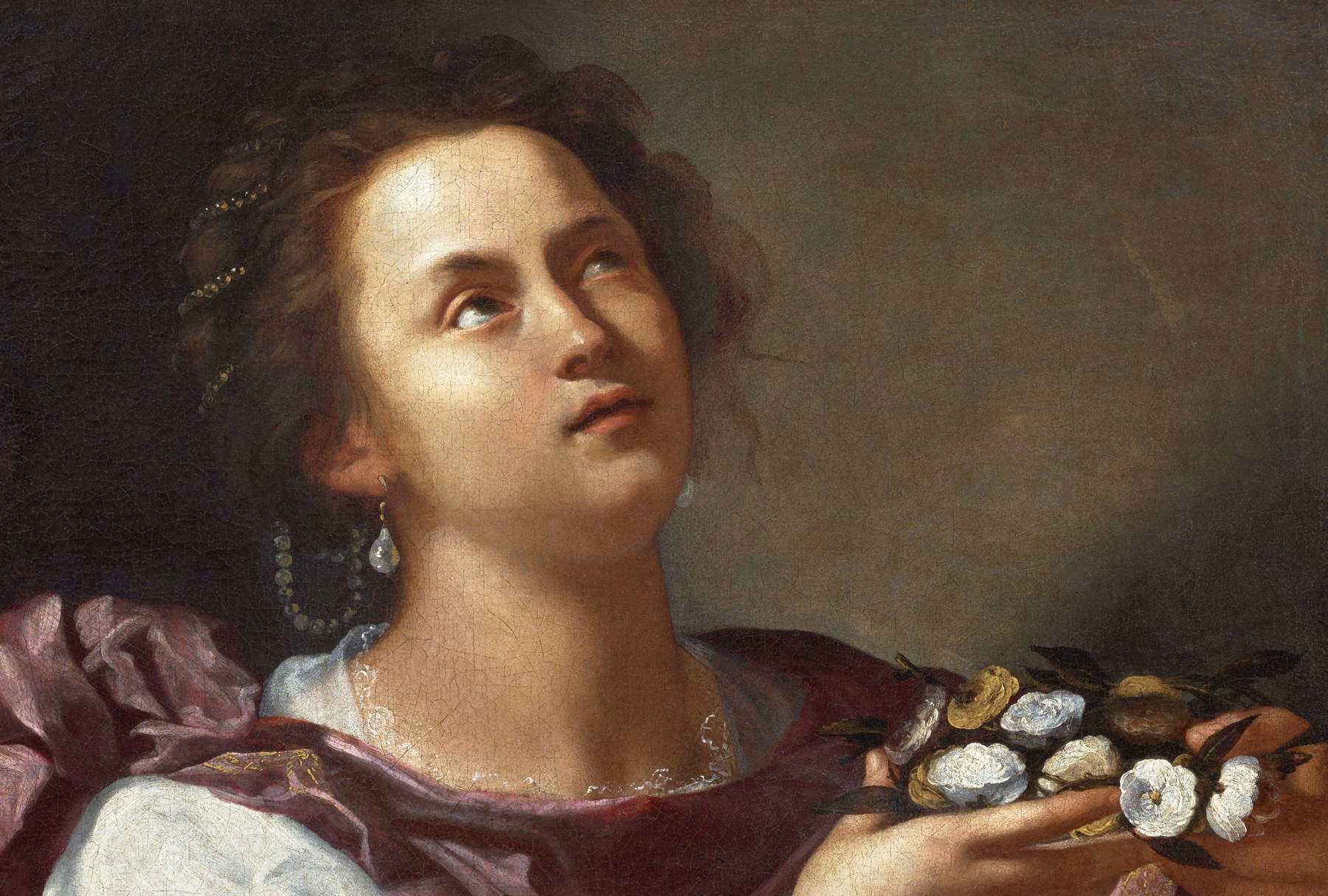
Rouillac therefore involved the firm Turquin & Associés and art historian Stéphane Pinta, who from the first observations would have no doubts about the attribution. According to Pinta, it would be the stylistic elements that would lead back to the hand of Artemisia Gentileschi. In particular, the critic emphasizes the treatment of the white fabric, slightly creased and rippled, interpreted almost as a signature of the artist. The painting, the expert observes, is built up through extremely sophisticated color transitions: from cold white modulated by light gray veils, warmer tones gradually emerge in the violet and wine-red folds of the drape, executed with a soft, almost foamy brushstroke, until reaching the coppery complexions that characterize the saint’s face.
The recovery of the work was accompanied by a restoration conducted by Laurence Baron-Callegari: the very restoration revealed that the author of the painting significantly altered the composition during the execution of the painting. Originally, in fact, the lintel present in the upper part of the painting had been decorated with a series of petals later erased, but still visible in some fragments of the original pictorial layers. According to Baron-Callegari, these elements introduce a completely different symbology, close almost to the theme of vanitas. Even the palm of martyrdom, now present in the composition, appears problematic and ill-defined, probably added at a later stage when Artemisia decided to transform the subject of the painting. The restorer also points out that the palm was made with a lacquer varnish that makes it difficult to read today. The restoration also highlighted the difficulties faced by previous conservation interventions. Baron-Callegari notes that both the nineteenth-century and early twentieth-century restorers who worked on the painting were faced with obvious pentimenti and pictorial changes without knowing how to handle them. Both therefore opted to cover some traces of the original composition, albeit in different ways. Instead, the latest intervention chose to remove numerous repaintings to restore legibility to the authentic surface.
However,the identification of the subject remains complex and still open. The painting is now presented as Saint Dorothy, but the hypotheses formulated by scholars oscillate between different figures from the Christian tradition. One of the initial interpretations advanced the hypothesis that the figure was that of Saint Rosalie, who was particularly significant in the Neapolitan context of the seventeenth century. After the plague that struck Palermo in 1624, in fact, the discovery of the saint’s relics on Mount Pellegrino encouraged a rapid spread of her cult throughout the Kingdom of Naples, transforming her into a powerful protective and thaumaturgical figure. Some iconographic elements do indeed seem to recall Rosalie. The skyward gaze and the presence of flowers might suggest a reading in this direction, at least on the poetic level. However, several scholars urge caution. Indeed, a comparison with Antoon van Dyck’s famous Saint Rosalie preserved at the Prado Museum in Madrid would risk misdirecting the interpretation. No artist of the time would have placed a palm of martyrdom in the foreground to represent Rosalie, who was never a martyr.
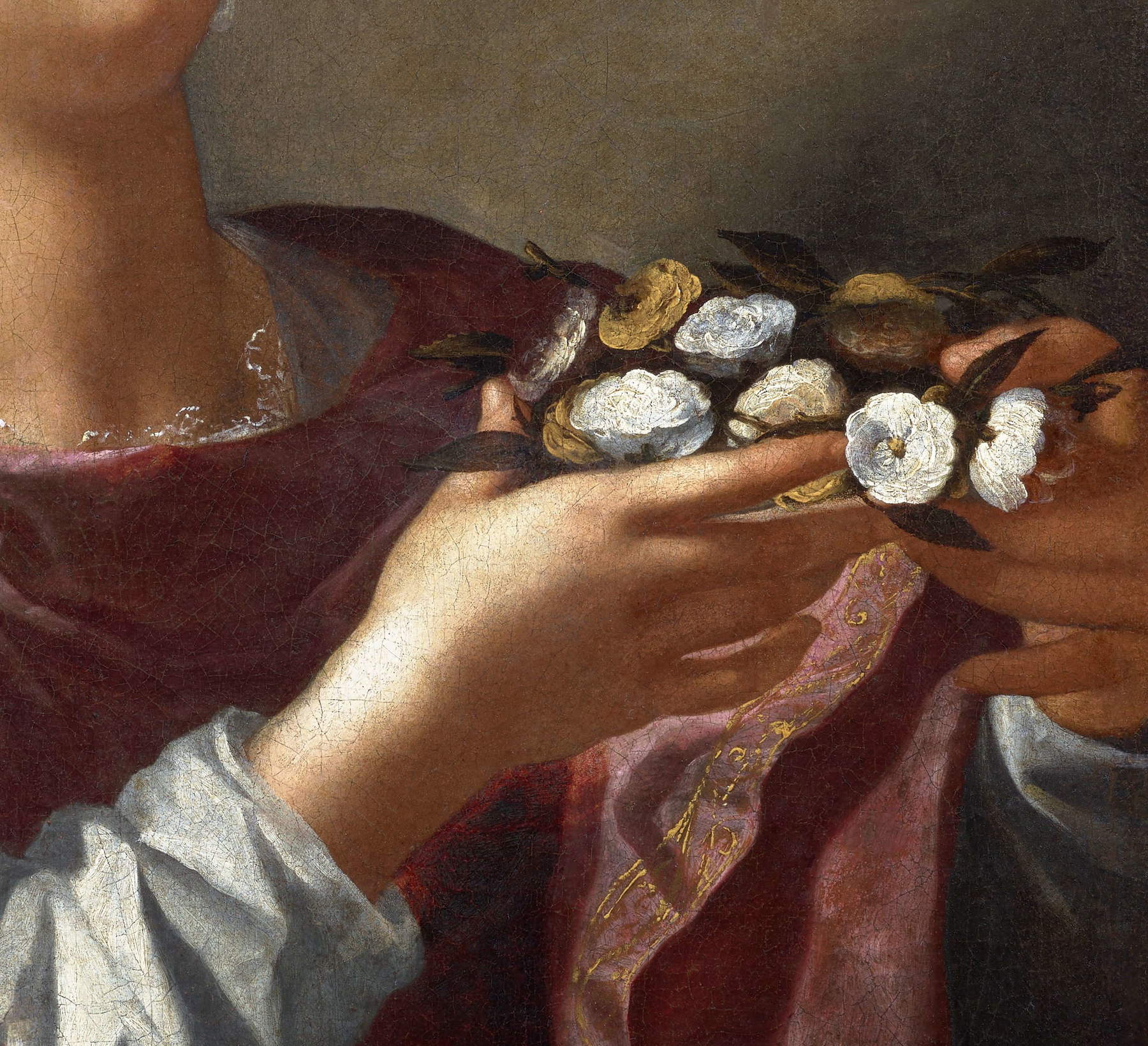
The presence of the palm tree thus prompts another identification, now considered the most plausible: Saint Dorothy, martyred under Diocletian in 311. According to hagiographic tradition, Dorothea sent roses and fruit from Heaven to the pagan lawyer Theophilus, who had mocked her before her execution. The flowers in the painting could therefore allude to this episode. Again, however, some anomalies emerge. The cult of Dorothy belonged mainly to the Spanish tradition and was relatively rare in the Neapolitan environment, which lacked particularly strong local roots. However, iconographic uncertainty is not an isolated case in the work of Artemisia Gentileschi. Indeed, many of the painter’s paintings elude unambiguous identification precisely because of the absence of clearly codified attributes.
New research has also reopened the debate over the identity of the model depicted in the artist’s Neapolitan paintings. Some scholars have suggested that the face featured in the Saint Catherine of Alexandria that entered the collections of the Nationalmsueum in Stockholm in 2020 may be identified with Adriana Basile, a Neapolitan singer and musician born around 1586 and sister of the writer Giambattista Basile. Adriana Basile was a central figure in cultural circles between Venice and Naples in the early decades of the seventeenth century. After her Venetian sojourn in 1623, during which a collection of poetry was dedicated to her, she moved to Naples and came into contact with the Accademia degli Oziosi, one of the most influential literary institutions of the time. Although there are no documents attesting with certainty to Artemisia’s presence in Venice in those same years, the painter is attested in the lagoon city in 1628, and common acquaintances could make a meeting between the two women plausible, according to Rouillac. Laurence Baron-Callegari suggests instead that Artemisia may have used herself as a model. The restorer invites observation of the shape of the nose, the design of the cheeks, and especially the intensity of the gaze, described as penetrating and almost judgmental. A detail that would once again bring the painting back to the artist’s personal universe, to her self-representation.
 |
| Is this Saint Dorothy by Artemisia Gentileschi that will go to auction in France? |

Warning: the translation into English of the original Italian article was created using automatic tools. We undertake to review all articles, but we do not guarantee the total absence of inaccuracies in the translation due to the program. You can find the original by clicking on the ITA button. If you find any mistake,please contact us.





























 IT
IT FR
FR DE
DE ES
ES CN
CN


