





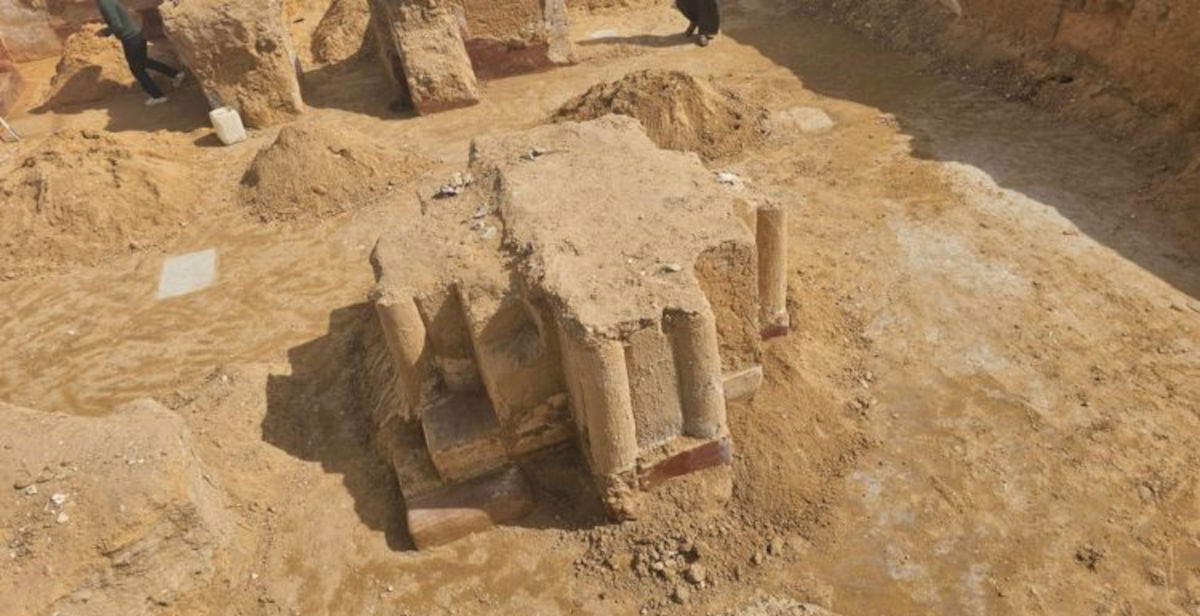
The Egyptian archaeological mission of the Supreme Council of Antiquities has unearthed a building dating back to the fifth century AD at Qalaya in Hosh Issa, Beheira governorate, considered part of the early phase of Coptic monastic life in Egypt. Excavations have revealed a complex that probably served as a reception house for monks and visitors, incorporating later architectural elements that testify to the building’s functional evolution over the centuries.
According to the secretary-general of the Supreme Council of Antiquities, Hisham El-Leithy, the discovery represents a major contribution to the study of early Egyptian monastery architecture. The Qalaya area in Hosh Issa constitutes the second-largest monastic settlement in Coptic history, and the architectural complex found reflects the early structure of the first monasteries, while offering important insights into the daily life of the monks. The found decorations and wall paintings constitute important sources for understanding early Coptic art, documenting symbols and practices related to spirituality and community life. The complex clearly shows the development of monastic architecture of a simple character toward semi-communal structures, up to spaces intended for the hospitality of visitors and aspiring monks.
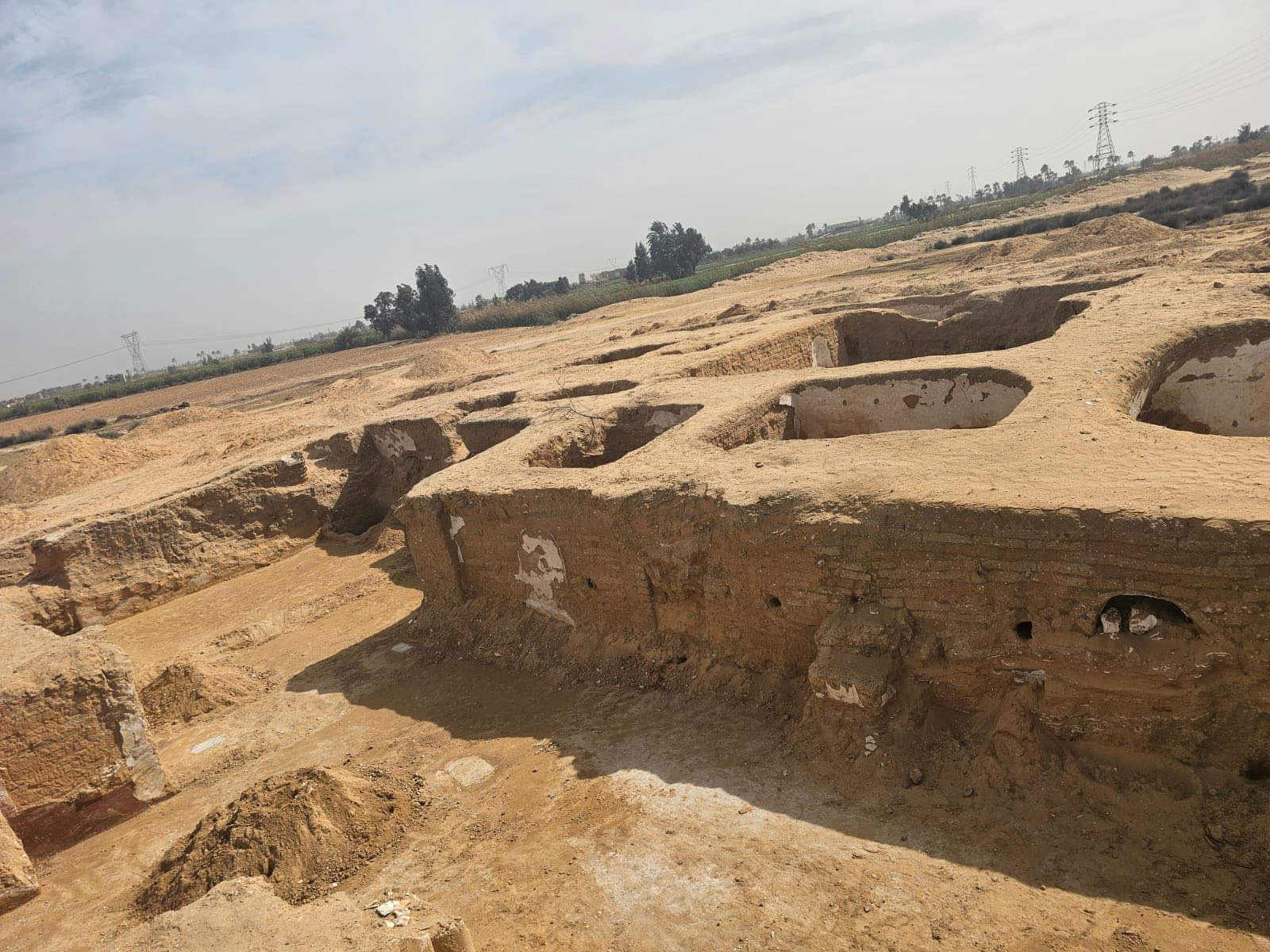
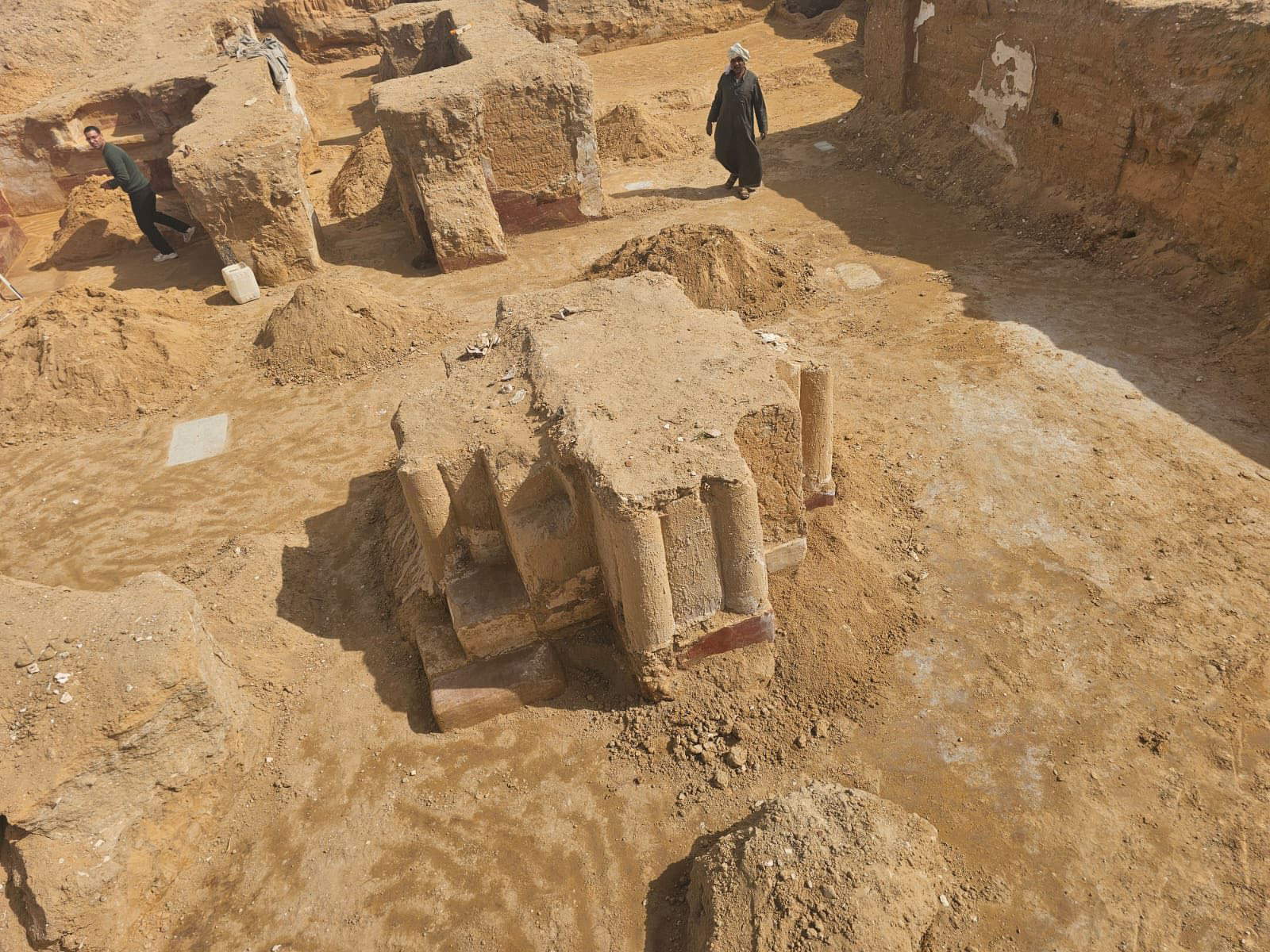
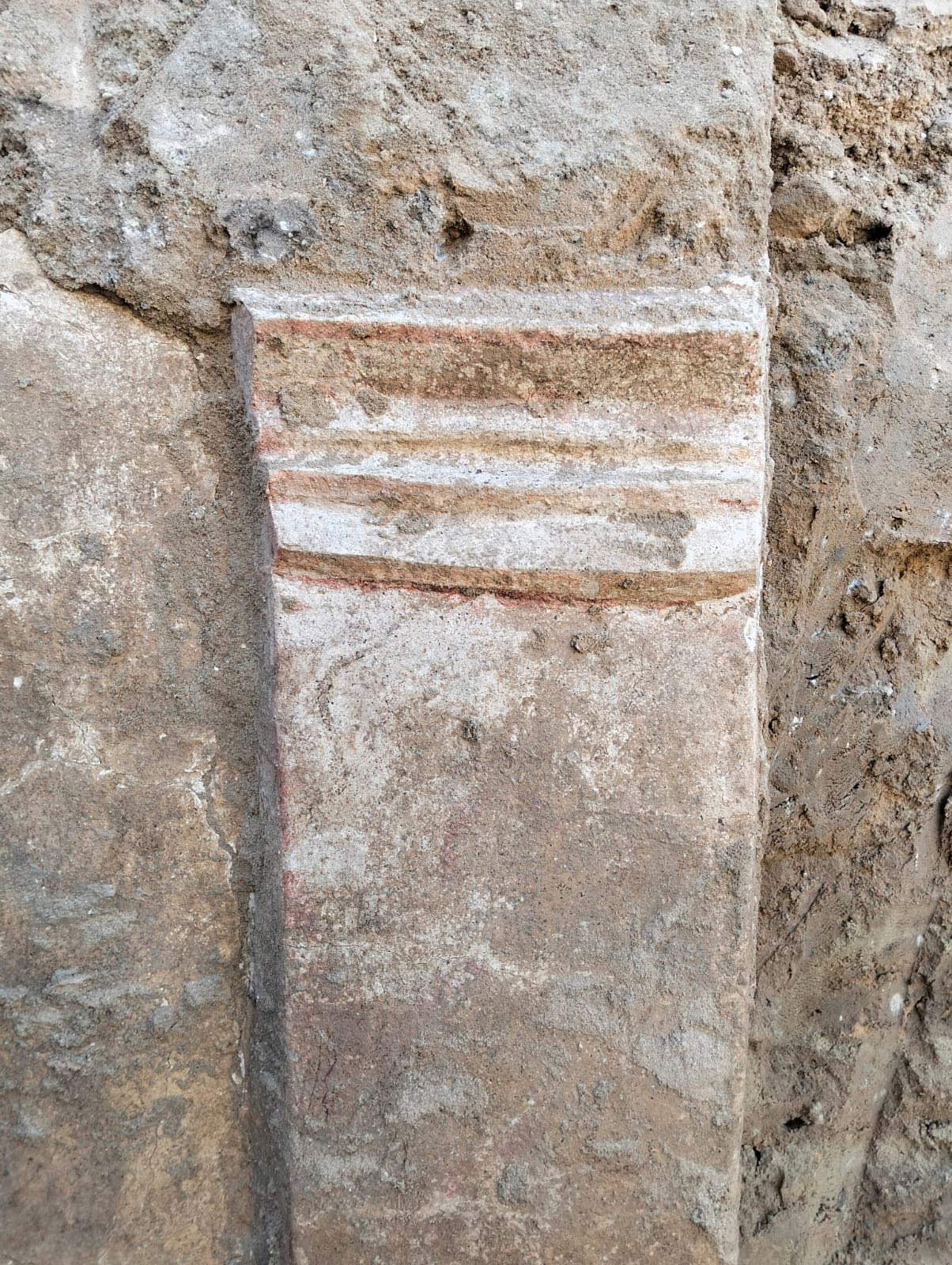
Diya Zahran, the council’s head of Islamic and Coptic antiquities, pointed out that the building includes 13 multifunctional rooms, including cells for individual and collective monastic life, spaces for education and reception, as well as service facilities such as a kitchen and storerooms. A northern hall of considerable size features decorative architectural elements, including stone steps adorned with plant motifs, probably intended to welcome visitors. In the center of the building, the prayer area faces east and features a niche preceded by a limestone cross, with a main axis running through the building from north to south.
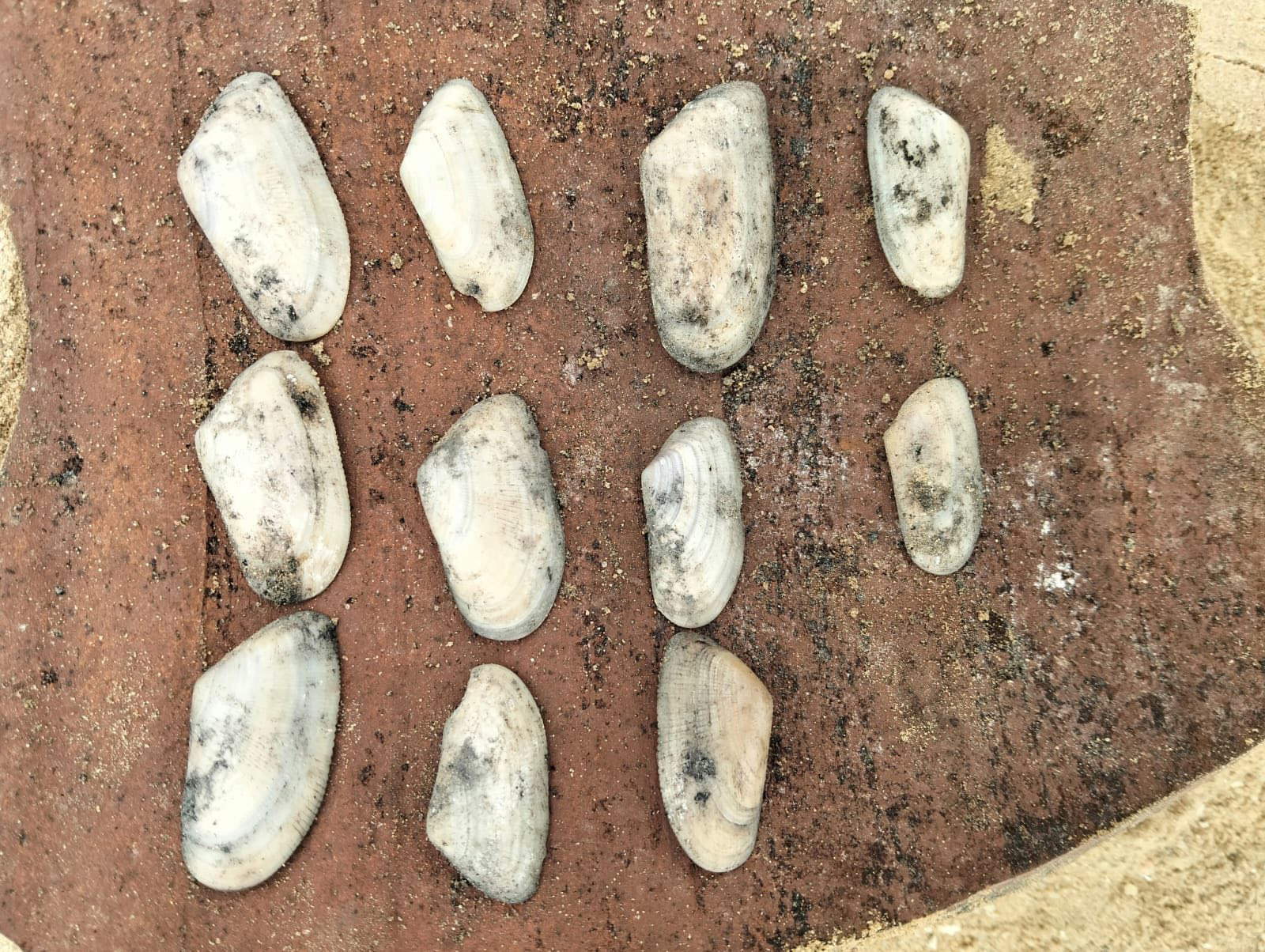
As Samir Rizk Abdel-Hafez, head of the mission and director general of Beheira Antiquities, says, the mission has also documented numerous frescoes with partially preserved monastic figures, recognizable by their robes, alongside plant motifs, including white, red and black weaves and eight-petaled flowers. Prominent among the paintings is a scene depicting two gazelles surrounded by plant decorations and a double circular motif in the center, highlighting the richness of symbolism in early Coptic art. Other finds include a two-meter-high marble column, capitals and column bases, numerous vases and ceramic fragments, some with plant or geometric decorations and others bearing Coptic inscriptions. Bone remains of birds and animals and shells found in one of the rooms offer further details about the daily activities and diet of the monks.
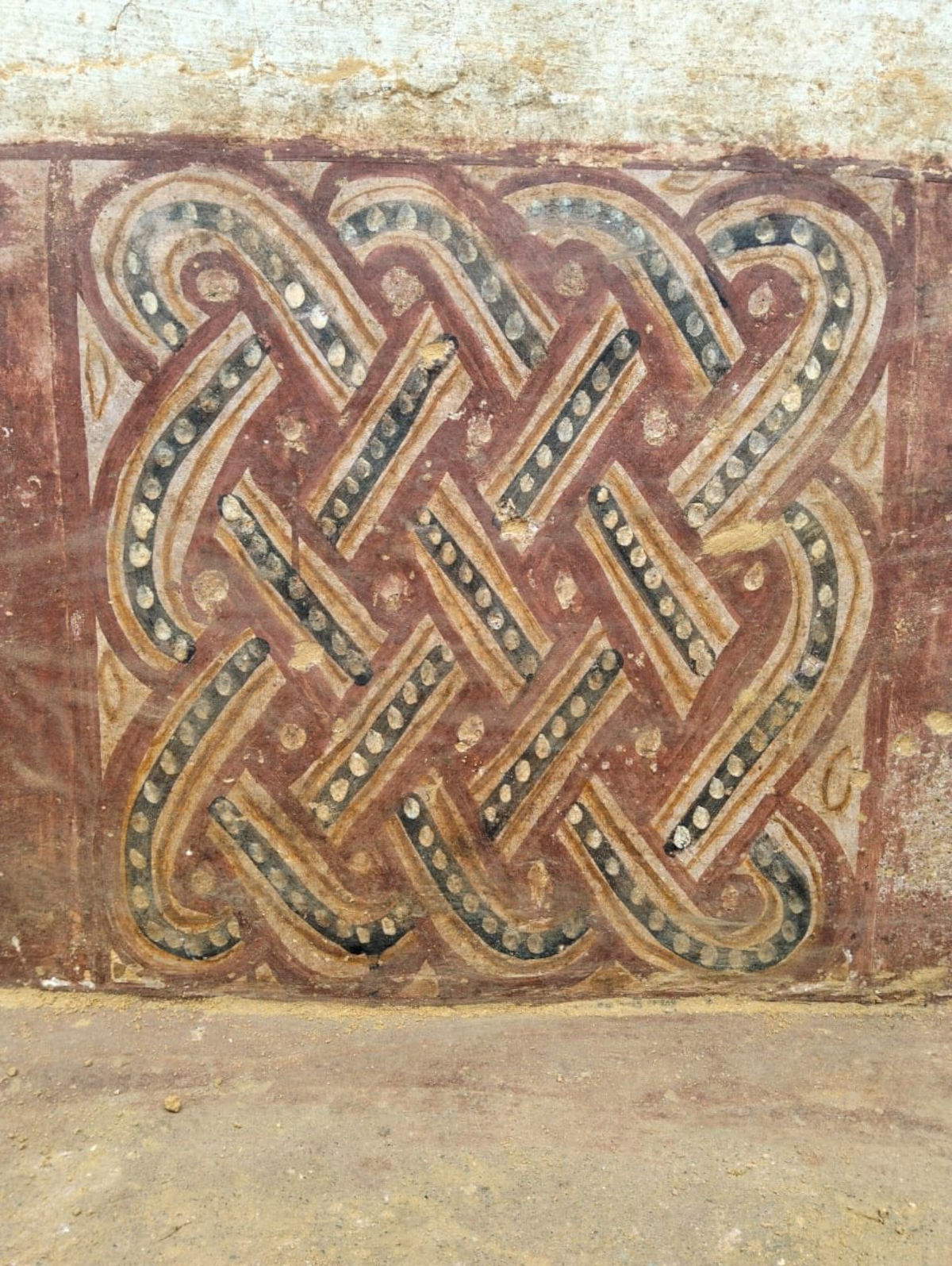
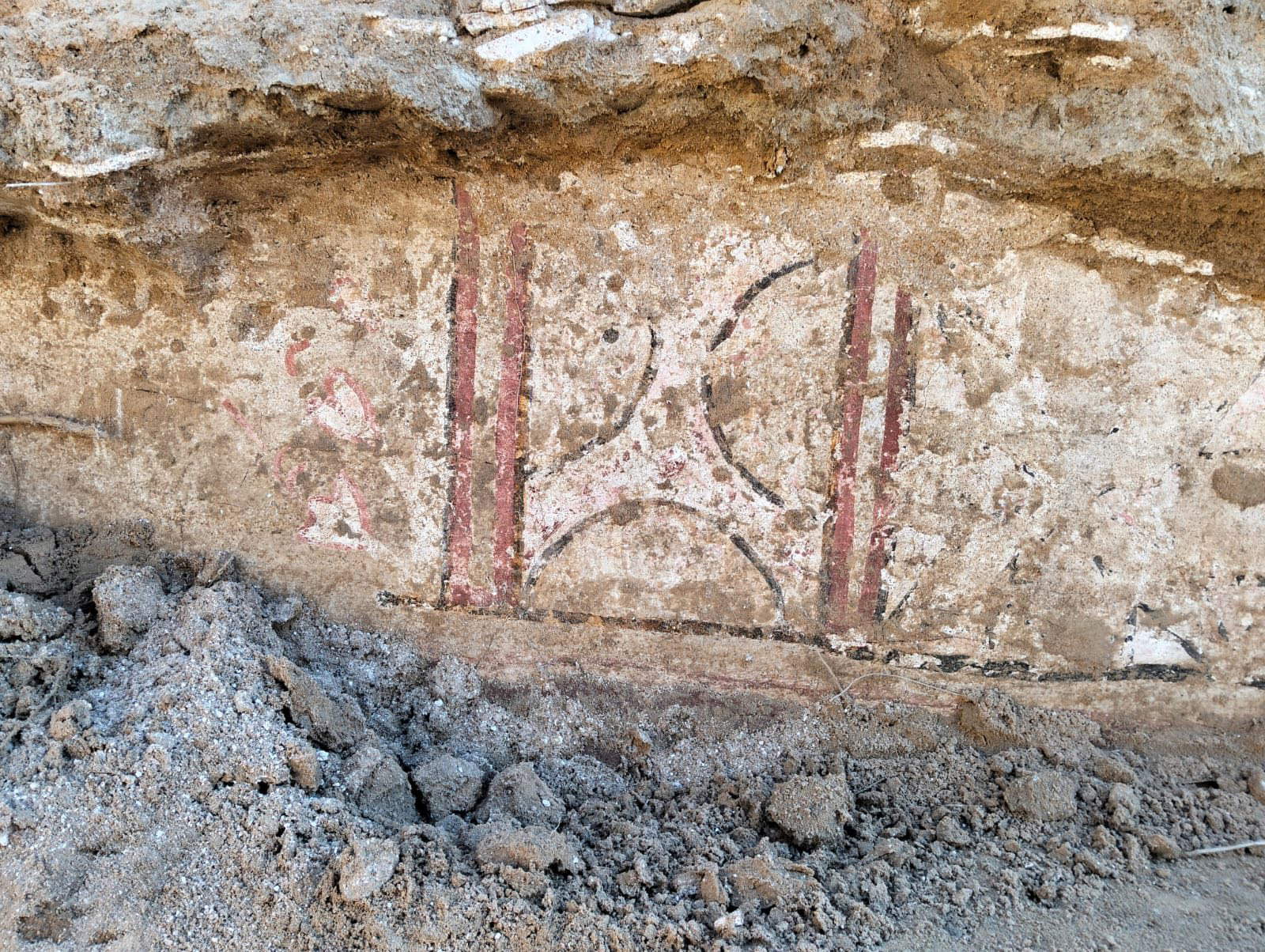
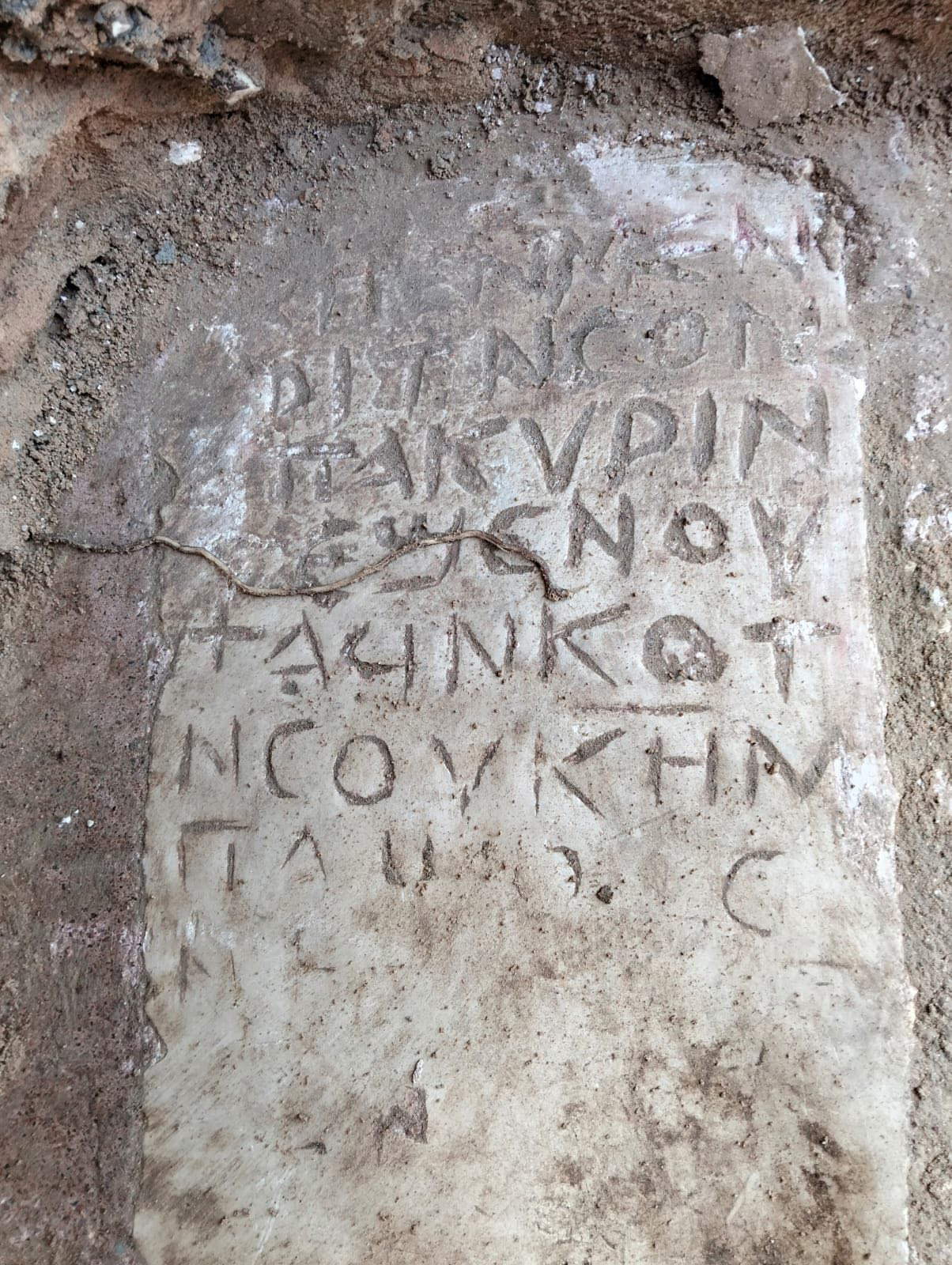
Among the most important finds, a rectangular limestone slab found at the entrance to a room bears a Coptic inscription interpreted as an epitaph, mentioning “Aba Kir ibn Shenouda,” confirming the continuous use of the site during the height of monastic life. The mission, launched in 2023, had already unearthed two aggregations of monastic cells, along with service buildings and a series of wall paintings.
 |
| Egypt, 5th century A.D. building found linked to early phase of Coptic monastic life |

Warning: the translation into English of the original Italian article was created using automatic tools. We undertake to review all articles, but we do not guarantee the total absence of inaccuracies in the translation due to the program. You can find the original by clicking on the ITA button. If you find any mistake,please contact us.



























 IT
IT FR
FR DE
DE ES
ES CN
CN


