





In Rome, the Villa of the Tritons, locatedon the Appian Way, became part of the public heritage in 2022, and four years later, for the first time, archaeologists began excavating a part of the complex that had never been investigated before. The first few weeks of work have already uncovered reticulated masonry structures and evidence of various phases of occupation, raising new questions about the history of a Roman villa that still holds many unknown aspects. The excavation began on September 16 in the area of Via Appia Antica 55, near the intersection with Via della Caffarella. The excavation campaign is being conducted by the Appia Antica Archaeological Park in collaboration with the University of Ferrara and also involves undergraduate and graduate students in archaeology programs, who are directly engaged in fieldwork. Luigi Scaroina, director of the Park, serves as the scientific director, while Stefano Roascio, the Park’s archaeologist, and Rachele Dubbini, associate professor of Classical Archaeology at the University of Ferrara, jointly oversee field operations.
The new excavation area is located a short distance from the villa’s main complex and involves a building of considerable size: so far, masonry structures have been identified, but further excavation will determine more precisely when they were built, what changes they underwent, and what function the rooms served (one of the objectives for the coming weeks will, in fact, be to reconstruct the chronology of the structures and understand their relationship to the rest of the complex). This is a particularly significant development because the Villa of the Tritons preserves evidence of a very long architectural history. The remains visible today include a farmhouse of late medieval origin built on the foundations of a previous Roman residential building. The Roman complex is already known to include rooms built with reticulated masonry and brickwork, a circular structure, and several underground spaces, dating from various phases ranging from the Republican era to the 4th century A.D.
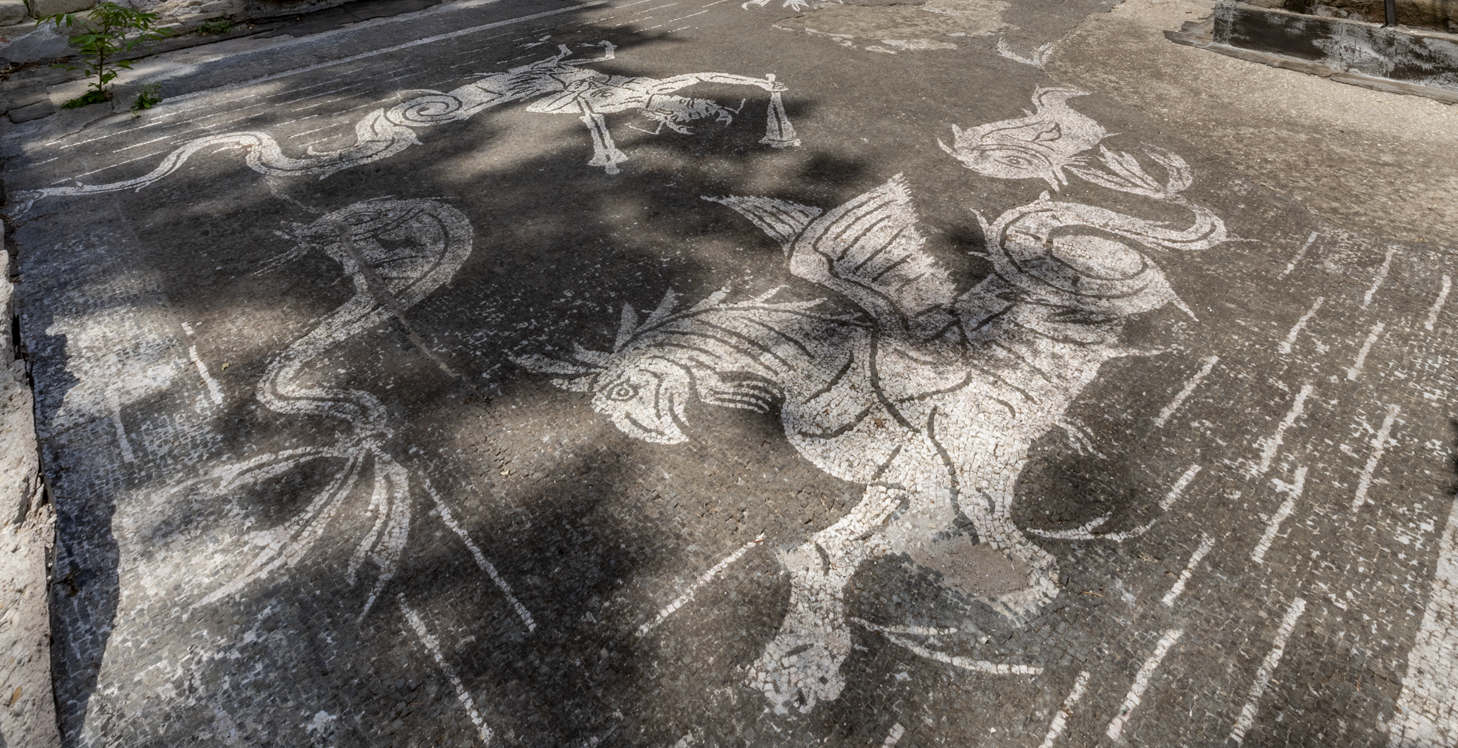
The villa’s name derives from the feature that, more than any other, has defined our understanding of it: the large floor mosaic preserved in a ceremonial room, likely a nymphaeum: it depicts a marine procession populated by tritons, ichthyocentaurs, and other creatures associated with the world of Neptune, rendered in white on a black background. The mosaic dates to the 3rd century A.D. and thus belongs to one of the complex’s later monumental phases.
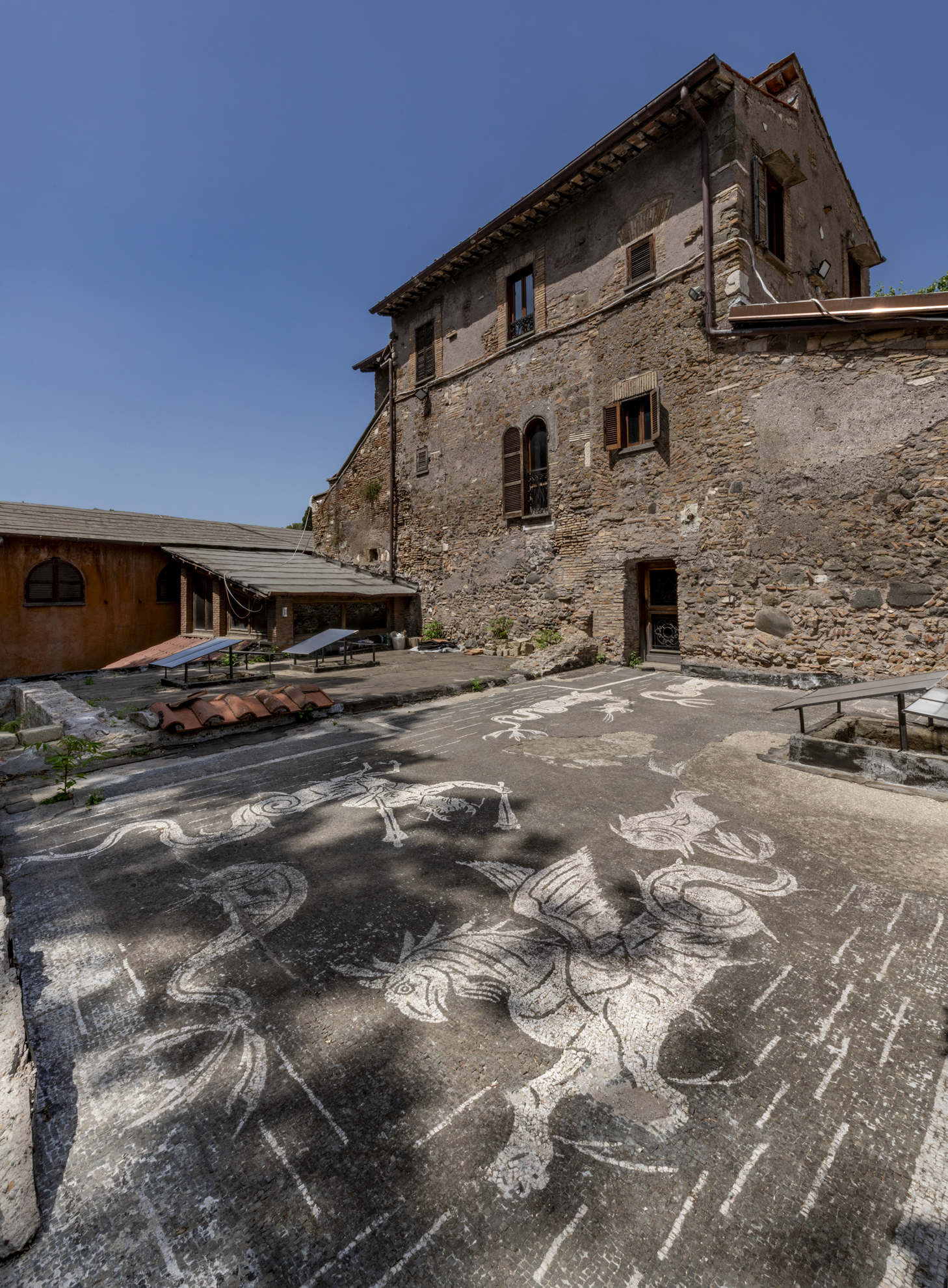
The composition must also have had a specific relationship with water: in fact, a thin film of water must have flowed across the floor, accentuating its dynamic effect and bringing out the marine figures within the decoration. It is precisely this mosaic that gave the villa the name by which it is known today, but the new excavation shows that the site’s history cannot be reduced to just this one decorated room. The building currently under investigation is, in fact, located in an area that had not been excavated until now. Exploring this area could therefore add new insights into the villa and the various phases through which the complex developed. At present, however, the function of the rooms and their precise chronology remain to be determined: the data collected during the excavation campaign will make it possible to establish the relationship between the new structures and those already known.
The discovery and archaeological research follow a long history of ownership disputes regarding the area. The Roman remains of the villa were identified in the 1970s during renovation work on the farmhouse; subsequently, in 1982, the Ministry placed the complex under archaeological protection, and subsequently, after several unsuccessful auctions, that protection enabled the State to exercise its right of first refusal.
In 2022, the site thus became public property and was incorporated into the Appia Antica Archaeological Park, an institution of the Ministry of Culture. The acquired area measures approximately one hectare and is situated in a unique location, between the Via Appia Antica and the Caffarella Valley. Its very location is one of the factors that make the acquisition significant for the future as well: the area could, in fact, allow for the creation of a connection to the Caffarella Valley.
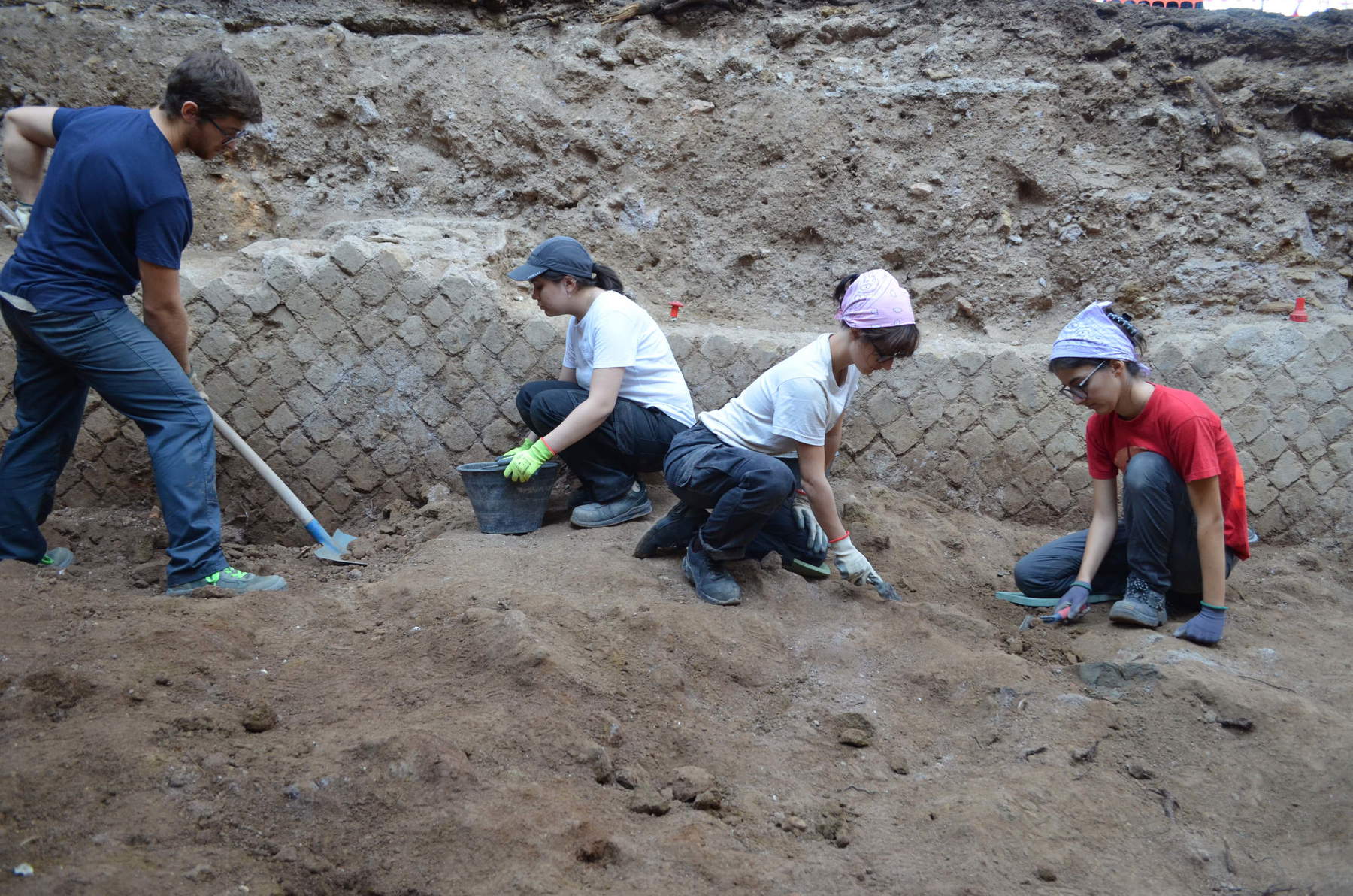
The new excavation thus represents one of the first research projects undertaken since the complex returned to public ownership: the acquisition did not merely change the property’s status but also created the conditions to launch a program of study, conservation, and enhancement, and to carry out archaeological investigations in areas that had not yet been explored.
In any case, the Villa of the Tritons is not yet a fully understood site. The known Roman structures constitute parts of a complex that has undergone centuries of transformations, culminating in the construction of the late-medieval farmhouse that still characterizes the area today. The 3rd-century mosaic, the rooms built with reticulated masonry and brickwork, the circular structure, and the underground spaces are evidence of different periods, which the new excavation will help to connect.
To witness the archaeologists’ work firsthand, visitors will have a special opportunity to enter the Villa of the Tritons duringAppia Day: the site will be open to the public on Saturday, October 3, from 10 a.m. to 6 p.m., and on Sunday, October 4, from 10 a.m. to 2 p.m., with no reservation required. However, access to the mosaic area will be limited. On the same days, visitors will also be able to tour the archaeological site through two daily guided tours, at 10 a.m. and 11 a.m., organized by the University of Ferrara. This will be an opportunity to observe the excavation activities firsthand and learn about the initial findings from the first few weeks of the campaign. The tours are free, but in this case, reservations are required through the Appia Day website (www.appiaday.org). The site will also be open to the public on Saturday, October 10, with tours at 10 a.m. and 11 a.m. Again, each tour will be limited to a maximum of 30 people for safety reasons. Booking details for this second day will be announced via the social media channels of the Appia Antica 55 project and the Appia Antica Archaeological Park.
 |
| First excavation at the Villa dei Tritoni in Rome since its acquisition by the government |

Warning: the translation into English of the original Italian article was created using automatic tools. We undertake to review all articles, but we do not guarantee the total absence of inaccuracies in the translation due to the program. You can find the original by clicking on the ITA button. If you find any mistake,please contact us.


























 IT
IT FR
FR DE
DE ES
ES CN
CN


