



by Redazione 04/04/2026



Categories: Contemporary art / Disclaimer
The eighth edition of Hypermaremma opens with Osservatorio M1, a traveling installation by Luca Bertolo between Ansedonia and Talamone, a work that reflects on the concept of horizon and refuge along the Maremma coast.
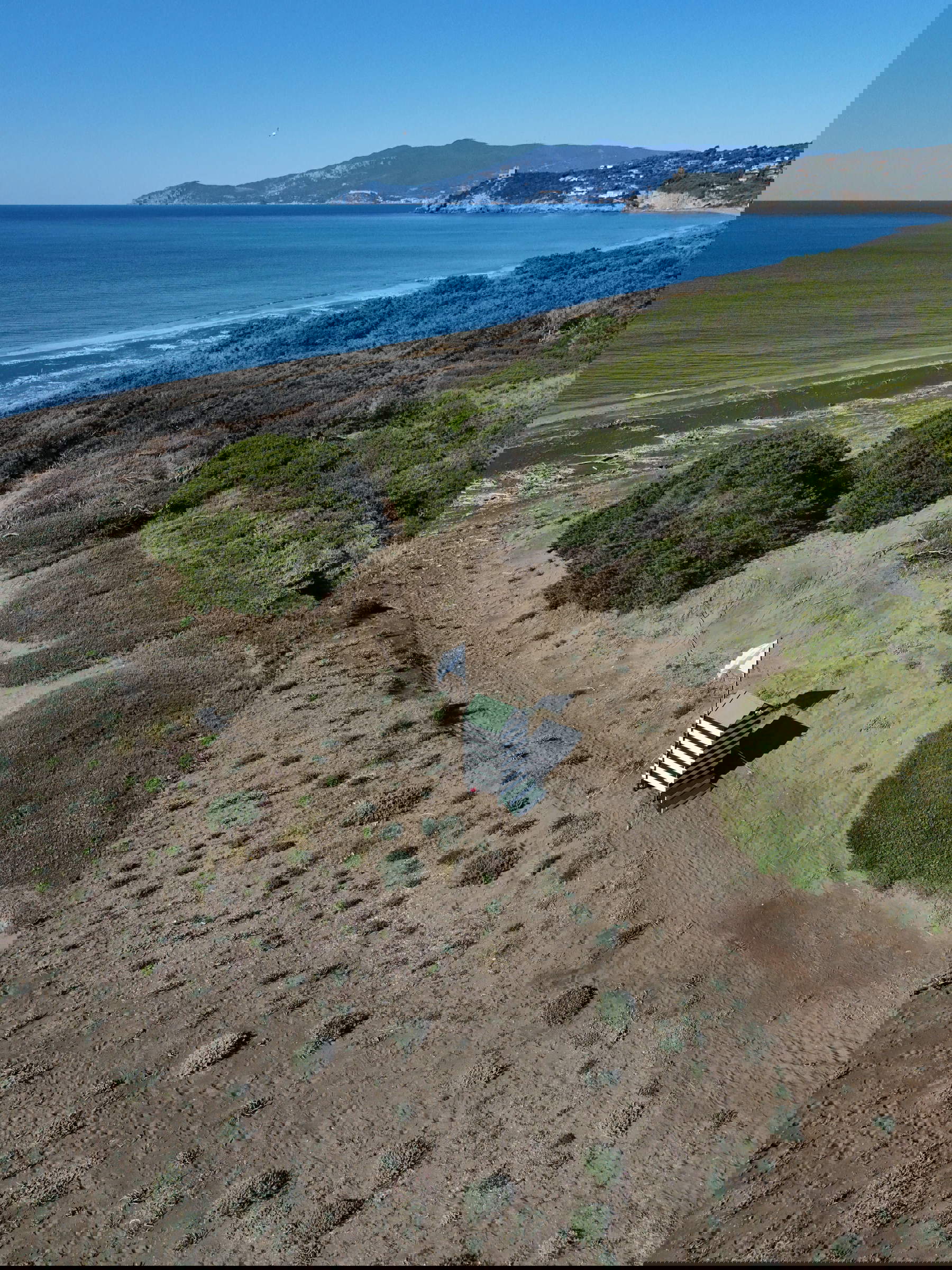
The eighth edition of Hypermaremma kicks off on Saturday, April 4, 2026, inaugurating the new season with the project Observatory M1 by Luca Bertolo (Milan, 1968). The appointment is set for 11:30 a.m. at La Torba Beach (also known as “Playa La Torba”), in Ansedonia, along the Maremma coast, in a natural setting characterized by dunes, spontaneous vegetation and archaeological presences. The intervention, sponsored by the Municipality of Orbetello, marks the start of an exhibition itinerary that will run until August 31, 2026 through three different stages: Playa La Torba in Ansedonia from April 4 to May 31, the Tagliata Etrusca, also in Ansedonia, in June and July, and finally the Spiaggia della Puntata in Talamone in August. An itinerary that transforms the work into a mobile presence, capable of traversing the landscape and engaging in dialogue with lesser-known but significant places on the coast.
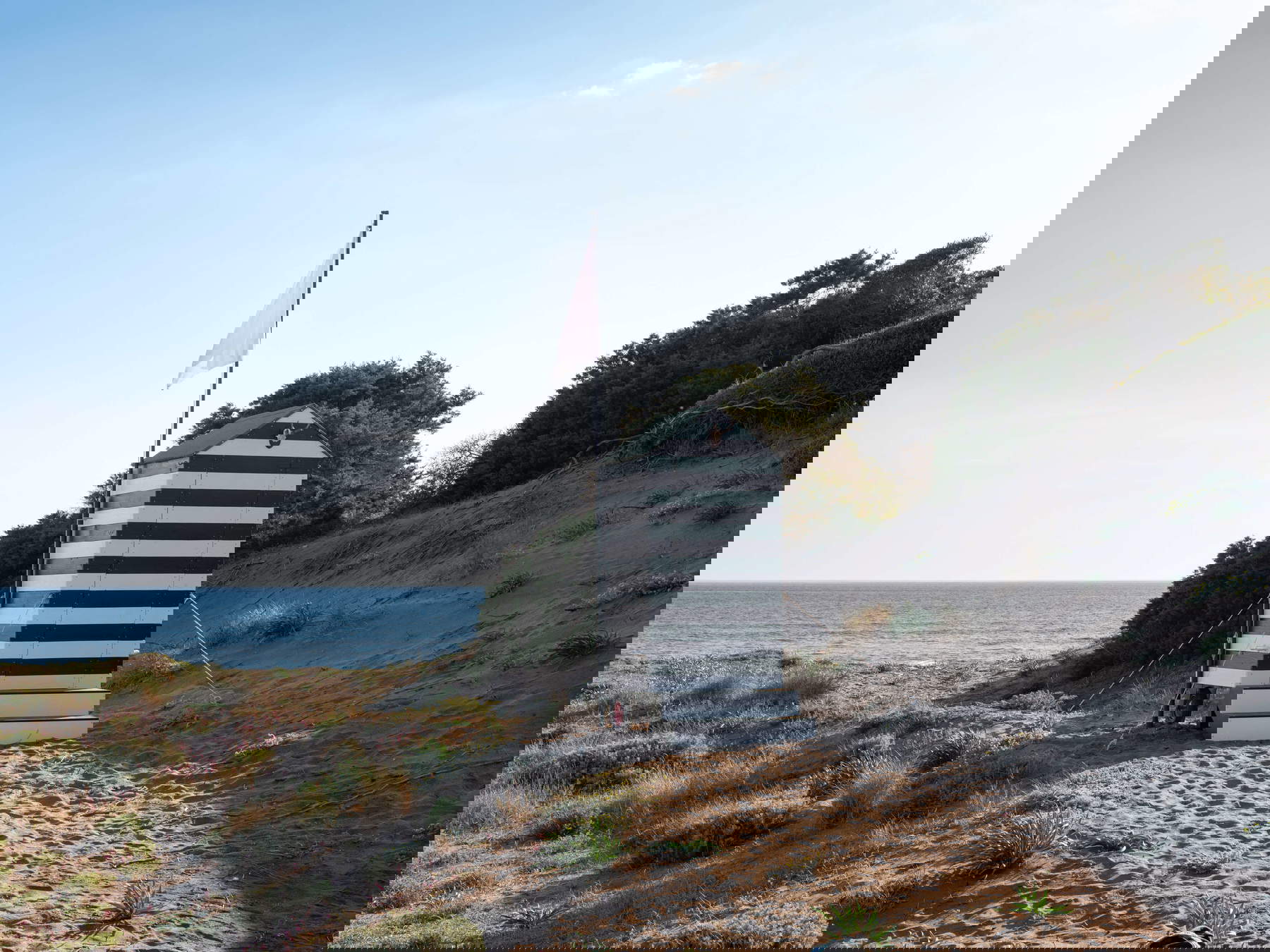
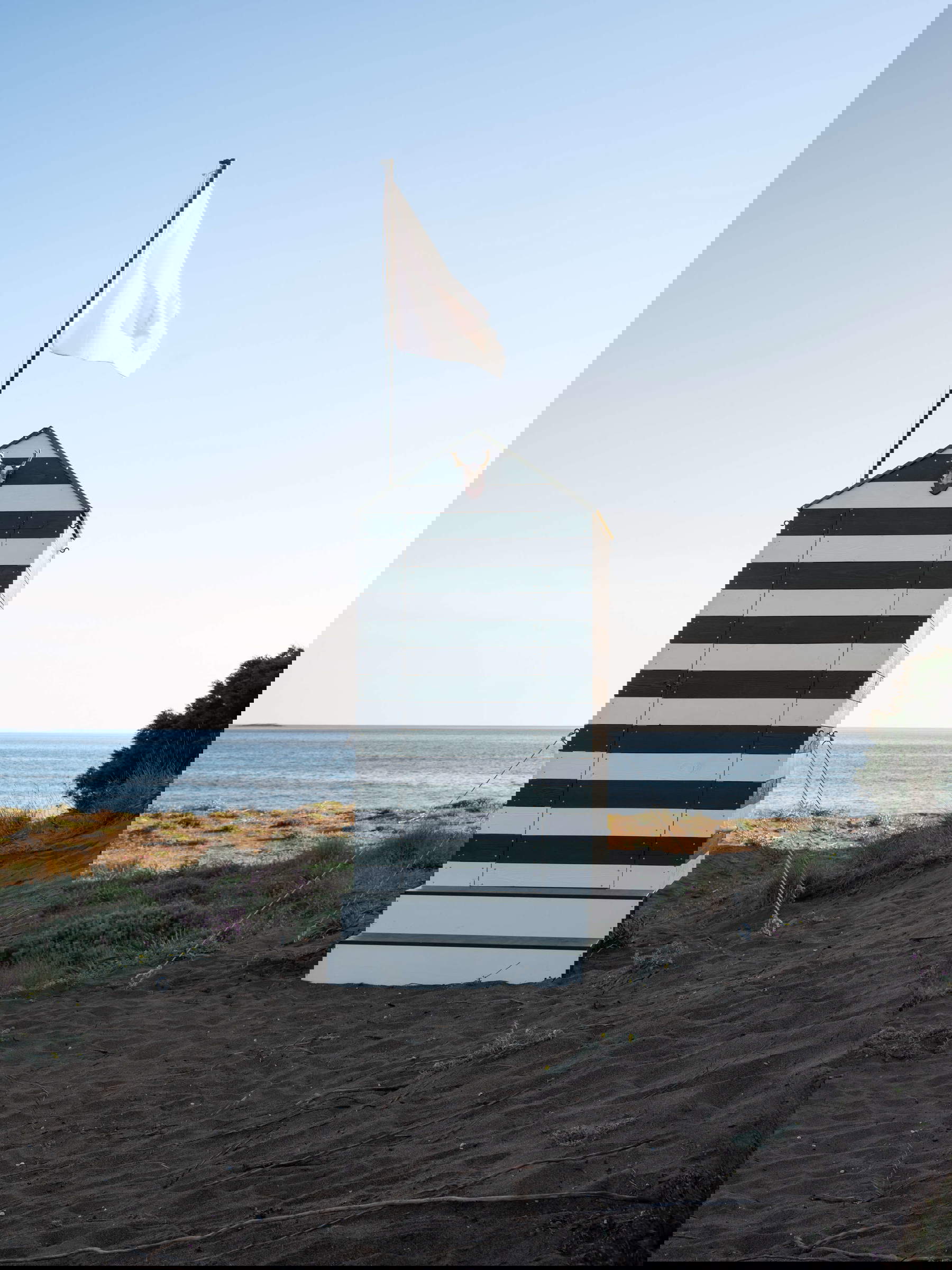
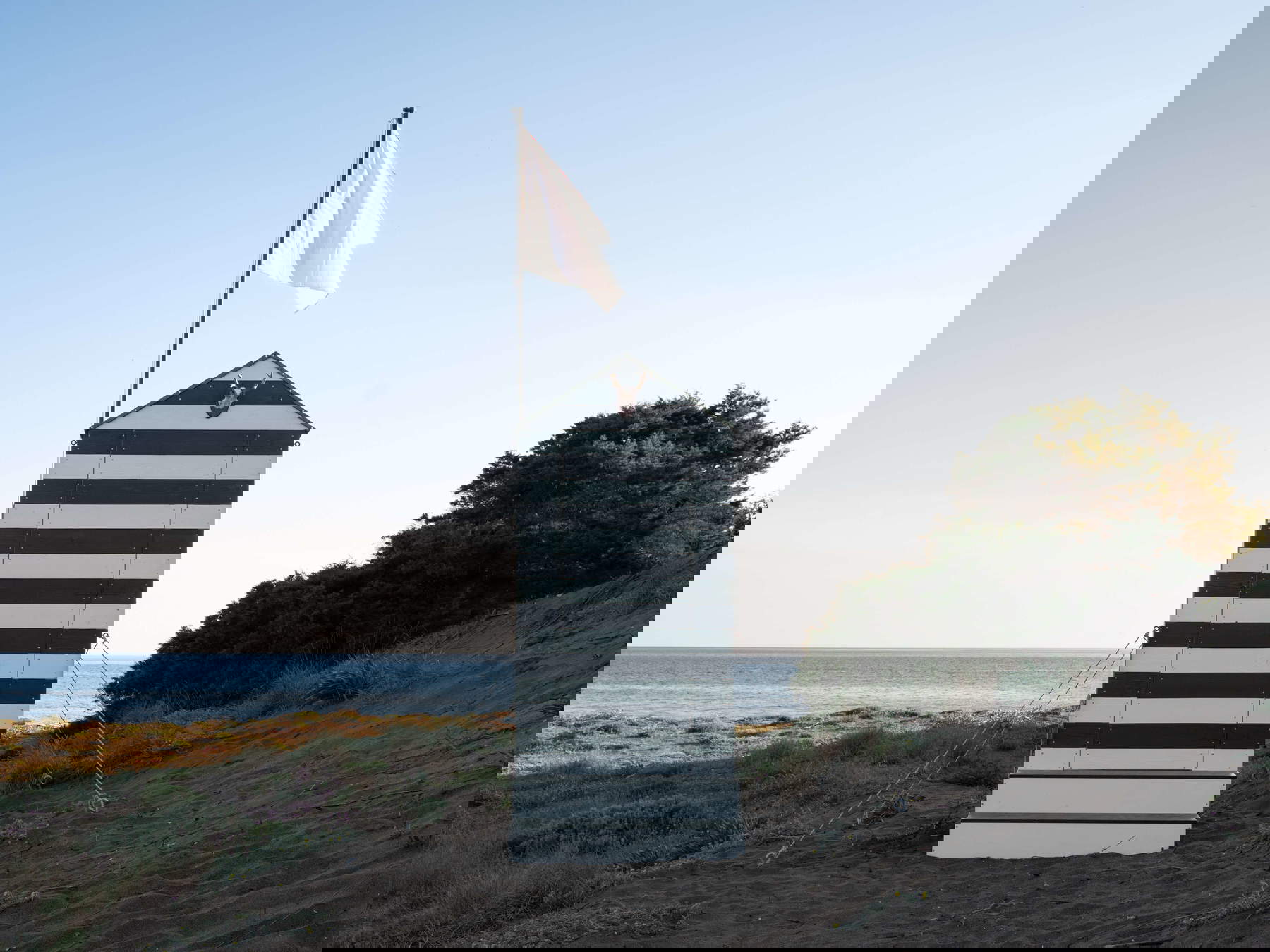
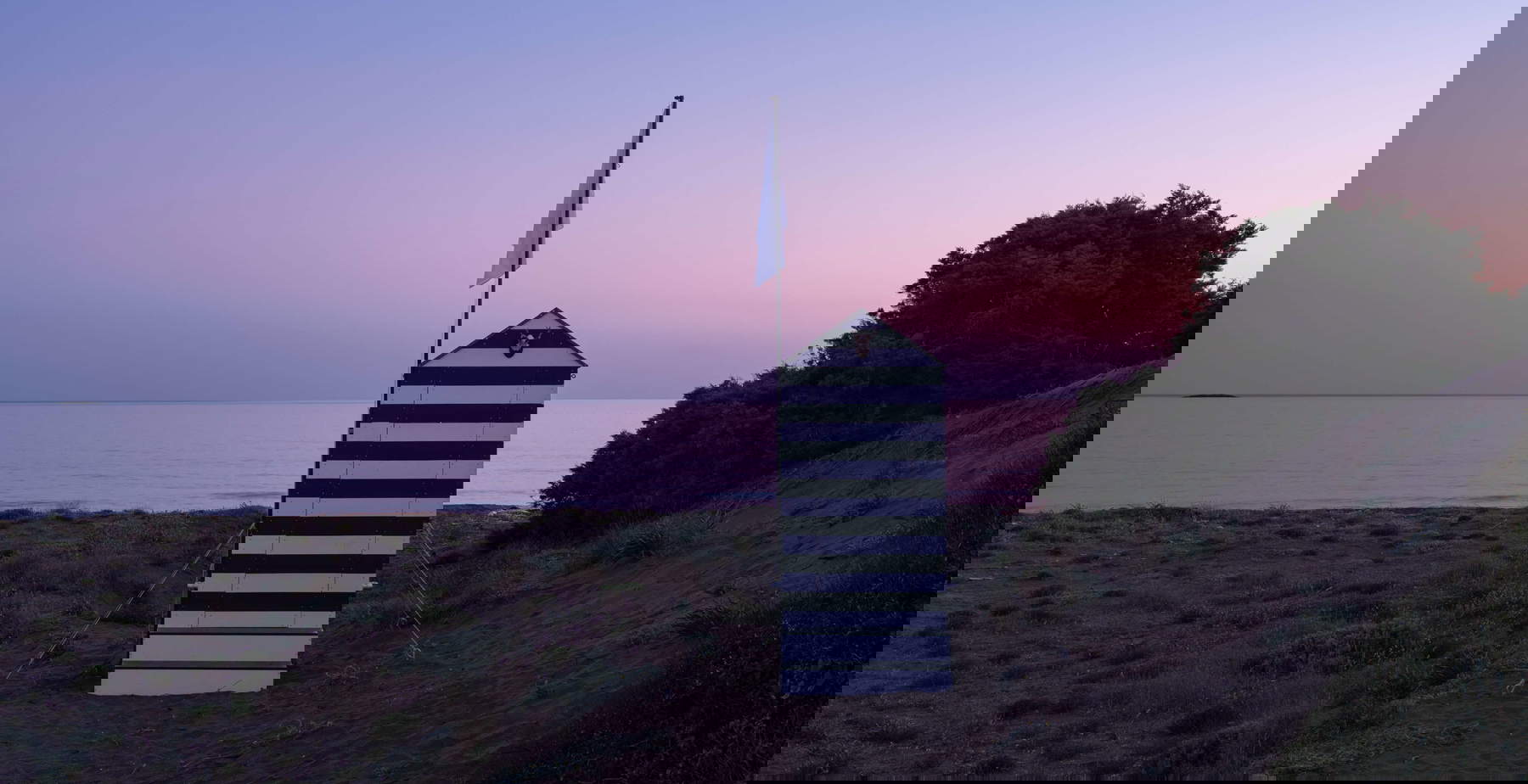
Osservatorio M1 is presented as an essential yet evocative structure: a small wooden construction placed on a dune, among bushes of helichrysum, baccherone and sea lilies, typical plants of these areas, near archaeological remains. The shape recalls that of bathing huts, reinterpreted, however, in an imaginative key, as if drawn by a child or an early 20th-century artist. The structure rests on two wheels and is decorated in stripes, a visual reminder that evokes historical architecture and pictorial suggestions.


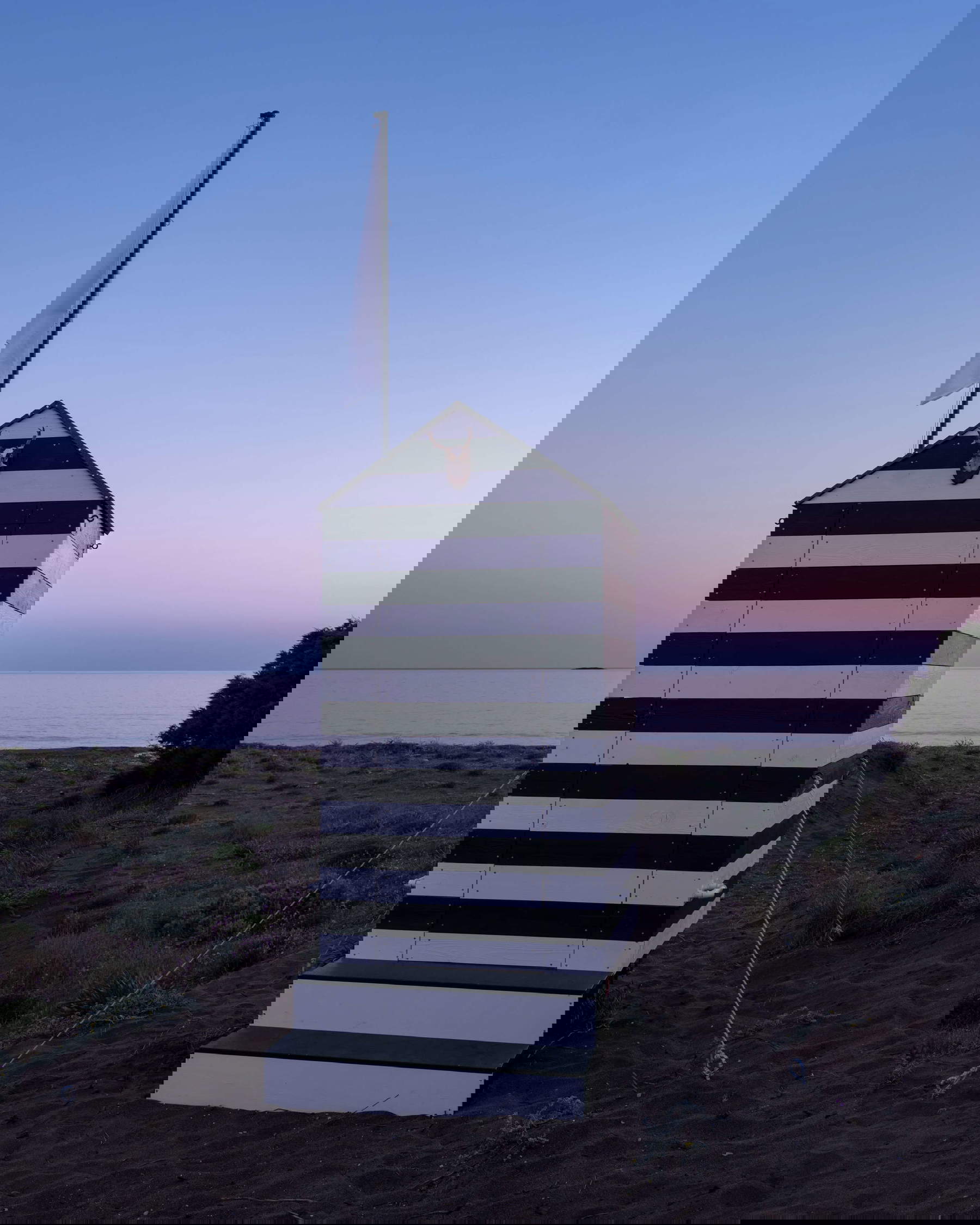
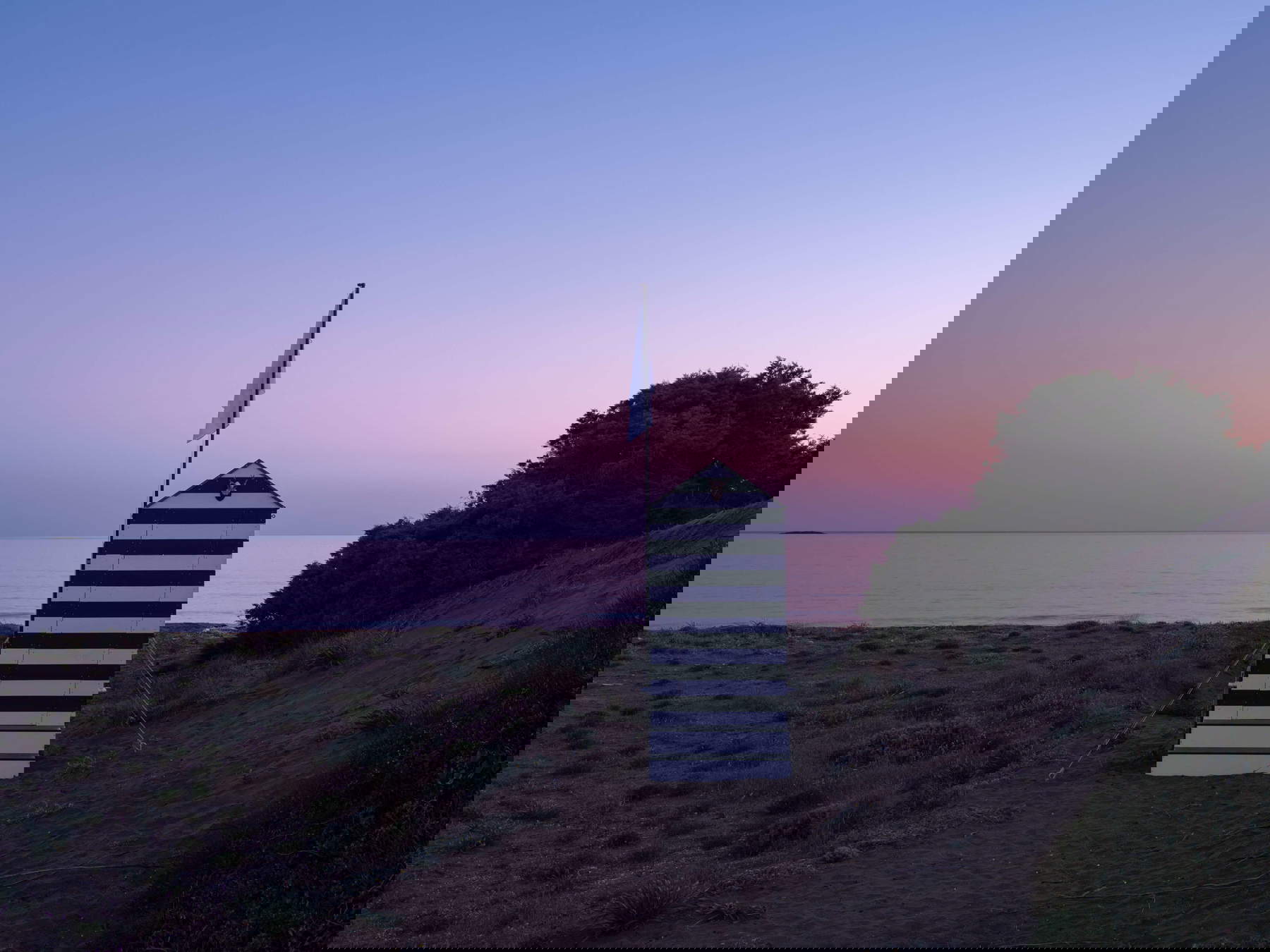
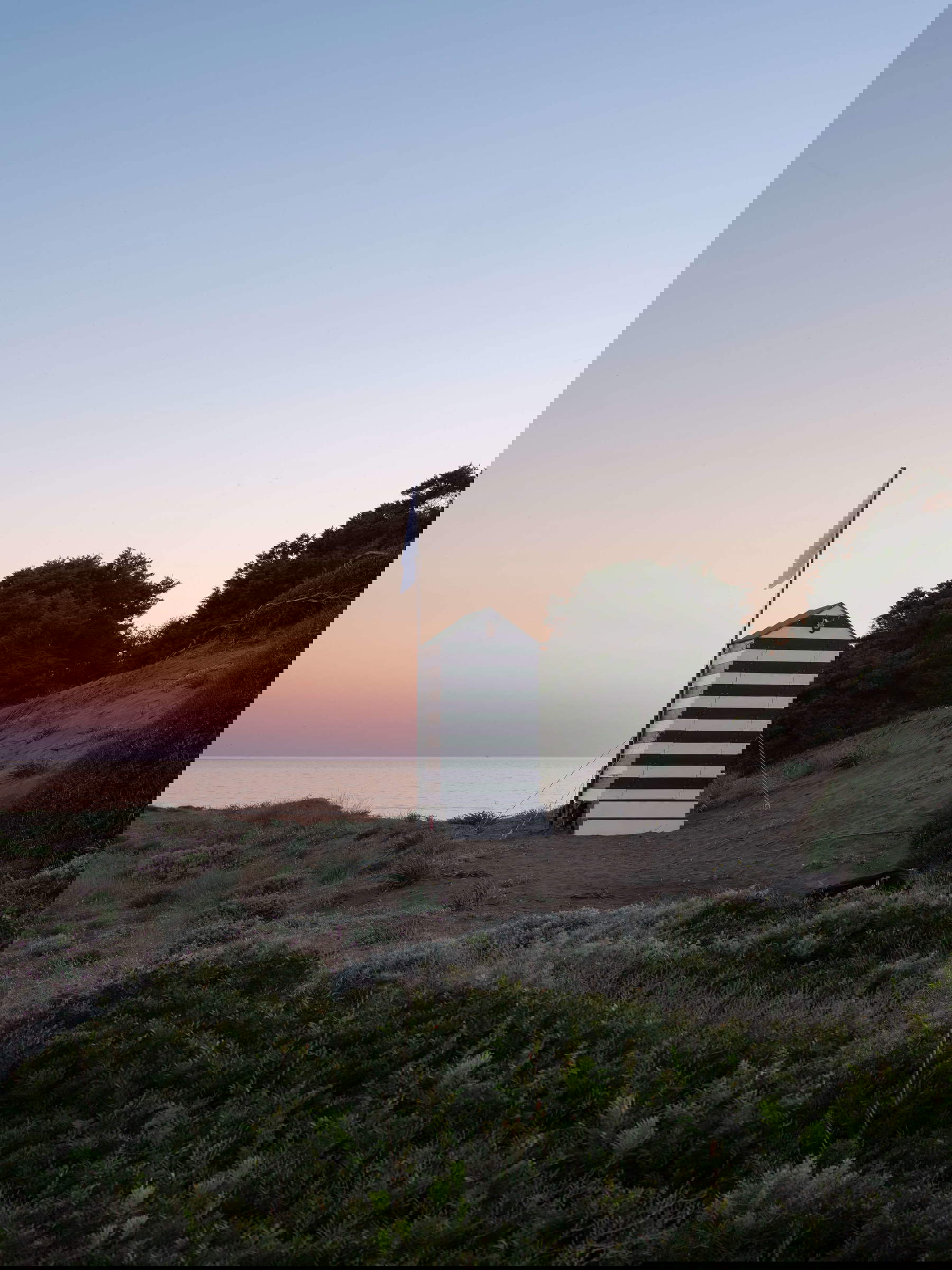
Next to the building stands a flagpole with a white flag, while a small telescope, similar to a viewfinder, emerges from the south-facing wall. The device is accessible by climbing two steps and allows the visitor to observe a single point: the horizon. The viewfinder, fixed, offers no possibility of deviation, imposing a concentrated and continuous gaze toward that thin line that separates sky and sea.
The project develops around a reflection on the theme of the horizon, understood as limit and possibility. The act of looking in that direction symbolically refers back to crucial moments in history, such as the voyage of Christopher Columbus, who on October 12, 1492 identified the prospect of a “New World” in the open sea. In this perspective, the horizon becomes a space of projection, a mental place in which to imagine future scenarios and possible alternatives.
Alongside this theme, the work introduces that of the architecture of the refuge, a fundamental element in human history and artistic tradition. The structure designed by Bertolo is configured as a minimal shelter, an ephemeral and mobile construction that becomes both physical space and mental device. A point of observation that invites us to slow down and reconsider the relationship between individual, landscape and time.
The project inaugurates Hypermaremma’s season with an intimate and reflective tone, consistent with Bertolo’s artistic practice, which for years has been investigating the relationship between image and reality, between perception and materiality. The work intends to offer a multiple gaze on a single point, suggesting a reflection on the way we observe the world, often conditioned by the need to focus on precise objectives. The intervention is also meant to be a tribute to a broader artistic tradition, recalling references ranging from the Romantic painting of Caspar David Friedrich to the metaphysical atmospheres of Giorgio De Chirico to the ideal architectures of Aldo Rossi. There is also no shortage of references to Carlo Carrà, Giovanni Anselmo and Alberto Garutti, as well as a possible dialogue with the historical avant-gardes, particularly Kazimir Malevič’s interpretation of Victory over the Sun. The literary dimension is equally present in the project, as suggested by the reference to Dino Buzzati and his novel The Desert of the Tartars, evoked as a key to understanding the sense of waiting and suspension that runs through the work.
The decision to make the installation itinerant responds to the desire to construct a path that is both real and symbolic. Moving between the three locations on the Maremma coast is not just a change of scenery, but becomes an integral part of the project, which aims to highlight less iconic places and create a dynamic relationship between the work and the territory.
Born in Milan in 1968, Luca Bertolo lives and works in Seravezza and has been teaching painting at the Academy of Fine Arts in Bologna since 2015. His research focuses on the potential of pictorial space, understood both as a physical dimension and as a conceptual sphere. The painting, in his practice, is transformed into an open device, able to accommodate multiple levels of interpretation and to dialogue with different spheres, from philosophy to literature. Throughout his career, he has exhibited in numerous public and private institutions, including the Mart in Rovereto, the Palazzo delle Esposizioni in Rome, the Italian Cultural Institute in Madrid, the Centre Européen d’Actions Artistiques Contemporaines in Strasbourg, the MAN in Nuoro, Arcade in London, Marc Foxx in Los Angeles, the Fondazione Prada in Milan, the GAM in Turin, the Galleria Nazionale in Rome, Palazzo Collicola in Spoleto, the Centro Pecci in Prato and the Macro in Rome.
With Osservatorio M1, Bertolo thus opens the new season of Hypermaremma by proposing a work that combines formal simplicity and conceptual depth. A minimal device that invites us to look far, but also to question the present, transforming the gesture of observation into a conscious and shared experience.
 |
| A metaphysical cabin on the sea. Luca Bertolo's talk for Hypermaremma. |
Warning: the translation into English of the original Italian article was created using automatic tools. We undertake to review all articles, but we do not guarantee the total absence of inaccuracies in the translation due to the program. You can find the original by clicking on the ITA button. If you find any mistake,please contact us.