





Through November 22, 2026, the Armenian Pavilion at the 61st Venice Biennale International Art Exhibition is hosting *The Studio*, a solo project by artist Zadik Zadikian (Yerevan, 1948) that transforms the exhibition space into a permanent creative workshop. The Armenian national contribution offers an experience in which the process of artistic production becomes a work of art in itself, bringing the public into direct contact with the birth, evolution, and transformation of forms. The project is presented by the Republic of Armenia with Svetlana Sahakyan as commissioner and Tony Shafrazi and Tina Chakarian as co-curators. The exhibition is hosted withinthe Venice Military Arsenal, a complex that for over nine centuries has represented the heart of Venetian naval power and which, for the occasion, is transformed into a space dedicated to reflection on artistic practice, on matter, and on the continuous redefinition of the artwork.
At the center of the initiative is the figure of Zadik Zadikian, an artist born in Yerevan in 1948, whose practice spans over fifty years. With The Studio, the artist offers a reflection on the meaning of the artist’s studio, removing it from its traditional private setting to make it an open, shared, and observable space. Throughout the entire duration of the Biennale, in fact, the public will witness the creation of the works firsthand, following a creative process that does not end with the opening but continues daily until the event’s conclusion.
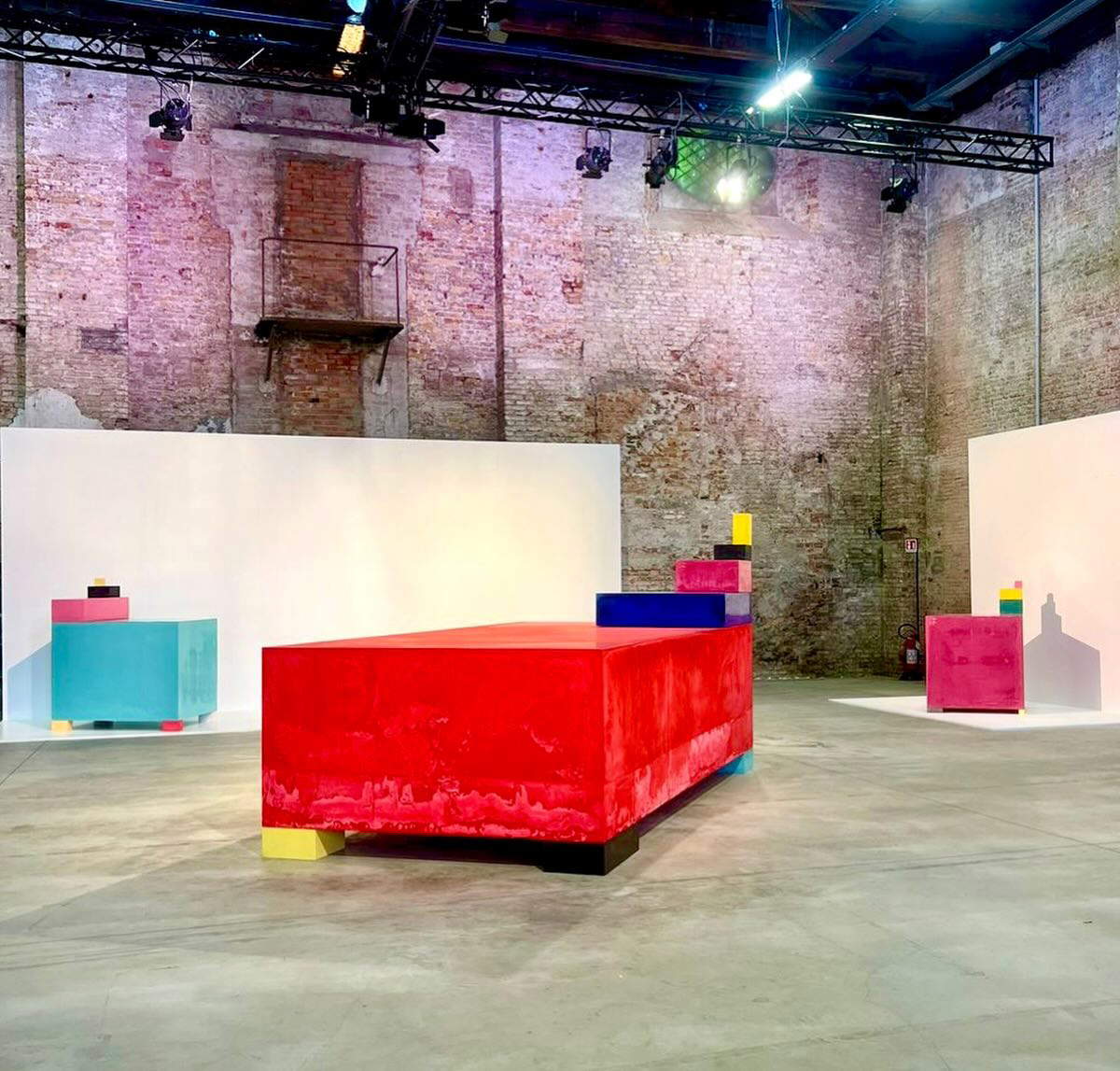
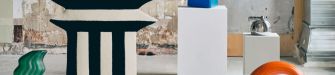
The exhibition unfolds as a fully operational studio. Inside the pavilion, Zadikian and his collaborators will create hundreds of plaster elements that will be progressively cast, assembled, disassembled, and reassembled. The main materials used will be plaster bricks of various sizes and colors, intended to form composite structures in constant transformation. Each installation arises from the juxtaposition and layering of individual modular units that remain mobile and independent. This characteristic allows for a continuous redefinition of the work and makes change an essential component of the project. Nothing is fixed definitively: every configuration can be modified, expanded, or reinterpreted over the course of months, underscoring the dynamic nature of artistic creation.
The choice of brick as a foundational element of Zadikian’s practice has its roots in an episode dating back to the late 1970s. At that time, the artist was collaborating with Tony Shafrazi, a central figure in the international contemporary art market and now co-curator of the pavilion. Their professional relationship began in Tehran, on the occasion of Zadikian’s first solo exhibition hosted at Shafrazi’s newly opened gallery, just a few weeks before the fall of the Shah and the onset of the profound political and social transformations that would affect Iran.
It was during that very stay that the young artist observed a group of workers engaged in the production of clay bricks at a plant located about three hundred kilometers from the Iranian capital. The men stacked the bricks with precision, leaving them to dry in the open air. That scene deeply struck Zadikian, who would later recall being fascinated by their ability to create forms resembling sculptures without any awareness that they were producing art.
From that moment on, the brick became a central element of his artistic vision. The repetition of the gesture, the serial nature of production, and the relationship between manual labor and collective construction are themes that have accompanied the artist’s entire career and now find a new synthesis in the Venetian project. The Studio also situates itself within an artistic tradition that engages with some of the key movements of modernism and post-minimalism. The use of repeated modules, the focus on the physical presence of the work, and the relationship between form and space evoke the work of artists such as Richard Serra, Sol LeWitt, and Carl Andre. However, the project is not limited to a formal reflection but extends the discourse to the social and relational dimensions of art.
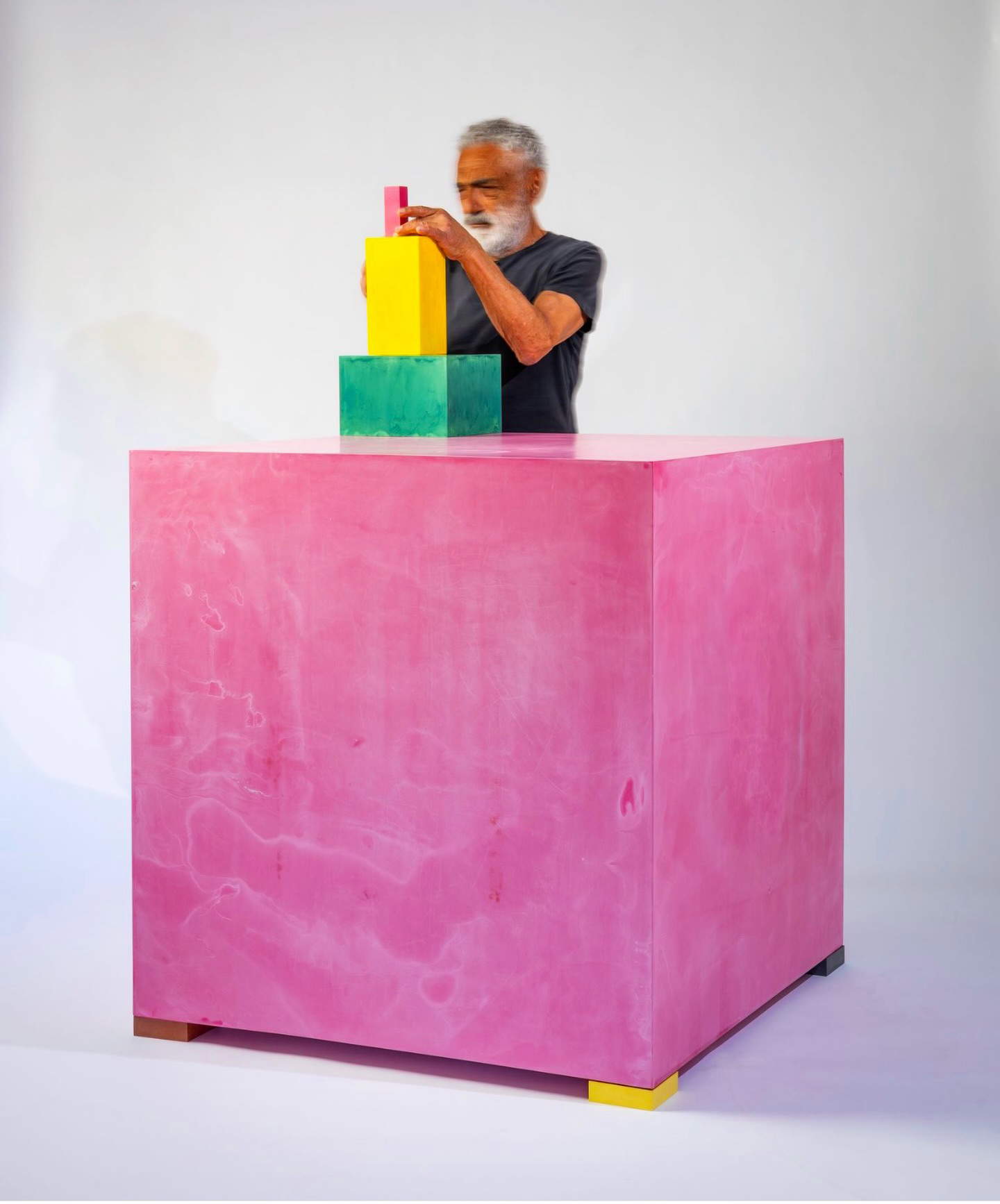
By making the production process visible, Zadikian challenges the idea of the studio as a space separate from the public and aims to redefine artistic practice as a shared experience. Visitors do not simply observe a finished work, but become witnesses to an ongoing transformation that reveals the labor, time, and choices underlying the creation. In this sense, The Studio also seeks to evoke certain experiences linked to Pop Art and the famous factories of the 1960s and 1970s, particularly the one founded by Andy Warhol. However, while artistic production in those contexts often took on a spectacular and media-driven dimension, Zadikian’s project focuses on manual labor, the continuity of the work, and the slow construction of forms.
With The Studio, the Pavilion of the Republic of Armenia thus offers a reflection on artistic practice that transcends the traditional distinction between work and process. The installation presents itself as a constantly evolving organism, destined to change day by day through the work of the artist and his assistants. The public will be invited to engage not only with the objects produced, but with their very process of becoming.
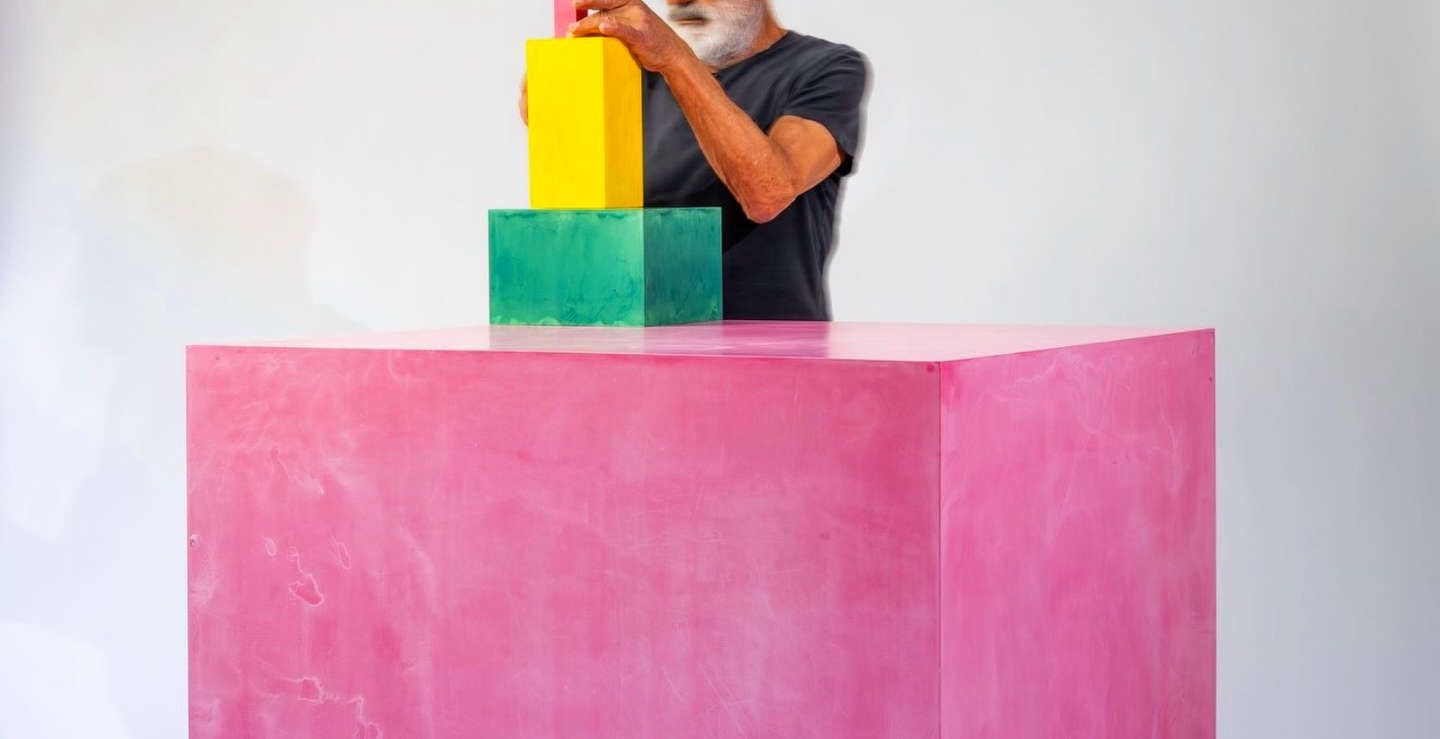 |
| At the Biennale, artist Zadik Zadikian works right in front of the audience at the Armenian Pavilion |

Warning: the translation into English of the original Italian article was created using automatic tools. We undertake to review all articles, but we do not guarantee the total absence of inaccuracies in the translation due to the program. You can find the original by clicking on the ITA button. If you find any mistake,please contact us.




















 IT
IT FR
FR DE
DE ES
ES CN
CN


