





Radically redefine the very concept of the exhibition pavilion, moving it from physical space to the domestic dimension. In essence: the best pavilion at the Venice Biennale is your home. This is the proposal of In Home Pavilion, a project by the Luca Rossi collective that, after its first activation during the 2024 Venice Biennale, returns also for the 2026 Biennale to question the model of large international exhibitions, proposing an alternative that puts the viewer and his or her everyday space at the center.
Underlying the initiative is a reflection on the contemporary role of the museum, understood no longer as a physical place but as a capacity. A capacity that is expressed in the possibility of developing a critical and conscious look at the world, training new ways of observation and interpretation (“training new eyes,” according to Luca Rossi’s slogan). In this perspective, then, the museum can exist anywhere, finding in the home of each of us one of its most radical and accessible forms.
The project fits into a global context marked by geopolitical instability, energy crises and growing ecological urgency. Against this backdrop, In Home Pavilion proposes a reflection on the environmental burden of major cultural events. According to some estimates, each edition of the Venice Biennale would produce over 100,000 tons of CO2, equivalent to the use of thousands of cars. Specifically, the last edition, according to data released by the Biennale itself, totaled 154,961.18 tons of CO2 emissions. Consider that an average car driving about 10,000 km a year produces 2 tons of CO2. A figure that prompts a rethinking not only of individual participations, but of the entire exhibition system.
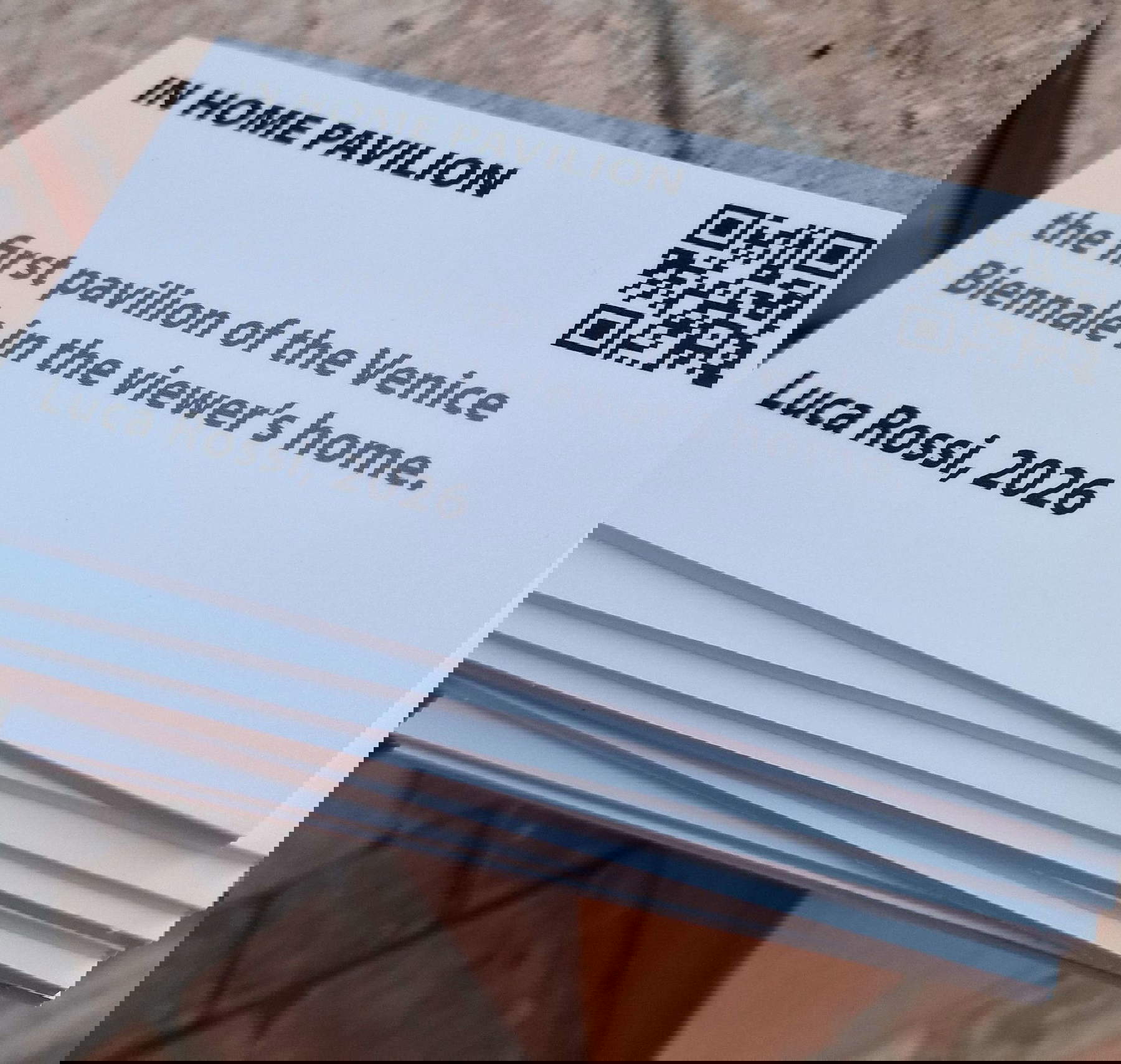
The idea developed by the project consists in identifying a pavilion that already exists but is invisible because it has not yet been activated: the viewer’s home space. Access is through a digital ticket in PDF format that guides the user through a series of actions and activations within his or her home, temporarily transformed into an exhibition environment.
Through this device, the public enters into a relationship with Luca Rossi’s Hidden Works, flanked by a selection of thirty of the most relevant artists on the modern and contemporary scene. The experience is configured as diffuse, personal and low-impact, disengaged from the traditional logic of the museum visit.
The project thus proposes a redefinition of the relationship between art and the public, eliminating the physical and institutional distance that often characterizes large exhibitions. The viewer becomes an active part of the process, called upon to interact directly with the works and build his or her own interpretive path. In this vision, contemporary art assumes a central role as a tool for expanding perception. No longer just an experience to be enjoyed in dedicated contexts, but a practice capable of inserting itself into everyday life, changing the way space is observed and experienced.
In Home Pavilion is thus configured as a proposal that combines theoretical reflection and practical experimentation, raising questions about the future of cultural institutions and the ways of accessing art. At a time in history when sustainability and accessibility are central issues, the project suggests an alternative model that reduces environmental impact and broadens the possibilities for participation.
The idea of the “domestic pavilion” thus becomes a critical device, capable of questioning established conventions and opening new perspectives on the role of art in contemporary society. It is not simply a matter of transposing the exhibition experience into a private space, but of radically rethinking it, transforming every home into a potential site of cultural production. Here then, the project fits into the broader debate on the transformation of art institutions and their relationship with the public, proposing a vision in which art is no longer confined to specific spaces, but becomes an integral part of everyday experience.
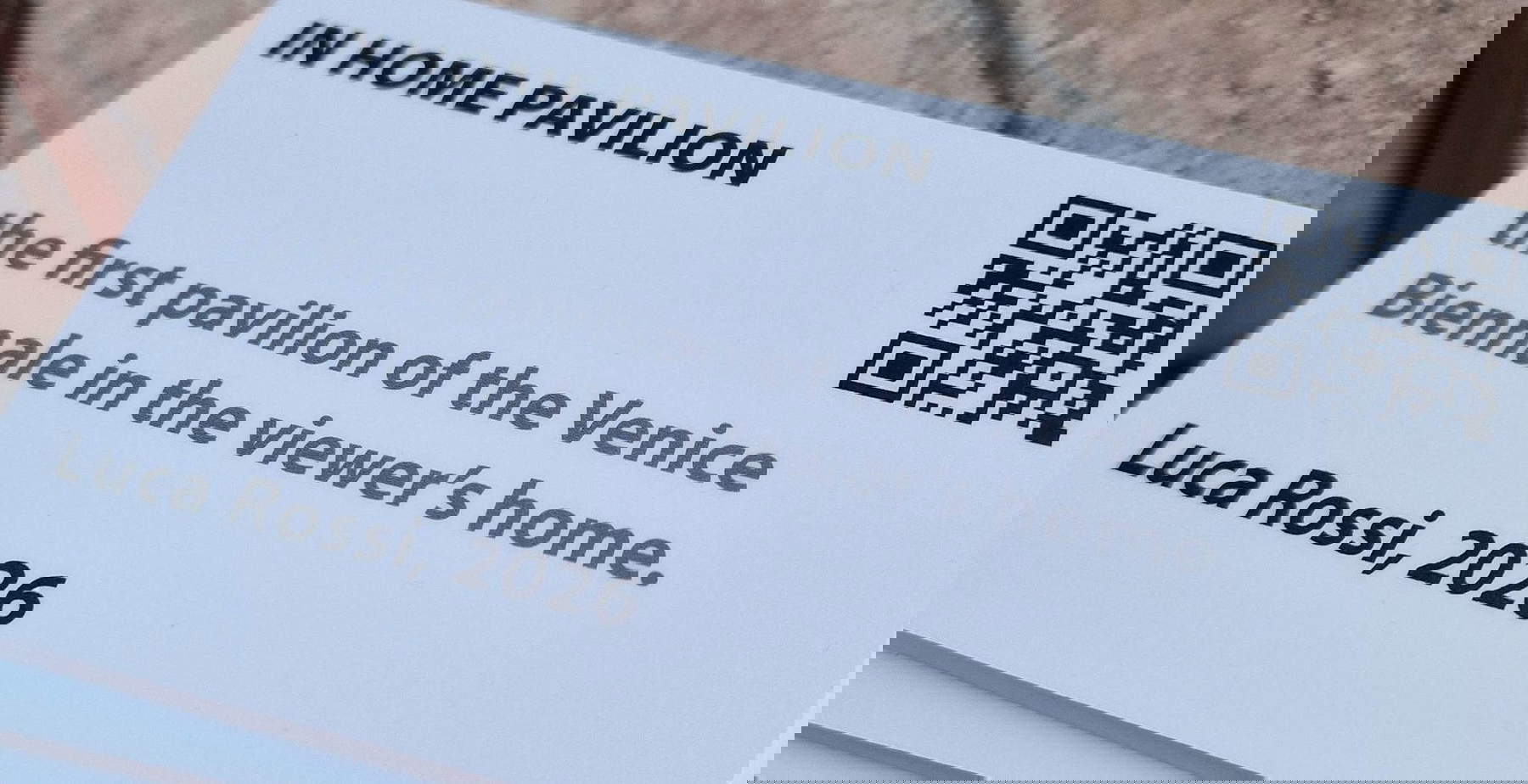 |
| The best pavilion at the Venice Biennale? It's your house! Luca Rossi's proposal |

Warning: the translation into English of the original Italian article was created using automatic tools. We undertake to review all articles, but we do not guarantee the total absence of inaccuracies in the translation due to the program. You can find the original by clicking on the ITA button. If you find any mistake,please contact us.




















 IT
IT FR
FR DE
DE ES
ES CN
CN


