




by Ilaria Baratta 10/06/2026



Categories: Exhibition reviews / Disclaimer
The Indonesia Pavilion, a hidden gem and true revelation of this Venice Biennale 2026, proposes an alternative journey among engravings, memory, cultural exchanges and forgotten narratives, transforming the art print into a tool for re-reading global history. Ilaria Baratta's review.

Don’t take it personally or, if you do, take offense at the somewhat strong comparison you are about to read. I think people are sometimes like those insects attracted by light (or sweat, given the season): they head in true swarms to what they hear most about, all the better if what is being talked about are naked bodies of women starring in performances or new-parent experiences to witness with a selfie. Far be it from me to accuse pure curiosity, but I hope that the visit to the Venice Biennale 2026 will not stop there, and will go beyond that. Beyond the “must-see” attractions that offer the opportunity to be able to say “I saw it too.” So do not stop at the Arsenale and the Giardini, because even outside these two essential places for the Biennale audience there are other interesting pavilions, which, however, are skipped over because of lack of time or desire (I am aware that seeing everything in two-three days is almost impossible or otherwise comparable to a marathon) or especially because they do not make enough noise.
One of these is the Indonesia Pavilion, hosted for this Art Biennale 2026 in the International School of Graphic Design. The Pavilion is notable for matching the exhibition site with the place of production of the works on display. In fact, the Indonesian artists, in artistic residency for two months, worked directly at the School of Graphics, producing their works here and experiencing a daily confrontation with the Venetian urban reality and its traditions. Rather than simply occupying a temporary exhibition space, the pavilion made staying and working in the city a central element of the project. For this reason, it is probably the pavilion that has succeeded best in fostering authentic interaction between the artists and the Venetian cultural and social fabric, transforming artistic production into an opportunity for exchange, dialogue and encounter.


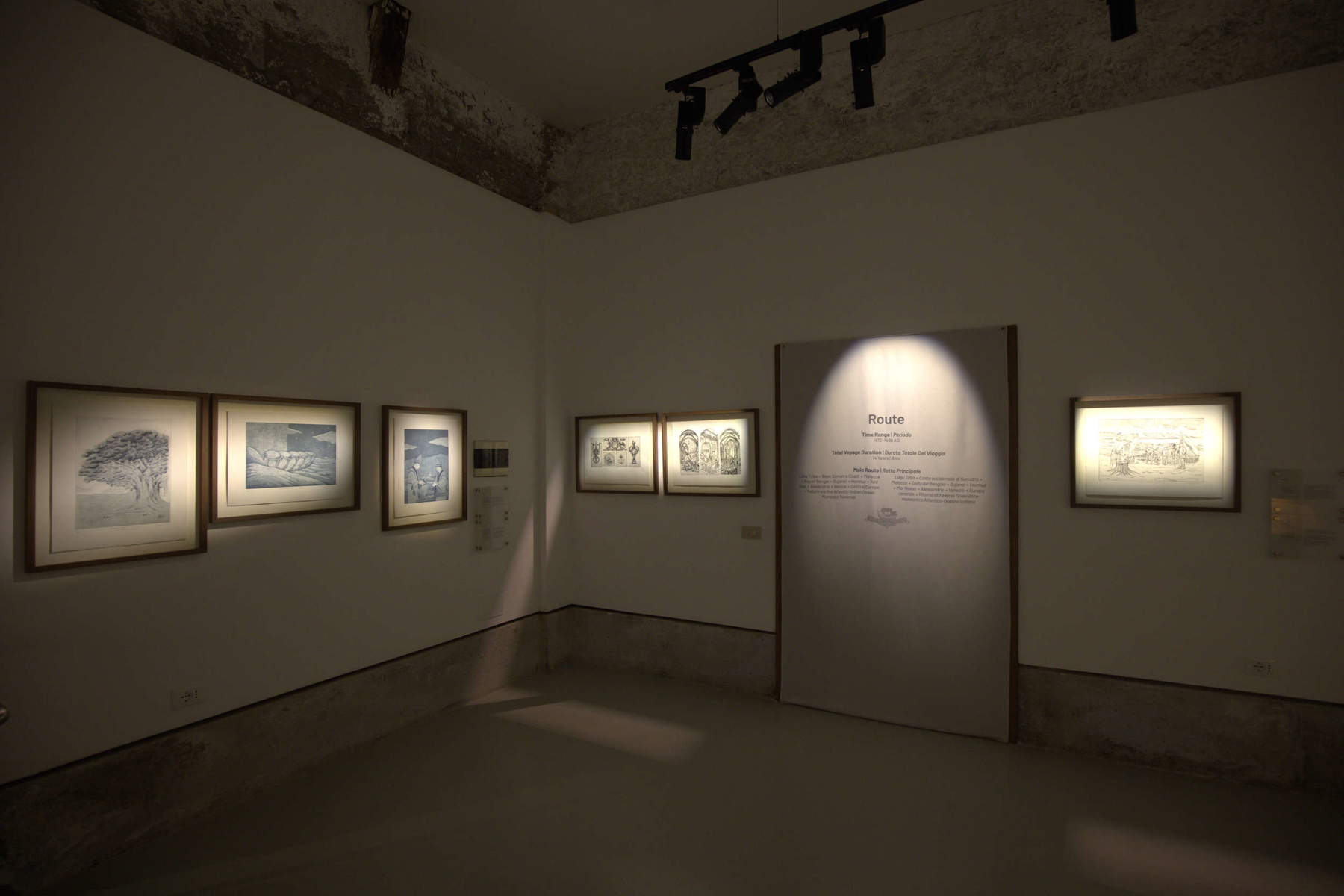
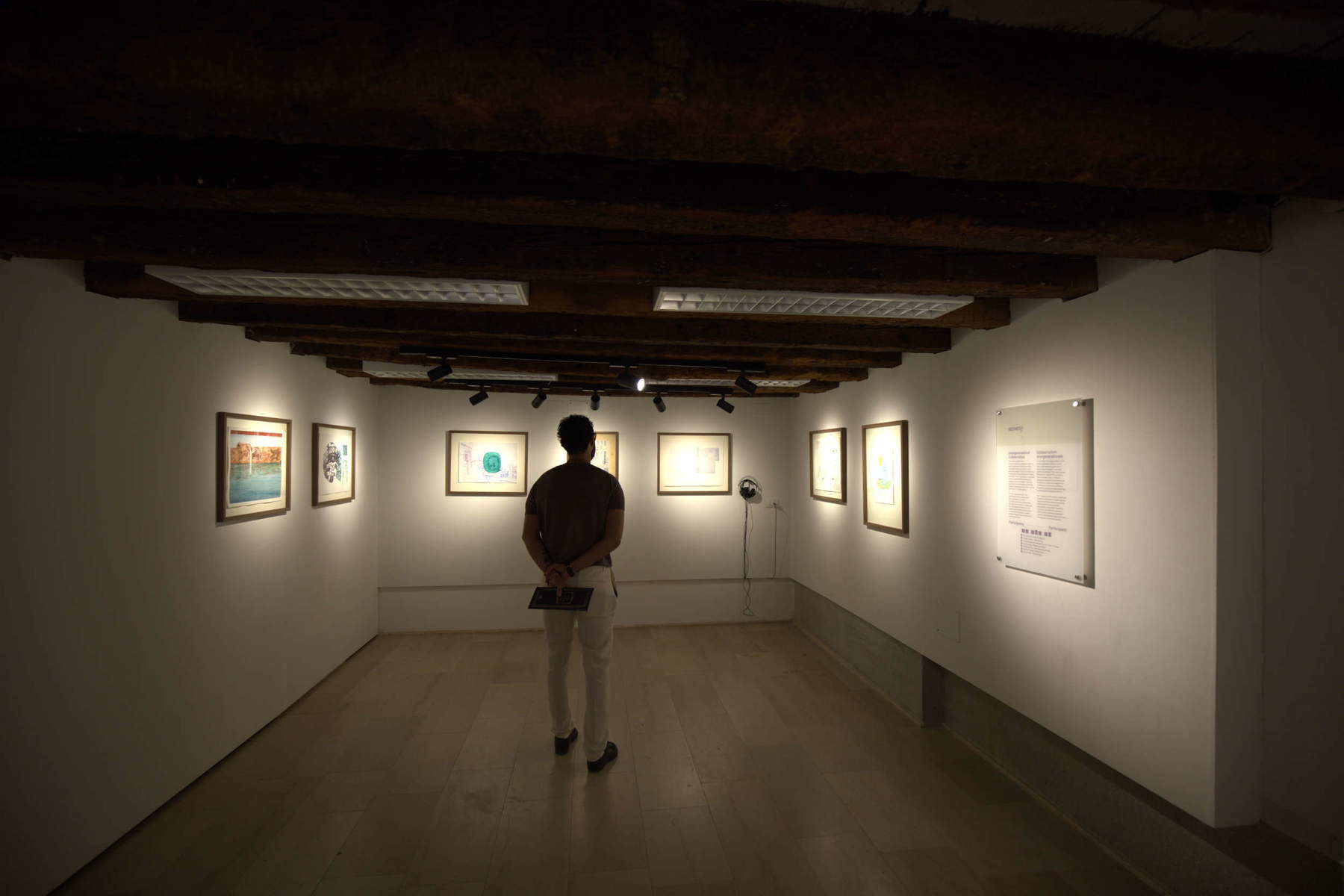
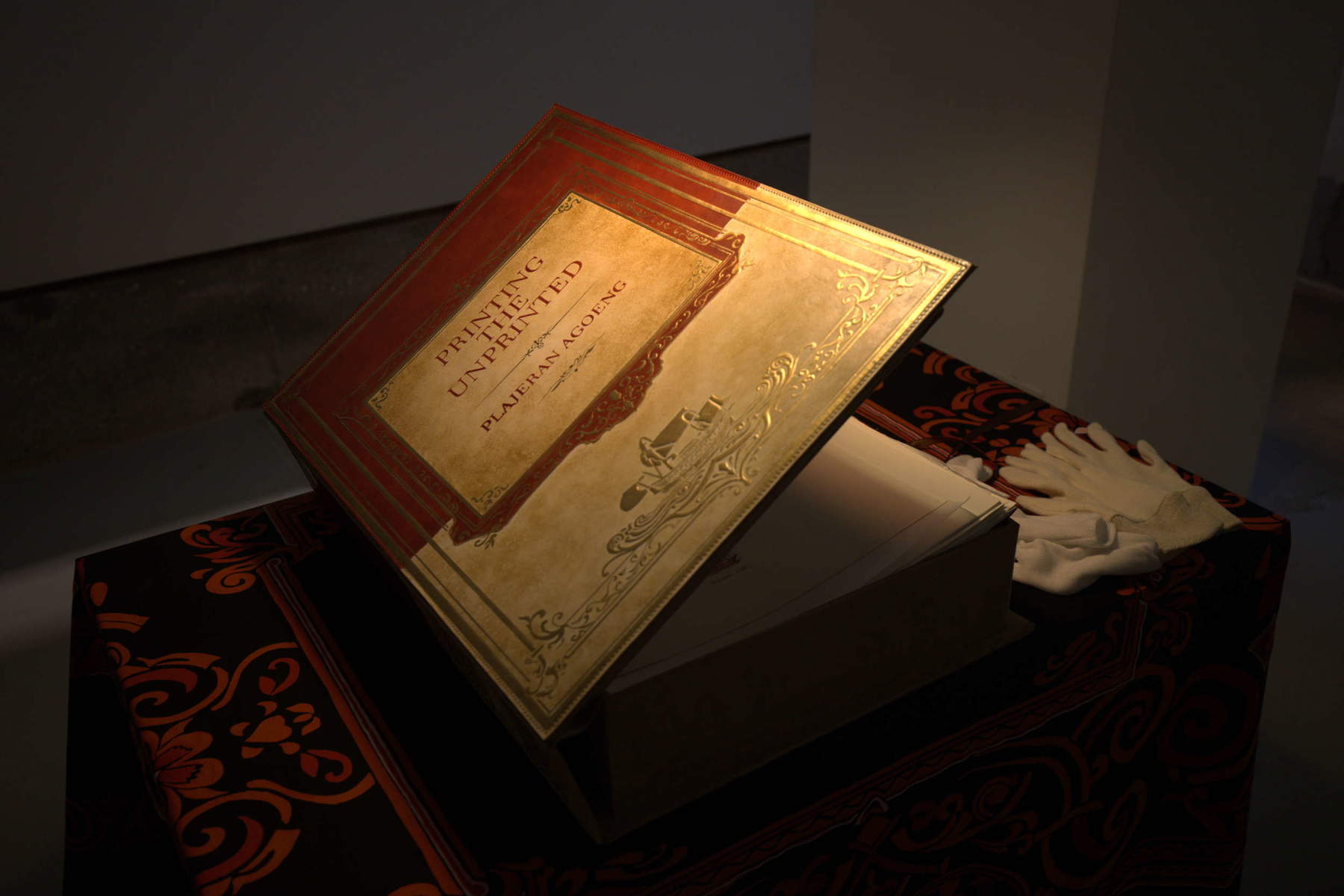
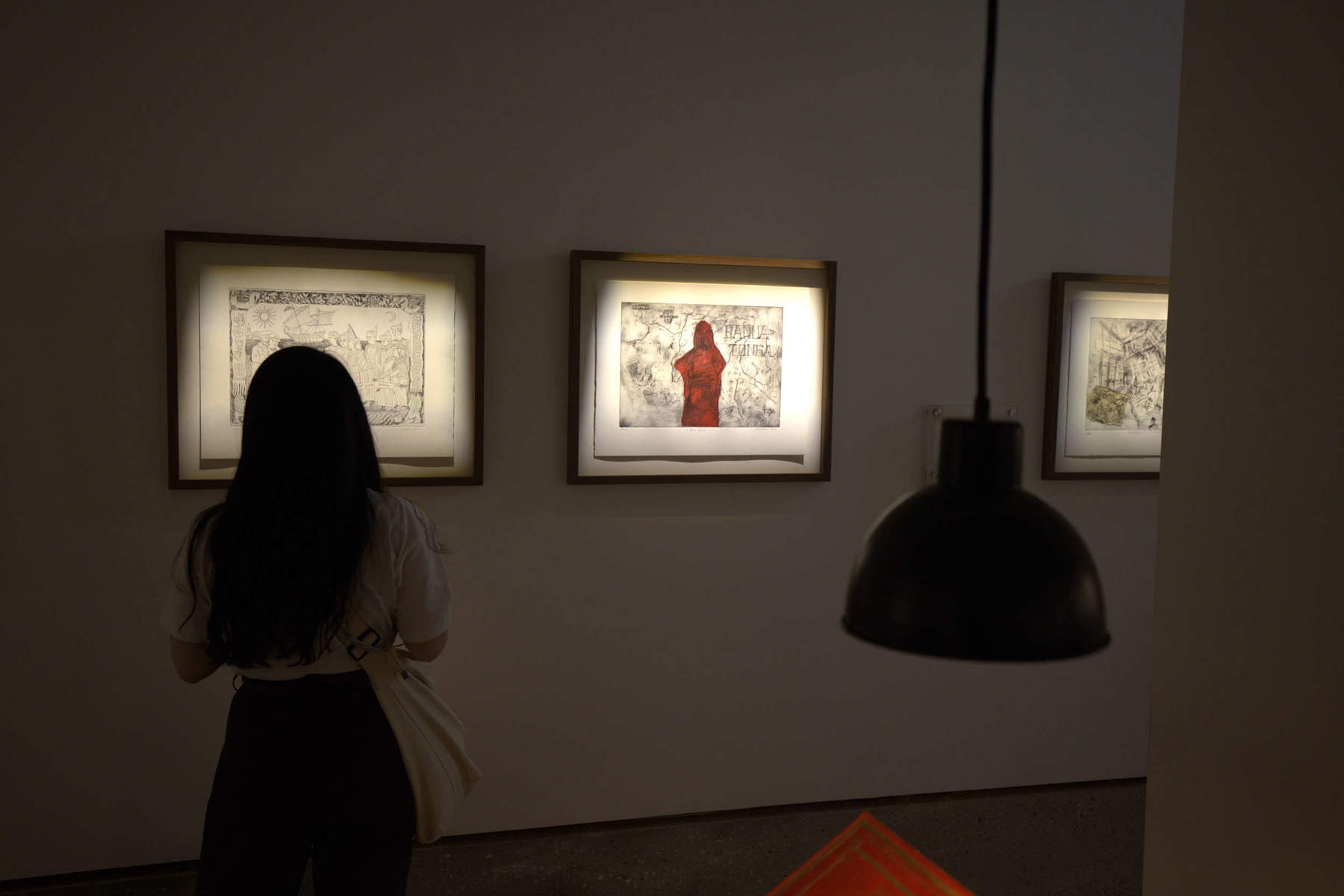
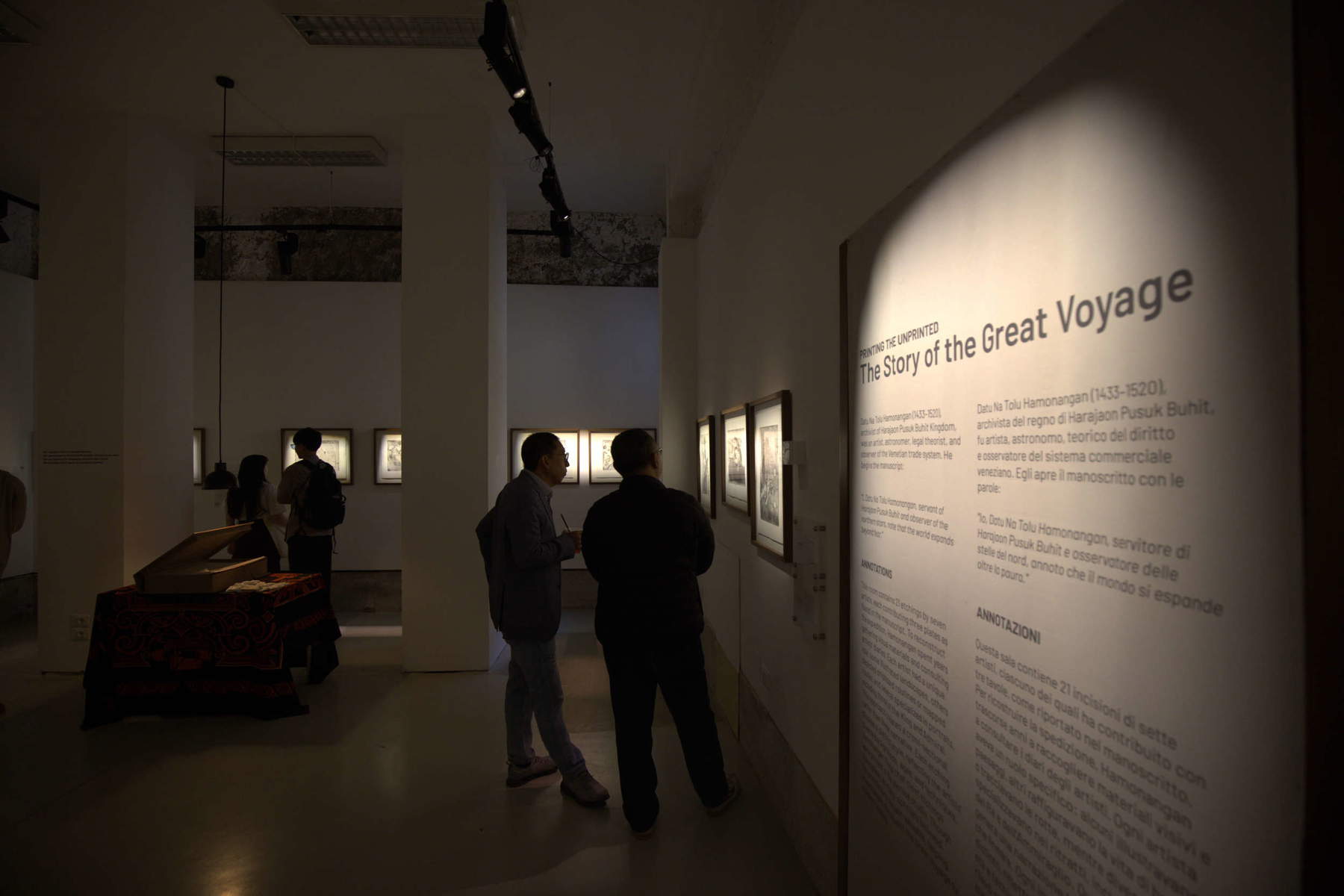
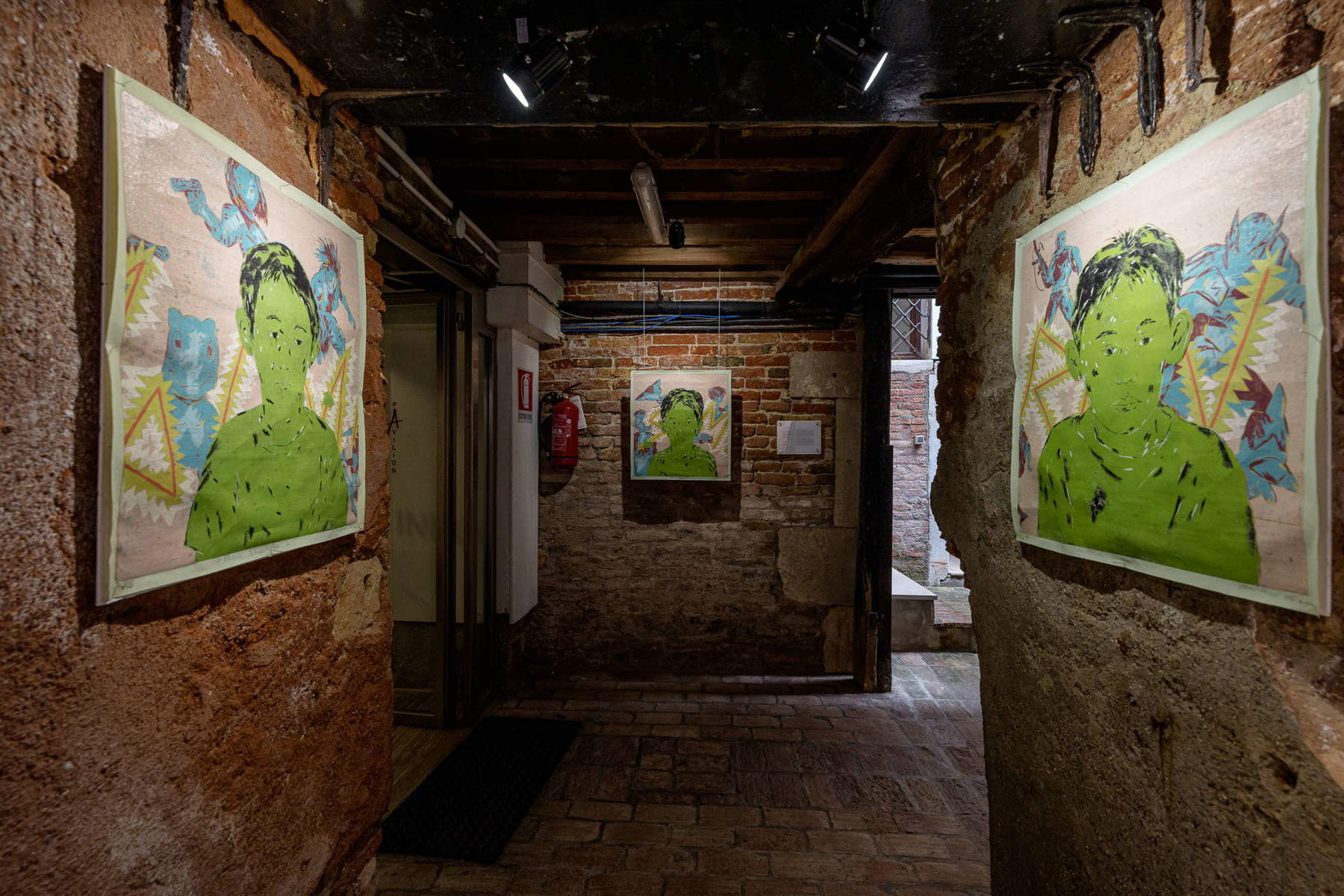
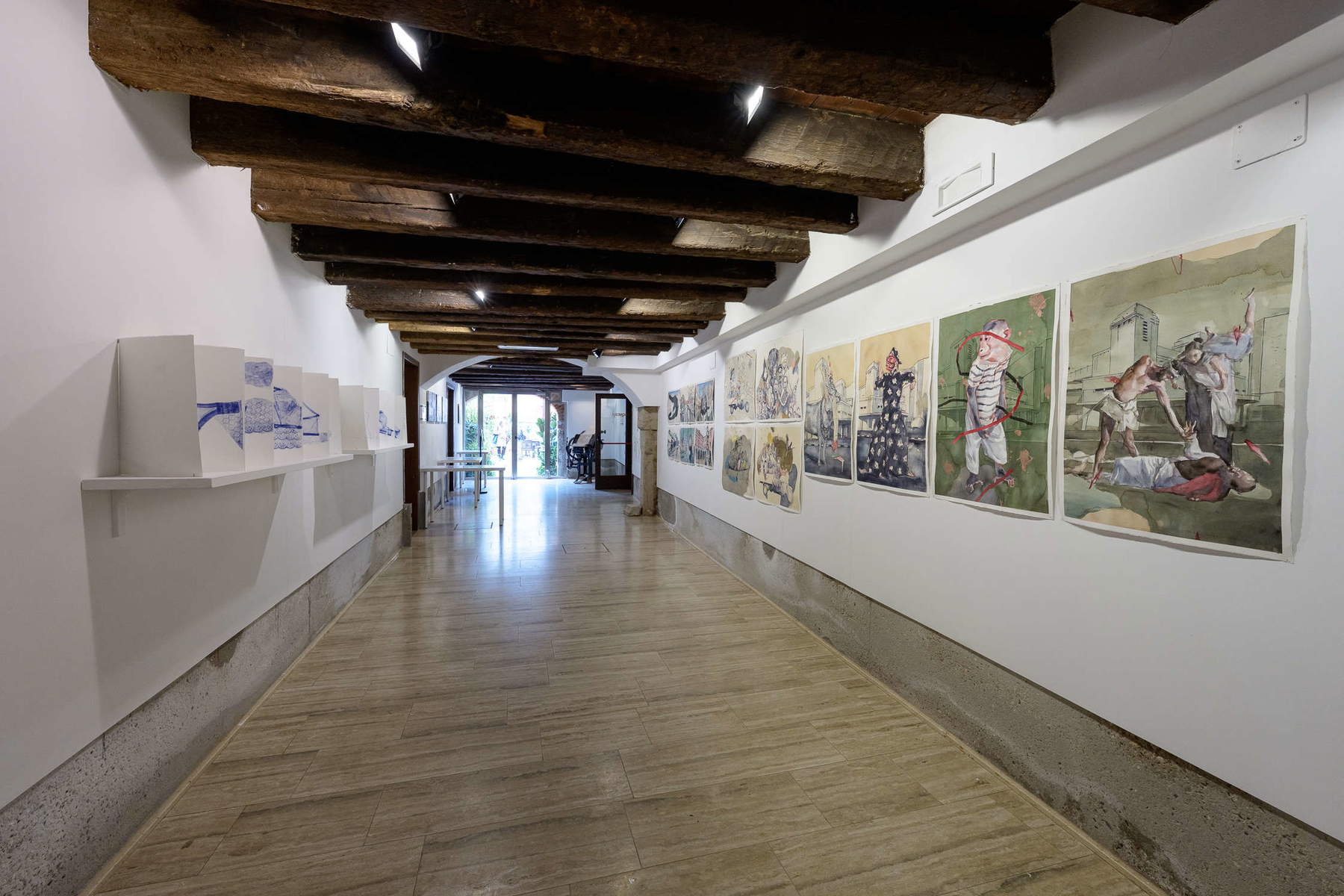
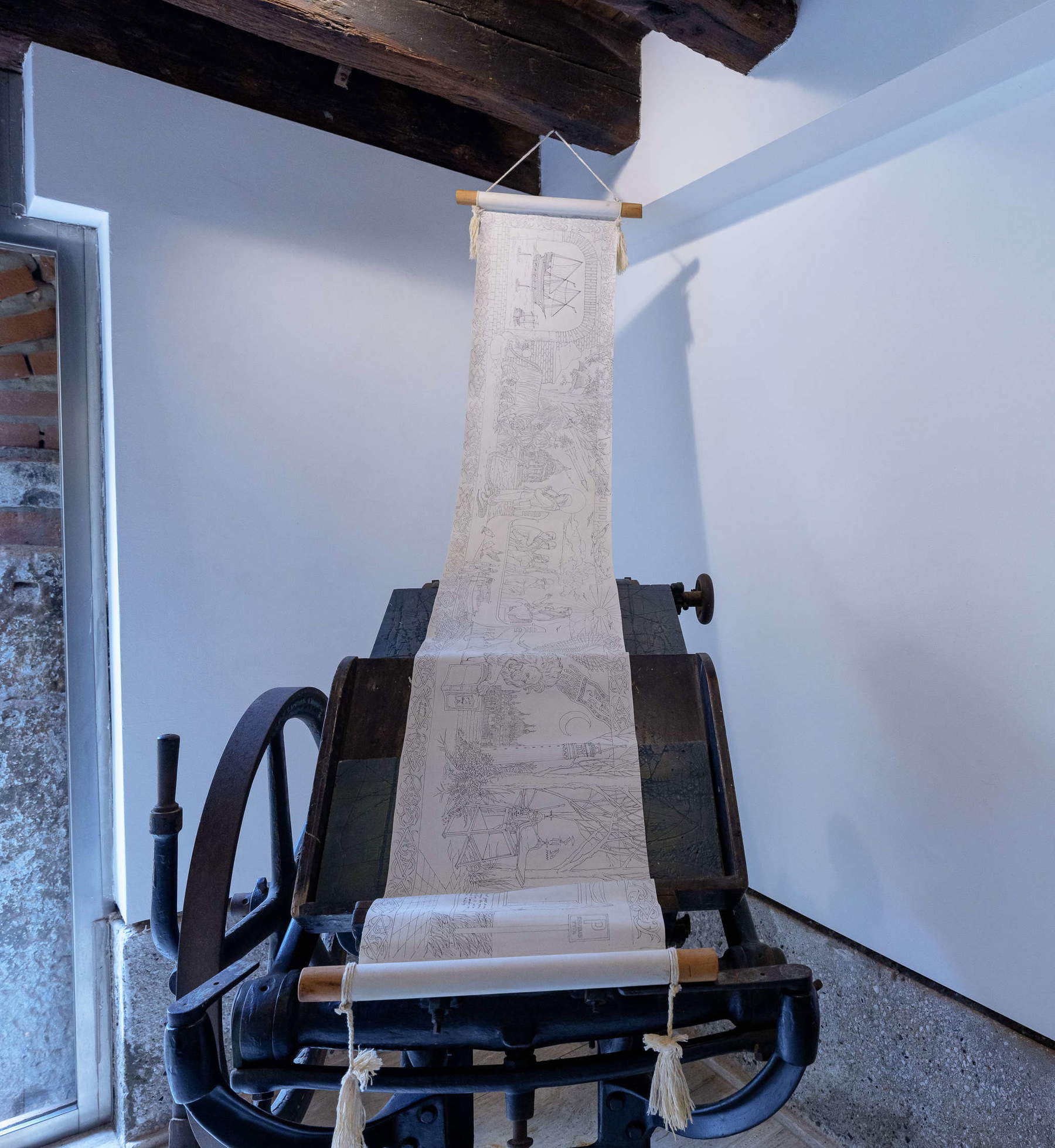
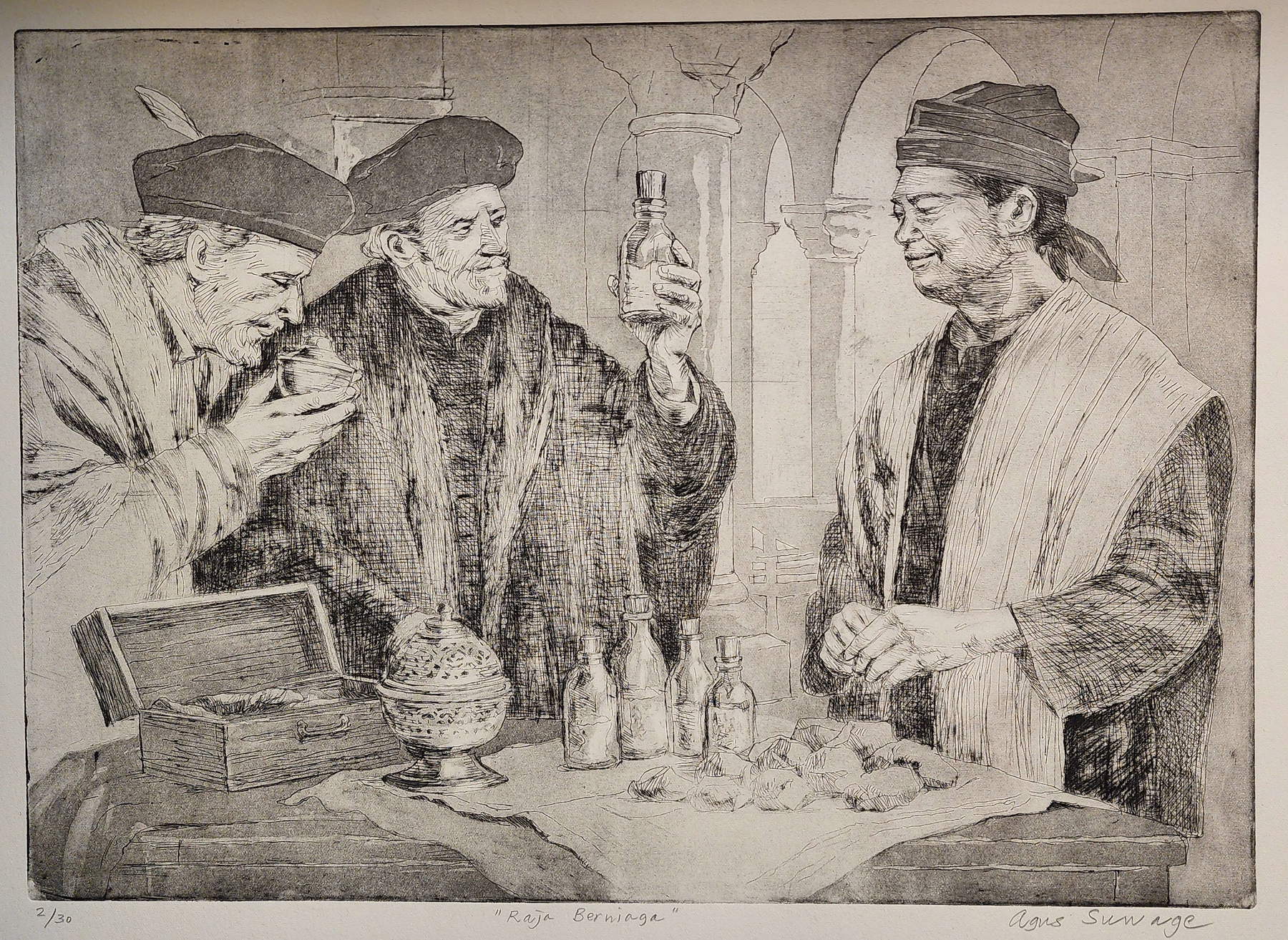
The centerpiece of the Pavilion is an interior room entirely dedicated to the narrative of a great journey: a story in images through twenty-one etchings made by seven Indonesian artists of different generations (Agus Suwage, Syarizal Pahlevi, Nurdian Ichsan, R.E. Hartanto, Theresia Agustina Sitompul, Mariam Sofrina, and Rusyan Yasin) who came to Venice in artist residency specifically for this project, in collaboration with the Indonesian Ministry of Culture. They each produced three works, thus contributing to an organic body of work, a collective narrative, and created them in the printing workshops of the School of Graphic Design supported by the School’s technical staff. The Great Narrative Journey is an imaginary fourteen-year journey set in the fifteenth century, specifically from 1472 to 1486, which takes its inspiration from the fictitious discovery of an ancient manuscript (displayed in the center of the room) attributed to an imaginary archivist named Datu Na Tolu Hamonangan of Harajaon Pusuk Buit, a kingdom in Sumatra known for its advances in maritime technology, astronomy, trade, governance of a society, and art. In this leather- or wood-bound manuscript containing engravings, drawings, sketches, and text, the archivist documented a great maritime expedition that took off from Lake Toba and landed in Venice. The twenty-one graphic works are thus fragments of the expedition, depicting landscapes, characters, animals, interiors and situations, as if the seven Indonesian artists involved were “reprinting” the pages of that ancient manuscript, opening up new interpretations on the origin of global knowledge. As if the pages of that rediscovered manuscript hold a different story, inviting reflection on how History has always been told, on which part of the world History has always focused. This is why the Indonesia Pavilion project was titled, according to the curatorial choice of Aminudin TH Siregar, Printing the Un printed (literally translatable to “Printing the Unprinted”), based precisely on the idea of reprinting (as mentioned above, concretely in the School’s print shop) a kind of untold History. In this sense, art printing,engraving, is not just the tool or technique of making graphic works, but takes on a deeper meaning, becoming a process through which a hidden narrative of the past is revealed, leading us to reflect on the past as something that is continuously rewritten, thanks in this case to the manuscript and its “reprinted” works. There are three main cores around which the project was built: reflection on the processes of disappearance, marginalized or censored narratives rediscovered through artistic practice, and reversal of discovery for a rereading of global history.
For example, the story is told of how Venetian merchants marveled at camphor and benzoin from Sumatra; how, in Florence, Renaissance scholars analyzed Ptolemaic maps by comparing them with Indonesian nautical charts, in which Batak navigators reinterpreted Europe as a peninsula on the edge of a borderless world, suggesting the existence of a single interconnected globe. There are also stories of how people in Malacca mixed their languages or how Batak artisans were intent in a workshop near St. Mark’s Basilica in Venice studying stained glass, ceramic technology and mechanical clocks.
The artists created their works with sustainable printing techniques, using state-of-the-art soybean oil-based inks that can be washed with soap and water and are designed to reduce the&
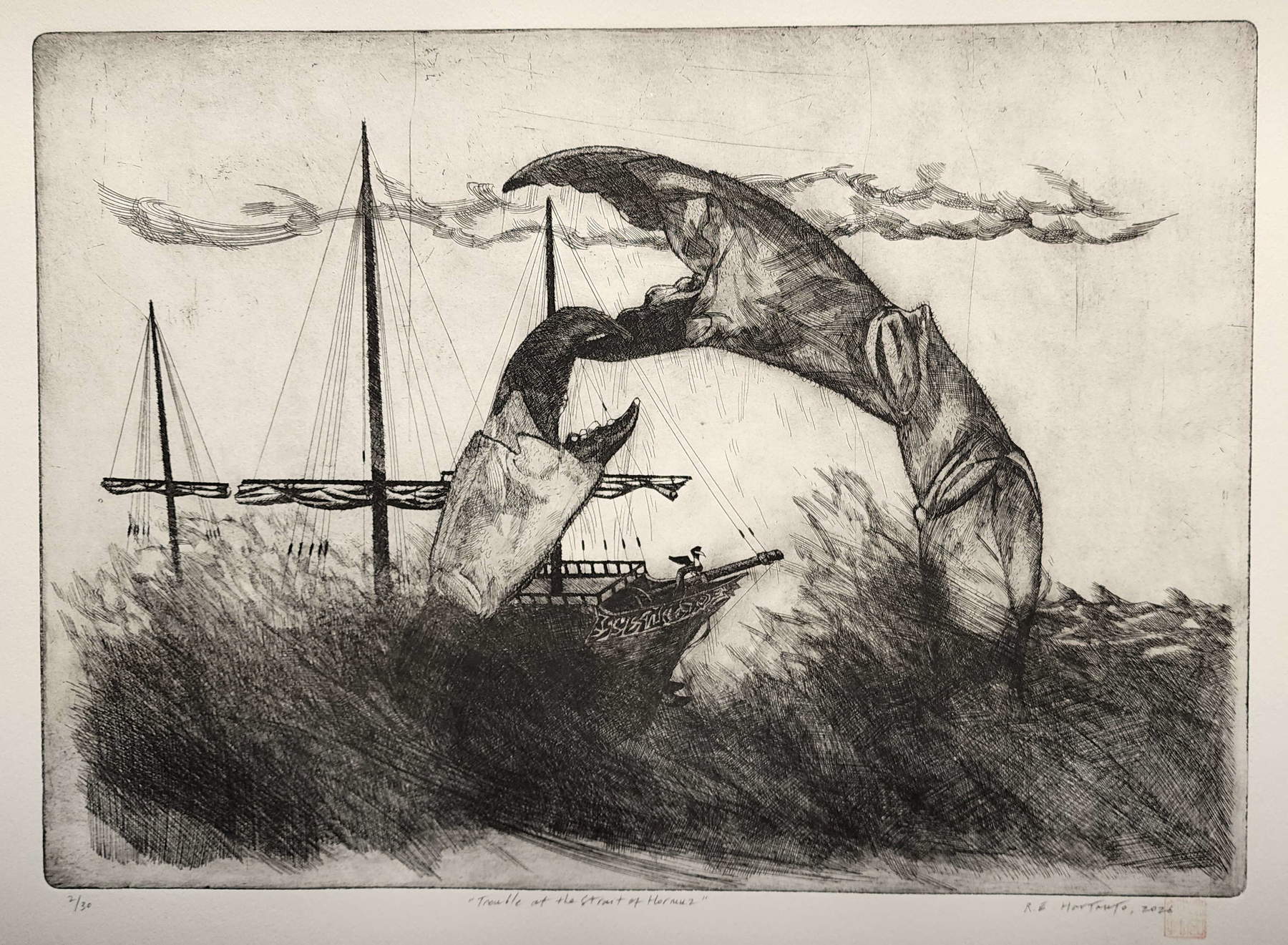
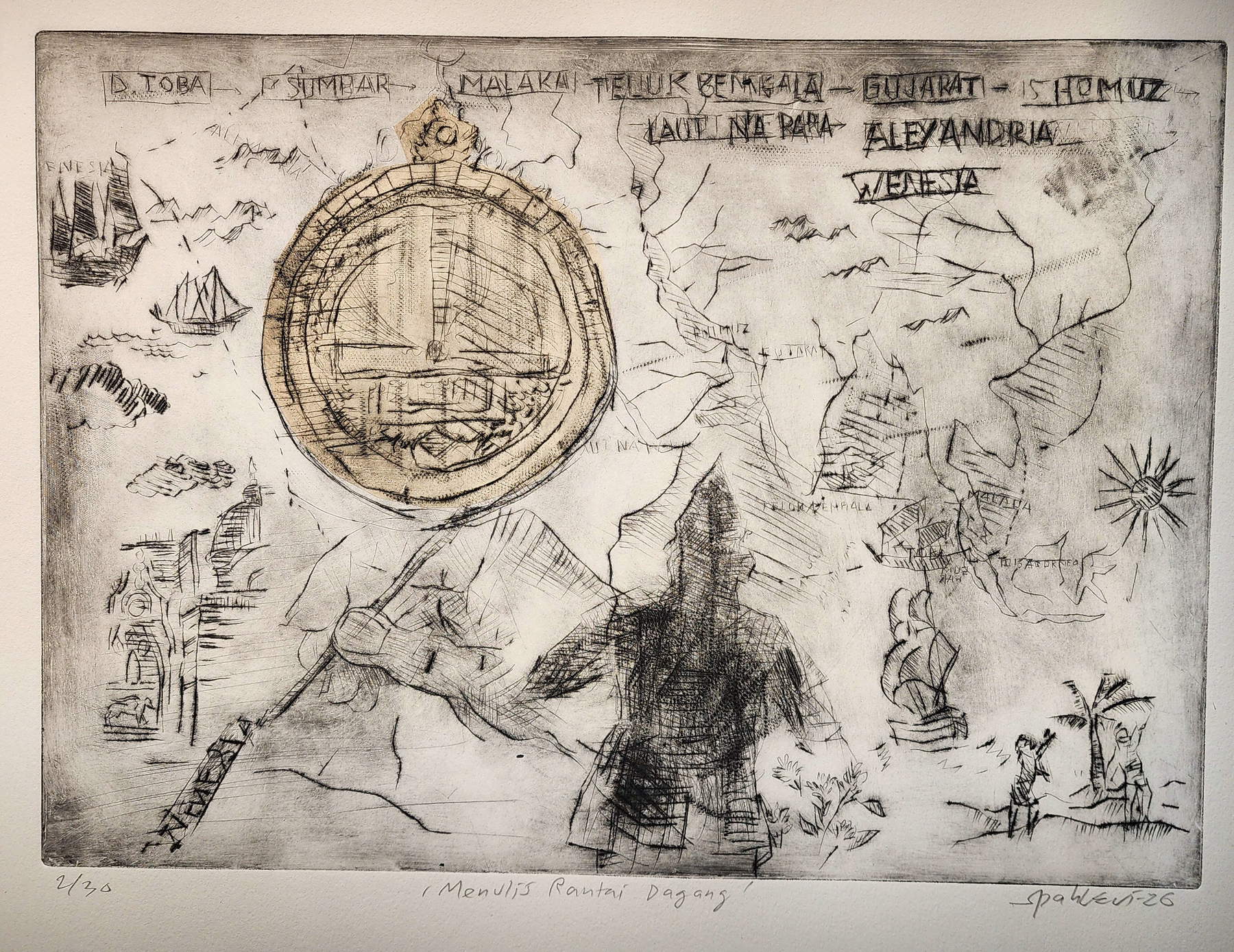
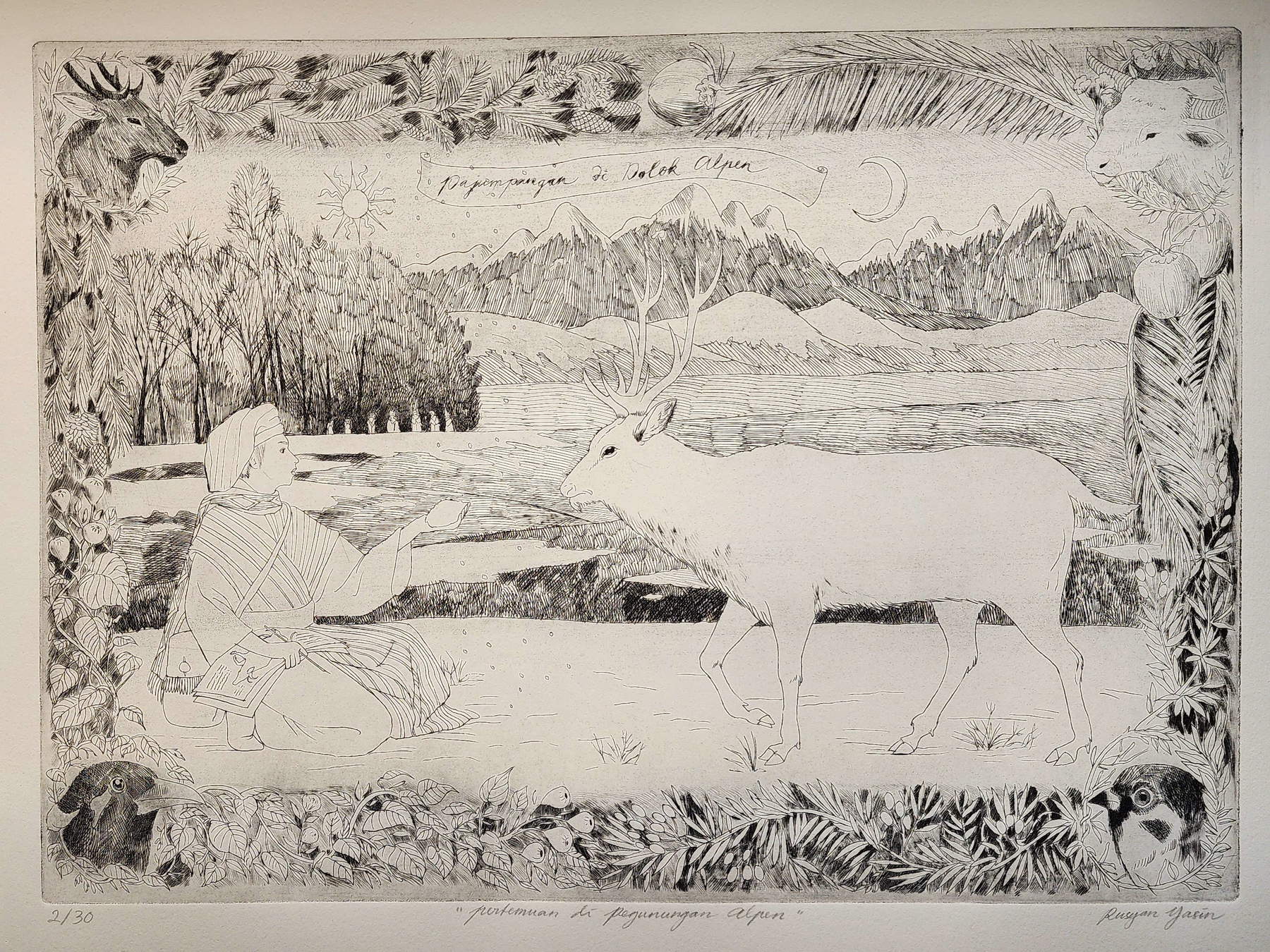
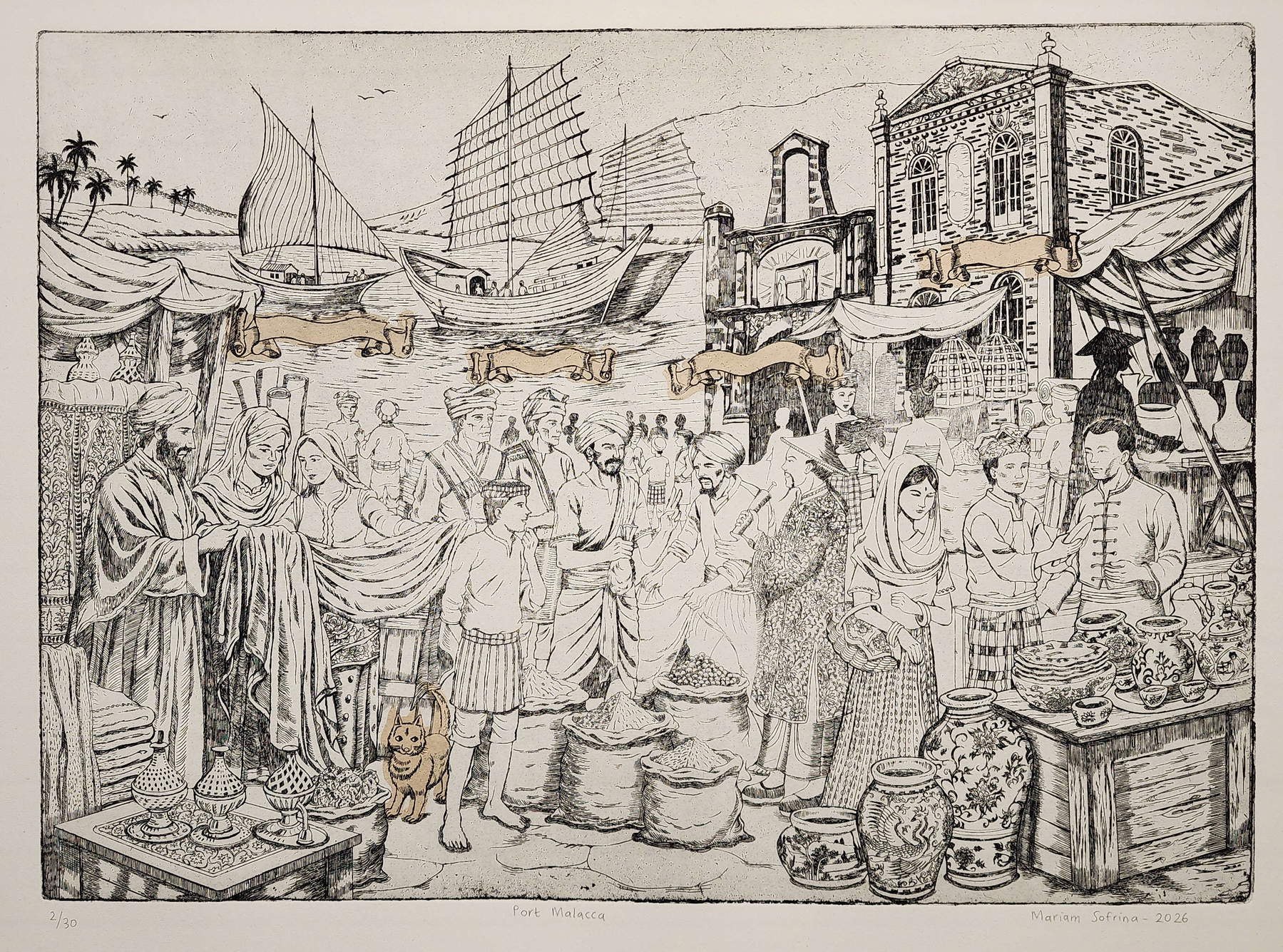
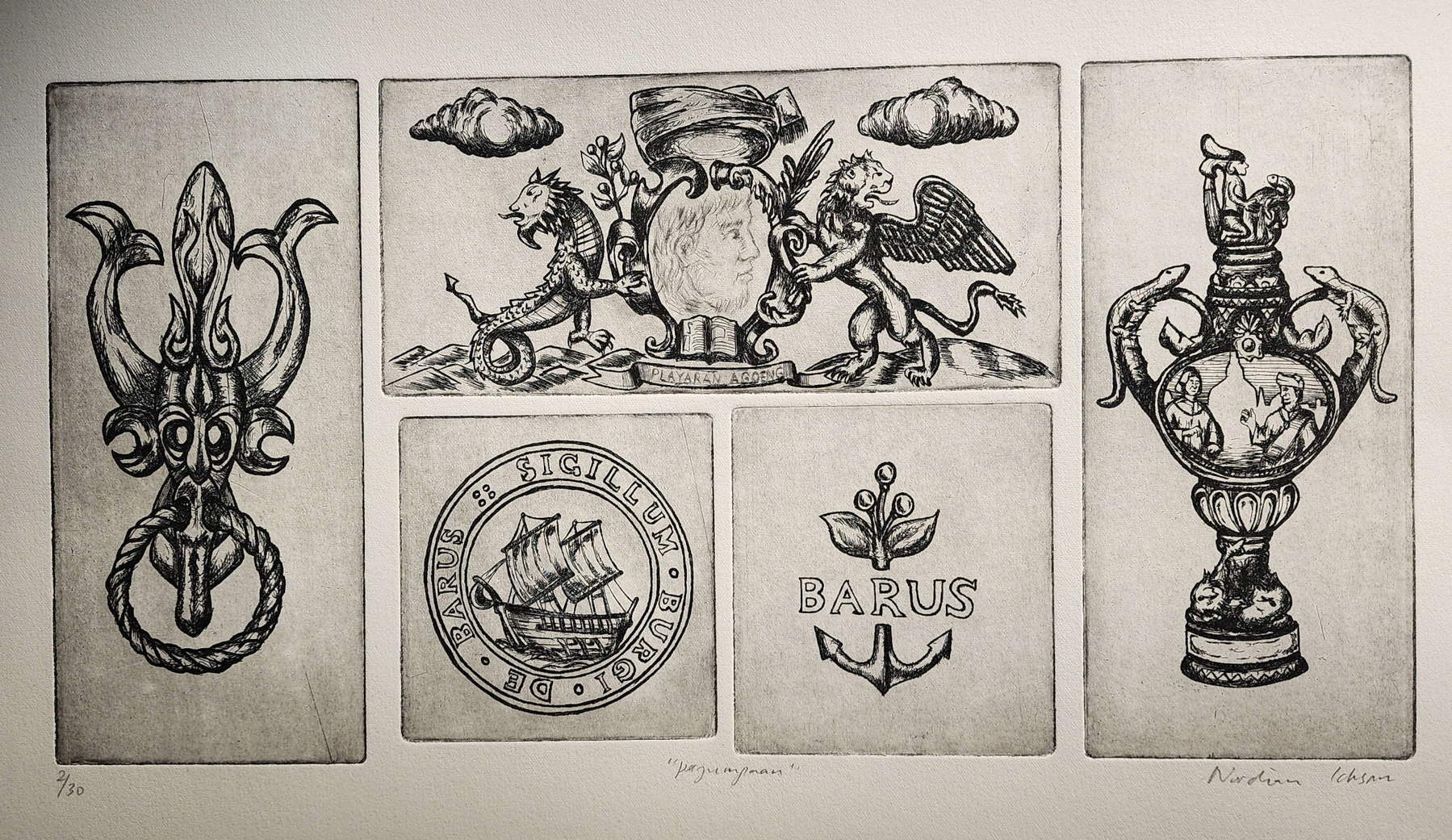
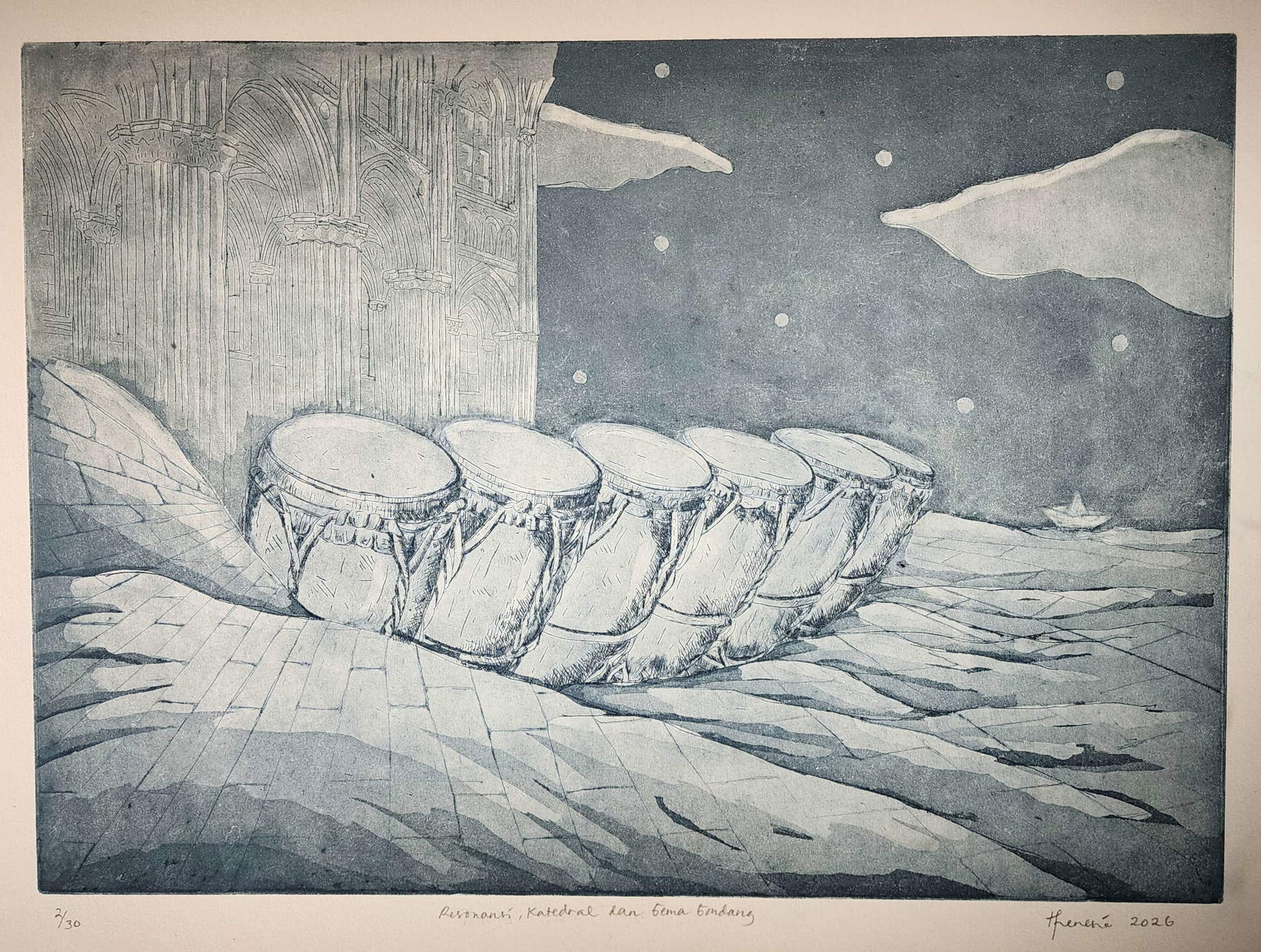
quo;use of traditional solvents. An art print that the Venice School of Graphic Design has been promoting for years through residencies, workshops and teaching activities aimed at students and artists from all over the world and that brings together technical quality with attention to materials and sustainability.
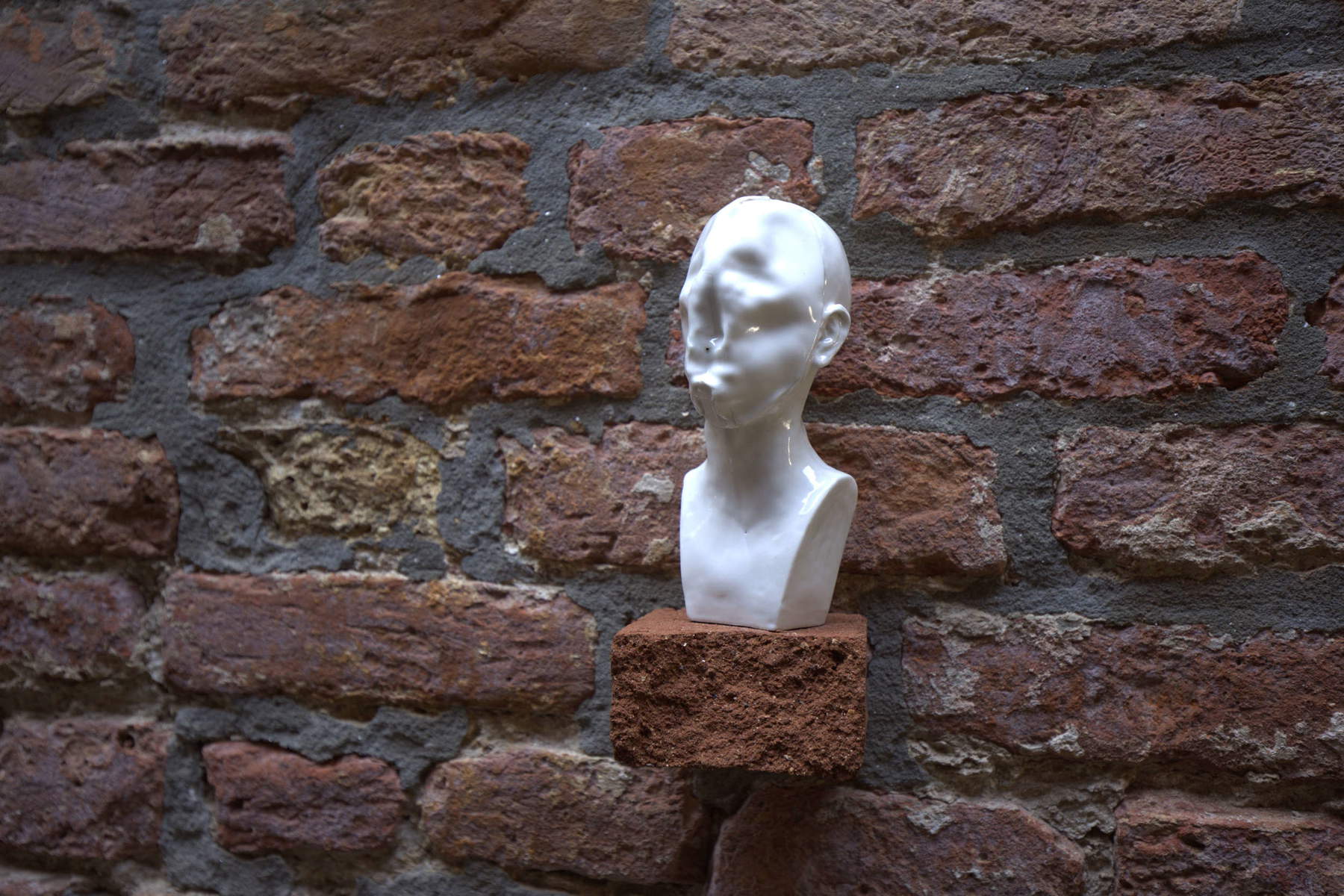
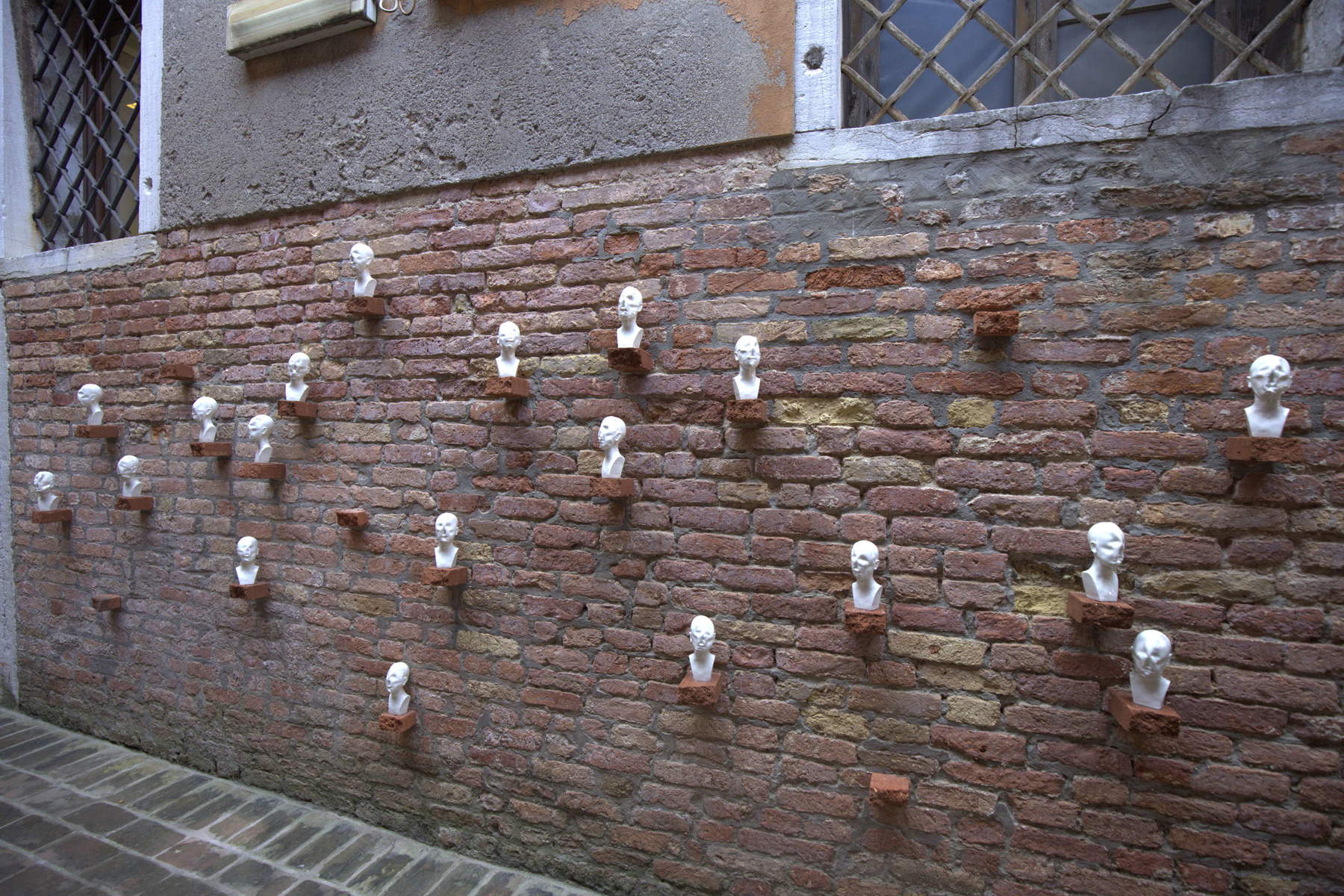
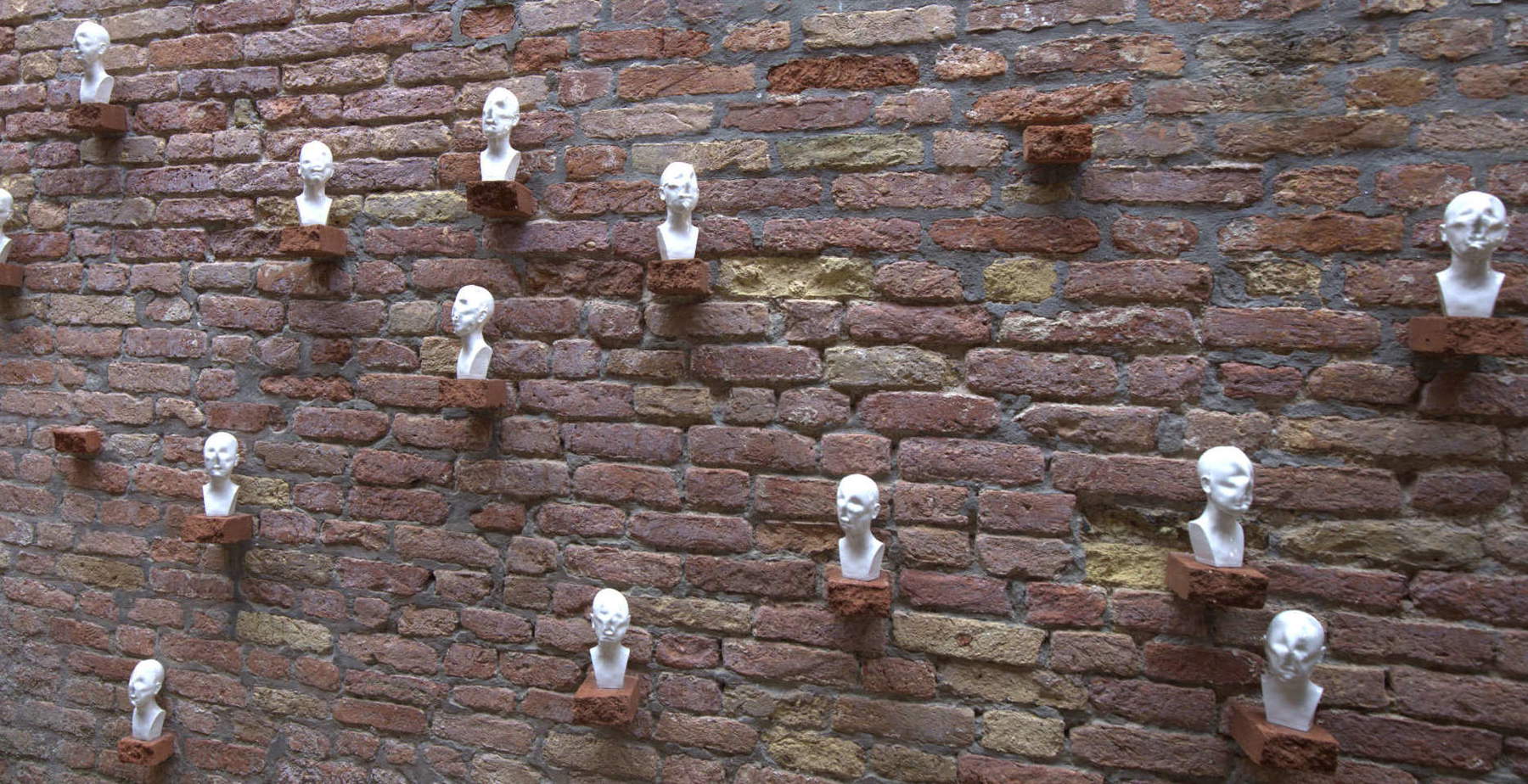
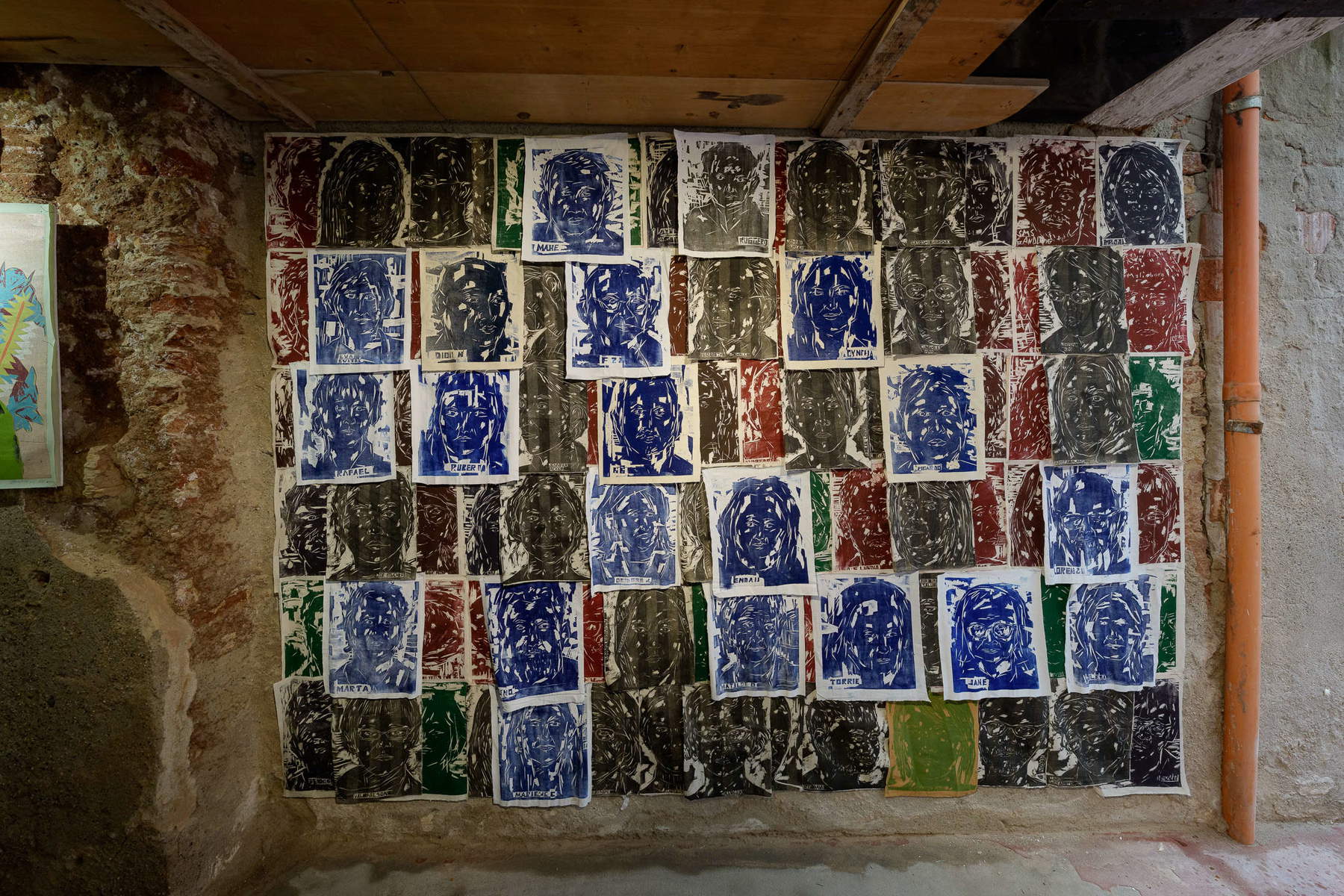
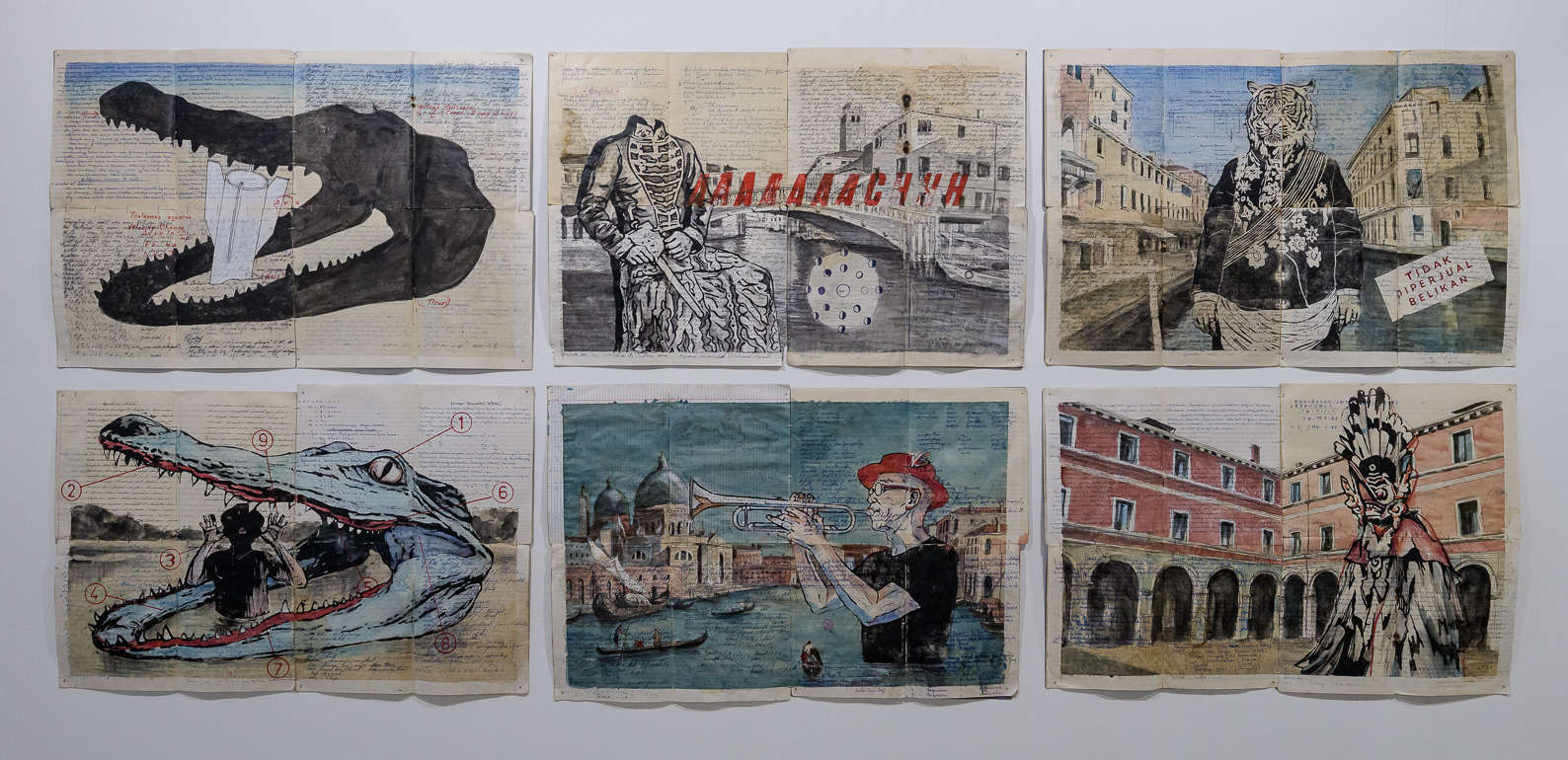
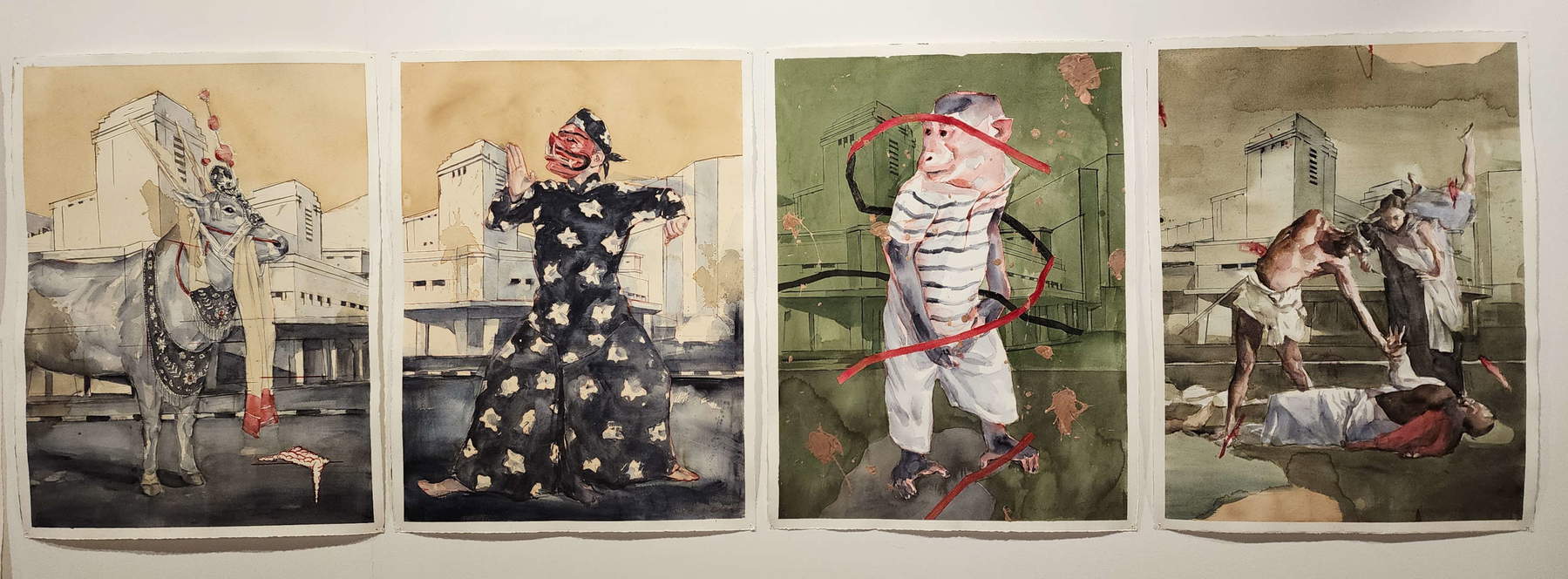
In addition to the room dedicated to the Great Journey, the Indonesian Pavilion also displays other works created by the seven artists mentioned above, each characterized by each author’s own style. While the twenty-one graphic works appear mostly unified to give the idea of a unified whole, the others, divided by artist, are remarkably different from each other. We begin from the outside with the small portraits on bricks by Nurdian Ichsian (1971) that deal with the theme of contrasting outward appearance and inwardness. It then continues with the art of Syarizal Pahlevi (1965), who offers the Moving Woodcuts Project, for which the artist continued even during his Venetian residency program to capture fragments of everyday life and subtle interactions continuing his research begun in 2011 that documents people and landscapes around the world through woodcuts. Also his portraits of the Boy of Somodar and theVenice Insignia. Agus Suwage (1959), on the other hand, presents particular works in watercolor and tobacco juice in which he depicts the Land Crocodile and the Sea Crocodile, symbols of predatory force, to express the ambition of domination that remains unchanged regardless of context, and the series Journey to the East and Diaspora, which focus on movement and exchange. As people move, so do objects and memories. These are elements in constant movement, through which a new reorientation is expressed that challenges centralization.
Also linked to this idea of movement and travel is Mariam Sofrina ’s (1983) Bukit Tunggul series (named after a mountain in West Java), in oil on linen, which recounts the landscape not as a passive backdrop to one’s life, but as an element that has within it traces of migration, choices, interpersonal ties and ties to nature.
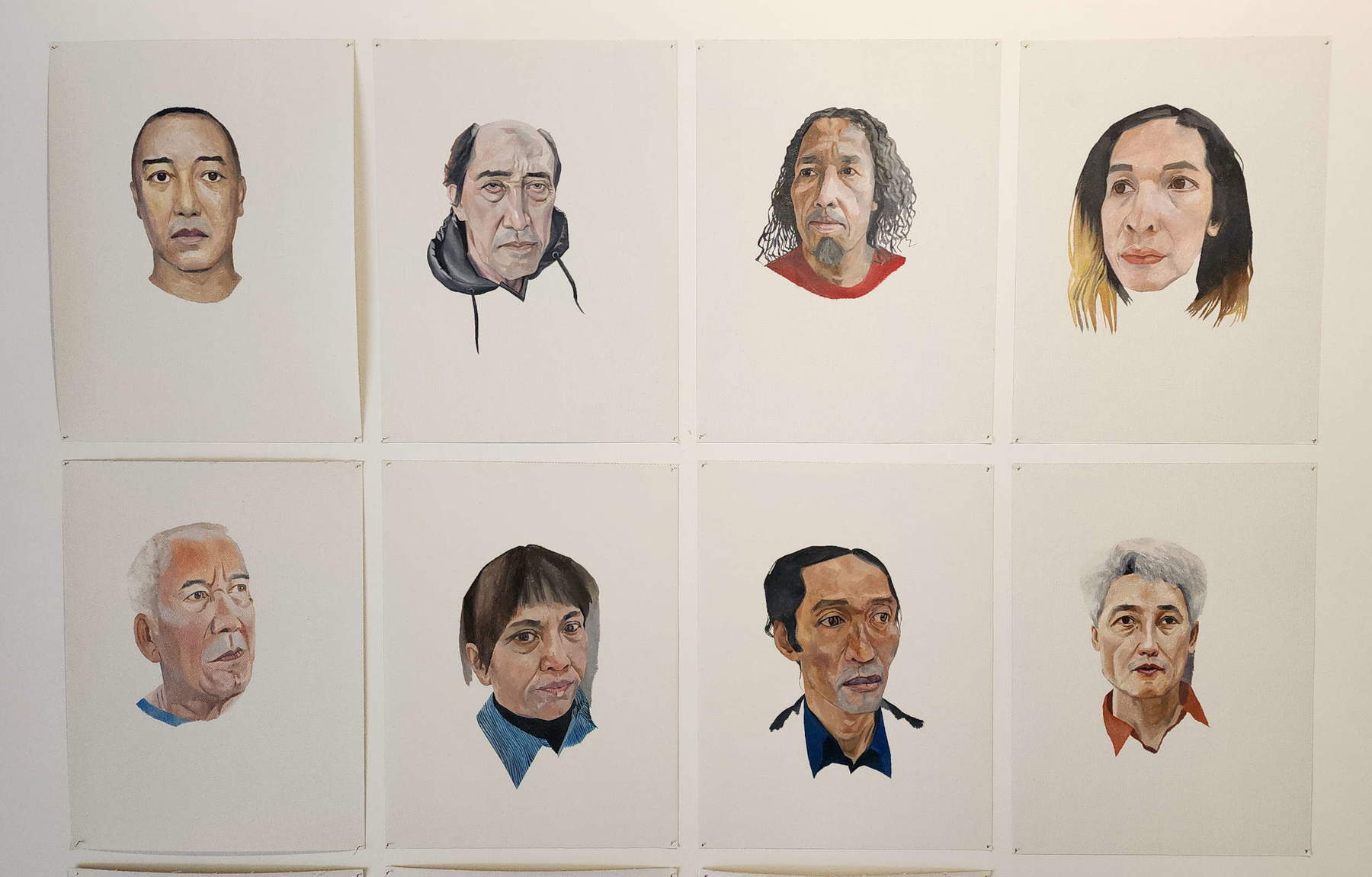
Then one encounters the carbon prints on cotton by Theresia Agustina Sitompul (1981), which express the dialogue between past and present, between waste material and the idea of recycling and reintegration through the formulation of new meanings; and the portraits of Indonesians by R.E. Hartanto (1973), which, inspired by the fictitious manuscript of the Great Journey of the 15th century, depict Indonesians on their 21st-century journey to Europe.
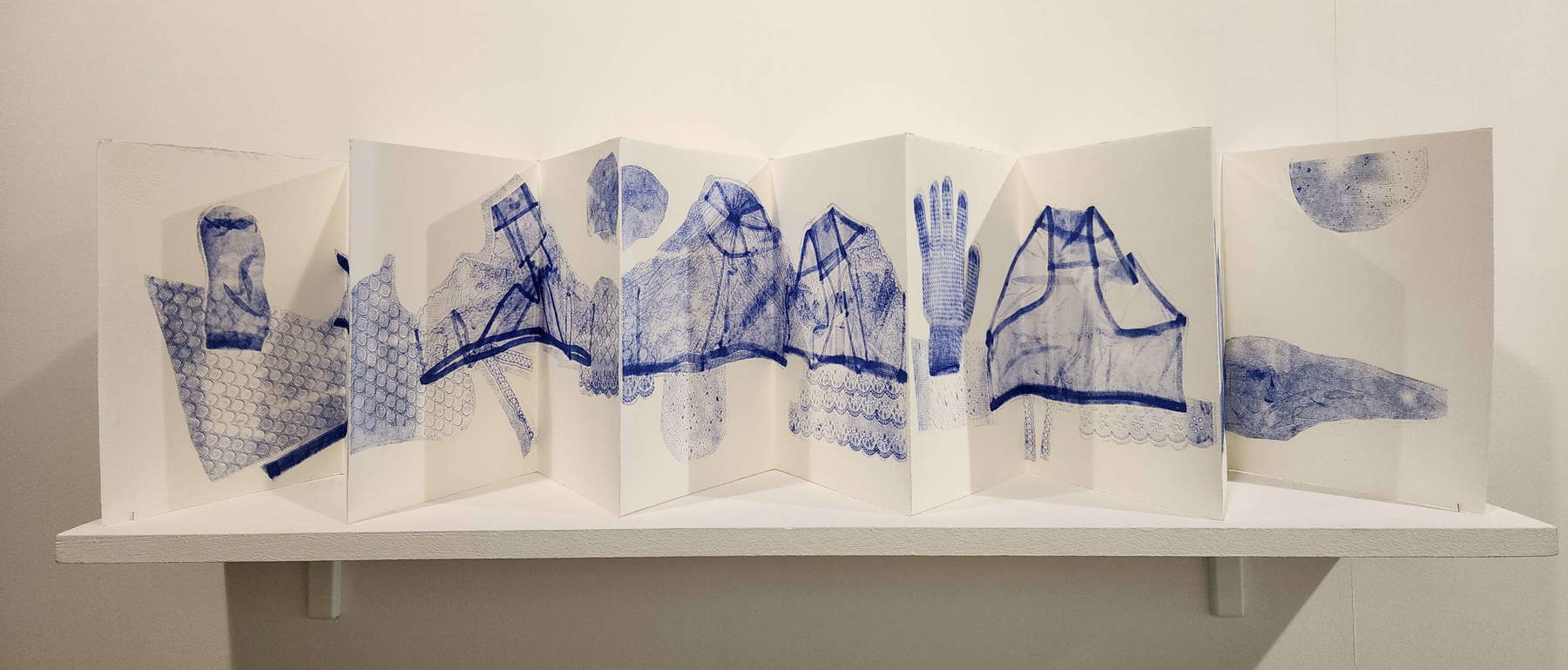
It finally concludes with Rusyan Yasin ’s Ethnographic Scroll (1994), which serves as a visual diary of a journey of seven artists from Indonesia to Venice. Titled The Inversion of Time, the scroll symbolizes the inversion or absence of a central narrative, as anyone who approaches it can read it either from right to left or left to right, thus raising a question: where do time and narrative really originate?

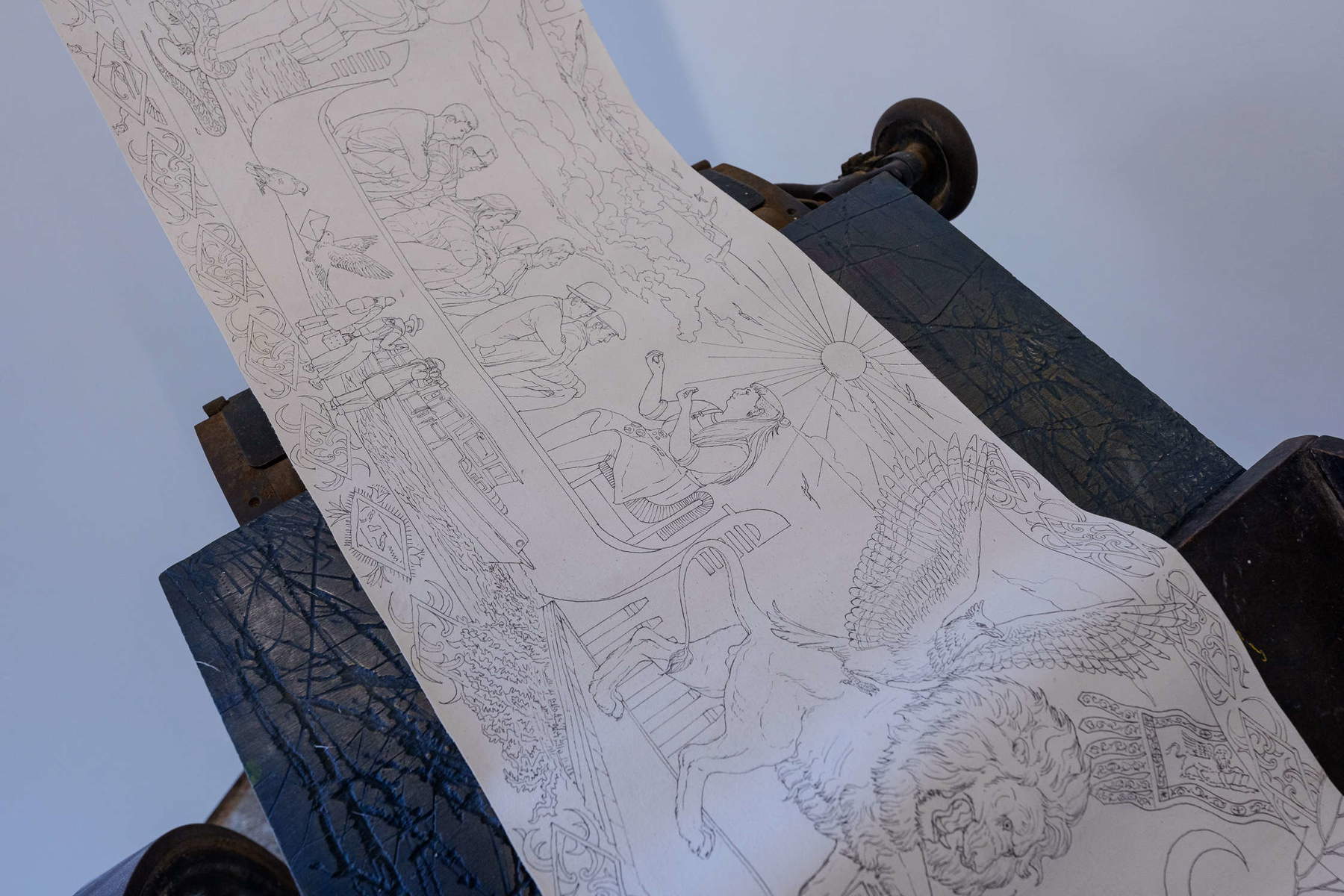
Interaction, exchange, dialogue, and encounter, the basic concepts of the Indonesian Pavilion project, did not end only at the relationship between the seven Indonesian artists mentioned and the technical staff of the School of Graphic Design, but continued in the relationship between them and seven young emerging artists from disadvantaged backgrounds, selected by Negeri Elok and National Talent Management (their initiatives aim to cultivate artistic talent in Indonesia), who thus had the opportunity to come to Venice, connect with the School and participate in a collaborative project that uses art as a tool to foster empathy, process traumatic experiences and strengthen individual and collective resilience.
While the Biennale is often traversed as a race through the most photographed works and the most talked-about pavilions, the Indonesia Pavilion is worth walking through not because it promises the most spectacular work or the most Instagrammable, but because it invites reflection and questioning on how many stories have remained on the margins of official narratives, a concept fully in line with the curatorial project In Minor Keys conceived Koyo Kouoh for the 61st edition of the Venice Art Biennale. Printing the Unprinted ’s main merit, however, is to consider art not only as an end result to be observed, but as a set of relationships and encounters that leave a mark capable of going well beyond the duration of an exhibition. And at this point, if visitors continue to walk past it without stopping, attracted by brighter lights, the problem will certainly not be the Pavilion’s.
Warning: the translation into English of the original Italian article was created using automatic tools. We undertake to review all articles, but we do not guarantee the total absence of inaccuracies in the translation due to the program. You can find the original by clicking on the ITA button. If you find any mistake,please contact us.