





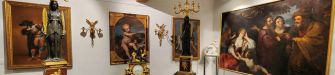
Brun Fine Art in Milan is hosting from April 16 to May 15, 2026 Cagli and the Symbol. In the Material Contemporaneity of ABI, an exhibition that offers a comparison between the work of Corrado Cagli (1910-1976) and a selection of Egyptian stone objects conceived as sculptures of use by ABI, a contemporary design brand that uses stone, active between Cairo and Milan, with the collaboration of Marmonil. The exhibition, curated by Alberto Mazzacchera and realized in partnership with theCorrado Cagli Archive, draws inspiration from the symbol understood as a structure of thought and cognitive device capable of crossing epochs, languages and materials.
In Cagli’s artistic journey, the symbol evolves from an element of narrative allusion to an analytical tool, emancipating itself from representation to probe further dimensions of reality and the psyche. After exile, war and confrontation with New York culture, the artist perceives the limits of a monological system of art. It was in this context that he developed his interest in non-Euclidean geometry and the so-called “fourth dimension,” a concept that, while remaining utopian, proved fertile creatively. The hypercube, in Cagli’s vision, becomes a metaphor for a painting capable of suggesting dimensions beyond the visible, while the cube remains a measure of the three-dimensional.
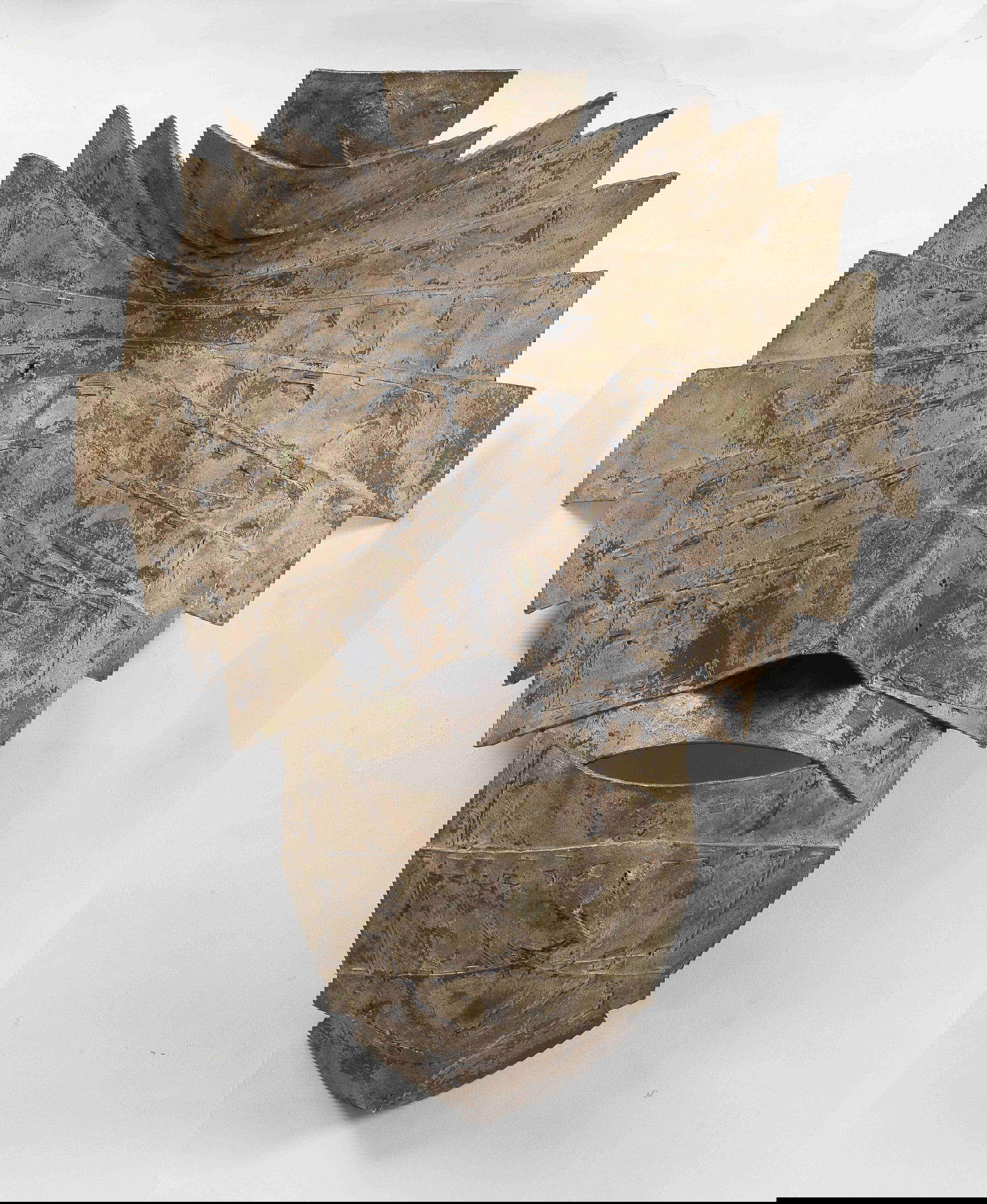
The works on display, from paintings to sculptures to the 1958-59 Carte, illustrate this research: the pulverization of color generates optical vibrations that dissolve the distinction between matter and image, between two- and three-dimensional. While remaining an illusion of new spatiality, the pictorial result results in an “expressive liberation of the sign,” as Enrico Crispolti observed, placing Cagli in a central position with respect to the first Italian informal elaborations.
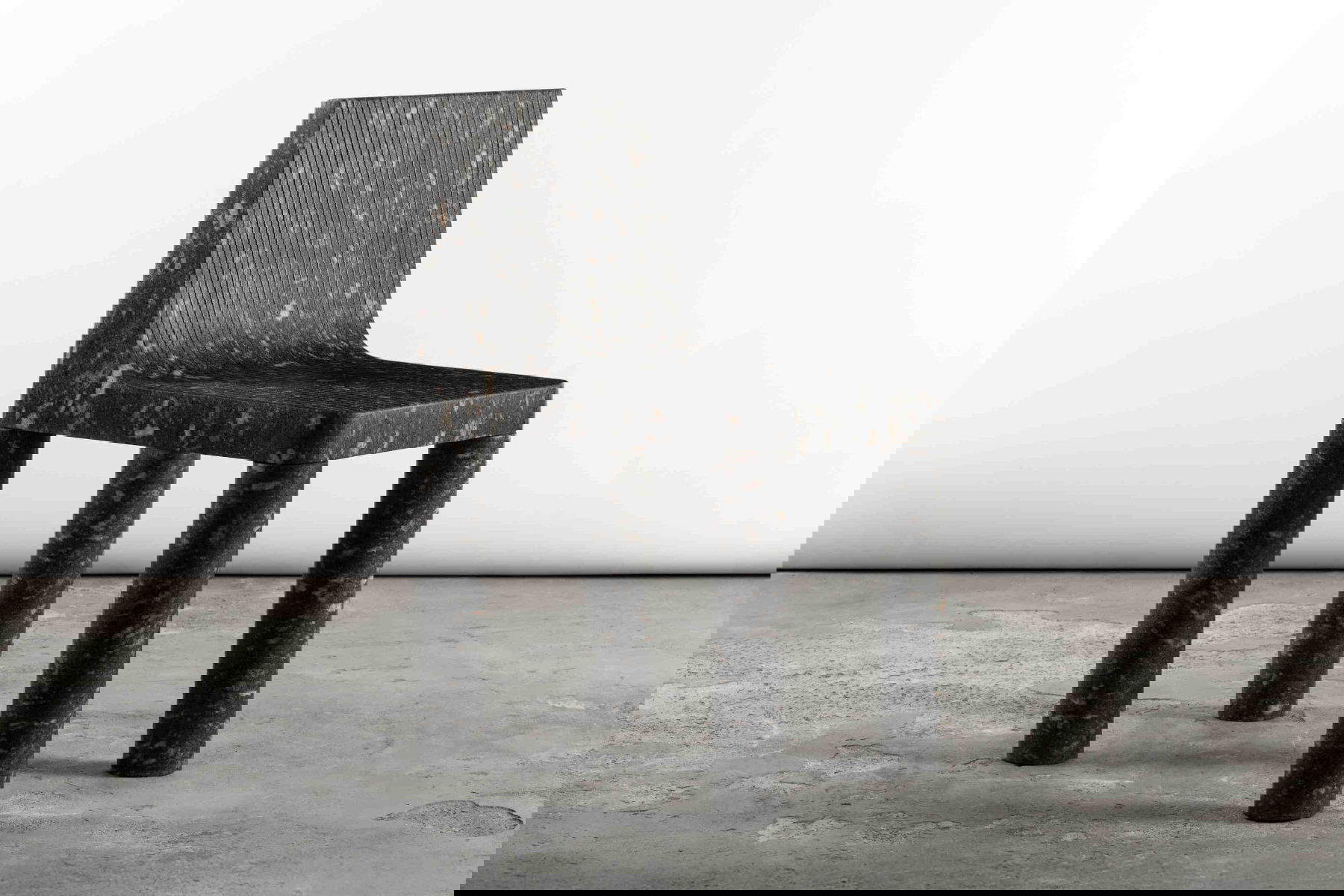
The dialogue with ABI, which combines Egyptian craft tradition and European design thinking by transforming limestone from the Aswan quarries, already used in Pharaonic times, into contemporary objects, is set in this scenario. The products, conceived as sculptures of use, are not limited to practical function but take on a plastic role in space. Egyptian stone becomes symbolic material, a vehicle of memory and permanence, integrating functionality and sculptural value. If for Cagli the symbol interrogates invisible space, for ABI the material is configured as a silent symbol, an ordering principle translated into essential form.
An emblematic example of the project is the marble transposition, curated by Marmonil and authorized by the artist’s archive, of a Cagli mask originally conceived as a cardboard maquette. The limited edition of nine copies preserves the work’s unique character. The mask, recurring in Cagli’s imagination as a perimeter between identity and archetype, acquires a new plastic presence: it maintains the original structure of the sign and takes on, through the density of the marble, a dimension of permanence that contrasts with the fragility of the original material.
The exhibition project avoids celebratory tones, proposing instead a critical reading of the artist’s actuality. Cagli, who rejected any rigid classification, affirmed the coexistence of genres as a necessary condition of modernity. In an age dominated by the ephemeral, the exhibition compares the symbolic sign, which permeates the surface of art with timeless meanings, and the material, which spans the centuries, restoring the symbol’s ability to structure time.
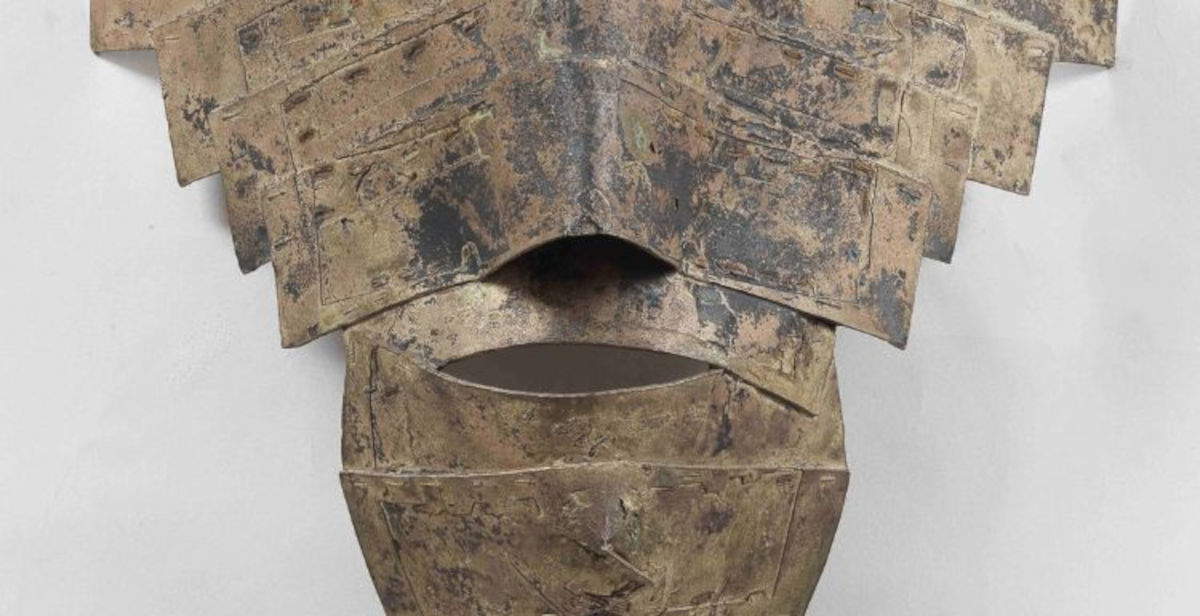 |
| At Brun Fine Art, in Milan, Cagli's works meet ABI's contemporary design |

Warning: the translation into English of the original Italian article was created using automatic tools. We undertake to review all articles, but we do not guarantee the total absence of inaccuracies in the translation due to the program. You can find the original by clicking on the ITA button. If you find any mistake,please contact us.


















 IT
IT FR
FR DE
DE ES
ES CN
CN


