





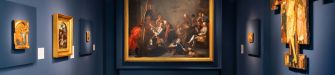
From March 27 to Aug. 23, 2026, the Castello di Rivoli Museo d’Arte Contemporanea will host the second edition of Inserzioni, a six-monthly program featuring artistic commissions conceived in dialogue with the museum’s Baroque rooms. The initiative, curated by Francesco Manacorda, includes site-specific interventions that transform the rooms normally dedicated to the permanent collection into constantly evolving exhibition devices, generating new relationships between works, architecture and memory. Curator Linda Fossati accompanies Huda Takriti’s intervention, while the selection of artists includes Gabriel Chaile, Lonnie Holley and Takriti herself.
The project aims to intervene on the traditional museum narrative, inviting artists to confront the unfinished architecture of the Castle and the historical and symbolic layering of its rooms. The conceived works redefine the meaning of the space, proposing new critical perspectives on dominant cultural and historical narratives. Inserts thus aims to rethink the canons of Western art history, welcoming visions and traditions that interrogate collective memory and cultural genealogies.
Gabriel Chaile (San Miguel de Tucumán, Argentina, 1985) creates an intervention related to the medieval well of the Castle, an element that connects the building to the hill on which it stands. The artist transforms the space into an environment suspended between historical diorama and science fiction scenario, with an anthropomorphic figure in clay interacting with sculptural elements evocative of a precarious encampment, suggesting a condition of post-apocalyptic survival. Chaile’s research is based on the concept of genealogy of form, according to which structures hold cultural stratifications and traces of individual and collective memories. The sculptures, made from clay, earth and adobe, are inspired by the craft traditions and indigenous cosmologies of Argentina’s northwest, interweaving ancestral narratives and processes of cultural transmission. The dialogue with fragments of historical frescoes in the room reflects on history, identity and transformation, generating an interweaving of architectural memory and contemporary imagination.
Lonnie Holley (Birmingham, Alabama, United States, 1950) presents a group of new sculptures and paintings conceived for the Hall of Continents, decorated in the 18th century with allegorical representations related to the geopolitical vision of the time. The artist, an exponent of Southern U.S. Black Art, uses found and salvaged materials, including burned wood, metal, plastic and everyday objects, transforming them into assemblages that convey narratives intrinsic to the materials themselves. Holley’s work addresses themes of collective memory, social inequality, historical violence and the possibility of spiritual and political transformation. In the context of the Castle’s historic rooms, his works establish a critical tension with eighteenth-century allegories, proposing alternative perspectives on power and memory. Sculptures and quilt paintings evoke collective presences and symbolic genealogies, redefining the perception of the exhibition space and the relationship between work and historical context.
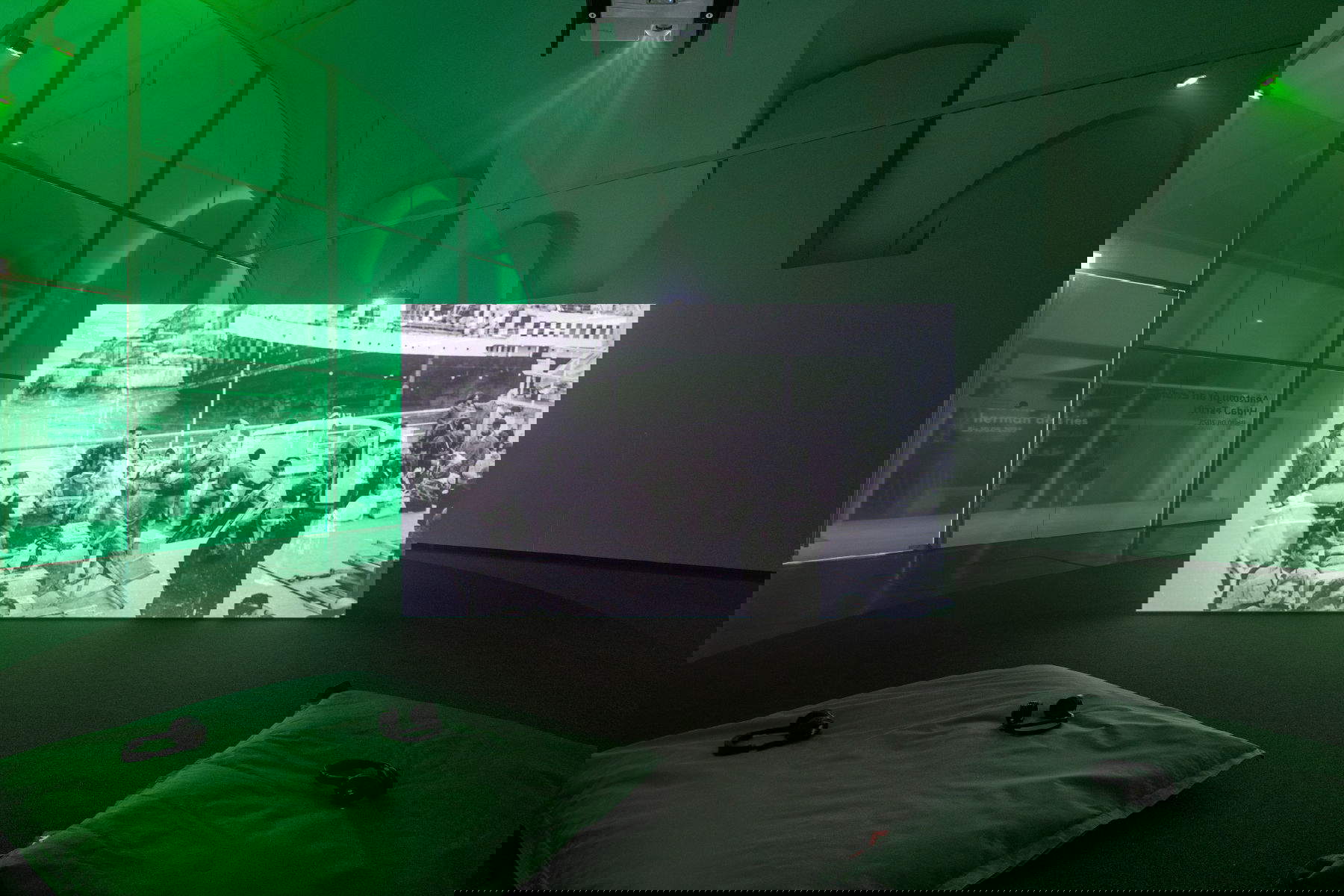
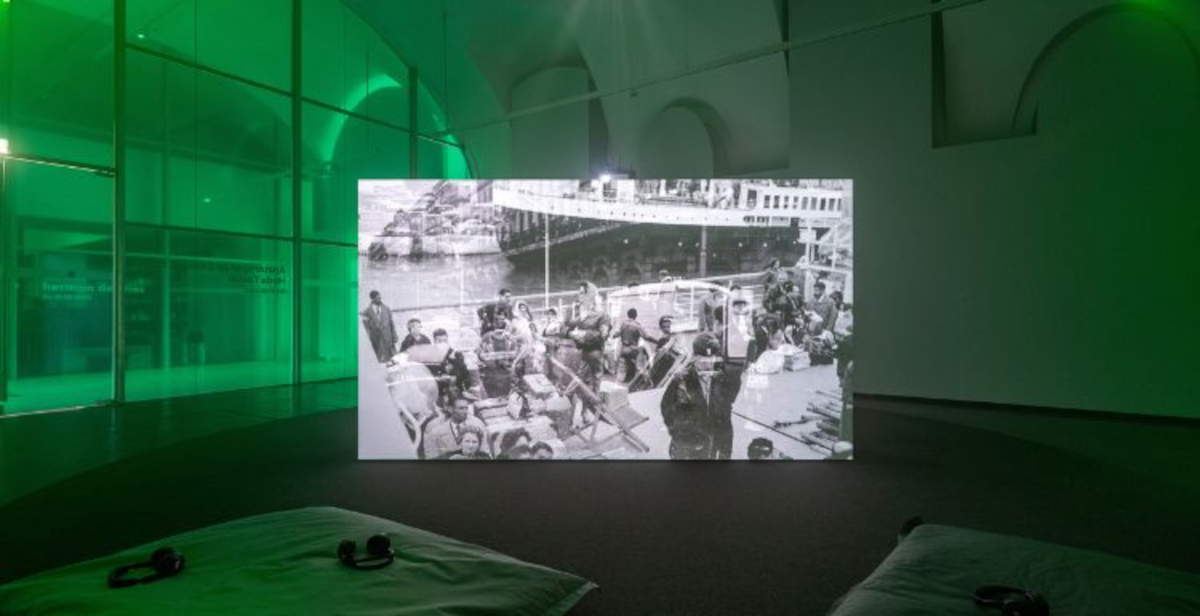
Huda Takriti (Damascus, Syria, 1990; lives and works in Vienna) develops a practice that interweaves archival research, video and performance, creating installations that link moving images and historical materials to architecture. For Advertisements, Takriti presents a project that examines the role of images, cinema, institutions and industry in the construction of post-World War II historical narratives. The work includes the video Clarity is the Closest Wound to the Sun (2023) and two new productions, including It Is Always Midnight In Their Minds (2026), developed through research in Italian archives.
The work explores the connections between the Ente Nazionale Idrocarburi (ENI), former European colonies, including those in Italy, and areas still struggling for liberation in the 1950s and 1960s, investigating the intersections of economic interests, political support and film production in the context of decolonization processes. Alongside the videos, Takriti creates a vinyl installation conceived as a contemporary fresco along the walls of Room 29, dialoguing with historical frescoes and reflecting on the ways in which historical narratives are constructed and transmitted.
The project is realized with the support of the Austrian Federal Ministry for Housing, Arts, Culture, Media and Sport (BMKÖS), Section IV - Art and Culture and is produced in collaboration with Phileas -The Austrian Office for Contemporary Art.
 |
| At Rivoli Castle, new works dialogue with baroque rooms |

Warning: the translation into English of the original Italian article was created using automatic tools. We undertake to review all articles, but we do not guarantee the total absence of inaccuracies in the translation due to the program. You can find the original by clicking on the ITA button. If you find any mistake,please contact us.























 IT
IT FR
FR DE
DE ES
ES CN
CN


