





From April 4 to September 27, 2026, the Villa Mussolini spaces in Riccione will host Bruno Barbey. The Italians, a major exhibition dedicated to the famous photographer of the Magnum Photos agency, Bruno Barbey (Morocco, 1941 - Paris, 2020), and his extraordinary reportage made in Italy between 1961 and 1964. The exhibition represents a journey into the visual memory of the country, at a historical moment suspended between the aftermath of World War II and the profound transformations of the economic boom. Promoted by the Municipality of Riccione and organized by Rjma Progetti Culturali and Creation, the exhibition is curated by Caroline Thiénot-Barbey and Alberto Rossetti and offers the opportunity to reread, with a contemporary gaze, one of the most comprehensive photographic frescoes of Italy in the early 1960s. Sixty years after its completion, Bruno Barbey’s work thus returns to dialogue with the present, restoring a layered and complex vision of Italian society.
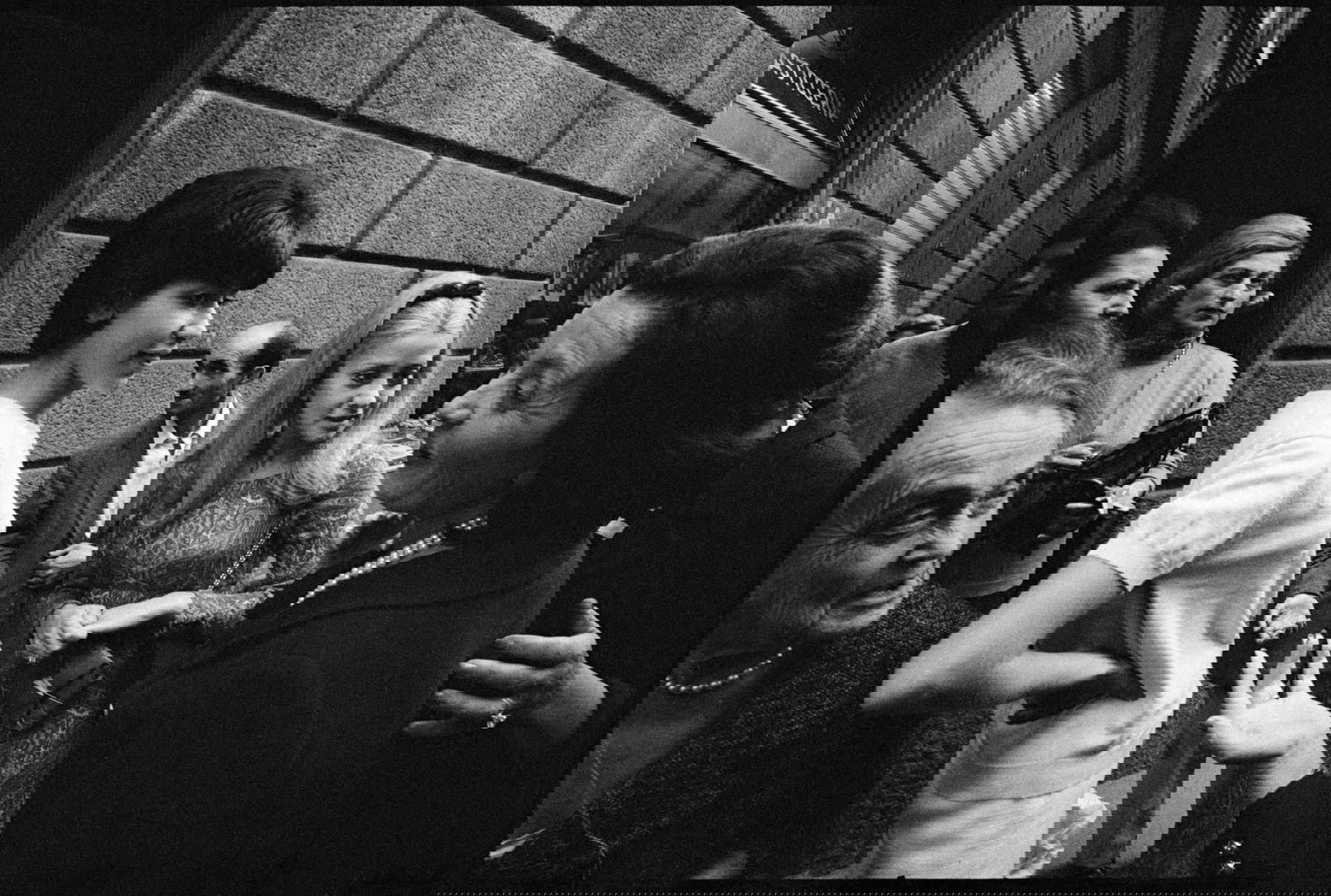
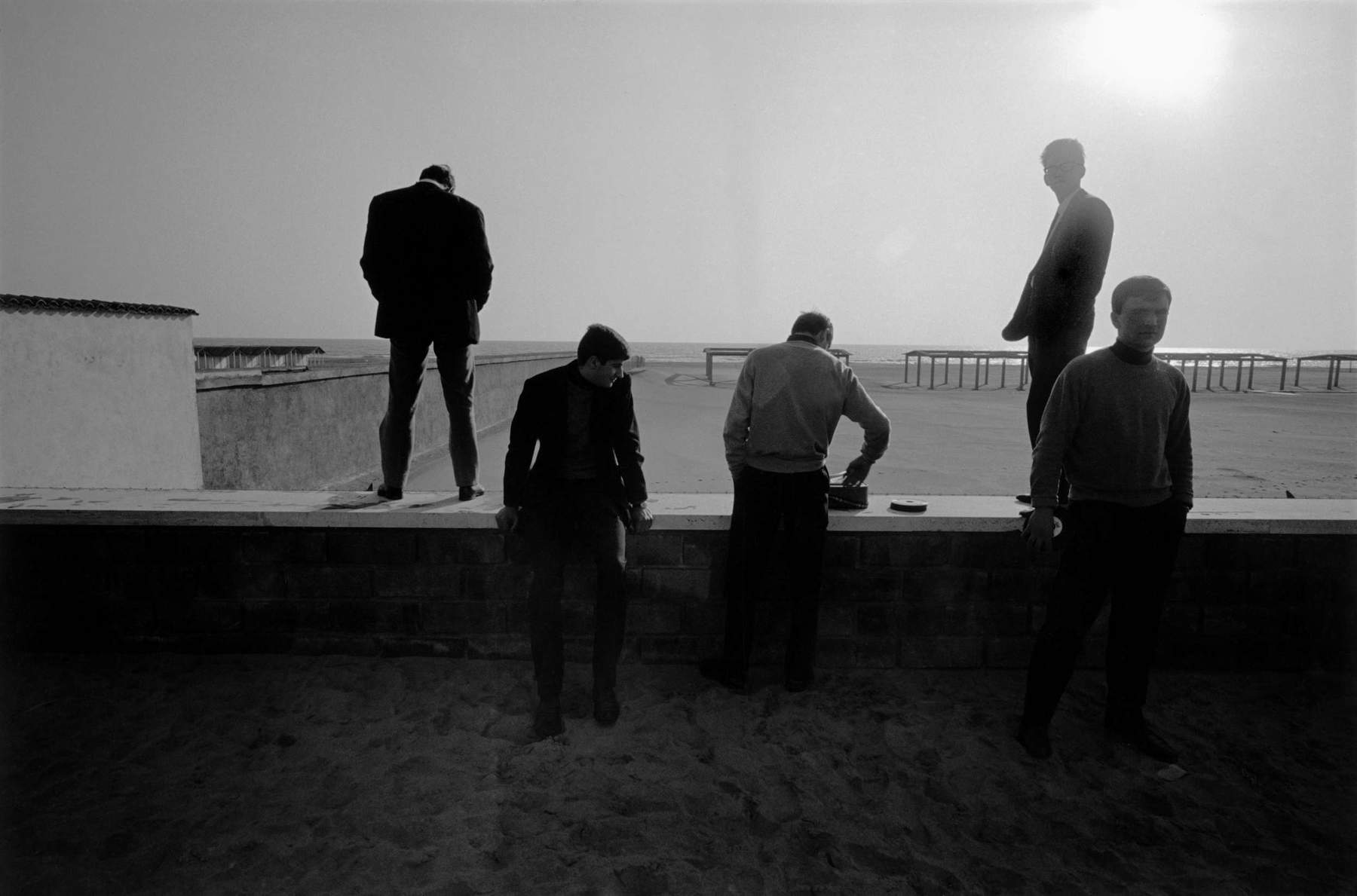
At the time a photography student in Switzerland, Barbey crossed the border several times in his Beetle, traveling the entire peninsula with his camera. The result was a broad and articulate reportage, capable of capturing the soul of a country in transformation. On one side the South, engaged in a difficult reconstruction, on the other the North projected toward modernity and the metropolitan dream. His images recount beggars and aristocrats, nuns, street children, peasants, laborers and the bourgeoisie, restoring a rich and multifaceted humanity in which theatricality, a sense of community, resilience and a widespread joie de vivre emerge.
The photographs, all in black and white and selected by the author himself shortly before his death, traverse every level of Italian society. They tell of the Italy of religious ceremonies and village festivals, but also that of the economic boom and social transformations, of the workers and peasants, of the newly emerging classes and above all of the humble, whose dignity embodies one of the most authentic expressions of national identity.
An almost theatrical dimension emerges in many shots, recalling the characters of a modern Commedia dell’Arte and finding affinities with the cinema of Pier Paolo Pasolini, Luchino Visconti and Federico Fellini. Through Barbey’s lens thus resurfaces an Italy that belongs to the collective memory, that of parents and grandparents, committed after the war not only to material reconstruction but also to the rebuilding of social and community ties.
The choice of Villa Mussolini as the exhibition venue is not accidental. The building, which the Municipality of Riccione is acquiring from the Carim Foundation to return it permanently to public heritage, is considered a true historical device, an identity node that accompanied the birth and development of the seaside town. In recent years, the villa has established itself as an important cultural space, hosting exhibitions dedicated to great protagonists of international photography such as Robert Doisneau, Robert Capa, Vivian Maier and Ferdinando Scianna.
In this context, Barbey’s gaze is inserted with a narrative force that confirms the maturity achieved by the exhibition space, now fully returned to the community as a place of cultural production. The exhibition itinerary opens with the projection of a ten-minute video curated by Caroline Thiénot-Barbey, accompanied by the music of Nino Rota, evoking the cinematic atmospheres associated with the world of Federico Fellini.
The photographs are organized by thematic nuclei and dialogue with quotations from great writers and intellectuals of the 20th century, including Elsa Morante, Cesare Pavese, Italo Calvino, Alberto Moravia, Natalia Ginzburg and Michelangelo Antonioni, helping to restore the cultural climate of an Italy traversed by profound changes. The photographic project, originally titled Les Italiens, had been presented by Barbey to French publisher Robert Delpire with the idea of including it in an ideal trilogy alongside Robert Frank’s Les Américains and René Burri’s Les Allemands. However, circumstances at the time prevented publication of the volume, although the portfolio proved decisive for the photographer’s career, convincing the Magnum Photos agency in 1964 to invite him to collaborate.
The book would only see the light of day many years later, in 2002, thanks to Editions de La Martinière, and later in Italy in 2022 with the posthumous volume Gli Italiani published by Contrasto. The Riccione exhibition is therefore also an opportunity to reread a project that had a long editorial gestation but over time acquired an increasingly relevant documentary value.
Alongside the exhibition itinerary, Generazione Riviera also takes shape, a participatory initiative promoted by the Municipality of Riccione together with Rjma Progetti Culturali and Creation, in collaboration with the AMAREA Cultural Association. The project invites citizens and tourists to contribute to the construction of a shared memory of life on the Riviera since the 1960s. Participants can bring up to two analog photographs from their family albums: the images will be digitized and reprinted to become part of an in-progress collection displayed inside the villa, around an art installation by the association.
This section, located on the ground floor, will be free to visit and is an ideal extension of Barbey’s work, transforming individual memory into collective heritage. Participants will also be given reduced admission to the exhibition, strengthening the link between community and cultural institution.
The exhibition will be open at different times during the season. From April 4 to June 28, 2026: Tuesday to Friday 10:00 a.m. to 1:00 p.m. / 3:00 p.m. to 7:00 p.m., May 1, June 1, June 2, Saturdays, Sundays and holidays: 10:00 a.m. to 8:00 p.m. From June 30 to September 6, 2026: Tuesday to Friday: 10:00 a.m. to 1:00 p.m. / 5:00 p.m. to 11:00 p.m., Saturday, Sunday and holidays: 10:00 a.m. to 8:00 p.m. September 8 to 27, 2026: Tuesday to Friday: 10:00am-1:00pm / 3:00pm-7:00pm, Saturday, Sunday and holidays: 10am-8:00pm. The ticket office closes 30 minutes before the indicated time.
Tickets: Open € 13.00; Full € 12.00; Reduced € 10.00 (visitors with analogue photos from the 1960s of the Riviera Romagnola, groups of at least 12 people, holders of specially activated conventions, journalists, FAI members, FIAF members); Special Reduced € 5.00 (schools and under 24). Free for children under 6, accompanying teachers, disabled and accompanying persons, accredited journalists, licensed tour guides. Reservation fee: € 1.00 per person.
Guided tours organized by Creation, curated by Sara Polidori. For information and reservations: damsara78@gmail.com. Costs: €80 schools (maximum 25 pupils), €100 groups (maximum 25 people). The space on the ground floor of the villa, with the room dedicated to Generation Riviera, can be visited free of charge. Online ticketing: https://www.ticketone.it/artist/bruno-barley/bruno-barbey-gli-italiani-4120220/. Exhibition website: www.mostrabarbey.it
“There is a profound consistency in presenting these works precisely in Riccione,” says Mayor Daniela Angelini. “Our city, in the same years in which Barbey was traveling through Italy, was experiencing the explosion of the economic boom, becoming the privileged set of the new collective imagination. This exhibition is not only a moment of aesthetic contemplation, but a valuable opportunity for collective reflection on our identity. Riccione thus confirms its vocation as a cultural center of excellence, capable of offering beauty and critical thinking, paying homage to a master who was able to see Italy before Italy saw itself in its new modern guise.”
“Our vision transforms Villa Mussolini into a living museum, a place of wonder and creativity capable of bringing great international narratives into dialogue with the deep experience of our community,” emphasizes Deputy Mayor and Councillor for Culture, Sandra Villa. “The gaze of Barbey, a historical associate of the Magnum agency, captures Italy suspended between modernity and secular traditions, composing a modern ’Commedia dell’arte’. With this exhibition and the collective album initiative, we turn every visitor into a memory keeper, placing the work of this giant in a cultural welfare path that puts visual arts at the center of city life 365 days a year.”
“With this exhibition,” says Alberto Rossetti, administrator of Rjma Progetti Culturali, “a cultural path is consolidated, thanks to which the city of Riccione has become a point of reference for photography. Rjma has been able to contribute to it with commitment, supporting the local administration, which I thank for the trust. With this new exhibition we will be able to admire the ’youth’ work of another great photographer, dedicated precisely to Italy. But we also intend to promote active participation of visitors and involvement of young people, also thanks to the collaboration with the Amarea Association.”
“Looking to the past thanks to the great masters of photography is not an act of nostalgia, to how we were, but the most lucid way to understand the present,” says Umberto Pastore, CEO of Creation. “It is not just an operation to keep memory alive, but rather a lens that helps us decipher how we are today. As Creation, we are proud to help organize a project that goes beyond the exhibition of a great author. With the side initiative ’Riviera Generation’ we intend to build an exhibition of photographs brought in by visitors of all generations, creating a living bridge between past and future, bringing memory and new perspectives into dialogue.”
|
| Bruno Barbey, Italy of the 1960s on display in Riccione. |

Warning: the translation into English of the original Italian article was created using automatic tools. We undertake to review all articles, but we do not guarantee the total absence of inaccuracies in the translation due to the program. You can find the original by clicking on the ITA button. If you find any mistake,please contact us.



















 IT
IT FR
FR DE
DE ES
ES CN
CN


