




by Redazione 24/03/2026



Categories: Exhibitions / Disclaimer
From April 26 to August 26, 2026, the Castello San Materno Museum in Ascona, Switzerland, will host Nostalgia del Sud - German Artists in Italy 1865-1915, an exhibition featuring 40 works by German-speaking authors who found a source of artistic inspiration in Italy between the 19th and 20th centuries.

From April 26 to August 26, 2026, the Castello San Materno Museum in Ascona, Switzerland, will host the exhibitionNostalgia del Sud - German Artists in Italy 1865-1915, an exhibition project that investigates the relationship between the German-speaking art world and Italy between the second half of the 19th century and the early 20th century. Curated by Harald Flebig and supported by the Kurt and Barbara Alten Foundation for Culture, the exhibition presents forty works including paintings, engravings, drawings and sculptures by fourteen artists who, between 1865 and the outbreak of World War I, lived and worked in Italy or stayed there for periods of study.
The exhibition brings together works by authors such as Oswald Achenbach, Otto Greiner, Max Klinger, SigmundLipinsky and Ludwig Passini, alongside other figures from the German-speaking cultural area who crossed the peninsula attracted by its artistic heritage and Mediterranean landscape. All the works on display come from a private German collection and are presented to the public for the first time, offering insight into the variety of languages and interests that characterized a generation of artists active between academic tradition and new figurative experimentation. Indeed, between the late 19th century and the early decades of the 20th,Italy emerged as a favored destination forpainters, engravers and sculptors. The country represented not only a source of study of artistic and architectural heritage, from antiquity to the Baroque, but also a place of cultural comparison. The historic cities, landscapes and light of the Mediterranean helped define a visual imagery that many artists sought to rework in their works.


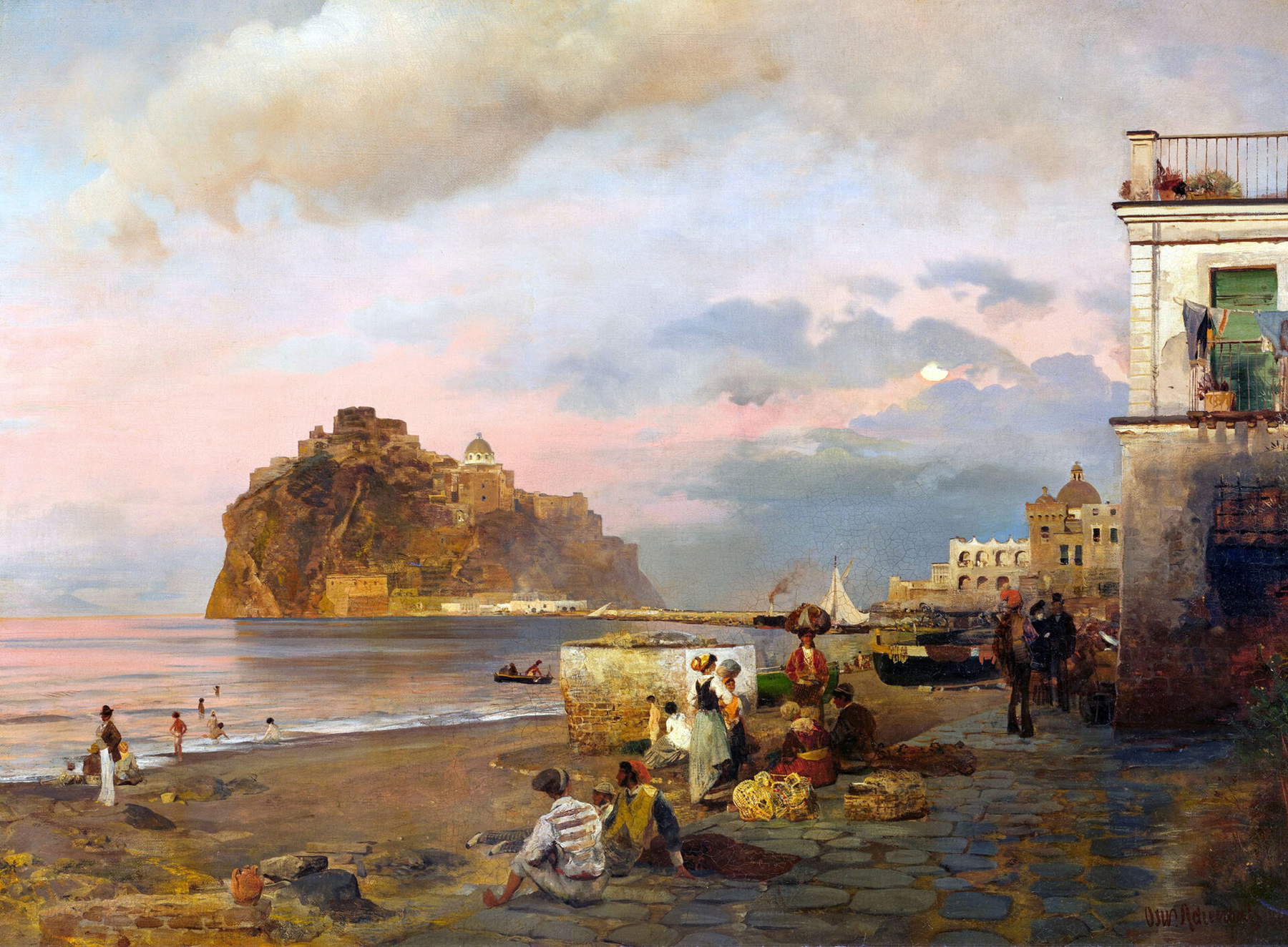
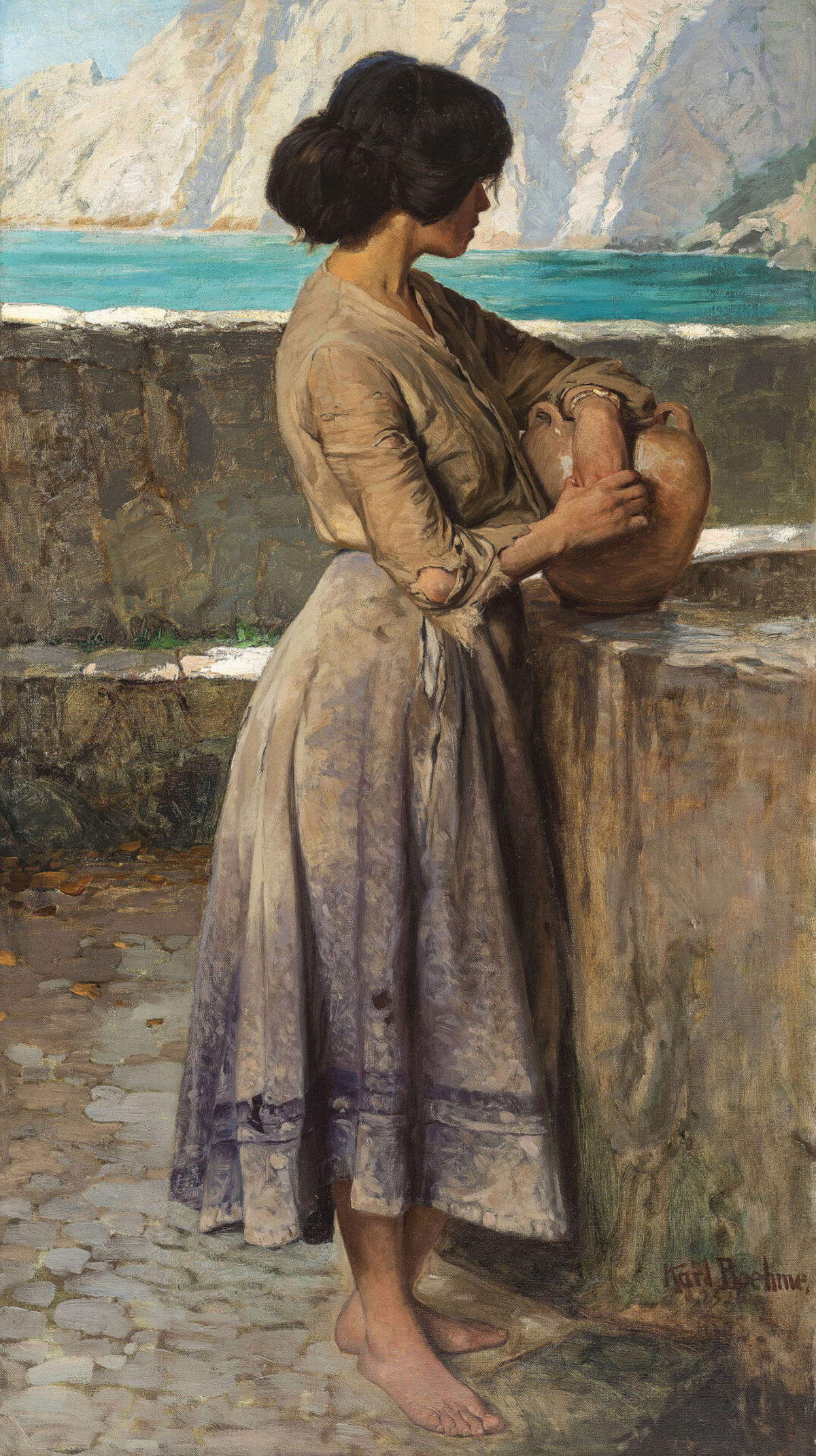
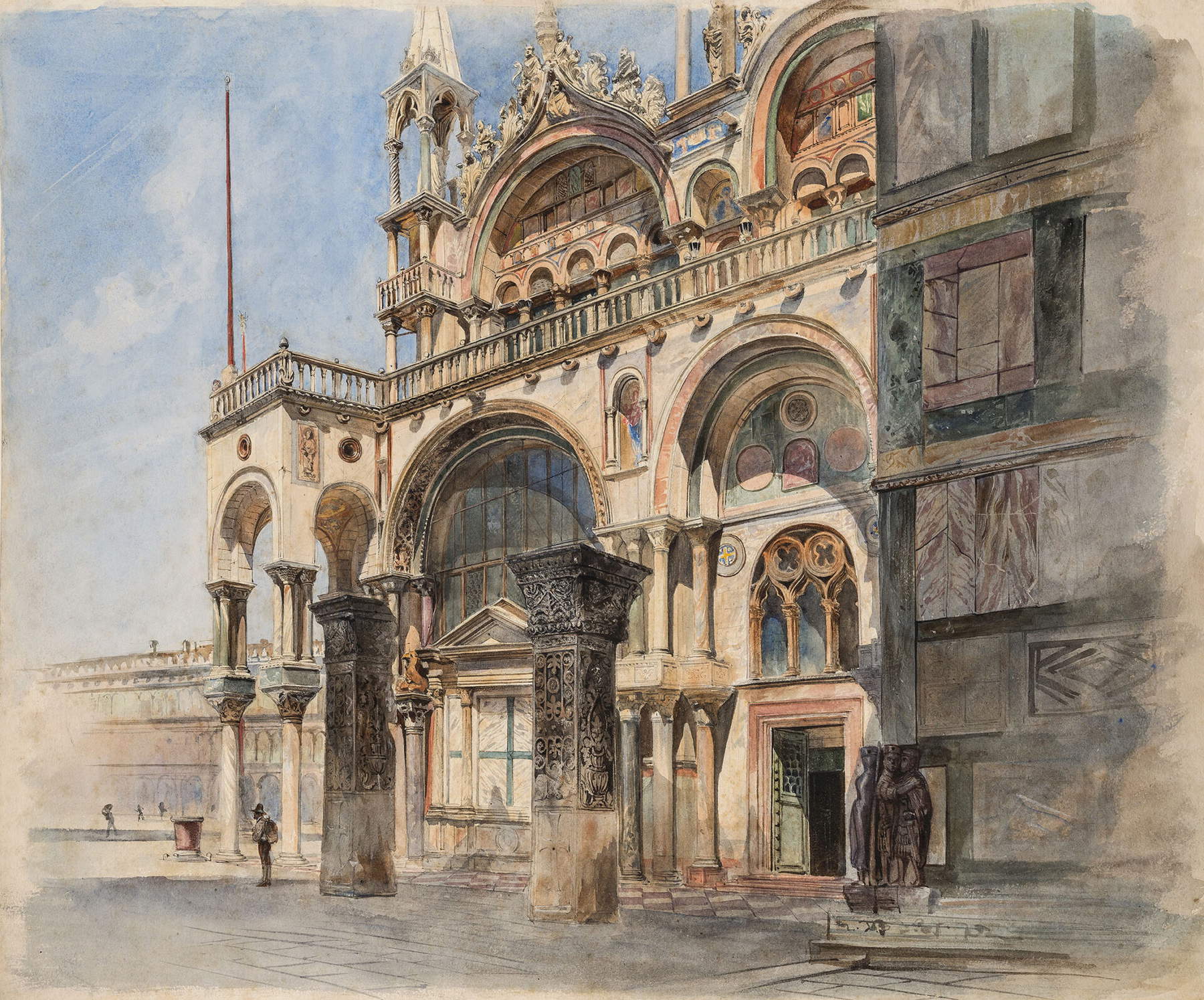
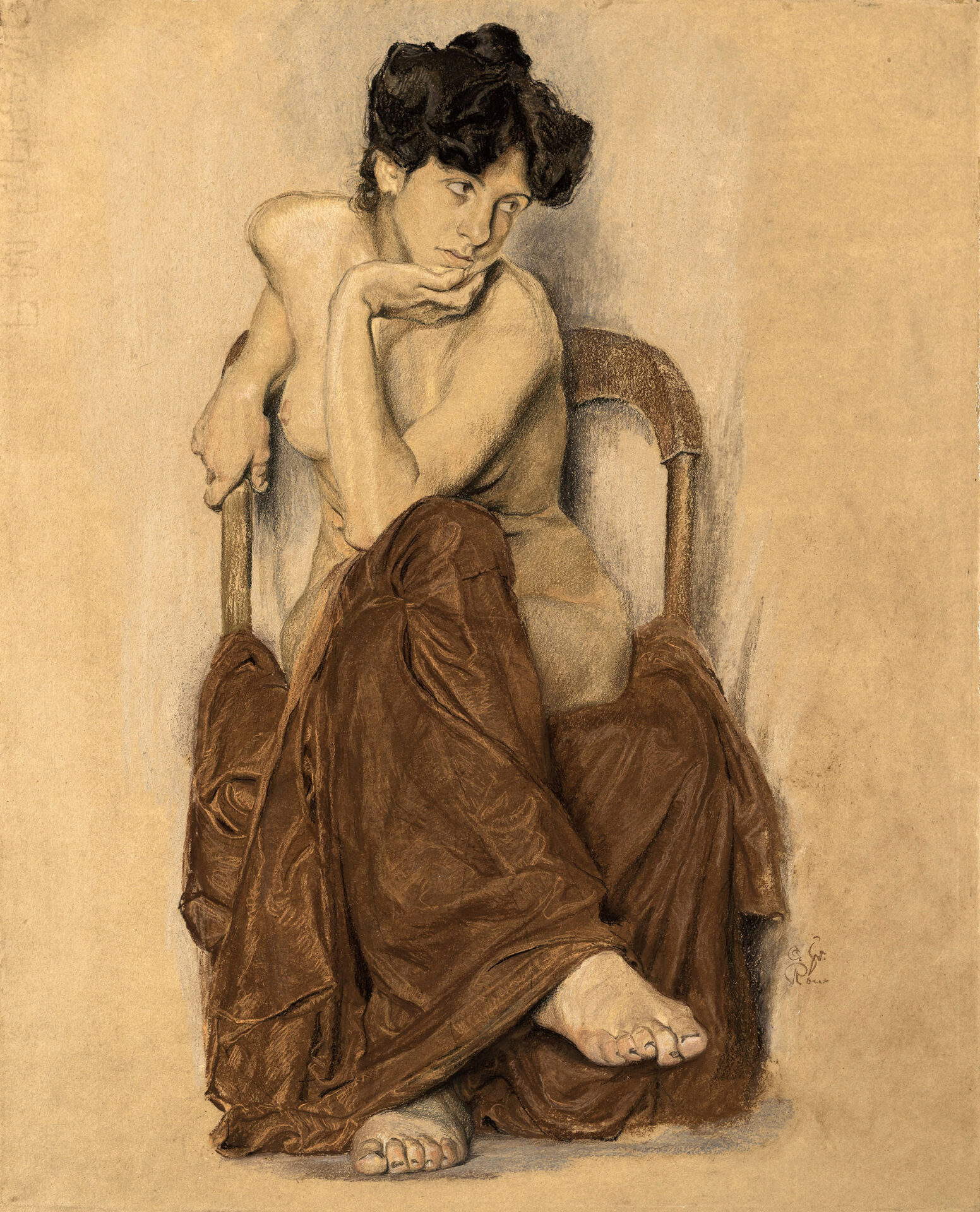
At the same time, the daily life of the local communities appeared as an alternative model to the social transformations associated with industrialization and the political tensions that swept through northern Europe. The sojourn in Italy thus offered artists a context perceived as freer than the academies in their home countries, encouraging experimentation with new themes and techniques. The exhibition also documents the role these experiences played in the development of the careers of the artists involved. Figures such as Otto Greiner and Sigmund Lipinsky, along with Hungarian painter Adolf Hirémy-Hirschl, reworked subjects and references from the classical tradition in a modern key. Alongside them appear Oswald Achenbach, among the leading landscape painters of the Düsseldorf school, and Austrian watercolorist Ludwig Passini, who devoted an important part of their output to views and scenes set in Italian cities such as Venice, Rome and the Gulf of Naples area.
The itinerary also includes works by artists such as Anton von Werner, Adolph von Menzel and the sculptor August Gaul, evidence of the wide attraction exerted by Italy and its culture on the artistic circles of German-speaking Europe between the 19th and 20th centuries. Accompanying the exhibition is a catalog published by the Wienand Verlag publishing house in Cologne, edited by Harald Flebig and Ilse Ruch on behalf of the Kurt and Barbara Alten Foundation for Culture. The volume brings together contributions by scholars including Emanuele Bardazzi, Manuel Carrera, Sarah Kinzel, Alexander Kunkel, Susanne Scherrer, and Julia Tietz.
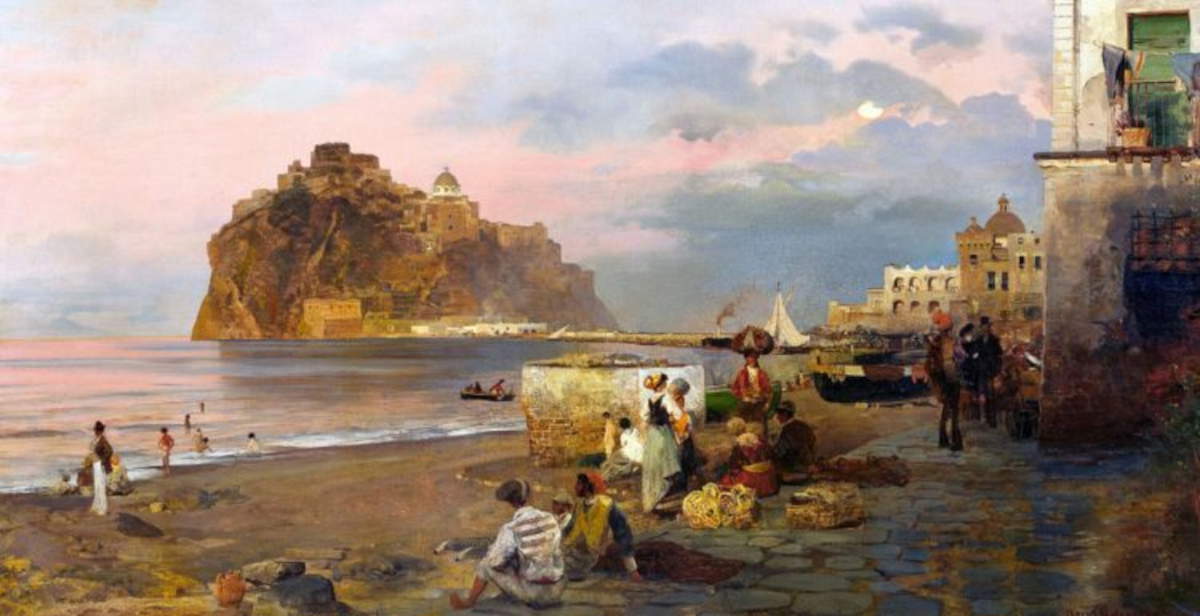 |
| German artists in Italy between the nineteenth and twentieth centuries: the exhibition Nostalgia of the South in Switzerland |
Warning: the translation into English of the original Italian article was created using automatic tools. We undertake to review all articles, but we do not guarantee the total absence of inaccuracies in the translation due to the program. You can find the original by clicking on the ITA button. If you find any mistake,please contact us.