





The European tour of “Identità oltre confine” continues—an exhibition project promoted by the Ministry of Foreign Affairs and International Cooperation to mark the 25th anniversary of the Farnesina Collection. The fifth stop of the exhibition, curated by Benedetta Carpi De Resmini, will open on June 17, 2026, at 7:00 p.m. at MUŻA – The National Community Art Museum in Valletta (Malta), in collaboration with the Italian Cultural Institute in Valletta and with the support of the Italian Embassy in Valletta. The exhibition will be open to the public from June 18 to August 16, 2026.
The project began as an exploration of the concept of identity in the contemporary context, viewed through a broad and multifaceted lens that intertwines cultural, social, and geopolitical dynamics. The exhibition engages with a contemporary world marked by ecological crises, migration, political instability, and cultural divisions—elements that contribute to the continuous redefinition of categories of individual and collective belonging.
Launched as a three-stage itinerary, “Identity Beyond Borders” has progressively expanded its scope, evolving into an exhibition and conceptual space where identities are examined in their fluid and relational dimensions. The focus is on the ways in which identities form, transform, and redefine themselves over time, within a cultural landscape that has always brought together different languages, traditions, and perspectives.
Following its stop in Paris, the project arrives in Valletta, a city that plays a central role in the exhibition itinerary due to its geographical and symbolic significance. The Maltese capital, in fact, represents a crossroads of the Mediterranean—a region historically marked by cultural exchanges and today characterized by significant environmental and social tensions. Southern Europe, as a whole, has long been on the front lines of the effects of climate change and migration flows. In this context, Malta emerges as a key hub where these dynamics take on a particularly rich cultural dimension.
The city of Valletta thus becomes the place where the project directly engages with the urgent issues of the present, where art grapples with concerns regarding the future of the environment, communities, and the cultural identities emerging from these transformations. The MUŻA – The National Community Art Museum hosts the exhibition within a space that is woven into the city’s historical and cultural fabric, strengthening the dialogue between the artworks and their context.
Mario Merz’s work *Fibonacci* marks the starting point of the exhibition itinerary. The work is interpreted as a metaphor for organic, non-hierarchical knowledge that develops through connections and ramifications. From this symbolic threshold, the exhibition unfolds, structured into three thematic sections: Roots of Resistance, Unstable Ecologies, and Geographies of Detachment. The three sections offer different perspectives on the tensions of the contemporary world, without reducing them to a single interpretation, but rather presenting an open and pluralistic field of inquiry.

The section “Roots of Resistance” brings together works by key figures of the women’s avant-garde, including Tomaso Binga, Carla Accardi, Ketty La Rocca, Maria Lai, and Elisa Montessori, in dialogue with works by Elena Bellantoni, Silvia Giambrone, Marinella Senatore, and Loredana Di Lillo. In this context, subversion is interpreted as an active and ongoing practice, in which the body and language play a central role in the processes of emancipation and the redefinition of meaning.
The second section, Geographies of Detachment, addresses the theme of fracture as both a concrete and symbolic experience. The works by Gea Casolaro, Agnese Purgatorio, and Sarah Ciracì map out urban, social, and emotional wounds, revealing a geography marked by discontinuity and tension. Within this same framework, the works by Rä di Martino, Marta Roberti, and Paola Gandolfi explore figures suspended between the human and the non-human—liminal presences that challenge the very notion of identity as a process in constant redefinition. The boundary between subjects and their context thus appears as an unstable threshold, continually crossed and redefined.
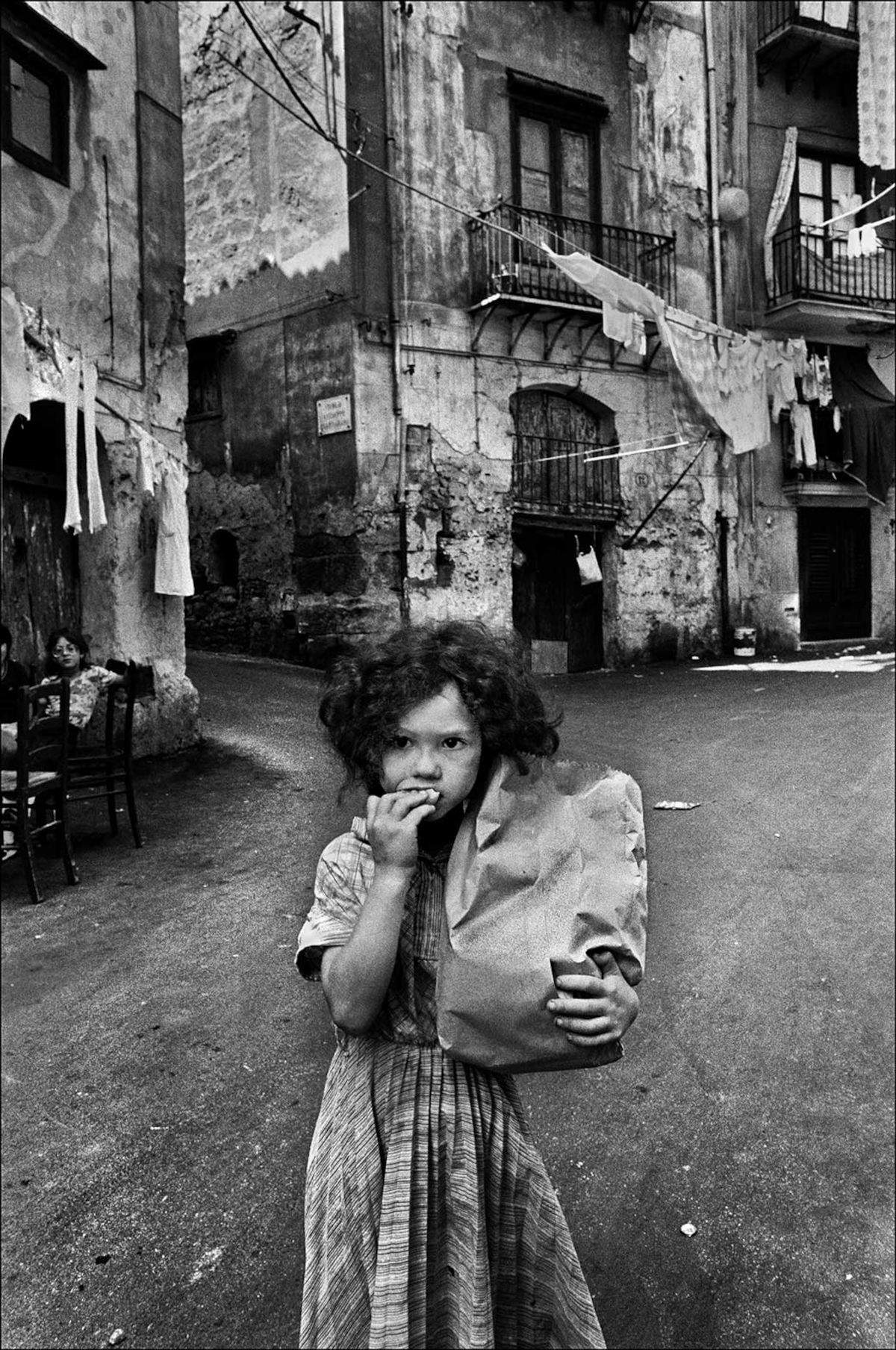
The third section, “Unstable Ecologies,” focuses on the relationship between the environment and contemporary transformations. The works by Letizia Battaglia, Silvia Camporesi, Martina della Valle, Iginio De Luca, Elena Mazzi, and Laura Pugno offer an interpretation of the landscape as a vulnerable organism, subject to processes of crisis yet simultaneously open to possibilities of regeneration. The landscape is understood as an active subject, traversed by ecological and social tensions that continually alter its structure.
Alongside the main body of the exhibition, the project also includes site-specific interventions and a selection of works conceived in relation to the exhibition context in Malta. The poem *Rima di Mari* by Tomaso Binga, dated 2002, is presented in dialogue with the island and its relationship to the Mediterranean. The text evokes the marine element as a space of passage and redefinition of identity, highlighting the sea’s role as a place of transit and transformation.
The exhibition also features Gea Casolaro’s 2019 work *Chi utilizza più lettere vince*, which invites reflection on the possibilities for cultural change through the construction of meaning and language. The same artist also presents the 2015 video *Prima che la notte duri per sempre* ( *Before the Night Lasts Forever* ), dedicated to the theme of oil exploitation and its environmental consequences, with a focus on the need for a collective response to the ecological crisis.
The exhibition also includes Laura Pugno’s *Ammophila arenaria*, created in 2025. The work consists of an amphora engraved with a depiction of the plant of the same name, a fundamental element for the stability of coastal dunes. The work establishes a direct dialogue with the Maltese coastal landscape, prompting reflection on nature’s capacity to regenerate and withstand environmental pressures. The exhibition opening will feature the participation of artists Laura Pugno and Gea Casolaro, who will take part in a discussion dedicated to the themes addressed in the project and the works on display at MUŻA.
 |
| In Malta, “Identity Beyond Borders”: The Farnesina Collection, Between Art and Environmental Crises |

Warning: the translation into English of the original Italian article was created using automatic tools. We undertake to review all articles, but we do not guarantee the total absence of inaccuracies in the translation due to the program. You can find the original by clicking on the ITA button. If you find any mistake,please contact us.


























 IT
IT FR
FR DE
DE ES
ES CN
CN


