




A journey into the memory of the Mediterranean through images of extraordinary visual intensity capable of transforming the past into a living, contemporary presence. This is Mimmo Jodice’s intention . Mediterraneo, the exhibition curated by Carlo Sala, will be on view from July 7 to November 8, 2026, at Palazzo Lanfranchi, home of the National Museums of Matera, before moving to the Centre d’Art Moderne in Tétouan, in Morocco, between December 2026 and February 2027. The exhibition is promoted by the Ministry of Culture’s Task Force for Cultural Cooperation with Africa and the Wider Mediterranean, in collaboration with the City of Matera, the Matera Basilicata 2019 Foundation, the MUNAF – National Museum of Photography, and Studio Jodice. Made possible thanks to the National Museums of Matera and the scientific consultation of the General Directorate for Contemporary Creativity of the Ministry of Culture, the exhibition is part of the program for Matera and Tétouan, Mediterranean Capitals of Culture and Dialogue 2026.
The exhibition features 83 photographs. Of these, 68 are vintage silver gelatin prints on baryta paper with selenium toning, created by Jodice himself between the late 1980s and early 1990s as part of his renowned “Mediterraneo” series. The works come from the private collection “I Cotroneo,” Rome, and from the Farnesina Collection of the Ministry of Foreign Affairs and International Cooperation, which holds them in storage and is presenting a selection. Rounding out the exhibition are five large-format works from the Danzatrici series and an appendix of ten vintage and modern works dedicated to the artist’s most recent explorations of the Mediterranean, coming directly from the Jodice Studio.
The exhibition represents the first major institutional monographic exhibition dedicated to Mimmo Jodice since his passing. It is an important opportunity to revisit and update one of the most significant series of his work, highlighting how the theme of the Mediterranean has continued to accompany his creative journey over the years through constant and consistent exploration.
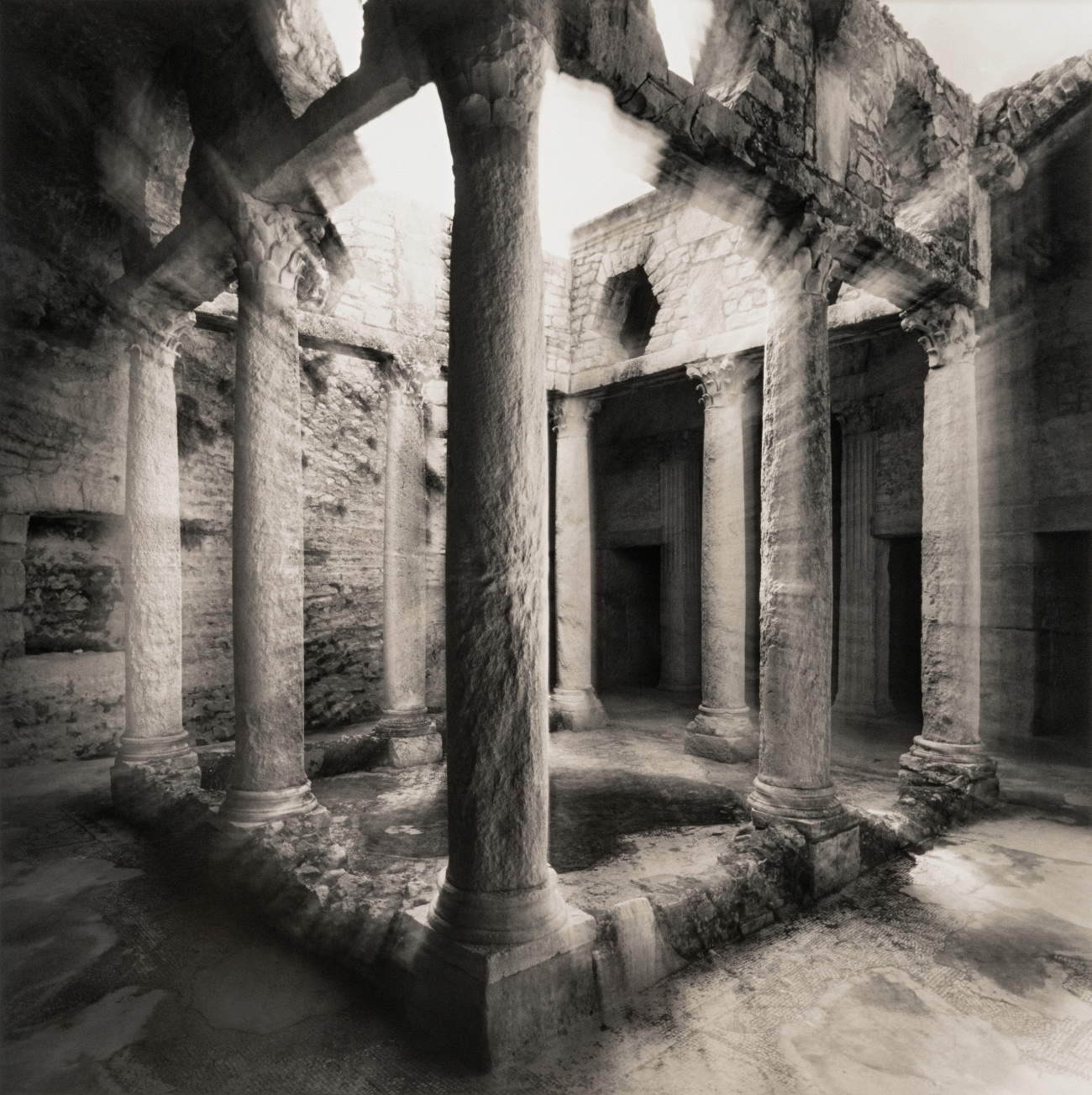
The images on display stem from numerous trips and site visits dedicated to the symbolic sites of Mediterranean civilization andarchaeology. The exhibition begins in Campania, a region to which Jodice always remained deeply attached, with views of Paestum, Pompeii, Cuma, and Baia, before expanding to a broader geographical horizon that includes Greece, Turkey, Jordan, Tunisia, France, and Libya.
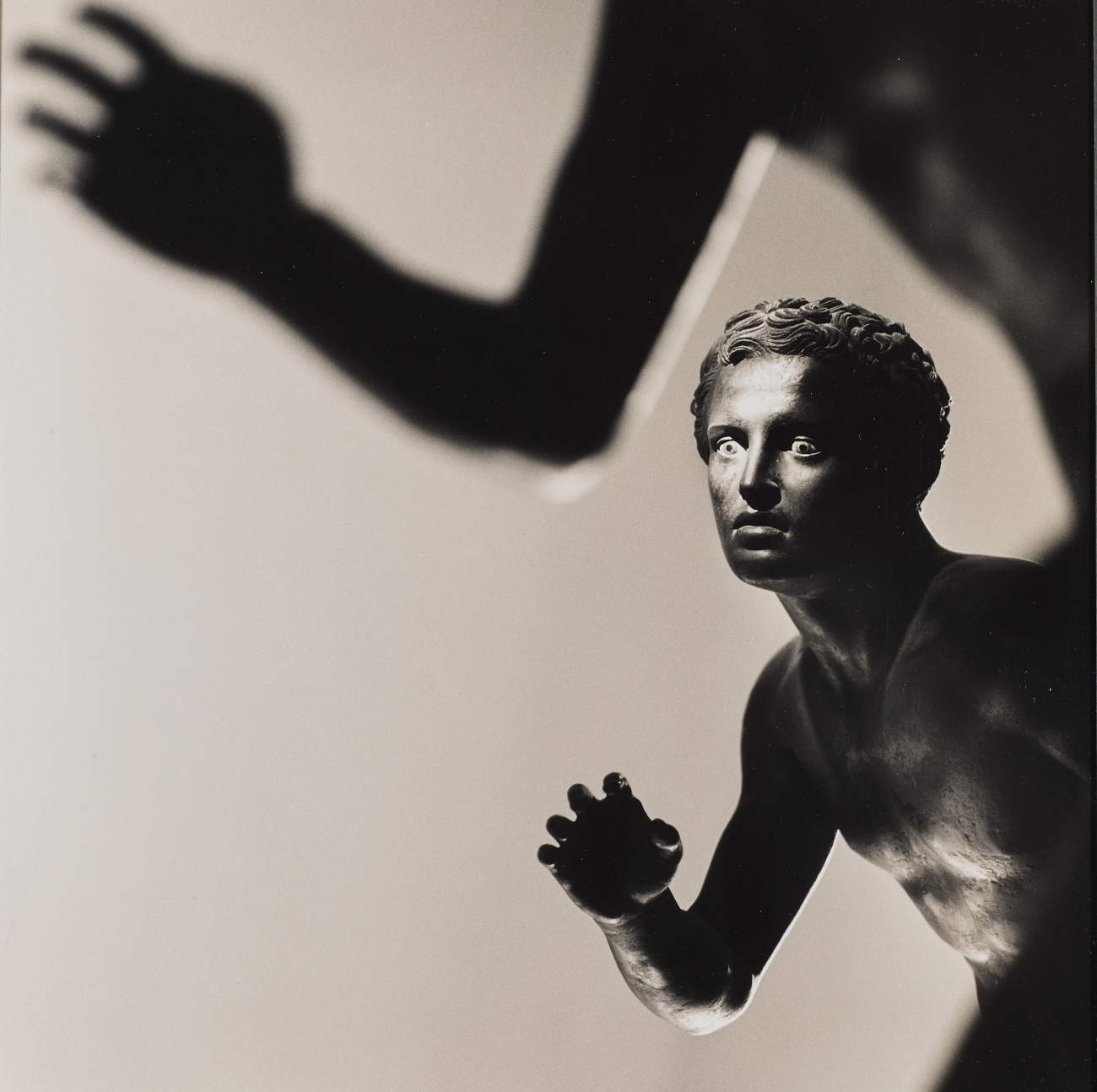
Among the most famous photographs in the exhibition are the Athletes from the Villa dei Papiri in Herculaneum and the Dancers housed at the National Archaeological Museum of Naples. The ancient sculptures emerge from the darkness with extraordinary expressive power, taking on an almost animated presence. The emotional intensity of the works is the result of Jodice’s refined photographic technique, which comes into play both during shooting and in the darkroom, accentuating contrasts and creating a dramatic dialogue between deep blacks and luminous whites. The exhibition also marks the occasion for the publication of a new expanded edition of the book *Mediterraneo*. The book, originally published in 1995 by the New York-based publisher Aperture on the occasion of the exhibition at the Philadelphia Museum of Art, is now reissued by Marsilio with a new graphic design by Studio Sonnoli and enriched with additional images from the famous series. The volume includes a curatorial essay by Carlo Sala, reprints the text by Predrag Matvejević that appeared in the original 1995 edition, and features a contribution by Salvatore Settis, which first appeared in the catalog for the 2016 exhibition Attesa and is presented here in its final version.
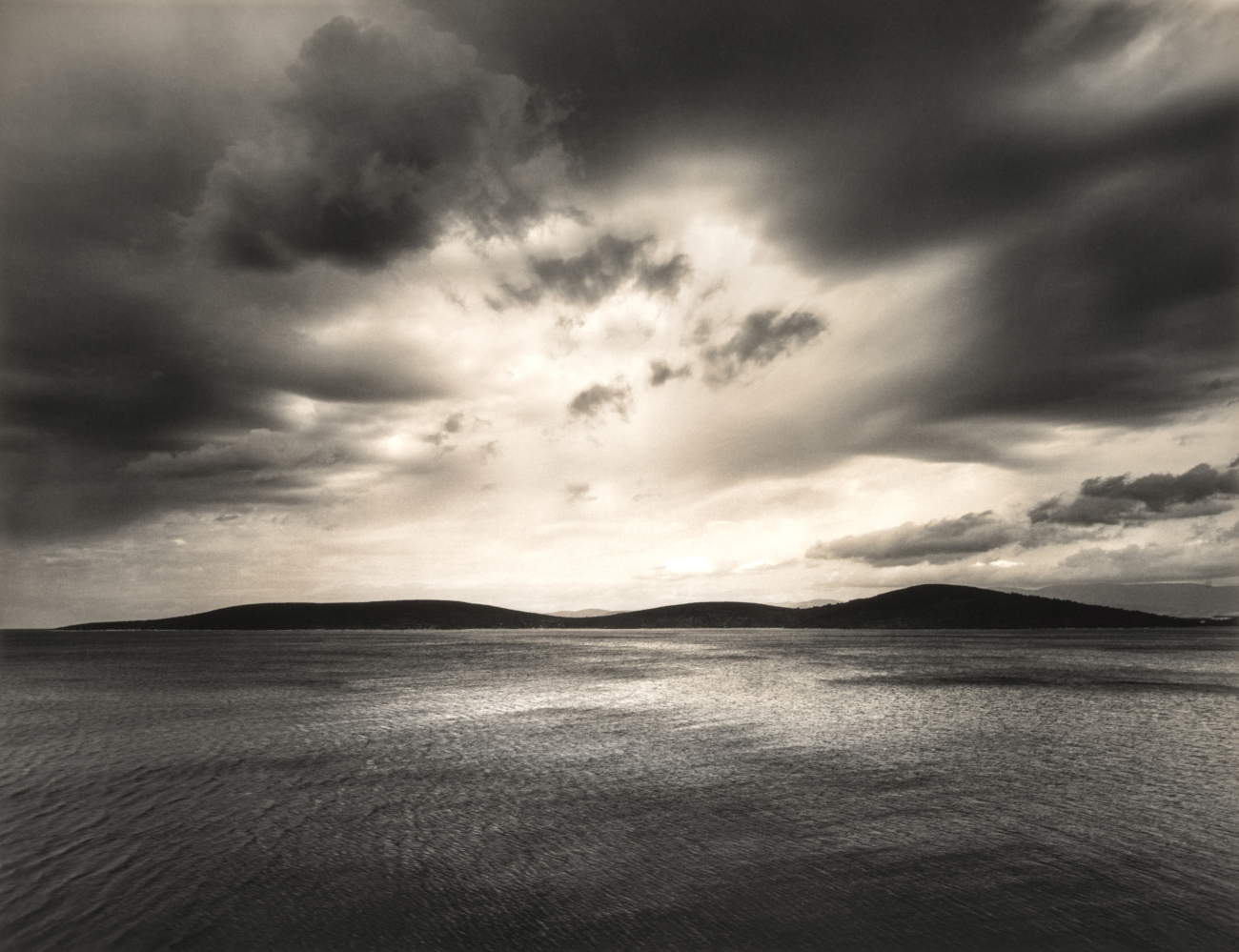
Finally, the photographs engage in a dialogue with a series of images dedicated to the Mediterranean landscape, interpreted by Jodice in an almost metaphysical key. The sea appears devoid of any references to the contemporary world, immersed in a suspended and silent atmosphere. Through this gaze, the artist attempts to recover the original perception of the ancient inhabitants of the Mediterranean, transforming the landscape into a space of memory.
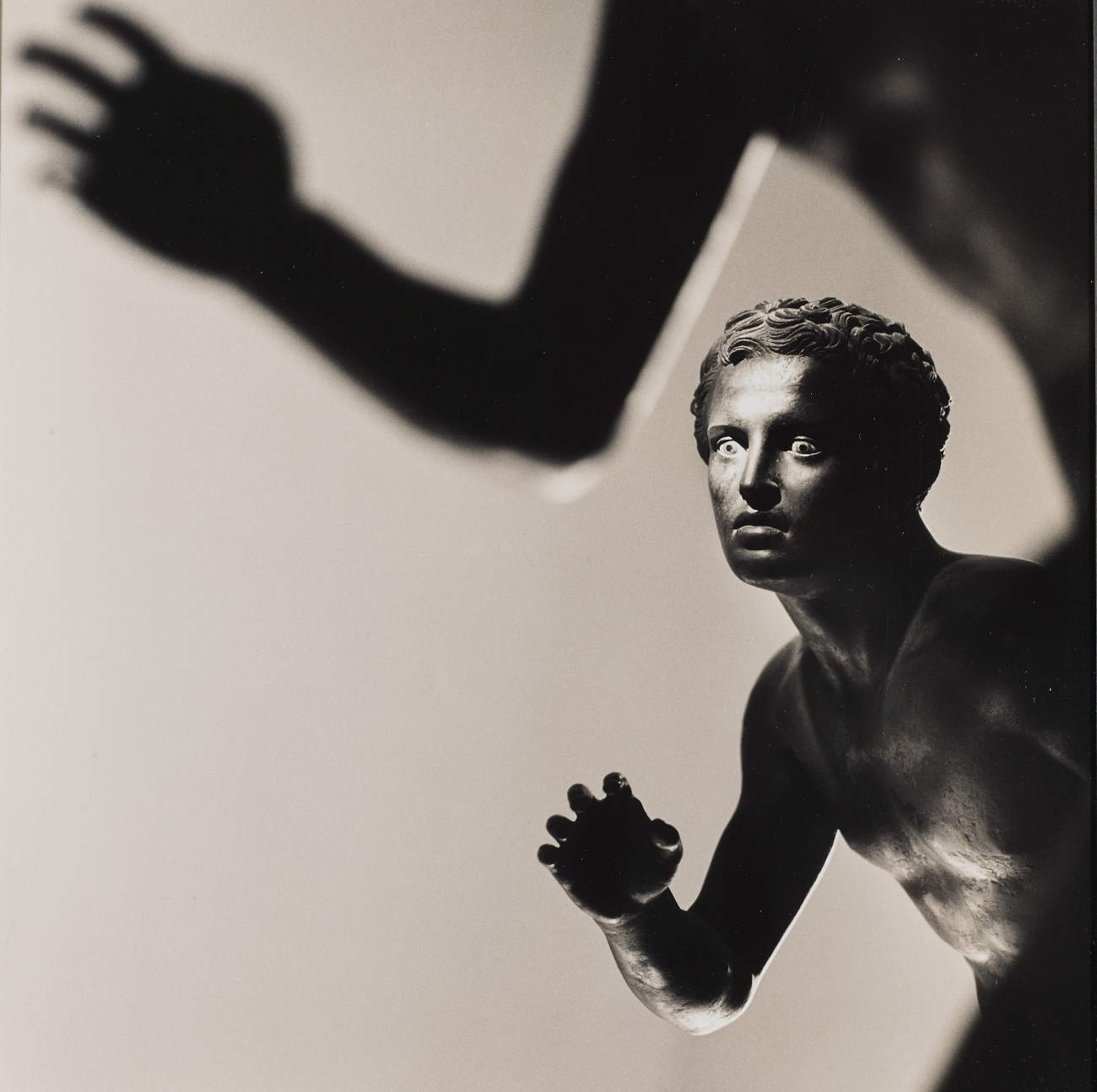
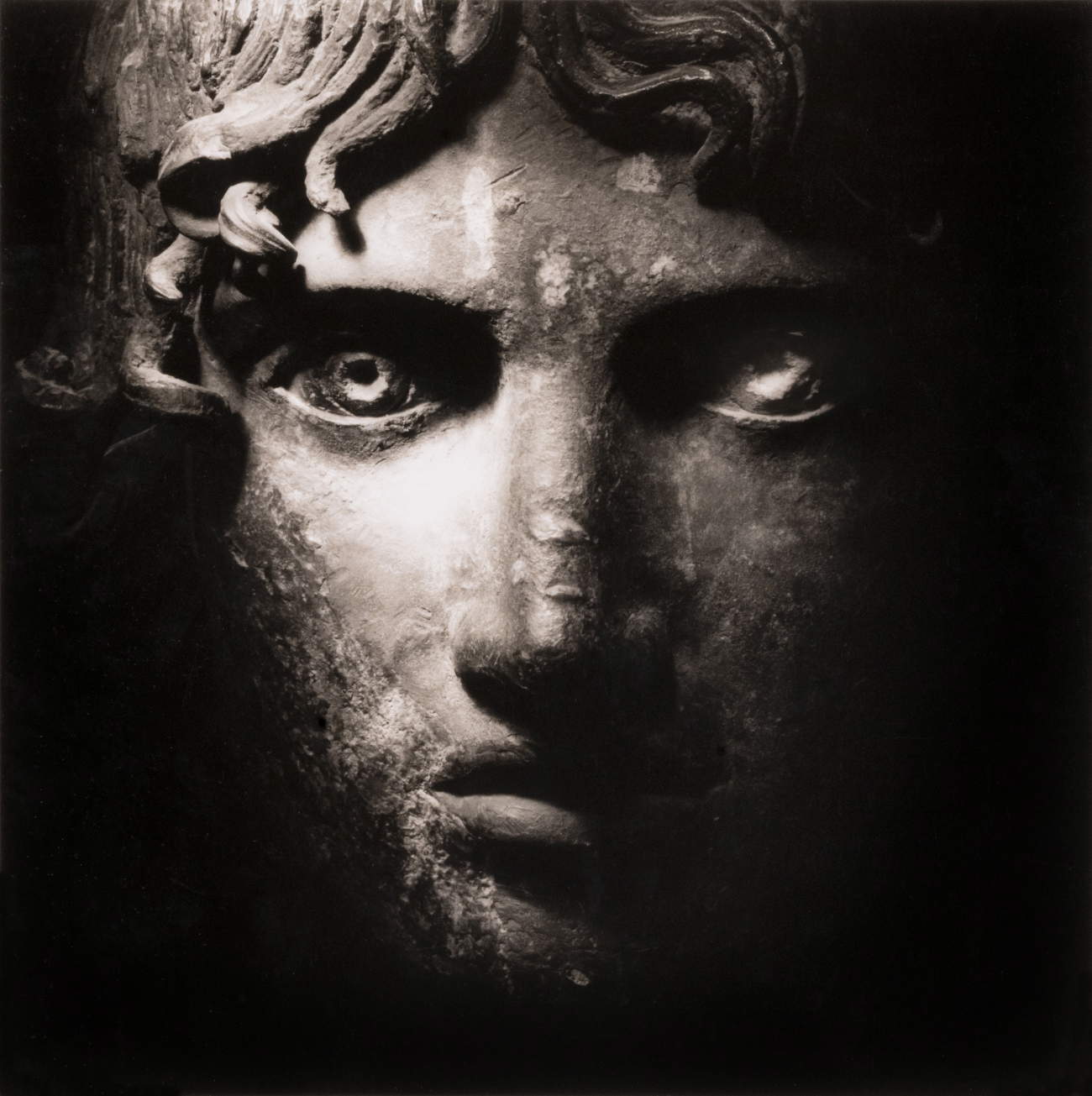
“In the photographer’s images,” reads Carlo Sala’s text in the exhibition catalog, “the statues are the subjects imbued with the greatest expressive pathos because their faces are charged with a pulsating humanity where bronze and marble lose theicy formal perfection intended by their anonymous creators and become emotional matter capable of conveying a variety of feelings that resonate from ancient man into the consciousness of the contemporary one.”
"Mimmo Jodice’s images remind us that the Mediterranean is not a dividing frontier, but a unifying space: an extraordinary mosaic of different identities, cultures, colors, scents, sensibilities, and memories that find, precisely in their plurality, a common root. An ancient and vital root, beautifully branched out across time and space,” states Angelo Piero Cappello, Director General of the Mission Unit for Cultural Cooperation with Africa and the Wider Mediterranean.
“The exhibition and the book, to which Munaf is contributing with pleasure and emotion, bring together the capitals of the Mediterranean in dialogue, and Mimmo Jodice is the artist best suited to bring this dual opportunity—of History and Photography—into focus,” comments Davide Rondoni, President of the National Museum of Photography. “A composed and unique gesture from a great artist who had photography and the Mediterranean in his veins. And he continues to give it to us as a gift.”
"In 1993, Michael Hoffman and a young Melissa Harris, while researching European photography, came to visit us in the studio. Mimmo showed them the work on archaeology and the Mediterranean that he had begun. Hoffman was enthusiastic about the project, the prints, and the new narrative vision. They asked us to complete the work so they could present it in the United States. We worked intensely, driven by that recognition, from one sea to another, from one coast to another, always captivated by extraordinary places,” explains Angela Jodice. “When the Director of the Philadelphia Museum of Art saw the work, he was breathless, and so were we, at the opportunity and the recognition of Mimmo’s great art.”
“The art of photography has a deep connection with Matera, not only because the city has been in the sights of great 20th-century artists,” declares Antonio Nicoletti, Mayor of Matera. “It is, perhaps, the ’city of stone’s’ relationship with time that constitutes the strongest link to that art which extracts a moment from time, fixing it in the truth of an image. In Mimmo Jodice’s art, this relationship with time multiplies and is enriched with meaning. He had worked in Matera, and today the role of ‘Mediterranean capital’ makes this connection relevant, to the point of making this exhibition an opportunity to highlight the cultural heritage that unites the peoples on both shores of the Mediterranean. The exhibition offers a reflection on the relationship between memory, archaeology, landscape, and Mediterranean civilization, providing the public with a profound understanding of a shared historical and cultural heritage.”
“Mimmo Jodice’s exhibition is an immediate and necessary expression of the insights that underpinned Matera’s bid to become the Mediterranean Capital of Culture and Dialogue 2026,” states Rita Orlando, General Director of the Matera-Basilicata 2019 Foundation. “His visual exploration reveals a timeless Mediterranean, a cultural reality that extends beyond the coastline and is embedded in the stone, the landscape, and the memory of the inland regions: there is a profound connection with the vision that underpins Matera 2026. That perspective now fully enters the Terre Immerse program and constitutes an authentic interpretive gateway to understanding the Mediterranean, for which Matera intends to be a voice.”
“Palazzo Lanfranchi,” adds Raffaella Bonaudo, Director of the National Museums of Matera - Regional Directorate of National Museums of Basilicata, “welcomes with great satisfaction the exhibition by Mimmo Jodice, a master of contemporary photography, offering the public the opportunity to engage with one of the most significant artistic experiences of our time. The exhibition fits fully within the Museum’s cultural program: like Carlo Levi and Luigi Guerricchio, Jodice embarks on a journey into memory, transforming the image into a tool for knowledge and participation. His photographs go beyond the simple representation of reality and invite everyone to recognize themselves, their own history, and their relationship with the community. This makes Jodice potentially an integral part of the cultural heritage of Palazzo Lanfranchi."
 |
| In Matera, the first posthumous solo exhibition dedicated to Mimmo Jodice, featuring his "Mediterraneo" series |

Warning: the translation into English of the original Italian article was created using automatic tools. We undertake to review all articles, but we do not guarantee the total absence of inaccuracies in the translation due to the program. You can find the original by clicking on the ITA button. If you find any mistake,please contact us.


















 IT
IT FR
FR DE
DE ES
ES CN
CN


