



by Redazione 13/05/2026



Categories: Exhibitions / Disclaimer
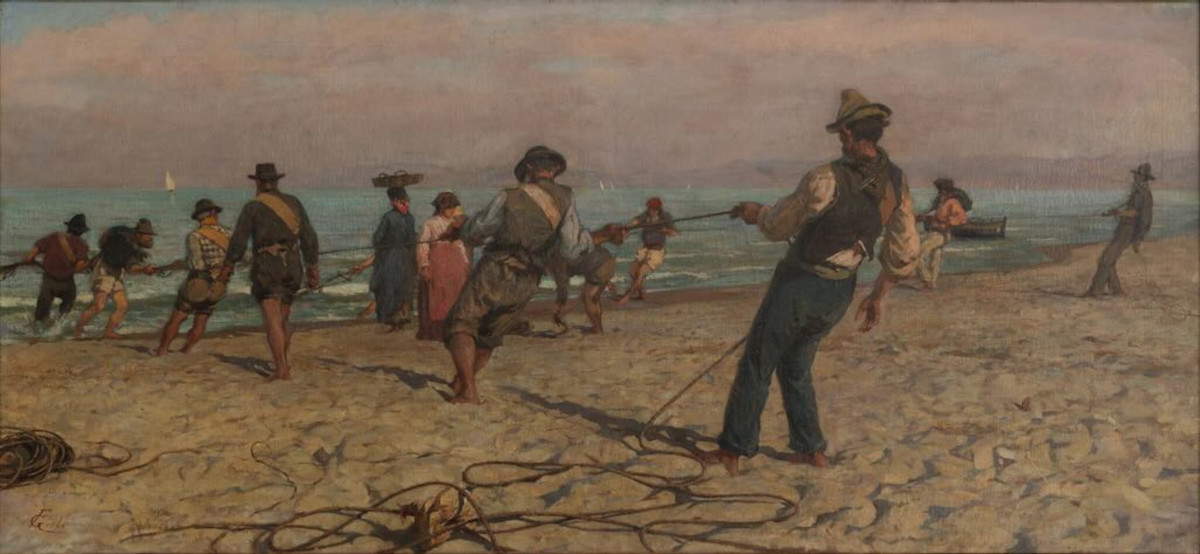
From May 16 to Sept. 6, 2026, Palazzo Blu in Pisa is hosting the exhibition "The Gioli Brothers and Painting in Pisa between the Nineteenth and Twentieth Centuries" in its exhibition halls to restore the complexity of a particularly fertile artistic season.

Palazzo Blu in Pisa presents in its exhibition halls from May 16 to September 6, 2026 the exhibition I fratelli Gioli e la pittura a Pisa fra Otto e Novecento, curated by Stefano Renzoni. With this exhibition, Palazzo Blu continues its path of research and enhancement of figurative culture between the 19th and 20th centuries, already addressed through previous exhibitions dedicated to the Macchiaioli, the artistic season of Henri de Toulouse-Lautrec and the atmosphere of the Belle Époque.


The exhibition project aims to offer a wide-ranging look at Pisan painting between the 19th and 20th centuries, reconstructing the dialogue between artists of different generations and restoring the liveliness of a cultural context deeply linked to the main Italian artistic centers of the time.
At the center of the itinerary emerge the figures of Francesco and Luigi Gioli, protagonists of an artistic season rooted in the Macchiaioli experience and later developed through different interpretations of naturalism and landscape painting. Their artistic vicissitudes, however, are not presented in isolation, but embedded within a wider network of relationships, influences and comparisons involving some of the leading interpreters of the figurative scene of the time.




Divided into six sections, the exhibition thus intends to construct a choral narrative in which, alongside the Gioli brothers, prominent personalities such as Adolfo Tommasi and Spartaco Carlini find space, along with artists such as Plinio Nomellini, Vittorio Matteo Corcos and Amedeo Lori, all of whom played a leading role in defining the identity of painting in the Pisan territory between the late 19th and early 20th centuries. In this scenario, the Gioli’s work appears as a meeting point between the Macchiaioli lesson and the opening toward a more contemporary sensibility in the representation of landscape and everyday reality.
Through paintings and drawings, the exhibition thus aims to restore the complexity of a particularly fertile artistic season, highlighting Pisa’s role as a place of comparison, experimentation and cultural elaboration. Special attention is devoted precisely to the drawings, selected by Bianca Cerrina Feroni and presented not only as preparatory materials but as autonomous expressions of artistic research. Coming from the Gioli family archives, still preserved by the heirs, these works are exhibited to the public for the first time.
The exhibition aims to propose a new reading of Pisan figurative culture, placing it within a broader national historical and artistic panorama and confirming Palazzo Blu as a point of reference for the study and appreciation of art between the 19th and 20th centuries.
The exhibition is accompanied by a catalog published by Felici Editore.
|
| Palazzo Blu dedicates an exhibition to the Gioli brothers and painting in Pisa between the 19th and 20th centuries |
Warning: the translation into English of the original Italian article was created using automatic tools. We undertake to review all articles, but we do not guarantee the total absence of inaccuracies in the translation due to the program. You can find the original by clicking on the ITA button. If you find any mistake,please contact us.