







From May 29 to July 24, 2026, Gió Marconi Gallery in Milan presents the exhibition Ron Nagle. Phantom Banter, the first solo exhibition in Italy dedicated to U.S. sculptor Ron Nagle, a figure associated with the West Coast scene and known for his production of small-scale ceramic sculptures. The exhibition marks another step in the artist’s presence in the country, following his participation in The Encyclopedic Palace exhibition at the 55th Venice Biennale in 2013, curated by Massimiliano Gioni. The exhibition can be visited at the gallery’s headquarters at 15 Tadino Street, open Tuesday through Saturday from 11 a.m. to 6 p.m.
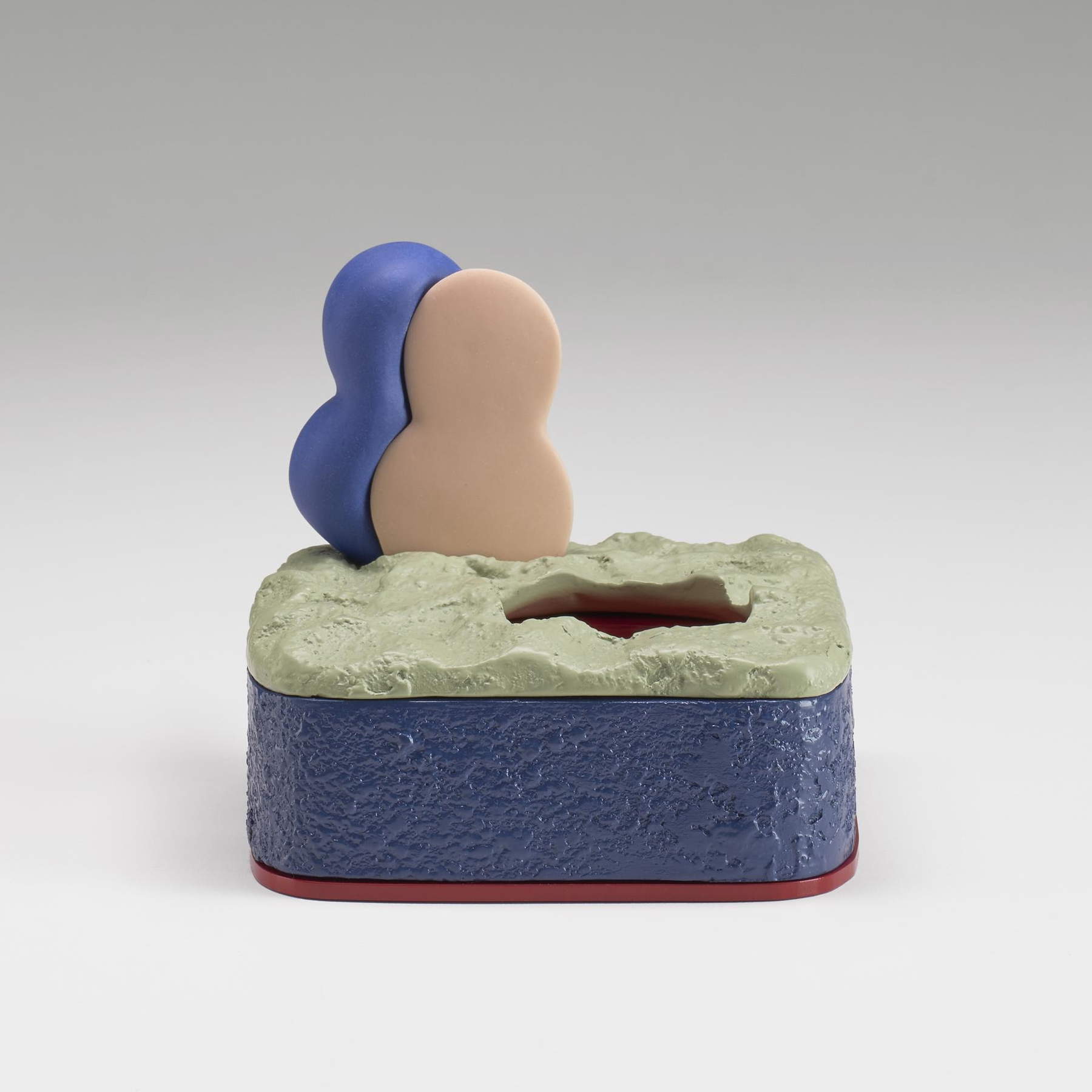
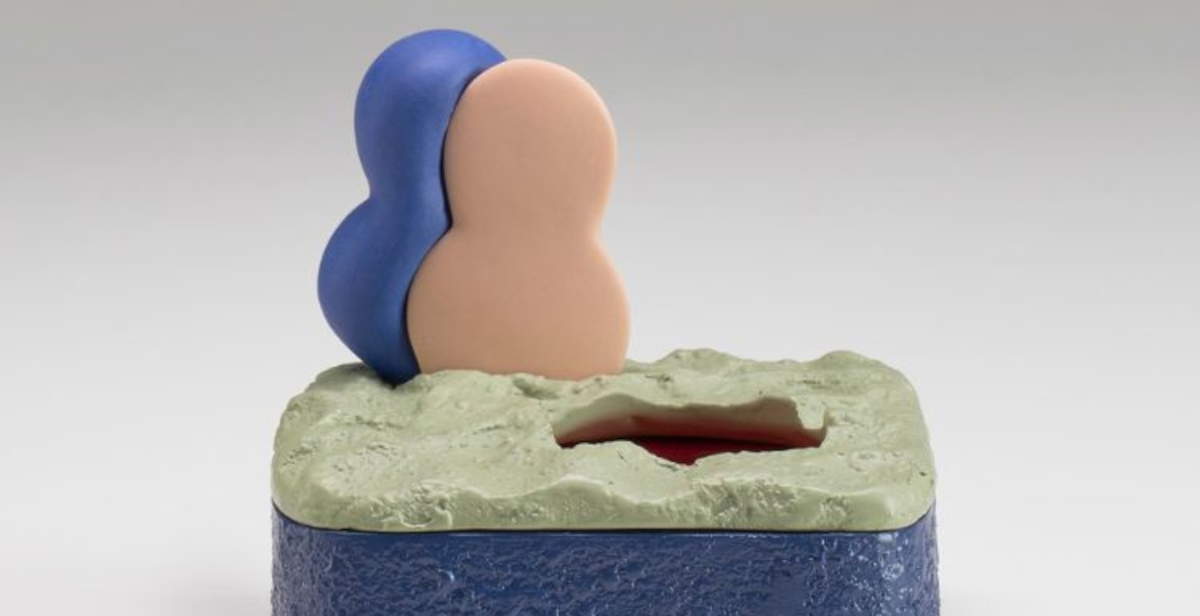
The exhibition project brings together eleven sculptures made between 2024 and 2026 and a selection of recent drawings. The corpus allows us to observe a recent phase of Nagle’s research, in which the relationship between drawing and three-dimensional object takes a central role. The works, generally small in size and rarely exceeding 15 centimeters, are located within a language that works on the reduction of scale and an analytical attention to surface, a constant element in the artist’s production.
Born in San Francisco in 1939, where he still lives and works, Nagle approached ceramics in the 1950s. In 1961 he joined Peter Voulkos’s studio at the University of California at Berkeley as an apprentice, a context that helped define the so-called California Clay Movement. During that period he came into contact with artists such as Ken Price, whose influence proved decisive in the early phase of his career. From the outset, Nagle’s research is distinguished by a progressive reduction in scale and a specific interest in surface construction as an autonomous field of experimentation.
The sculptures are made from cast and then fired ceramic elements, to which interventions with resins and synthetic materials are added. This combination allows the artist to expand the formal possibilities of clay, overcoming its structural limitations and introducing solutions that modify the perception of the object. The production process is aimed at the construction of specific visual effects, which include shiny or opaque surfaces, granular textures, suspended drippings and chromatic layering. Despite the three-dimensionality of the works, the work is developed from an avowedly flat perspective, in which the object is conceived as an image rather than an autonomous volume.
Within this process, drawing assumes a crucial role, especially since the 1990s, when it becomes an almost constant preliminary stage to sculptural realization. Iconographic sources are often derived from observations of everyday life, such as bent trees, eroded surfaces, crushed chewing gum, or urban graffiti. These elements are translated into quick sketches, sometimes automatic in nature, which do not directly define the color palette, but guide the construction of form and volumetric structure. At an early stage the drawings are made in black and white on blocks of colored paper, often yellow or pink and striped. Later the artist switched to the use of tissue paper, giving the drawing an increasingly decisive role within the creative process. After the production of hundreds of studies, Nagle selects those deemed most effective and modifies their scale through the use of the photocopier until he finds the size most suitable for three-dimensional transposition.
A further level of work concerns verbal language, which develops independently of the formal construction of the works. The titles of the sculptures arise from word games, phonetic slips and free associations. Assigned a posteriori, they introduce a margin of ambiguity that adds to the visual reading. This distance between object and title indirectly recalls practices that can be traced back to Surrealism and, in particular, to experiences such as those of Man Ray, in which language takes on an autonomous and non-explanatory function. This attention to the sound and linguistic dimension is also connected to the artist’s musical training. Indeed, Nagle is also active as a musician and songwriter. Narration, rhymes and language games constitute structural elements of his overall practice and contribute to the construction of an artistic identity that crosses different media without establishing clear hierarchies between disciplines.
Nagle’s work also develops through a network of cultural references that are presented as components integrated into a coherent system. Influences include the modern painting of Giorgio Morandi, Philip Guston, and Josef Albers, along with Japanese ceramics of the Momoyama period and the wabi-sabi aesthetic, which values the imperfection and transformation of materials. These elements are complemented by references to postwar U.S. visual culture, such as hot rods, characterized by lacquered surfaces and highly polished finishes, and the architecture of San Francisco’s Mission District, marked by the presence of polychrome murals.
The combination of such references produces a continuous oscillation between high and popular culture, within a form of abstraction that lies between pop and surrealism. Highly controlled and layered surfaces coexist with deliberately artificial effects, while technical precision is integrated with visual solutions close to automotive design and industrial materials. Over the course of more than sixty years, Nagle has gradually expanded his technical vocabulary, introducing materials and tools also from the industrial sphere. The use of airbrush, automotive paints and color overlay techniques allows for very precise control of the surface, which emerges as the main field of experimentation in his research.
 |
| Ron Nagle in Milan: at Gió Marconi the first Italian solo exhibition 'Phantom Banter' |

Warning: the translation into English of the original Italian article was created using automatic tools. We undertake to review all articles, but we do not guarantee the total absence of inaccuracies in the translation due to the program. You can find the original by clicking on the ITA button. If you find any mistake,please contact us.
















 IT
IT FR
FR DE
DE ES
ES CN
CN