





From April 23 to July 14, 2026, the large ledwall on the ground floor of Milan’s Palazzo Citterio will host BODY MACHINE (MERIDIANS), an installation by Sino-Canadian artist Sougwen Chung (1985). The work is being presented for the first time in Italy as part of the cycle of exhibition projects dedicated to the digital ledwall device of the Milan headquarters of Grande Brera. The project is curated by Auronda Scalera and Alfredo Cramerotti and is realized in collaboration with the National Museum of Digital Art.
Sougwen Chung is internationally known for research that interweaves performance, drawing, robotics and artificial intelligence systems. Over the past decade, she has developed working environments in which the creative process is not solely attributed to the artist, but is shared with mechanical systems designed to learn and react to human gestures. This includes the definition of an operational entity called “Them,” referred to as a synthesis of human and machine presence, in which manual gesture and algorithmic response overlap.
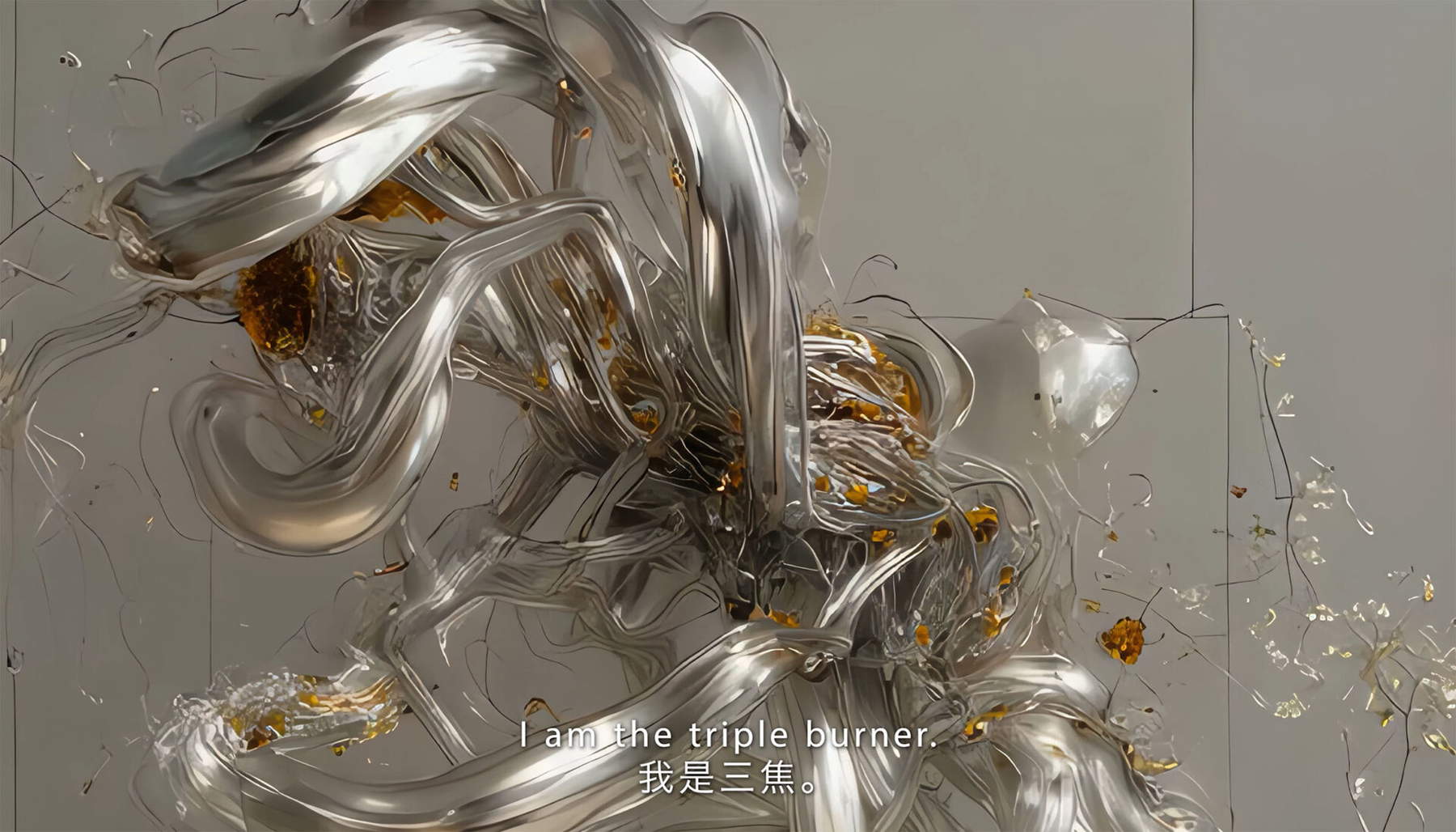
Within the D.O.U.G. (Drawing Operations Unit: Generation) series, Chung trained robotic arms through recording their own movements. The machines thus acquired a learning capacity based on observation of human gesture, becoming active participants in public performances. In such actions, sign production occurs in real time and is structured as a continuous interaction between the body and the automated system, with no clear separation between drawing origin and response. BODY MACHINE (MERIDIANS) fits into this trajectory of research, expanding its field of inquiry. The installation integrates body movement data, environmental recordings, machine learning models and immersive sound design. The result is a dynamic system in which light, sound and movement influence each other, generating continuously transforming visual and sonic configurations.
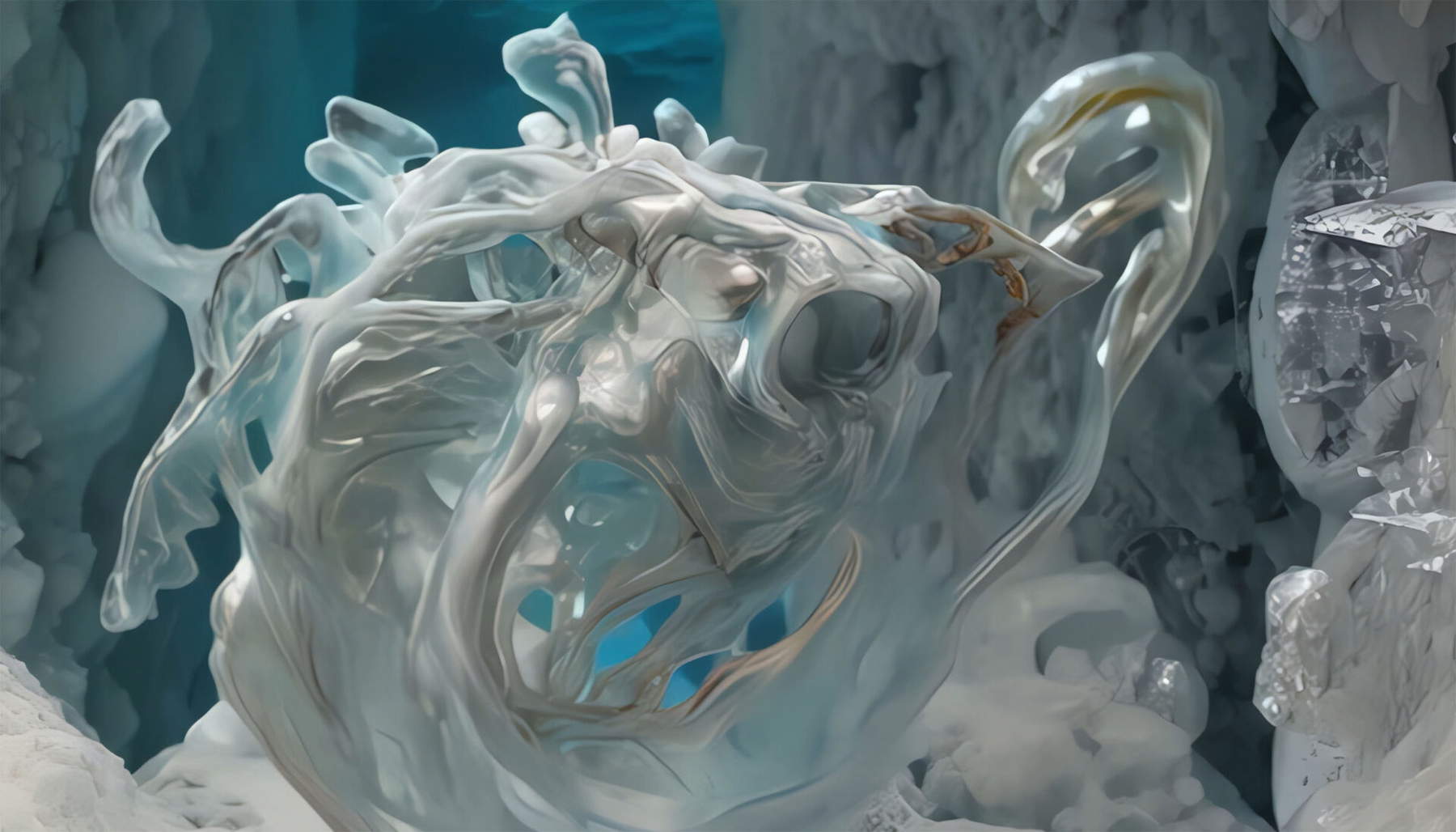
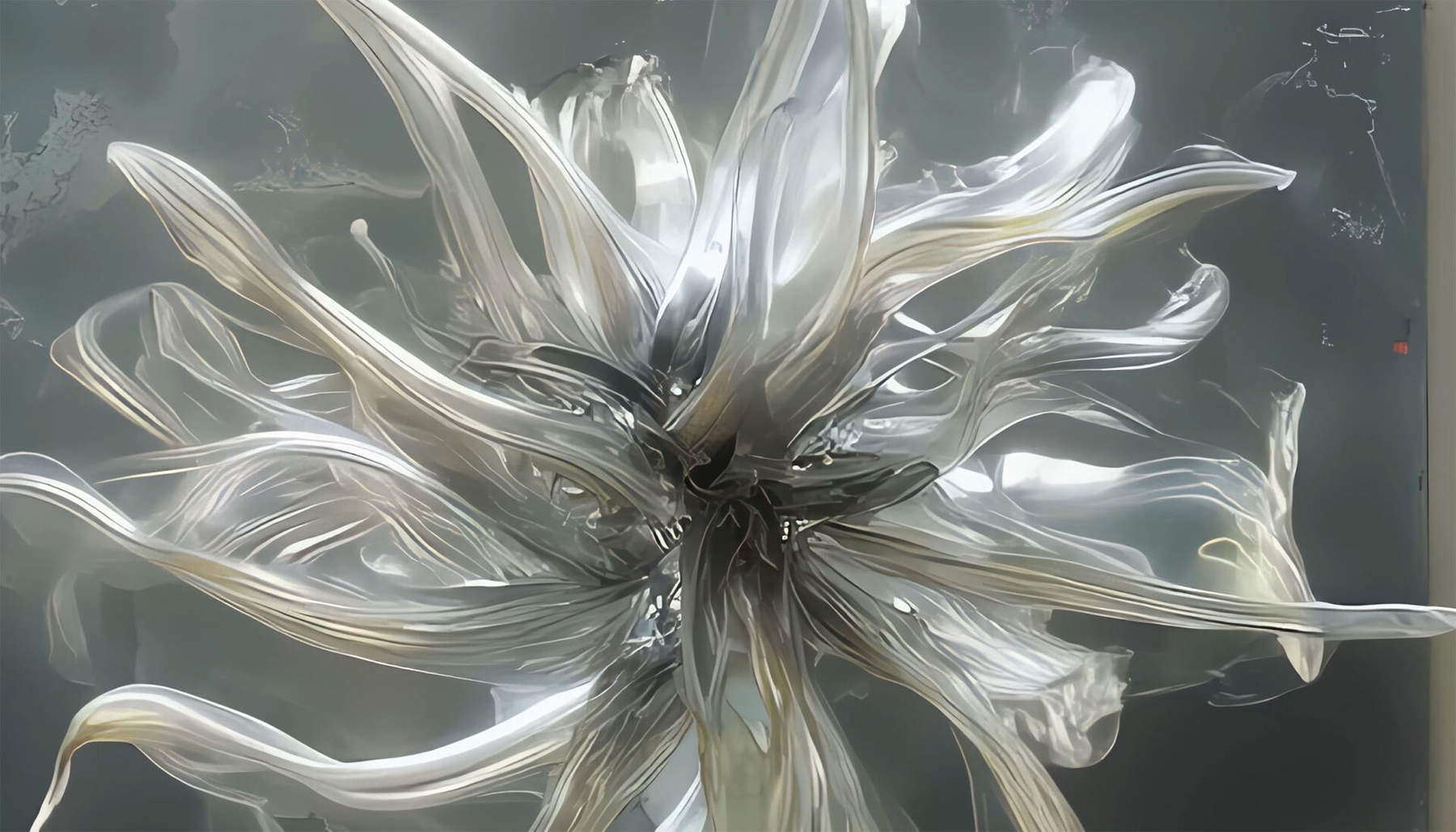
The forms produced by the installation are based on processes defined as biomimetic. The digital structures, generated through algorithms, reference organic-like organizations without directly reproducing recognizable natural elements. The work is thus placed in a zone of interference between computational systems and biological references, where form is the result of relationships between data, body and environment. The title of the project introduces the concept of meridian as a central interpretative element. The term is employed in a triple meaning: geographical line, energy path of the human body according to medical traditions, and symbol of connection between distant places. This semantic overlap is used to interrogate the relationships between the body, technology and terrestrial ecosystems, presented as interdependent rather than separate systems.
A major part of the project is devoted to the themes of water and ice. For the creation of the installation, Sougwen Chung undertook an expedition to the Arctic with the goal of observing melting glaciers and recording changes in sunlight in the polar environment. While in the field, the artist immersed herself for about five minutes in the glacial melt waters at a temperature of about 0.2°C, noting the gradual change in the thermal conditions of her surroundings. The physical experience under extreme conditions was translated into body movement data, which was later integrated into the work’s digital system. The collected information, together with environmental measurements and light-related parameters, contribute to the construction of the visual and aural language of the installation.
“I am delighted with this new project that highlights the great work of MNAD in this start-up phase,” says Director of Grande Brera, Angelo Crespi. “A series of exhibitions and acquisitions, in collaboration with Grande Brera, to plumb the field of digital art in which the aesthetic and scientific datum is always accompanied by engagement with narrow contemporary themes, in this case by Sougwen Chung on the theme of glaciers.”
"With BODY MACHINE (MERIDIANS)," say Auronda Scalera and Alfredo Cramerotti, “Sougwen Chung brings to Milan a work that challenges our most ingrained categories: what it means to be body, what it means to be machine, where one ends and the other begins. The installation does not just answer these questions, it inhabits them, puts them in tension, transforms them into sensory and conceptual experience. The ledwall of Palazzo Citterio thus becomes a liminal place, where human gesture and algorithmic computation meet in a choreography that is open, alive, and never final. We are honored to present for the first time in Italy the work of an artist who has been able to make the collaboration between human and machine a true poetics.”
“After an initial selection of works dedicated to the reinterpretation of cultural heritage through the languages of digital,” stresses Maria Paola Borgarino, director of the National Museum of Digital Art, "BODYMACHINE (MERIDIANS) invites us to an intense and very topical reflection on the relationships that bind the individual, technology and the environment. A complex relationship that, in Chung’s vision, is inevitably dialogic, transformative but also, surprisingly, equal. Artist and machine are interconnected actors, inseparably linked in a process of continuous listening, learning and co-evolution, and they collaborate to create a common space in which new levels of awareness and depth are possible."
Sougwen 愫君 Chung (1985) is a Sino-Canadian artist and researcher recognized internationally as a pioneering figure in the field of collaboration between humans and machine systems. His work MEMORY (Drawing Operations Unit: Generation_2) is housed in the permanent collection of the Victoria and Albert Museum and is considered the first model of artificial intelligence acquired by a major cultural institution.
Its practice, which is multidisciplinary in nature, crosses installation, drawing, performance and sculpture, intertwining with areas such as robotics, machine learning and biosensory. Within this intersection of languages, the artist explores the transformations affecting the relationship between human gesture and mechanical action, observing how such dynamics can redefine the modes of image and sign production.
Chung’s work proposes the collaboration between human, machine and environment as a constantly redefining system in which different agents participate in the generation of shared aesthetic processes. The result is open configurations in which perception and meaning emerge from ongoing, nonhierarchical interactions between biological and technological components.
Throughout her career, Chung has received numerous international awards. She was listed among the 100 most influential people in the field of artificial intelligence according to Time and received the Global Impact Award. She was also named Cultural Leader at the World Economic Forum and awarded Woman of the Year in Munich for her contributions to the arts and sciences. Other awards include the Lumen Prize for Art in Technology and the Japan Media Arts Excellence Award for Drawing Operations, as well as a relevant commission for Omnia for Omnia. The artist is also the founder of SCILICET, a London-based experimental studio dedicated to researching the intersections between creativity, computational systems and contemporary art practices.
 |
| Sougwen Chung in Milan: BODY MACHINE (MERIDIANS) on the ledwall of Palazzo Citterio |

Warning: the translation into English of the original Italian article was created using automatic tools. We undertake to review all articles, but we do not guarantee the total absence of inaccuracies in the translation due to the program. You can find the original by clicking on the ITA button. If you find any mistake,please contact us.

























 IT
IT FR
FR DE
DE ES
ES CN
CN


