





In conjunction with the 61st International Art Exhibition of the Venice Biennale, Anish Kapoor (Mumbai, 1954) presents an ambitious new exhibition in the spaces of Palazzo Manfrin, a historic 16th-century building located in the Cannaregio district and home to the artist’s Foundation. The exhibition, entitled Anish Kapoor: Palazzo Manfrin, can be visited until August 9, 2026, and represents the second occasion on which the palace opens its doors to the public. The exhibition project brings together about one hundred architectural models documenting works and projects developed over the past fifty years of the artist’s work, and includes both realized interventions and proposals that remained on paper. Alongside these materials are a series of large-scale installations and stainless steel works that explore the relationship between object, space and perception, central themes in Kapoor’s research.
Indeed, the exhibition is intended as a journey through the particular conception of space elaborated by the artist throughout his career. Kapoor has repeatedly stressed that his own work has long been thought of as a form of potential architecture. According to his vision, the creation of a new work of art necessarily implies the creation of a new space, capable of changing the way the public perceives and experiences its surroundings.
This reflection intends to find a concrete translation in the itinerary set up at Palazzo Manfrin, where visitors are invited to confront works that cross the traditional boundaries between sculpture and architecture. Indeed, Kapoor is internationally recognized for having developed an artistic language capable of transforming sculpture into spatial experience and architecture into sculptural object. Throughout his career, he has created works that have redefined the relationship between art, the environment and public participation, working on extremely different scales and experimenting with heterogeneous materials.
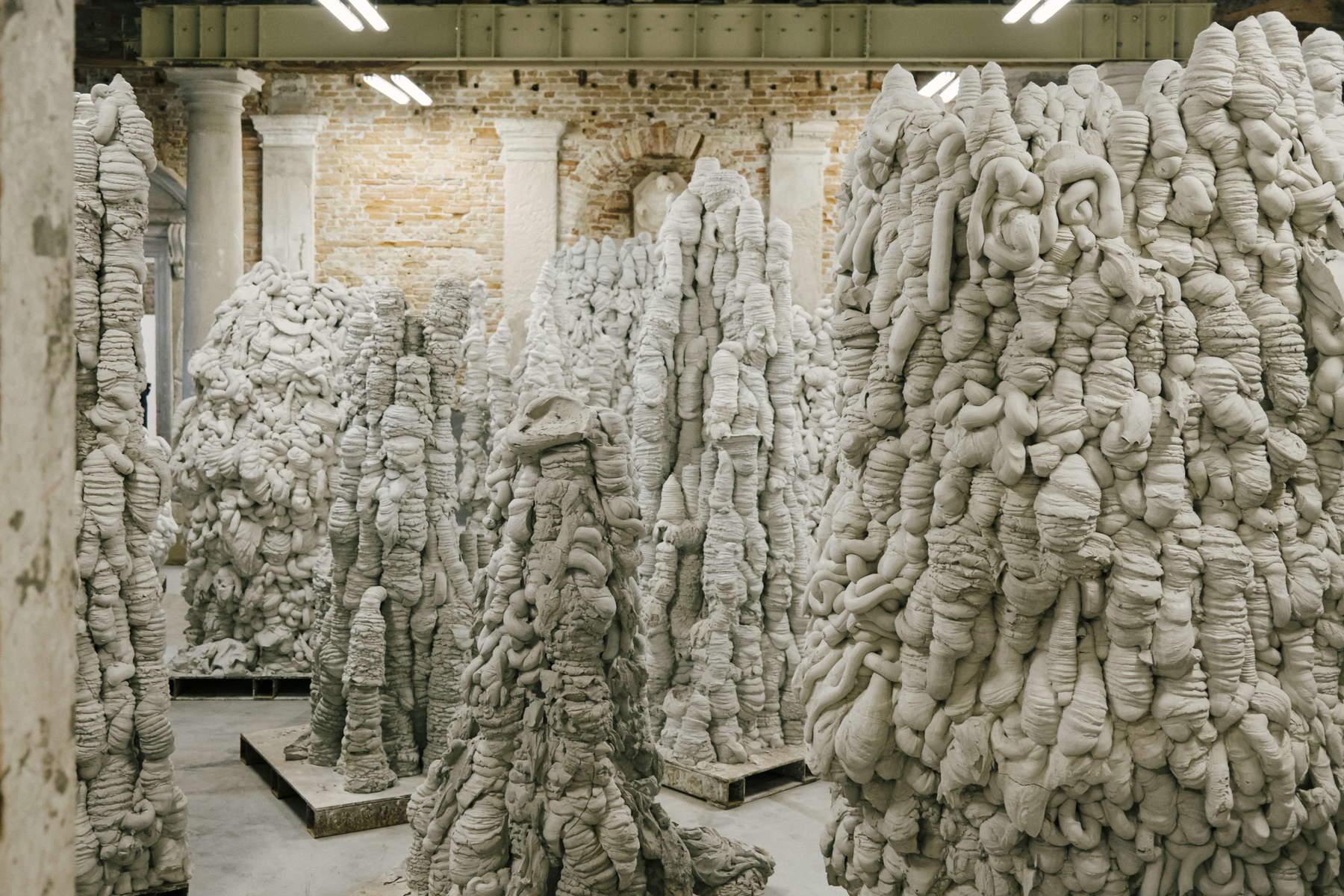
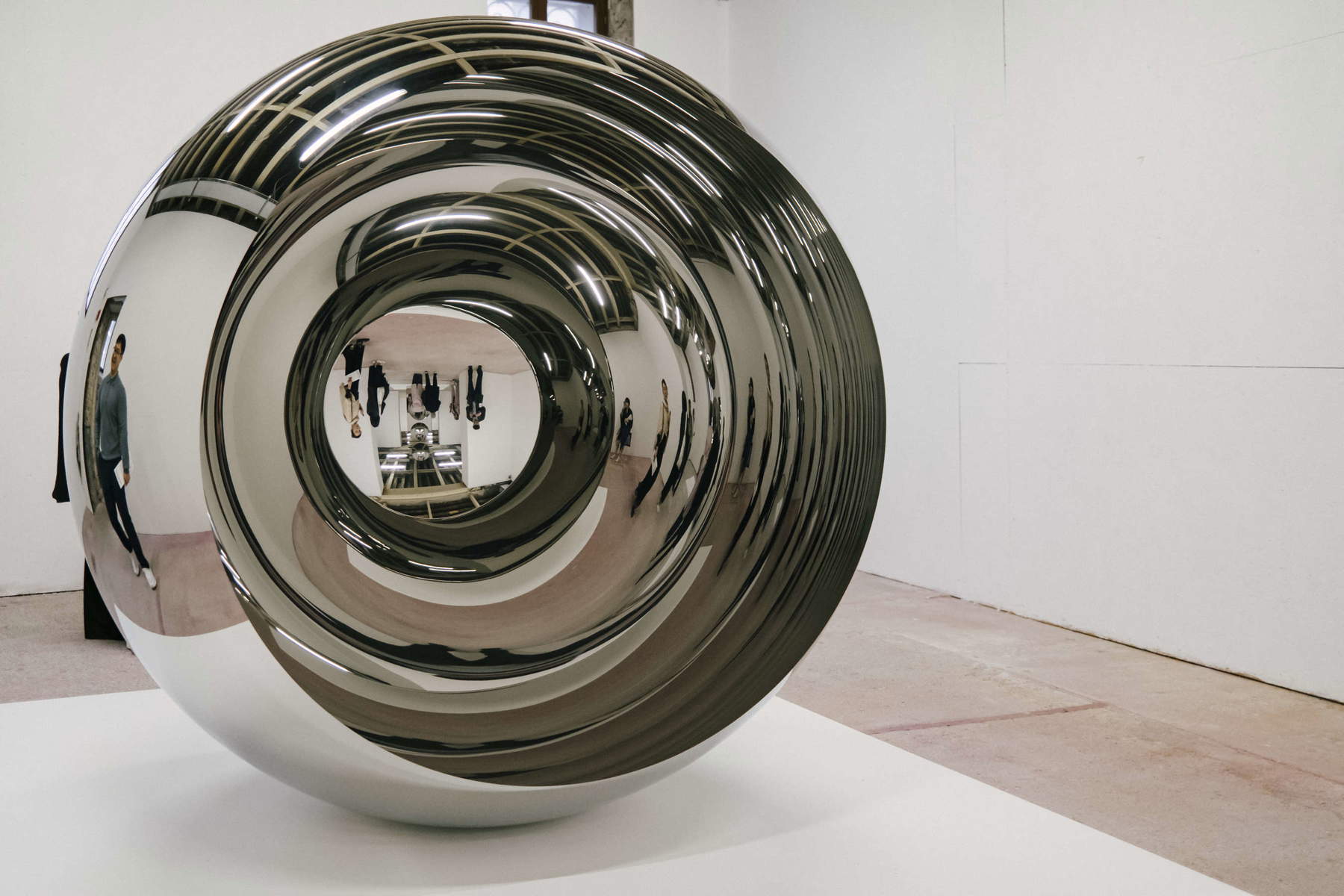
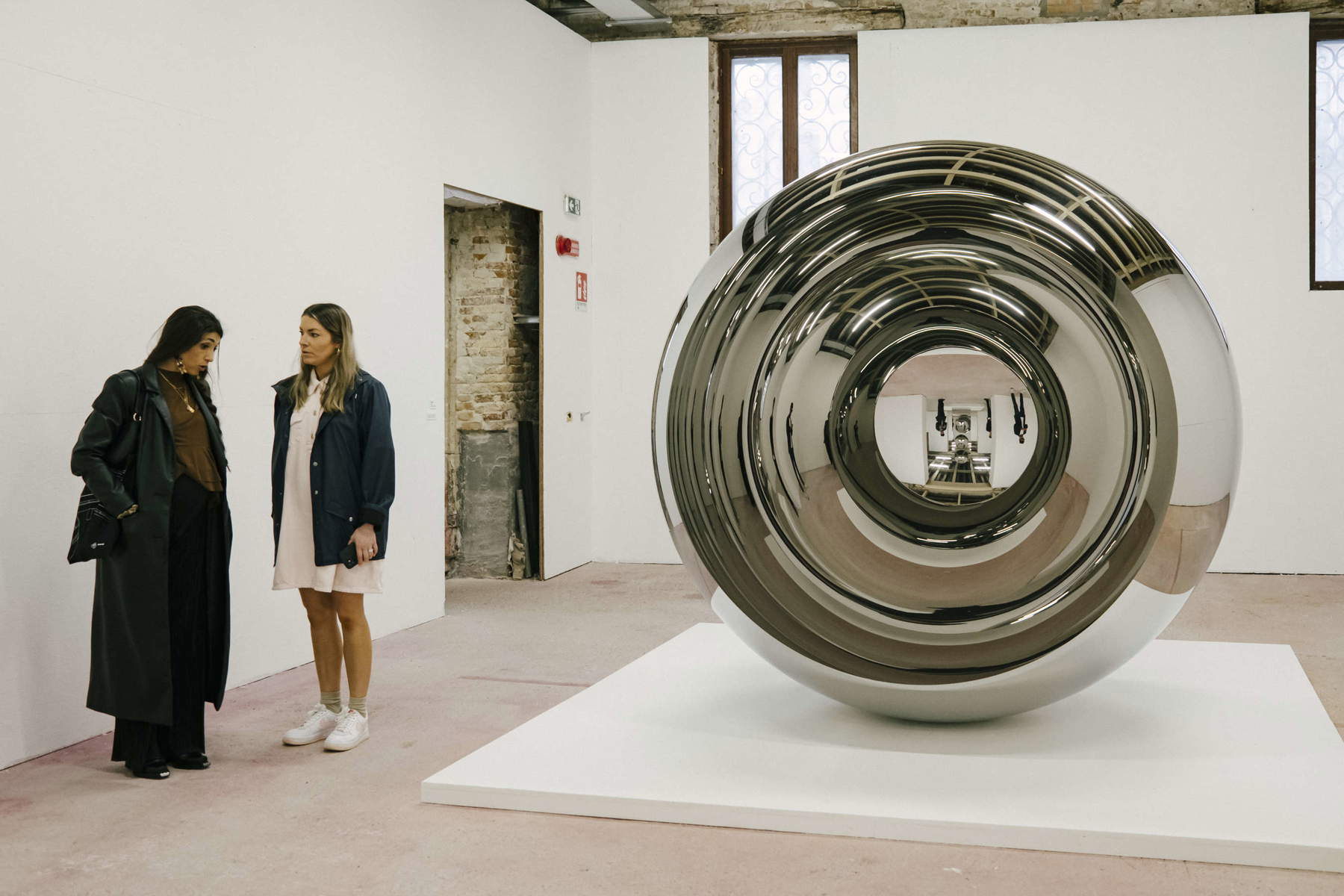
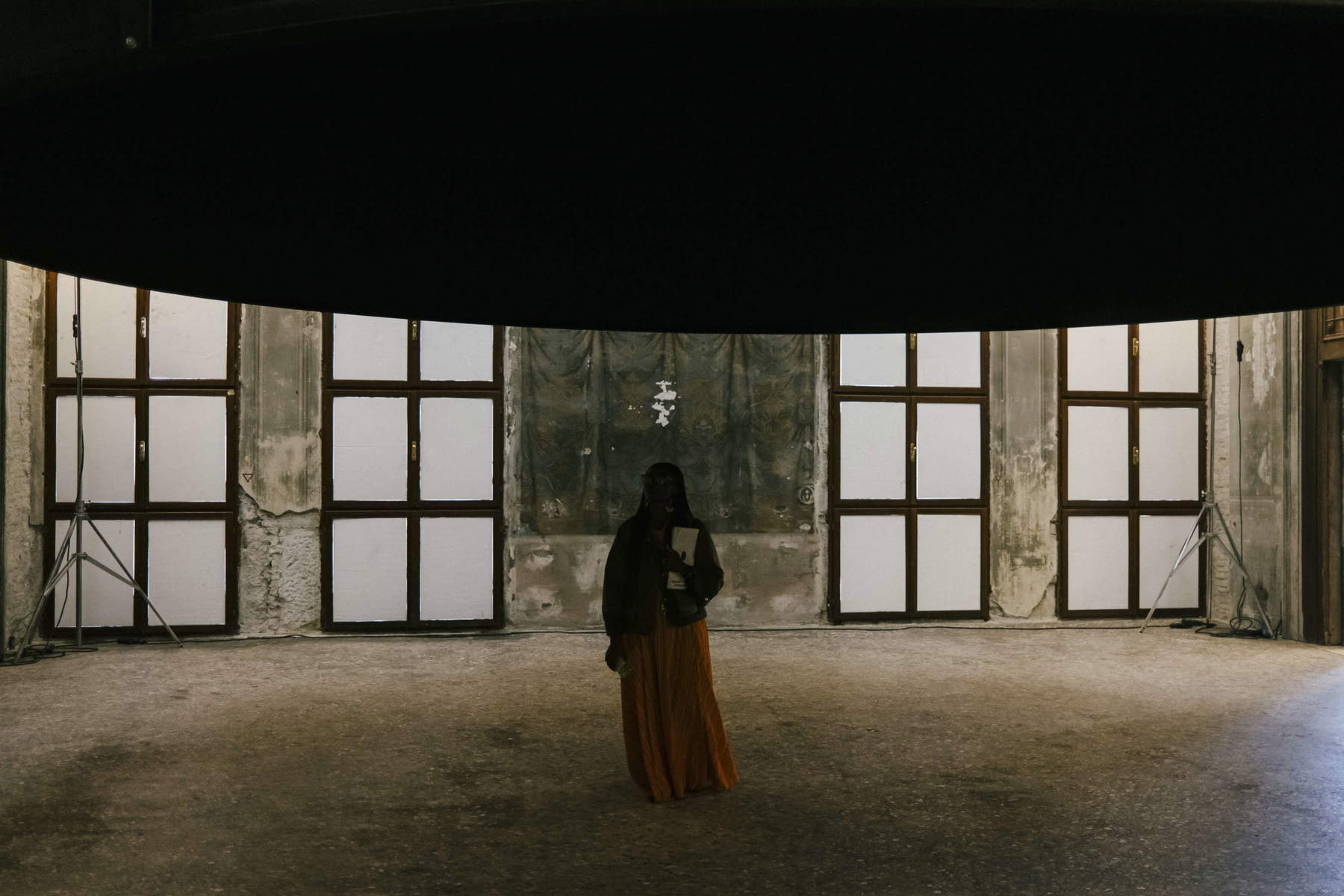
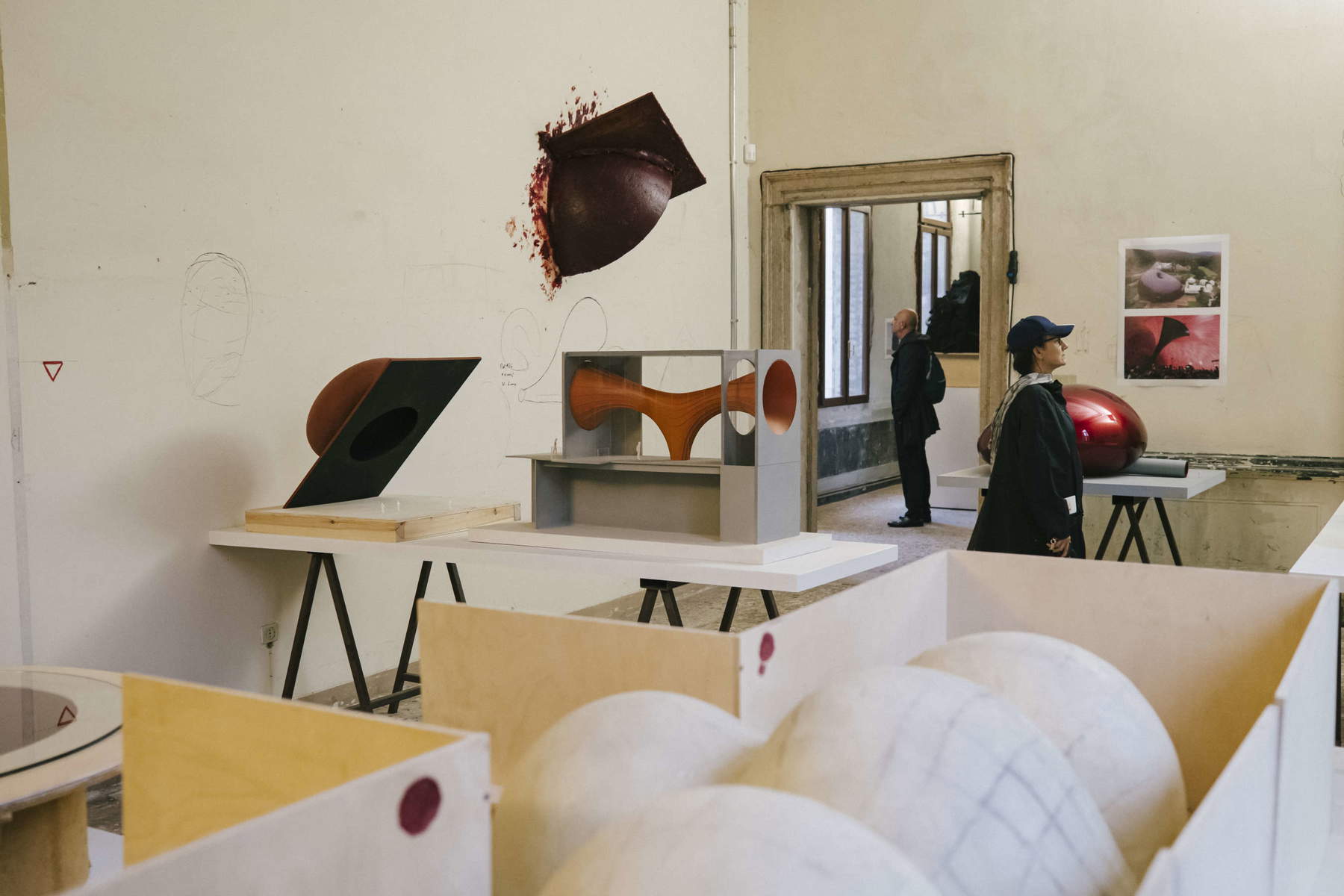
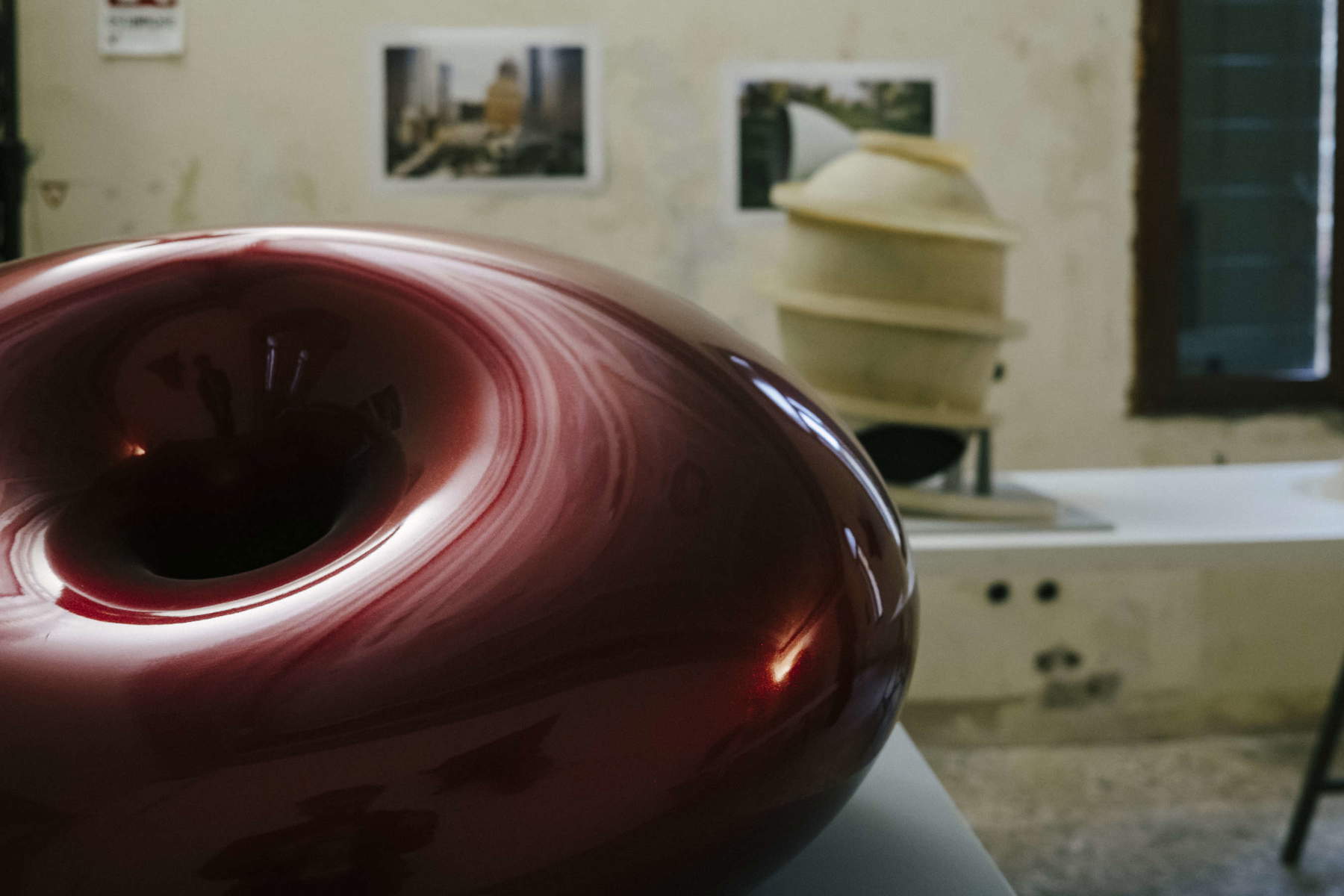
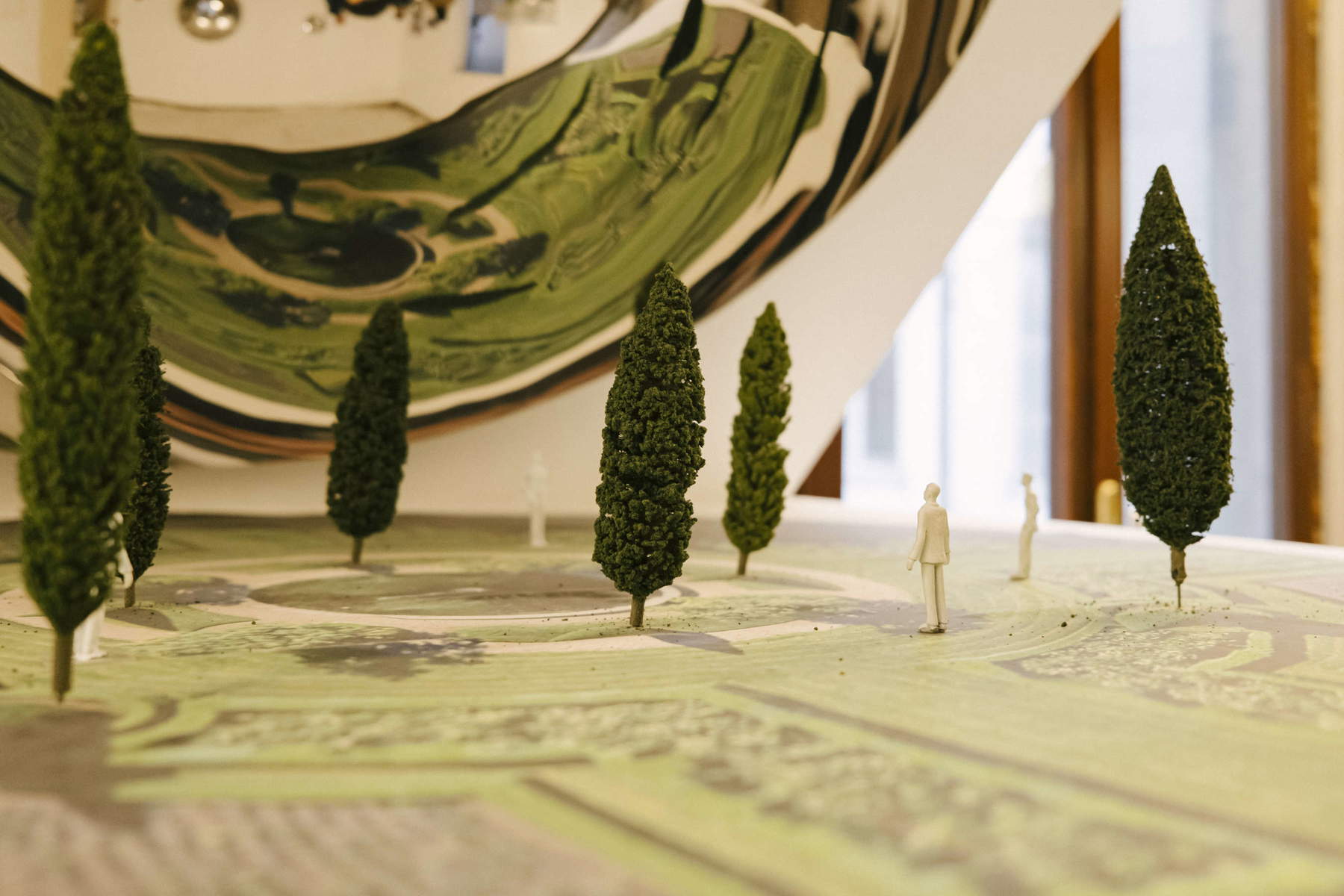
Among the references recalled by the exhibition are some of the most emblematic projects of his production. This is the case of Taratantara, the imposing stretched PVC installation created in 1999 for the Baltic Centre for Contemporary Art in Gateshead, UK, considered one of the artist’s most spectacular works. Likewise recalled is Ark Nova, inaugurated in 2013 and presented as the world’s first inflatable concert hall, conceived as a traveling structure designed to host musical and cultural events. More recent interventions also include the Monte Sant’Angelo subway station in Naples, opened during the course of last year and evidence of the artist’s constant interest in the integration of public art and architecture.
The basis of these monumental projects is always drawing and modeling. For Kapoor, in fact, the sketchbook and the construction of models represent the starting point of every creative process. These are experiments in exploring form, scale and constructive possibilities through simple and immediate materials, often belonging to the everyday dimension of the studio. Some of these insights are later developed and realized, while others remain at the design stage. However, even works that have never been built retain their own conceptual force, testifying to crucial moments in the process of artistic elaboration.
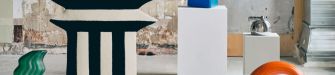
The hundred or so models on display in Venice restore precisely this dimension of creative thinking, offering the public the chance to take a close look at the path that leads from the idea to the realization of the work. Through these materials emerges the way Kapoor addresses issues related to volume, matter and the transformation of space, highlighting the role of experimentation as the driving force behind artistic research.
The exhibition also develops through new works of architectural scale that deepen the transformative character of sculpture. Welcoming visitors at the entrance to the building is a new and monumental version of the work At the Edge of the World, a work originally conceived in 1998 and here repurposed through a spectacular black pigment configuration. The intervention measures eight meters in diameter and is suspended from the ceiling, imposing itself as a dominant presence in the space and immediately introducing the audience to the perceptual questions that run through the entire exhibition. Presented alongside this installation is a new large-scale mirror work intended to dialogue with one of the artist’s most iconic creations, 1992’s Descent into Limbo. In these works Kapoor uses reflective materials, concave surfaces and optical illusions to alter the perception of the surrounding space. The works seem to simultaneously expand and absorb their surroundings, generating a condition of visual instability that directly engages the viewer.
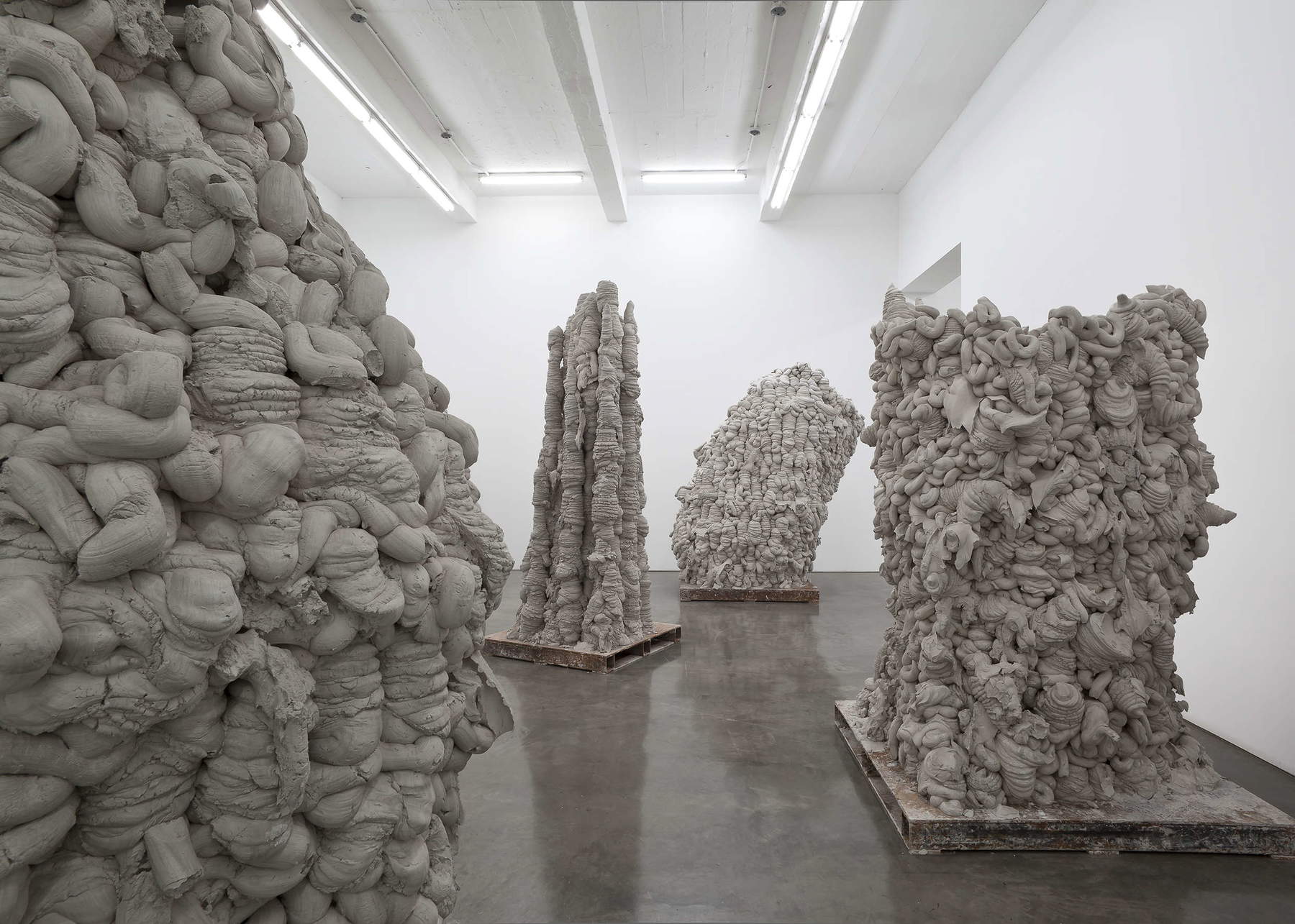
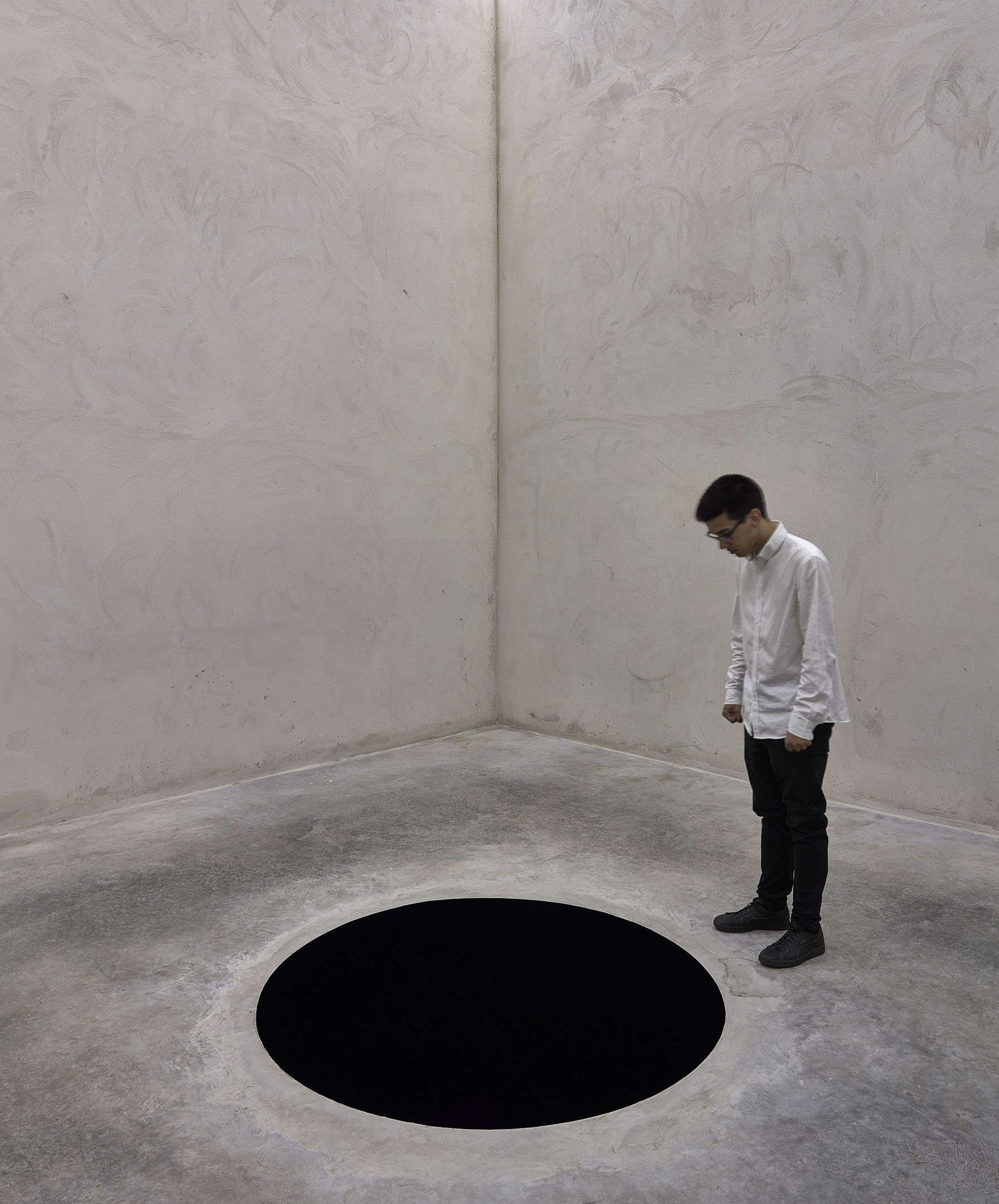
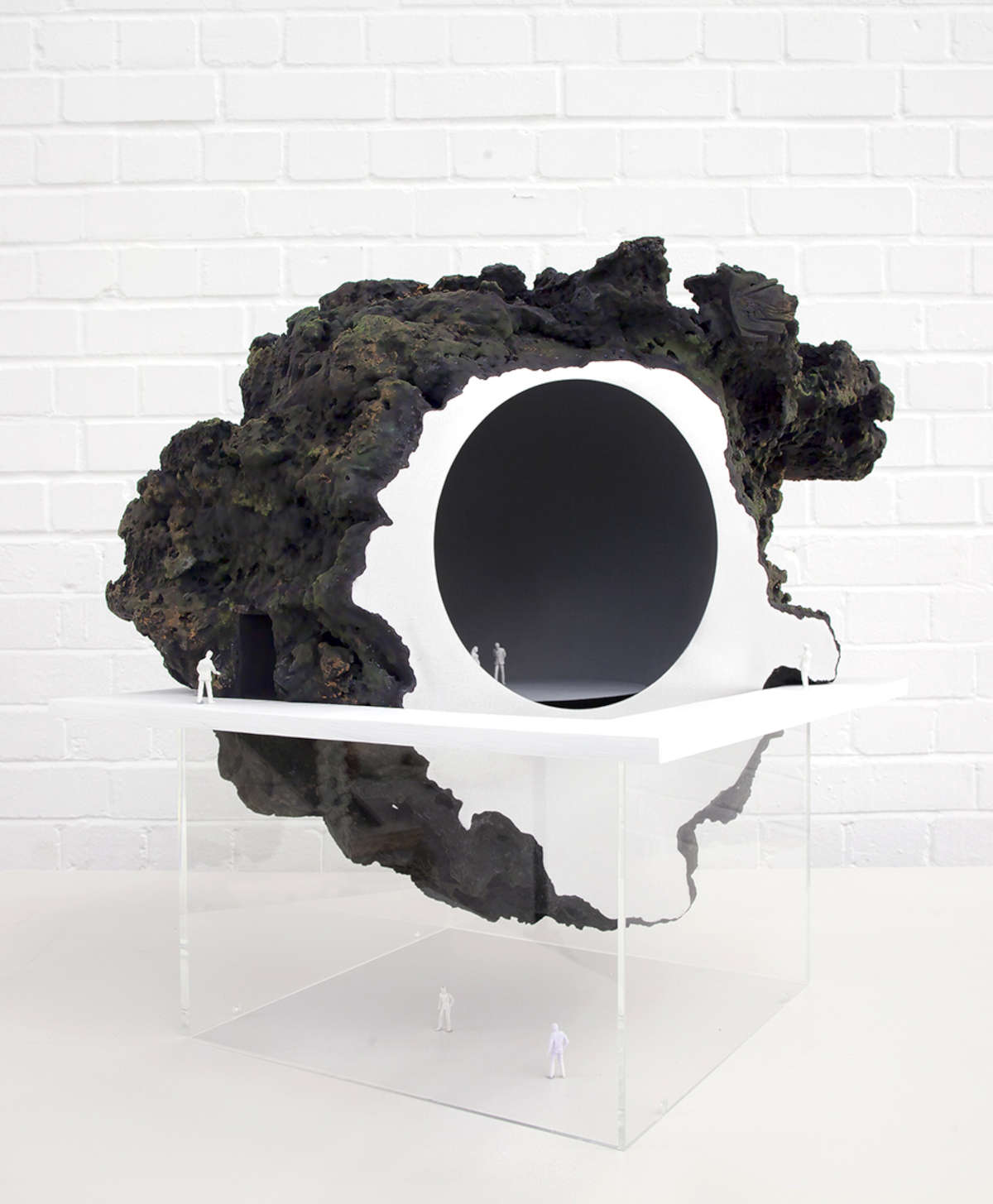
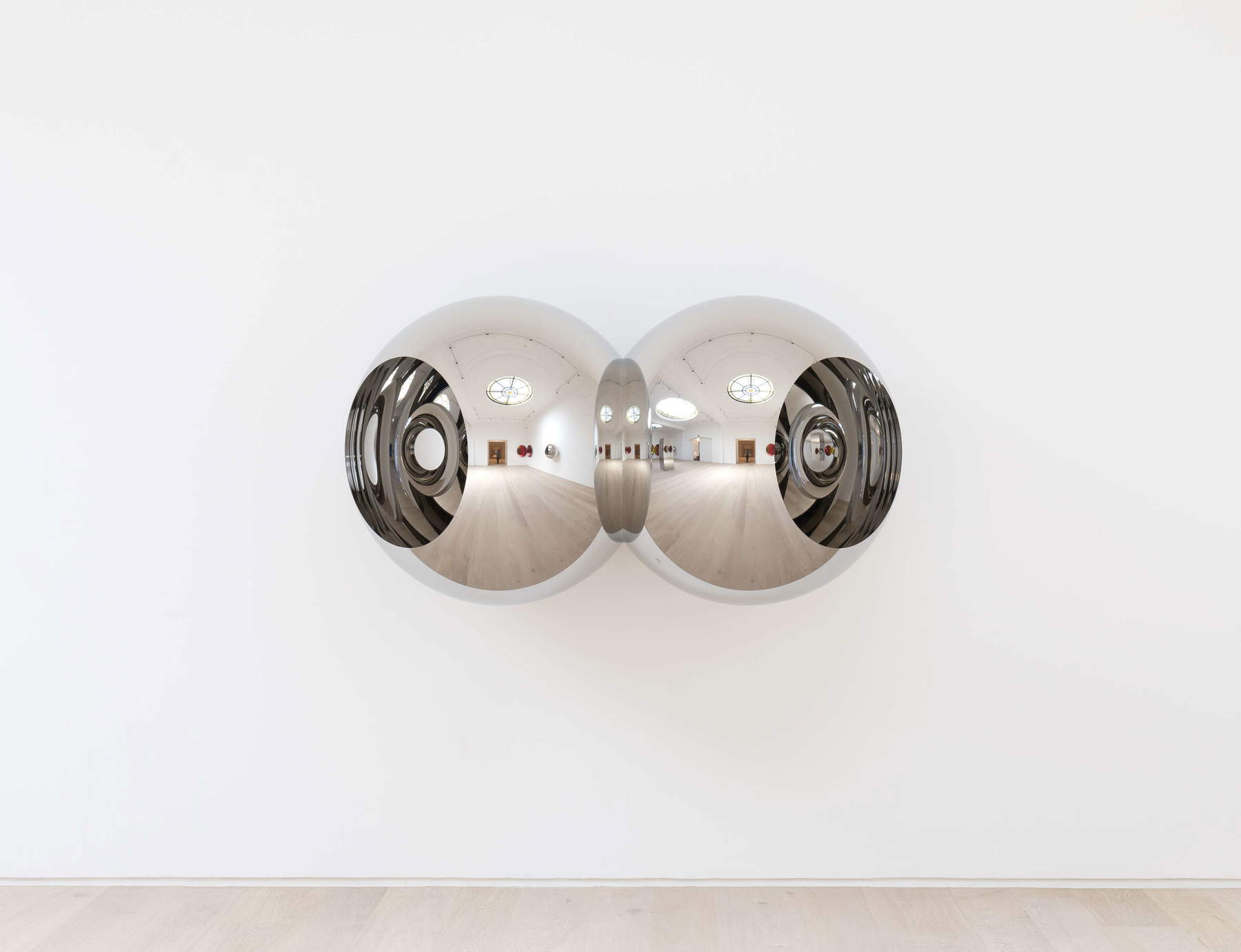
Through such interventions, the audience is introduced to what Kapoor calls the “non-object,” a dimension in which sculpture ceases to be mere physical presence and transforms into perceptual and mental experience. The work does not merely occupy a space but redefines it, creating a dynamic relationship between matter, void and viewer. Another section of the exhibition is dedicated to Ga Gu Ma, a 2012 work composed of concrete extrusions that evoke forms at once organic and mechanical. The material masses that characterize this series oscillate between industrial processes and biological references, generating images that recall the grotesque and the scatological. In these works Kapoor continues to interrogate the relationship between control and randomness, between artificial construction and natural growth, questioning the traditional categories through which we interpret matter.
The exhibition also includes an immersive room made of silicone and paint that establishes a direct connection with the artist’s most recent painting practice. This environment represents a moment of dialogue between different expressive languages, confirming Kapoor’s desire to overcome conventional separations between sculpture, painting and installation.
The works presented also include Violet Pearl over Burple, made in 2013. It is a blue pigment monochrome applied on a wall that appears as a kind of suspended chromatic void. The work testifies to the artist’s ongoing interest in the perceptual potential of color and its ability to transform space. In this case, pigment is not used as a simple decorative element, but as a tool capable of generating depth, absence and visual tension.
The reflection on emptiness and perception continues through a selection of sculptures made with Vantablack, the revolutionary nanotechnology material that has enabled Kapoor to further expand his research. Due to its characteristics of almost total absorption of light, Vantablack produces forms that seem to appear and disappear before the viewer’s eyes. Indeed, surfaces treated with this material cancel the perception of volume, creating objects that escape immediate comprehension and challenge the usual parameters of vision. The presence of these works takes on a special significance within Palazzo Manfrin. In fact, the series is presented again four years after its first exhibition in the same spaces, which took place in 2022. This return allows us to observe the evolution of a research that continues to confront the theme of emptiness and the limits of visual perception.
A figure among the most influential protagonists of international contemporary art, Anish Kapoor has built over the decades a research characterized by an extraordinary variety of forms, materials and scales of intervention. His works range from immense PVC membranes stretched or inflated within buildings and landscapes to paintings characterized by a strong material physicality. Alongside these works are mirrors that seem to suck the viewer inside dizzying concavities and pigmented cavities carved into stone or soil, capable of radically altering the perception of space. Central to his production is a constant focus on the relationship between the inner world and external reality. Kapoor’s works stage inversions, reversals and tensions that evoke profound metaphysical polarities: container and content, being and non-being, presence and absence. Through these oppositions, the artist constructs experiences that interrupt the normality of everyday perception and invite the audience to engage with normally invisible dimensions of space and consciousness.
|
| Venice, Anish Kapoor on display at Palazzo Manfrin with one hundred monumental projects and installations |

Warning: the translation into English of the original Italian article was created using automatic tools. We undertake to review all articles, but we do not guarantee the total absence of inaccuracies in the translation due to the program. You can find the original by clicking on the ITA button. If you find any mistake,please contact us.
























 IT
IT FR
FR DE
DE ES
ES CN
CN


