





Brescia is preparing to celebrate the bicentenary of the discovery of the Winged Victory, a masterpiece of the Roman age for its compositional quality, material and state of preservation. It is one of the very rare Roman bronzes from excavations that have come down to us, as well as an identifying symbol of the city.
On July 20, 1826, during an archaeological campaign in the Capitolium area of Brescia, members of the Ateneo di Brescia Accademia di Scienze Lettere e Arti found, inside a hidden cavity, the perfectly preserved Winged Victory, along with six heads from the imperial age and hundreds of bronze artifacts.
The echo of the discovery was such that it prompted Luigi Basiletti to plan a city museum. Thus began a two-century-long journey, which from the first nucleus of the Museo Patrio, housed in the specially reconstructed Capitolium, led to the birth of the Brescia Civic Museums. Today this system includes the Museum of Santa Giulia and Brixia Archaeological Park of Roman Brescia (a UNESCO site since 2011), the Pinacoteca Tosio Martinengo, the Castle of Brescia with the “Luigi Marzoli” Weapons Museum and the Museo del Risorgimento Leonessa d’Italia, as well as the Nuovo Eden movie theater, all managed by the Brescia Musei Foundation.
To celebrate the discovery and bring the city’s heritage back to the center, the Brescia Musei Foundation is organizing a four-day celebration, July 16-20, with a full calendar of events: dance, performances, workshops, guided tours and special itineraries will invite the public to rediscover the history of the statue. The bicentennial celebrations, under the patronage of the University of Brescia, Academy of Sciences, Letters and Arts, began already last December with the exhibition project Idols of Bronze, divided into two exhibitions: Victoria Mater. The Idol and the Icon, hosted in Brescia at the Archaeological Park, and Icons of Power and Beauty, staged at the National Archaeological Museum in Florence. Both exhibitions have been extended until June 14 and June 21, 2026, respectively.
For the Brescia stop, the Foundation involved Francesco Vezzoli, who created anunpublished installation curated by Donatien Grau, to put the Winged Victory in dialogue withPesaro’s Idolino, from the National Archaeological Museum in Florence. In Florence, meanwhile, the exhibition curated by Daniele Federico Maras and Barbara Arbeid explores the role of images in the representation and transmission of power in the Roman Empire, particularly during the crisis of the third century AD. It focuses on three gilded bronze heads of Roman emperors from Brescian collections, placed in relation to works from the Medici collections.
The program continues on April 23 with the installation of Vezzoli’s metaphysical Nike in the Viridarium, Sculpture Park of the Santa Giulia Museum: a work that reworks the famous Nike of Samothrace through suggestions of metaphysical painting, recalling the atmospheres of Giorgio de Chirico and Alberto Savinio. On the same day, Vezzoli will dialogue with director Peter Greenaway at the Santa Giulia Auditorium, in a meeting dedicated to the relationship between cinema and art history, an area also central to the artist’s research.
Also in this context is the archaeology course Intrecci d’identità: the Brescia Bronze Deposit, which started April 13 and runs through May 19. The initiative offers weekly meetings between specialists and scholars, promoting a reflection on archaeological heritage as a founding element of collective identity. The project is promoted by the Municipality of Brescia and Fondazione Brescia Musei, in collaboration with Ateneo di Brescia, Accademia di Scienze Lettere e Arti; Soprintendenza Archeologia Belle Arti e Paesaggio for the provinces of Bergamo and Brescia, and Ordine degli Architetti, Pianificatori, Paesaggisti e Conservatori della Provincia di Brescia.
After discussing how the recovery of the bronzes was a catalytic event that prompted the city to establish its own civic museums, and after a comparison between the Brescian Winged Victory and the one from Calvatone, now housed in the Hermitage, the course will continue on Monday, April 27, with the meeting La memoria che rivive. Great archaeological finds as a mirror of collective identity, in which Maurizio Harari and Marina Lostal will discuss the political role of archaeological heritage. On Monday, May 4, Elena Calandra and Azzurra Scarci will analyze the Capitolium’s male portrait heads and their concealment to investigate the representation of power and its inherent fragility through the changes of time, while, on Monday, May 11, Monica Salvadori and Livia Capponi will reconstruct the complex social web of Roman women between self-assertion and public life. The program will be completed on Tuesday, May 19, with Anna Patera and Serena Rosa Solano’s meeting on the challenges of contemporary archaeology. At the conclusion of the series, participants will have extraordinary access to the western interspace of the Capitolium, the site of the discovery of the bronzes, and to the excavations currently underway in the area of the Roman Theater.
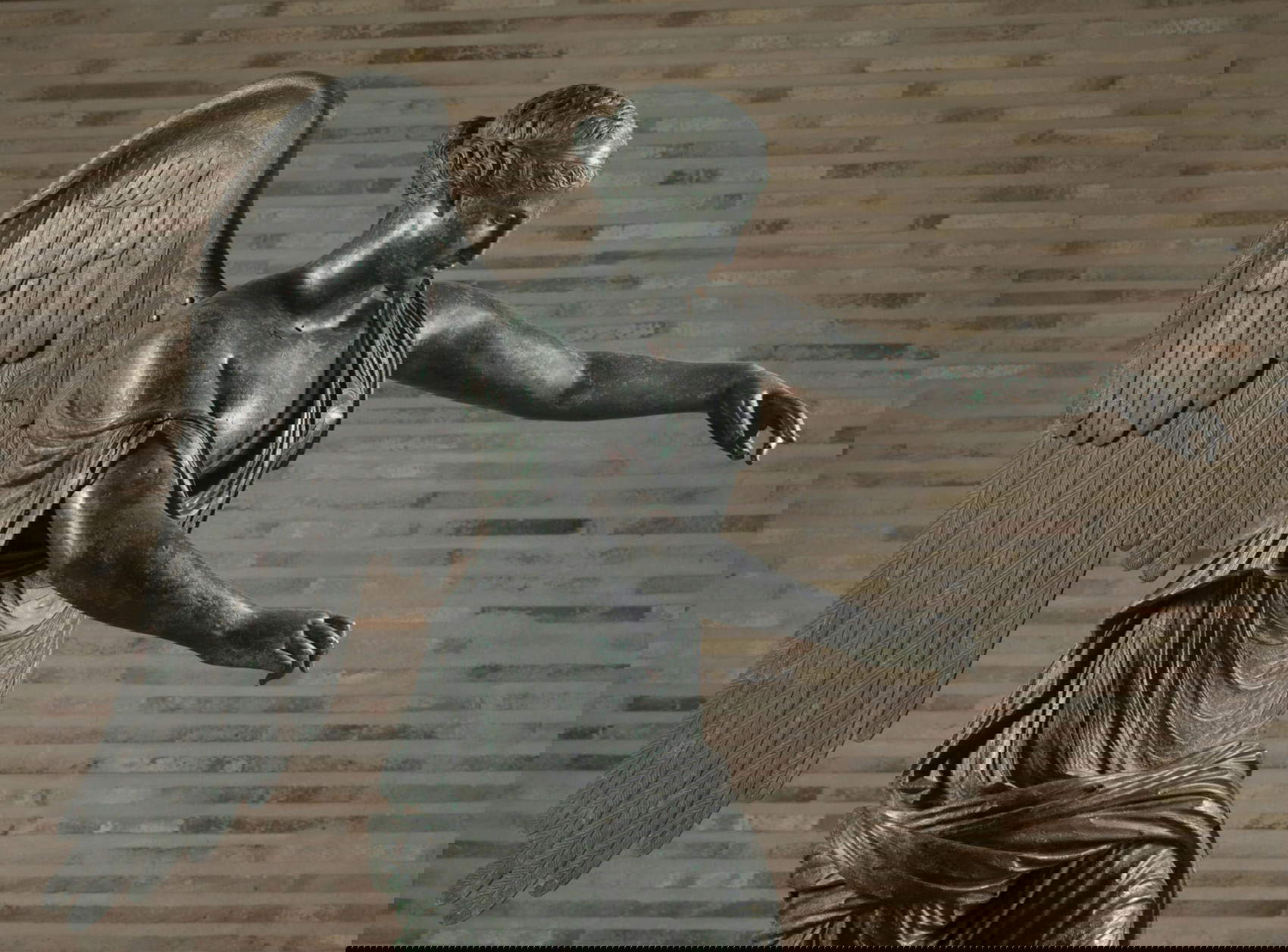
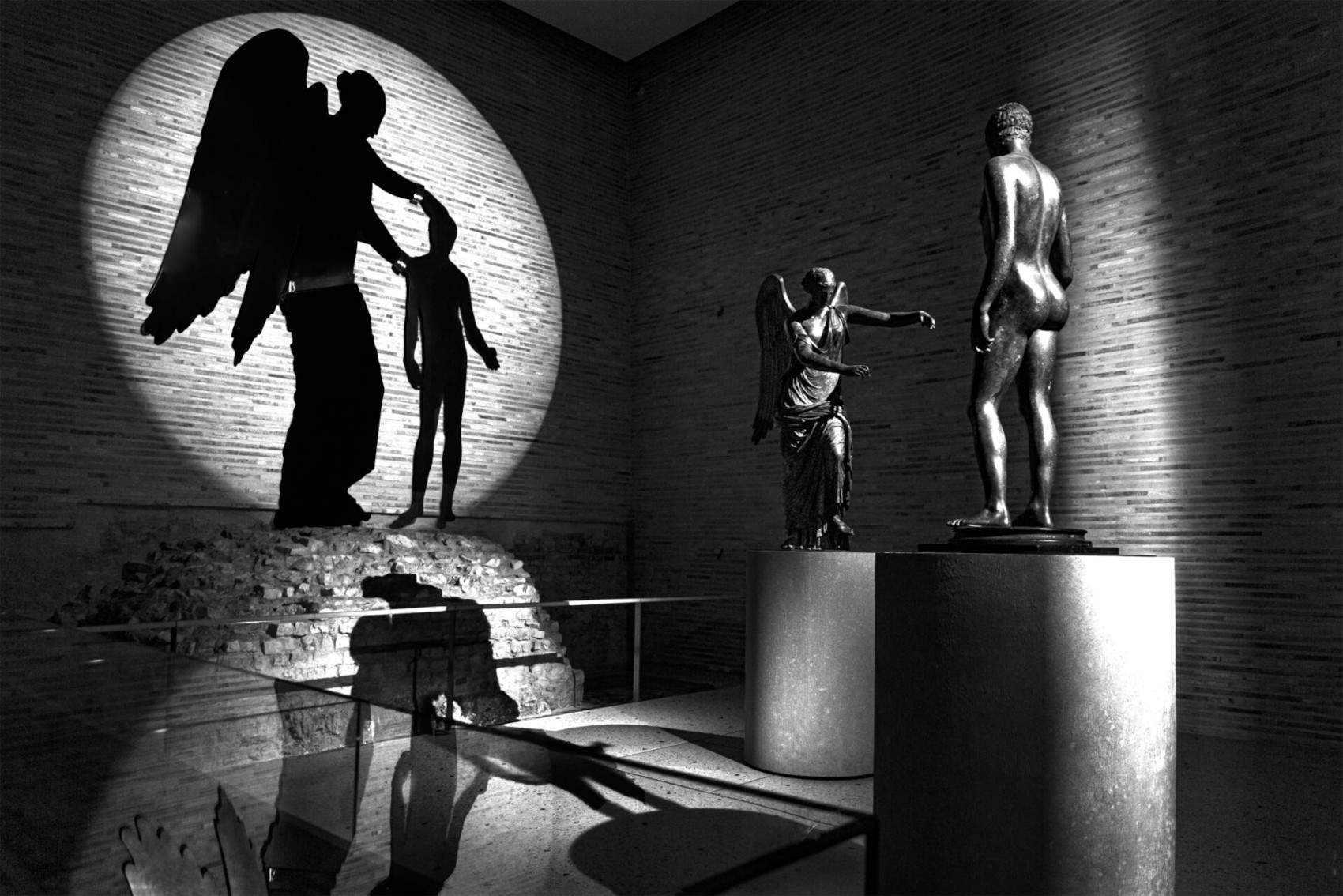
From July 17 to November 1, 2026, the Santa Giulia Museum will also host the exhibition La Vittoria di Brescia. 40 Photographers and an Eternal Beauty, curated by Giovanna Calvenzi, promoted by Fondazione Brescia Musei, organized in collaboration with special partner Olimpia Splendid and EWMD - European Women’s Management Development Brescia. The project brings together forty Italian photographers, including Gabriele Basilico, Gianni Berengo Gardin and Franco Fontana, who have confronted the statue as a source of inspiration. The initiative was created with the aim of going beyond the dimension of the simple documentary image, proposing a more complex and personal reading of the Winged Victory. The result is a plurality of gazes that transform the sculpture into a common ground for visual experimentation, giving rise to an iconographic heritage of great value.
The culmination of the celebrations will be on October 30 with the exhibition More Modern than Any Modern. Unseen Treasures from Brescia’s Museums 1826 | 2026, curated by Roberta D’Adda and Stefano Karadjov. The exhibition will feature some 200 stories, of works, people and places, constructed exclusively from materials stored in museum repositories, highlighting their evocative potential and deep connection to memory and community aspirations.
|
| Bicentenary of the discovery of the Winged Victory of Brescia: a full calendar of events to celebrate the anniversary |

Warning: the translation into English of the original Italian article was created using automatic tools. We undertake to review all articles, but we do not guarantee the total absence of inaccuracies in the translation due to the program. You can find the original by clicking on the ITA button. If you find any mistake,please contact us.























 IT
IT FR
FR DE
DE ES
ES CN
CN


