





In Mantua, Andrea Mantegna ’s Bridal Chamber becomes the center of an experiment on advanced museum lighting. The project SLiM - Smart Lighting in Museums: Development of an Innovative Light-Sensing and Adaptive Control System for Palazzo Ducale in Mantua, an initiative developed as part of the Alta Scuola Politecnica of the Politecnico di Milano and the Politecnico di Torino, is starting at Palazzo Ducale. The goal is the realization of an intelligent lighting system capable of integrating natural and artificial lighting in real time, with conservation and enhancement purposes for the frescoed heritage.
The project focuses on the Camera Picta, a fresco cycle executed by Andrea Mantegna between 1465 and 1474 inside the Ducal Palace in Mantua. The environment is identified as a case study for the development of a model that can be replicated in other museum contexts, with particular attention to the management of environmental conditions that influence the conservation of pictorial surfaces.
SLiM was created within the Alta Scuola Politecnica, a joint higher education program between Politecnico di Milano and Politecnico di Torino, and involves a team of seven master’s degree students from the two universities: Giorgia Avaro, Claudia Berra, Riccardo Castelnovo, Emanuele Ciccone, Lorenzo Bochicchio, Giorgia Prandi and Ludovica Schilhan. The project is configured as a multidisciplinary laboratory integrating design, computer engineering, optics and cultural heritage conservation.
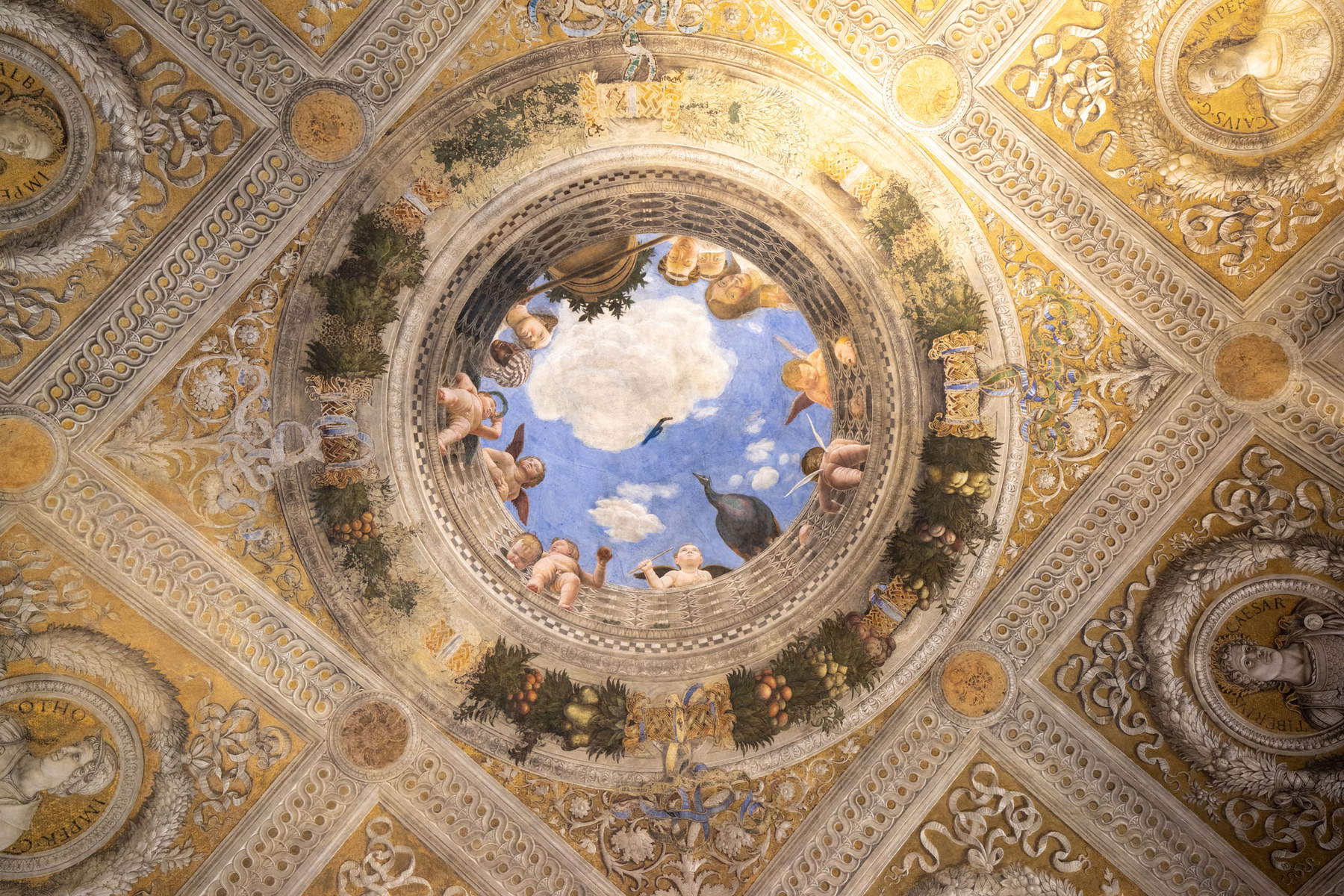
The experimentation involves the development of a system capable of making natural and artificial light dialogue. In the Bridal Chamber, the natural component will be modulated through the use of PDLC films applied to the openings, while the artificial lighting will be regulated by a digital system controlling the individual projectors dedicated to reading the frescoes. A supervisory algorithm will coordinate the two light sources, adapting their intensity to external environmental variations and the conservation parameters required by the work.
The project is led by Professor Raffaella Trocchianesi, associate professor at the Department of Design of the Politecnico di Milano and director of the Master in Exhibition Design and the course in Design and Digital Technologies for the Intangible Cultural Heritage. Scientific coordination also involves Professor Luciano Scaltrito, professor of Electronics at the Department of Applied Science and Technology at the Politecnico di Torino. Project managers also include Francesco Murano, light designer and managing director of Gigi Events; Stefano L’Occaso, director of Palazzo Ducale in Mantua and the Complesso della Pilotta in Parma; and Carlo Albano, managing director of Rimani, a Turin-based lighting company.
The SLiM project develops a mathematical model and control algorithm applied to devices installed and tested directly in the Bridal Chamber. The experimental system allows continuous monitoring of the lighting conditions to which the frescoes are subjected, with the aim of reducing glare phenomena and containing photodegradation of the pictorial surfaces. The system is also geared toward reducing energy consumption through dynamic management of light sources.
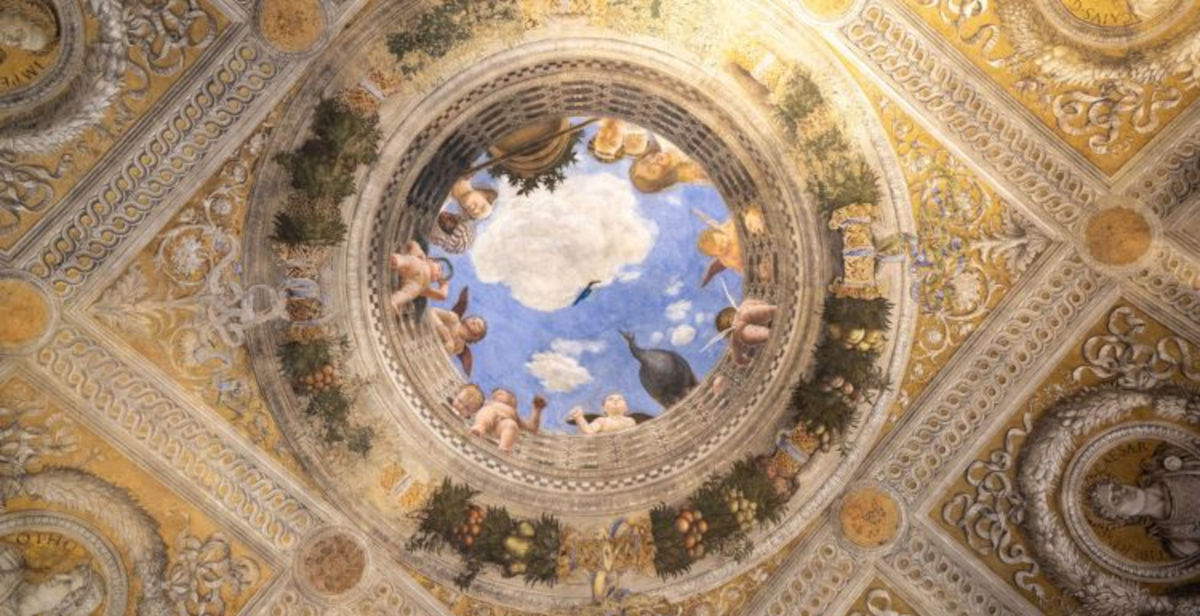 |
| Mantegna's Bridal Chamber at the center of an experiment on adaptive lighting in museums |

Warning: the translation into English of the original Italian article was created using automatic tools. We undertake to review all articles, but we do not guarantee the total absence of inaccuracies in the translation due to the program. You can find the original by clicking on the ITA button. If you find any mistake,please contact us.





















 IT
IT FR
FR DE
DE ES
ES CN
CN


