





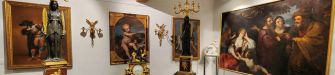
The National Art Gallery of Bologna is reclaiming a significant part of its history by bringing back to the exhibition halls some of the most important sculptures stored in the museum’s vaults. After years spent off the public view for conservation reasons and following a meticulous cleaning and restoration process, busts, herms, paintings, and rarely seen works return to engage with the masterpieces of the Bolognese artistic school as part of a new exhibition redesign developed by the Pinacoteca’s art historians. The initiative, launched today, is not merely an effort to highlight the collections but also marks the revival of a tradition rooted in the very history of the museum institution. In the early days of the Pinacoteca, when the museum served as the picture gallery of the Academy of Fine Arts in Bologna, sculpture played a central role in the exhibition layout. In an academy dedicated to the teaching of all the arts, painting and sculpture were considered complementary disciplines and were presented to the public in close relation to one another.
This approach was maintained even in the 20th century thanks to the major museum renovation project carried out by Cesare Gnudi and Leone Pancaldi. Over the following decades, however, conservation needs and new exhibition choices led to many sculptural works being transferred to storage, removing them from public view. Today, the museum is reviving that original vision by reintroducing the sculptures into the galleries to reconstruct historical, artistic, and biographical connections with the paintings on display.
“With this initiative, we are bringing some of the Pinacoteca’s historic sculptures back to the public’s attention, restoring an important part of the museum’s history and its original identity,” explains Luigi Gallo, director of the National Museums of Bologna – Regional Directorate of National Museums of Emilia-Romagna. “These sculptures are not merely relics of the past, but works that engage directly with the paintings and the great figures of the Bolognese artistic school. Returning them to the galleries, following meticulous cleaning and restoration, means reconstructing relationships, contexts, and interpretive pathways that enrich the visitor experience. The busts, herms, and works now on display allow us to rediscover the Pinacoteca as a place where the arts coexist and tell each other’s stories, in keeping with the spirit of the Academy from which the museum originated. This initiative also marks the launch of a broader program to highlight the works stored in the museum’s vaults: a heritage that will be progressively brought to light through new permanent exhibitions and thematic explorations, including through exhibitions and research projects to be developed in the coming months.”
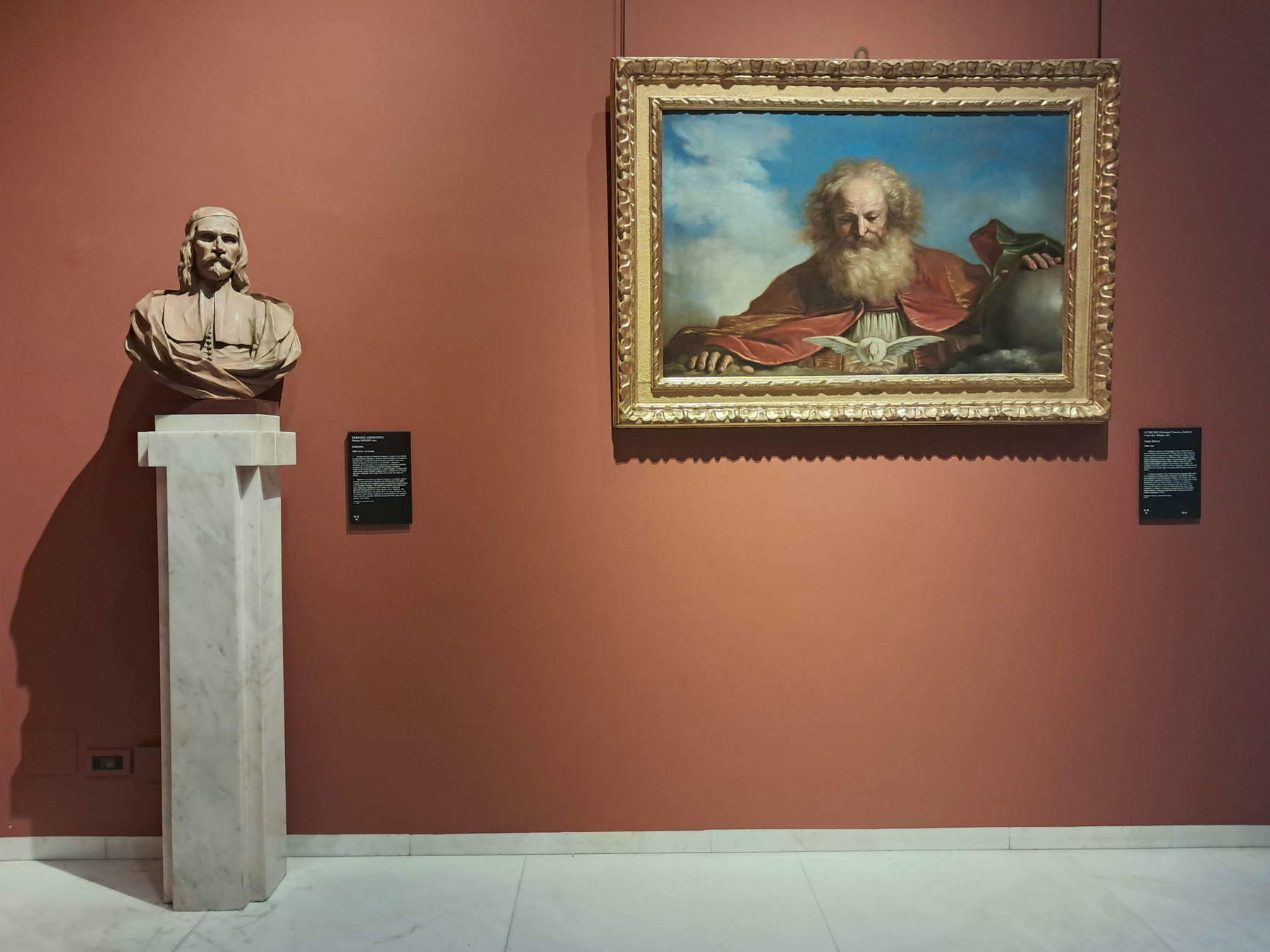
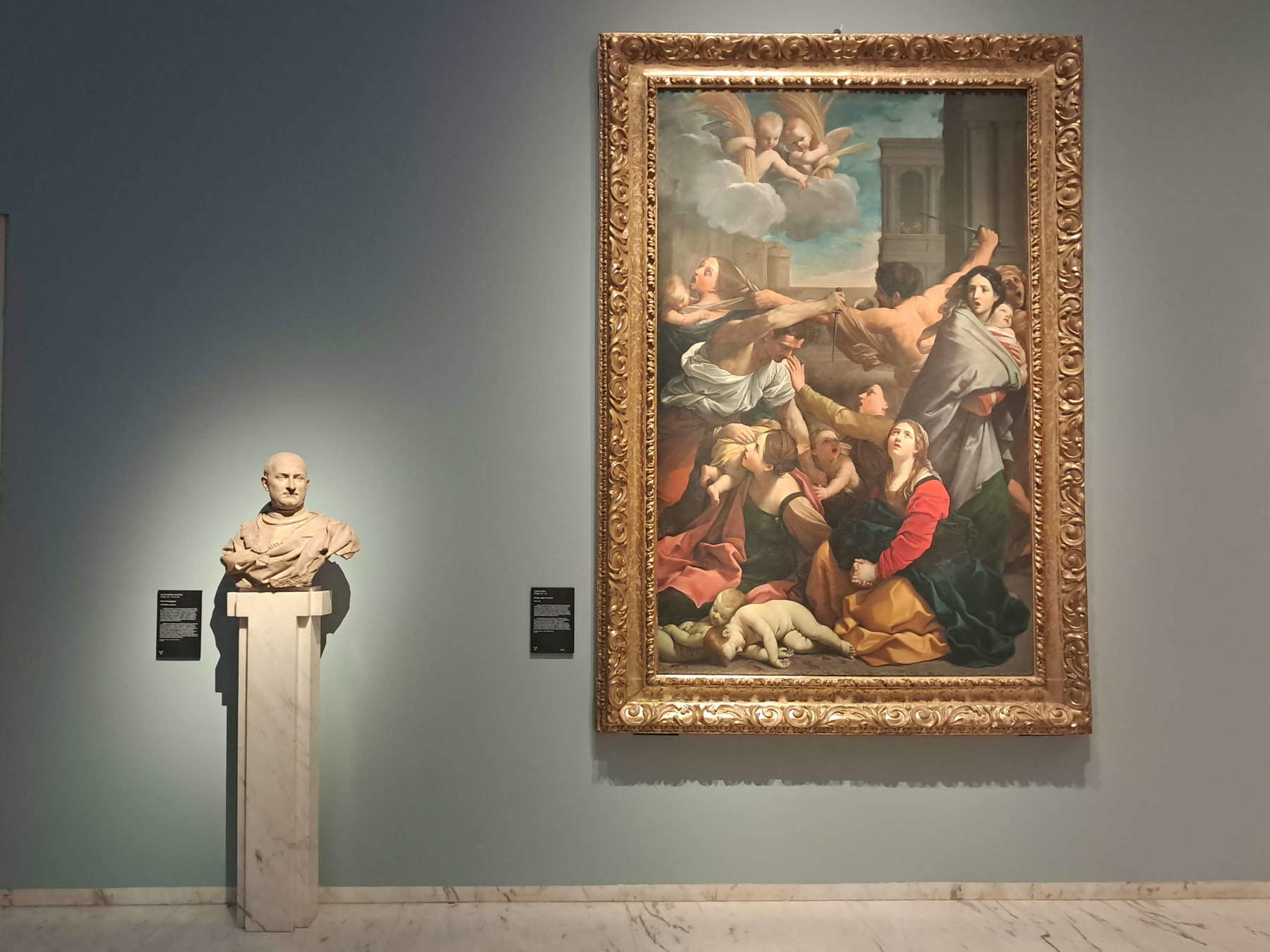
The first works to be brought back on view are two important terracotta busts occupying strategic positions within the exhibition layout. The first is the Portrait of Guercino created by Fabrizio Arrigucci around 1660. The sculpture has been placed in the room dedicated to the great painter from Cento, establishing a direct dialogue with his paintings. The work is a particularly valuable testament because it captures the artist’s features with great accuracy. The physiognomic details and the quality of the execution suggest that the bust may have been modeled from life during the painter’s final years. Originally housed in Guercino’s home-studio in Bologna, on Via Sant’Alò, the terracotta was later loaned to the Pinacoteca di Cento. It has only recently returned to Bologna, allowing it to be reintegrated into the museum context of the Pinacoteca.
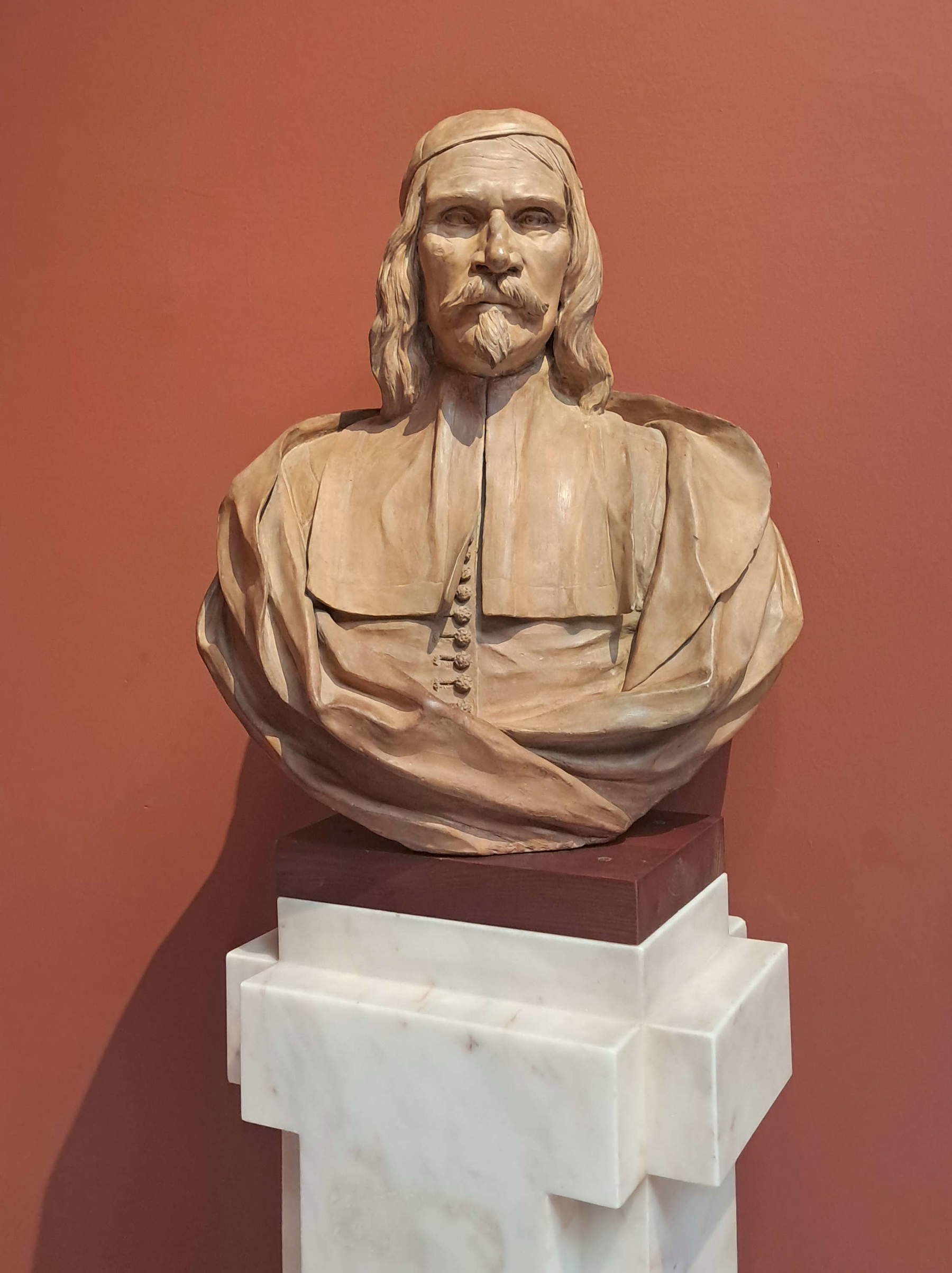
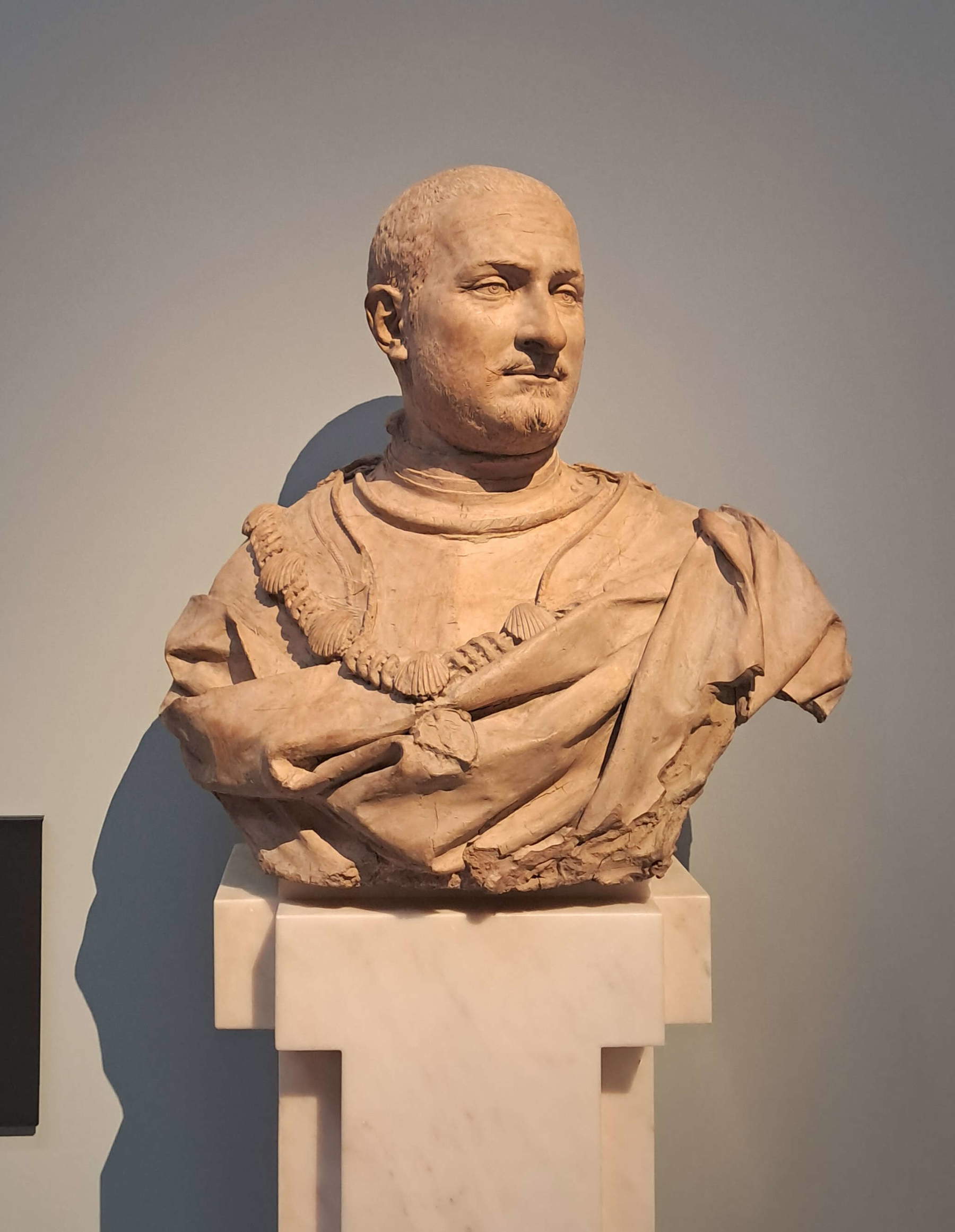
Next to Guido Reni’s paintings stands another work of great significance: the Bust of Muzio Frangipane, created by Alessandro Algardi between 1637 and 1638. Its placement next to the famous Massacre of the Innocents creates a dialogue between two leading figures of 17th-century figurative art, linking the sculpture by one of the greatest Baroque artists with one of the absolute masterpieces of Bolognese painting. The terracotta piece is particularly significant within the Pinacoteca’s collections as it is the only work by Algardi owned by the museum. The Bolognese sculptor, together with Gian Lorenzo Bernini, contributed decisively to the redefinition of the artistic languages of Baroque Rome. The bust on display in Bologna is the preparatory model for the marble monument created in 1638 for the Frangipane Chapel in the Roman church of San Marcello al Corso. The work depicts Muzio Frangipane, a member of the ancient Roman family who lived in the 16th century, portrayed posthumously in the guise of a man-at-arms. The sculptural quality of the terracotta and the expressive power of the face attest to Algardi’s extraordinary skill as a portraitist, capable of imbuing the material with intense psychological vitality.
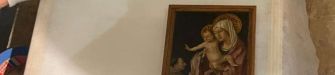
The redesign also involves the section dedicated to the Renaissance, where a rare panel by Marco Palmezzano depicting the Madonna and Child, dated between 1506 and 1513, has been placed. Also coming from the storage, it is now placed in dialogue with works by Cima da Conegliano, Perugino, Francesco Francia, and Lorenzo Costa. It is a surviving fragment of a larger altarpiece about which no further information is preserved. The panel thus takes on special significance as it represents one of the few examples of the Forlì Renaissance present in the Pinacoteca’s collections. Marco Palmezzano, together with the master Melozzo da Forlì, in fact contributed decisively to the development of Romagna’s artistic culture between the 15th and 16th centuries.

The exhibition project will continue in the coming months with the display of additional works that will punctuate the museum itinerary, following a logic of direct dialogue between the sculptures and paintings of the leading figures of the Bolognese school. The corridor dedicated to the Baroque period will feature the plaster portrait of Gaetano Gandolfi created by Giacomo De Maria in 1802. The work will be displayed alongside the 18th-century master’s paintings, replicating the approach adopted for the bust of Guercino. The plaster cast is the original mold of the terracotta monument modeled by De Maria for the artist’s tomb.
Another important group of works will be placed at the entrance to the Salone degli Incamminati, where the three busts dedicated to the Carracci brothers will be displayed : Annibale, Agostino, and Ludovico, founders of the famous Accademia degli Incamminati in 1582 and leading figures of the artistic revolution that transformed European painting between the 16th and 17th centuries. The bust of Annibale Carracci was created by Cincinnato Baruzzi between 1822 and 1823. Originally intended to adorn the entrance to the picture gallery of the Bolognese Academy, the work attests to the sculptor’s strong connection to the city. After training in Bologna, Baruzzi joined Antonio Canova’s studio in Rome, which he took over after the master’s death in 1822. Upon returning to Bologna, he taught sculpture at the Academy of Fine Arts from 1831 to 1859. The bust of Ludovico Carracci, on the other hand, was created in 1849 by Ladislao Sanmarchi, then a student at the Academy. The work began as an annual assessment project and was intended to be placed next to that of Annibale at the entrance to the picture gallery. Three years later, the bust of Agostino Carracci was also sculpted, a work that marked the beginning of the career of Stefano Galletti, a pupil of Baruzzi himself. With the addition of this last sculpture, a sculptural representation of the Carracci triad was completed for the first time, anticipating by more than half a century the famous bas-relief of the Three Carracci created by Tullo Golfarelli in 1908 for the entrance portico of the Pinacoteca.
Among the works emerging from storage is also an important painting attributed to Annibale Carracci: the Portrait of a Noblewoman, dated between 1583 and 1584. The canvas will be placed in the portrait corridor of the Baroque section next to Ludovico Carracci’s Portrait of the Tacconi Family and Guido Reni’s Portrait of His Mother. The work has a complex history of attribution. During the 20th century, critics had attributed it to Guido Reni. More recent studies, however, have attributed the painting to Annibale Carracci, identifying elements in its stylistic quality, expressive immediacy, and intimate tone that are characteristic of his early period. The painting thus enriches the collection dedicated to Carracci portraiture housed in the museum.
The exhibition at the Pinacoteca Nazionale in Bologna thus reconstructs a fundamental part of the institution’s history, restores visibility to works long hidden from the public, and reaffirms the principle of dialogue between the arts that had characterized the original picture gallery of the Academy of Fine Arts. Through busts, herms, paintings, and sculptures, the museum now offers a richer and more nuanced interpretation of the Bolognese artistic tradition, while simultaneously ushering in a new era of showcasing the heritage held in its storage facilities.
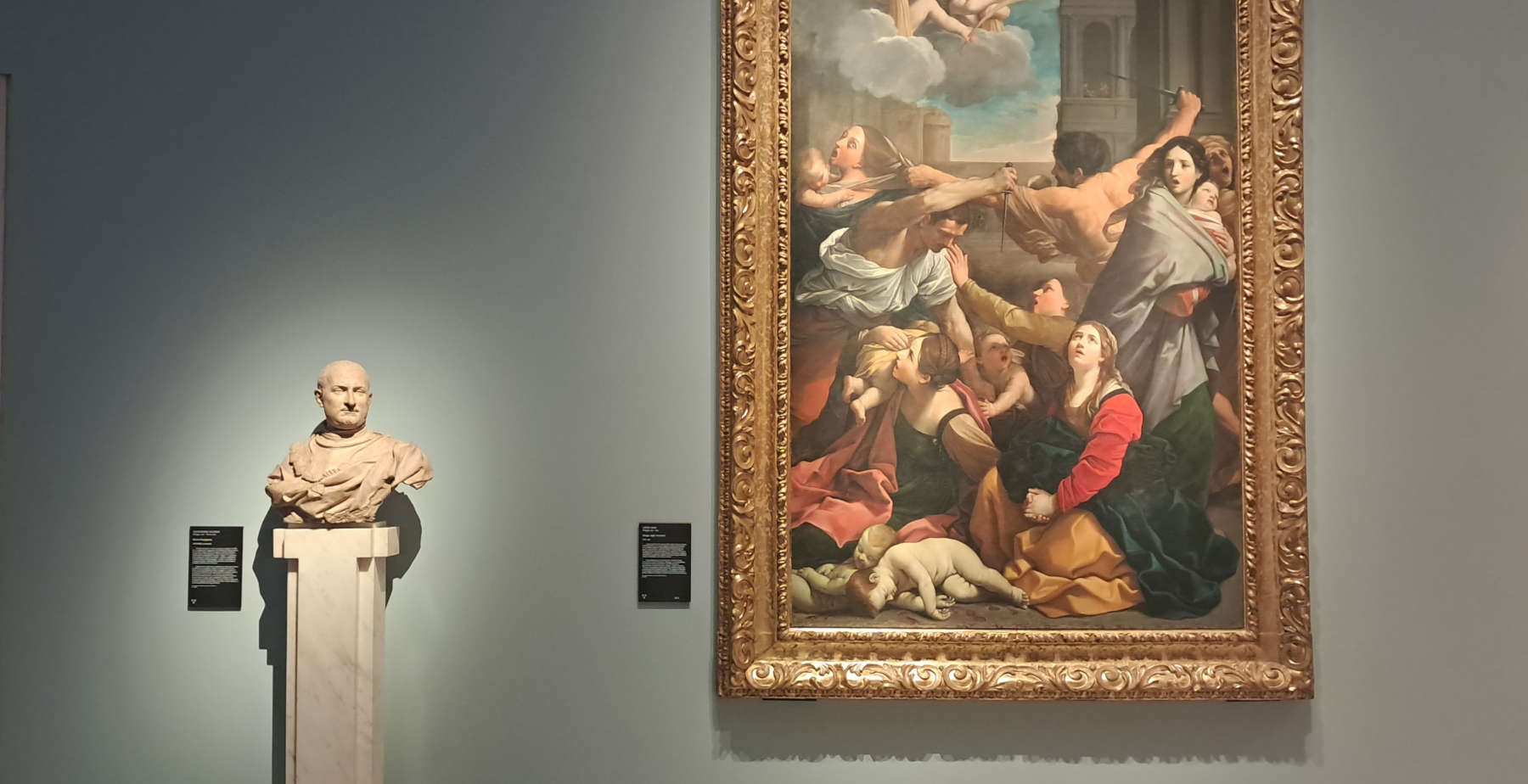 |
| The National Art Gallery in Bologna is once again hosting an exhibition of sculpted portraits of the great masters |

Warning: the translation into English of the original Italian article was created using automatic tools. We undertake to review all articles, but we do not guarantee the total absence of inaccuracies in the translation due to the program. You can find the original by clicking on the ITA button. If you find any mistake,please contact us.
















 IT
IT FR
FR DE
DE ES
ES CN
CN


