




The direction changes, the secretary changes, some of the antique dealers change—but the Florence International Antiques Biennial remains the same: Palazzo Corsini is still there, on the banks of the Arno, awaiting the dozens of antique dealers— the best in Italy, along with about a dozen international participants (for a total of roughly eighty booths this year), to host, over the course of two weeks, a sort of “worksite” of art history—where it’s common to see works once thought lost resurface, to see works reappear that have been kept for decades in inaccessible private collections, and to witness a showcase of paintings, sculptures, gems, jewelry, and objects of applied art on display for ten days for scholars, museum directors, and enthusiasts from around the world. Here it is, the temporary museum that takes shape every two years at Palazzo Corsini only to disperse again—for the thirty-fourth time.
Under the leadership of the new secretary general, Bruno Botticelli—appointed last April to carry on the prestigious legacy of Fabrizio Moretti and Giovanni Pratesi—the 34th edition of the International Antiques Biennial reaffirms the fundamental values of antiquity: the uniqueness of the material, the authenticity of the creation, and its enduring quality. This year’s impression is that of a BIAF in transition: there has been a significant turnover, even though the foundation remains more than solid, with about half of the 2024 debutants having confirmed their participation, and with an exhibition that reaffirms its quality, and, moreover, it seems to convey the impression of wanting to step even further beyond itself, opening up to the city and engaging with its history (inside Palazzo Corsini, this year—on a completely exceptional basis—the first design for the façade of San Lorenzo by Michelangelo Buonarroti is being presented, a precious autograph drawing housed in the Florentine institution and subjected to a rigorous diagnostic assessment and a complete restoration carried out by the Opificio delle Pietre Dure with full funding from the Fondazione CR Firenze), and reaffirming the centrality of a commercial offering of the highest caliber. It is a statement of approach: the BIAF is changing, but it remains true to what makes it recognizable.
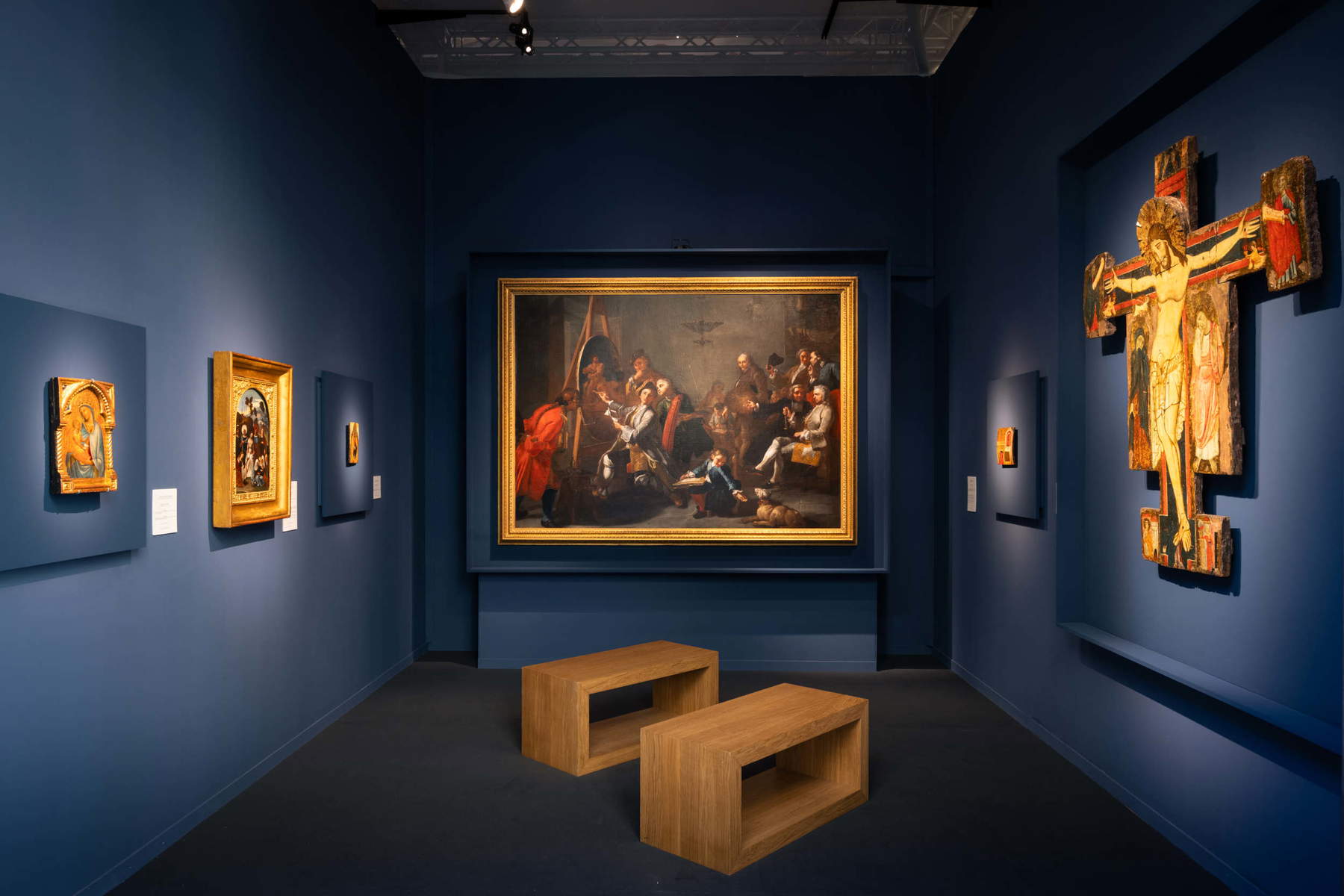
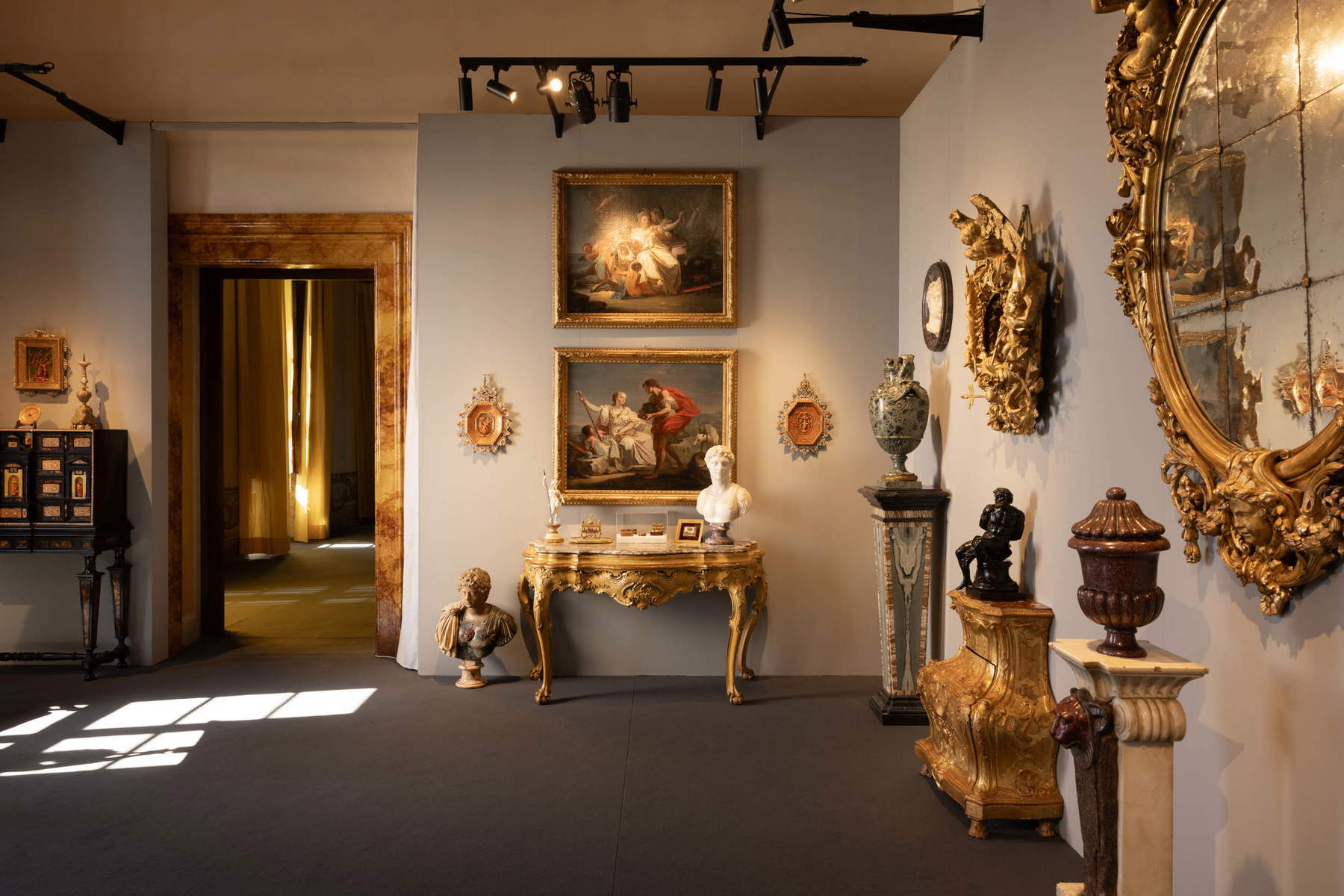
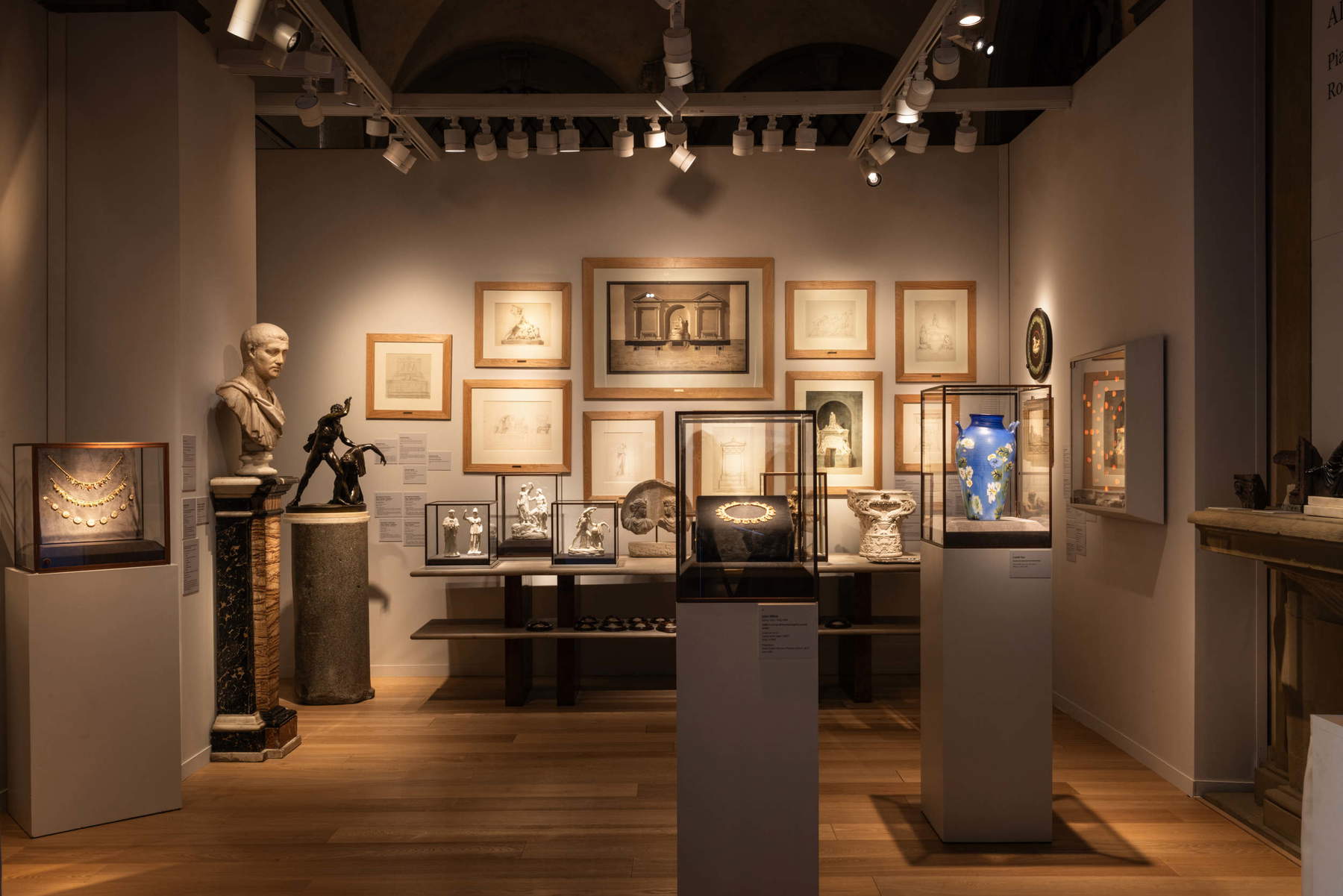
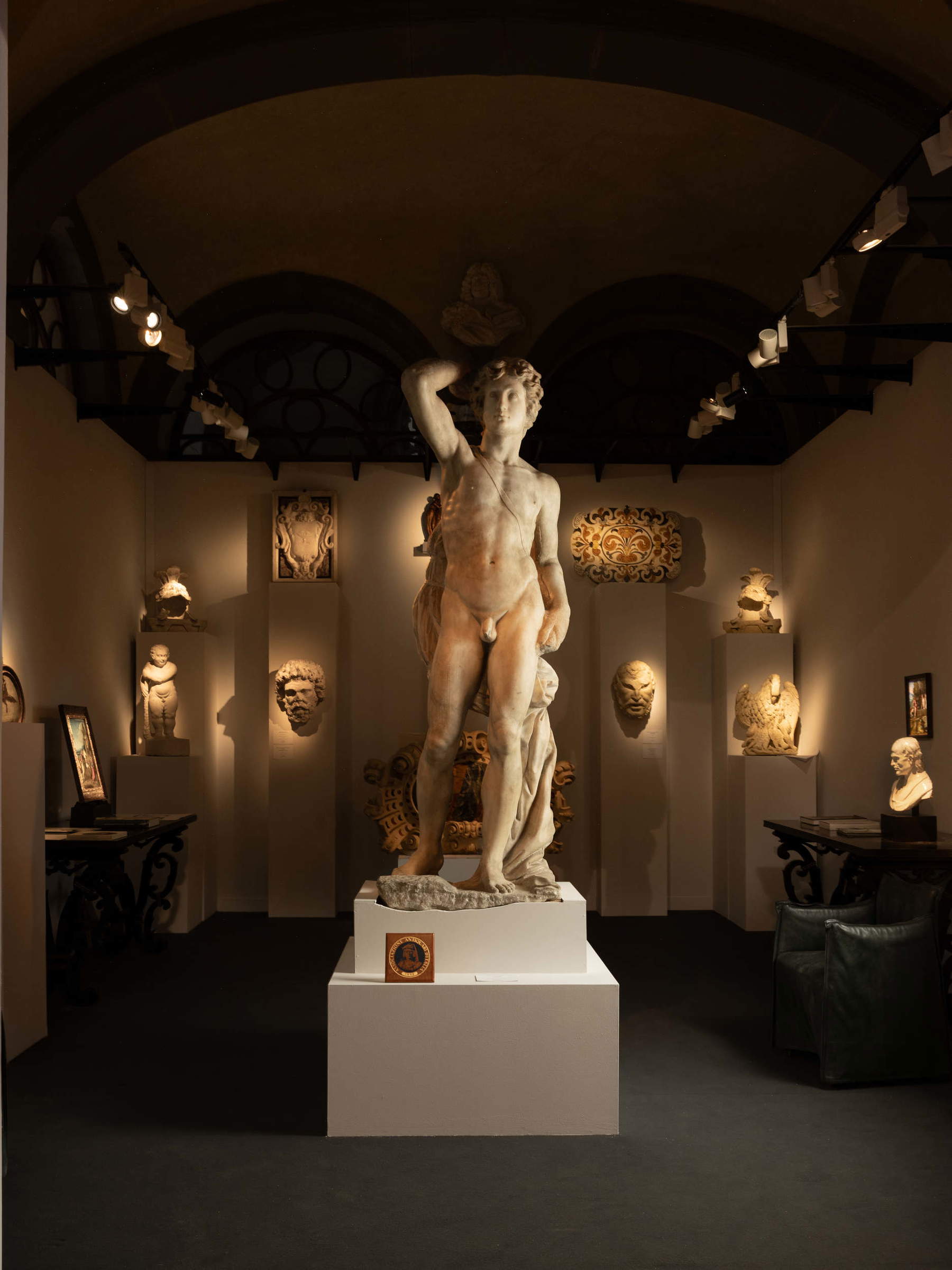
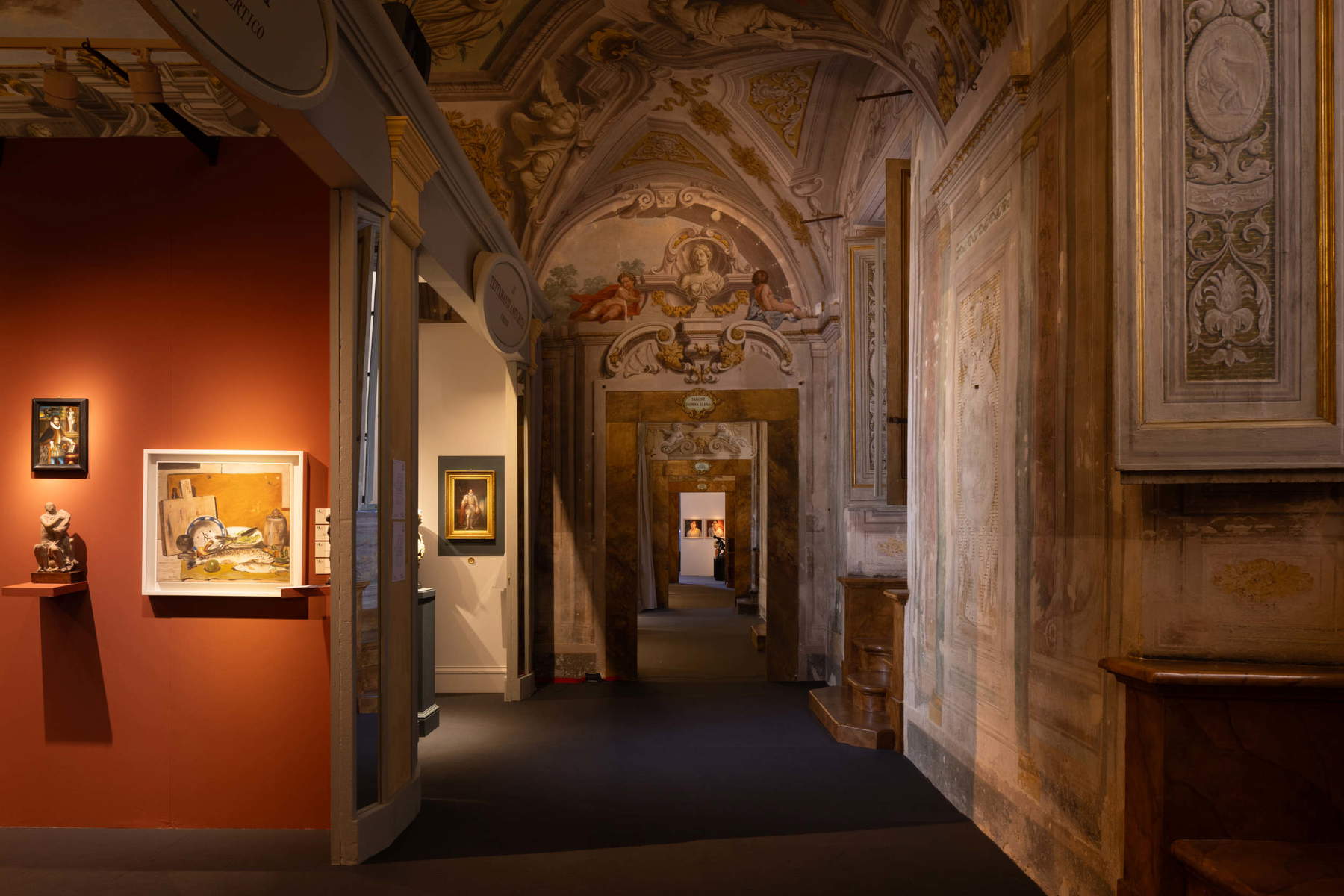
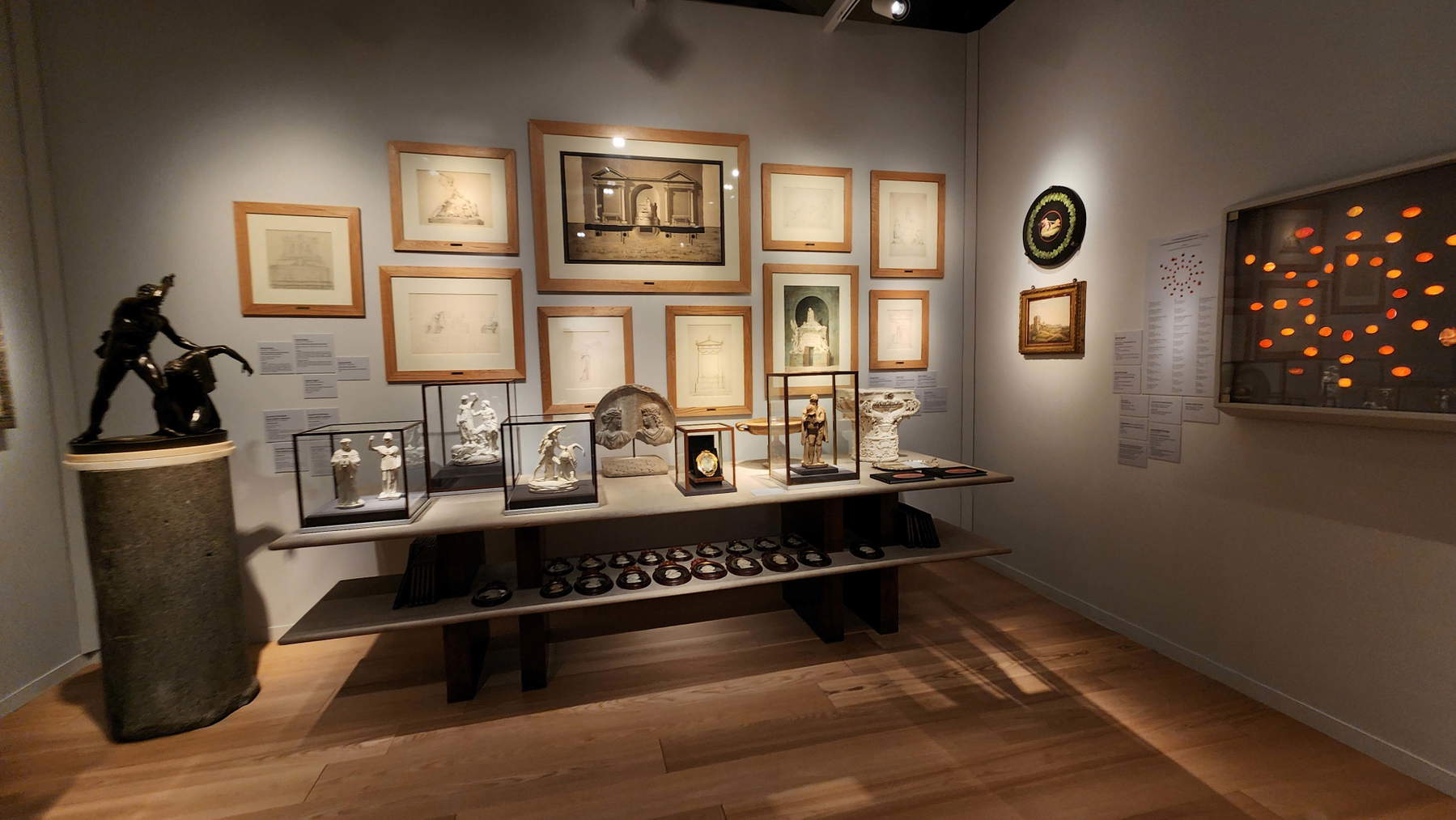
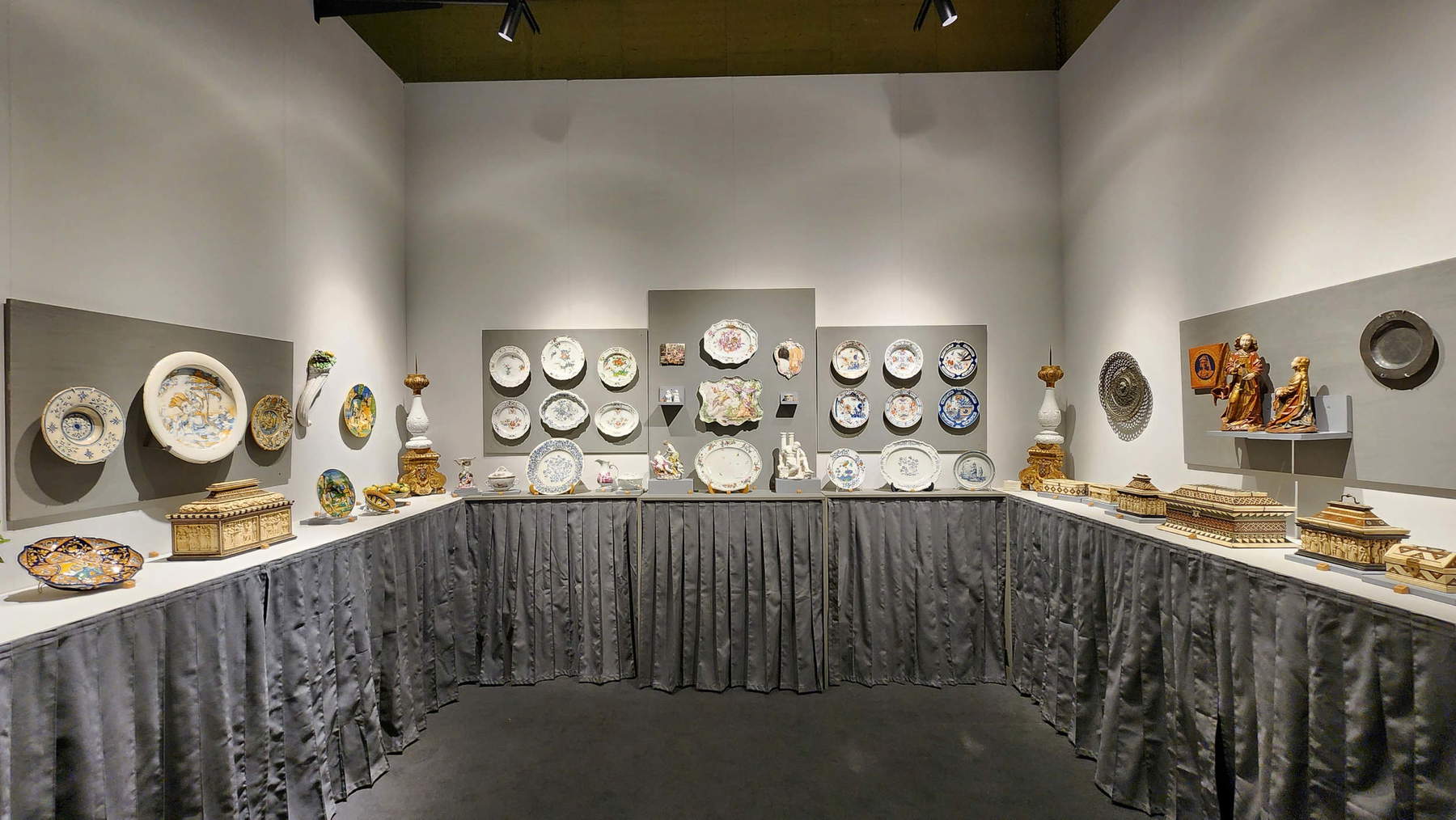
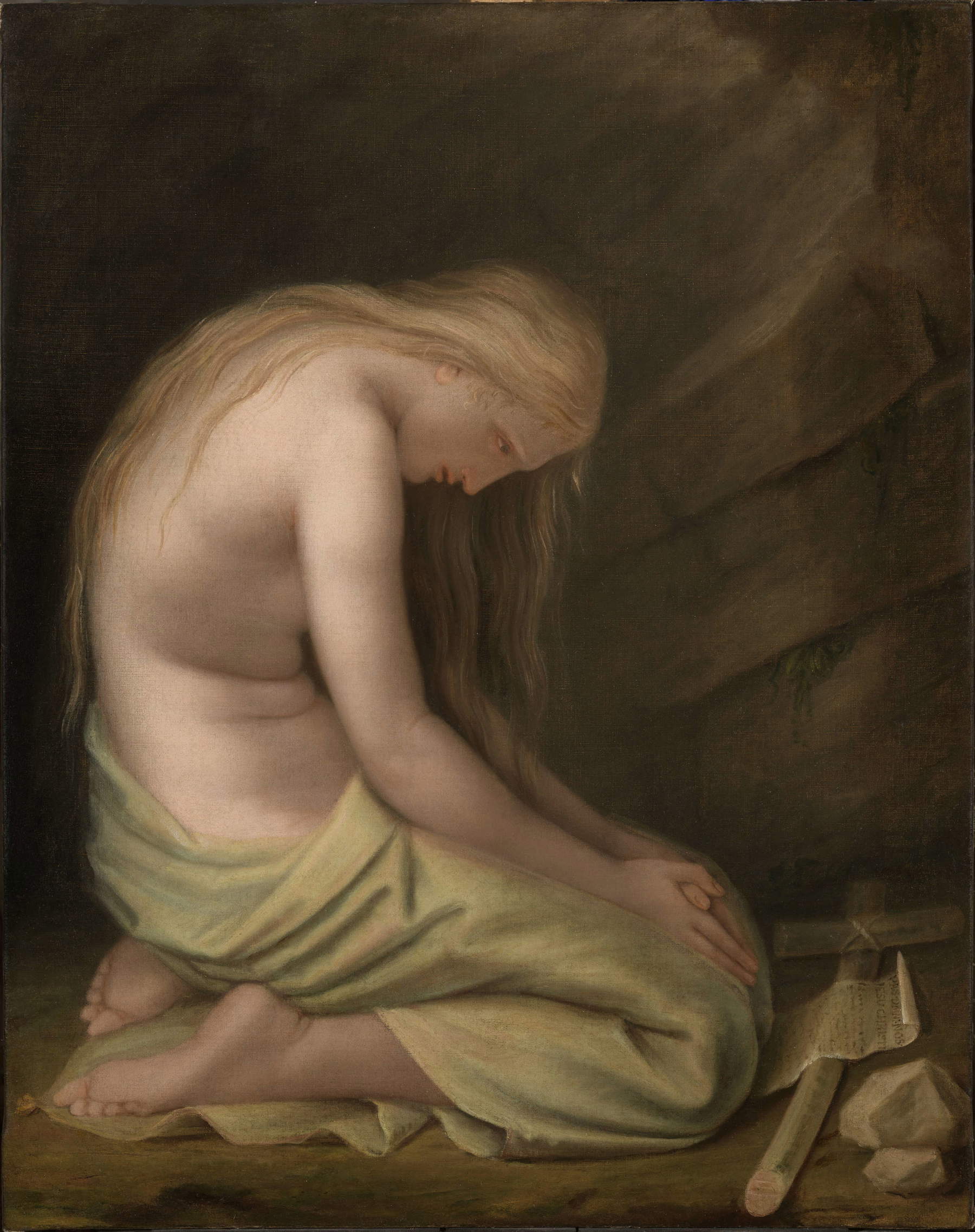
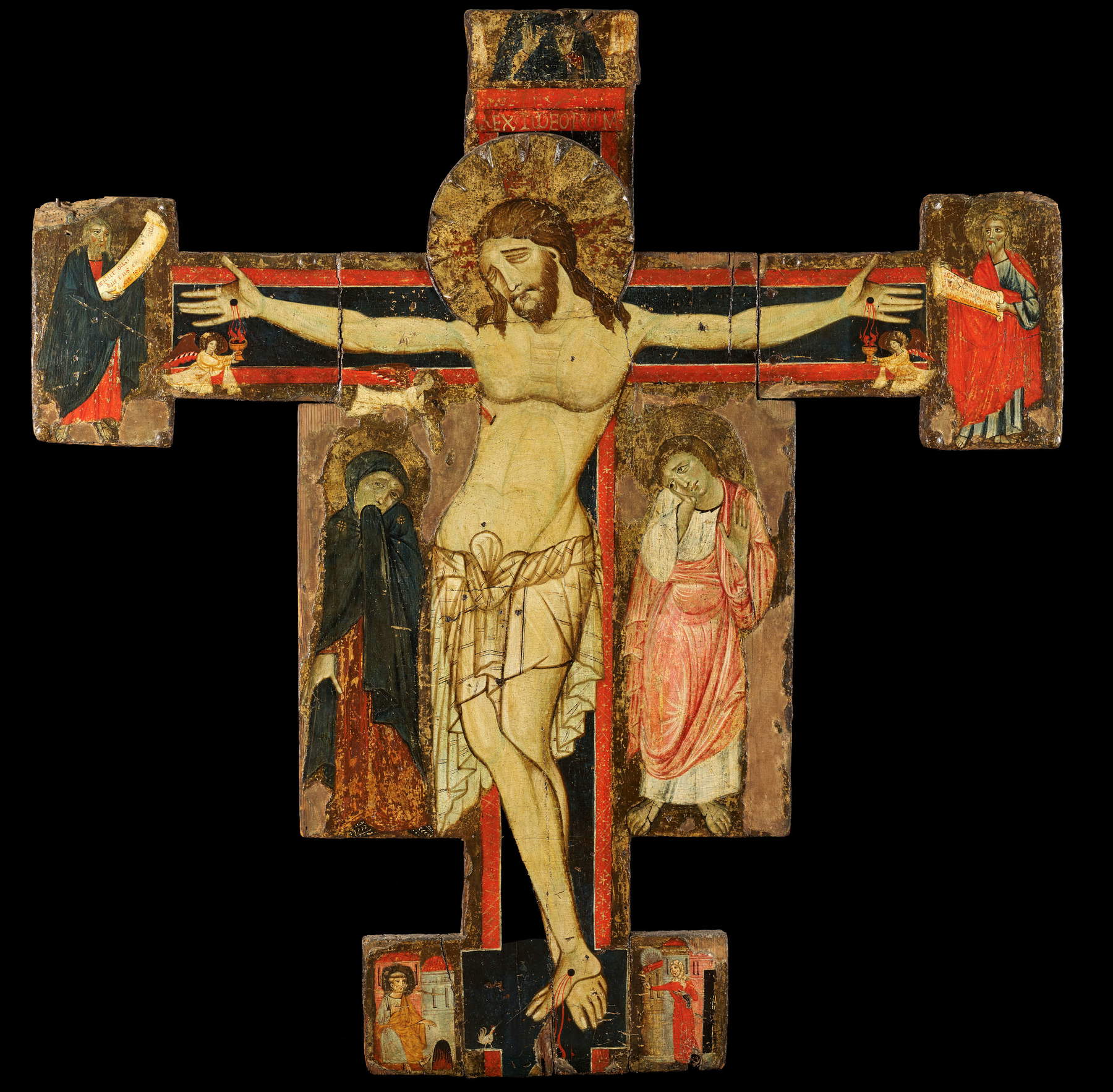
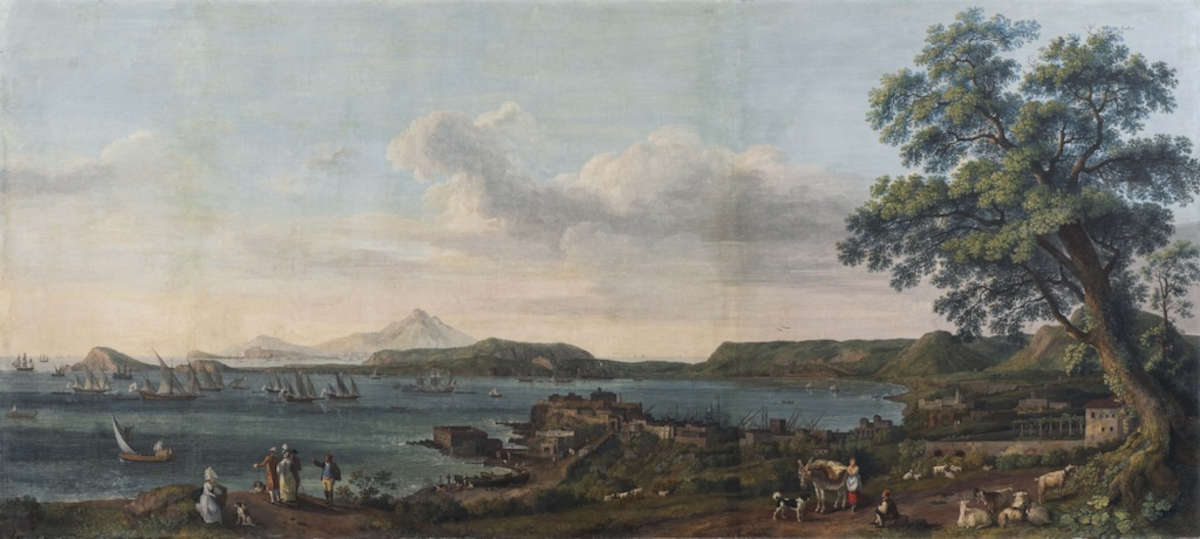
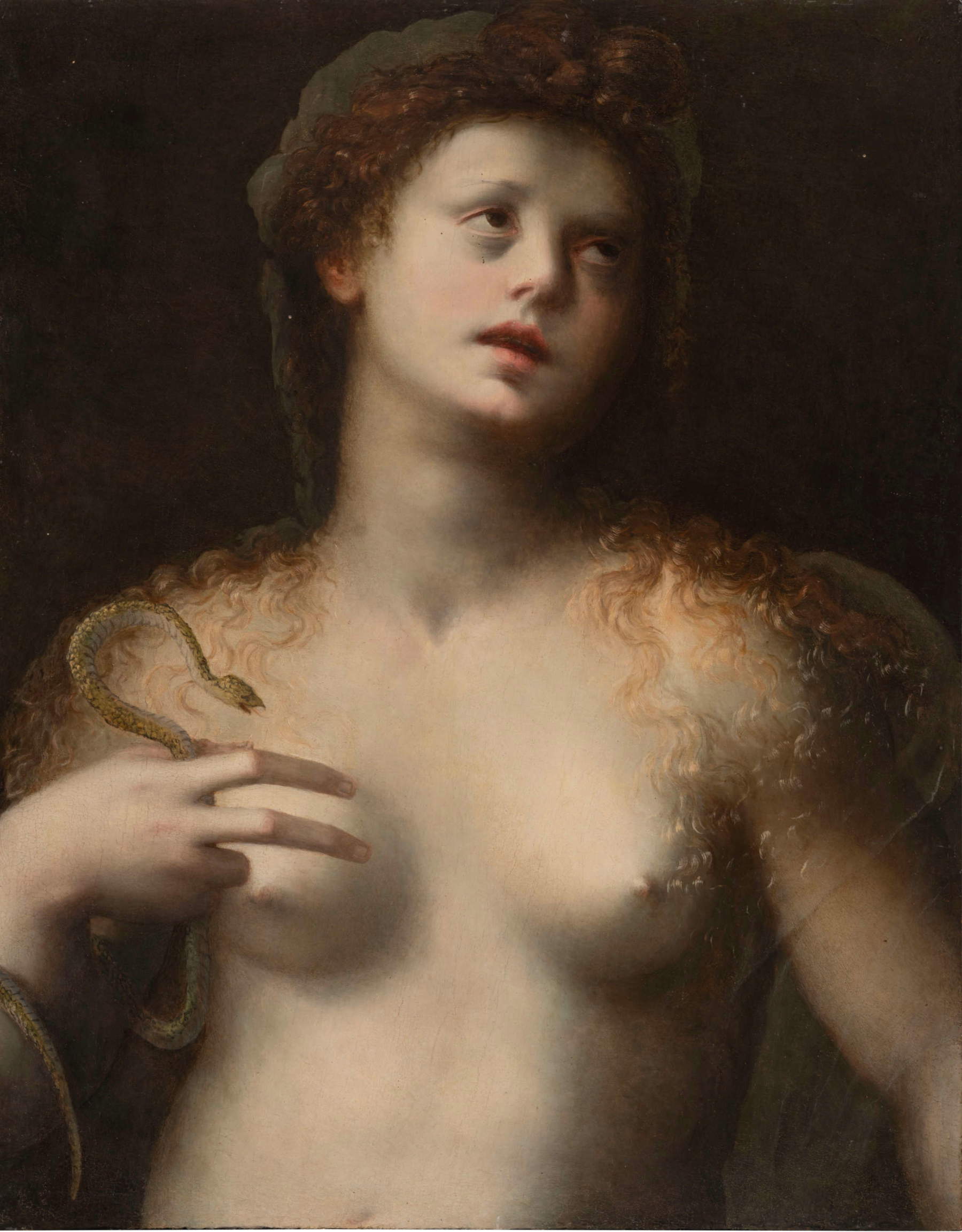
Beginning the exploratory tour at the booths on the ground floor of Palazzo Corsini, the path through the galleries offers an uninterrupted sequence of works ranging from medieval painting to the great innovations of the 19th and 20th centuries. We begin at the Carlo Orsi Gallery booth, where a painting of exceptional interest to the history of Neoclassical art takes center stage: Antonio Canova’s *Penitent Magdalene*, offered at a price of 350,000 euros. This rare oil painting was executed by the master in Possagno in 1823 during his extended stay in the Treviso area and was promptly documented by Giannantonio Falier and Melchiorre Missirini, who noted its location in Bassano in the collection of Count Roberti, prior to the recent monographic studies published by Mario Mascotto and Vittorio Sgarbi. The work demonstrates how Canova pursued painting with an expressive freedom capable of rivaling the masters of the Venetian Renaissance, such as Titian and Paolo Veronese. A few steps further on, Galerie Canesso welcomes visitors with the majestic 13th-century painted Cross by Corso di Buono, a key figure in archaic Florentine painting, with an asking price of 1.2 million euros. The dramatic austerity of Christ on the cross contrasts with the sweeping, atmospheric scope of the large canvas presented a short distance away at the Hartford Fine Art–Lampronti Gallery booth: The Gulf of Pozzuoli: The Encounter Between the Bourbon Fleet and the Maltese Fleet, a masterpiece by Jakob Philipp Hackert (600,000 euros), which depicts the Phlegraean harbor and the royal vessels with exceptional clarity.
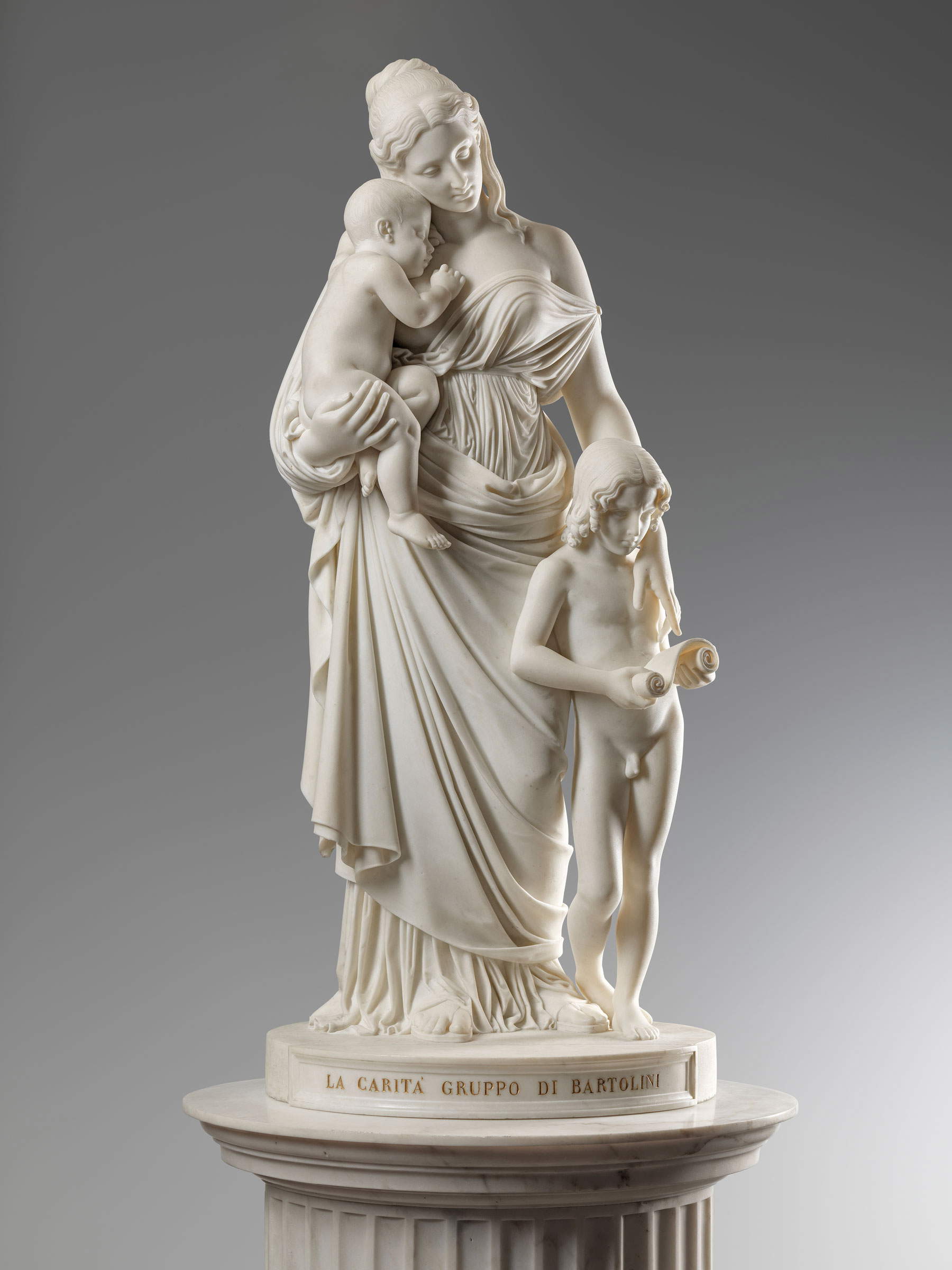
Next is the selection from the Frediano Farsetti Art Gallery, a historic Milan-based institution specializing in 20th-century masters, which features four pivotal canvases in the creative trajectories of Severini, Savinio, and De Chirico. Gino Severini is represented by the important work on paper *Danseuse et violiniste*, offered at 580,000 euros, while Alberto Savinio is featured with a dreamlike canvas *Untitled* ( 650,000 euros), and Giorgio de Chirico is represented by a masterpiece from the 1920s: *Il tempio di Apollo*, an oil on panel signed and dated 1920 (750,000 euros). Florentine grand ducal sculpture and monumental Neoclassicism, on the other hand, find their highest expression at Walter Padovani’s booth, which features one of the most important works of this BIAF: Lorenzo Merlini’s marble *Portrait of Cosimo III* in life-size (price on inquiry). Merlini’s work, characterized by broad, broken drapery with angular folds reminiscent of Giovan Battista Foggini’s style, conveys a figure of extraordinary expressive vitality. Alongside the Merlini, Padovani is exhibiting Lorenzo Bartolini’s marble statue depicting Charity ( price upon inquiry): this Bartolini marble sculpture, identifiable as the work commissioned by the Balbi family of Genoa and completed in 1846 by the sculptor Vassaro on behalf of the master, joins the ranks of the famous model of *Charity as Educator* at Palazzo Pitti and the version for the Medici Villa at Poggio Imperiale, distinguished by the absence of the Gospel scroll in the child’s hands. And still on the subject of great Medici sculpture, don’t miss Antonio Novelli’s *Maggio* (*Apollo*) , offered by Botticelli Antichità ( under private negotiation), another of the most important works in this edition: carved from Apuan marble, it was studied by Francesco Caglioti. A little-known work, which has always been held in private hands in Florence, it has been the subject of a complex history of attribution (until the 1980s, it was even attributed to Michelangelo—a view held by eminent scholars such as Alessandro Parronchi and Carlo Ludovico Ragghianti) and even iconographic debate, and was ultimately attributed to Novelli based on close figurative comparisons. Sources record the work as having come from Palazzo Tempi (now Bargagli Petrucci) in Piazza Santa Maria Sopr’Arno, and is associated with the cycle of eighteen statues representing the Months, the Seasons, Time, and Fortune, which Novelli worked on alongside other sculptors commissioned by Maria de’ Medici (the cycle would later remain unfinished).
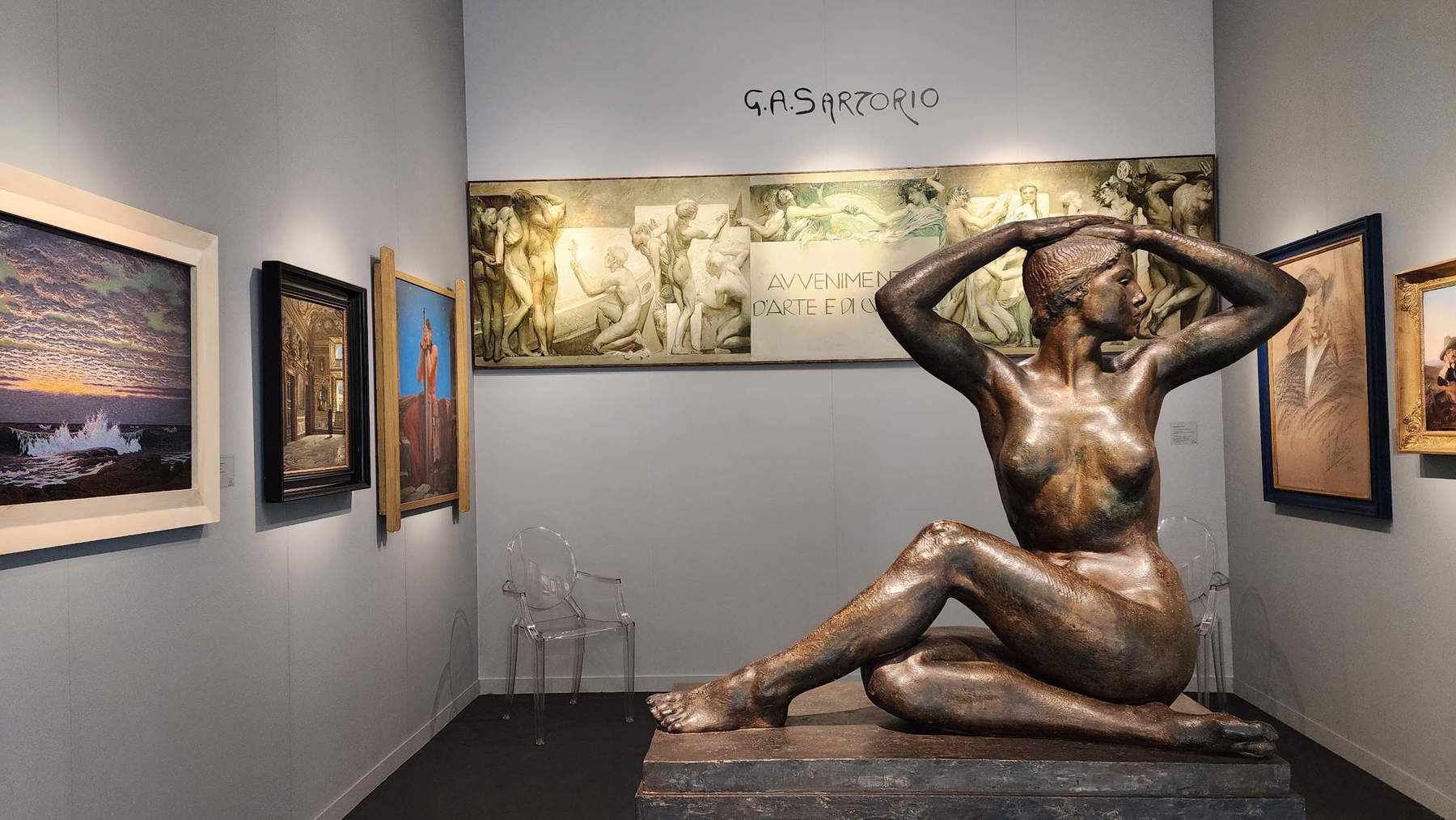
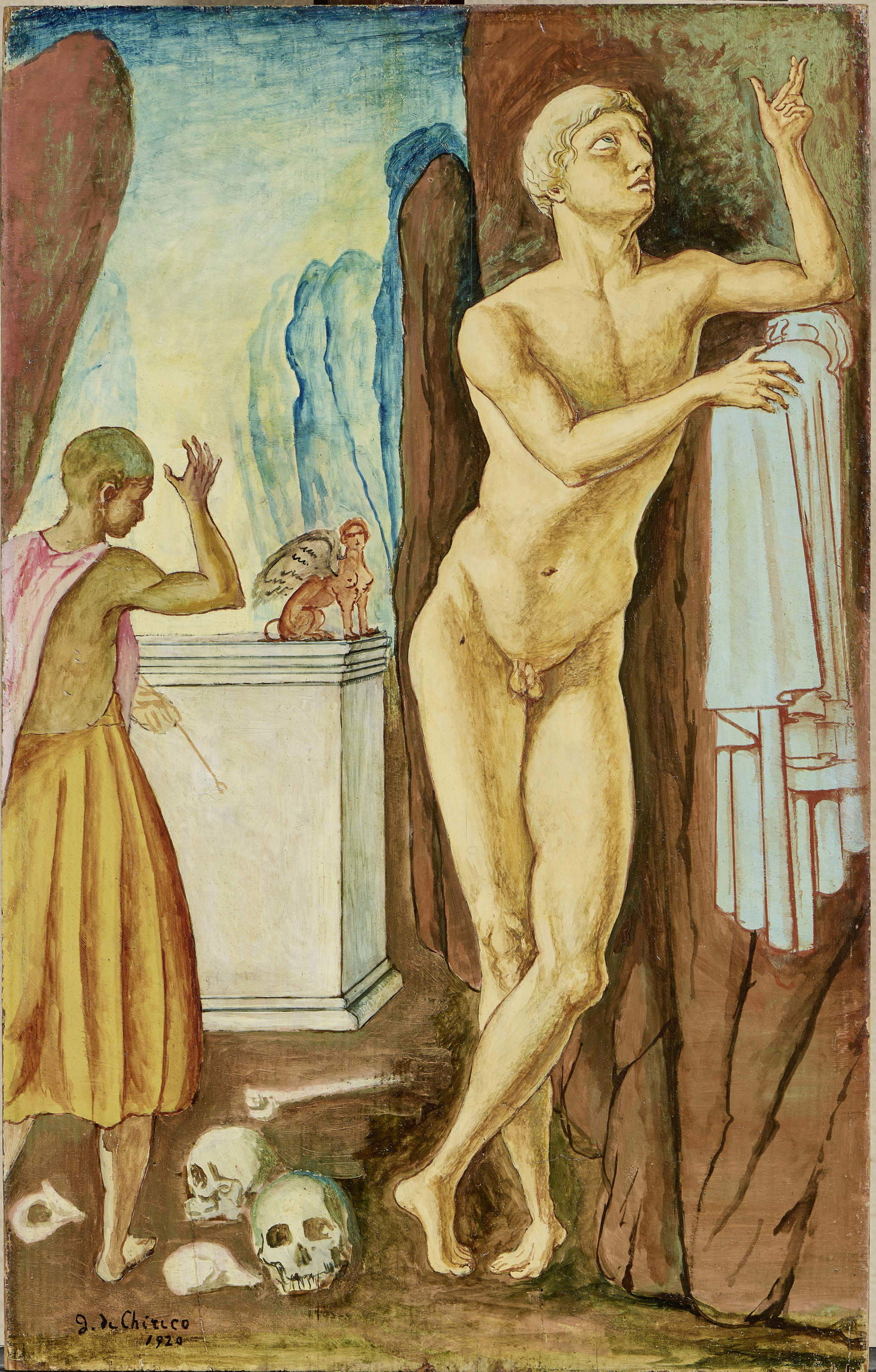
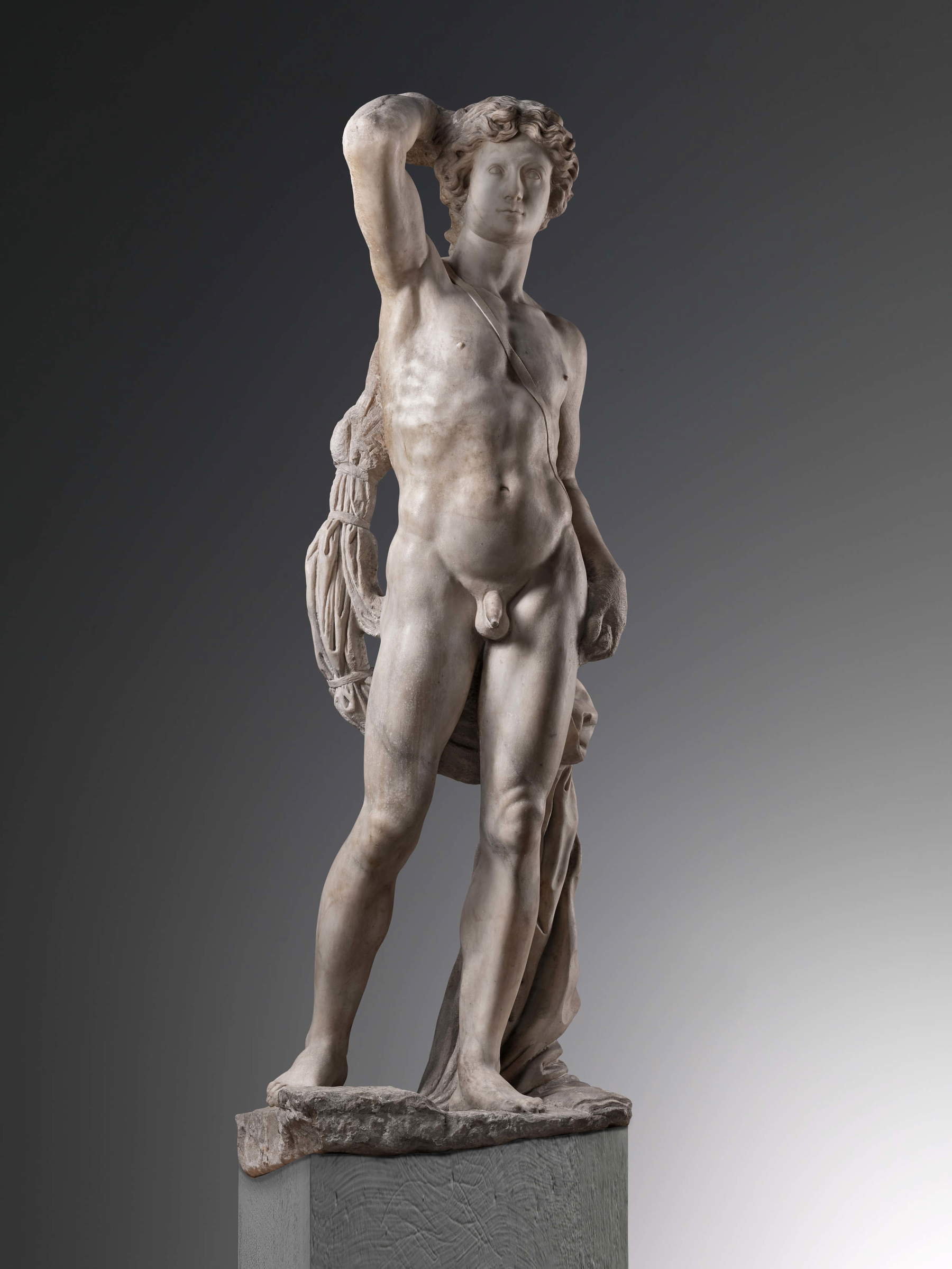
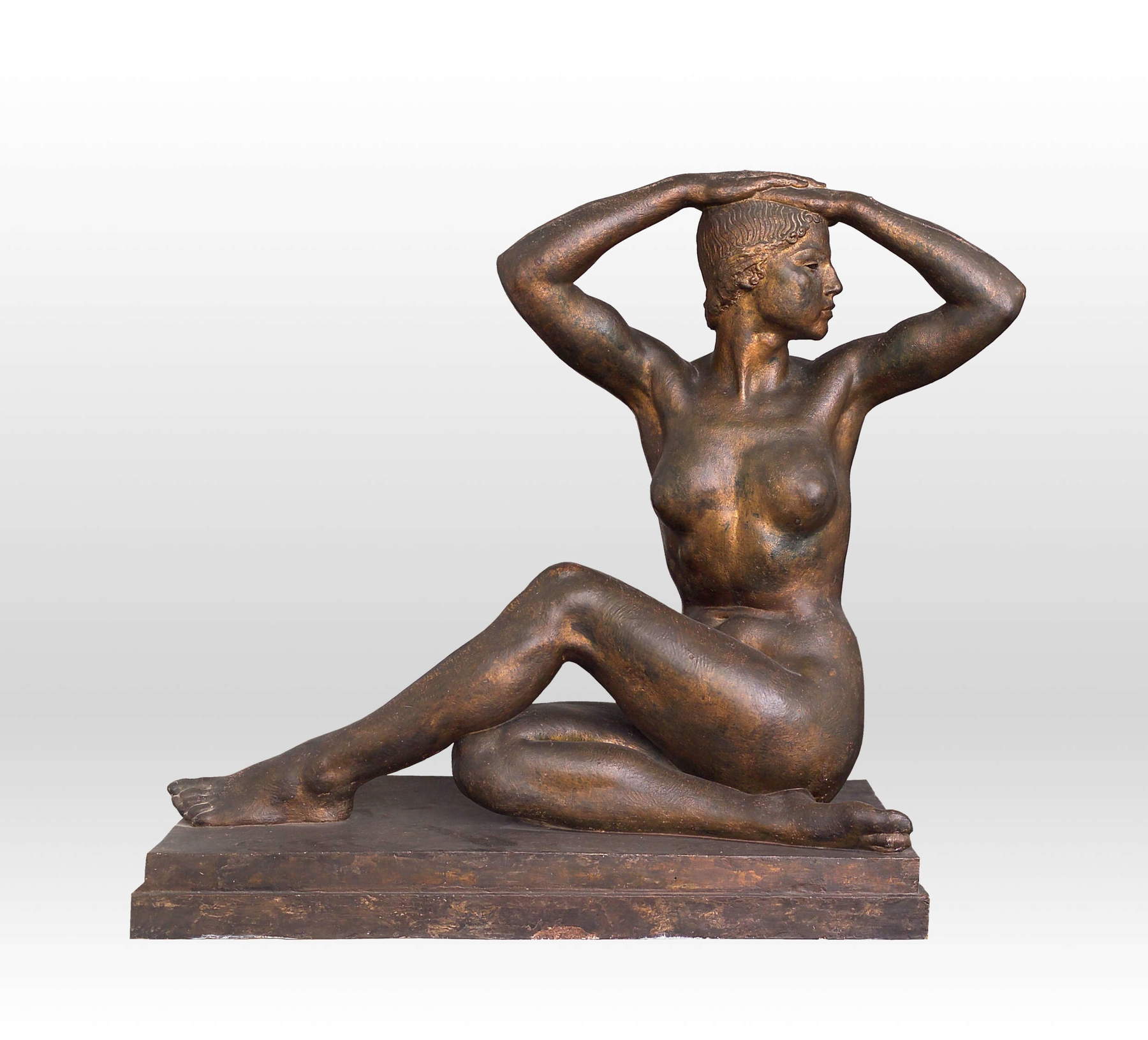
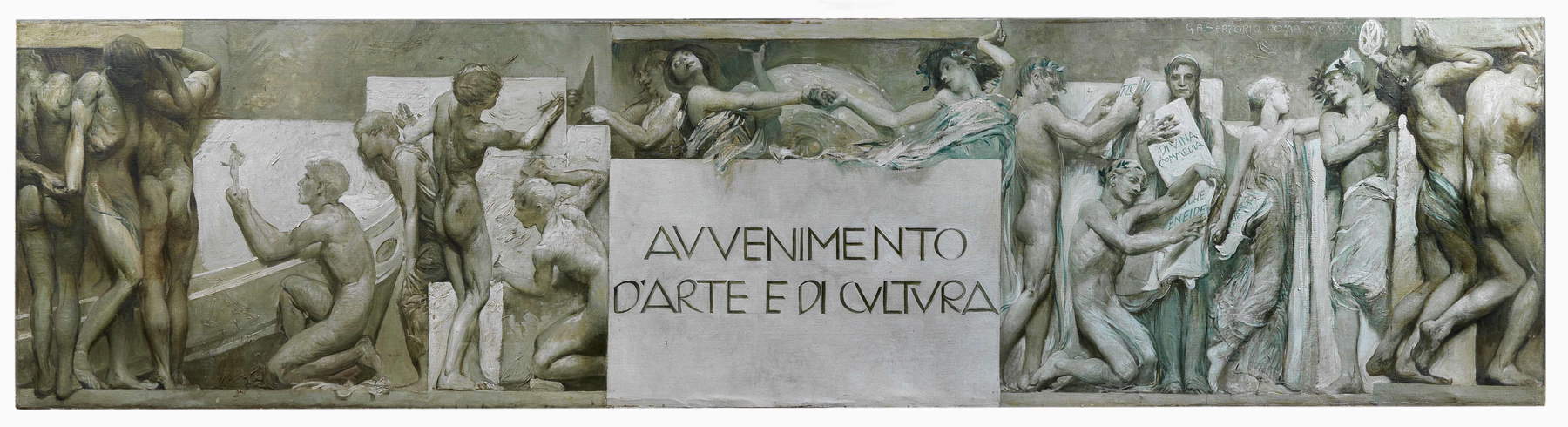
The lively atmosphere of the ground-floor booths is also evident at the Antonacci Lapiccirella Fine Art booth, where the original plaster cast of *Ritmi*, modeled in 1914 by Attilio Selva (priced between 100,000 and 200,000 euros), and the painting by Giulio Aristide Sartorio titled *Avvenimento d’arte e di cultura*, offered at 150,000 euros: the latter is the rediscovery of part of a large decorative frieze painted in grisaille for the 1906 Sempione International Exposition, which Sartorio enriched with brushstrokes of color in 1923 on the occasion of the Regia Nave Italia’s cruise to Latin America. Two other panels from the same frieze were acquired by the Musée d’Orsay in Paris, which contributed to the revival of Sartorio’s reputation among art critics.
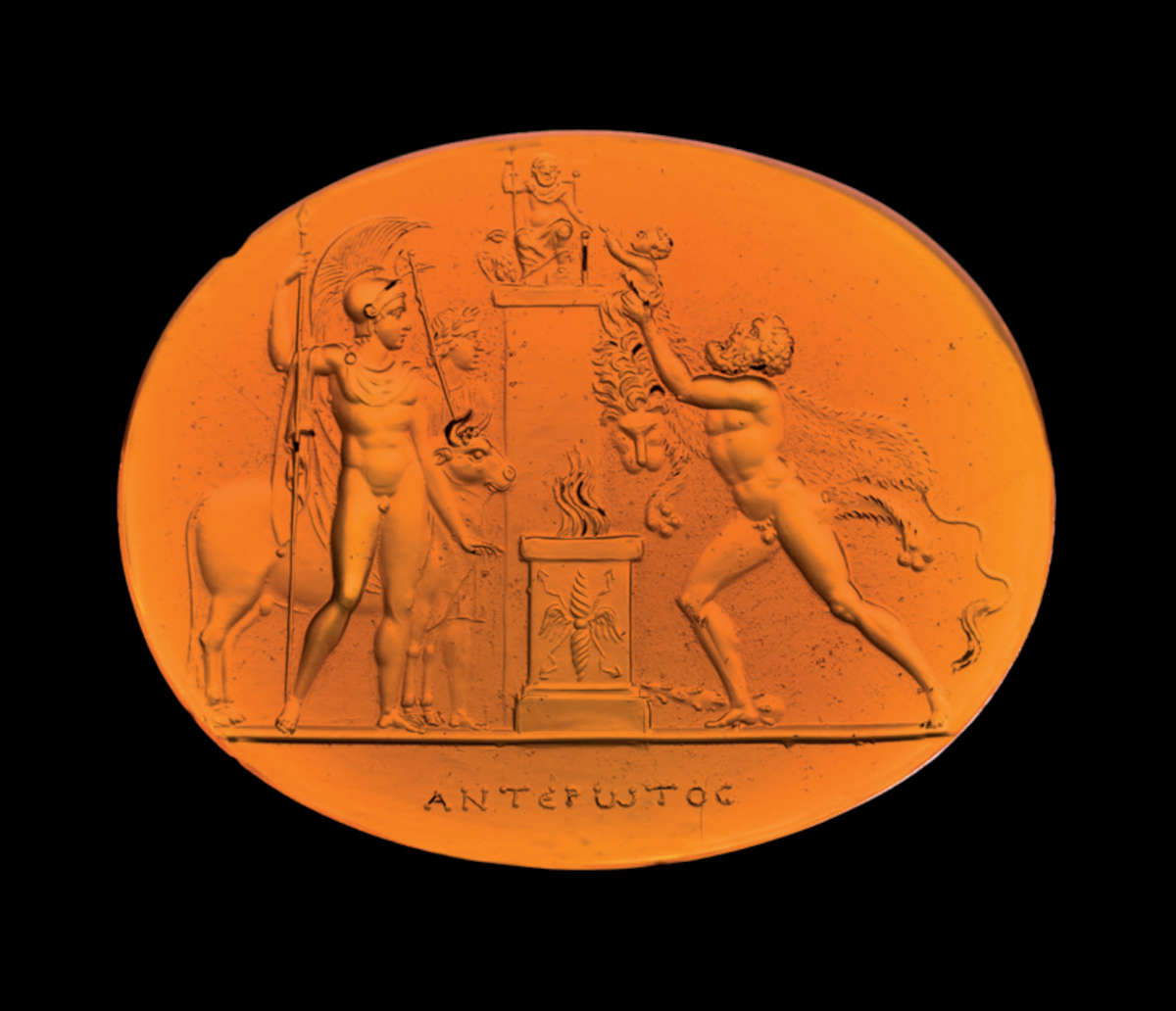
Among the most intriguing items at this BIAF, it is impossible not to mention the story of the thirty-seven engraved gems that belonged to Prince Stanislaw Poniatowski, on sale at Alessandra Di Castro for 5,000 euros each: an episode that speaks not only to neoclassical collecting but also to the capacity of antiquity to be reinvented—almost fabricated—when it is missing. We must start from the premise that, for nearly a century, hundreds of collectors throughout Europe were convinced they owned engraved stones from Greek and Roman antiquity: they were not. Behind those gems—some inscribed in Greek letters with the names of engravers mentioned by Pliny the Elder or Suetonius—was in fact that Polish prince so enamored with antiquity that he had them custom-made: Stanislaw Poniatowski, grandson of the last king of Poland, who between 1803 and 1822 commissioned hundreds of engravings in Rome from the finest “gem engravers” working at the time, leading people to believe they were authentic artifacts. Over 1,700 of those carvings bore forged signatures with names drawn from classical literature; sources identify Luigi Pichler and Giovanni Calandrelli as the primary creators. The prince, who died in Florence in 1833, did not intend to create forgeries in the strict sense: he wanted to live immersed in the dream of antiquity, as scholar Francesco Leone explains in his book dedicated to the collection. These are the gems that can be viewed and purchased these days at the Alessandra Di Castro Gallery’s booth, allowing visitors to take home a piece of this history at a relatively modest price.
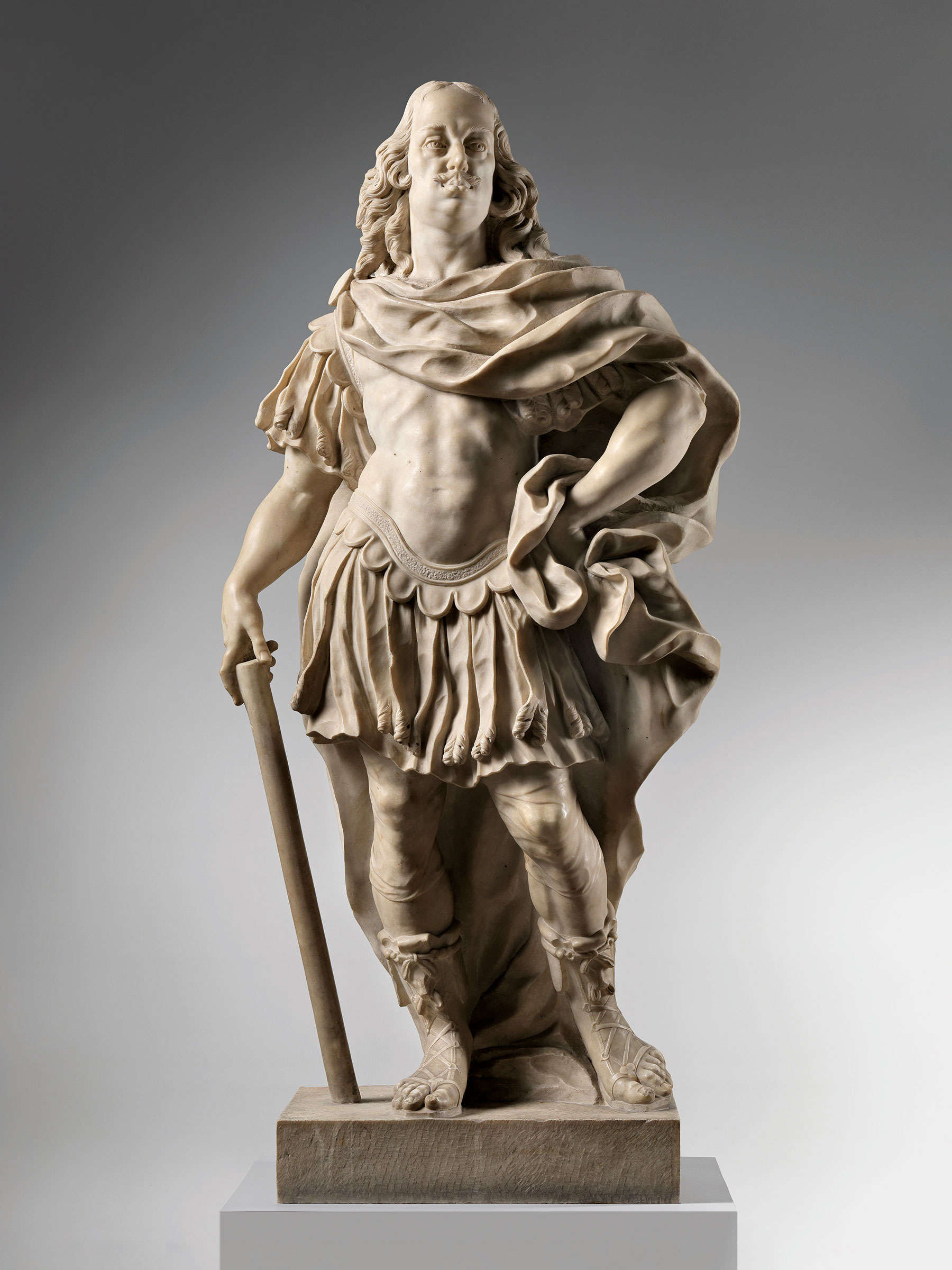
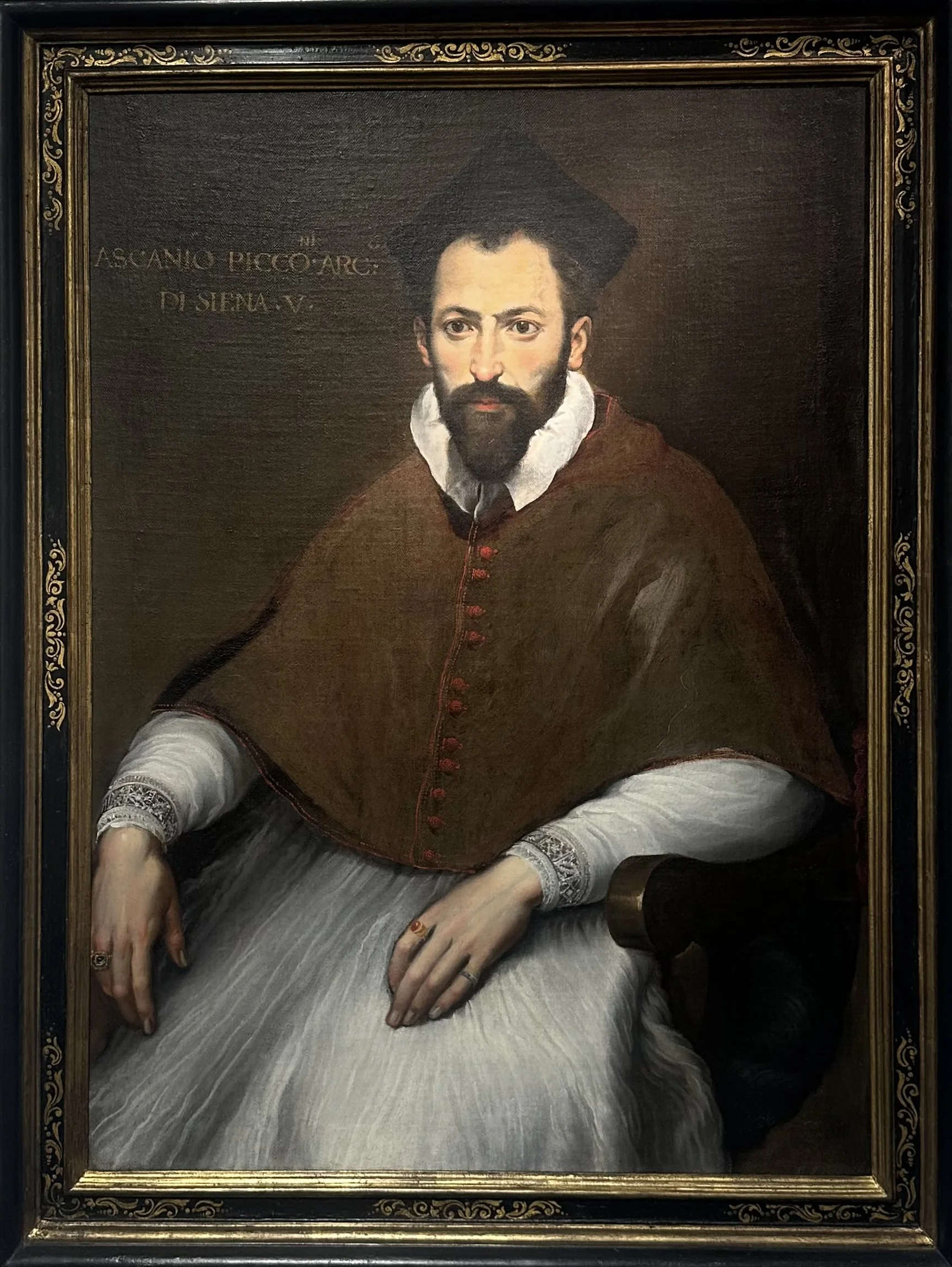
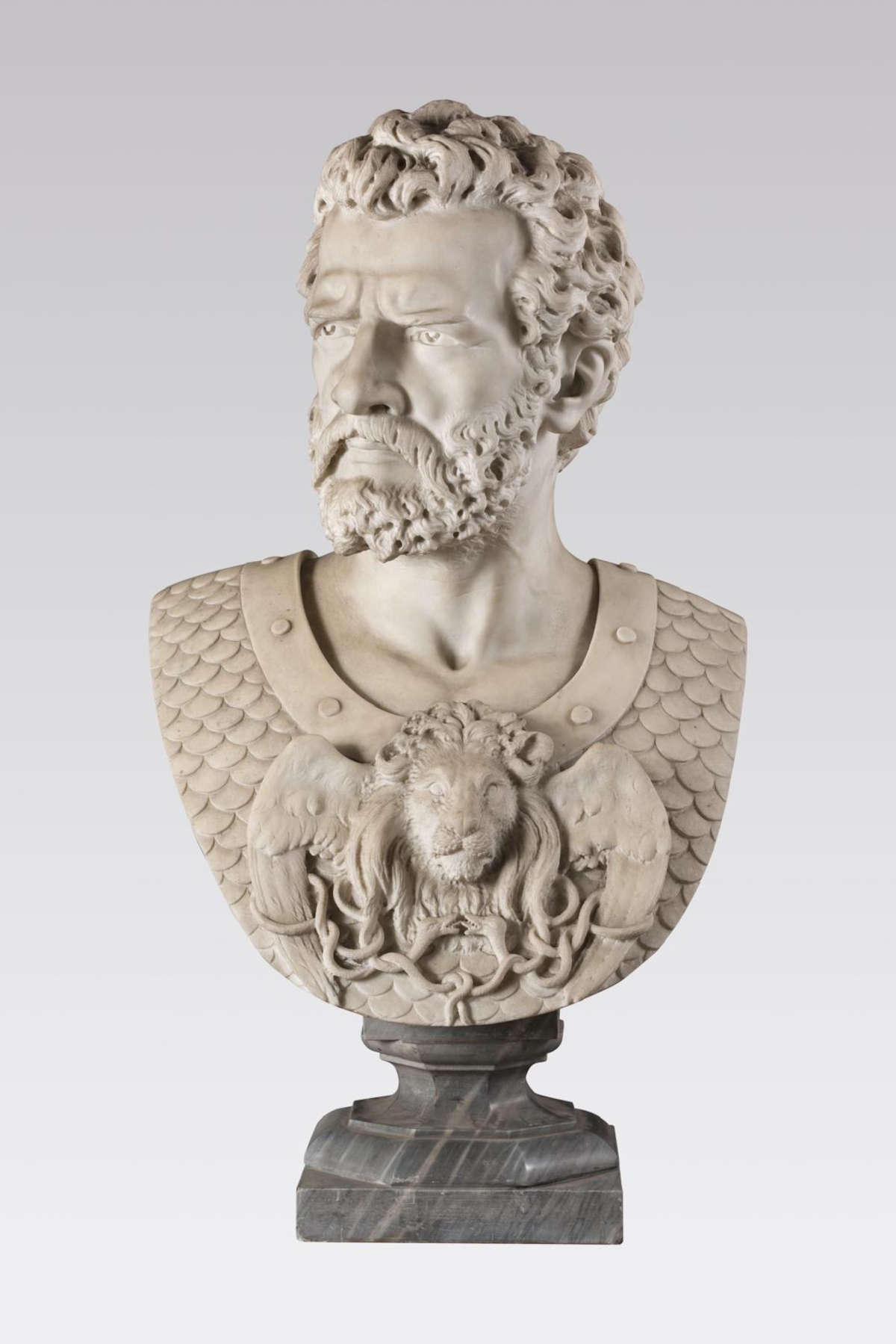
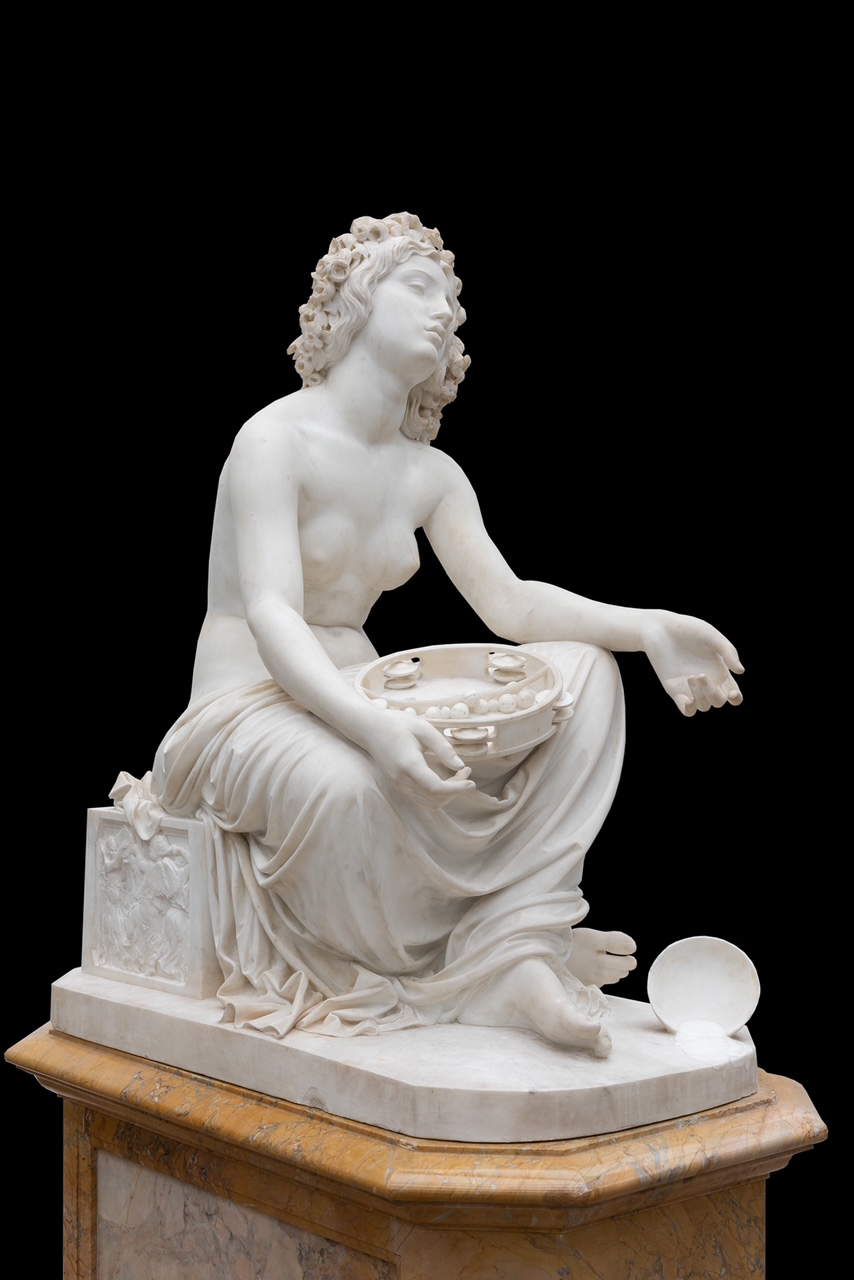
Moving on, from Bacarelli 1923 there are two portraits of exceptional quality: a Portrait of Ascanio Piccolomini, V, Archbishop of Siena, painted around 1590 by Francesco Vanni, oil on canvas, and a marble sculpture by Tancredi Pozzi, an Annibale, both offered at a price between 60,000 and 80,000 euros. Vanni’s painting comes from the Piccolomini collection at the Villa di Fagnano near Siena, which later passed to the Naldi Bandini and Terrosi Vagnoli families. The marble sculpture, on the other hand, depicts the Carthaginian general in his later years, with a stern expression and an elaborate breastplate dominated by a gorgoneion—the apotropaic head that, in Roman statuary, adorned the chests of emperors and generals. The Gomiero Gallery, meanwhile, owns the sculpture awarded first prize at the Biennale: Giovanni Duprè’s *Tired Bacchante*, in statuary marble and Siena yellow marble (price upon inquiry). Commissioned by the King of Portugal, the sculpture represents one of the high points of Duprè’s Neo-Greek phase, when the Sienese sculptor drew inspiration from classical statuary while simultaneously embracing the international aesthetic of the “art pour l’art” movement, which he had come to know through his friend Luigi Mussini. The figure, inspired by the Neo-Hellenistic statuary Duprè discovered in Naples in 1853, depicts a bacchante left behind after the Dionysian dance—evoked by the cembalo and the cup spilled onto the ground—with her ecstatic face framed by a garland of small roses, a symbol of vanitas. Duprè himself recounted having repeated the composition several times: in Manchester, in London, at the imperial residence in St. Petersburg, in the United States, and finally, in 1865, for the King of Portugal.
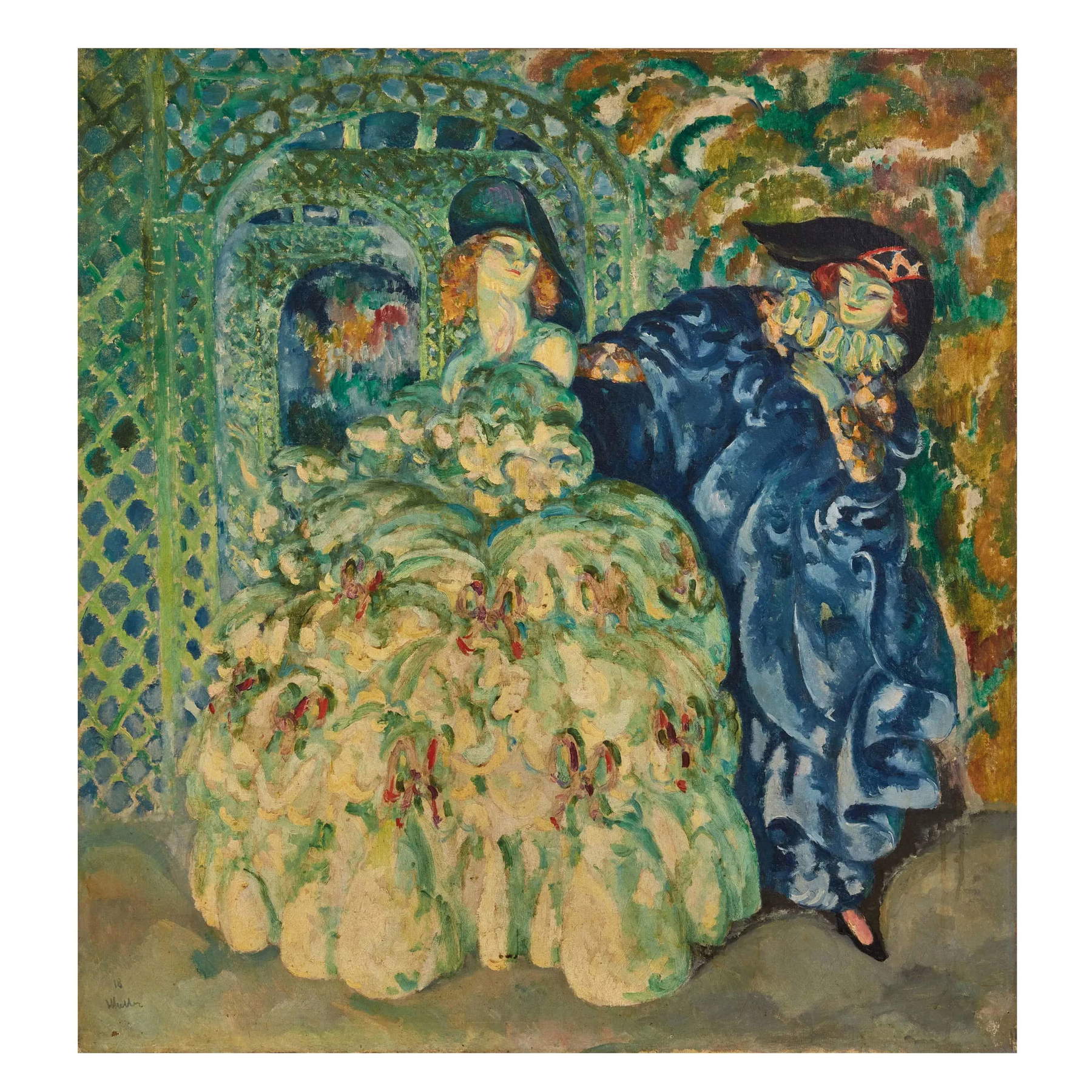
Lovers of early 20th-century theater and masks will find an ideal destination at the 800/900 Art Studio booth, which features three canvases by Alfredo Müller titled *The Conspiracy*, *The Rendezvous*, and *The Labyrinth* (50,000 euros each). These three works belong to the series of twelve *Arlecchinate* created by Müller between 1918 and 1922 and featuring a distinctive proscenium-style frame, exhibited at the Galleria Pesaro in Milan in 1922 and praised by critic Ferdinando Paolieri for their vivid and unabashed theatrical fiction. The theme, which intertwines the masks of the Commedia dell’Arte with elements of vaudeville, seems to hold an almost autobiographical dimension, with Harlequin in pursuit of Colombina as an image of love and beauty to be attained.
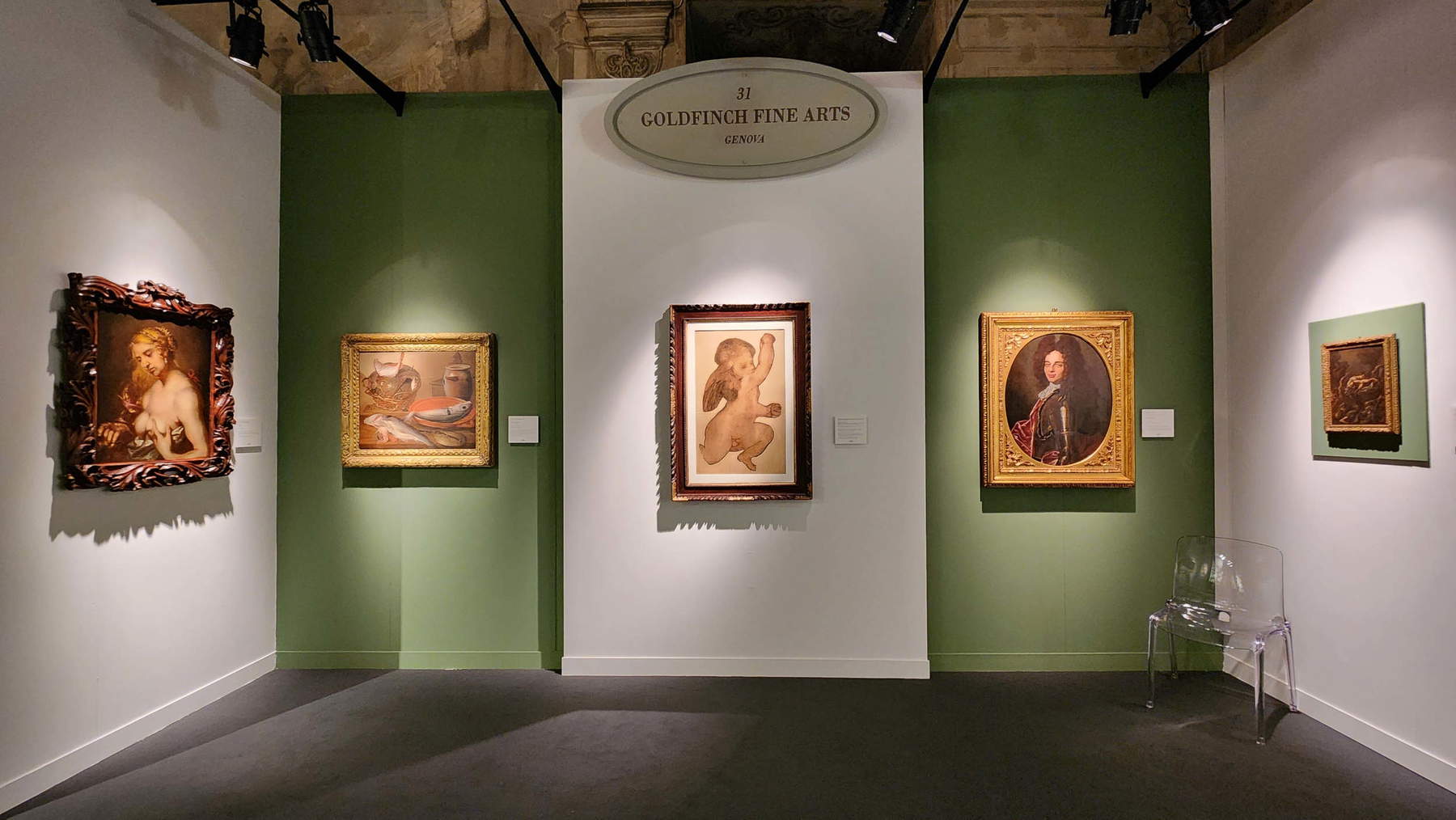
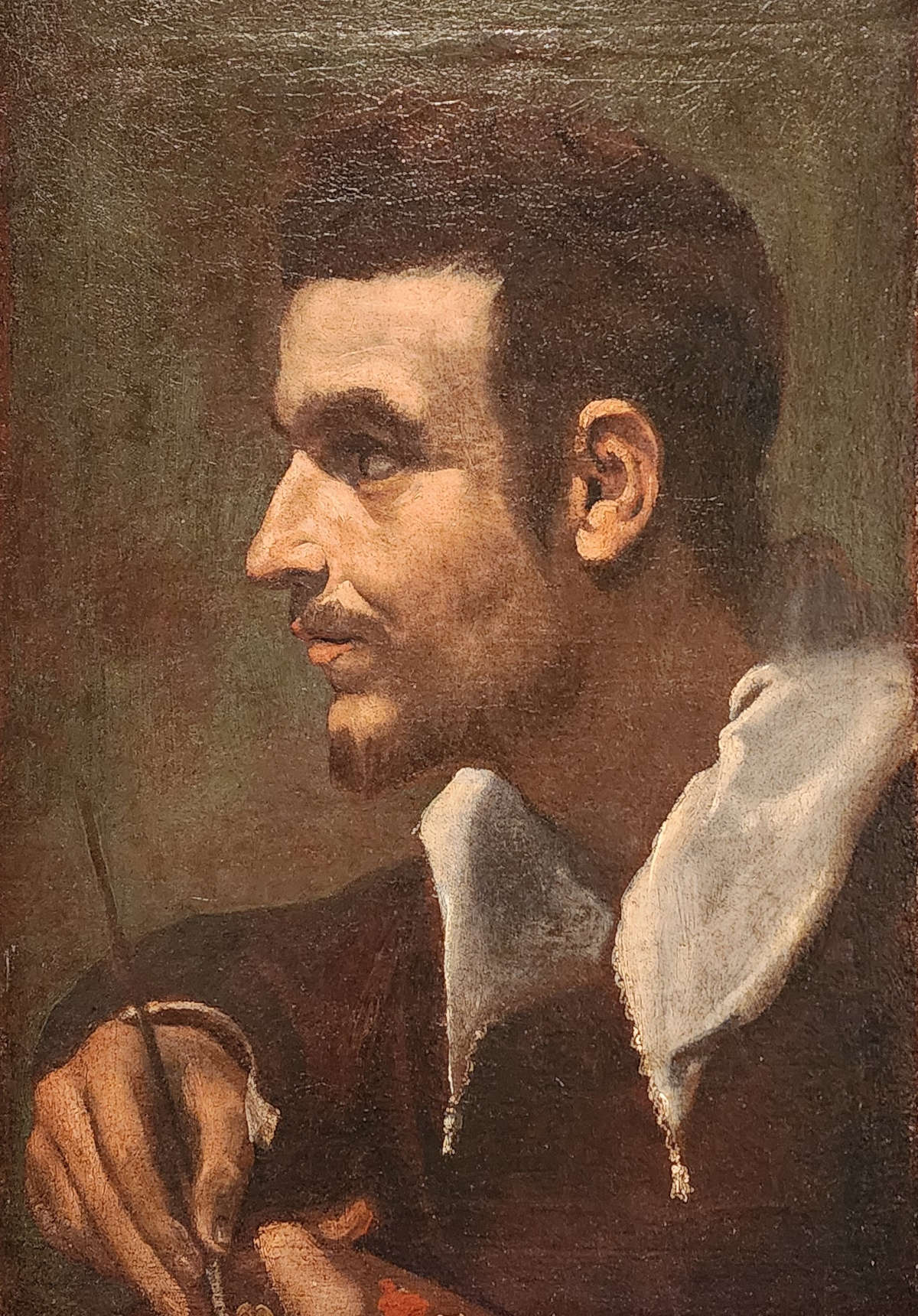
A moment of extraordinary artistic, documentary, and scientific depth is offered by the Goldfinch Fine Arts gallery in Genoa. At the booth, directly opposite Annibale Carracci’s Portrait of a Painter (probably depicting his brother Agostino, 80,000 euros), Perin del Vaga’s*Amorino* is on display—a fragment of a preparatory cartoon for a tapestry from the famous *The Thefts of Jupiter* series (price upon request). The work, executed in ink, white lead, and tempera on paper mounted on canvas, is one of the extremely rare surviving fragments of the cartoons drawn by Piero di Giovanni Bonaccorsi, who was a student and collaborator of Raphael, for Admiral Andrea Doria in Rome and Genoa for the weaving of the six large tapestries depicting Jupiter and Juno, Jupiter and Io, Jupiter and Semele, Jupiter and Callisto, Jupiter and Alcmene, and Jupiter and Danae, intended for the Prince’s Palace, as documented by the drawing in the collection of the Metropolitan Museum of Art in New York. The collecting history of these cartoons is extraordinary: recorded in the Doria inventories of 1606, they have passed through many of the most important Italian and European noble collections. Purchased in 1721 by Duke Philip II of Bourbon-Orléans, the cartoons were subsequently separated.The Cupid was also exhibited in 1892 at Palazzo Bianco during the Columbus celebrations, and today it underwent a thorough diagnostic imaging examination by Mario Amedeo Lazzari, who used infrared technology to reveal the details of the wings and the coat of arms beneath them, followed by a restoration led by Julie Guilmette, who removed the buildup and altered varnish, consolidated the primary canvas from the reverse side, and brought to light the exceptional quality of Perini’s drawing.
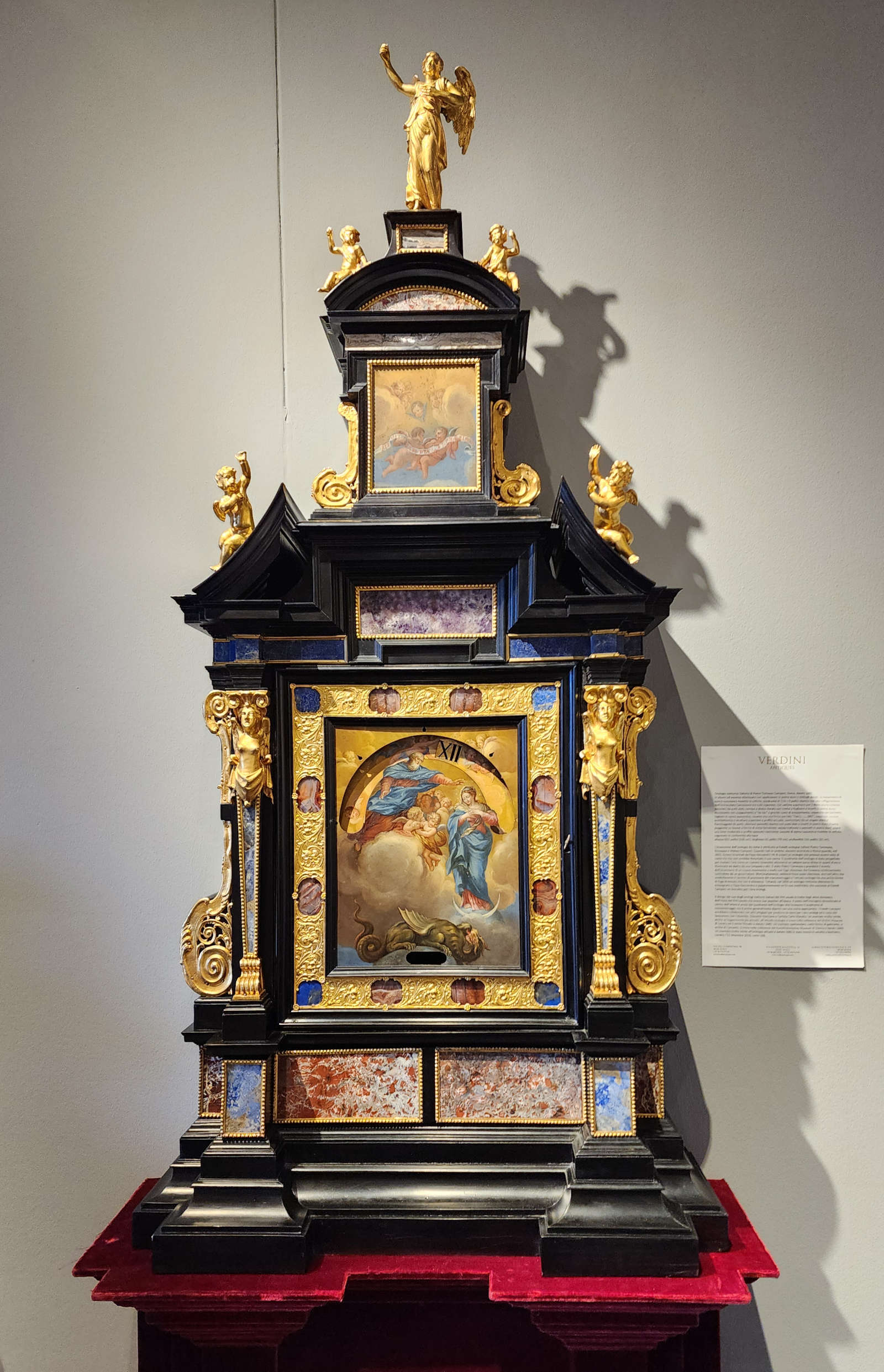
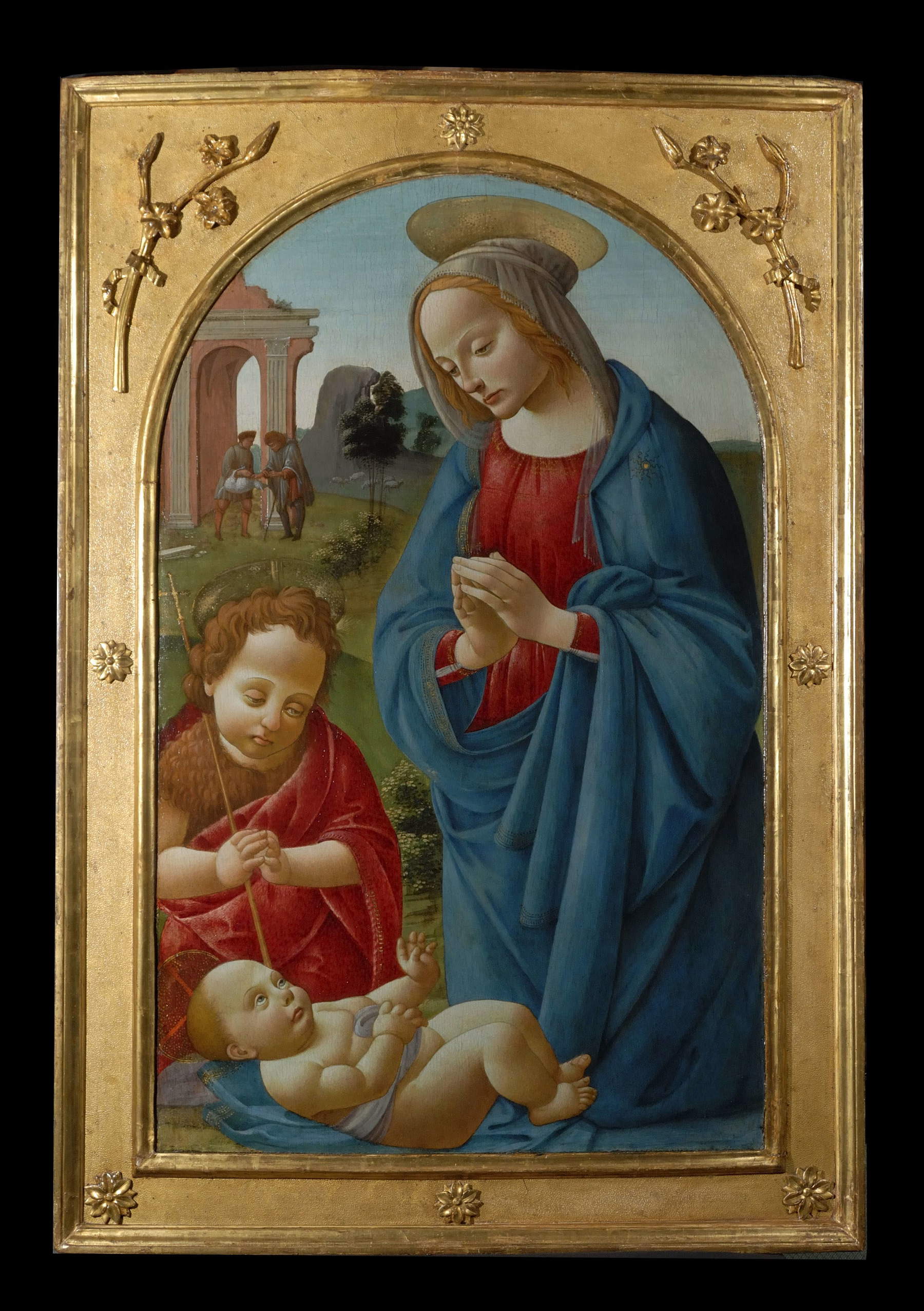
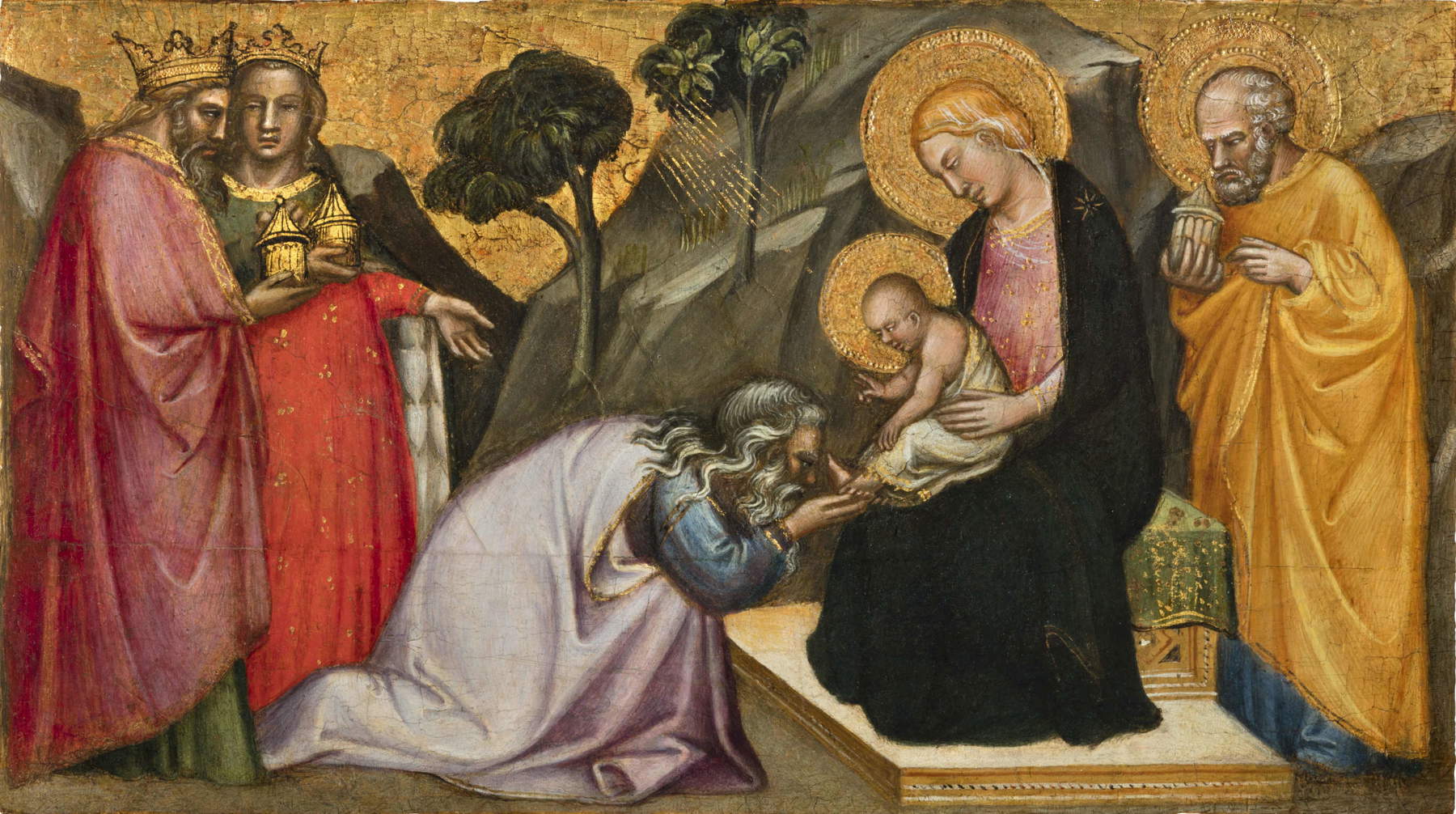
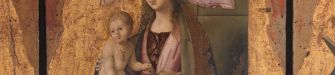
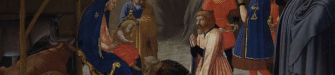
Continuing through the eastern section of the ground floor, the exhibition offers other highlights of the utmost importance for art historians and collectors: at the Verdini Antiques booth, a rare and sophisticated Italian night clock by the clockmaker Pietro Tomasso Campani—one of the masters of the genre—captures the interest of time-keeping enthusiasts (the invention of the night clock is attributed precisely to the Campani brothers, who were commissioned in 1655 by Pope Alexander VII to create a mechanism that would indicate the time at night without the usual ticking), and dated 1682 (approximately 150,000 euros). Not far away, the Milanese gallery Altomani & Sons has set up a wall of Renaissance and 14th-century masterpieces of exceptional quality: Biagio d’Antonio Tucci’s *Madonna and Child with an Idealized View of Florence*, a painting designated by the Italian government as being of exceptional historical interest (220,000 euros); the exquisitely delicate panel paintingof the Adoration of the Child, an oil on panel studied by authoritative historians such as Giuliano Briganti, Nicoletta Pons, and Andrea De Marchi (280,000 euros), and the solemn gold-ground predella by Spinello Aretino, dated around 1395, depictingthe Adoration of the Magi, studied by Stefan Weppelmann and Gaudenz Freuler (300,000 euros).
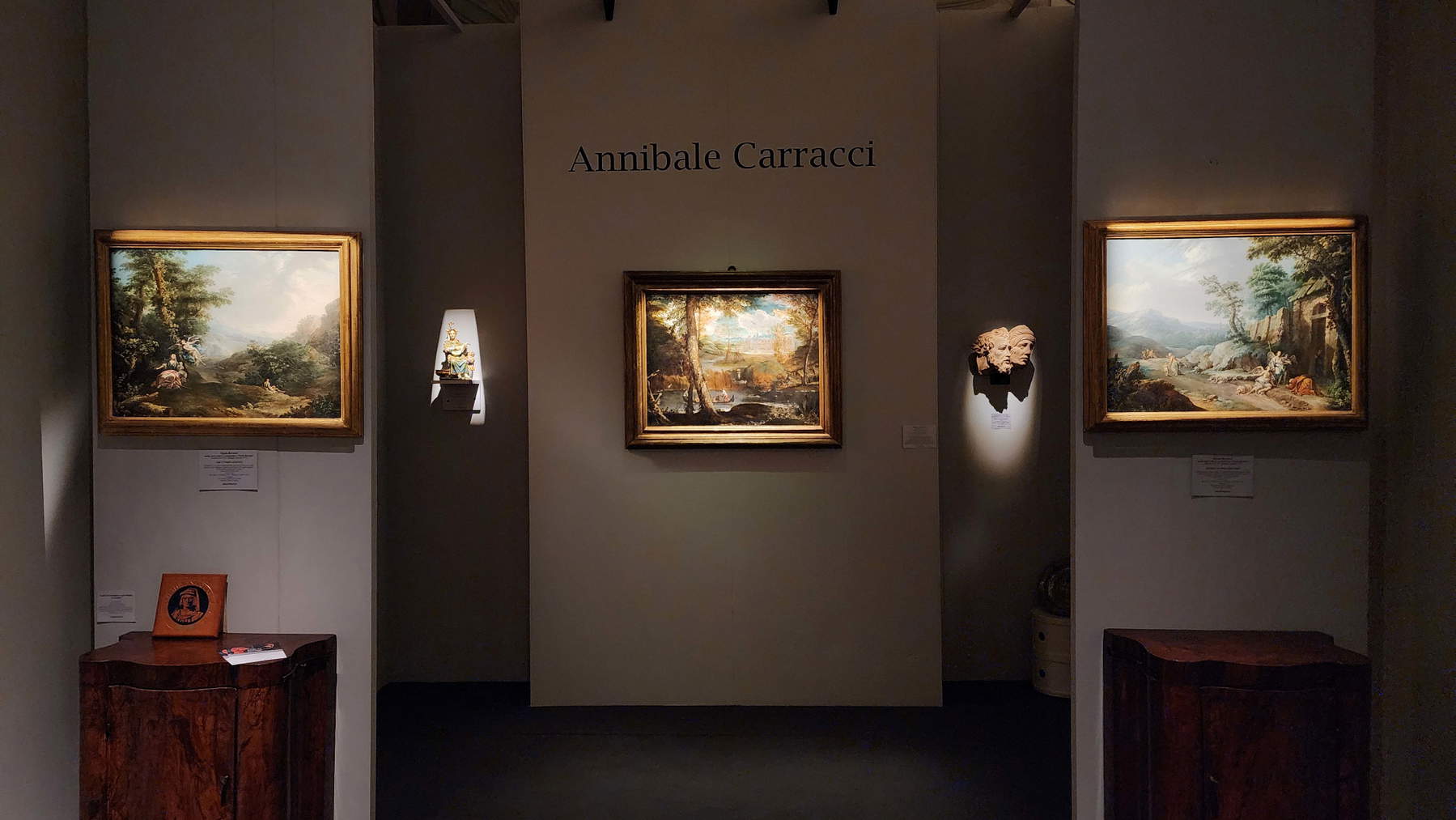
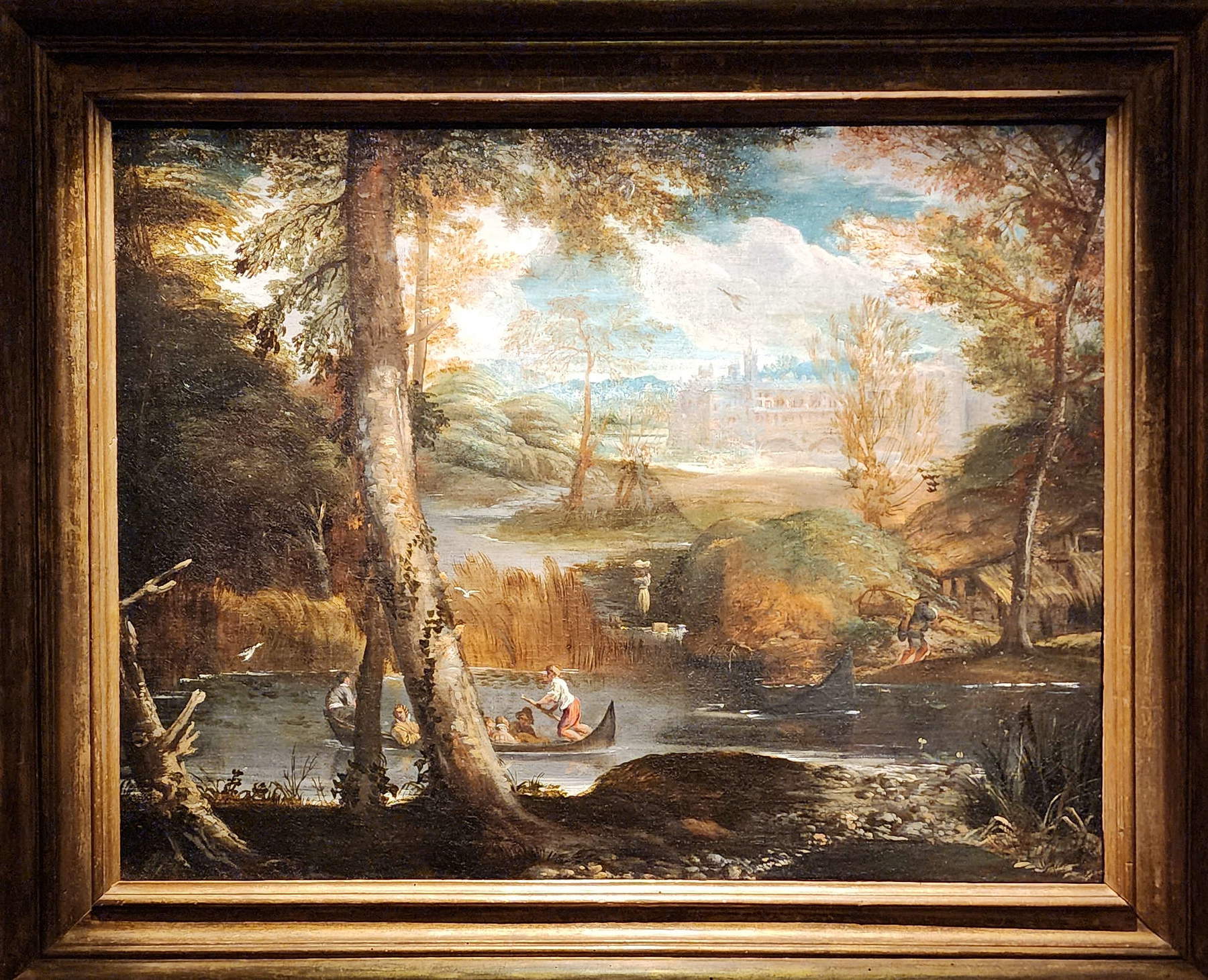
A short distance away, the Alice Fine Art gallery booth features one of the most celebrated paintings of this edition: Annibale Carracci’s *River Landscape with Boatmen*, which was awarded the prestigious prize for best painting at BIAF 2026 and is currently the subject of confidential negotiations. The work dates to the late 1580s: it depicts a view of a countryside traversed by a river, first attributed to Carracci in 1919 by Herman Voss, when the work was part of the Platky Collection in Leipzig, and has since passed through several other private collections. It is one of the earliest landscapes by Annibale Carracci known to us, if not the very first painting of its kind produced by him (that is, not a mythological or biblical scene set in a landscape: here, the artist is not interested in incorporating a narrative element). This painting stands out for its fresh, natural tone, making it one of the most interesting works at this BIAF—a must-see during your visit.
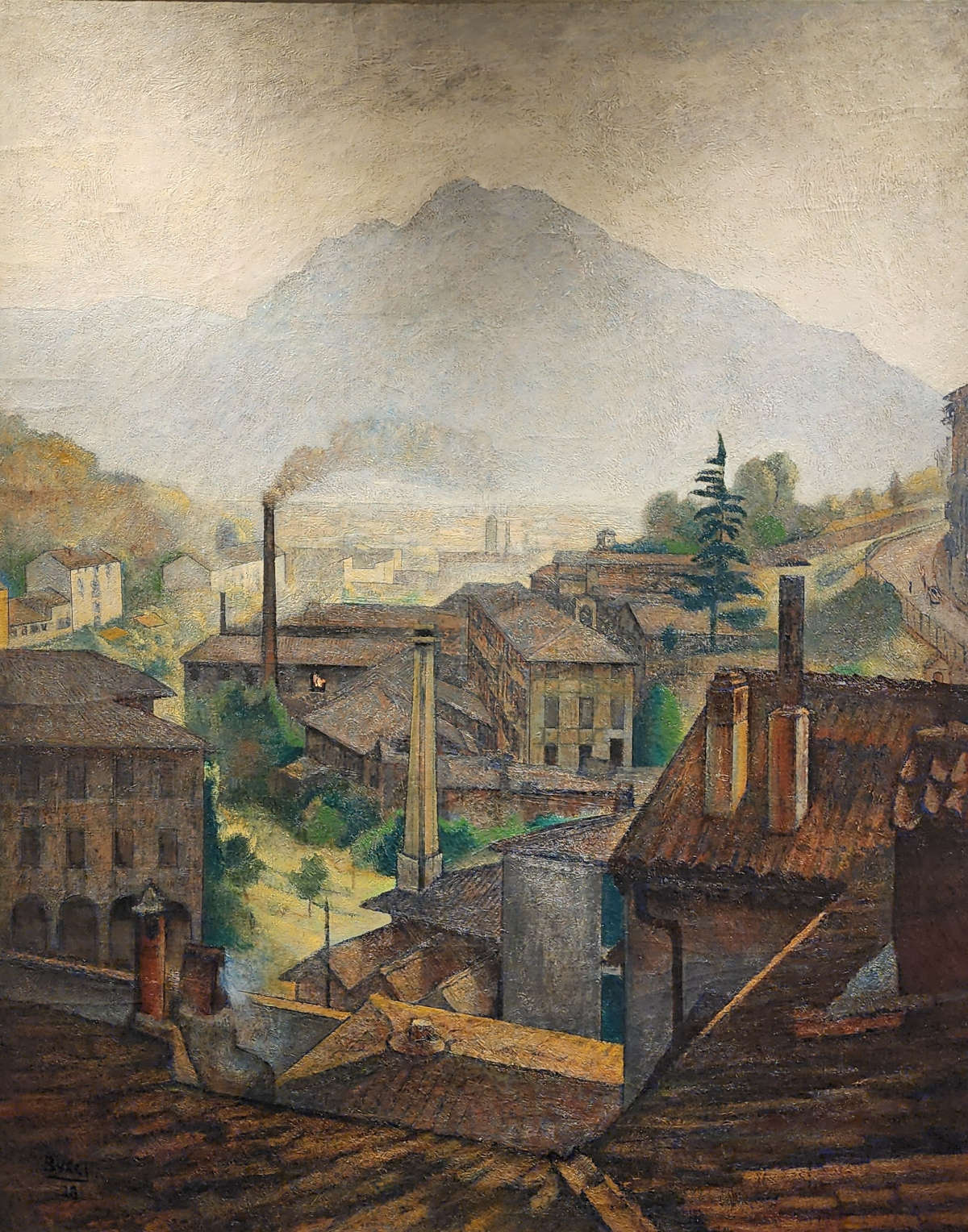
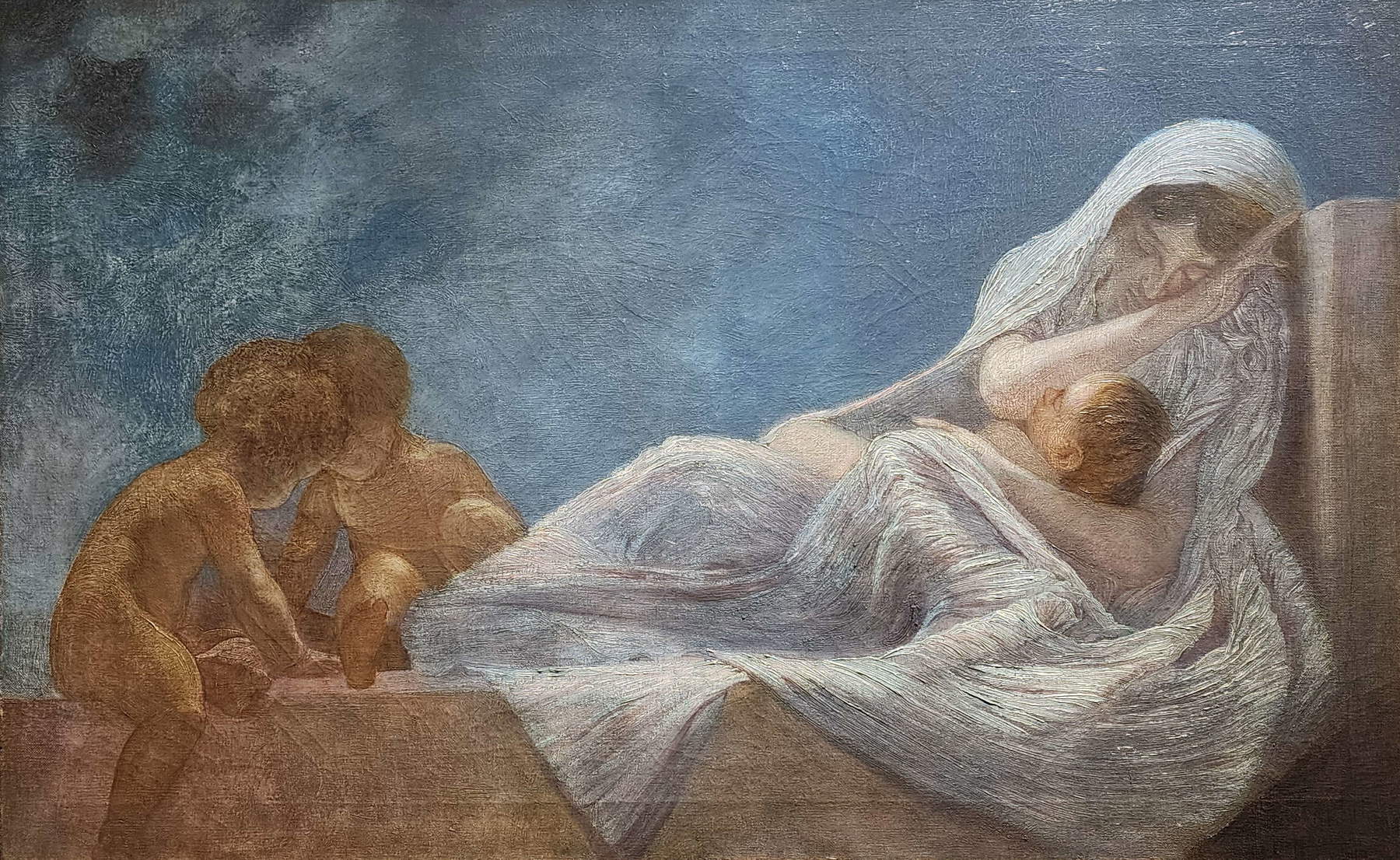
The Reve Art gallery, on the other hand, offers—as usual—an in-depth exploration of Italian painting from the late 19th to the early 20th century. The first highlight is the large and complex canvas *Ferriera a Malavedo*, painted in 1928 by Anselmo Bucci and signed (60,000 euros). The work depicts the steel mill of Giuseppe and Fratello Redaelli, led by engineer Ernesto Redaelli, in Malavedo near Lecco, nestled in the pre-Alpine landscape dominated by the blue hues of the mountains and the yellow-green triangle of light from the meadows amid the smoking chimneys: It dates from the years when the painter, having returned to Milan after his time in Paris and his service on the front lines of World War I, was drawing closer to the Novecento group before eventually distancing himself from it, discovering new themes such as animal subjects, landscapes, and still lifes between 1923 and 1930. Alongside Bucci, Reve Art is exhibiting Gaetano Previati’s *Il sogno* (The Dream), a precious Symbolist composition from 1908 (40,000 euros), originally conceived for Alberto Grubicy’s music room and closely linked to the panel *Notturno* or *Il silenzio* (The Silence ), preserved at Gabriele D’Annunzio’s Vittoriale degli Italiani: it is a work that enchants with its female figure draped in fabric rendered with the typical Divisionist technique of luminous strands of color beneath a sky populated by Neo-Renaissance cherubs.
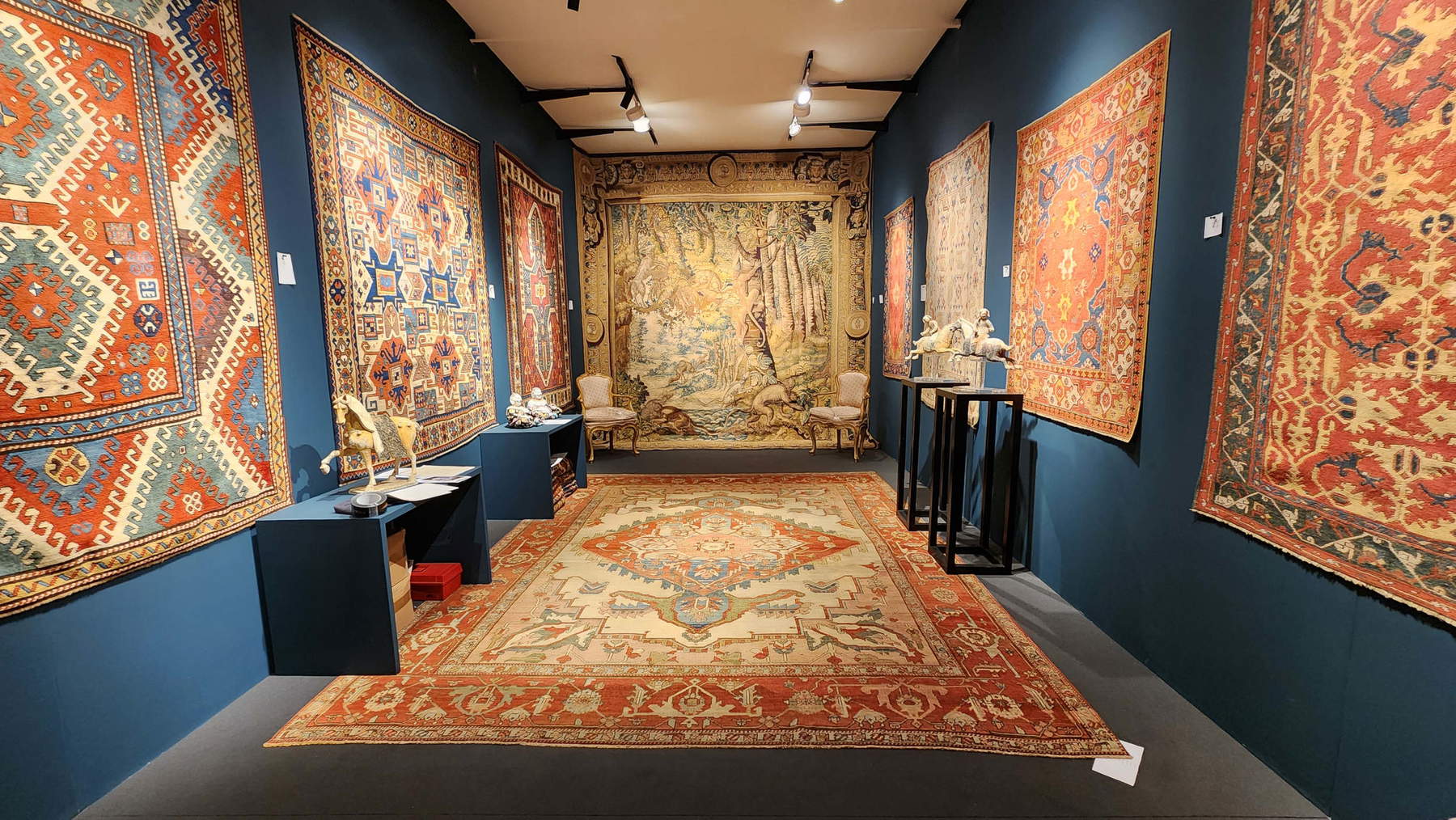
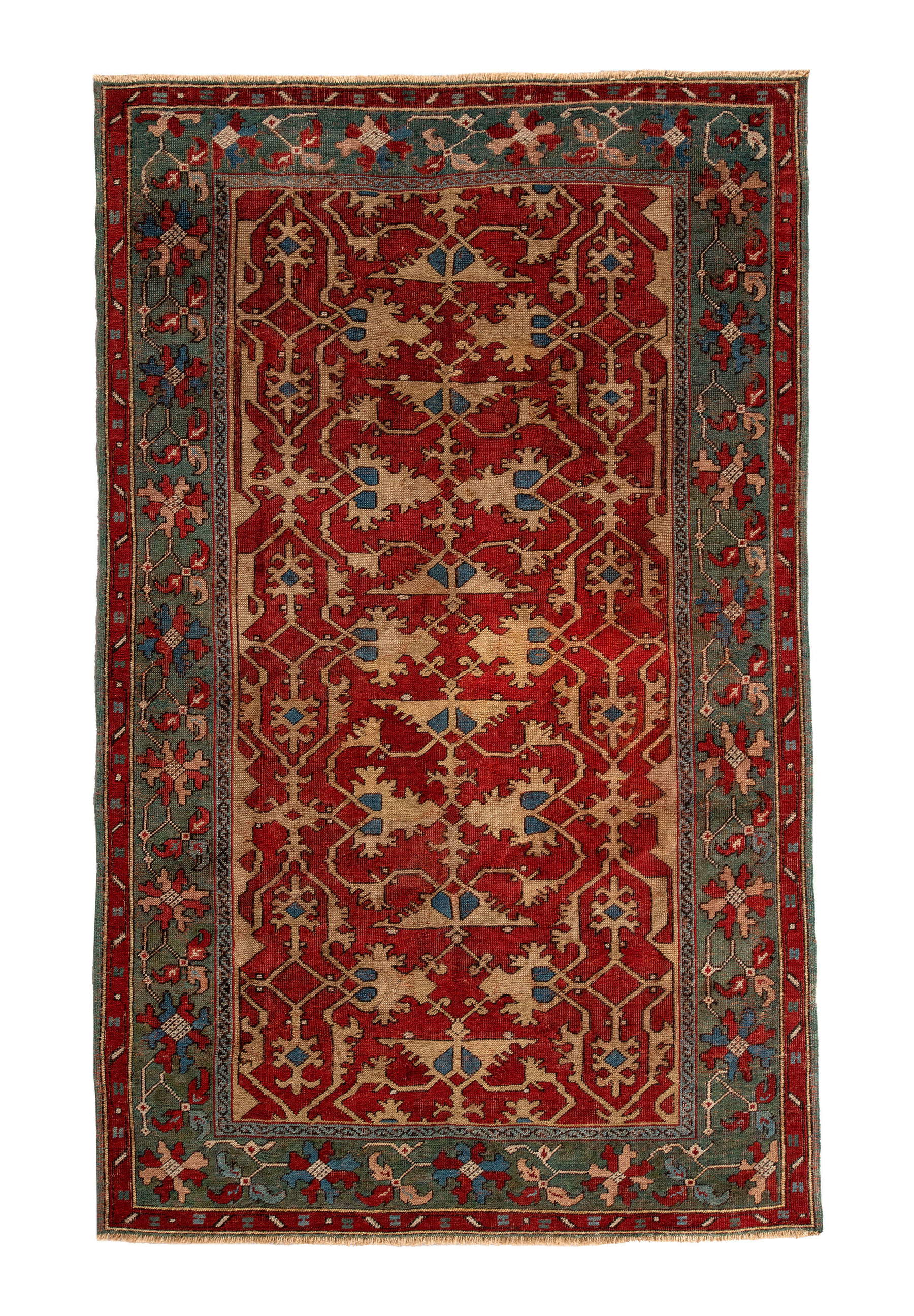
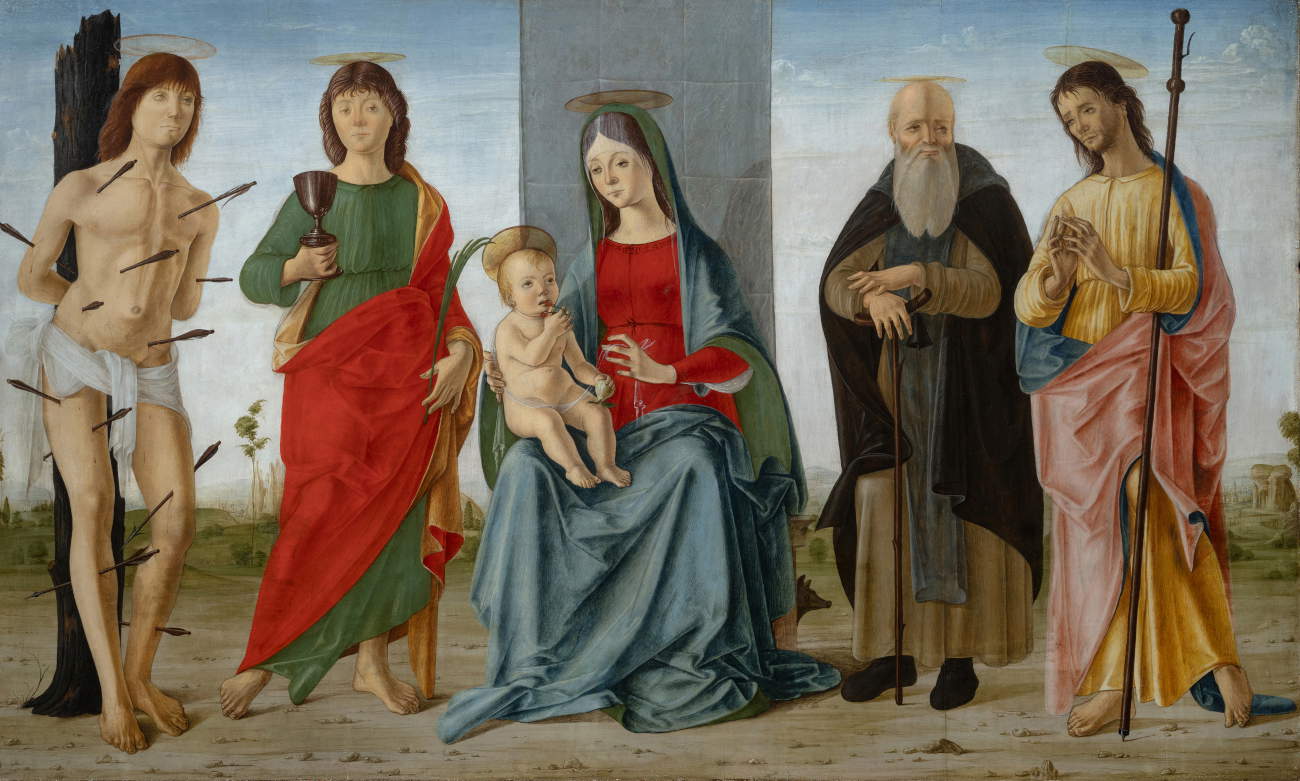
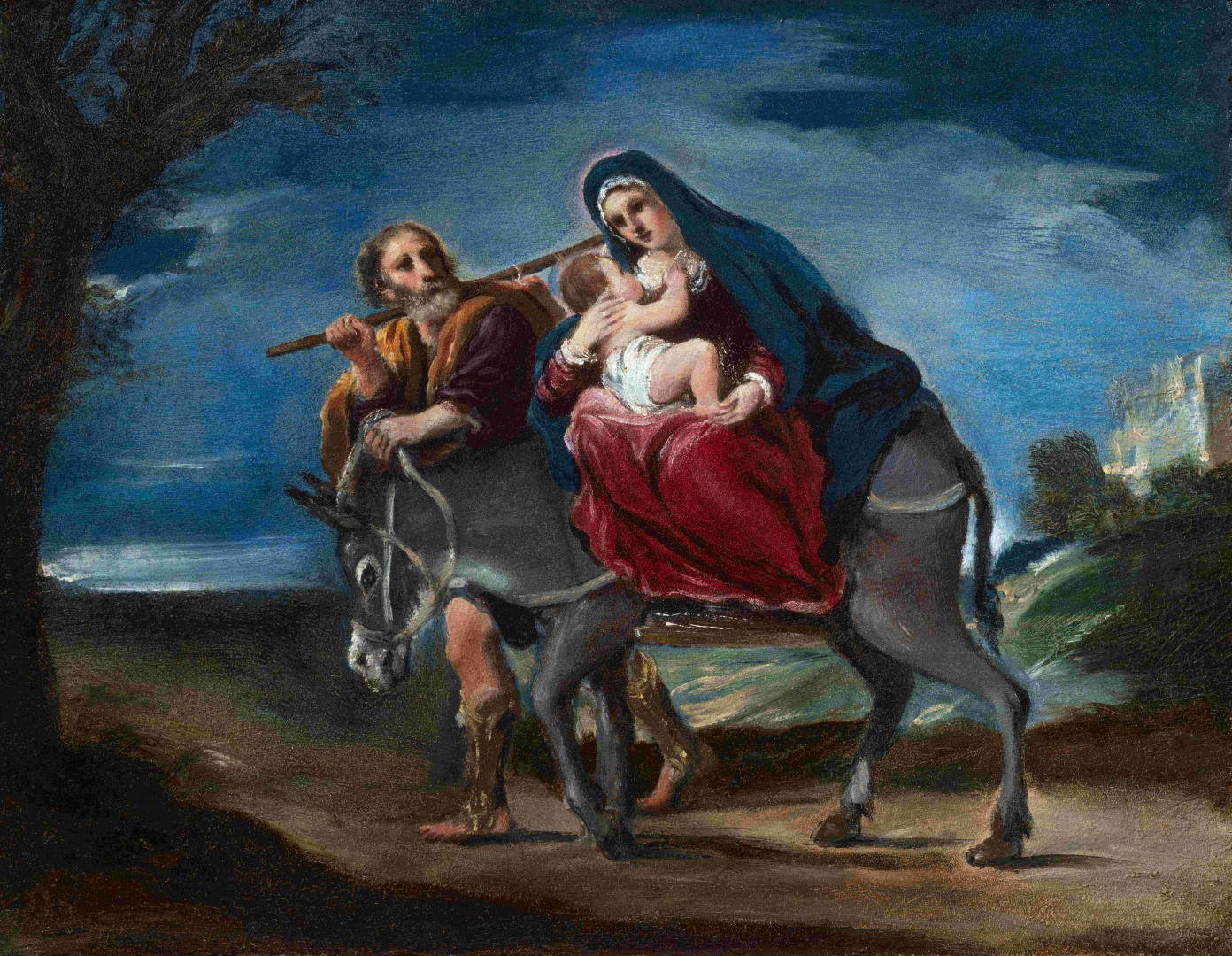
The ground-floor exhibition finds its crowning glory in the works by Mirco Cattai and Tiziana Sassoli’s Fondantico. Mirco Cattai is exhibiting a magnificent and extremely rare Anatolian Ushak carpet dating from the mid-16th century, preserved in exceptional condition and offered at a price exceeding 200,000 euros. At the Fondantico di Tiziana Sassoli booth, the highlights include a large panel by Lorenzo Costa depicting the Madonna and Child with Saints John the Evangelist, Anthony the Abbot, Sebastian, and John, offered at approximately 600,000 euros, and the delightful, tiny panel by the young Guercino depicting The Flight into Egypt, a recent rediscovery (it was presented for the first time, with a study by Daniele Benati, at the 2025 edition of TEFAF: the attribution is also confirmed by another Guercino expert, David Stone). Painted around 1615 and in superb condition, the work depicts the Holy Family, led by Saint Joseph, fleeing after Herod’s tragic edict, set against a vast natural landscape.
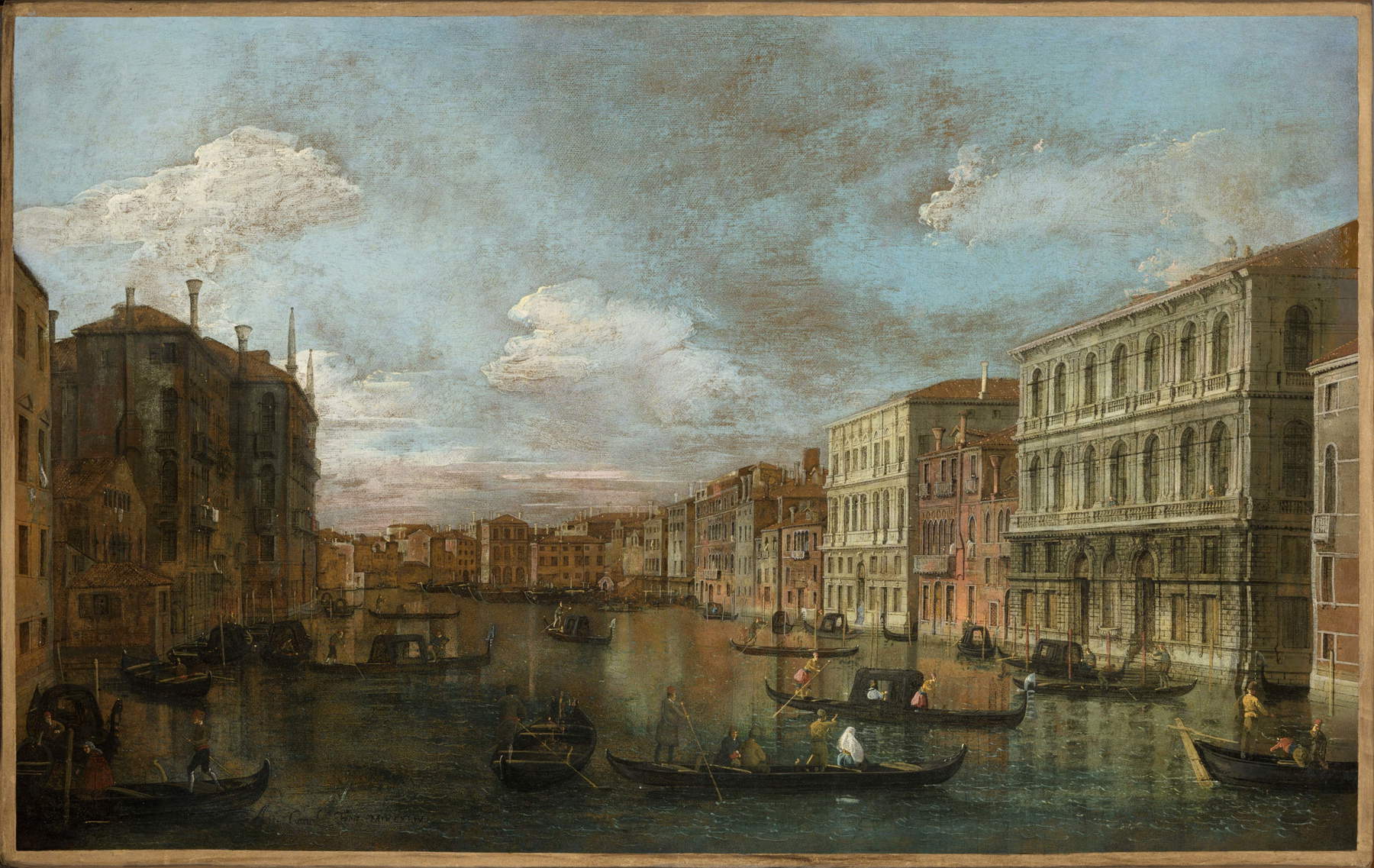
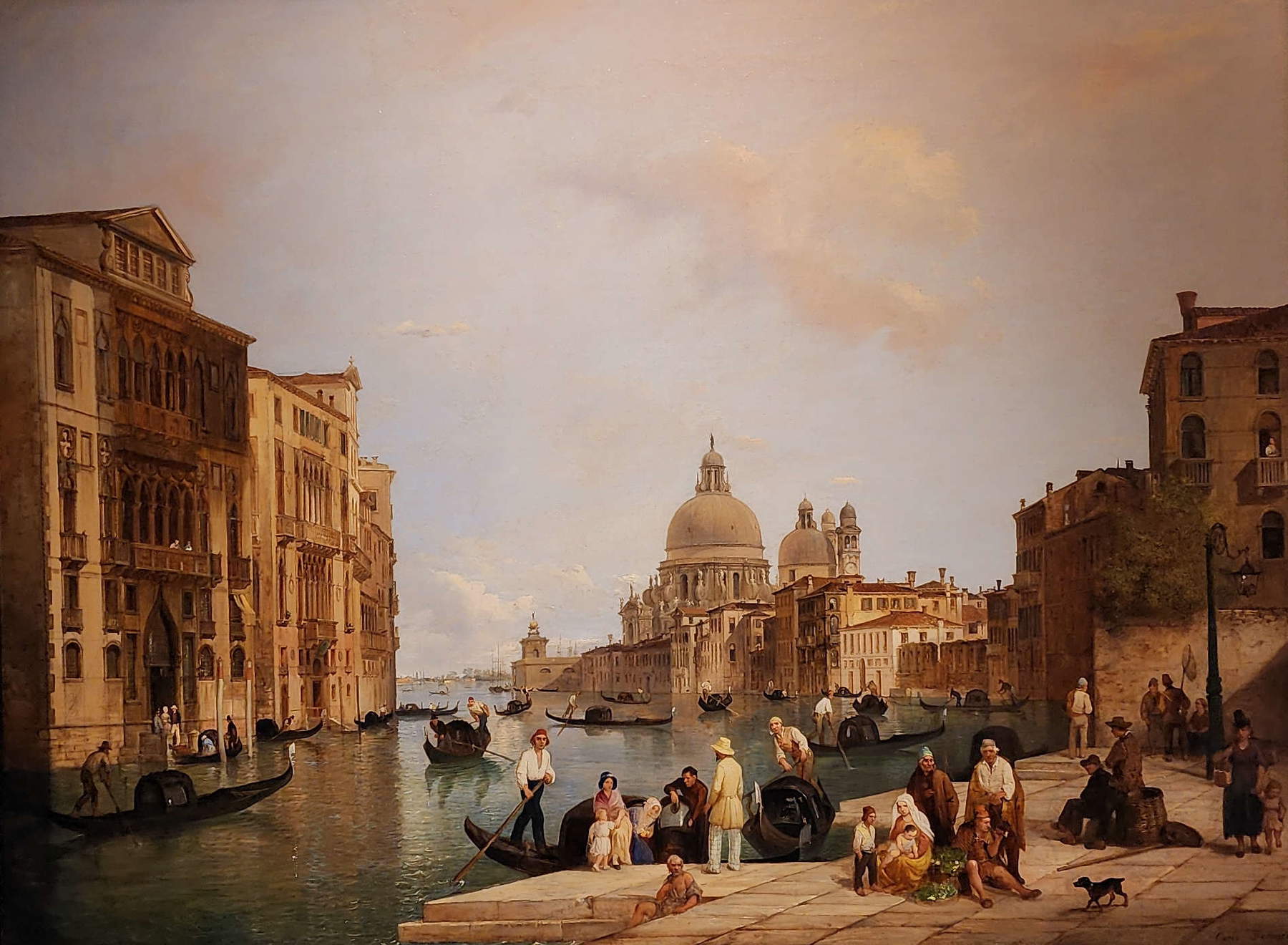
As you ascend the monumental staircase leading to the piano nobile of Palazzo Corsini, you’ll encounter another highlight of this BIAF: Matteo Salamon’s booth, where a masterpiece of 18th-century landscape painting takes center stage: Canaletto’s *The Grand Canal Looking Southeast, from Palazzo Pesaro to the Fondaco dei Tedeschi* (1.5–2 million euros). The canvas, signed and dated (“Ant. Canal Fecit MDCCXLIV”), has emerged on the art market after remaining hidden from the eyes of collectors and enthusiasts for a long time: it is, in fact, a previously unseen work (with the exception of a single black-and-white promotional reproduction that appeared in 1975 in the magazine *Arte Veneta* when it was housed at the Galleria Edmondo Sacerdoti in Milan). The painting, which arrived for restoration in critical condition due to a defective historical lining that required an extremely delicate canvas-to-canvas transfer, now shines in its rediscovered authenticity. At the same booth, Salamon pairs the Canaletto with a panel by Gaudenzio Ferrari depicting Saint Anthony of Padua (100,000–150,000 euros)—a fascinating example of a masterpiece that was dismembered, scattered, and successfully reconstructed by art historians, with the central portion now housed at the Accademia Carrara in Bergamo (we have discussed this fragment in these pages).
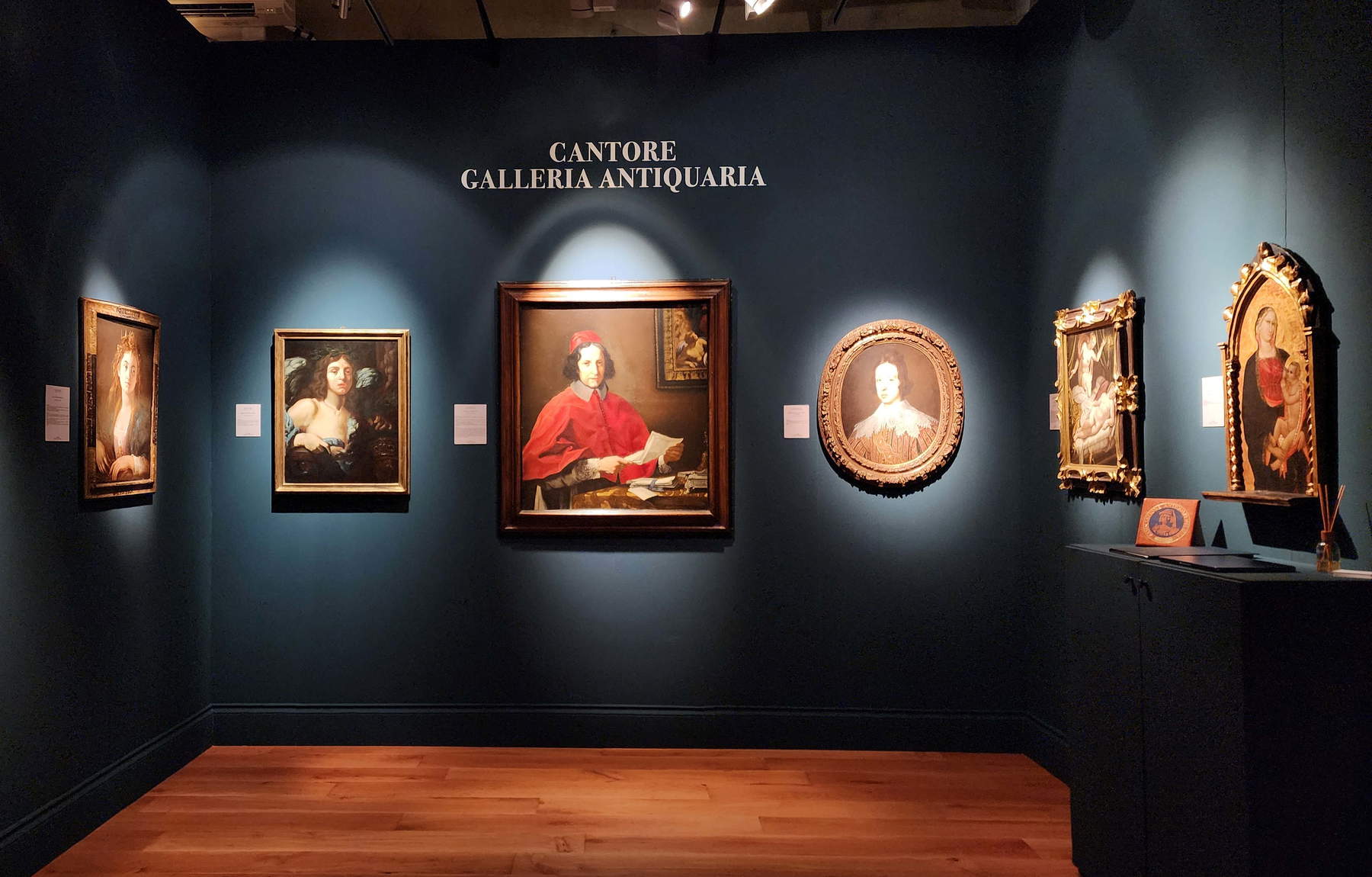
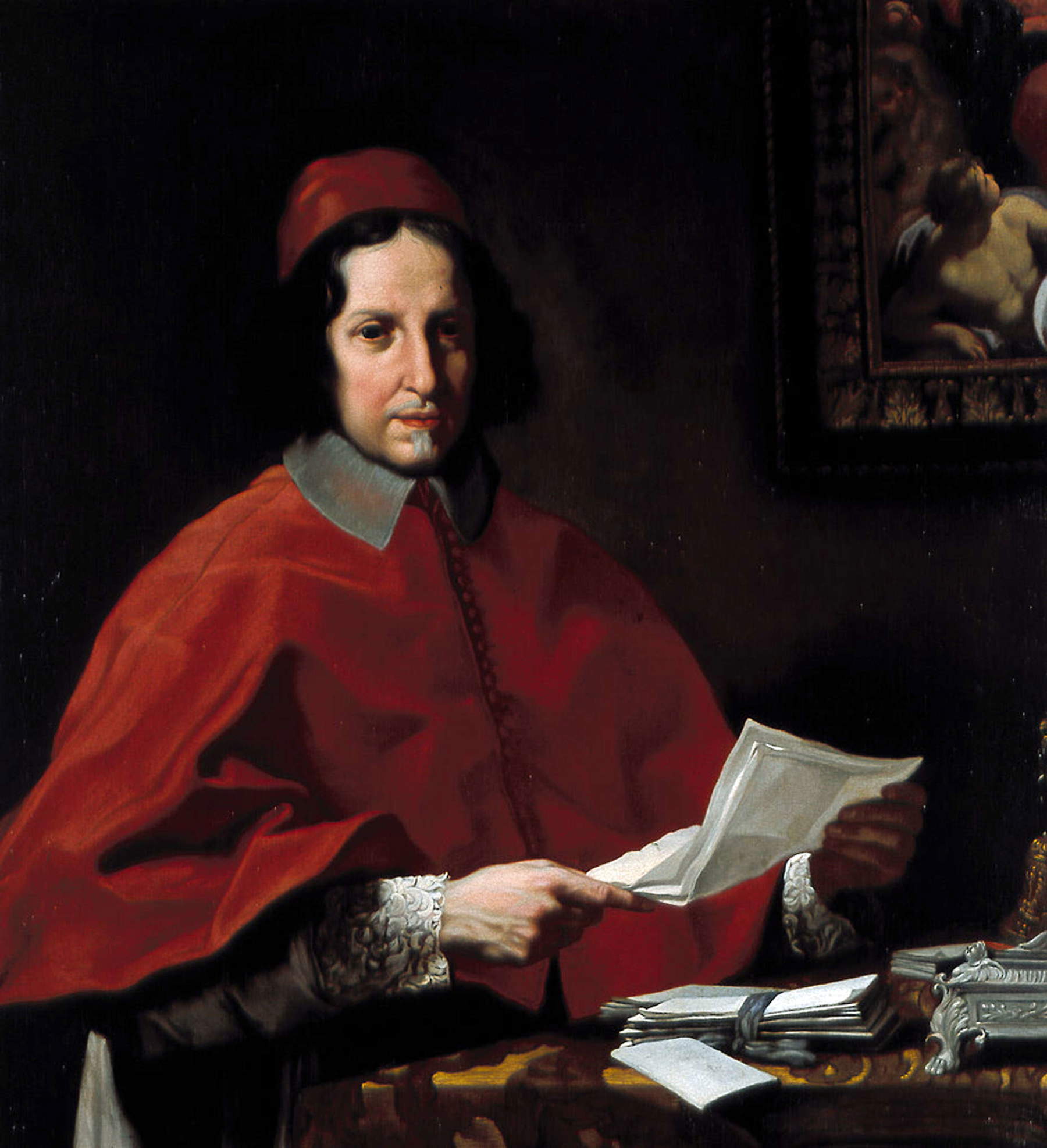
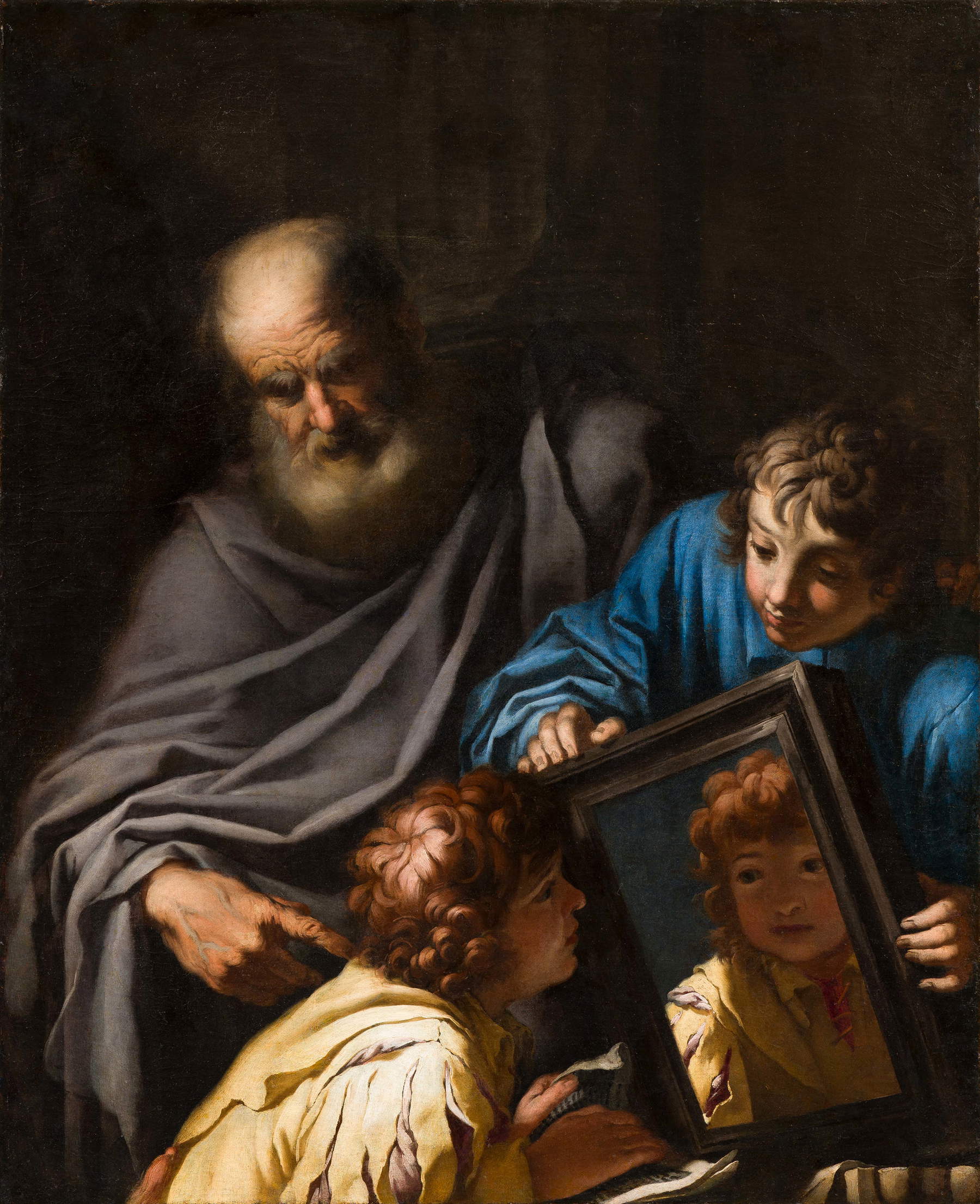
Continuing through the rooms on the main floor, Cantore Galleria Antiquaria presents three 17th-century masterpieces of high collector’s value: these include the luminous Saint Catherine of Alexandria by Giovanni Baglione (160,000 euros), the intense *Portrait of Cardinal Alderano Cybo* painted by Carlo Maratta (120,000 euros), and the splendid canvas *Nosce te ipsum* by Francesco Ruschi (65,000 euros). This last work, recently featured by Martina Leone in a monograph published by Campisano, depicts the philosopher Socrates pointing sternly at a young student who is gazing at his reflection in a mirror held by a companion (the theme, drawn from Diogenes Laertius’ *Lives of the Philosophers*, was dear to the Venetian Accademia degli Incogniti), transforming the Socratic maxim of knowing one’s own limits into a vibrant theatrical composition built on light and shadow around a fluted half-column. A historical photograph at the Kunsthistorisches Institut in Florence documents the painting at the Berlin antiquities market of the 1920s; it was exhibited in 1927 at the Warenhaus Wertheim as part of the collection of Galerie Schmidt & Co. and was later sold on the German market by Neumeister in 2025. The Venetian painter Antonio Zanchi revisited its iconography on several occasions. Not far away, Cortona Fine Arts is exhibiting Imperiale Gramatica’sAllegory of Truth and Mercy (under 100,000 euros), while Longari Arte is offering a precious Nativity by Eusebio Oldoni dated 1525 (75,000 euros), which was once studied by Roberto Longhi (his handwritten expert report is reproduced at the booth as a caption: it was Longhi who attributed the work to Oldoni based on the initials EVP, which can be expanded as “Eusebius Vercellensis Pinxit”).
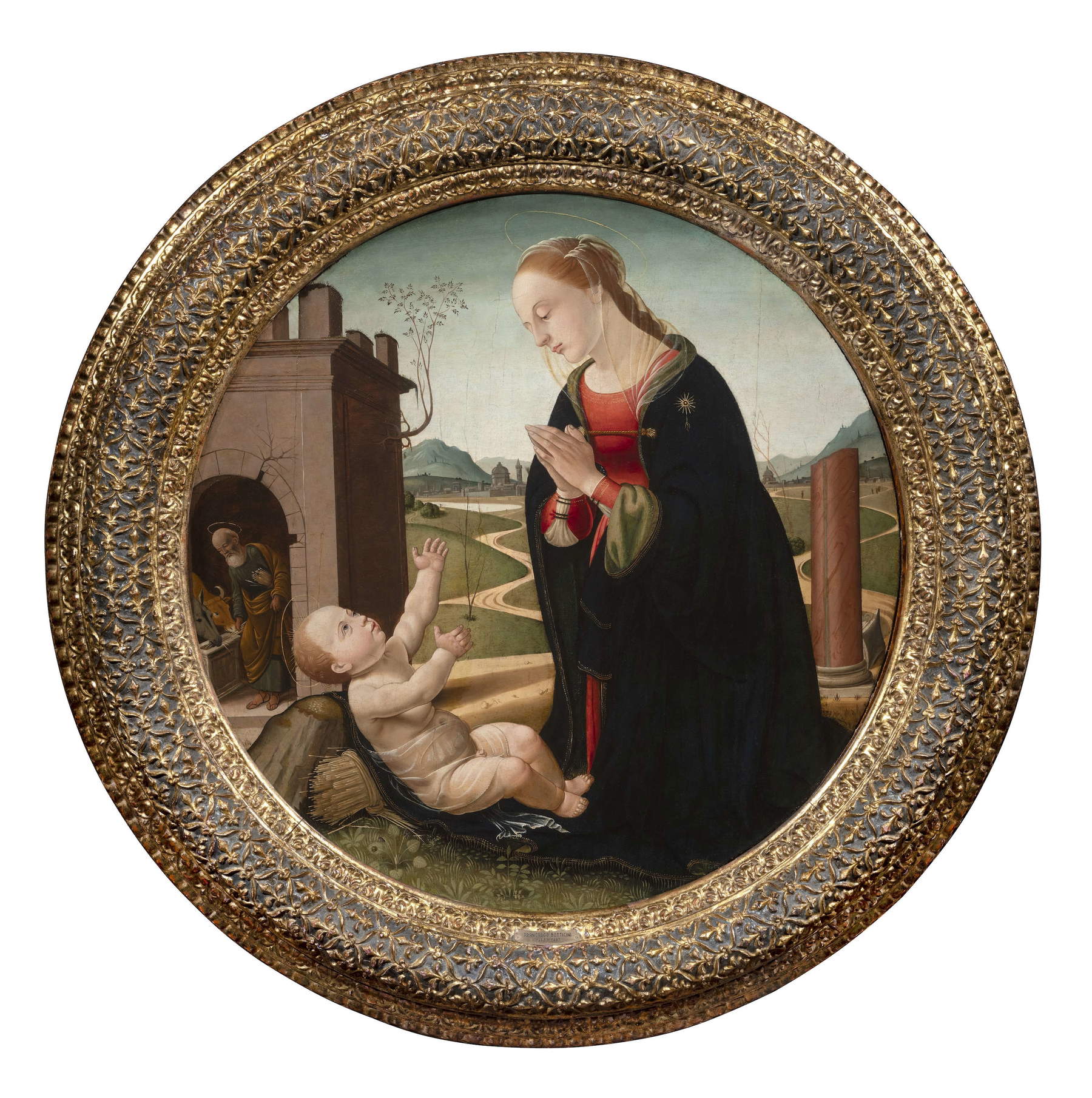
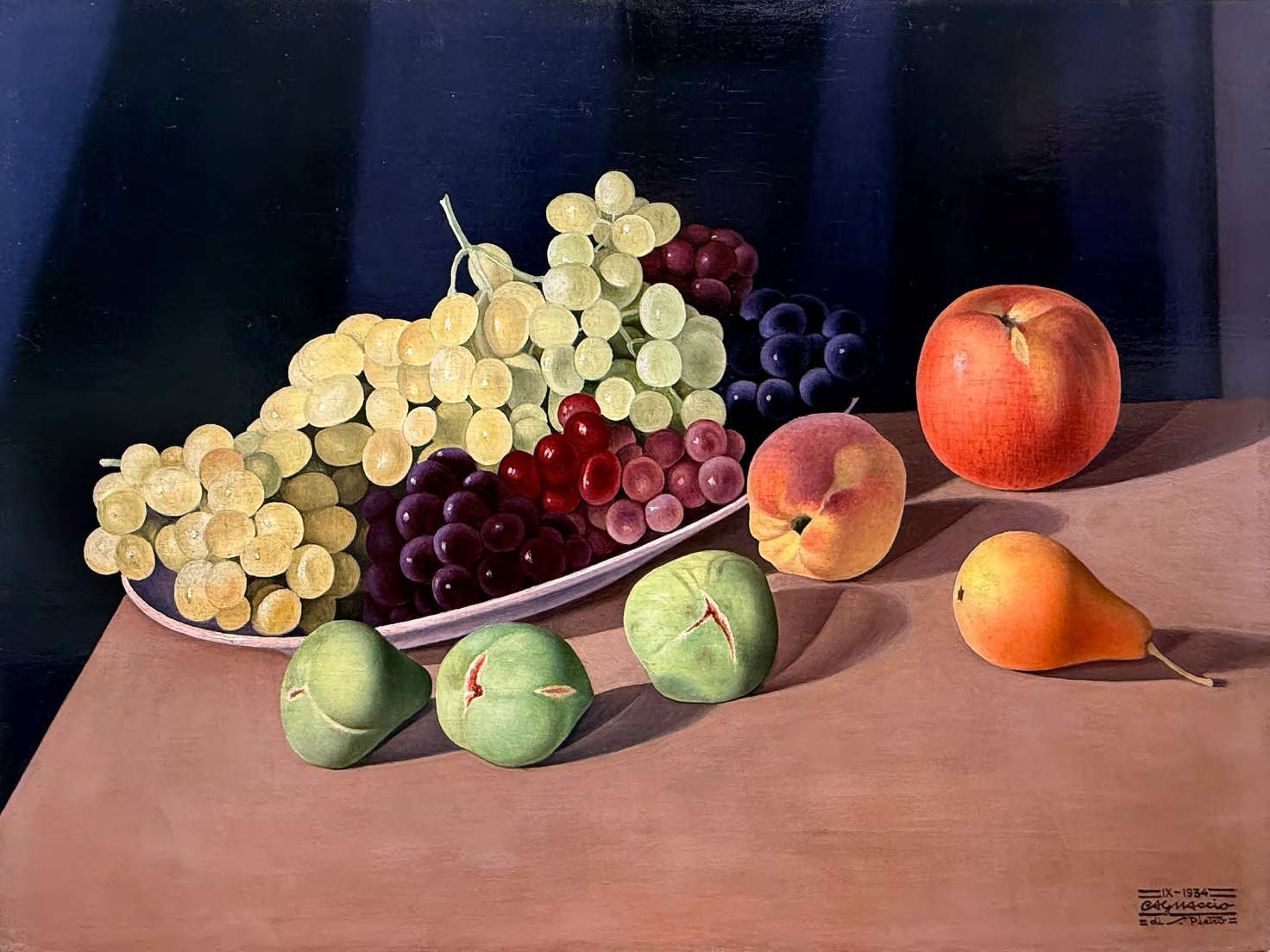
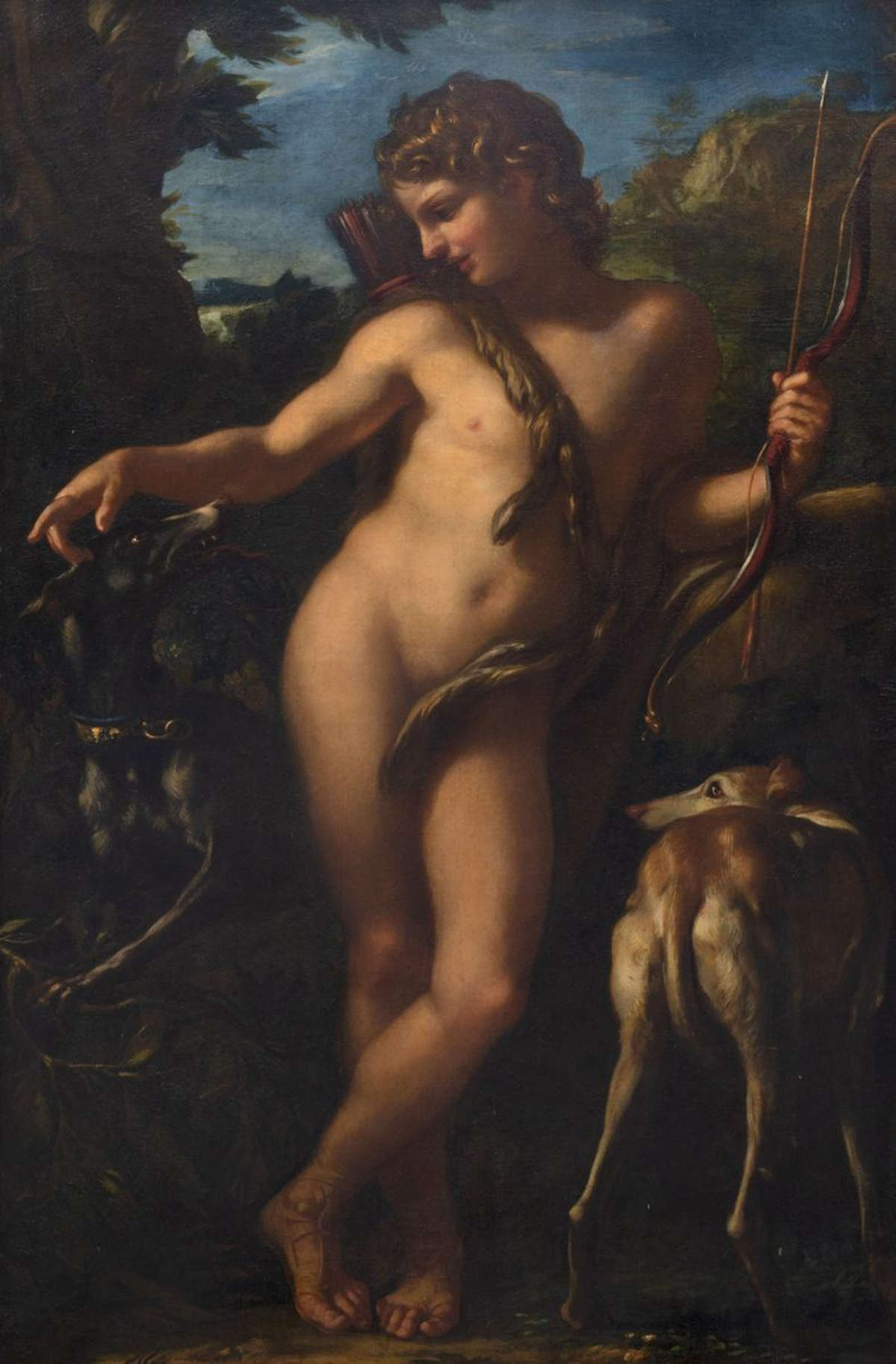
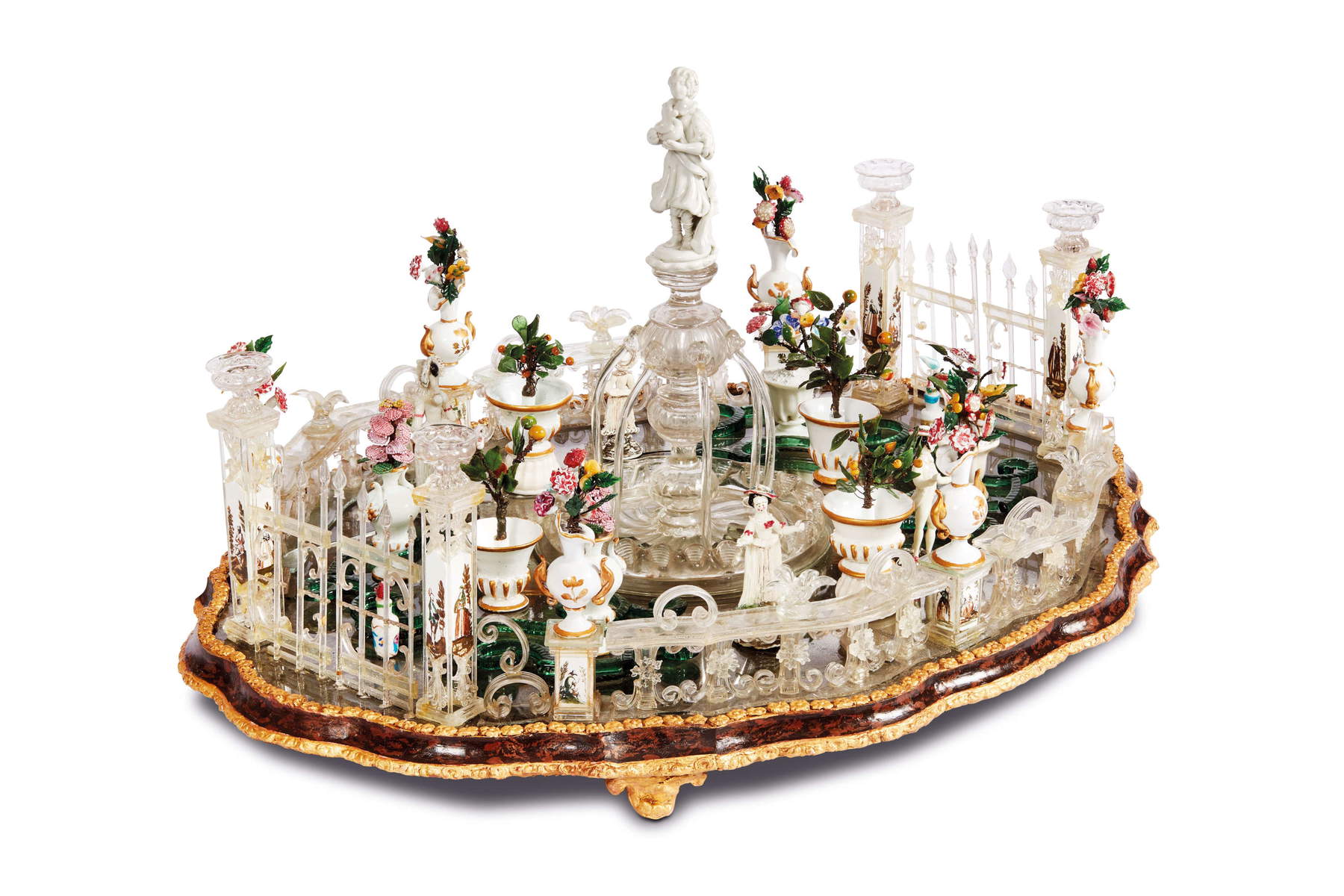
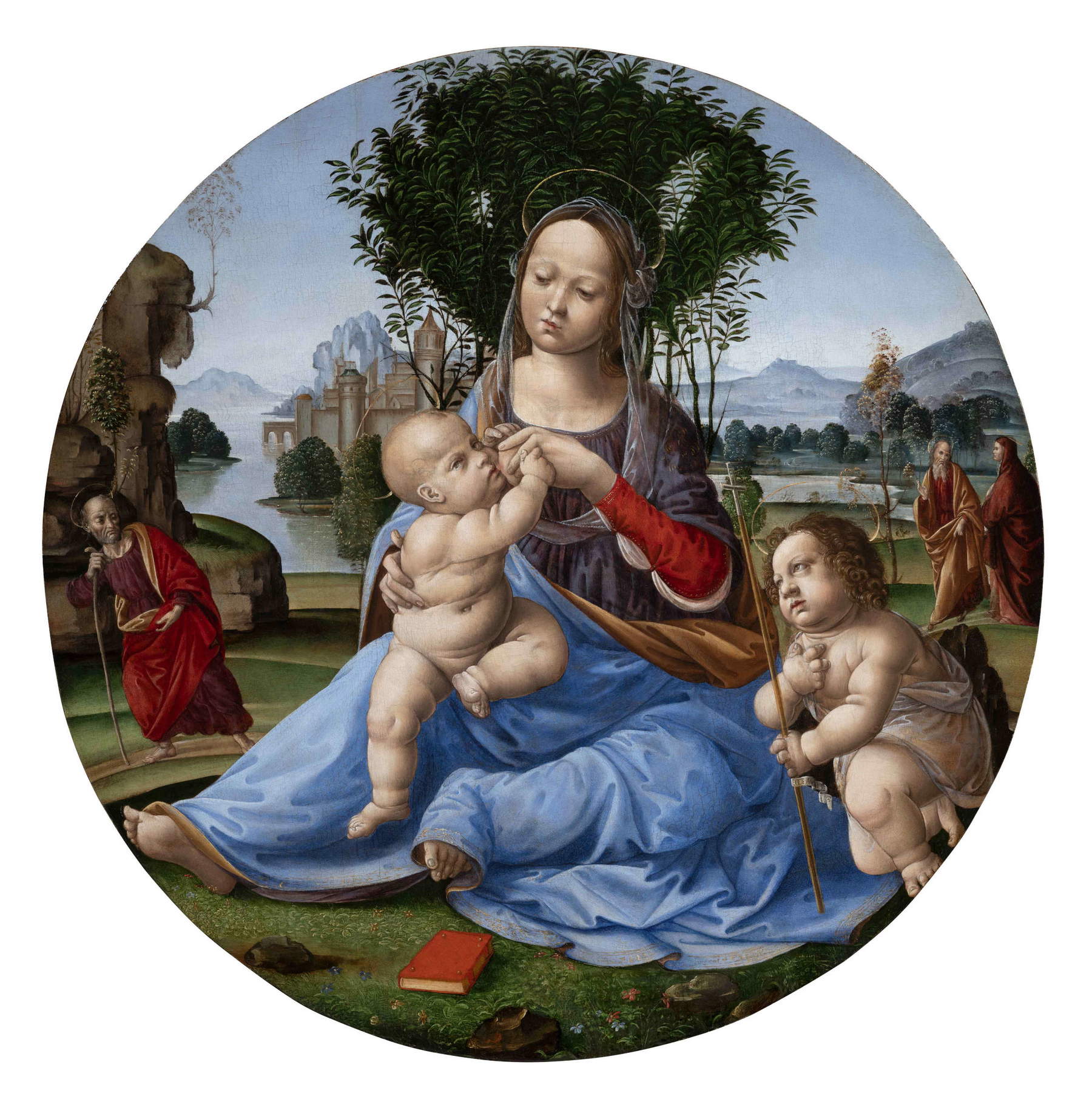
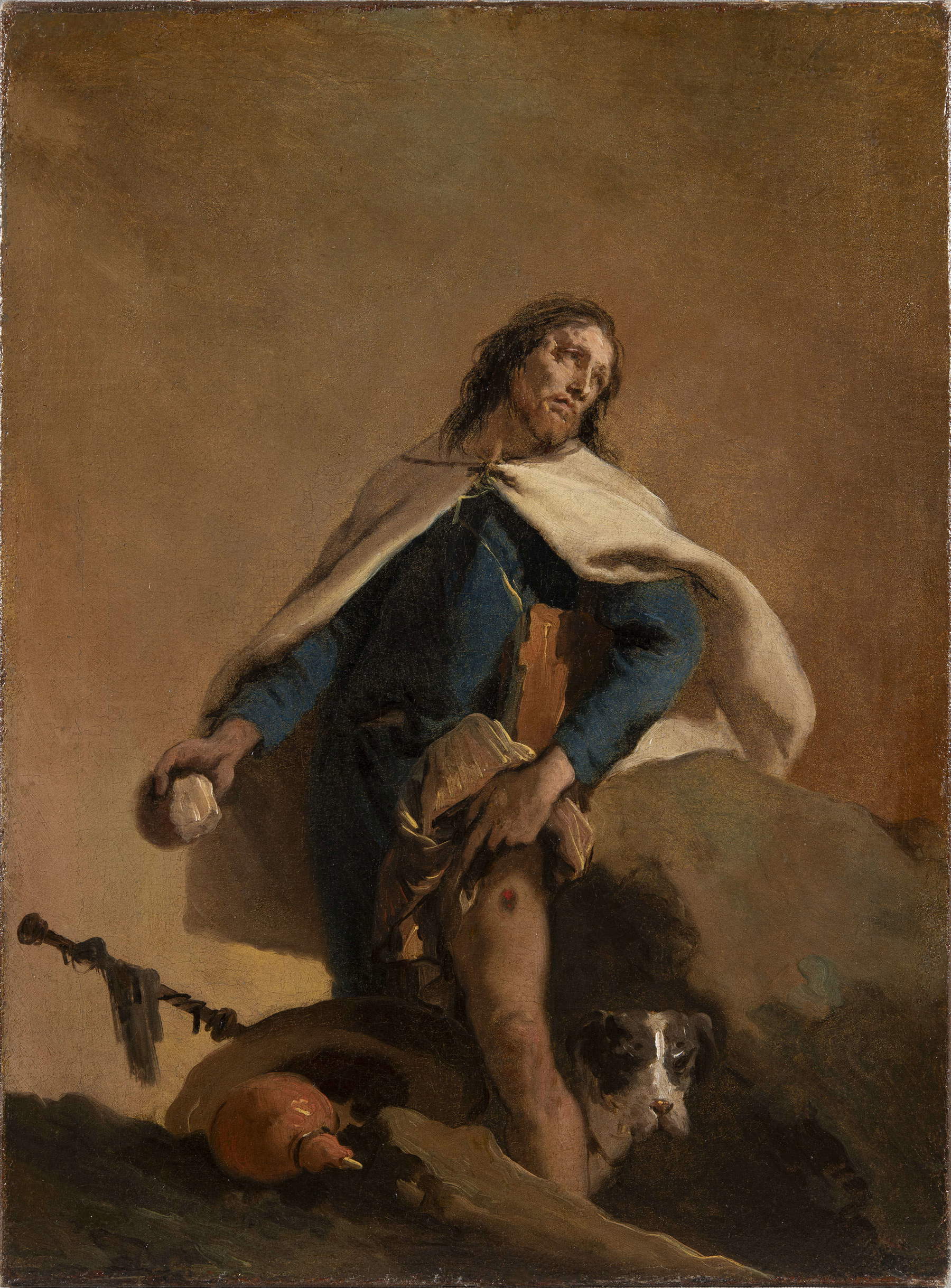
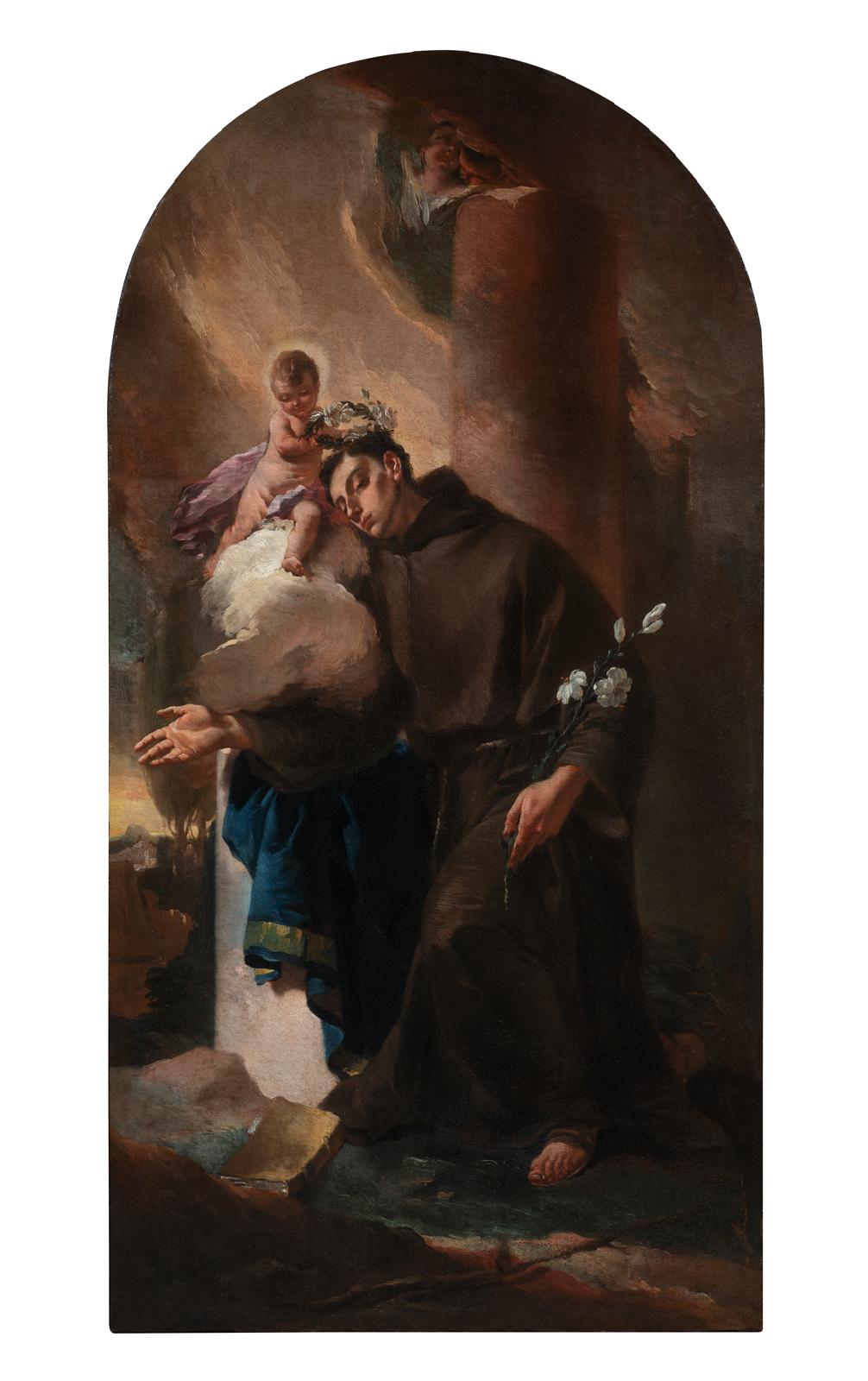
A little further on, the Berardi Gallery dedicates an entire wall to the 20th-century painter Cagnaccio di San Pietro, with a selection of works priced between 10,000 and 80,000 euros. Baroque painting and Venetian decorative arts come together at the Piva & C. booth, which features a canvas by Domenico Parodi depicting Adonis with his dogs (between 50,000 and 100,000 euros) and a spectacular centerpiece “Italian Garden,” created in Murano around the mid-18th century by the workshop of Giuseppe Briati (60,000 euros). Scholars of Renaissance painting will also find much of interest at the Brun Fine Art booth, where a tondo on poplar wood, 85 centimeters in diameter, depicting the Madonna Nursing the Child with the Adoring Saint John the Baptist ( 850,000 euros) stands out The work, brought to light by Gigetta Dalli Regoli in 2007 when it belonged to a private Spanish collection, is attributed to Tommaso, an anonymous master and close collaborator of Lorenzo di Credi whom Bernard Berenson described as a sort of “Doppelgänger,” that is, a doppelgänger, of the Florentine painter. In a completely different vein is the offering from Santa Tecla Srl, which features two small masterpieces by Giovanni Battista Tiepolo: the previously unseen Saint Roch with His Dog (195,000 euros) and Saint Anthony of Padua with the Infant Jesus (230,000 euros). The former belongs to a group of small canvases dedicated to the pilgrim saint, first documented by Antonio Morassi in 1950 with thirteen recorded examples, which rose to eighteen in 1962 and were later expanded by further studies to include this canvas as well. Although the Saint Anthony is well-known (in the early 20th century, it was attributed by Pompeo Molmenti and Eduard Sack to the younger Giandomenico Tiepolo, before Morassi, in 1962, correctly attributed it to the young Giambattista), reappeared on the Genoa art market only in 2024 and has since attracted renewed attention from specialists.
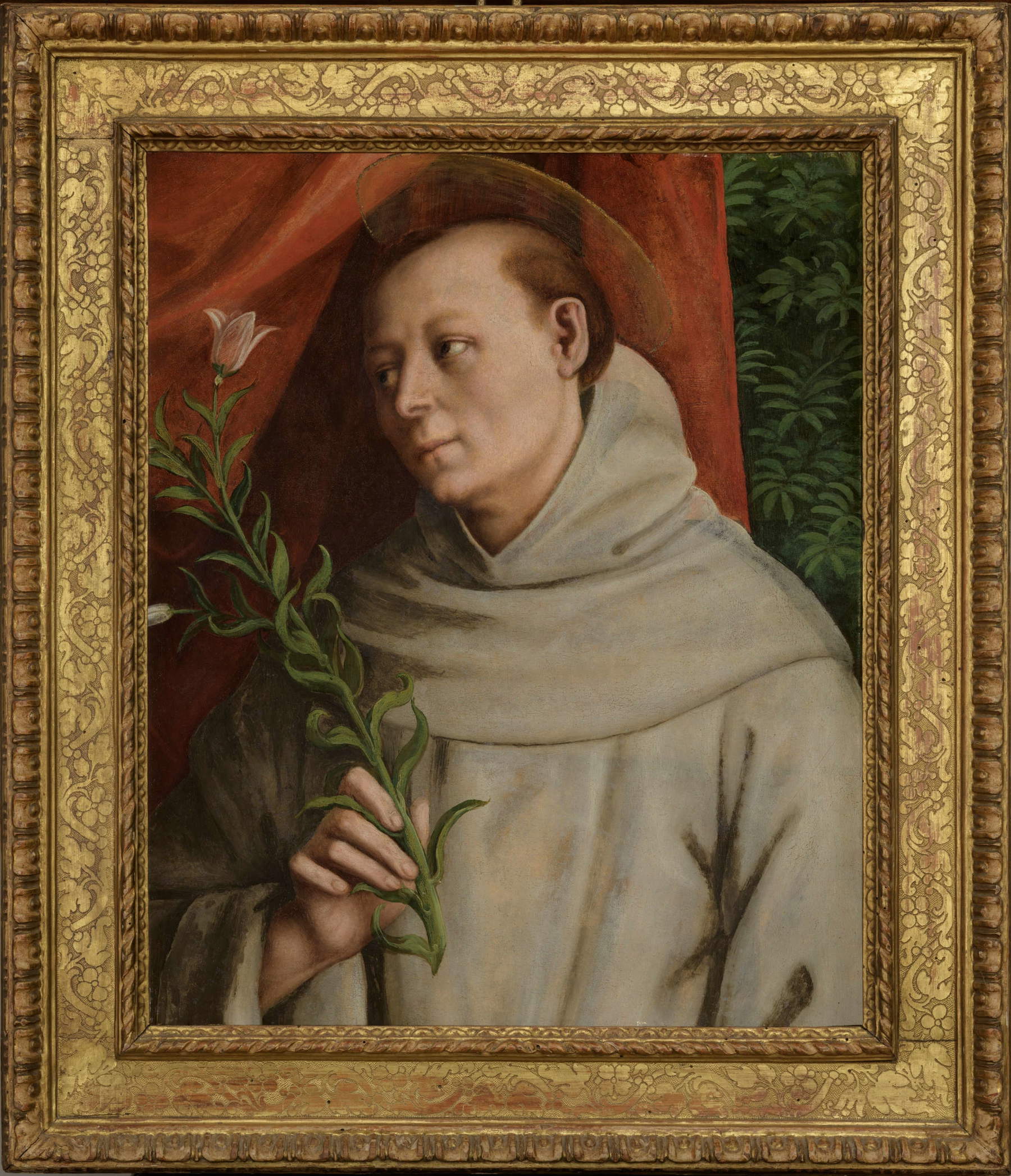
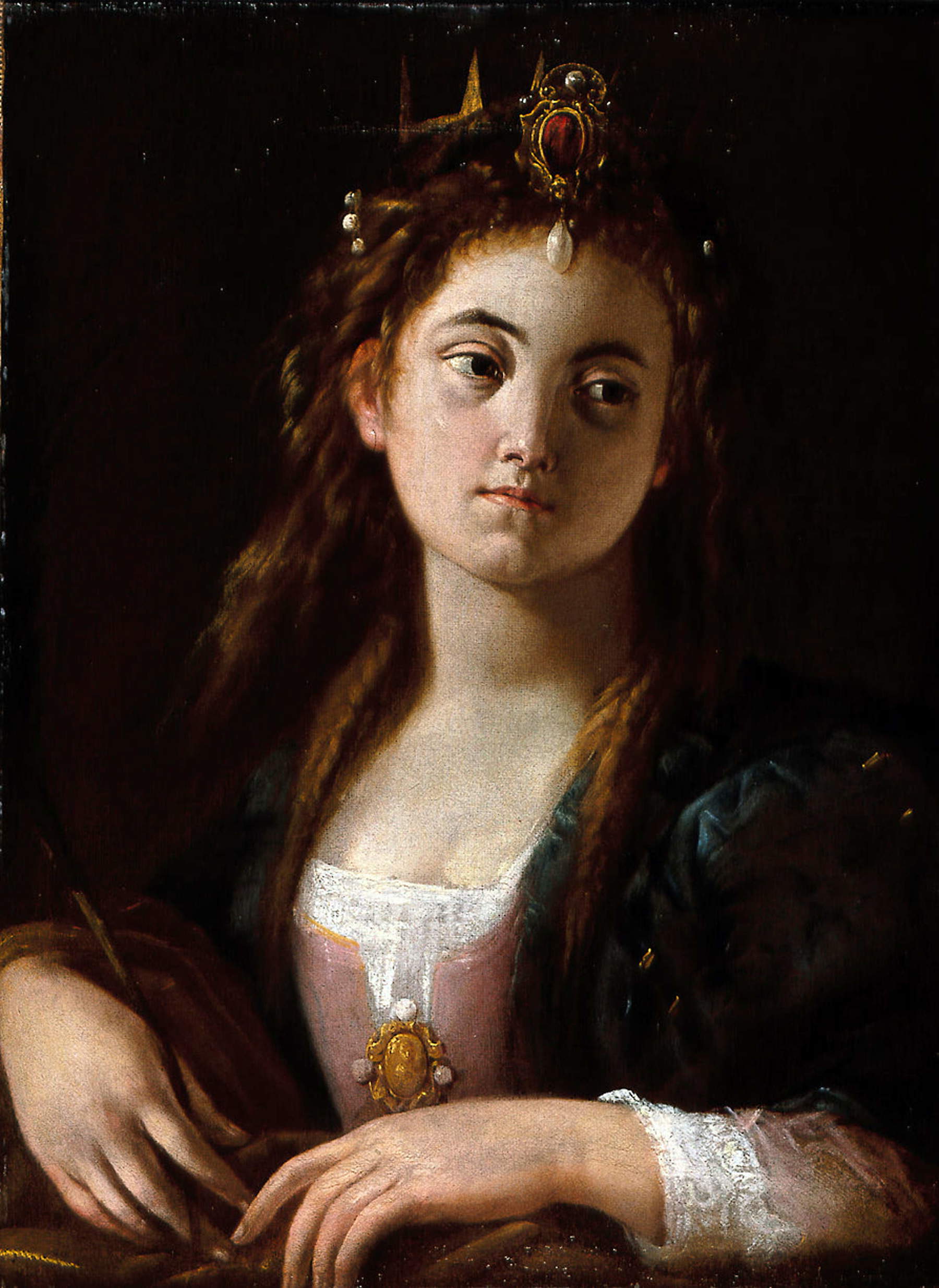
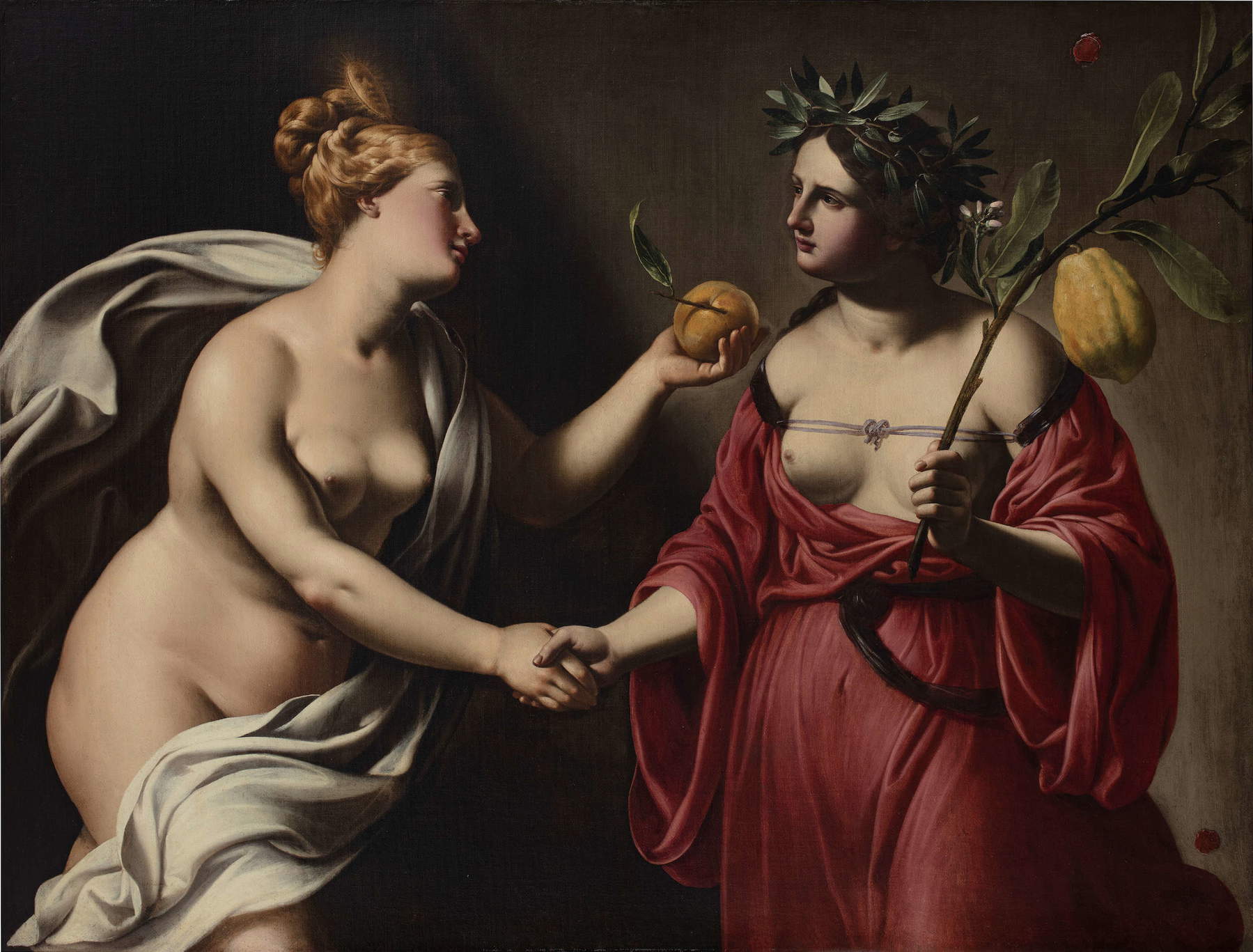
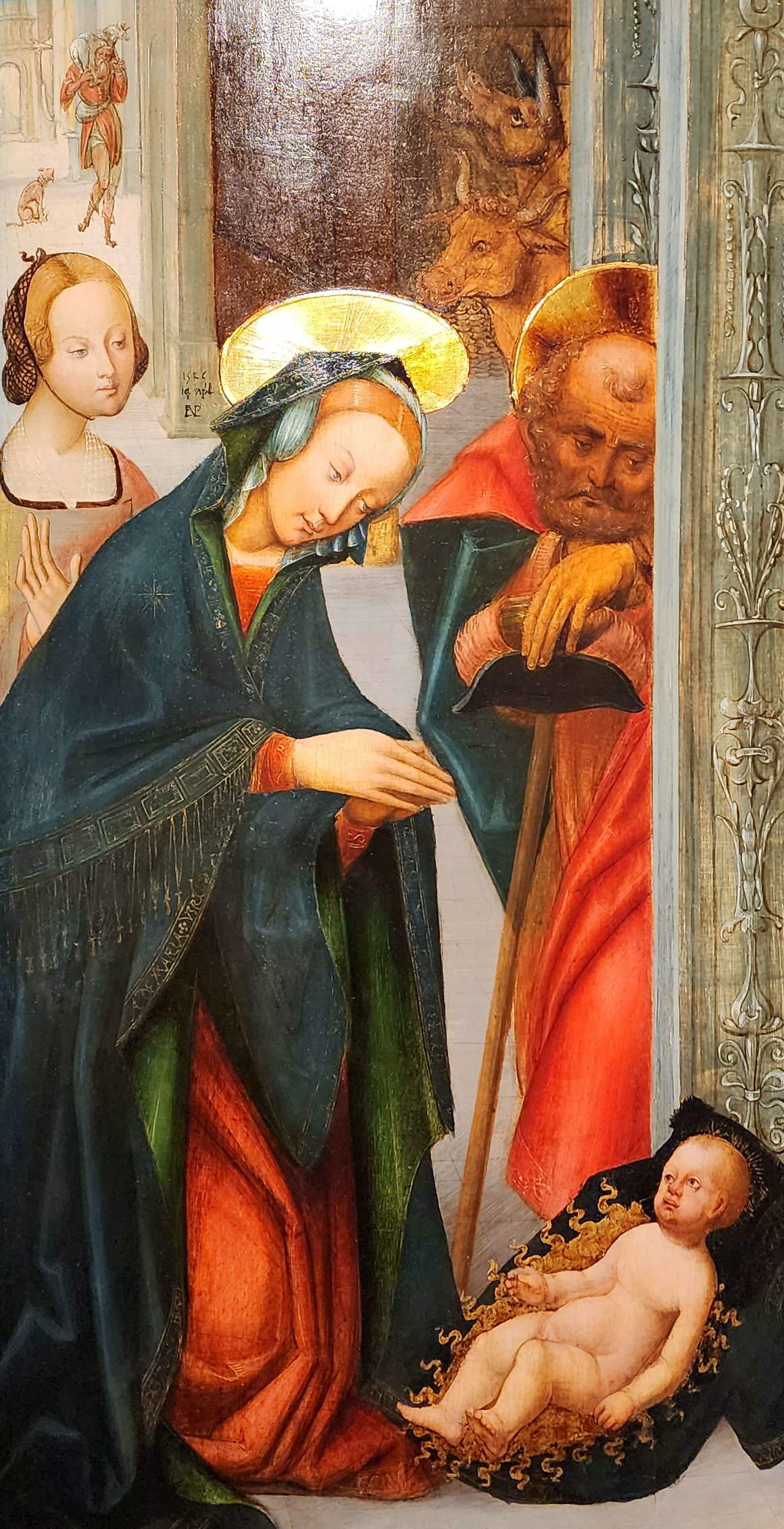
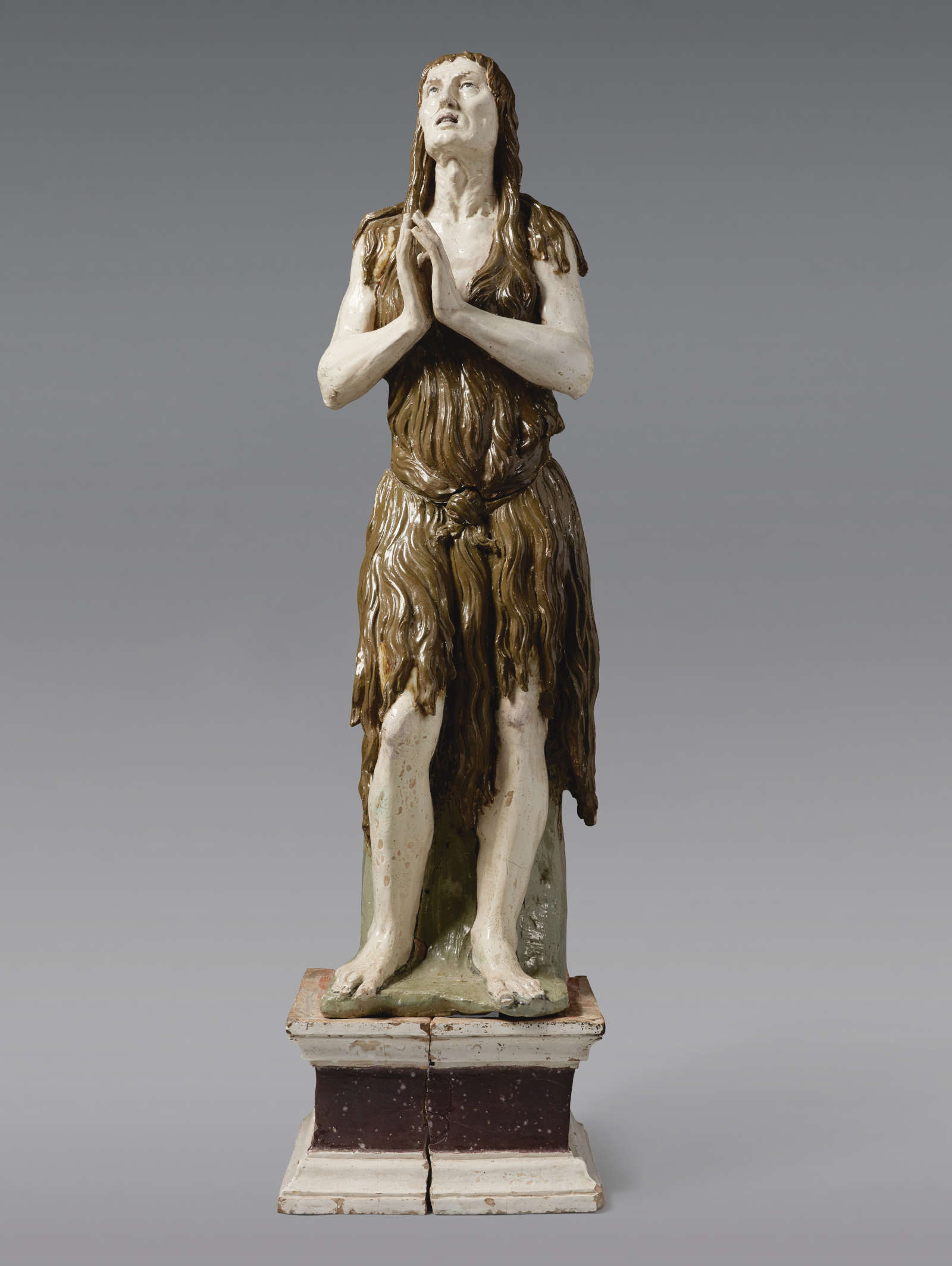
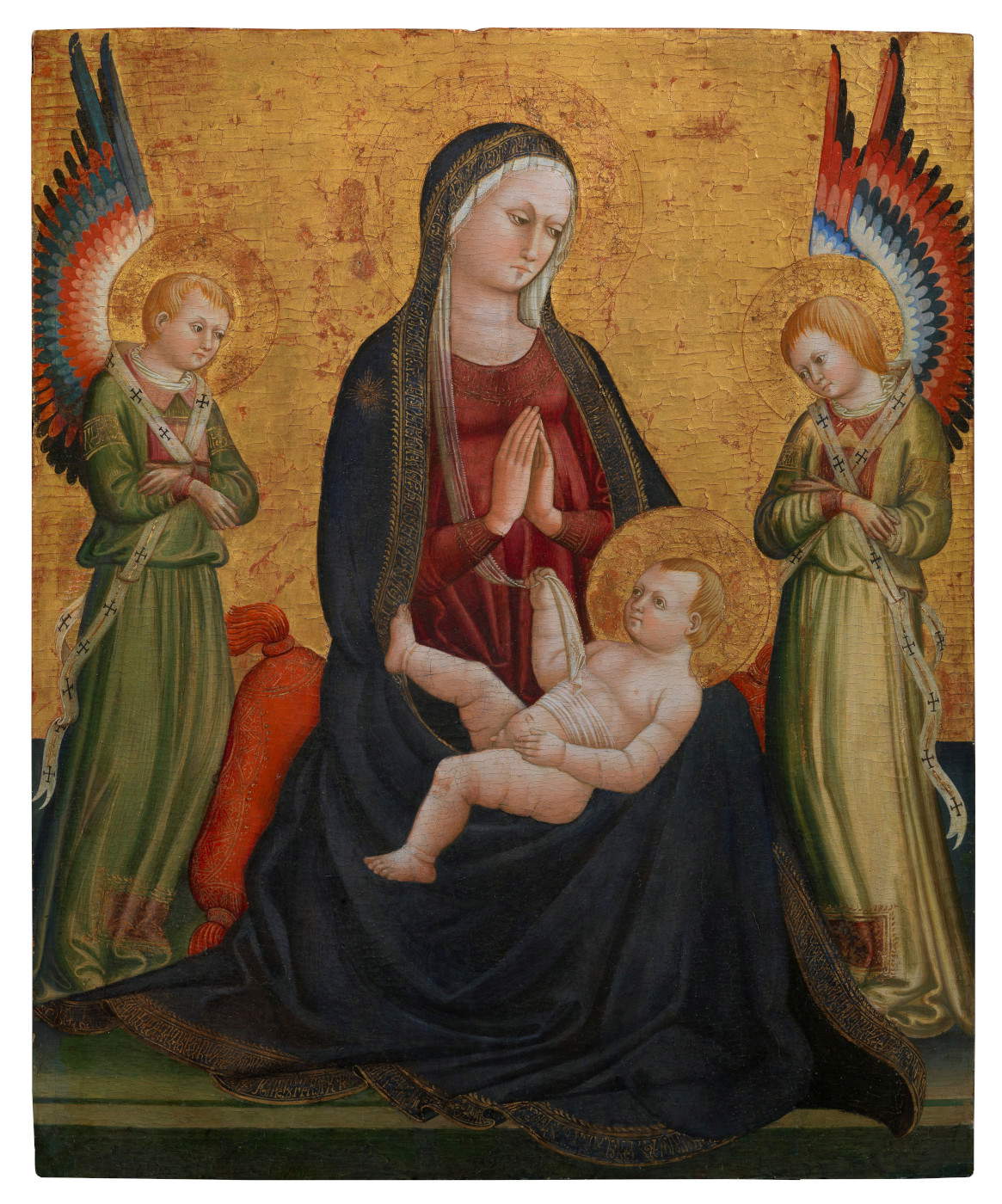
The path through the halls of the Piano Nobile leads to Flavio Gianassi’s booth, where the history of Florentine collecting resurfaces with poignant clarity thanks to the rediscovery of Domenico Puligo’s *Cleopatra* (250,000 euros), which is returning to its rightful home: originally part of Prince Tommaso Corsini’s famous collection, it was long housed in the halls of the palace that hosts the BIAF, before being passed down through the family. Extensively documented in nineteenth-century guides to Florence and in historical inventories, the *Cleopatra* returns—albeit only for a few days—to Palazzo Corsini, the very place where it was preserved for generations. At the same Gianassi booth, alongside *Puligo*, two other works of exceptional interest are on display: the *Penitent Magdalene* by the Master of the *Magdalene of Cascio* (175,000 euros), a monumental glazed terracotta piece that emerged in the 1920s from the hermitage of Cascio in Garfagnana, where it had been housed since ancient times; this work bears a strong resemblance to Donatello’s “Magdalene ,” which is housed at the Museo del Duomo in Florence (and also significant for its technique: here, the glaze is not merely a decorative coating but an expressive tool that, in a highly modern way, propels the glazed terracotta toward a realism unusual for this material—one more typically associated with wood), and a refined gold-ground piece, one of the finest at this BIAF: it is a work by Neri di Bicci, depicting the Madonna and Child with two adoring angels (380,000 euros), which boasts a rare documented history, having been commissioned in Florence in 1464 by a certain Antonio di Jacopo and recorded in Neri di Bicci’s own *Ricordanze*, the workshop diary that has survived to this day.
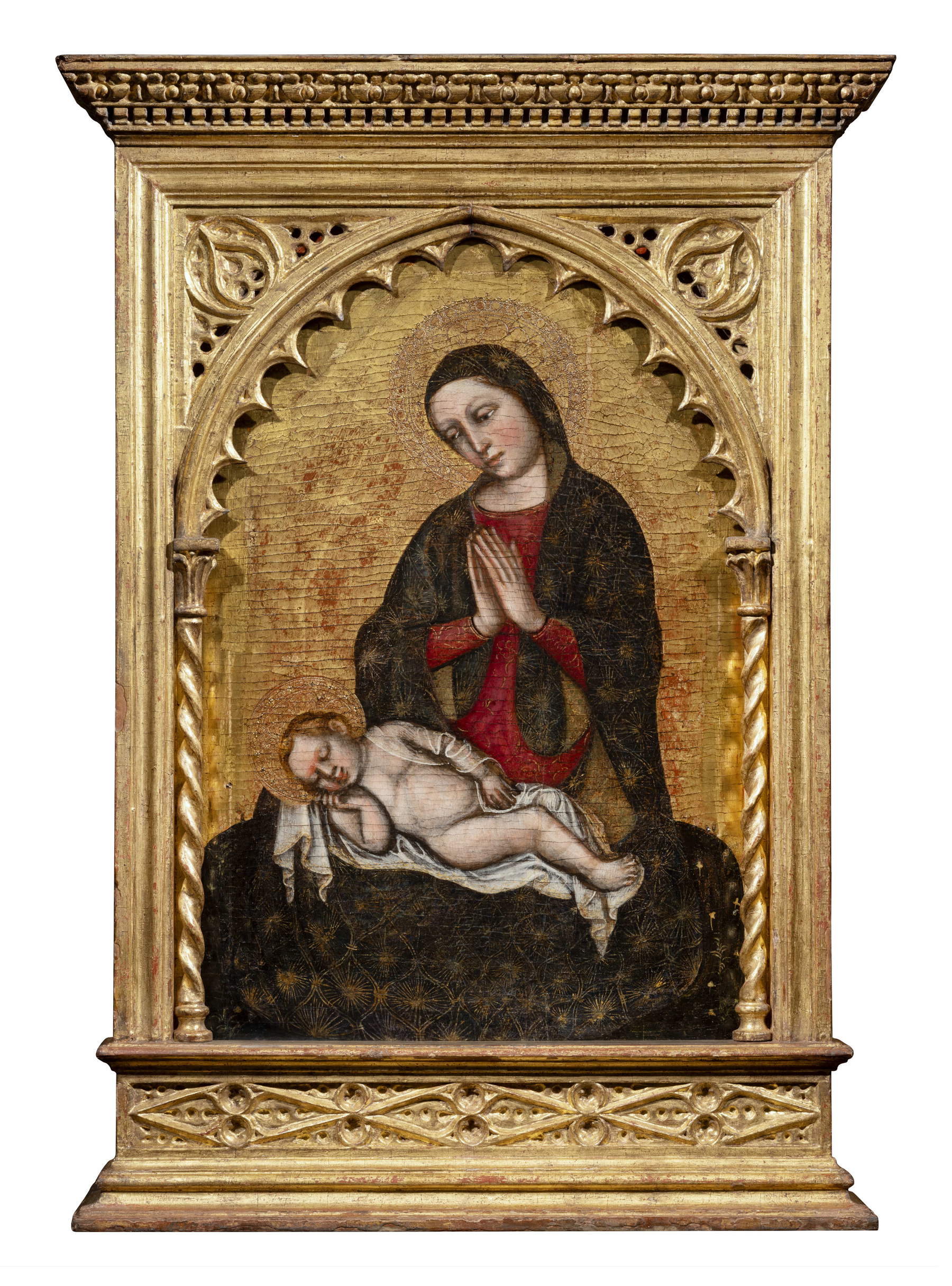
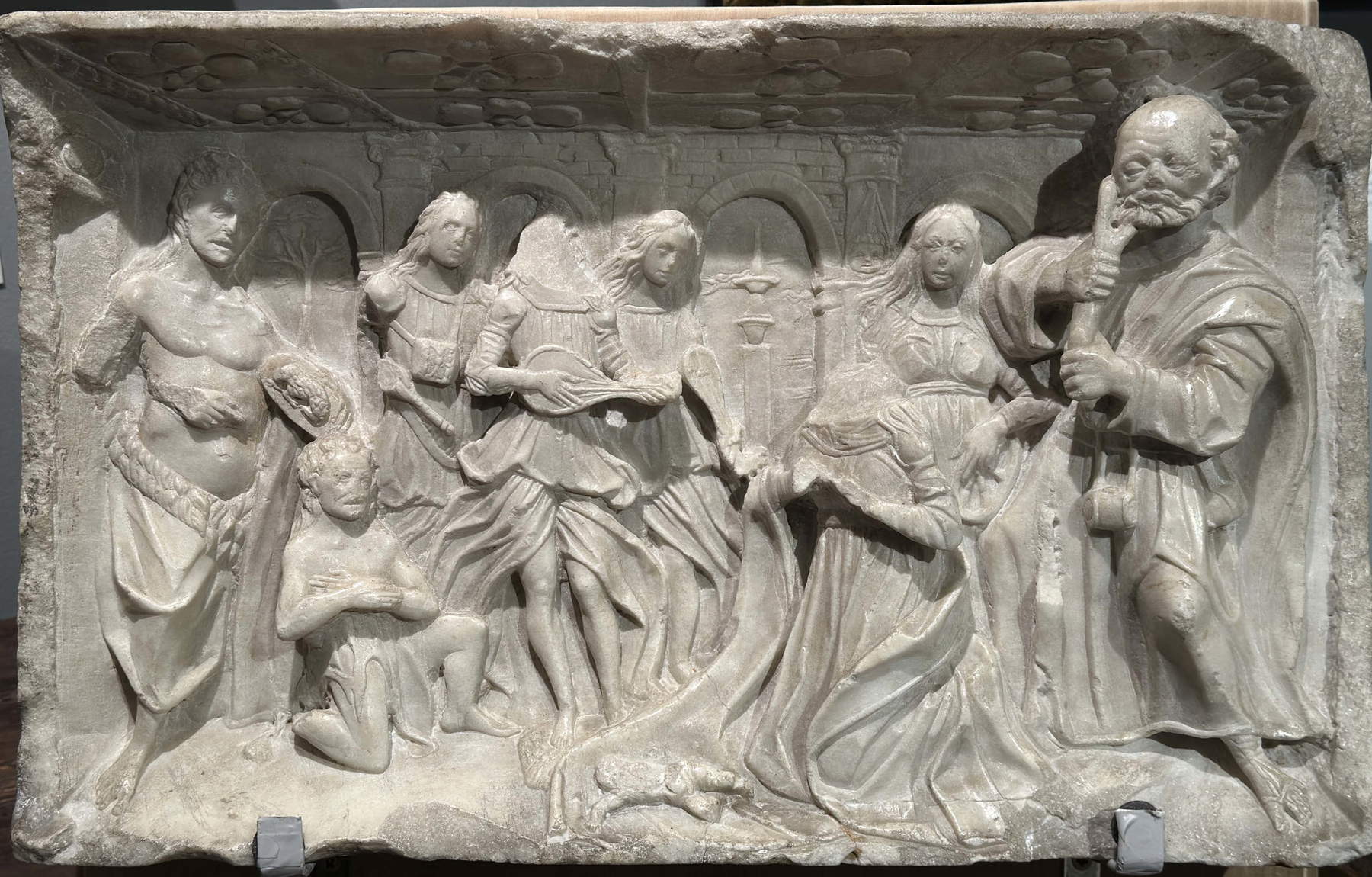
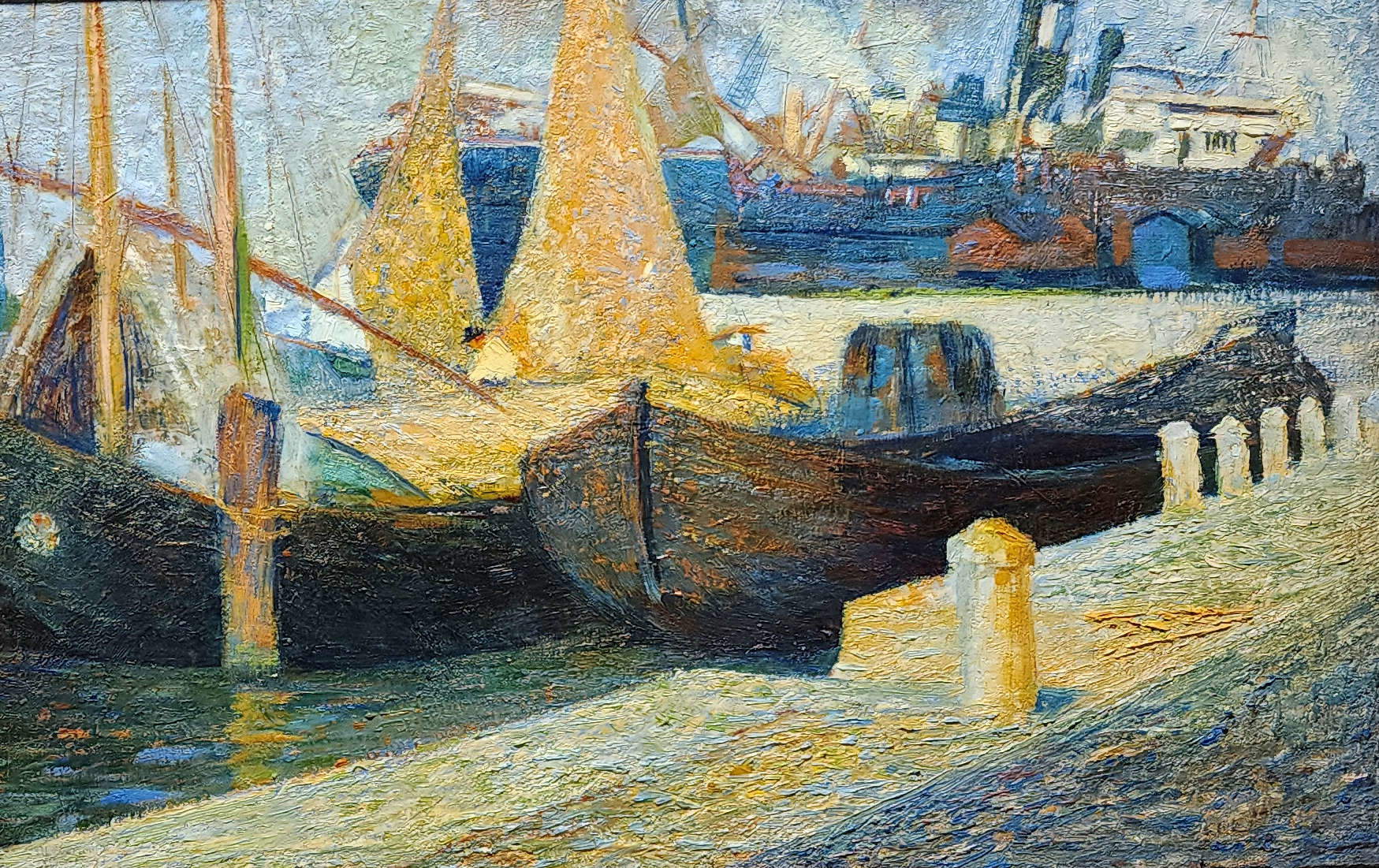
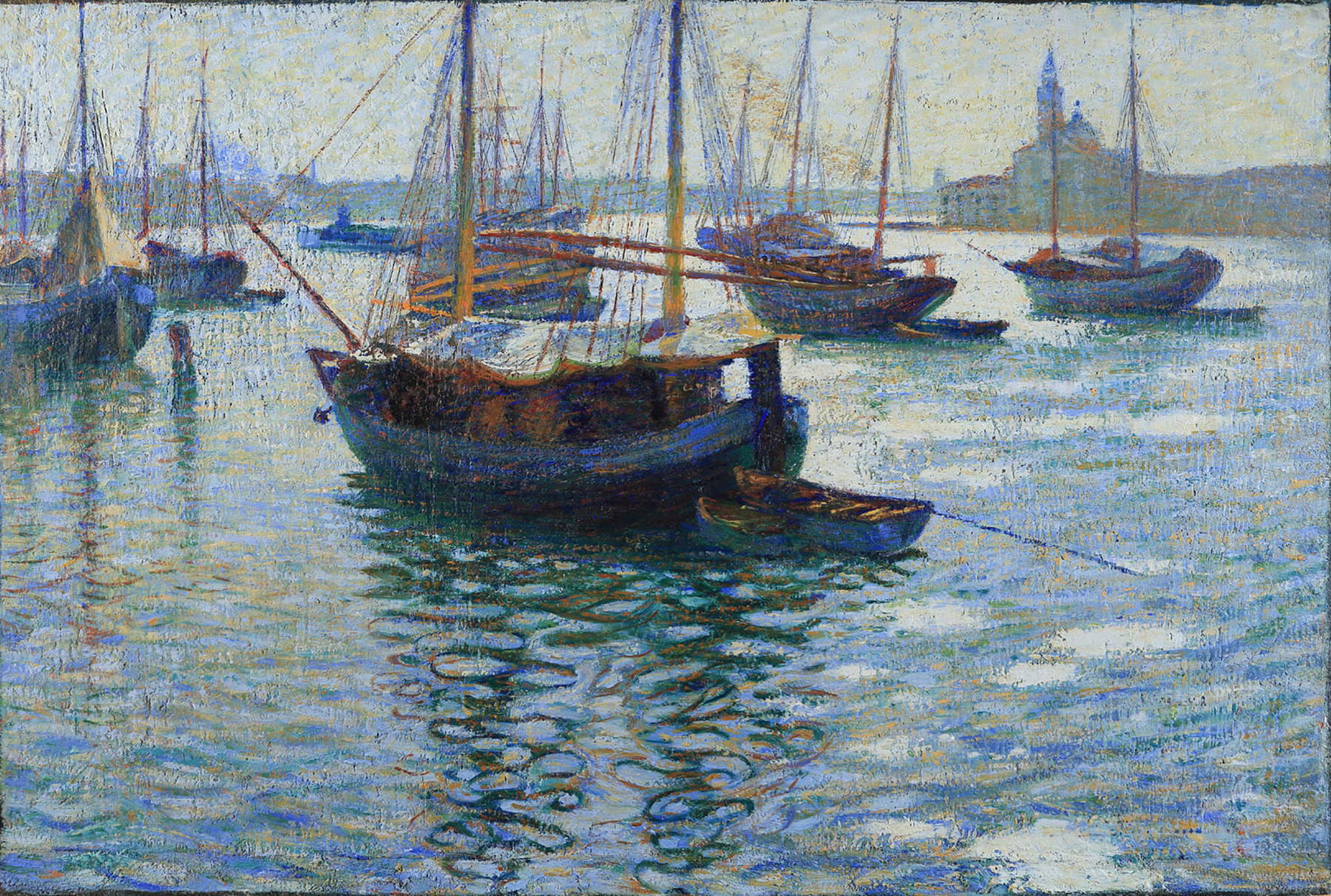
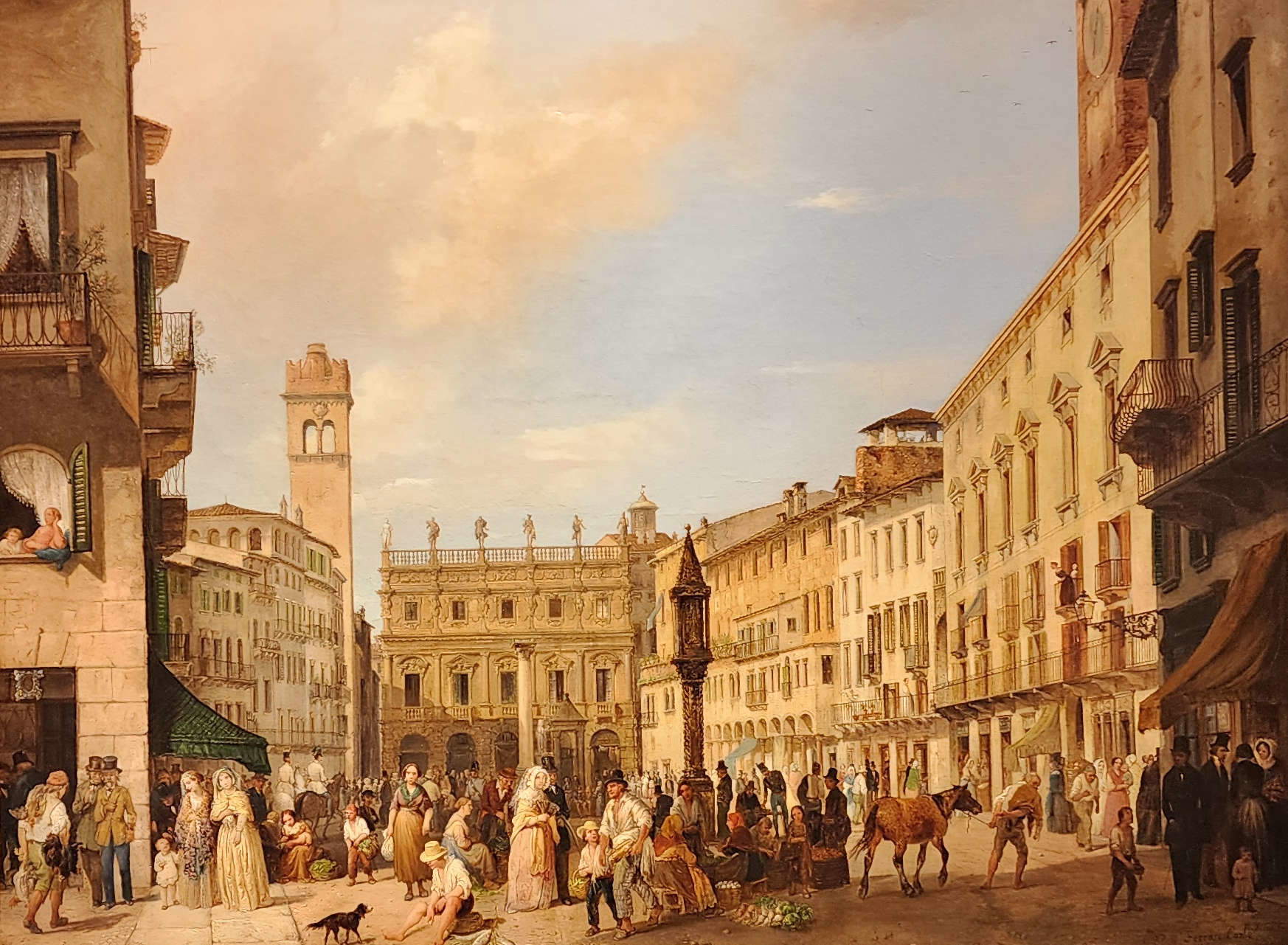
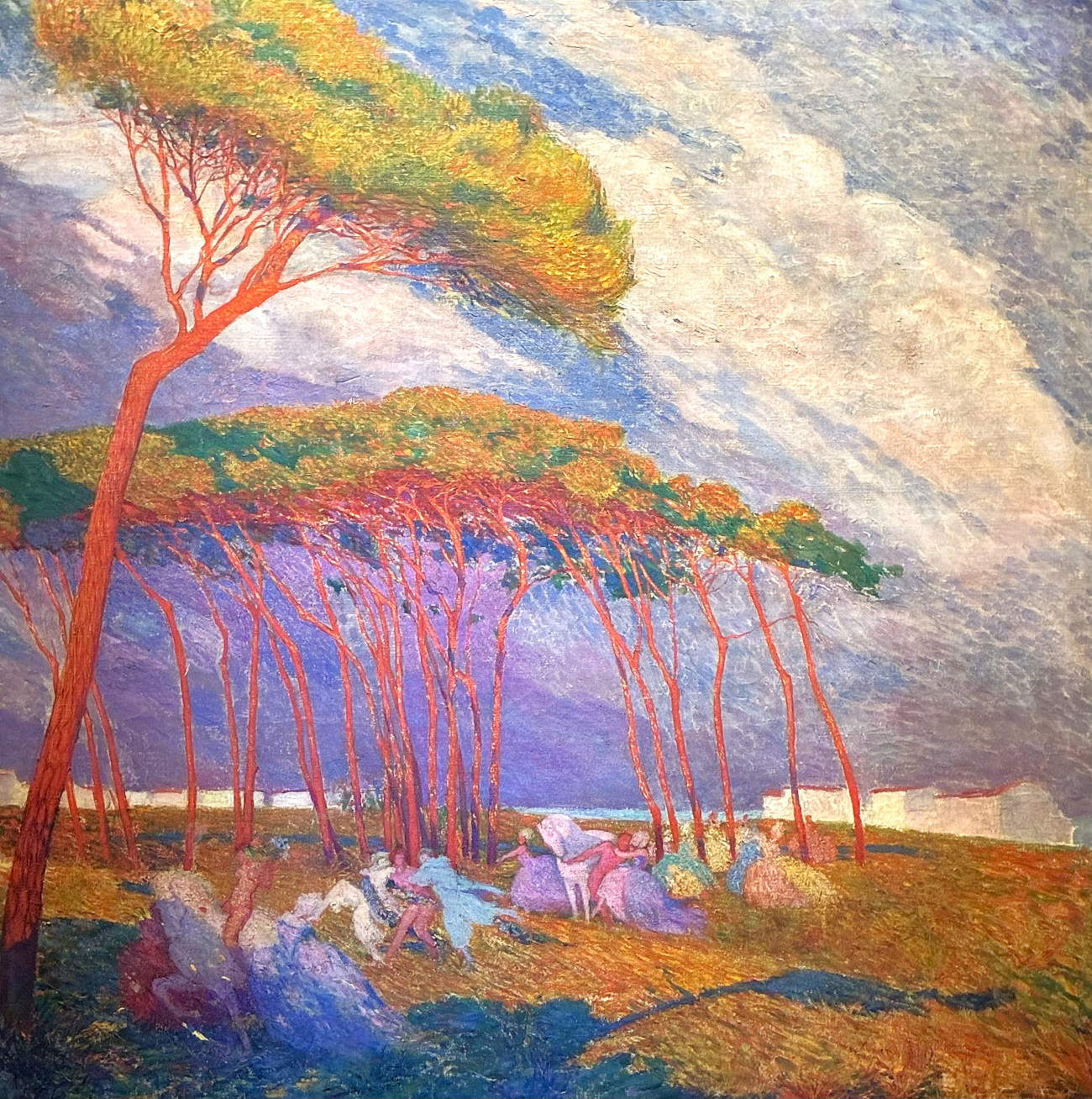
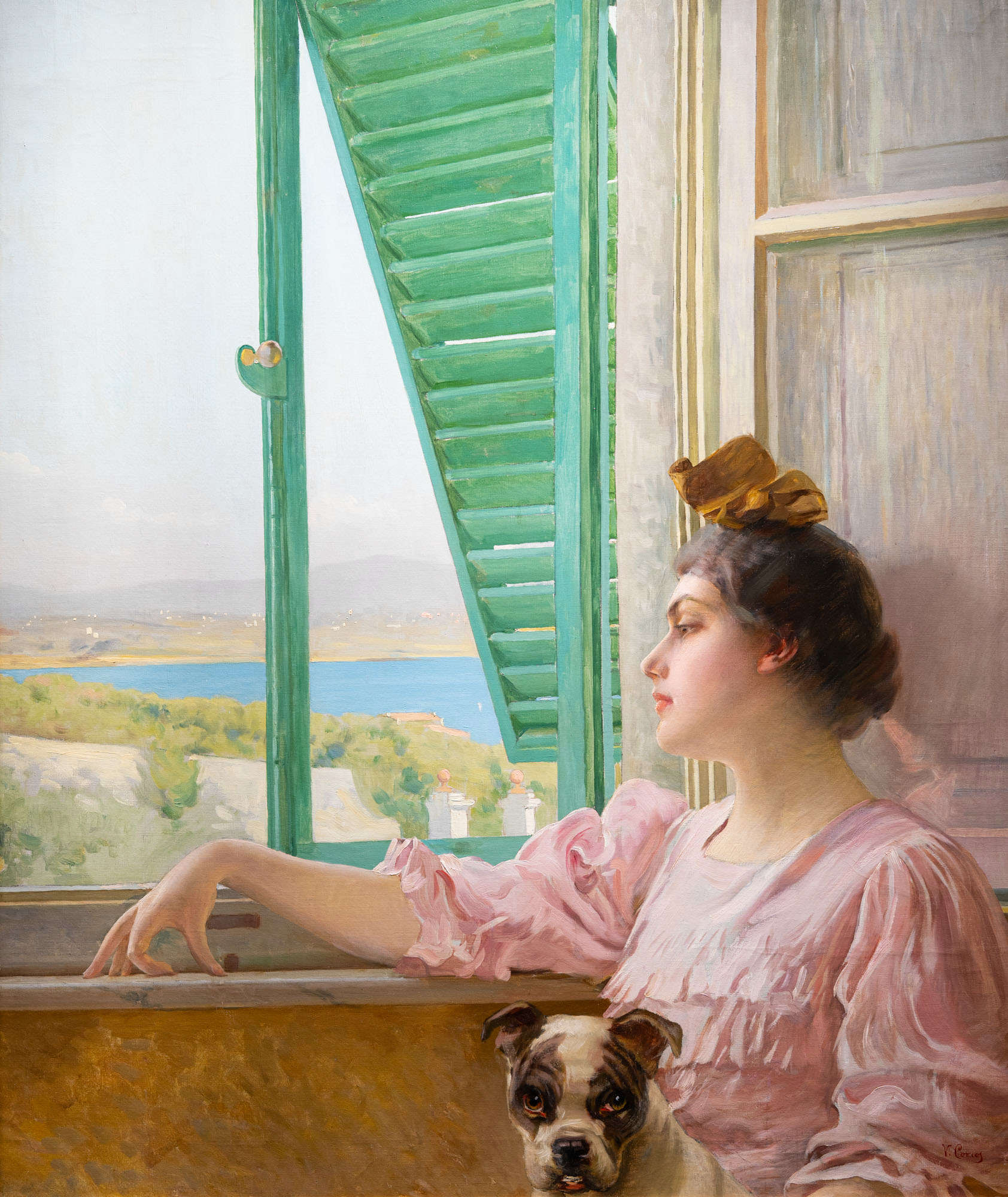
At Giorgio Baratti Antiquario ’s booth, visitors can admire another key addition to the catalog of international Venetian Gothic art: the Madonna of Humility by Zanino di Pietro, documented in Bologna and Venice from 1389 to before 1448, a panel that recently resurfaced from a private collection and was identified by Angelo Tartuferi; it stands out for the extraordinary formal elegance of the Virgin with the Sleeping Child (190,000 euros) and a significant bas-relief depictingthe Adoration of the Shepherds, executed by a sculptor active in the circle of Giovanni Pietro da Rho (38,000 euros). The 20th century and 19th-century landscape painting, on the other hand, are beautifully represented at the Enrico Gallerie d’Arte booth, which presents two rare early panels by Umberto Boccioni dating from 1907, titled *Boats in the Sun* and *Impression of Venice*, offered at approximately 500,000 euros each, along with two large cityscapes by Carlo Ferrari, known as Il Ferrarin: *Piazza delle Erbe in Verona* (250,000 euros) and *View of Venice* (150,000 euros). Finally, as the public makes its way to the exit, they are accompanied by Paolo Antonacci, featuring Umberto Brunelleschi’s visionary painting *La fête du soleil* as the centerpiece, and Bottegantica, which is exhibiting one of Vittorio Matteo Corcos’s most famous paintings, *The Painter’s Daughter at the Window*, painted in 1909 and cited in major critical surveys dedicated to the Belle Époque (such as those curated by Durbè in 1965 in Livorno and by Francesca Dini in 2025 in Pisa, at Palazzo Blu), offered at a price exceeding 200,000 euros.
As is the case every year, the authenticity and condition of all these works are guaranteed by the vetting process carried out by the Biennale’s Selection Committee, which brings together sixty-three international experts—including conservators, curators, and museum directors—tasked with examining each piece individually over the two days preceding the public opening. The invitation-only preview, the press preview, and the opening night on September 24—reserved for museum directors, scholars, and collectors from every corner of the world—preceded the event reserved for collectors and industry professionals on September 25, after which the BIAF will open to the public tomorrow.
Among the micro-engravings of the Poniatowski gems, the cartoons by Perin del Vaga, Canaletto’s Venice, and the bold works of the 20th century, Palazzo Corsini reaffirms itself, every two years with almost ritualistic regularity, as one of those places where collecting seeks to shape the visual arts. It is therefore inevitable that, while walking through this edition of the BIAF, one encounters a significant number of new acquisitions, restorations, new research, and reappearances—reminding us that high-profile antiquities collecting, when it is not content to be merely about antiques, can also become a rather effective form of cultural and scientific progress. Of course, the primary goal remains sales. And naturally, items are being sold and will continue to be sold. Some of what is here now, we’ll see again hanging on the wall of some museum. Other pieces will disappear into the rooms of some private collector somewhere, and we’ll probably never see them again. And it would be strange for an antique art fair to forget the existence of commerce. The BIAF, however, is not just a commercial showcase. It is something more: a curious alliance between the market, preservation, and knowledge. An alliance that continues to assign Italy a leading role in the world, reminding us that the past can continue to be transformed into the present.

The author of this article: Federico Giannini
Nato a Massa nel 1986, si è laureato nel 2010 in Informatica Umanistica all’Università di Pisa. Nel 2009 ha iniziato a lavorare nel settore della comunicazione su web, con particolare riferimento alla comunicazione per i beni culturali. Nel 2017 ha fondato con Ilaria Baratta la rivista Finestre sull’Arte. Dalla fondazione è direttore responsabile della rivista. Nel 2025 ha scritto il libro Vero, Falso, Fake. Credenze, errori e falsità nel mondo dell'arte (Giunti editore). Collabora e ha collaborato con diverse riviste, tra cui Art e Dossier e Left, e per la televisione è stato autore del documentario Le mani dell’arte (Rai 5) ed è stato tra i presentatori del programma Dorian – L’arte non invecchia (Rai 5). Al suo attivo anche docenze in materia di giornalismo culturale all'Università di Genova e all'Ordine dei Giornalisti, inoltre partecipa regolarmente come relatore e moderatore su temi di arte e cultura a numerosi convegni (tra gli altri: Lu.Bec. Lucca Beni Culturali, Ro.Me Exhibition, Con-Vivere Festival, TTG Travel Experience).

The author of this article: Ilaria Baratta
Giornalista, è co-fondatrice di Finestre sull'Arte con Federico Giannini. È nata a Carrara nel 1987 e si è laureata a Pisa. È responsabile della redazione di Finestre sull'Arte.

The author of this article: Noemi Capoccia
Originaria di Lecce, classe 1995, ha conseguito la laurea presso l'Accademia di Belle Arti di Carrara nel 2021. Le sue passioni sono l'arte antica e l'archeologia. Dal 2024 lavora in Finestre sull'Arte.Warning: the translation into English of the original Italian article was created using automatic tools. We undertake to review all articles, but we do not guarantee the total absence of inaccuracies in the translation due to the program. You can find the original by clicking on the ITA button. If you find any mistake,please contact us.





















 IT
IT FR
FR DE
DE ES
ES CN
CN


