





He makes an appointment for me in the store of one of his colleagues, concealed in the courtyard of a nineteenth-century palace on Via Vittoria Colonna. He, Mario Bigetti, doyen of Rome’s antiquarians, no longer has his own store, no longer even works as an antiquarian, and when he has to receive someone he relies on the courtesy of his friend, who practices his business here, near the Tiber, a walk of not even ten minutes to get to Castel Sant’Angelo. I arrive a few minutes late, but I don’t have time to justify myself that Bigetti is already talking about Caravaggio. About his Caravaggio, about his Caravaggios. He is the only human being in the world who owns two paintings by Michelangelo Merisi: a Capture of Christ and a St. Francis. The problem is that not everyone agrees with him: his paintings have, for a long time, been at the center of a lively debate that fascinates specialists. There are those who consider them products of the master’s hand, those who tend to discard this hypothesis, and those who do not even consider them. Those who did not take them into consideration include the curators of last year’s exhibition, the one at Palazzo Barberini. Heavy absence, hardly justifiable when one considers that the reverberation of these two paintings, especially the Capture of Christ, in recent months has begun to bounce back between the walls of scholars’ rooms.
We enter the studio, overlooking the palace courtyard: no preamble, no pleasantries. Only at the end of our conversation will he show me his friend’s works for sale here in the store. Not now: we get straight to the point. Our rendezvous comes about because of a piece of topical news: the granting on loan of Bigetti’s The Capture of Christ to the Palazzo Chigi in Ariccia, which for the antiquarian is a sort of redemption, compensation and at the same time a challenge to Caravaggist critics. It is a challenge that has been going on for some time, at least since the last two years, that is, since Bigetti has taken his painting on a kind of tour that has attracted more than a hundred thousand visitors to the various exhibitions in which the Capture has been exhibited: Gorizia, Illegio, Naples, Ariccia again. This time, however, it has found a permanent location: five years to give everyone, scholars in the lead, a chance to see the work live. Bigetti, as is obvious, has a rather specific target in mind. “An interesting exhibition has been done on Caravaggio, but that’s not the point,” he begins, referring to the Palazzo Barberini exhibition, without even giving me time to formulate the first question. He knows my position: he is informed about the review with which I had panned the exhibition, and he knows that I criticized the way the recent debate on the Capture was neglected at Palazzo Barberini, which on that occasion found no space, not even for a mention in the catalog. "The point is that a very specific choice of paintings was made, but it penalized the comparison. In recent years, two important paintings have come out in Italy, but so many have decided as if to hide them. They are the Capture of Christ and the Saint Francis."
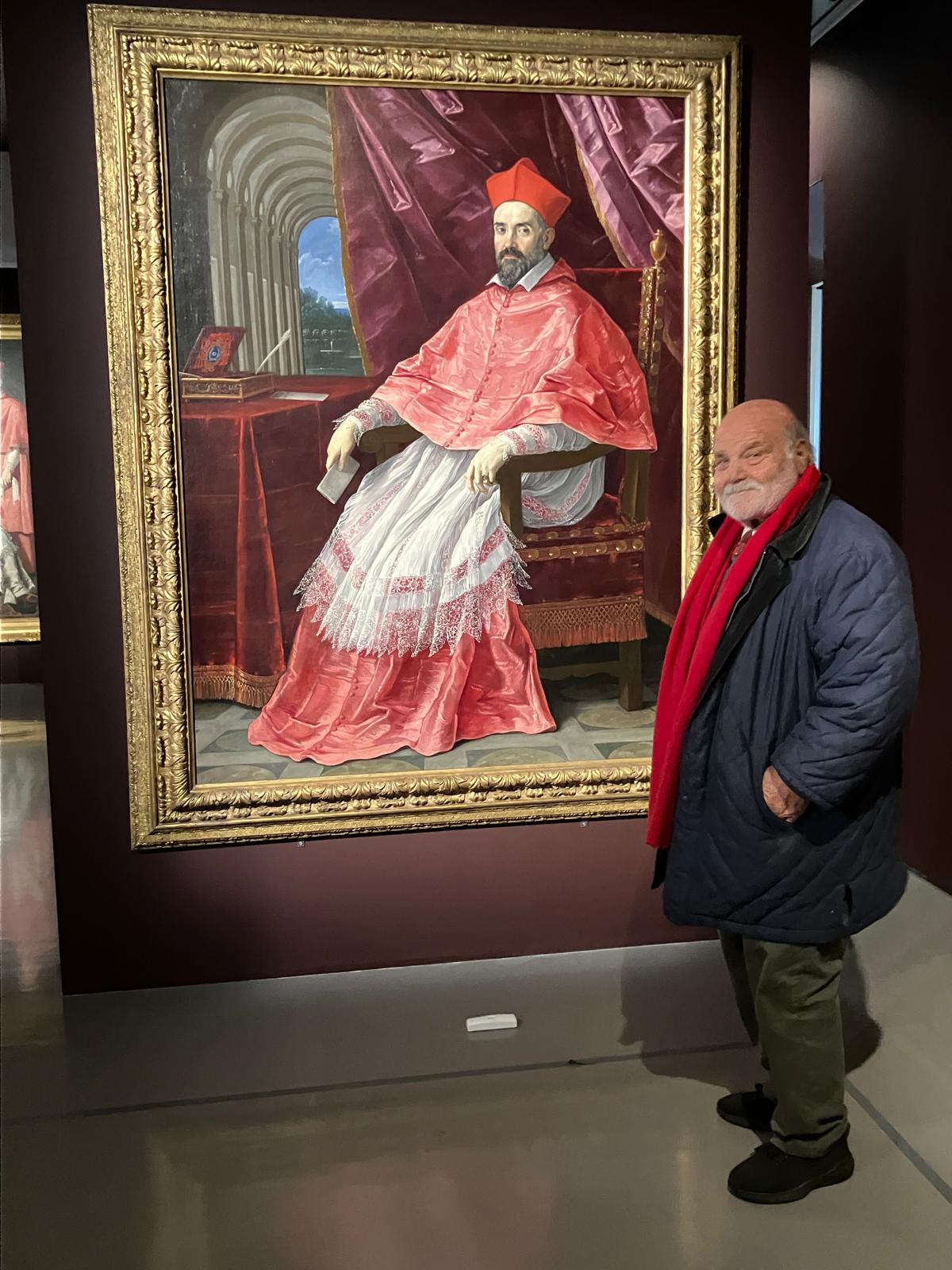
Bigetti has his own way of telling things, with his snappy Roman country accent, his hands describing dry movements in the air, his way of reconstructing events: he starts with a fact, near or far, jumps from one era to another, runs the index finger of his hand over photographs, flips through his papers, he warms up, quiets down, rains down names of scholars, of restorers, and then gets back to the point, back to where he started. It comes to mind that the way he talks has something to do with the way he worked. He is the kind of antiquarian who today struggles to find continuators: Bigetti is someone who bought great paintings (the seventeenth century, and in particular the Roman seventeenth century, his period of reference), studied them, took them to historians, put them on display before selling them, produced dense catalogs on which leading scholars would compete. All produced by his gallery, Laurina Arte, a name that anyone who studied seventeenth-century Roman art a few decades ago sooner or later encountered along their route. “They all came to me,” he says. Collectors, antiquarians, scholars. And he lists the names. “I used to sponsor all the exhibitions myself. I was paying for the catalogs, I was paying for all the scholars. Guaranteed.” Between the 1980s and the beginning of the third millennium his golden moment. And the Capture of Christ enters Bigetti’s history right in the early 2000s. “Before I bought it, I am someone who always documents, I went and read the writings on Caravaggio, I read Roberto Longhi. And he claimed that the Sannini painting was a faithful copy, even in measurements, of a lost original.” Sannini was a lawyer from Florence, in whose collection was in 1943 the painting later purchased by Bigetti, which is now known, therefore, as “Presa Sannini” (or also as Presa Ruffo, since in the past it also belonged to the Ruffo di Calabria). It must be said that Longhi, at the time, had seen the painting in precarious collections, before restoration: this element may have led him to think that the painting was a copy. However, he had guessed that it was a quality painting, since he decided to bring it in 1951 to his seminal exhibition on Caravaggio and the Caravaggesques at the Palazzo Reale in Milan, the exhibition that, in fact, opened up Caravaggio’s twentieth-century fortunes. “Longhi had rejected the Odessa painting,” that is, the copy of the painting kept in Ukraine, which, moreover, has just been finished being restored, and is an inescapable term of comparison whenever versions of the Capture are discussed. “It is a more beautiful painting,” he acknowledged. However, he also wondered why the Sannini painting was more extensive.“ Longhi, Bigetti is convinced, had already pointed the way: start with the measurements. And the Sannini painting is unquestionably larger than the copies that were circulating on the market: it measures 142 centimeters by 218, while the Dublin painting is smaller (133.5 by 169.5 centimeters). ”Then what emerged? A document was discovered that an Englishman, Lord Nisbet, owned a Gherardo delle Notti’s Taking of Christ , with its gilded frame." William Hamilton Nisbet was a Scottish collector who in 1802 bought from Duke Giuseppe Mattei a painting considered at the time to be the work of Gerrit van Honthorst, a painting whose history can be traced with certainty ever since: it is the canvas recognized in the 1990s by Sergio Benedetti as a work by Caravaggio and now in the National Gallery of Ireland in Dublin. Scholars favoring Caravaggio’s authorship of the Irish painting believe that the inventory of the Mattei collection contained several attribution errors. Those who dispute the attribution of the Irish painting to Caravaggio, on the other hand, believe that the old attribution to Gerrit van Honthorst was correct and appeal to formal elements that would suggest a colder, more northern temperament.
The story at this point gets complicated, as it often does with Caravaggio, and Bigetti unravels it with a precision that reveals years of dogged study. Meanwhile, his measurements don’t add up: the Irish painting is 133 centimeters by 169, compared to 140 by 220 for his own. “The supporters of the Dublin painting said the painting had been curtailed. They always claimed that.” And to him it is implausible. Then, it does not add up for him what is reported in the inventories of the Mattei collection. It will be appropriate at this point to recall that this is not a trivial element, since the inventories would make it possible to link the Capture of Christ to the commissioner, that is, to the collector Ciriaco Mattei who, we know from documents, in 1603 paid a painting with this subject to Caravaggio.
“The Mattei inventory of 1613,” Bigetti continues, "is stuck at 124 paintings, but then there is another hand that, in another handwriting, adds others, including the ’Presa di nostro signore con cornice nera rabescata d’oro’ and Antiveduto Gramatica’s Disputa dei Dottori , ’con cornice d’oro rabescata,’ both anonymous in the inventory. The frames are identical, the paintings were overlays, and both have the same measurements. And the Antiveduto had it made by Ciriaco Mattei. We then know that Giovanni Battista, son of Ciriaco Mattei, inherited some paintings, including the Antiveduto and the Taking of Christ. Giovanni Battista in 1623 left a Taking of Christ to his cousin Paolo, again with that ’black frame guilloched in gold.’ But in 1624, after Paul’s death, the frame became gold. The black frame disappeared.“ For Bigetti, the meaning is quite clear: there was a substitution, an exchange of paintings with the same subject between members of the same family. The story of Mattei’s inheritance is complicated by the fact that Giovanni Battista (a 1616 inventory of him recorded ”A painting of the Taking of Jesus Christ by Caravaggio with the black frame guilloché in gold: the one that went to his cousin Paolo) died before his uncle Asdrubale Mattei (Ciriaco’s brother), with no male heirs, and upon his death the collection passed to Asdrubale himself. The original painting, the one that Bigetti says is his, would therefore at some point have come back into the possession of Asdrubale Mattei, in whose collections are recorded four canvases with the same subject (the Capture of Christ, precisely), while Paolo would have been left with a homologous painting, although not autograph. The duplication thesis is supported by Jacopo Curzietti, who has written important pages on the relationships between the versions of the Capture and the paintings mentioned in the Mattei inventory. Francesco Petrucci, following this hypothesis, considered to identify in the Sannini painting the original painted for Ciriaco Mattei. And according to Bigetti, it would be the version left to Paolo Mattei that in 1790 appears to be described in a document as a work by “Gherardo delle Notti,” with a gilded frame and reduced dimensions, and that in 1802 was purchased by Lord Nisbet as such, that is, as the Taking of Christ attributed to Gerrit van Honthorst, before being rediscovered and recognized as authentic Caravaggio at the National Gallery of Ireland. “The duke never owned it,” Bigetti says, flaunting confidence. “The Dublin one was always in Paolo Mattei’s house, and from there in the 18th century it ended up as Gherardo delle Notti.” As for the painting that, following this reconstruction, would have remained in Asdrubale Mattei, there would also be another clue. Palazzo Barberini houses a canvas by Giovanni Serodine, the Detachment of St. Peter and St. Paul Led to Martyrdom, of almost identical measurements to Bigetti’s Capture of Christ (144 centimeters by 220): already Longhi, in 1950, believed there was a link between the two paintings. More recently, Francesco Petrucci has speculated that Asdrubale Mattei, between 1625 and 1626, arranged the gallery of his palace by commissioning paintings of the same size as the Capture, including Serodine’s work, to serve as a pendant to Caravaggio’s painting. It should be added that some scholars have disputed these reconstructions, by virtue of the fact that, according to others, the notes in the Mattei’s inventories are at present too equivocal to arrive at firm conclusions.
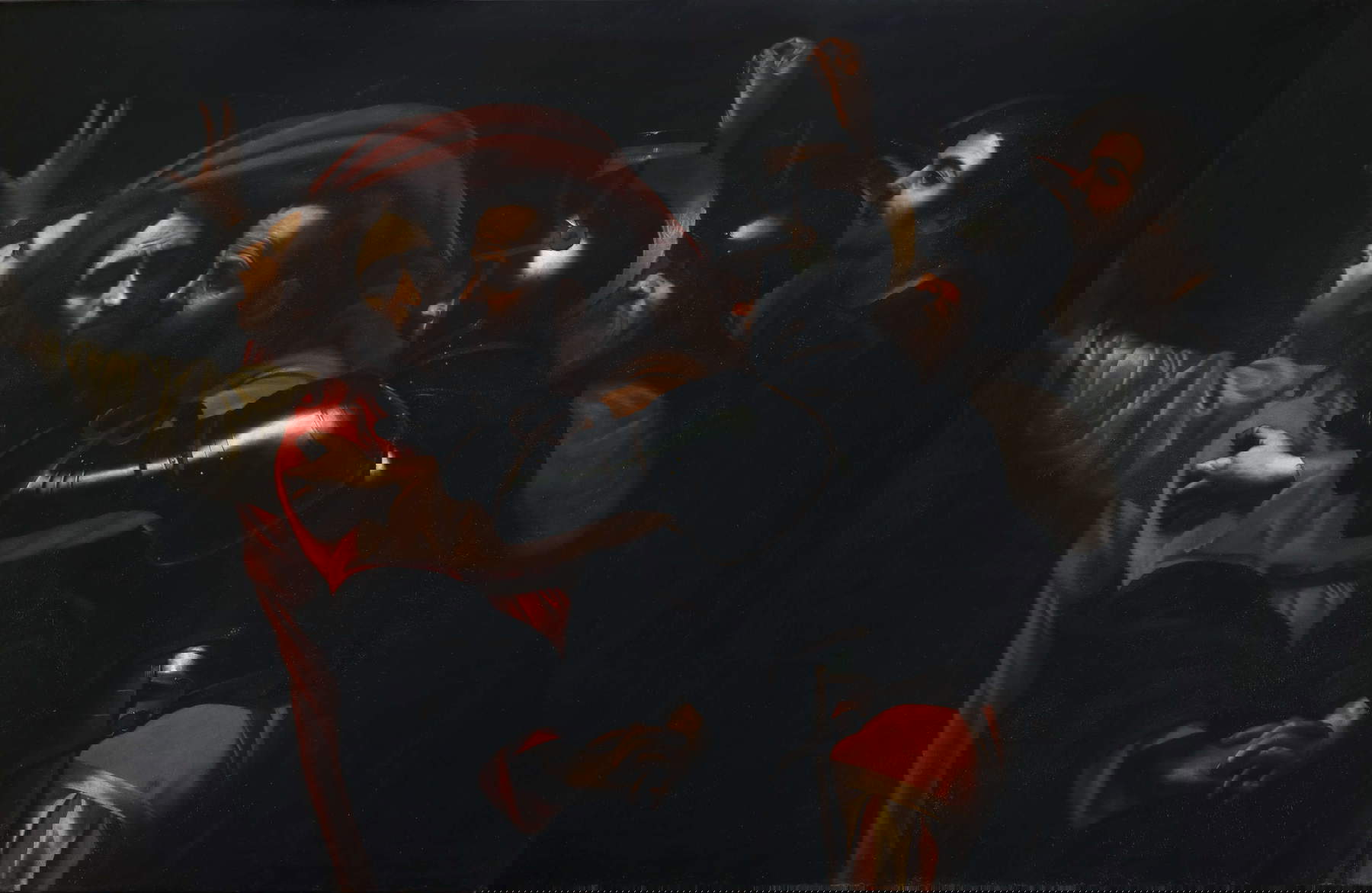
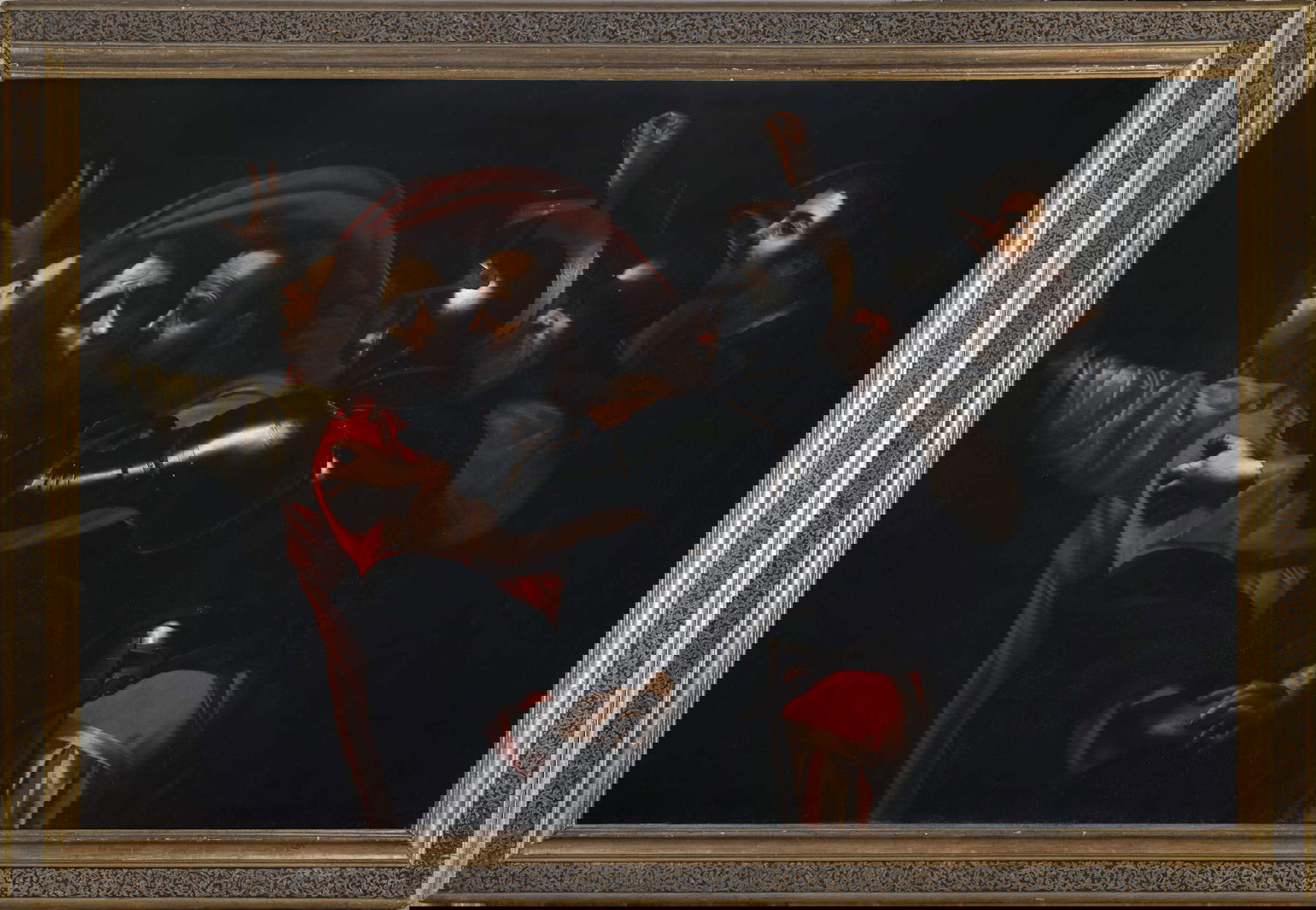
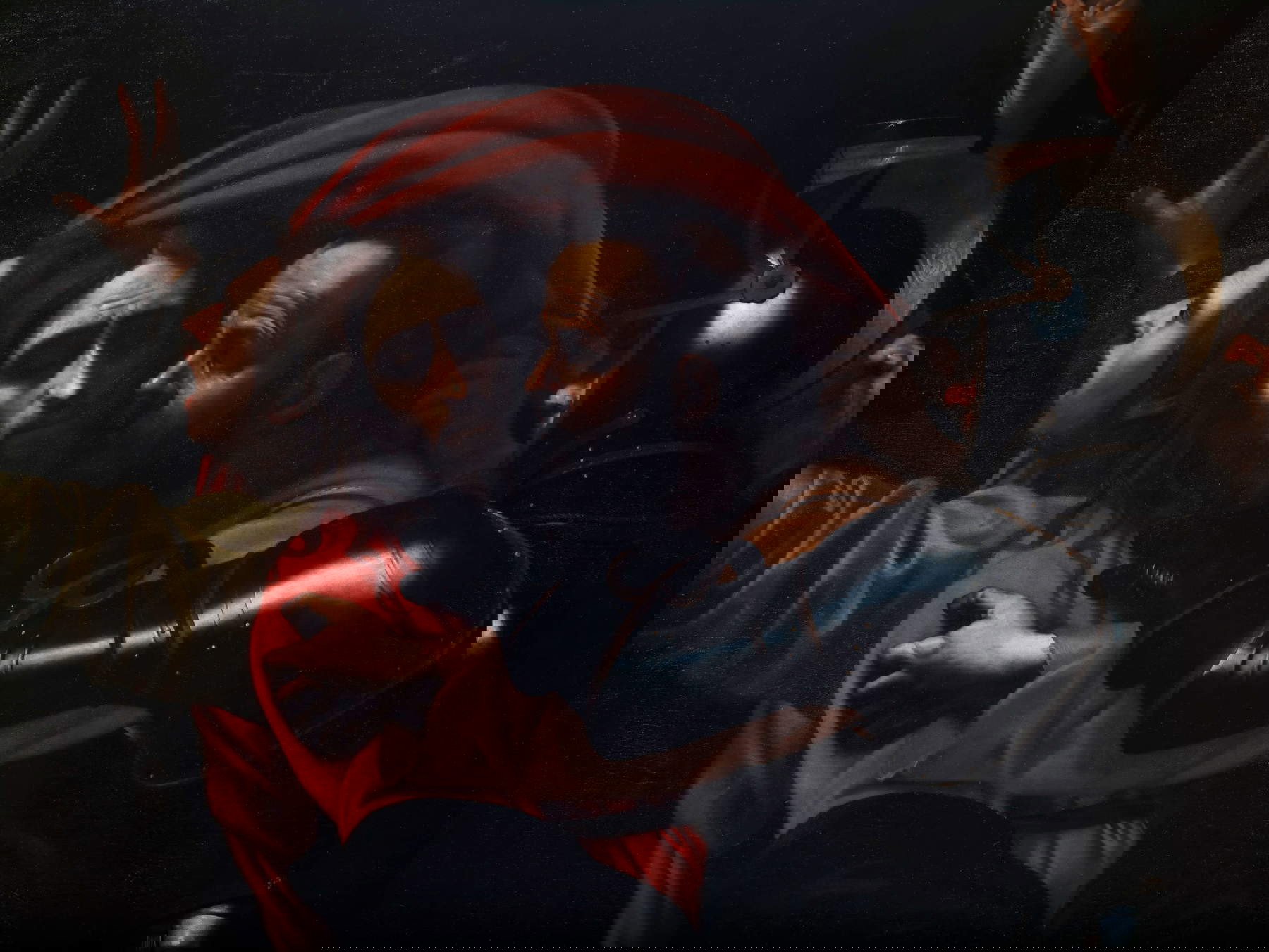
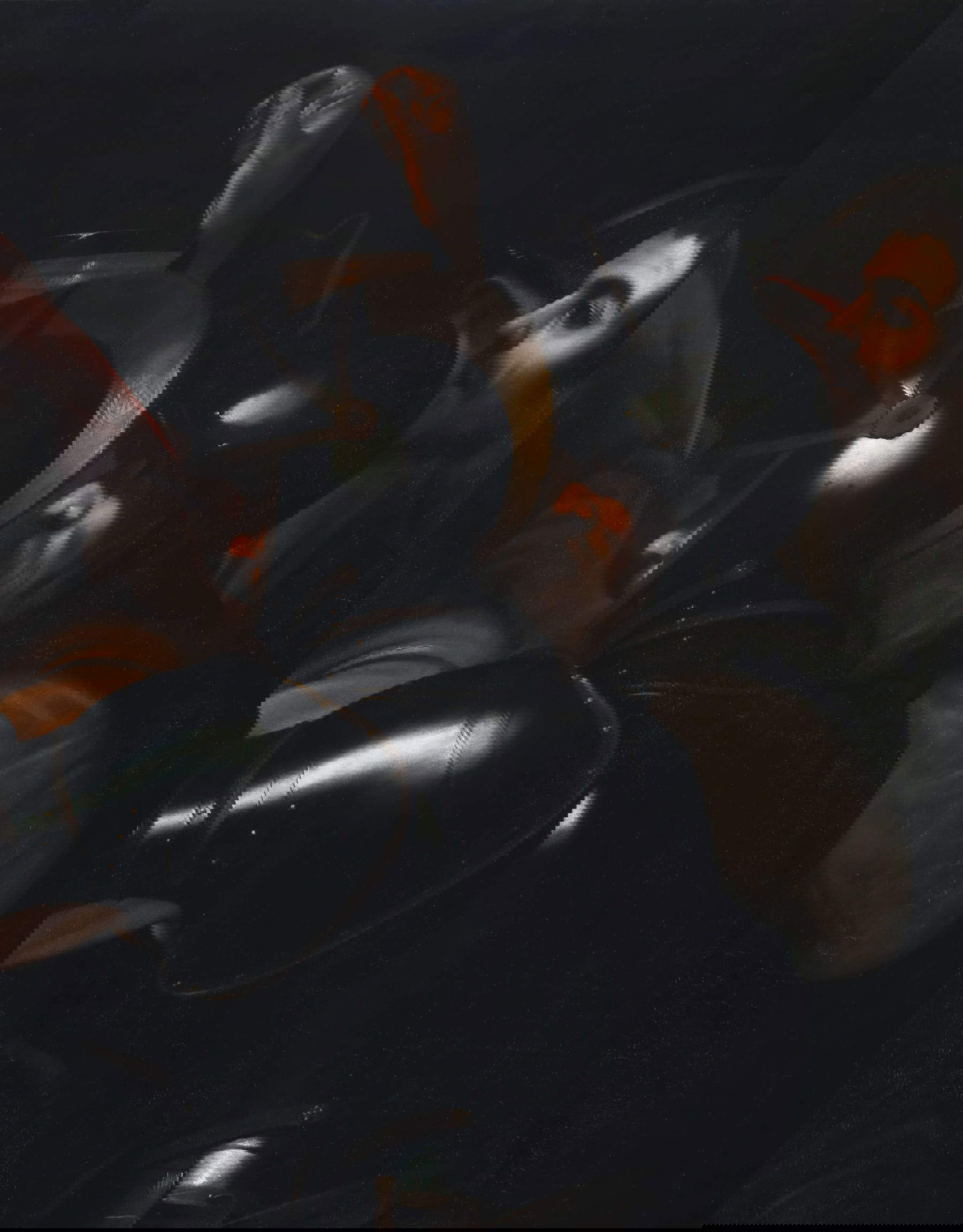
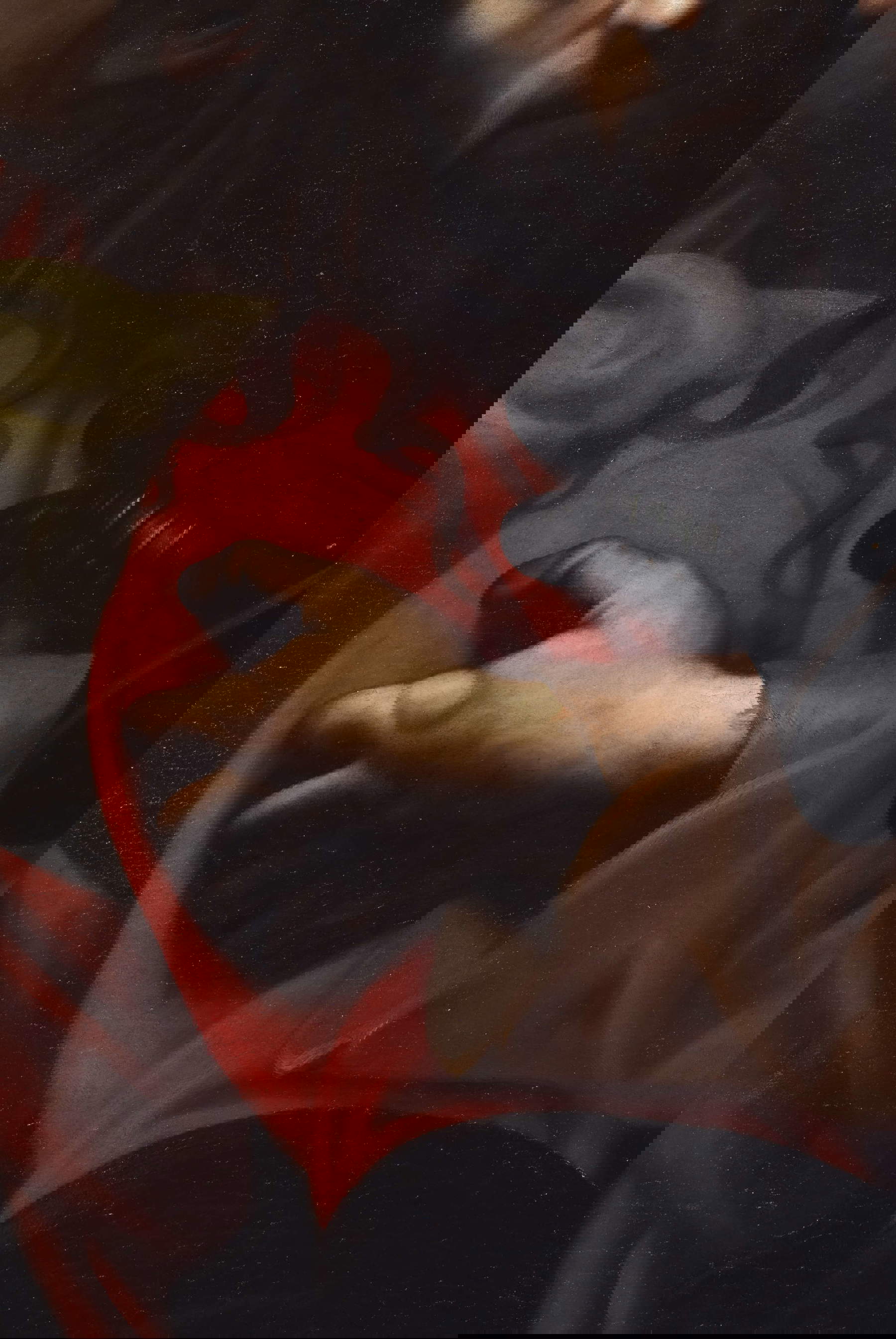
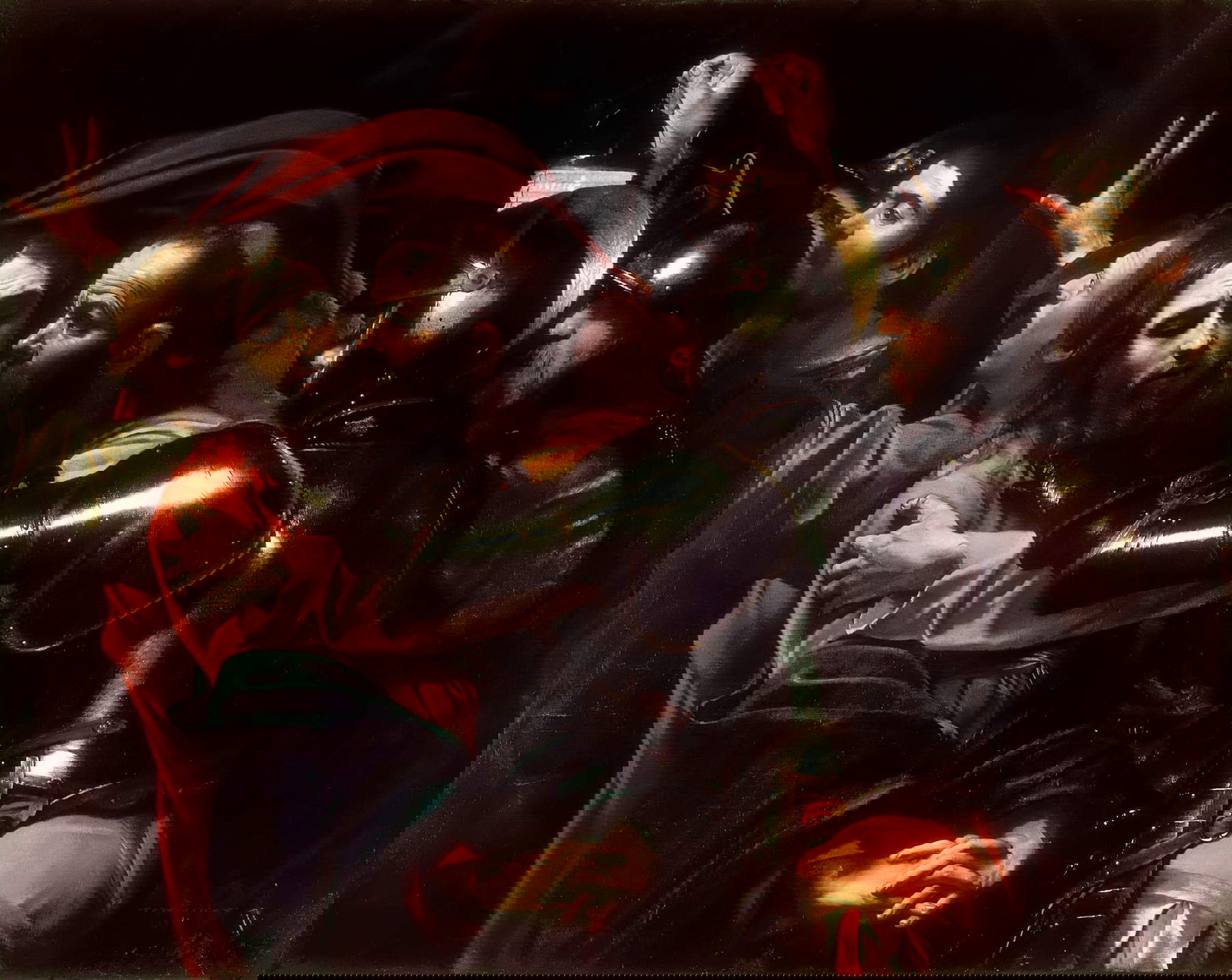
Bigetti does not stop at provenance, however. What he cares most about is probably the iconographic reading of the painting: he argues that the real subject of his Capture is not Jesus arrested in the Garden of Gethsemane, but Judas’s betrayal. And that Caravaggio declared it with a precise sign, hidden in plain sight: the hand of Judas. On the traitor’s finger is a kind of bubble, a protuberance that many had noticed without knowing how to interpret it. “I have studied it,” Bigetti tells me, always with his calm and confident demeanor. And he has his own explanation. “It is Cain’s scar: in the biblical tradition, after Cain killed his brother Abel, God marked him with a scar so that anyone who met him would not kill him. Cain was a blacksmith, and that mark was a kind of burn, a hammer blow. And Caravaggio put that mark on his left hand, the hand of betrayal. The most illuminated part of the painting is the hand: Caravaggio has indicated the subject: it is not the capture of Christ, it is the betrayal of Judas.” A system of cross-references, then, that for Bigetti would be deliberate, constructed with the same care with which Caravaggio constructed every detail.
Then there are the suggestions of a technical nature. And here Bigetti becomes inflamed, and it is easy to understand him, because he has spent the last two decades studying all the elements, in every possible way, of the painting’s surface. “Look here, look at the hand,” he says, showing me the photographs. “And then the hair: if you see the hair, there are all the shadows underneath. There is not a wrong one. But these fabrics! Look at the sleeve. Here, on the other hand, there is a repentance, you see? Here, it’s all the minutiae that came out when I cleaned the painting. And when I cleaned it, Mina Gregori would come to see me: she would look at all the shadows in the armor, and she would realize how the author got all the lighting right.”
In studying the painting, Bigetti had focused on a small flame, almost invisible in photographs: the lamp the soldier holds in the corner of the painting. The antiquarian tells me that he had discussed this element with an art historian, Carmelo Occhipinti, who was working on Leonardo’s theory of light: Leonardo argued that painters should work in a dark environment with a single oblique light source, oriented at 45 degrees, filtered by a waxed cloth or parchment. “This is Leonardo da Vinci’s theory, and the lamp in the painting is the same lamp Caravaggio used in his studio, which was seized from him by the police during his escape from Rome.”
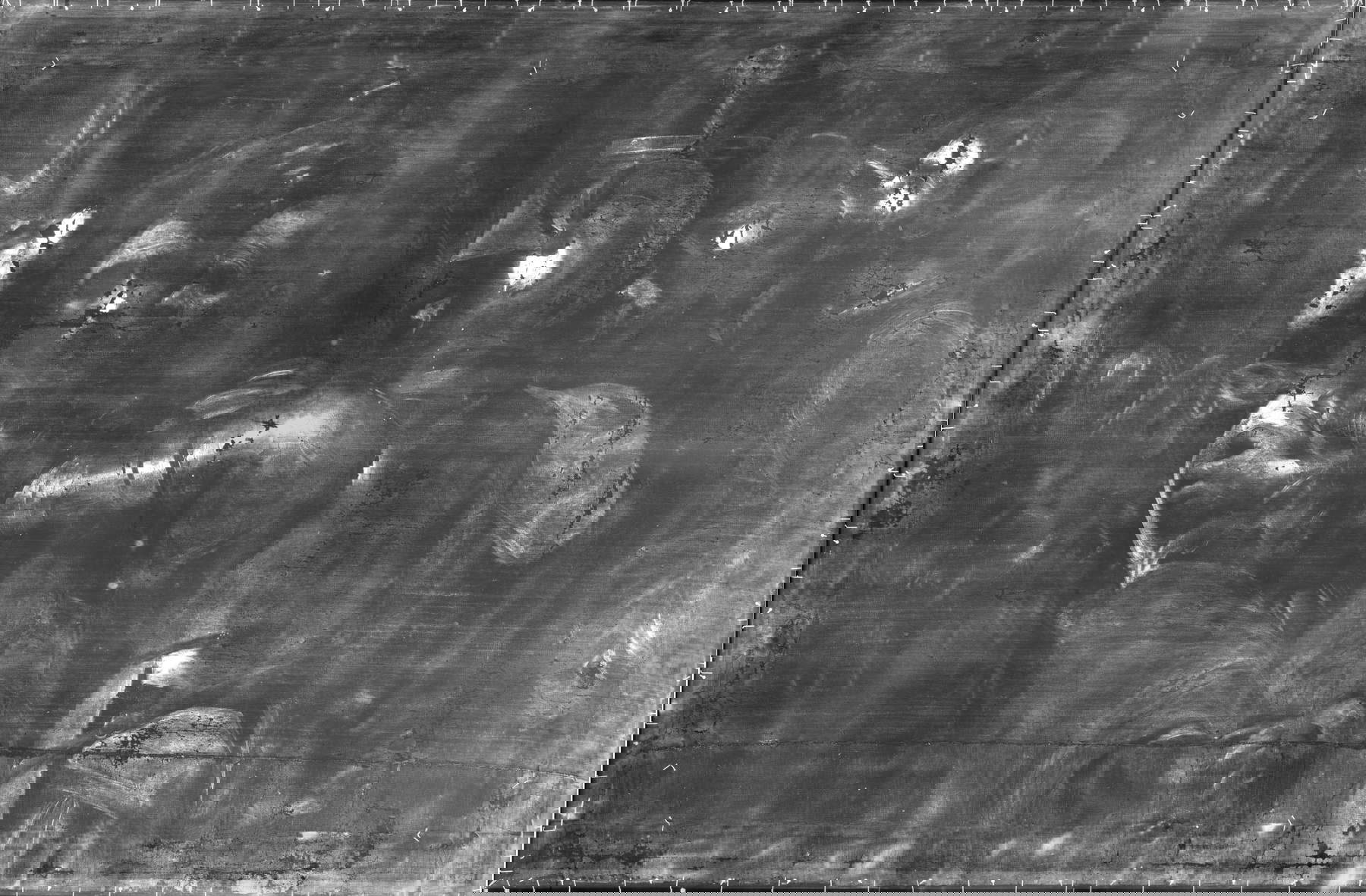
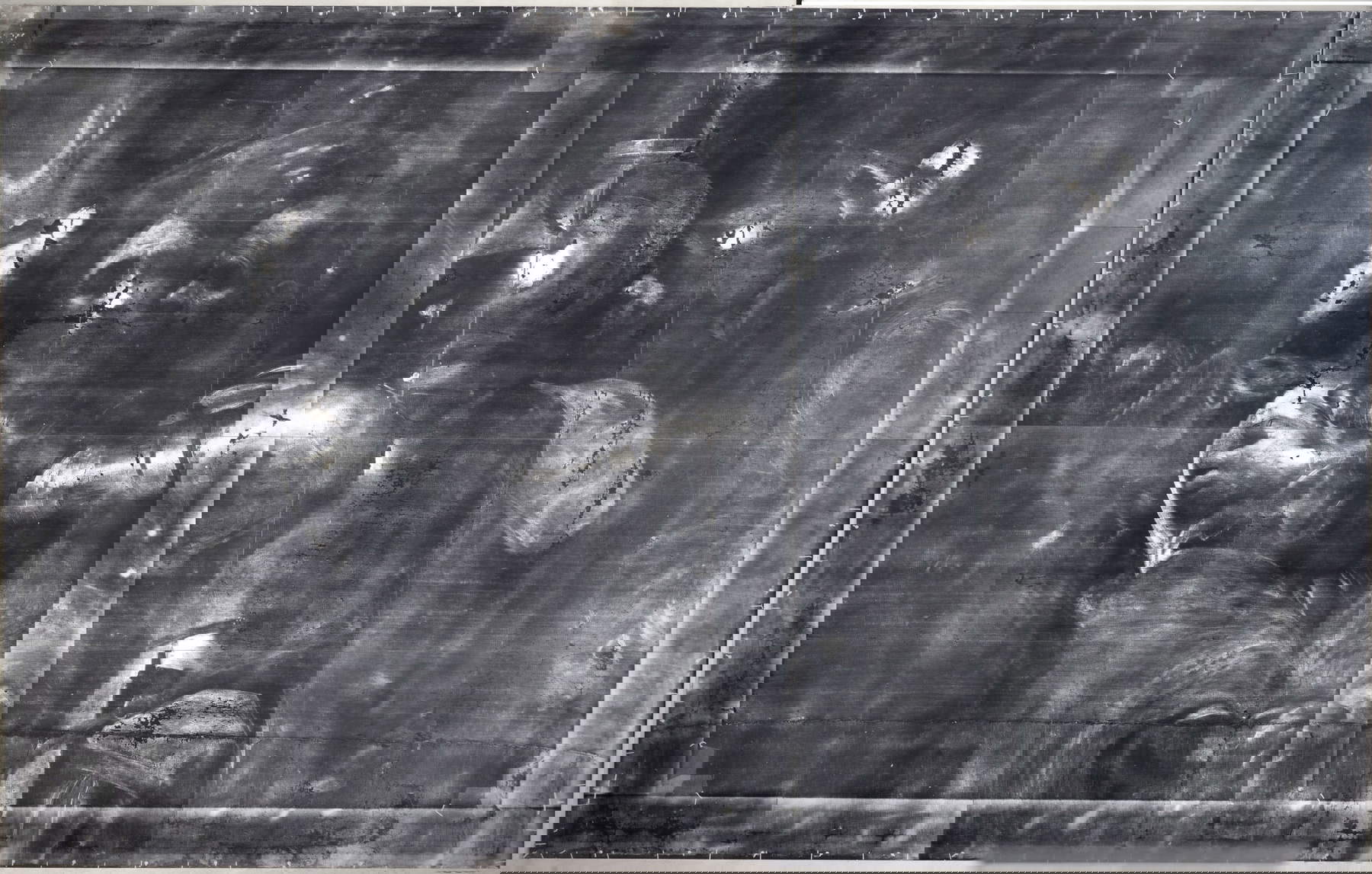
That’s not all: there are also technical analyses. Bigetti shows me the X-rays. Beneath the surface of the Capture of Christ, the x-rays reveal a composition that in some details is different from the final one: the arms of the fleeing young man (John, in the Gospel tradition) were originally raised, not along his sides. One hand was open. The lamp was placed in the center, then moved. There was a fist placed on the other shoulder. And behind it, hidden by layers of later paint, was a portrait of a woman - recognizable by the wider neck, the braids. Caravaggio had covered it up, but not enough to erase it completely. “Bellori writes that Giovanni flees with the two arms outward,” Bigetti recalls, quoting the seventeenth-century biographer. “Those arms are there, they are in the X-rays. We did an exhibition by making available all the material, this material, everything possible and imaginable for a study, a perhaps unrepeatable exhibition.” Which, however, did not get the response that Bigetti hoped for. Although it cannot be said that there are no scholars who even in recent months have argued for the autography of Bigetti’s work. The most recent contribution is that of Anna Coliva, who in 2023, in an article in Sole 24 Ore, argued in favor of autography, defining the Capture as “perhaps the master’s least known work, because it subtracted from view and study for twenty years due to unprecedented vicissitudes, many of them judicial,” and attributed the credit for the discovery “to the expert and passionate eye of Mario Bigetti, a true temper of an antiquarian.” a discovery that, according to the scholar, dictates that the attribution of the Dublin version be diverted to Gerrit van Honthorst.
Then, as he continues to talk about the Capture, Bigetti suddenly interrupts himself. From a bag he pulls out the catalogs of his exhibitions. Just like that, out of the blue. And when he tells me about the exhibitions, about what went through those exhibitions, the antiquarian gets hot. I pay attention to the dates: 1988, 1989, 1991, the heyday of his Laurina Arte. On the catalogs, one chases the signatures of all the best scholars of the seventeenth century, accompanying cards of works by Luca Giordano, by Guido Reni, by Daniel Seiter, by Cesare Dandini. It goes even further than the seventeenth century: he shows me, with some pride, a painting by Maria Luisa Raggi, an eighteenth-century painter virtually unknown until the 1970s. “I discovered this one, they even did a monograph on it.” He wants to tell me that he has always been used to, to discover works. He shows me a Sybil by Guercino, a portrait by Pompeo Batoni, a Magdalene by Giovan Francesco Guerrieri, an Allegory of Painting by Michele Desubleo, a rare Isaac blessing Jacob by Giovanni Battista Langetti. All resurfaced thanks to his insight. Stephen Pepper called Bigetti “a tireless discoverer of paintings.” Then, as he leafed through one of his catalogs, a photo of his St. Francis in Meditation, one of several known versions of the painting, appeared. "I discovered the St. Francis , too."
Caravaggio’s St. Francis is a 20th-century work, one might say, in the sense that it was discovered last century. There is also the date, 1908, when a scholar of the time, Giulio Cantalamessa, strolling along Via Veneto stopped in the Capuchin church, noticed a St. Francis, connected it to a court deposition by Orazio Gentileschi in 1603 (Gentileschi, a witness in the trial brought against Caravaggio for libel, we would say today, against his colleague Giovanni Baglione, reported that he had lent his friend a habit: for Cantalamessa it was proof that at that time Merisi was waiting to make a Saint Francis) and published it as a work by Caravaggio. The work was taken for certain to be an autograph until 1958, when Maria Vittoria Brugnoli, in the church of San Pietro in Carpineto Romano, discovered another version of the painting that reopened the discussion (today it is in storage at Palazzo Barberini). For the sake of brevity, we will not give an account of the elements for or against one or the other version, but we will simply recall that, after the discovery of the Carpineto specimen, two factions formed: on the one hand the supporters of the Capuchin St. Francis , led by Mina Gregori (who is followed, among others, by Gilles Lambert, Stefano Zuffi, Keith Sciberras and Keith Christiansen), and on theother those who affirm the opposite, that is, that the Carpineto St. Francis is the autograph and that of the Conception is a copy, a front on which Rossella Vodret, Maurizio Marini, Mia Cinotti, Maurizio Calvesi, Marco Bona Castellotti, and Sebastian Schütze take sides. Bigetti’s St. Francis is a third version, and the antiquarian claims that his painting is an original.
He shows me some photographs, as well as technical analysis: reflectographs, x-rays. From the x-rays we can see some repentances: the skull at the saint’s feet was stretched differently, then it was repositioned. The drapery had been redone. You can clearly see the incisions, the marks that Caravaggio traced with the handle of his brush on the imprimitura and that he used to manage the composition. “He would enlarge, change, remake. That’s not the way a copyist works. It is the way of working of a painter who is looking for something.” There is one detail Bigetti finds particularly significant in the St. Francis: the halo. Painted freehand. A quick, confident, almost contemptuous stroke. “He who copies, uses a compass,” he says.
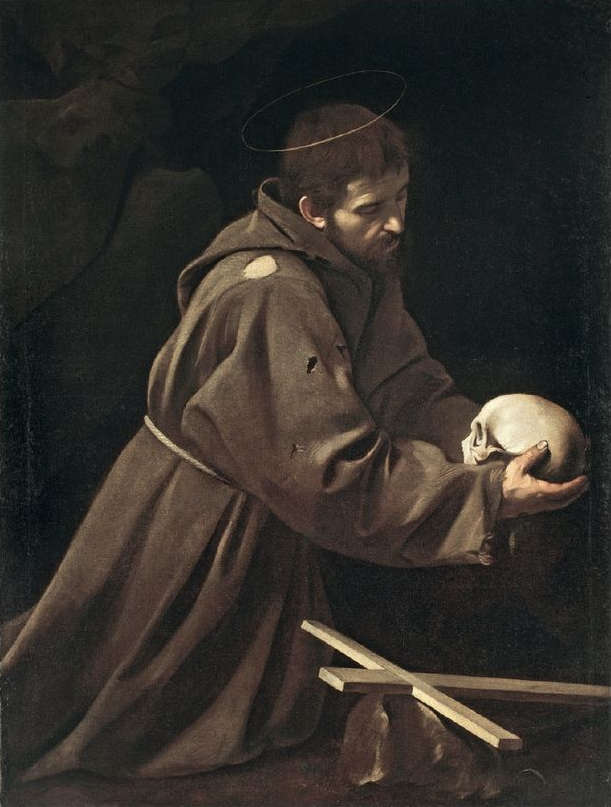
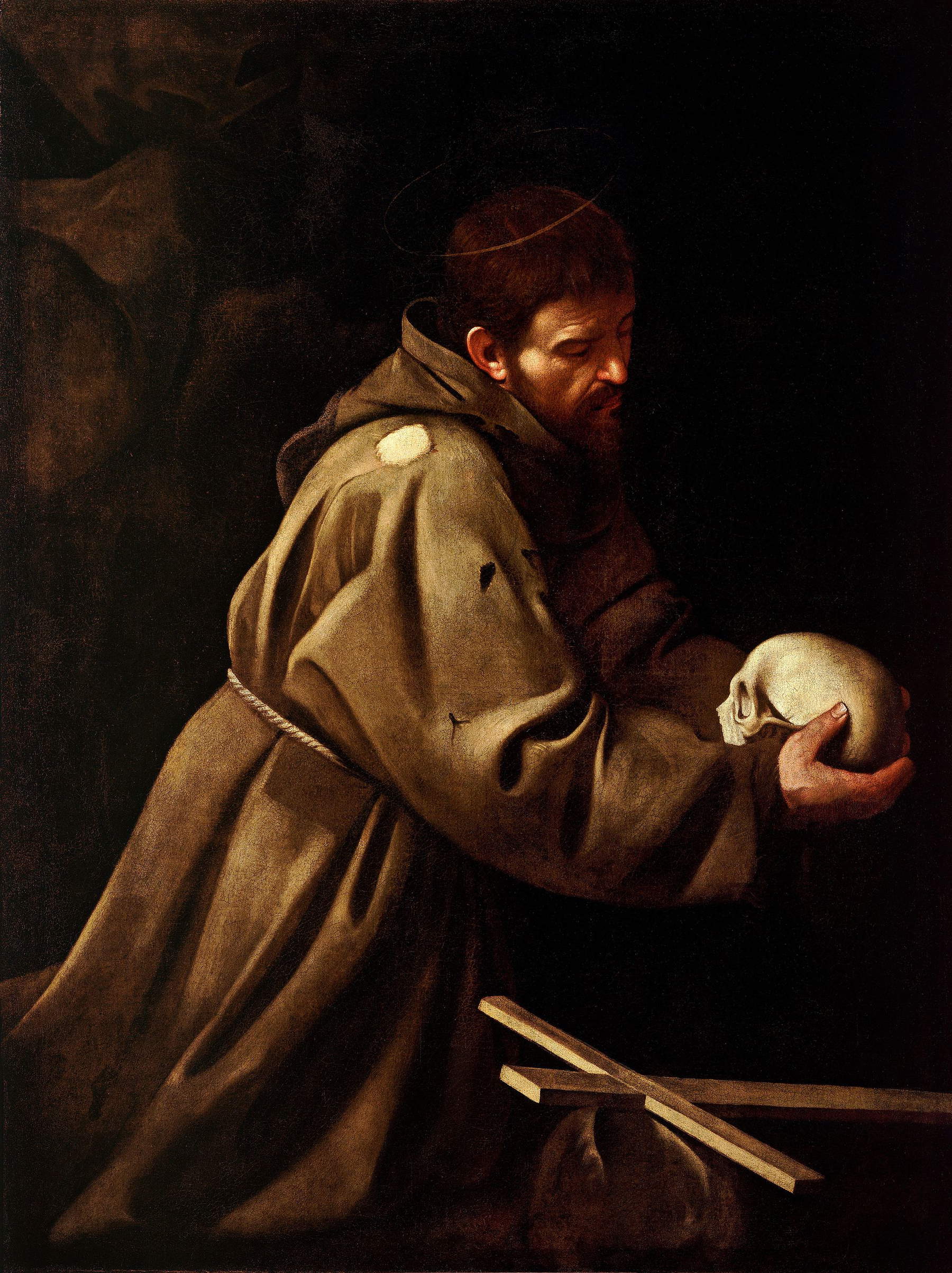
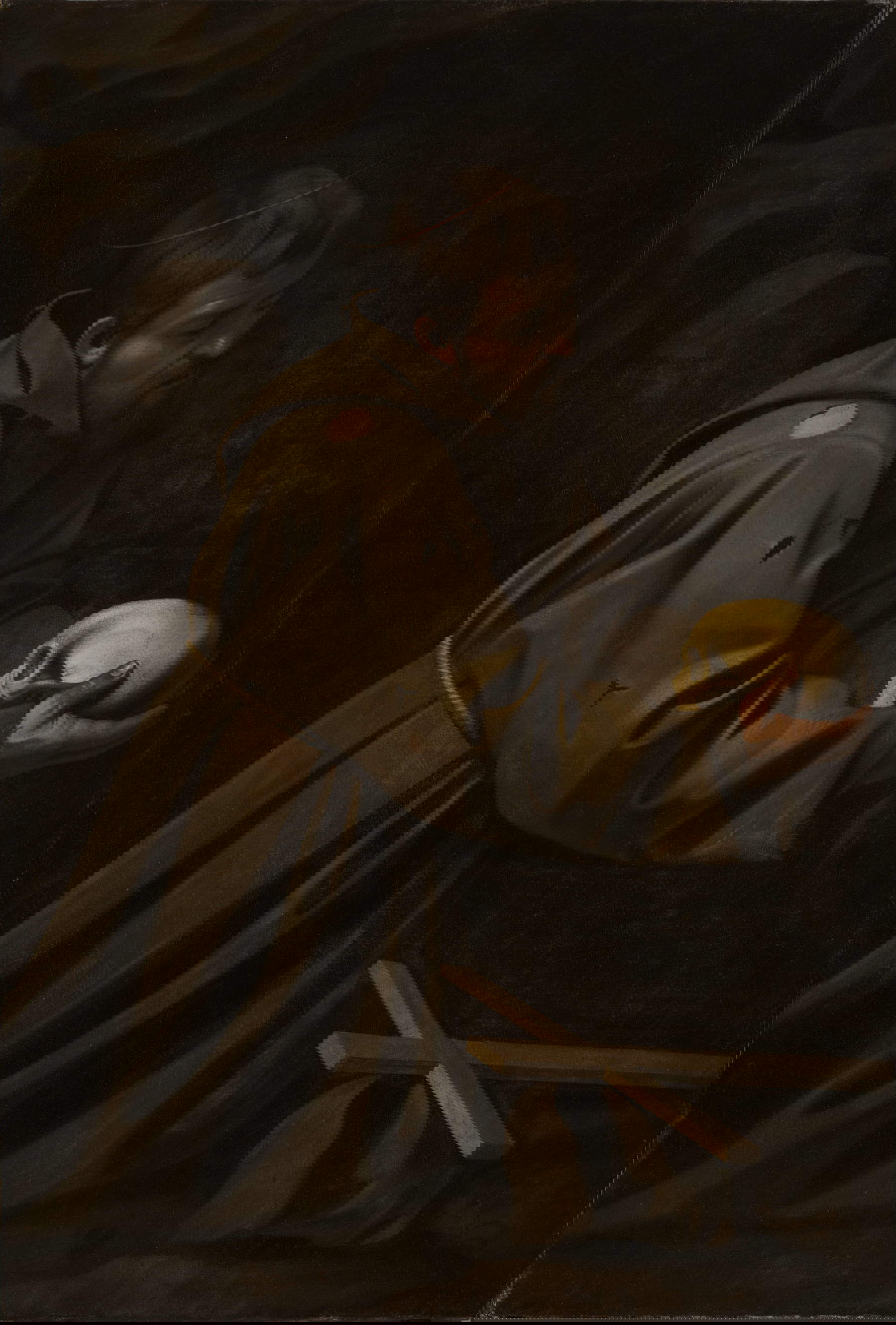
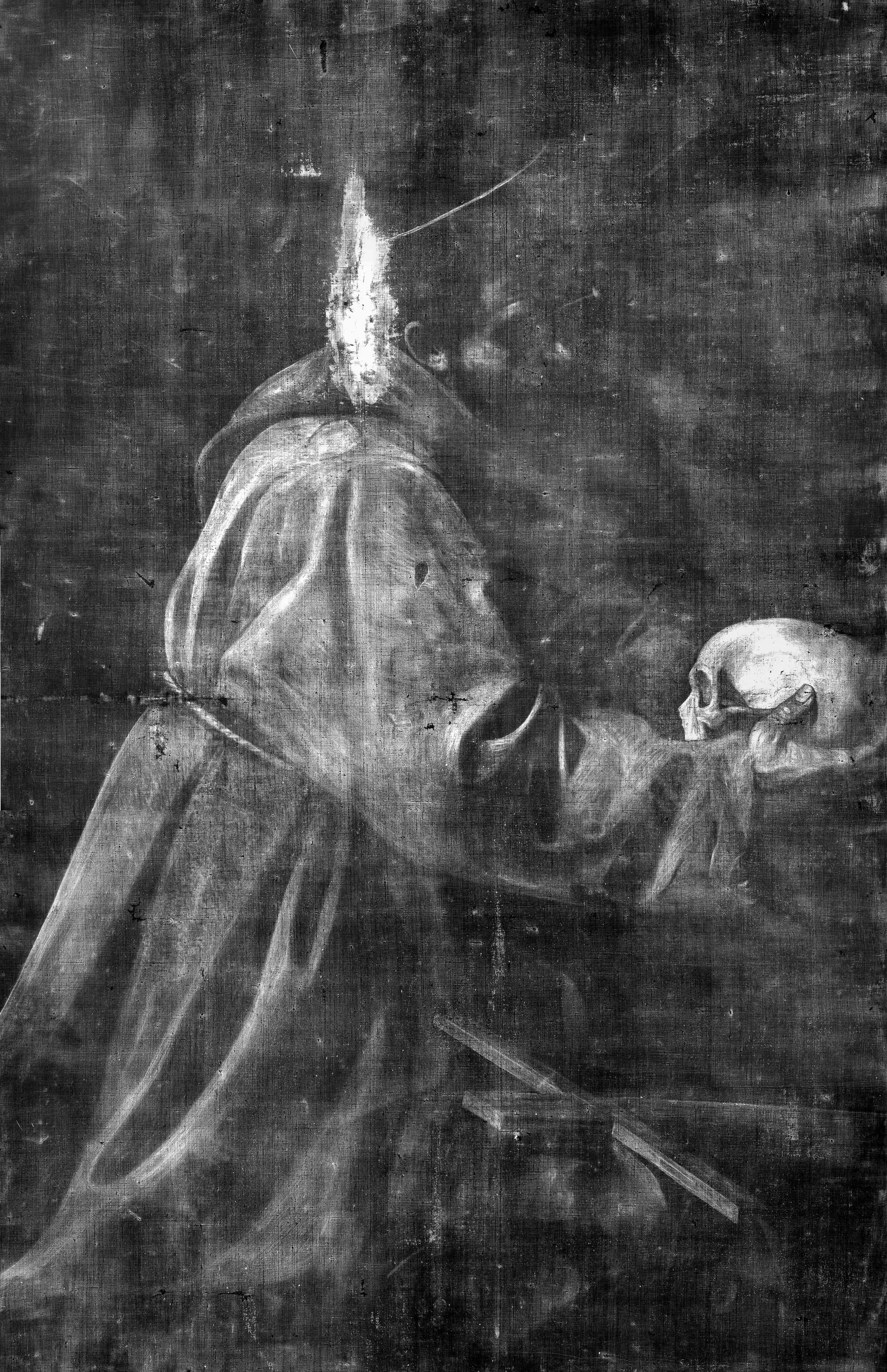
Then, he goes on to reconstruct the history of the painting, and mentions a name: Francesco dei Rustici. “He was a Roman layman, guardian of the Congregation of the Pilgrims, collaborator of St. Philip Neri in the construction of oratories. In 1598 he was commissioned by the Pope to organize the Jubilee of 1600. He frequented Mattei House and knew Caravaggio. In 1603, during the Baglioni-Caravaggio trial, the one in which the painter risked big for having written satirical verses against his colleague, Caravaggio declared that he had not been frequenting the Rustici for months, but had returned to him shortly before the trial ’a friar’s habit.’” The painting then disappeared for nearly two centuries. Bigetti believes he found a trace of it in the Mattei inventory of 1802, drawn up at the time of the Roman Republic, when nobles had to declare their property to pay taxes, where a St. Francis given to Caravaggio appears and valued at 500 scudi, the same figure as a Pietro da Cortona and a Valentin de Boulogne, thus a work assigned a considerable value. Gherardo delle Notti’s The Capture of Christ in the same inventory is worth 80 scudi-a confirmation, for Bigetti, that even at that time the real Caravaggio was not recognized as such. The painting then reappears in 1922 in the collection of Florentine lawyer Angelo Cecconi, who also had Prato’sCoronation of Thorns : there are no direct links between the “ex Cecconi” painting, as it is called by scholars, and the St. Francis mentioned in the Mattei inventories, but since Cecconi bought an Antiveduto Gramatica that had belonged to the Matteis, according to Bigetti it is possible that he also bought Caravaggio’s St. Francis from them. There is also another hint, he tells me: in the 1960s, one of the leading scholars of the time, Carlo Volpe, advocated the purchase of the St. Francis to Paolo Volponi, a refined poet, senator of the Republic, and well-known collector (a nucleus of his collection was later left to the Galleria Nazionale delle Marche in Urbino where it occupies some rooms in the permanent itinerary). Volponi would later not purchase the painting because he was dissuaded by a rejection of another scholar that intervened in the meantime.
The problem, however, for Bigetti, is not so much that someone disputes his paintings or his arguments, partly because scholars are still far from a definitive position. His Capture, the painting that is now in Ariccia, enjoys some consensus: authorities such as Roberto Longhi, Denis Mahon, Mina Gregori, Maurizio Marini, and more recently Vincenzo Pacelli, John T. Spike, Clovis Whitfield, Anna Coliva, down to Francesco Petrucci who took the trouble to curate the exhibitions of the tour mentioned at the beginning. We have not yet arrived at a unanimous consensus, of course, and several scholars still dispute the authorship of the Capture, but for Bigetti that is not the point. He knows that in Caravaggio’s world, controversy is the norm and certainty is rare. What he detests is silence, especially in light of all the exhibitions that the Capture has taken on lately, in light of a debate that has not stopped. Yet, even at the Palazzo Barberini exhibition, the Capture was not only not considered, despite the fact that there were paintings among the rooms of the museum that were far from unanimously considered autographs, and even in some ways more problematic than the Capture. It is not discussed, it is not refuted: it simply does not exist. “You can’t not quote it,” Bigetti continues. “You can say it’s not good. You can write that you don’t think it’s autograph. But to ignore it, after seven exhibitions, after Strinati called it the most beautiful version of the three existing ones, after Caterina Napoleone wrote an article only about the ’golden guilloche frame’ ... here, this is not criticism.”
Today that Bigetti’s The Capture of Christ is on display at the Chigi Palace in Ariccia everyone can see it whenever they want. “I put it there because where else am I going to put it, at home or in a warehouse?” he says realistically. But there is also another reason: visibility. In previous exhibitions his paintings have made a hundred thousand viewers. Considerable numbers, to be sure, but in Ariccia, with Rome twenty kilometers away, the potential audience is much larger, and scholars are all close, since Caravaggists largely gravitate to the capital. The work has been done: seven exhibitions, x-rays, archival documents, iconographic studies, letters from international experts. A history of provenance along four hundred years of passages. A theory of iconographic character. If the official academic world wants to confront the Capture of Christ (and the St. Francis) again, it will find the materials in order. Mario Bigetti has prepared them, keeps them ready, sends them to anyone who wants to read them. “Everyone can request them. My intent is always the same: to let people know.”

The author of this article: Federico Giannini
Nato a Massa nel 1986, si è laureato nel 2010 in Informatica Umanistica all’Università di Pisa. Nel 2009 ha iniziato a lavorare nel settore della comunicazione su web, con particolare riferimento alla comunicazione per i beni culturali. Nel 2017 ha fondato con Ilaria Baratta la rivista Finestre sull’Arte. Dalla fondazione è direttore responsabile della rivista. Nel 2025 ha scritto il libro Vero, Falso, Fake. Credenze, errori e falsità nel mondo dell'arte (Giunti editore). Collabora e ha collaborato con diverse riviste, tra cui Art e Dossier e Left, e per la televisione è stato autore del documentario Le mani dell’arte (Rai 5) ed è stato tra i presentatori del programma Dorian – L’arte non invecchia (Rai 5). Al suo attivo anche docenze in materia di giornalismo culturale all'Università di Genova e all'Ordine dei Giornalisti, inoltre partecipa regolarmente come relatore e moderatore su temi di arte e cultura a numerosi convegni (tra gli altri: Lu.Bec. Lucca Beni Culturali, Ro.Me Exhibition, Con-Vivere Festival, TTG Travel Experience).
Warning: the translation into English of the original Italian article was created using automatic tools. We undertake to review all articles, but we do not guarantee the total absence of inaccuracies in the translation due to the program. You can find the original by clicking on the ITA button. If you find any mistake,please contact us.

























 IT
IT FR
FR DE
DE ES
ES CN
CN


