





Beatrice Venezi is no longer music director of the Teatro La Fenice in Venice, and the relationship between the theater and the maestro comes to a clean break. In fact, the Foundation announced today the termination of all future collaboration with the conductor, at the end of days marked by strong tensions followingstatements made by Venezi herself in an interview with the Argentine daily La Nación. The decision was officially announced through a note from the theater. “The Teatro La Fenice Foundation, through the voice of Superintendent Nicola Colabianchi, communicates that it has decided to cancel all future collaborations with maestro Beatrice Venezi,” reads the statement released in recent hours. A stance that marks a definitive rift between the Venetian opera institution and the director, until recently among the figures involved in the theater’s activities.
Culture Minister Alessandro Giuli also intervened in the matter, saying he took note of Superintendent Nicola Colabianchi’s decision and confirmed his fullest confidence in him. “The Minister of Culture, Alessandro Giuli, takes note of the decision of Nicola Colabianchi, taken in autonomy and independence, and confirms to the Superintendent of La Fenice his fullest confidence,” reads the ministerial note. “With the hope that this choice can clear the field of misunderstandings, tensions and instrumentalization of every order and degree in the interest of the theater and the city of Venice.”
During the interview with the Argentine daily, Venezi, speaking about her own experience leading the Venetian orchestra, the conductor had described an environment that was not inclined to change, stressing her own unfamiliar background in the musical world and adding that it would be “an orchestra in which positions are practically passed from father to son.”
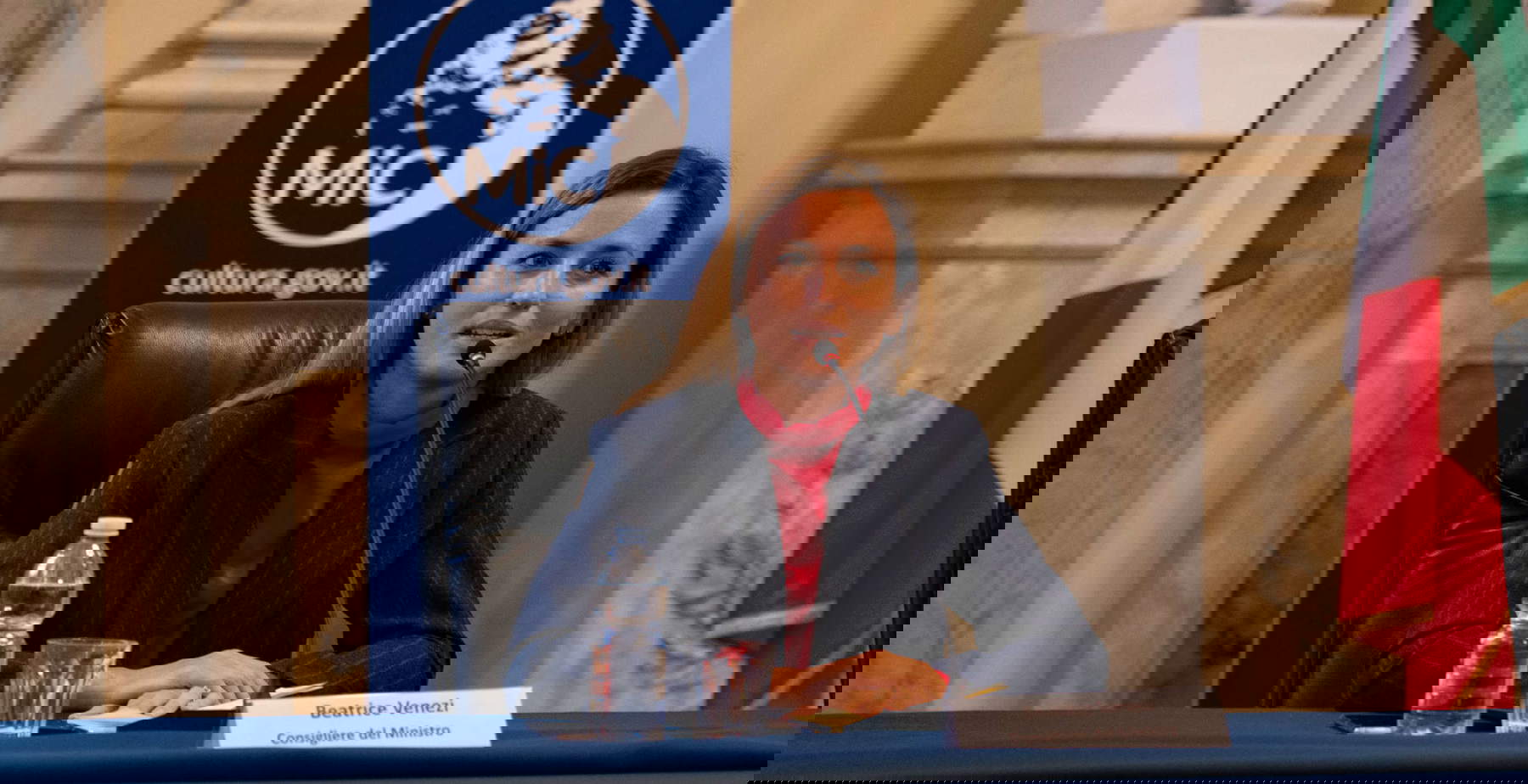
The words sparked an immediate reaction within the theater, particularly from the united union representation. The RSU firmly rejected the claims, calling them “false, serious and offensive.” In their official reply, the workers’ representatives reiterated how access to the orchestra is exclusively through international public competitions, based on criteria of merit and professional rigor, thus rejecting any hypothesis of hereditary transmission of roles.
The confrontation between the parties quickly stiffened, turning into a deepening rift in the days following the publication of the interview. Tensions, already evident in internal reactions at the theater, gradually made a recomposition difficult, until the Foundation’s final decision to sever all future relations with the director. The decision represents the culmination of an affair that has had wide media resonance and has brought the operation of musical institutions and the way orchestras are accessed back to the center of debate.
The crisis, however, has roots in earlier months. On Sept. 22, 2025, Venezi had been appointed music director of La Fenice, a decision that immediately sparked strong protests from the orchestral professors. In a public letter, the musicians had criticized the lack of transparency in the appointment process and raised doubts about the conductor’s artistic curriculum. The protests had intensified in the following weeks, to include a call for the resignation of Superintendent Colabianchi. The confrontation had also resulted in mobilization initiatives. On October 17, 2025, a strike had led to the cancellation of the premiere of the opera Wozzeck, accompanied by a workers’ demonstration. A procession had followed on November 10, also involving employees of other Italian theaters, while further protest actions, including leaflet-throwing, had kept tensions high within the institution.
Venezi’s appointment had also elicited critical reactions from the music world. Among the voices that had expressed perplexity were conductors such as Fabio Luisi, Silvia Massarelli, and Vittorio Parisi, as well as violinist Uto Ughi and former Fenice superintendent Cristiano Chiarot. Some of them had questioned the appropriateness of the choice, while conductor Peppe Vessicchio had expressed reservations about the manner of the appointment, while acknowledging the conductor’s artistic abilities.
However, there had also been no shortage of support for the initial decision. In addition to Colabianchi himself, the director of the Teatro Stabile del Veneto Giampiero Beltotto and Minister Alessandro Giuli had also expressed support for the appointment. In this context already marked by divisions, the statements made to La Nación represented a definitive breaking point. Both union representation and theater management immediately stigmatized the director’s words, accelerating a process of deterioration of the relationship that ended with the cancellation of all collaboration.
|
| Beatrice Venezi fired from Fenice after her statements about orchestra |

Warning: the translation into English of the original Italian article was created using automatic tools. We undertake to review all articles, but we do not guarantee the total absence of inaccuracies in the translation due to the program. You can find the original by clicking on the ITA button. If you find any mistake,please contact us.




























 IT
IT FR
FR DE
DE ES
ES CN
CN


