





TheUniversity of Milan expands its rootedness in the urban fabric of the Lombard capital through the completion of the project of restoration, refunctionalization and regulatory adaptation of the historic complex located at 23 Via Mercalli. The intervention, aimed at transforming the property into the new administrative and teaching headquarters of the university, bears the signature of the design company Politecnica Building for Humans, which worked in collaboration with Studio Valle Progettazioni. The operation involved a total area of more than 7,000 square meters, a listed architectural heritage that was converted into contemporary spaces for offices, training areas and services to the university community.
The original building was built in the early decades of the 20th century on the initiative of Cardinal Ferrari, maintaining from the beginning a distinct social and educational vocation. The contemporary project aimed to preserve that historical memory, while adapting the structure to the needs of a modern academic institution. Politecnica oversaw the entire procedure of the intervention, taking care of the integral design and construction management, coordinating the architectural, structural and plant engineering components in a single organic design. The intervention strategy adopted was based on the principle of volumetric conservation: the complex was transformed by working exclusively on the existing volumes through a process of subtraction and functional integration.
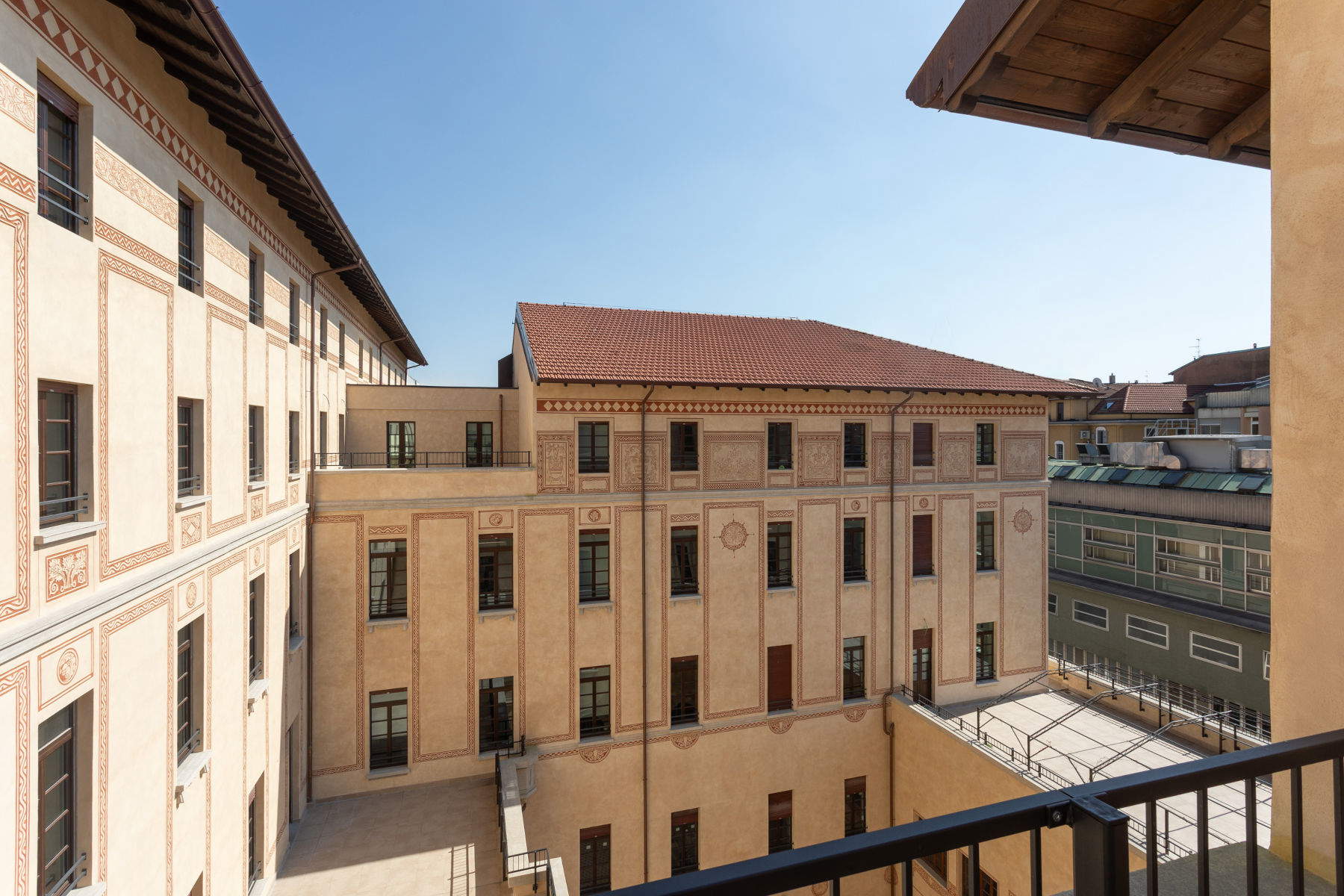
The methodology of design by subtraction was the cornerstone of the entire operation. Palazzo Mercalli, over the years, had undergone numerous internal transformations that had altered its original distributional layout, superimposing functional layers that were often discordant with the historical layout. The new project intervened selectively to eliminate these layers, with the aim of restoring the rooms to their original proportions and establishing a clearer spatial hierarchy. This approach made it possible to rethink the interiors to accommodate flexible and adaptable modes of use, which are essential for an evolving university body. An example of this approach can be traced in the construction of the basement archive under the inner courtyard: by digging underground, the designers avoided the occupation of the courtyards with new buildings, preserving the delicate balance between solids and voids that defines the building’s identity.
A crucial moment of the construction phase was the discovery of a frescoed apse, belonging to the building’s ancient chapel and previously concealed by masonry built in later periods. The discovery, which occurred during the demolition operations of the superfetations, required an immediate design variation. The rediscovered space was integrated into the overall architectural journey, transforming an unexpected historical element into an active part of the user experience. This integration underscores the scientific approach taken, where the surfaced historical datum is treated as a dynamic component capable of dialoguing with the new intended use.
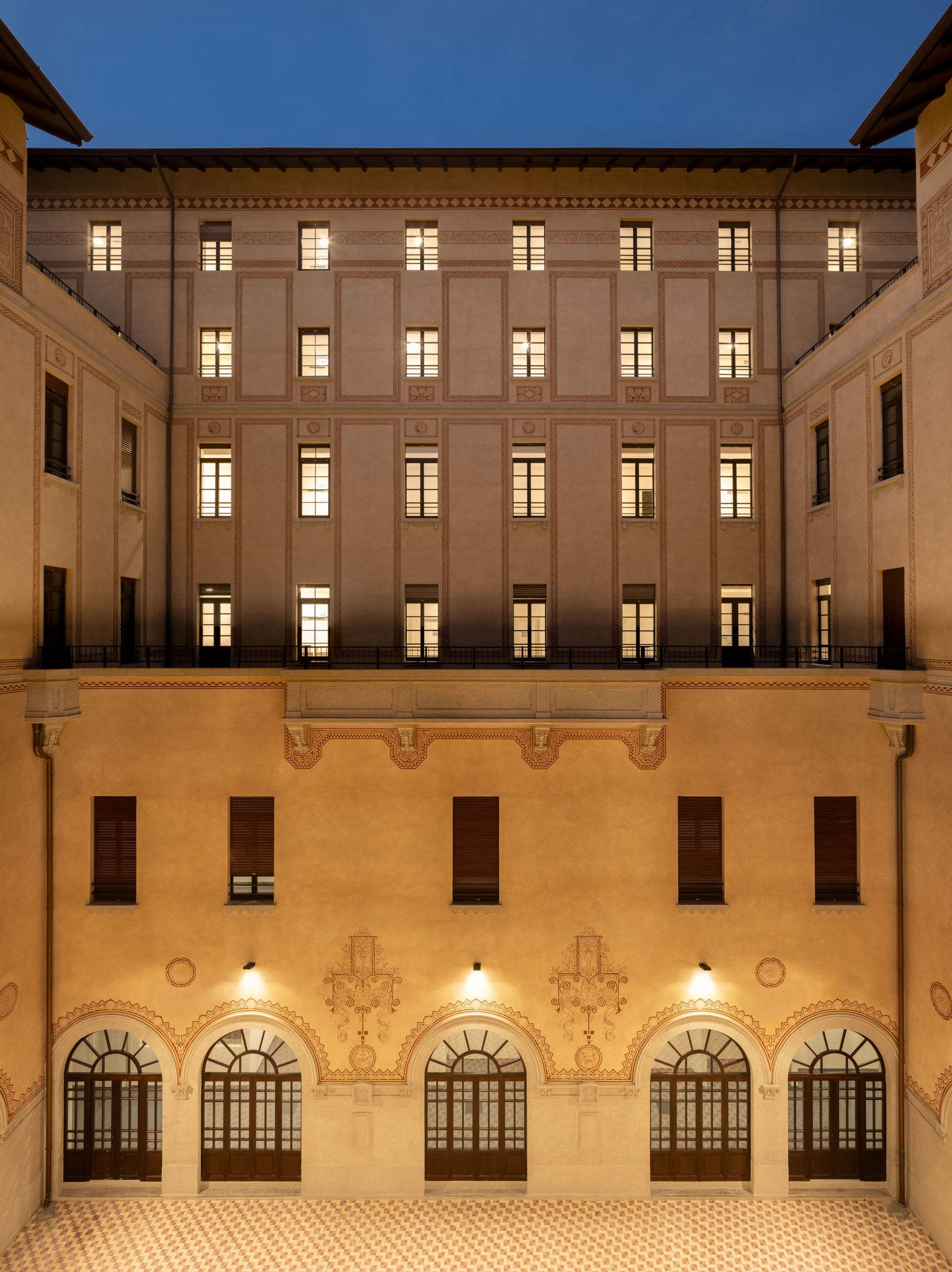
On the level of material restoration, the Via Mercalli complex stands as a testimony to Milan’s late Art Nouveau. Politecnica’s intervention focused with technical precision on the recovery of the ornamental apparatus, with particular attention to the graffito-decorated facades and surface details. The operations included the restoration of the original plasters, engravings and chromatics, based on rigorous stratigraphic analysis. At the same time, inside the building, the historic cobblestone floors were recovered and relocated, while the monumental atrium was restored to its original textural quality, eliminating signs of degradation accumulated over time.
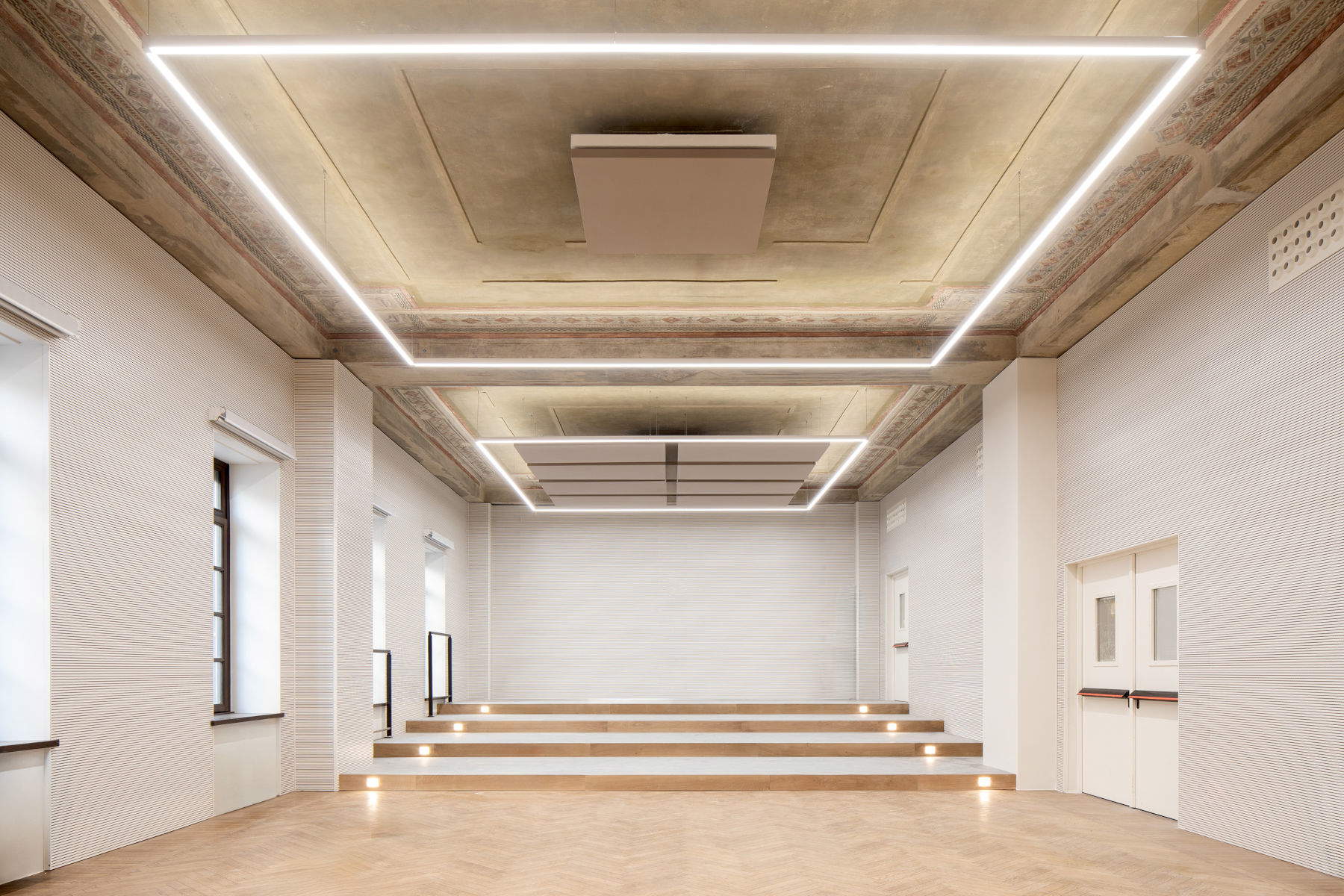
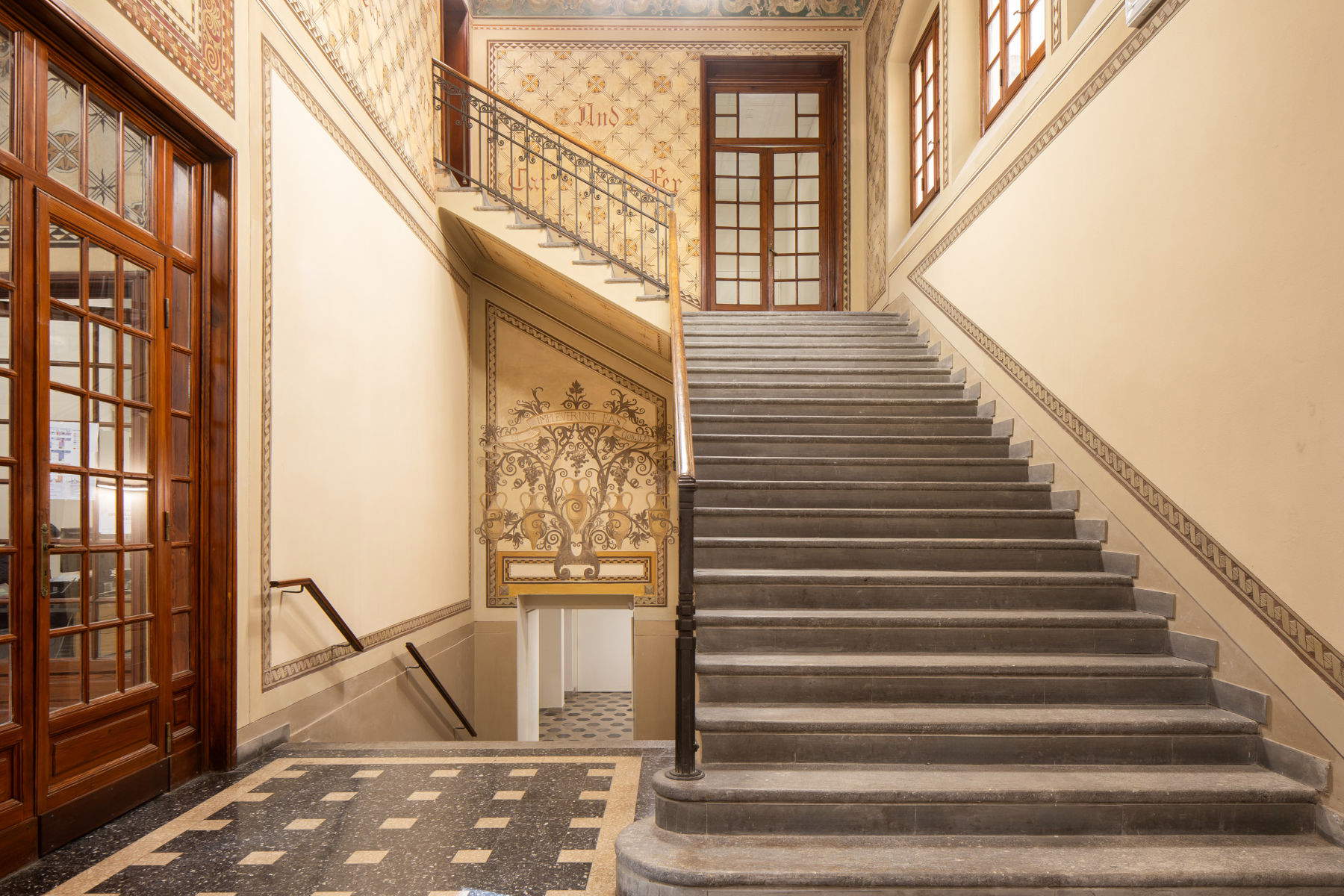
In addition to the conservation aspect, the project faced significant structural and technological challenges. Static adjustment and improvement of the building’s performance were pursued through targeted and minimally invasive interventions, designed not to alter the perception of the historic spaces while ensuring the highest safety standards. The reorganization of vertical flows and horizontal paths has radically improved the accessibility and legibility of the spaces. Administrative offices and teaching rooms have been distributed to function in an integrated manner, with large support areas. Students, accessing from the campus side, now find environments characterized by spatial continuity, where the succession of rooms is designed to encourage interaction and socialization. Even the outdoor courtyards, redeveloped as common spaces, participate in this new collective dimension of the building.
A key chapter of the intervention concerns environmental sustainability. Palazzo Mercalli is currently engaged in the process of obtaining LEED® Gold certification. This path attests to a design orientation aimed at energy efficiency, responsible management of water resources and indoor air quality. The integration of such advanced performance criteria within a listed historic building represents a technical example of sustainable urban regeneration, demonstrating how existing heritage can be adapted to the most modern ecological requirements without sacrificing its testimonial value. The end result is a building organism that, while maintaining its twentieth-century identity intact, fully complies with current regulations in terms of comfort and energy conservation.
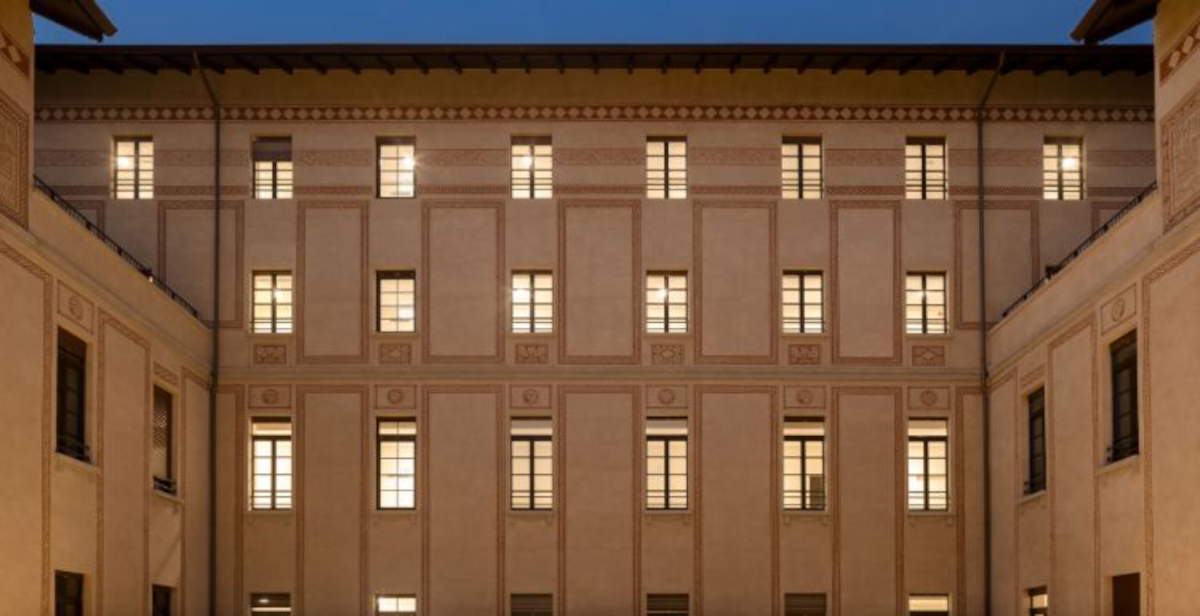 |
| Milan, finishes restoration of Palazzo Mercalli, new home of the University of Milan |

Warning: the translation into English of the original Italian article was created using automatic tools. We undertake to review all articles, but we do not guarantee the total absence of inaccuracies in the translation due to the program. You can find the original by clicking on the ITA button. If you find any mistake,please contact us.
























 IT
IT FR
FR DE
DE ES
ES CN
CN


