




by Redazione 03/03/2026



Categories: News / Disclaimer
U.S. Supreme Court justices decide not to rule on the appeal of scientist Stephen Thaler, who wanted to obtain copyright for a work produced by one of his artificial intelligence systems. The lower courts, however, had denied him copyright protection, which in the U.S. legally requires human intervention. For now, therefore, the&

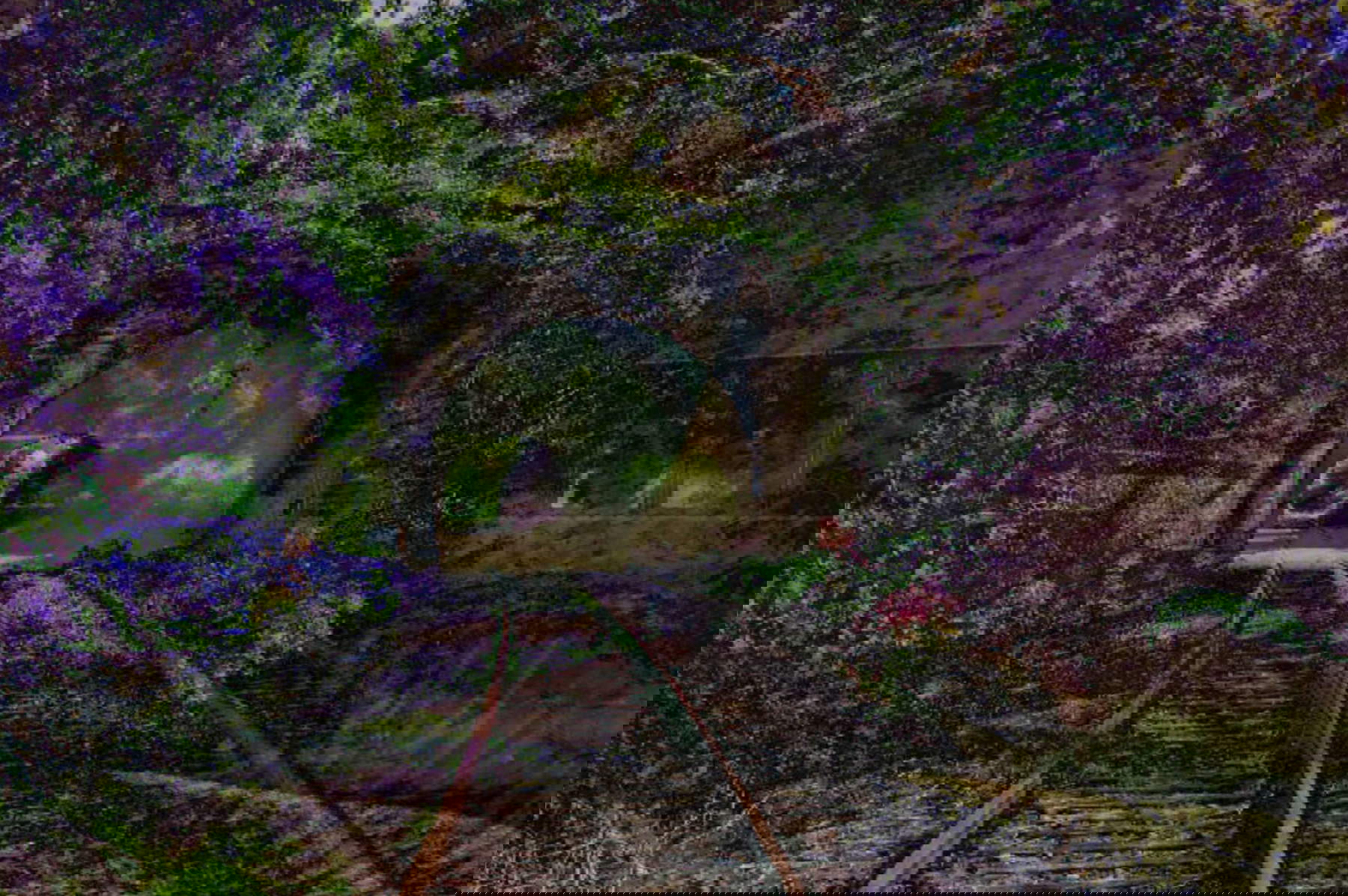
The U.S. Supreme Court has decided not to examine the question of whether a work of art generated by artificial intelligence can be protected by copyright under U.S. law. In a decision released Monday, March 2, the justices dismissed an appeal filed by Stephen Thaler, a computer scientist from Missouri, who had been denied copyright by lower courts for an image created by an artificial intelligence system of his own invention, called DABUS. The court’s decision not to review the case thus leaves in place the decisions of the lower courts and solidifies the view that copyright protection necessarily requires a human author.


At the center of the case is a visual work titled A Recent Entrance to Paradise, for which Thaler had applied in 2018 for federal copyright registration. The image depicts railroad tracks entering a portal, surrounded by elements reminiscent of green and purple vegetation. According to the computer scientist, the work was created autonomously by his artificial intelligence technology, without direct human intervention in the creative process. In 2022, the U.S. Copyright Office had rejected the application, ruling that in order to obtain copyright protection, it is necessary for the work to have a human author. The decision had later been upheld after an internal review. Thaler had then initiated court litigation, arguing that the legislation did not explicitly define the term “author” and that, in light of the rapid evolution of generative technologies, the traditional interpretation needed to be reconsidered.


In 2023, a federal judge in Washington had upheld the office’s position, stating that human authorship is a fundamental requirement of copyright. The ruling had then been reaffirmed in 2025 by the U.S. Court of Appeals for the District of Columbia (the federal district with which the U.S. capital city coincides), which had rejected Thaler’s arguments. In October of that year, the computer scientist had asked the Supreme Court to intervene, calling the issue of “paramount importance” in light of the exponential growth of generative artificial intelligence and arguing that previous decisions had created a deterrent effect on those who intend to use AI in creative fields.
In refusing to hear the appeal, the Supreme Court effectively ended a years-long legal battle. Thaler’s lawyers said the decision risks irreversibly and negatively affecting the development and use of artificial intelligence in the creative industry during years considered crucial. According to their position, even if in the future the Court were to review the criterion adopted by the Copyright Office in another case, it would now be too late for the industry to make up for lost ground.
President Donald Trump’s administration had formally urged the Supreme Court not to hear Thaler’s appeal. In a brief filed with the record, the government had argued that while the term “author” is not expressly defined in copyright law, several provisions make it clear that it refers to a human being and not a machine. The executive’s position thus aligned with that of the federal office and the courts that had already examined the case.
Thaler’s case differs from other attempts, also rejected, to obtain copyright protection for works generated with the help of artificial intelligence. In some cases, artists had sought rights to images created through systems such as Midjourney, claiming that they had contributed to the result through textual prompts and creative choices. However, the Copyright Office rejected these claims as well when it found that human intervention was not sufficient to constitute protectable authorship. In Thaler’s case, the position was even sharper: the computer scientist did not claim co-authorship nor did he claim to have created the work with the assistance of AI, but asserted that DABUS had produced the image independently. Thaler himself had described DABUS as a kind of “proto-consciousness,” capable of experiencing stress and trauma. For him, getting copyright was not only an economic issue, but a way to recognize the agency of the artificial intelligence model.
Meanwhile, the Copyright Office has also issued new guidelines clarifying that works generated by artificial intelligence based on textual prompts are generally not protected by copyright unless there is a significant and demonstrable human creative contribution. The Supreme Court’s decision reinforces this approach, leaving the legal framework unchanged at a time when generative technologies are increasingly widespread and integrated into creative processes.
The Supreme Court’s ruling, or rather refusal to rule, does not go into the merits of the definition of “author,” but in fact confirms the interpretation that copyright law presupposes human intervention. For the world of art, publishing and cultural production, this is a very clear signal: at least for now, and at least in the United States, works created exclusively by artificial intelligence systems cannot obtain copyright protection.
The affair highlights the tensions between technological innovation and traditional legal categories. On the one hand, the accelerated development of generative artificial intelligence raises questions about the very notion of creativity and authorship. On the other, the legal system continues to be based on concepts developed at a time when the author was necessarily a natural person. The Supreme Court’s choice not to intervene leaves this balance unchanged for now, deferring to possible legislative initiatives or future cases the possibility of redefining the boundaries of copyright in the AI era. With the March 2 decision, Stephen Thaler’s long court battle for copyright recognition in favor of DABUS thus ends, at least for the time being. The debate remains open as to how law should adapt to the transformations introduced by artificial intelligence, but the position of the U.S. federal courts now appears settled: without a human author, there is no copyright.
|
| No copyright on works created by artificial intelligence: the case at the US Supreme Court |
Warning: the translation into English of the original Italian article was created using automatic tools. We undertake to review all articles, but we do not guarantee the total absence of inaccuracies in the translation due to the program. You can find the original by clicking on the ITA button. If you find any mistake,please contact us.