



by Redazione 11/05/2026



Categories: News / Disclaimer
The Borghese Gallery begins the process for a new building adjacent to the historic 17th-century Villa thanks to a technical sponsorship. While management aims to improve flow and security, Italia Nostra and other associations fear the distortion of the monumental complex. What's happening.


Associations up in arms after a Repubblica article by Valentina Lupia, which brought attention to the project being pursued by the Galleria Borghese in Rome, which in January recently formalized its acceptance of a technical sponsorship proposal aimed at drawing up a feasibility plan for the expansion of the museum complex. The initiative, put forward by Pescara-based Proger Spa, involves the creation of a new building in an area adjacent to the museum’s current site. The administration’s stated goal is to boost the facility’s accommodation capacity, allowing more users to enter at the same time without compromising the necessary security standards. In addition to facilitating visitor flows, the intervention aims to diversify and enrich the overall offer through the creation of new spaces dedicated to exhibitions, educational activities, services and the creation of a conference room.


The context for this proposal is that of one of the most prestigious and popular cultural institutions in the country. The Villa Borghese outside Porta Pinciana, where the museum is located, traces its roots back to the 17th century, when the Borghese family began to consolidate its land holdings until the creation of the vast park that exists today. The social and political rise of the household culminated with the election of Pope Paul V, who promoted significant urban transformations and important art collecting operations. It was Cardinal Scipione Caffarelli Borghese himself who wanted the villa to be built to house his extraordinary art collection. Work began in 1607 under the guidance of Flaminio Ponzio and was completed by Giovanni Vasanzio, following the model of suburban residences of the time such as Villa Medici or Villa Farnesina.


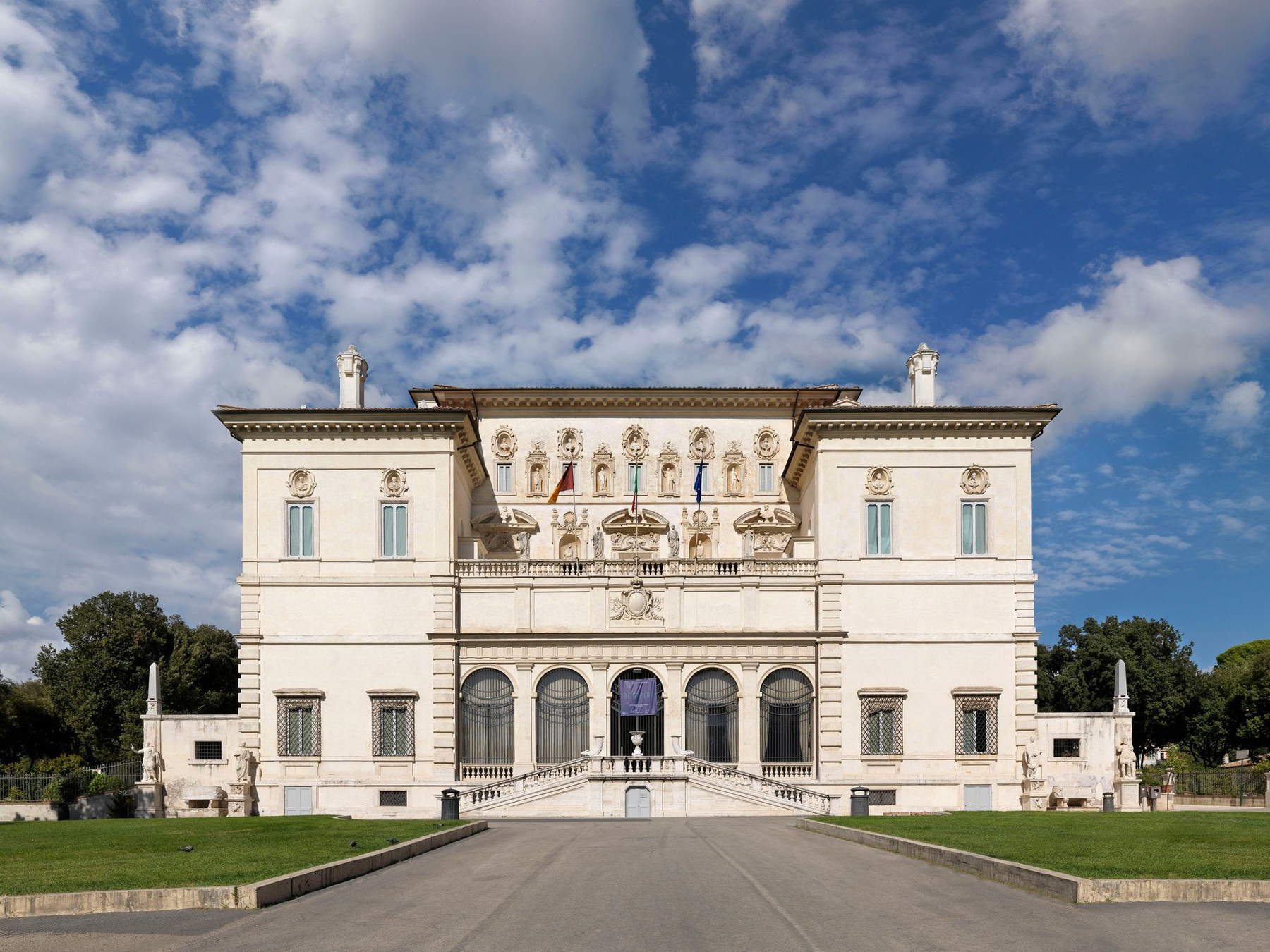
The current architectural conformation of the Gallery is characterized by a light structure, with projecting elements and a portico that encourage integration with the natural surroundings. The façade, historically adorned with reliefs and sculptures from ancient times, externally reflects the value of the masterpieces housed inside. The collection boasts priceless works, including sculptures by Gian Lorenzo Bernini and Antonio Canova, as well as paintings by masters such as Caravaggio, Raphael, Titian and Correggio. However, the very popularity of the museum and the nature of its spaces nowadays impose very strict flow management. Currently, access is limited to 360 people per two-hour tour round, a necessary measure for the protection of the works but one that, the museum points out, severely limits the availability of places compared to the growing tourist demand. Against this backdrop, the need for new spaces also appears to be linked to the desire to enhance the value of heritage not currently on display. In fact, the storage rooms located on the third floor of the building contain numerous works that do not find space in the rooms open to the public and that could be made usable thanks to the expansion.


The administrative procedure involved the publication of a public notice to receive sponsorship bids, in accordance with the public contracts code and cultural heritage regulations. The Proger company has pledged to fully cover the costs of preparing the technical and economic feasibility project, estimated at about 875,750 euros. This figure includes the activities of coordinating the selection procedure of the designers, the supply of the design elaboration, and the prizes for the professionals who will be ranked best in the comparison. In return for the financial support, the sponsor will obtain visibility benefits, including the possibility of organizing an exhibition of the submitted projects inside the museum and the inclusion of its name in institutional communication related to the future realization of the work.
However, the project has raised strong criticism from several conservation associations and citizen committees. Italia Nostra Roma and theBianchi Bandinelli Association have expressed firm opposition, speaking of a risk of commodification of cultural heritage. According to these organizations, the construction of a new building adjacent to the historic villa would pose a threat to the harmony of a context that has remained virtually unchanged for more than four centuries. “This vision of a simple market,” Italia Nostra writes, “has already led to the disastrous results of the distortion of the places of Culture, favoring only the development of a chaotic and destructive selfie-seeking tourism. It has alienated citizens from their museums, smuggling the blatant commodification of heritage for ’cultural enhancement’ and declining decision-making incompetence in a continuous and obtuse search for economic increase.”
Concerns relate in particular to the visual and environmental impact on the villa’s historic areas, such as the Secret Gardens, the Uccelleria, the Sundial or the Deer Park. The associations question what portions of the monumental complex might be sacrificed to make way for the new “factory.” The Friends of Villa Borghese association also recalled the civic battles waged 30 years ago for the reopening of the museum, denouncing the risk that private management of the design could dictate the law on a major public contract. The issue of transparency in the procedures for accepting privately received sponsorship was also raised.
On the institutional front, the Capitoline administration has sought to reassure the public, stressing that the path is still in its early stages and that any decision will be subject to compliance with strict protection constraints. Since Villa Borghese is municipal property, while the Gallery is a state institution, the involvement of the City of Rome is essential. Culture councillor Massimiliano Smeriglio told Corriere della Sera that the feasibility project will have to be submitted to the Environment, Culture and Urban Planning departments, as well as to the Capitoline Superintendency. “We have accepted the ideas of the management of the Borghese Gallery dictated by some needs that we understand,” he told Laura Martellini. “We have taken note of the needs expressed by the museum, but first of all it is a generic will for now. Secondly, the technical and economic feasibility project, the so-called Pfte, is a preliminary plan that has to be submitted to our three different departments of Roma Capitale, the owner of Villa Borghese -- Environment, Culture, Urban Planning -- and the Municipal Superintendency, for evaluations and deductions. Italian state law comes first. And, precise, the opinions will not only be advisory but binding! It is still early for any assessment.”
The Department of the Environment also reiterated that a context of such high historical and environmental value requires very high quality standards. The city administration’s goal is to support the museum’s bureaucratic process while ensuring that any intervention is compatible with the preservation of the city’s most central and significant public park. The council has mandated the Superintendency to activate all necessary procedures to monitor and guide the development of the plan from its preliminary stages.
The debate has also landed on social networks, where citizen groups have proposed protest actions such as the massive sending of critical messages to the museum’s management to express disagreement with what they call a potentially destructive project. The request for public clarifications addressed to the Ministry of Culture and the Gallery’s management remains central to the associations’ demands, which call for light to be shed on the real scope of the intervention and the guarantees of preservation of the site’s integrity.
The Borghese Gallery expansion project thus finds itself at the center of a complex dialectic between the need to modernize museum services and the duty to protect a historic legacy of worldwide value. While the administration sees expansion as a solution to structural limitations that penalize visitors and scholars, conservation associations warn of the danger of irreparable disruption of the seventeenth-century balance that makes the Villa Borghese a living work of art. The future of the museum will depend on the ability of those involved to find a synthesis that respects the sensitivity of the place while opening it up to new forms of accessibility and cultural enhancement.
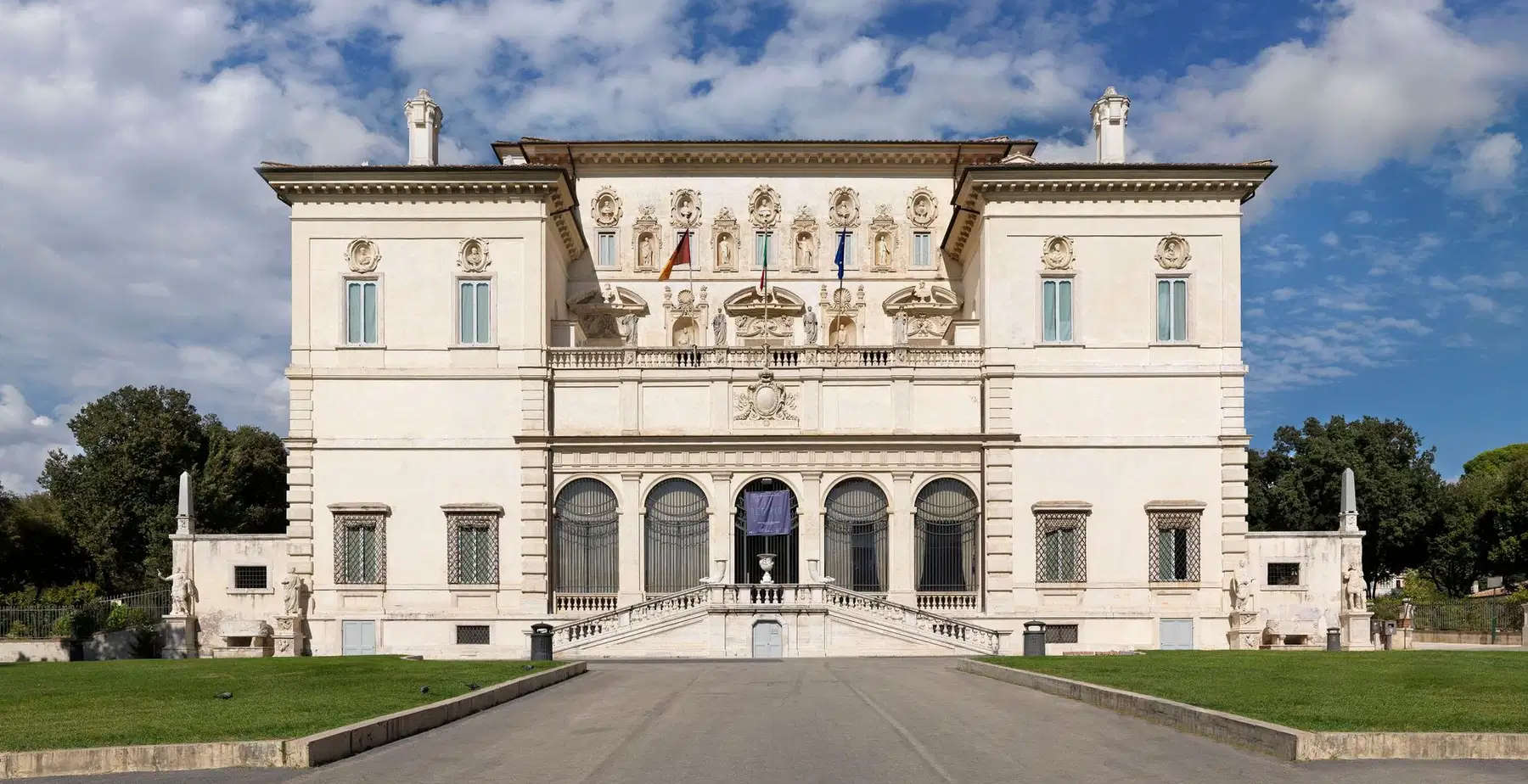 |
| Rome, Borghese Gallery considers expanding with a new building. Protest by associations |
Warning: the translation into English of the original Italian article was created using automatic tools. We undertake to review all articles, but we do not guarantee the total absence of inaccuracies in the translation due to the program. You can find the original by clicking on the ITA button. If you find any mistake,please contact us.