





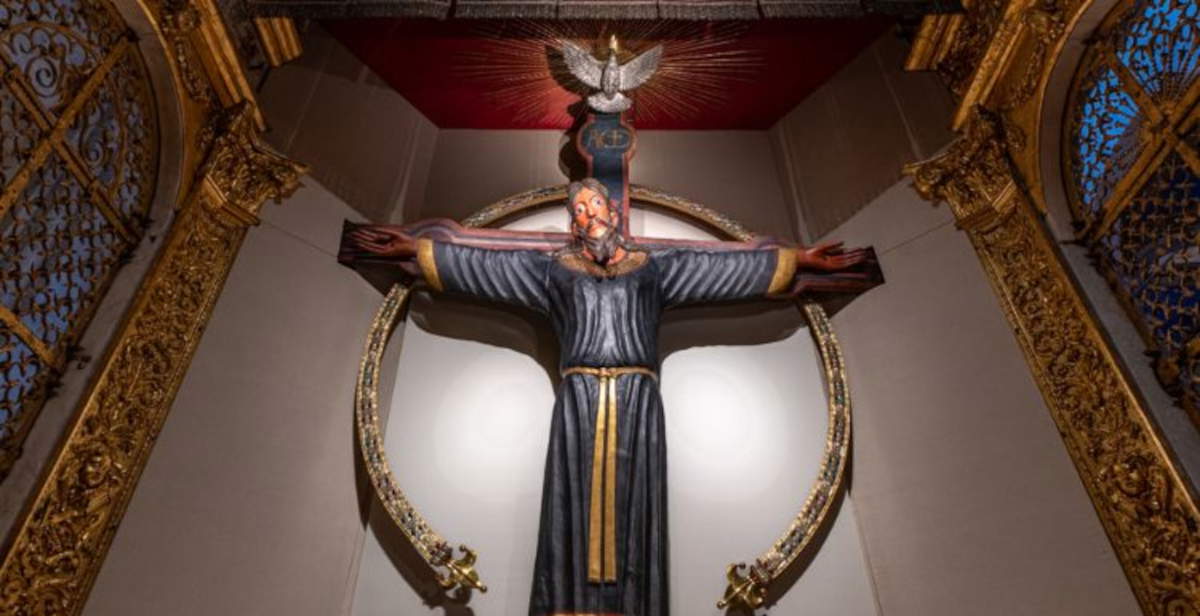
Starting on June 19, 2026, the Holy Face of Lucca will once again be placed in the Tempietto di Matteo Civitali inside Lucca Cathedral, where it has been housed since 1484. The relocation marks the definitive return of the monumental wooden crucifix following a lengthy restoration project completed in September 2025, which restored the work to its appearance prior to the color changes introduced beginning in the 17th century. Its unveiling to the public is scheduled for Friday, June 19. At 9:00 a.m., the Archbishop of Lucca, His Excellency Monsignor Paolo Giulietti, will preside over the Eucharistic celebration during which the Holy Face will be blessed. In the afternoon, at 6:30 p.m., there will be a presentation of the work, now returned to its small shrine.
The Holy Face, preserved in the cathedral for over a thousand years, is a monumental wooden sculpture depicting a Christus triumphans—Christ victorious over death and evil. Its devotional and symbolic significance made it, during the Middle Ages, one of the most venerated images in Italy and Europe; for a long time, it was believed to be an authentic portrait of Christ’s face, carved by the disciple Nicodemus after the Crucifixion. Lucca thus became part of the circuit of Christianity’s major pilgrimage centers, alongside Rome and Santiago de Compostela, as evidenced by the numerous medals bearing the image of the Holy Face that have been found as far away as Norway.
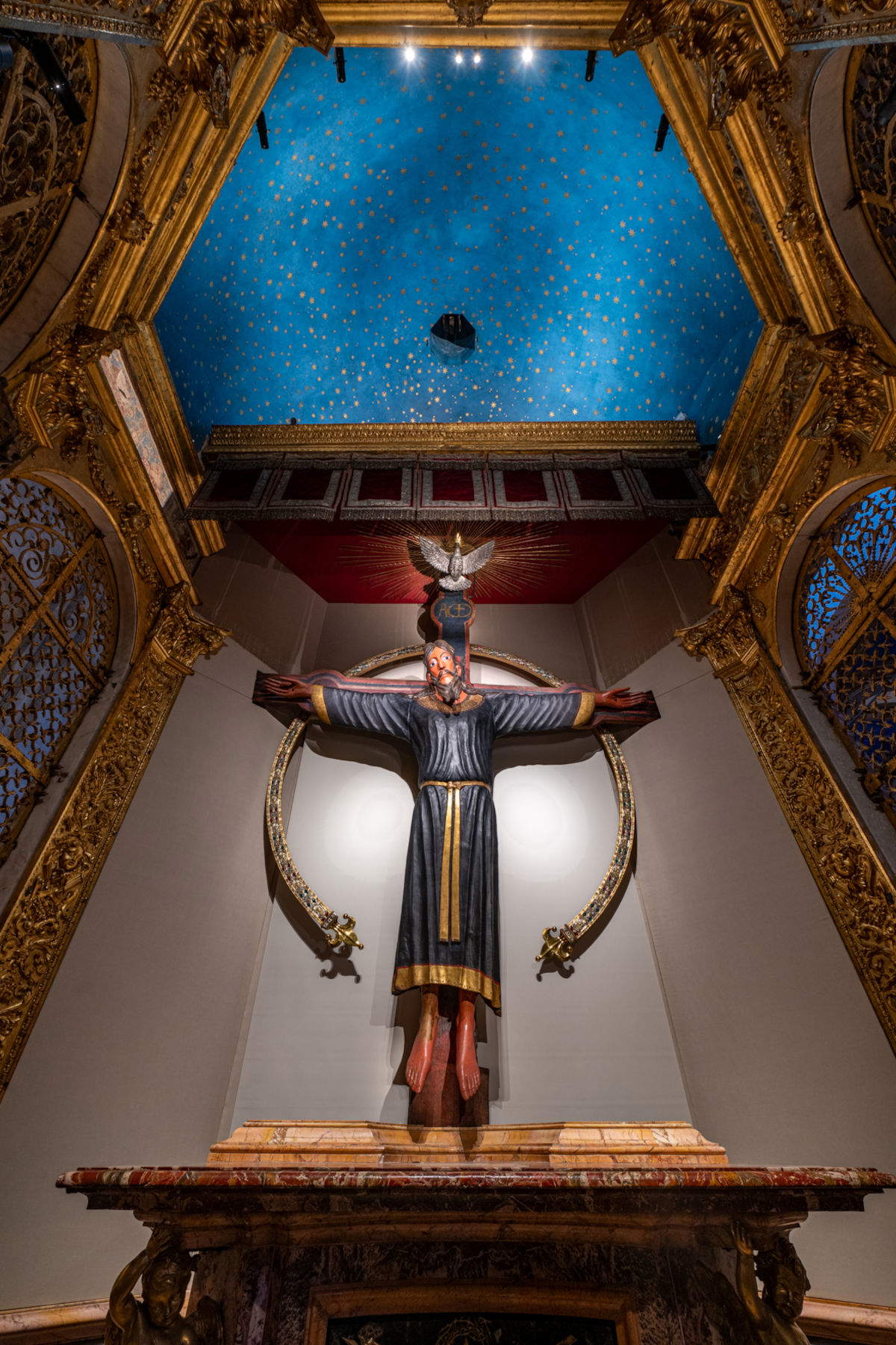
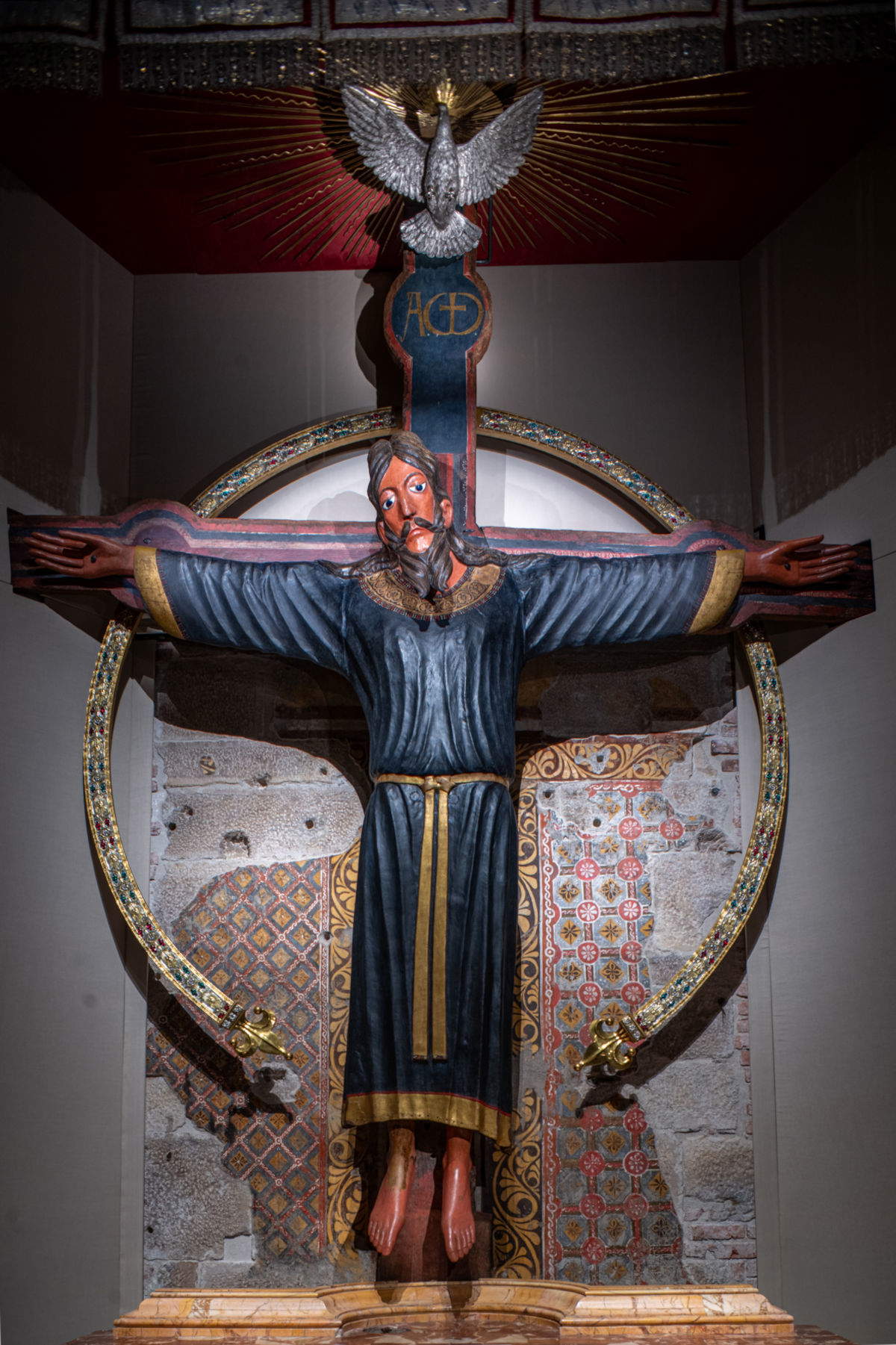
The work, which measures 250 centimeters in height and 270 in width, with a cross measuring 442 x 286 centimeters, depicts Christ dressed in a long tunic with sleeves—an iconographic element that portrays him as the priest of his own sacrifice. Unlike other medieval crucifixes, it shows no signs of suffering and is distinguished by a strong theological component linked to the idea of triumph over death.
The restoration, which began in 2022 following an initial diagnostic phase, was the first comprehensive intervention on the work. The project was necessitated by the state of deterioration observed and included a complex initial relocation process and a series of investigative studies. Work began in 2022 with initial analyses conducted directly in the Tempietto, followed by the transfer of the crucifix to the laboratory set up in the cathedral’s transept on December 1, 2022. The actual conservation work began in 2023 and was completed in September 2025.
The restoration was directed by the Polychrome Wooden Sculptures Restoration Departmentof the Opificio delle Pietre Dure in Florence, underthe general supervision of the Superintendence of Archaeology, Fine Arts, and Landscape for the Provinces of Lucca, Massa Carrara, and Pistoia. The restoration was carried out by Francesca Spagnoli. The project was sponsoredby the San Martino Cathedral Foundation and funded by the Cassa di Risparmio di Lucca Foundation with a total allocation of 600 thousand euros.
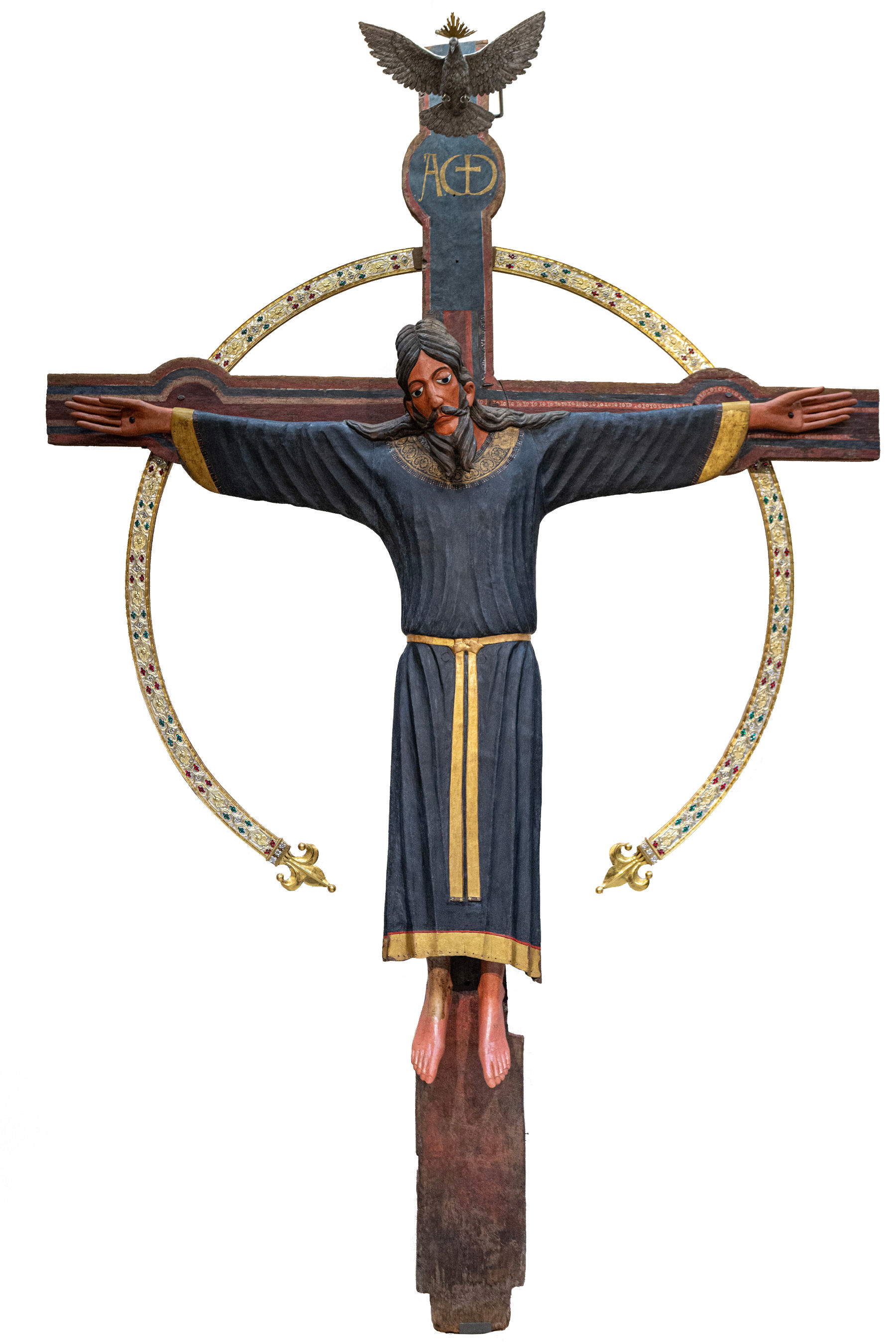
Scientific investigations played a central role in the project. In 2020, during the celebrations marking the 950th anniversary of the cathedral’s refoundation, the National Institute of Nuclear Physics in Florence conducted carbon-14 dating on samples of the walnut wood from the Christ figure and on a fragment of canvas. The results dated the work to between the late 8th and late 9th centuries, refuting the traditional hypothesis that dated it to the 12th century as a copy of a lost original. During the restoration, further analyses confirmed and refined this chronological framework. Dendrochronological studies conducted by the IBE-CNR Laboratory in Florence identified a date around 860, with margins consistent with the 9th century.
“This date is also confirmed by the style of the Holy Face,” explains Anna Maria Giusti, art historian and consultant for the museum and archaeological complex of Lucca Cathedral and for the restoration of the Holy Face, “which bears striking similarities to the Crucifix of Sansepolcro Cathedral, also dated to the 9th century by carbon-14 analysis. A similar date has been determined for a crucifix preserved in Tancrémont, Belgium, and originating from a Carolingian-founded abbey. Crucifixes of this type, now lost but mentioned in historical documents, were concentrated in large numbers within the territories of Charlemagne’s Empire—of which Lucca was also a part from 774 onward—and it cannot be ruled out that the Holy Face may have originated from that Carolingian context, which was the epicenter of an extraordinary artistic flourishing.”
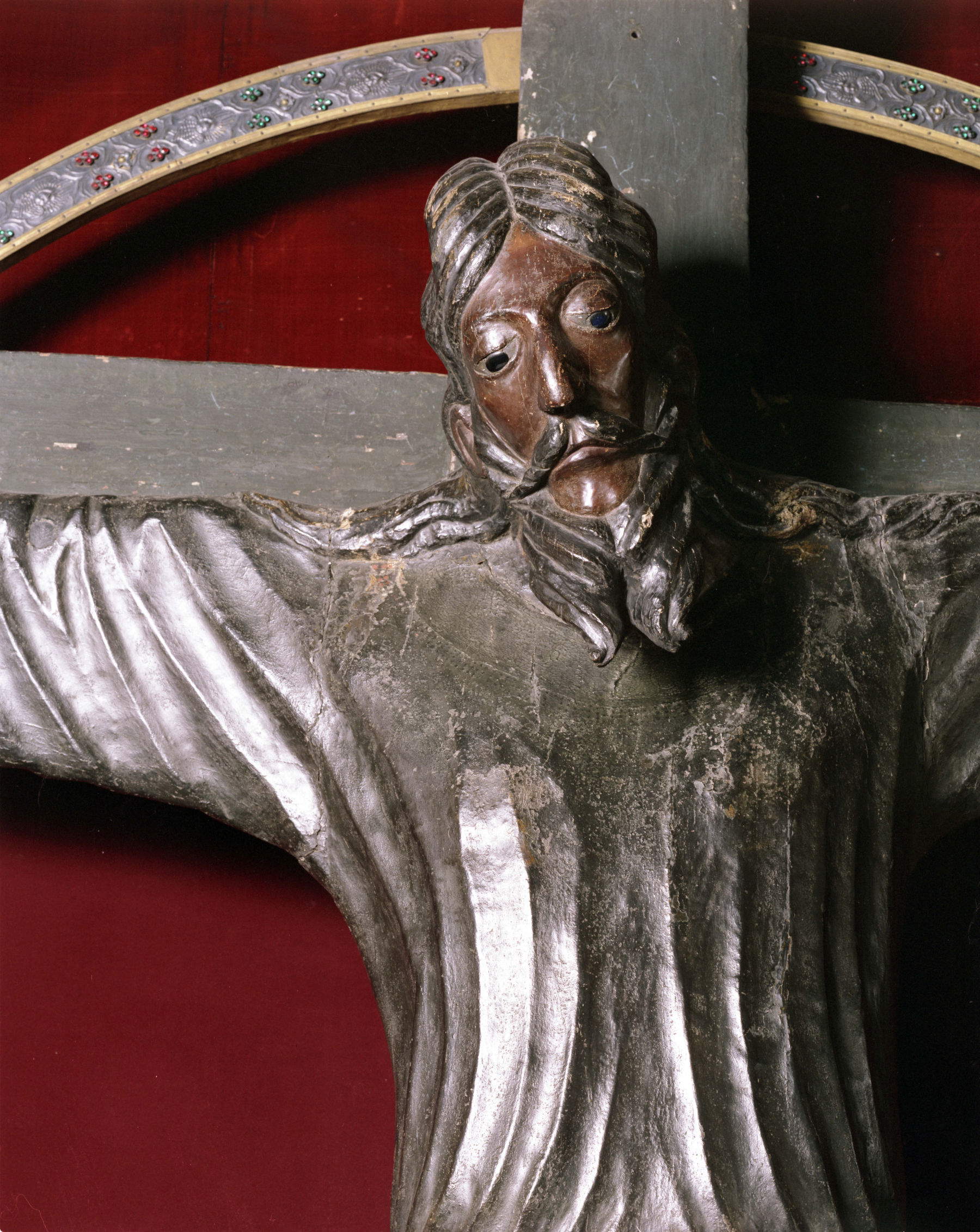
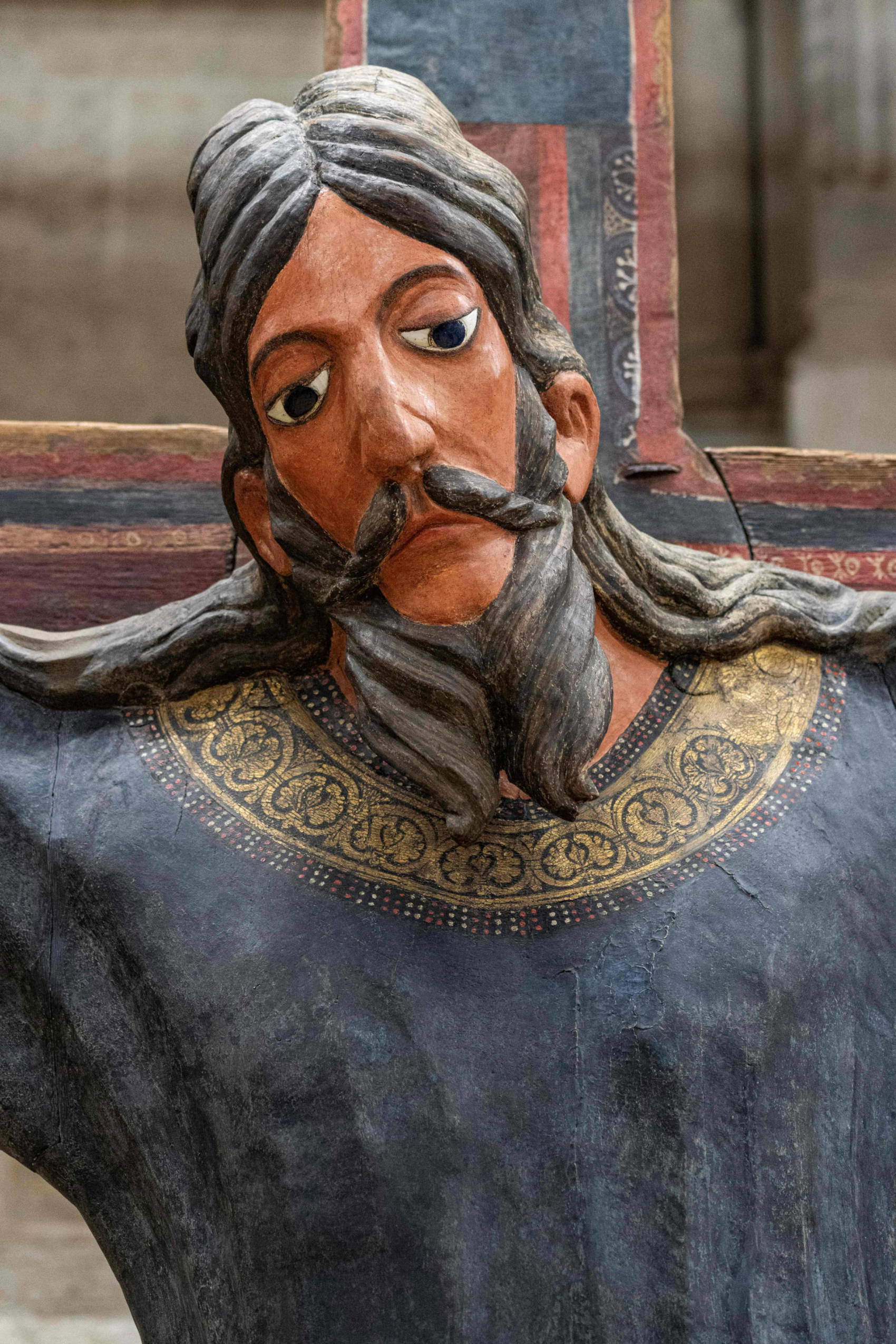
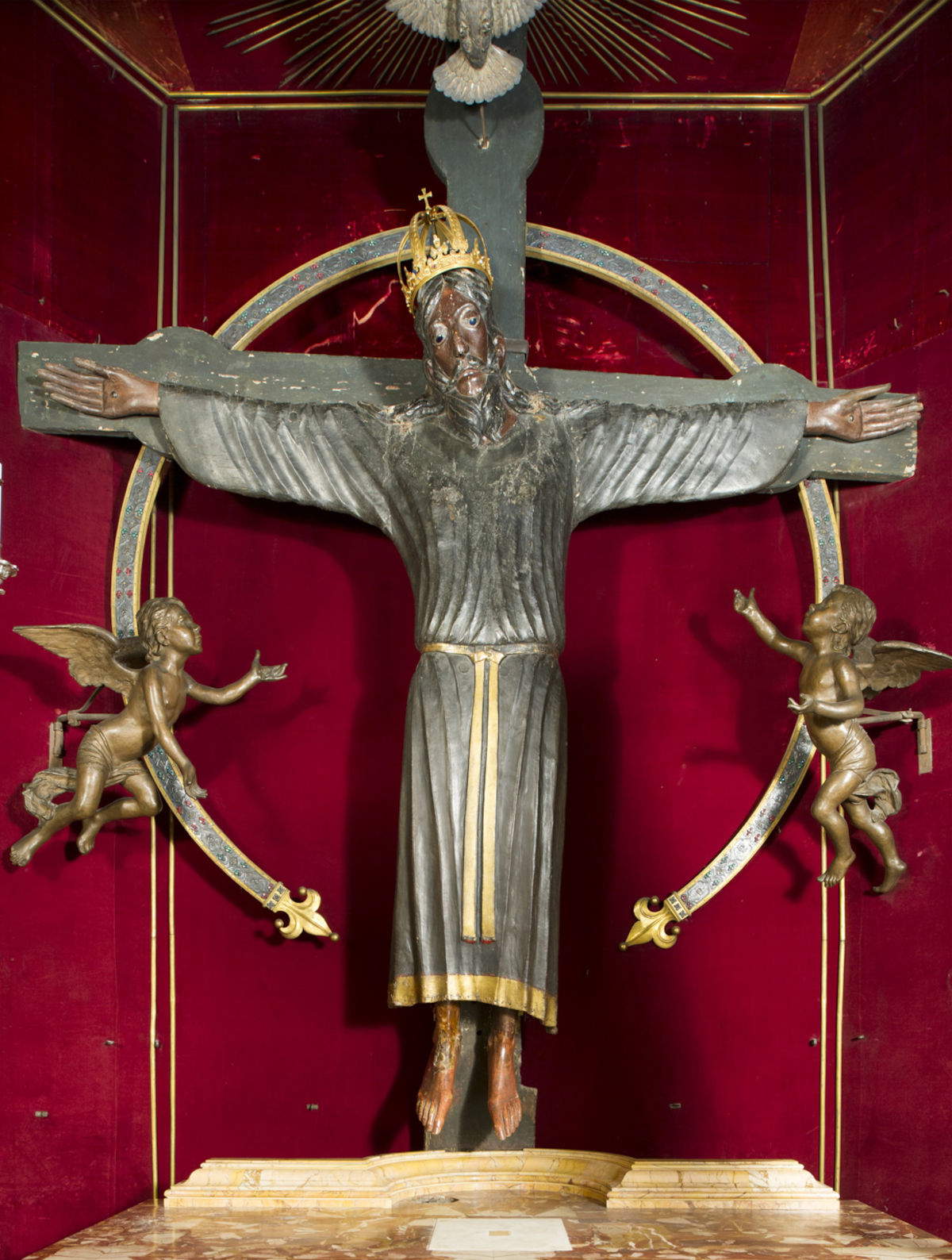
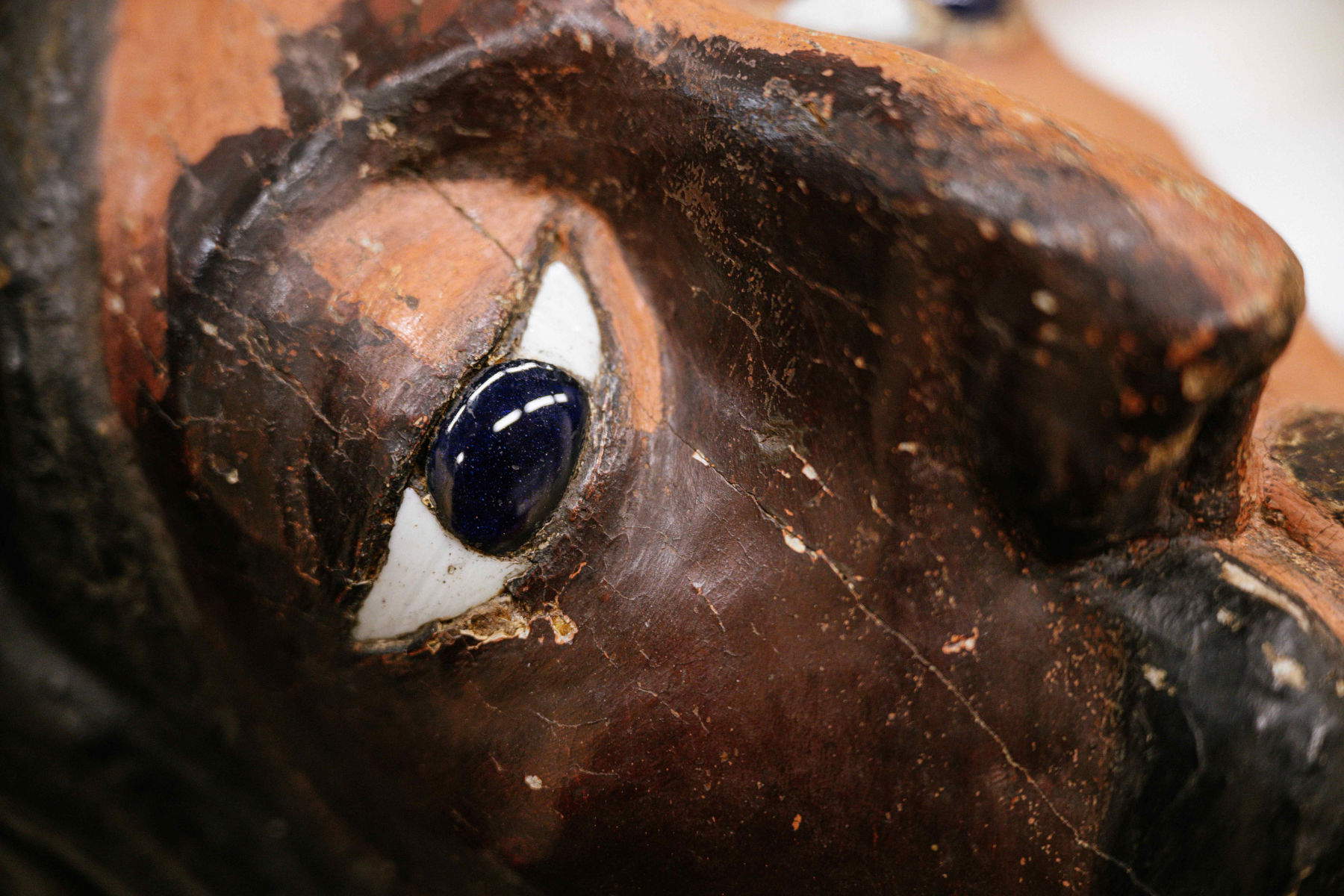
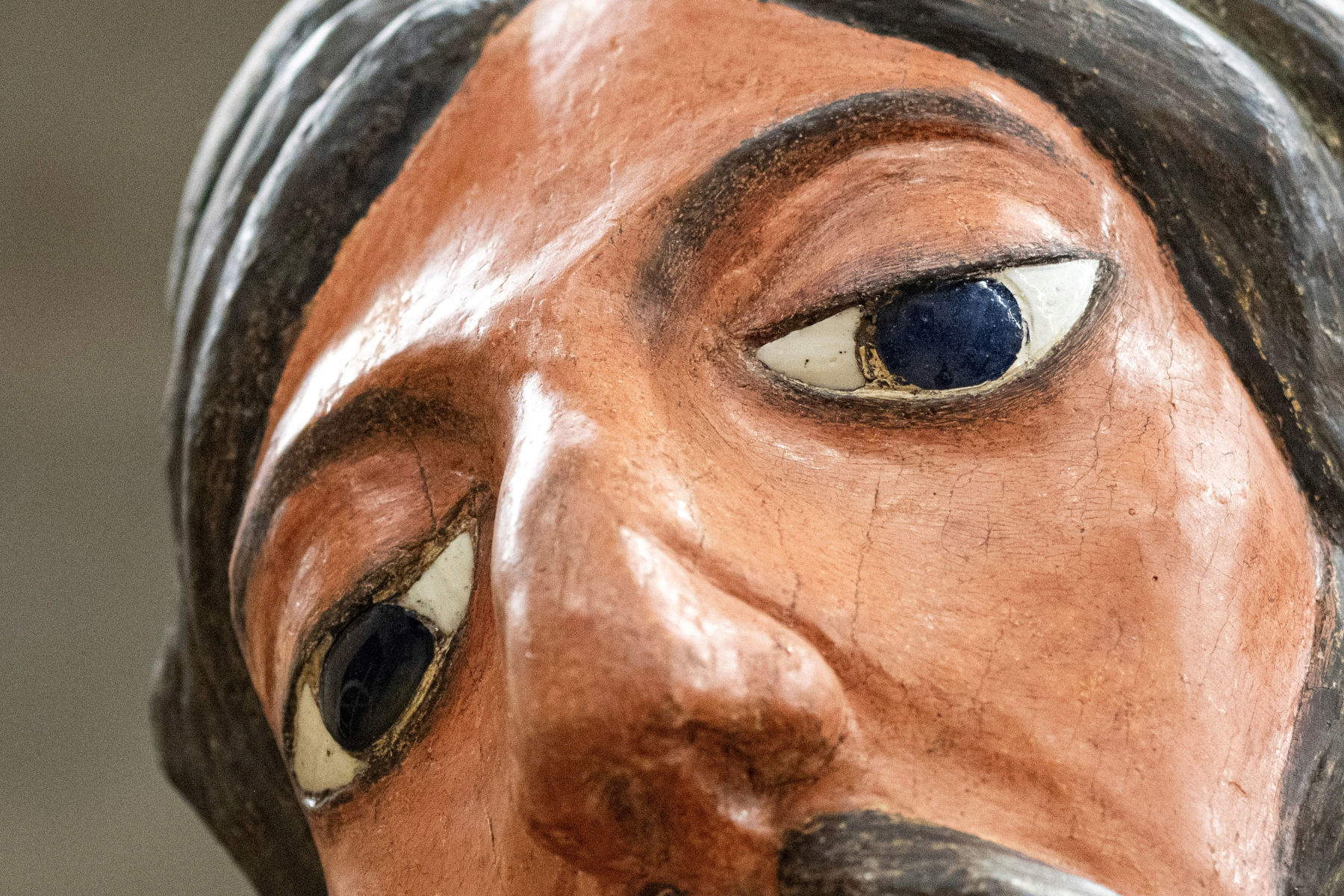
One of the most significant outcomes of the restoration is the recovery of the original polychromy. Beneath a thick dark layer applied in the 17th century, the flesh tones of the face, hands, and feet have emerged, along with gilding and decorations on the robe. An intense blue, created with high-quality lapis lazuli, has reappeared; this was the primary color of the tunic. The stratigraphy also revealed the presence of several successive layers of repainting. On the cross, a motif featuring the alpha and omega in gold leaf on a light blue background was recovered, along with traces of earlier red and blue decorations.
Another significant feature concerns Christ’s eyes, made of glass paste obtained by remelting Roman-era glass. The removal of 19th-century repainting has restored the full visibility of the sclera, giving greater depth to the sculpture’s gaze. The restoration also addressed a gap in the left eye, which was filled with resin. Structural analyses have clarified the construction technique of the crucifix. Christ is carved from a single block of walnut, with the head and legs sculpted as a continuous extension of the torso. The rear section has been hollowed out in accordance with a practice designed to ensure the stability of the wood. The assembly system uses oak and cedar dowels. The cross is composed of different types of wood: chestnut for the vertical post and white fir for the horizontal beam.
The large semicircular nimbus, with a diameter of approximately 240 centimeters, has been stripped of a dark layer that had obscured its surface. The structure consists of embossed silver plates featuring cherubim motifs, gilded elements, and 384 glass paste gems in emerald green and ruby red. At the lower ends are two gilded copper lilies.
Starting in 2026, a technical system has also been put in place to allow for the traditional dressing of the Holy Face during the Feast of the Holy Cross. The new setup reduces the risk of mechanical stress on the artwork: the weight of the crown no longer bears down on the top of the sculpture, while the textile and decorative elements are supported by dedicated structures. Protective measures have been introduced to reduce friction on polychrome surfaces and sensitive materials.
During the refurbishment of the Tempietto, historical elements of the decorative scheme were repositioned, including the 18th-century gilded wooden structure. Wall surfaces with fragments of painting that emerged during the restoration were protected using reversible systems compatible with future monitoring activities. In addition, fiberglass panels covered with fire-retardant fabric were installed to replace the previous paneling. The restoration project involved several scientific and cultural institutions, coordinated by the Opificio delle Pietre Dure and with contributions from the INFN in Florence, the IBE-CNR Institute in Florence, and the relevant conservation authorities.
 |
| The Holy Face of Lucca Returns to the Tempietto del Civitali Following the Restoration of the Medieval Crucifix |

Warning: the translation into English of the original Italian article was created using automatic tools. We undertake to review all articles, but we do not guarantee the total absence of inaccuracies in the translation due to the program. You can find the original by clicking on the ITA button. If you find any mistake,please contact us.





























 IT
IT FR
FR DE
DE ES
ES CN
CN


