




by Redazione 05/03/2026



Categories: News / Disclaimer
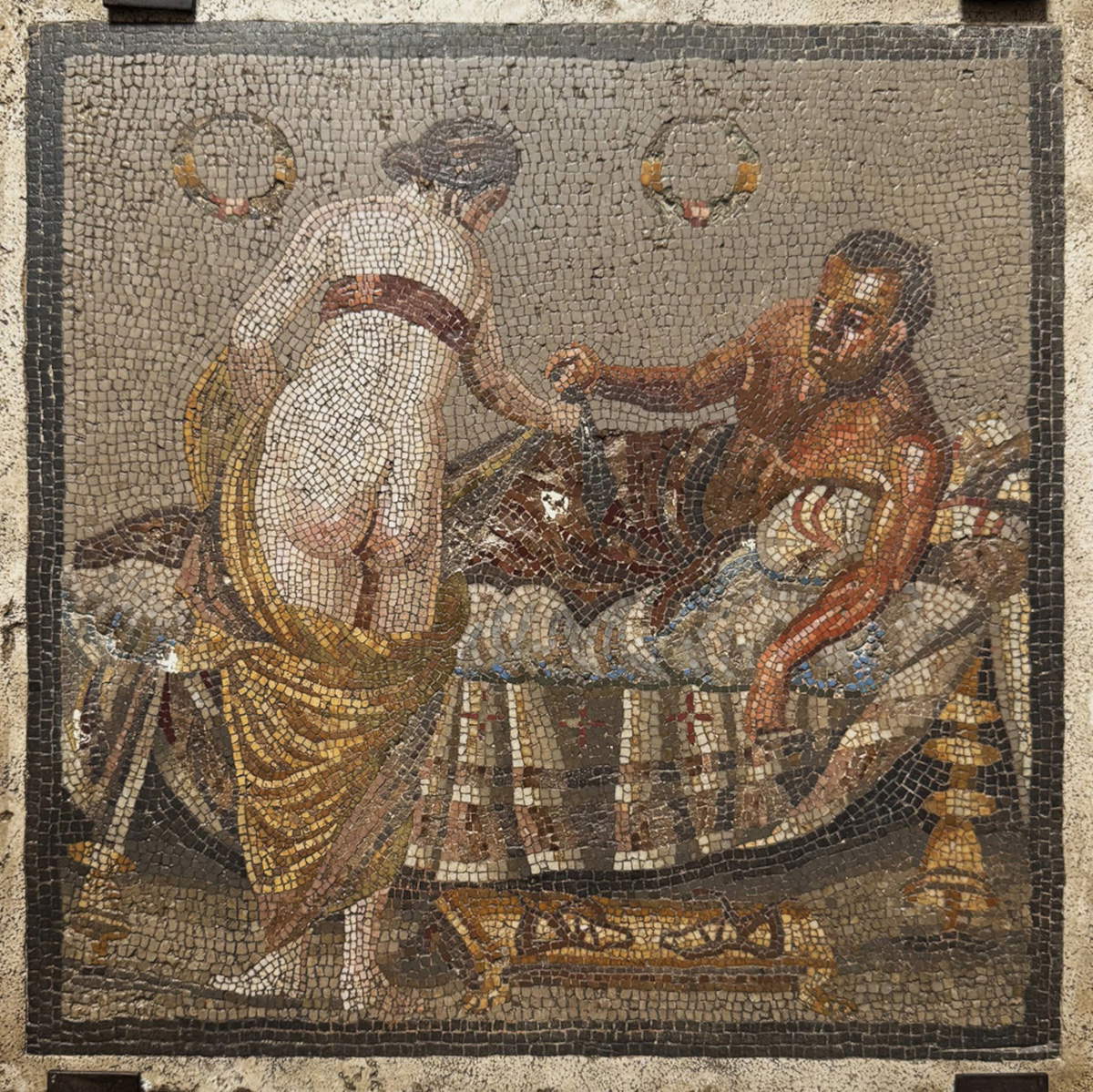
Discovered the true provenance of the mosaic with erotic scene that had been returned in July 2025 to the Pompeii Archaeological Park. It did not come from the Vesuvian area, but from a Roman villa in the Marche region.

The mosaic with an erotic scene that had been returned in July 2025 to the Pompeii Archaeological Park did not actually come from the Vesuvian area, but from a Roman villa in the Marche region. The provenance was confirmed by subsequent studies conducted by the archaeological park in collaboration with theUniversity of Sannio.

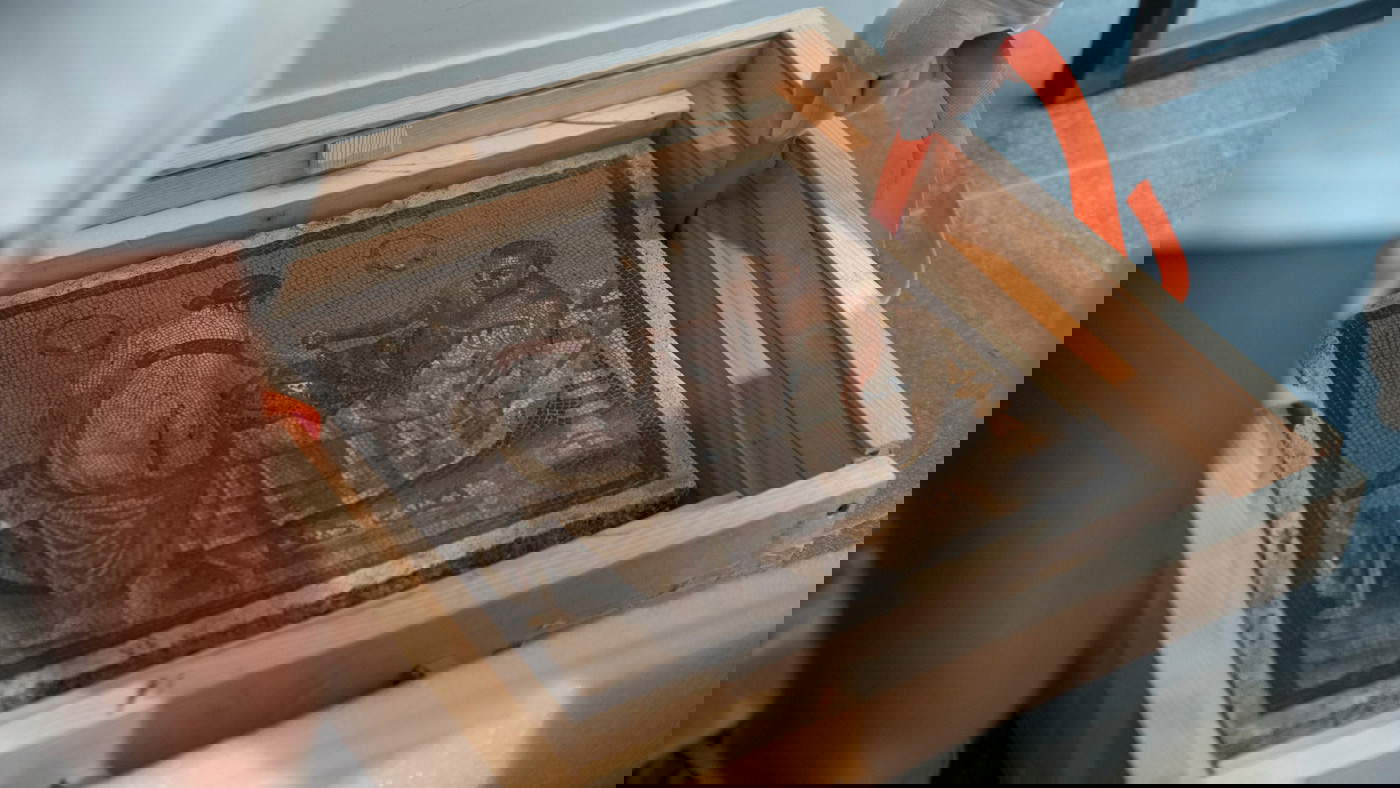
The history of the artifact originated when a Wehrmacht captain, in charge of the military supply chain in Italy during World War II, donated it to a German citizen, his friend. Later, the heirs of the gift recipient chose to return the mosaic to the Italian state.
As precise information about its origin was initially unavailable, the Ministry of Culture had decided to entrust it to the Archaeological Park of Pompeii(news of its return to Pompeii in 2025 here), believing such a destination to be plausible given that mosaics with similar technical and stylistic characteristics are documented in the Vesuvian area. However, a more thorough investigation initiated by the Park led to an unexpected discovery: the mosaic was not connected to Pompeii. Indeed, archaeometric analyses, carried out in collaboration with the Department of Science and Technology of the University of Sannio, indicate that the work would have been produced in Latium and later disseminated on a supra-regional scale market. In addition, a chance meeting during the 2025 presentation with Giulia D’Angelo, an archaeologist originally from the Marche region and coauthor of the article published today in the Pompeii E-journal, allowed the artifact’s provenance to be definitively clarified. The mosaic, in fact, comes from a Roman villa located in Rocca di Morro, a hamlet in the municipality of Folignano, in the Marche region, where its presence is attested as early as the late 18th century.


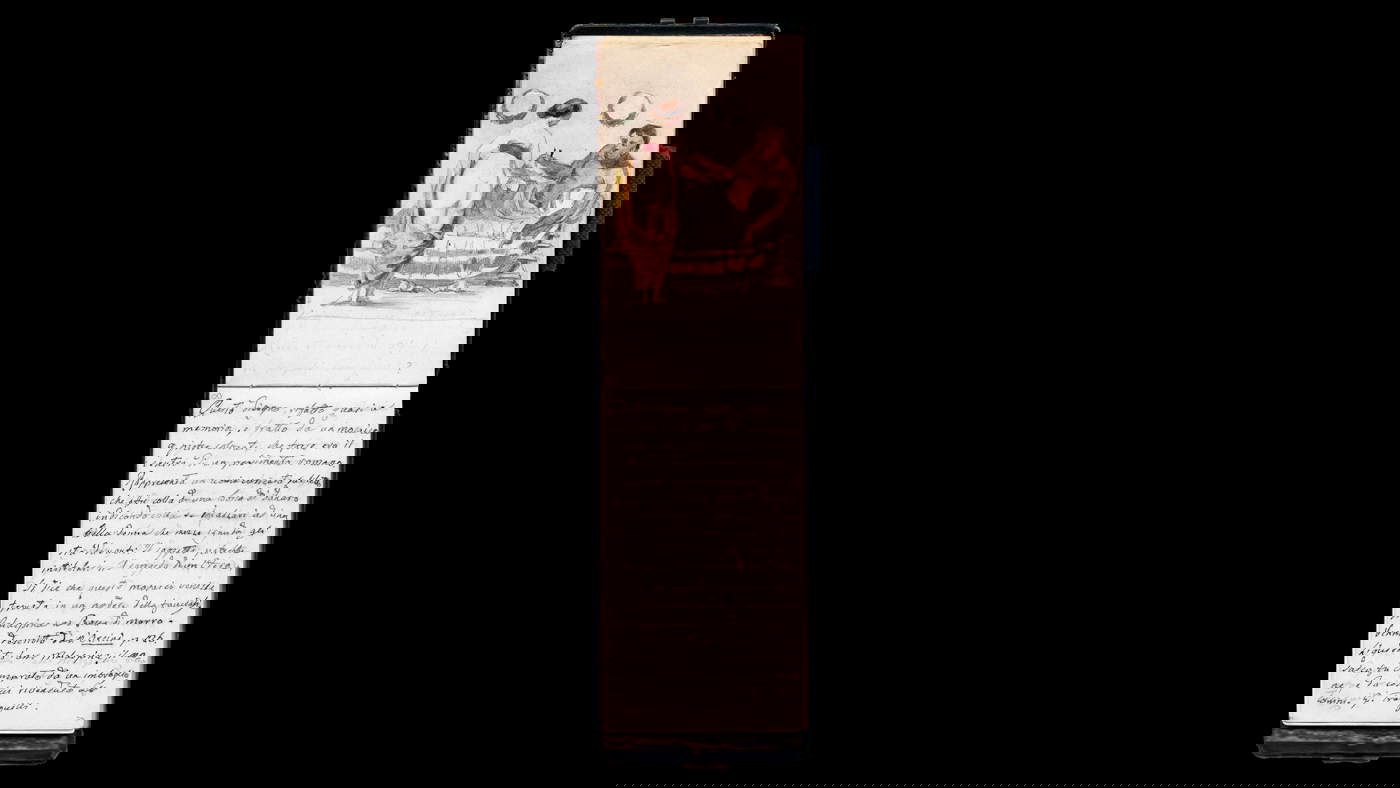
The memory of this find also resurfaces in the works of Ascoli Piceno painter and archaeologist Giulio Gabrielli (1832-1910), who reproduced it in a handwritten notebook dated around 1868 and now kept at the Ascoli Piceno Municipal Library. Alongside the drawing, Gabrielli inserted some notes regarding the subject and the location of the find. The author interpreted the scene as that of a man who “offers glue d[estra] a purse of money... to a beautiful woman who half-naked stands before him,” and suggested as the title Il congedo di un’etera (The Dismissal of a Heterus), further specifying that the find “was found on a farm belonging to the Malaspina family in Rocca di Morro.”
“The reconstruction of the story of this mosaic shows how the protection of cultural heritage does not end with the material recovery of the work, but continues with rigorous study, scientific verification and the restitution of historical truth. The joint work of the Carabinieri’s Nucleo Tutela Patrimonio Culturale, officials from the Ministry of Culture, the Pompeii Archaeological Park and the universities involved made it possible to correctly relocate the mosaic in its original context, a Roman villa in the Marche region. Each asset stolen and brought back to Italy represents a fragment of our identity that returns to the community,” said Culture Minister Alessandro Giuli.
“Great team work, reconstructing history is team work, and this is an example of how dedication, professionalism and passion lead to unexpected discoveries not only in Pompeii, but also in lesser-known but no less important sites for understanding and enhancing classical heritage throughout the peninsula,” says Pompeii Archaeological Park Director Gabriel Zuchtriegel. “Thanks to the latest research, a specialized Lazio production emerges that exports precious mosaics, presumably made in considerable quantities, to territories such as Marche, Campania and Puglia; a discovery of great interest not only for the history of Roman art, but also for the economic history of the Roman world.”
“This event gives back to Folignano a precious fragment of its memory and strengthens the deep connection between our community and its most ancient history,” said Folignano Mayor Matteo Terrani. “The fact that the work comes from a Roman villa in Rocca di Morro gives new value to a symbolic place that is a fundamental part of our identity. As an administration we are working, together with enthusiasts and volunteers, to promote initiatives to enhance the site. In the coming weeks we will travel to Pompeii to be able to view the mosaic and meet with the director of the Archaeological Park Gabriel Zuchtriegel, whom I thank for his availability and professionalism, with the aim of starting a constructive dialogue and new prospects for collaboration.”
|
| True provenance of mosaic with erotic scene delivered in 2025 to Pompeii discovered |
Warning: the translation into English of the original Italian article was created using automatic tools. We undertake to review all articles, but we do not guarantee the total absence of inaccuracies in the translation due to the program. You can find the original by clicking on the ITA button. If you find any mistake,please contact us.