




by Redazione 25/03/2026



Categories: News / Disclaimer
Conflict between Iran, Israel and the United States reignites concerns over the safety of masterpieces on loan to the Louvre Abu Dhabi. Paris reassures, but debate grows between protection and risks of repatriation.

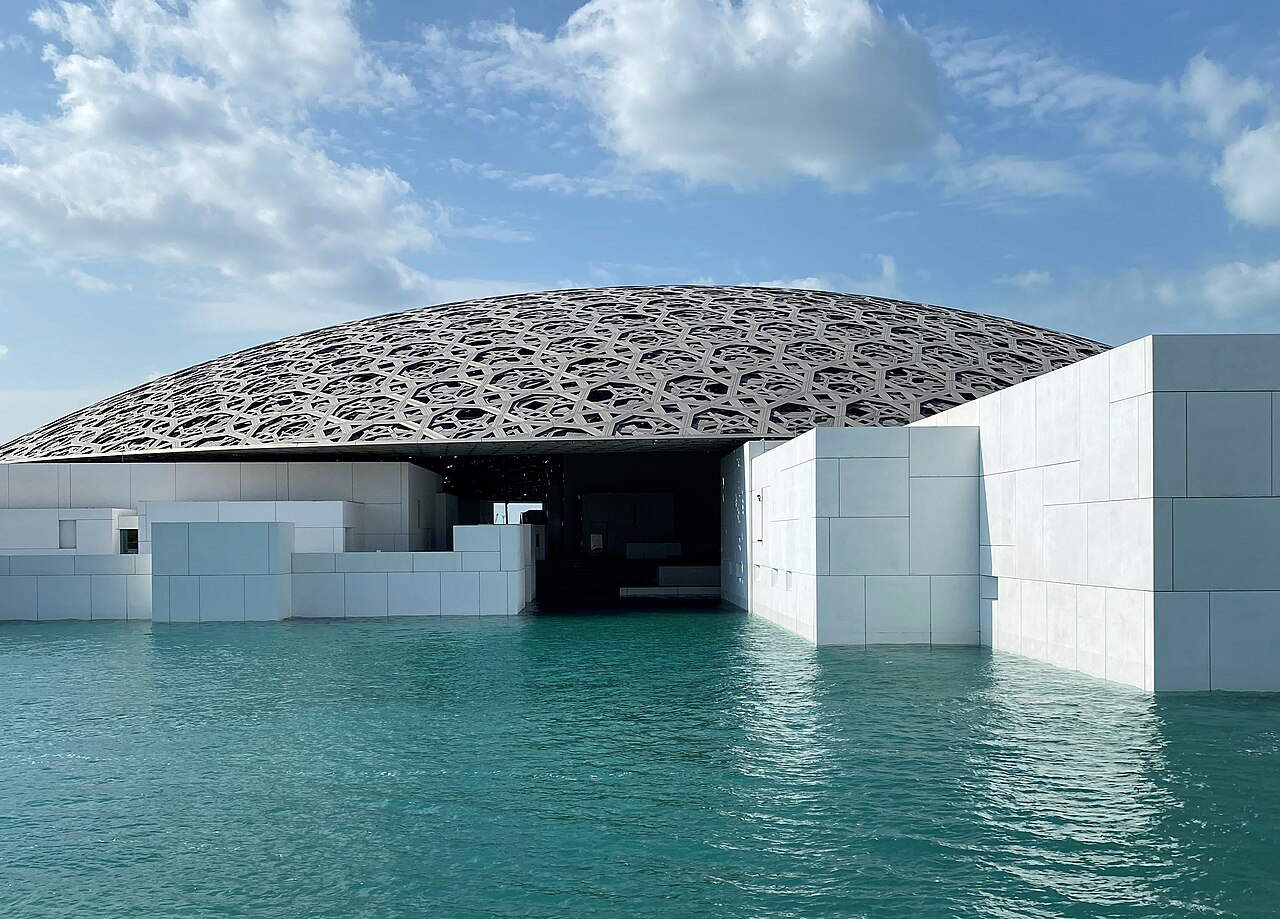
The war in Iran has the cultural world worried, and not only because of the damage Iran’s cultural heritage is already suffering: there is apprehension in France about one of the most ambitious museum projects in decades, namely the Louvre Abu Dhabi. In conflict involving Iran, Israel and the United States, as well as Persian Gulf countries that have suffered Iranian bombings, has rekindled fears for the safety of French works stored in the only foreign branch of the famous Parisian museum, which opened in 2017 in the UAE capital.

Although the museum has suffered no direct damage, the weighing figure is that of attacks: hundreds of drones and missiles launched from Iran toward the Gulf countries since the start of hostilities on Feb. 28. Constant military pressure that, while not affecting the facility, has inevitably opened questions about the real exposure of the artistic heritage housed inside. The Louvre Abu Dhabi, which continues to remain open to the public, has reiterated that the safety of visitors, staff and collections is the top priority. This official position is in keeping with the cautious line also taken by French authorities. Indeed, the Ministry of Culture in Paris stressed to AFP news agency that it is in “close and regular” contact with the Emirati authorities to ensure the protection of works on loan.


But institutional assurances are not enough to assuage concerns. In France, the debate has quickly intensified, involving experts, practitioners and art market observers. Among the clearest voices was that of Didier Selles, a key figure in the negotiation of the original agreement between France and the United Arab Emirates (he held this position between 2005 and 2007), who openly called for the works to be secured, even going so far as to evoke the need for their transfer.

At the heart of the issue is an agreement that has attracted interest but also criticism since its inception. The agreement between France and the United Arab Emirates provides for the concession of the “Louvre” brand name, the provision of scientific expertise and the organization of exhibitions, in exchange for a total consideration of about 1 billion euros, including 400 million for the use of the name. It is a project that has transformed Abu Dhabi into a cultural hub of global significance, but it also implies a continuous circulation of works between institutions.
The Louvre reportedly sends about 100 works each year, while a total of about 250 pieces are currently on loan from French museums. However, the detailed list remains confidential. None of the major institutions involved, from the Louvre to Orsay, from Versailles to the Centre Pompidou, has to date given precise indications of the works present in the Emirates, deferring any information to France Muséums, the agency in charge of museum development.
However, this opacity, justified with security needs, contributes to questions. The lack of transparency makes it difficult to concretely assess the extent of the risk and the value of the works potentially exposed to danger. The news outlet Euronews reports that when it opened in 2017, there were about 300 works on loan, including works by Leonardo da Vinci, Monet, Van Gogh, and Andy Warhol, as well as a statue of Ramses II. A level of quality that confirms the centrality of the project but also the delicacy of the choices involved.
The trade press also raised the alarm. La Tribune de l’Art spoke explicitly about the need to secure the Louvre masterpieces present in Abu Dhabi, helping to fuel a discussion that goes far beyond the single episode and touches on the broader issue of the international circulation of works in geopolitically unstable contexts. The very editor of La Tribune de l’Art, Didier Rykner, in a couple of his articles recalled the legal framework of the agreement between France and the Emirates, which provides clear means of intervention. Articles 12 and 13 in particular stipulate that if security conditions are deemed inadequate, the French side can request corrective measures up to and including the immediate repatriation of the works, at the expense of the Emirati counterpart. A clause that, in theory, provides ample room for action, but in practice involves highly complex political and operational assessments.
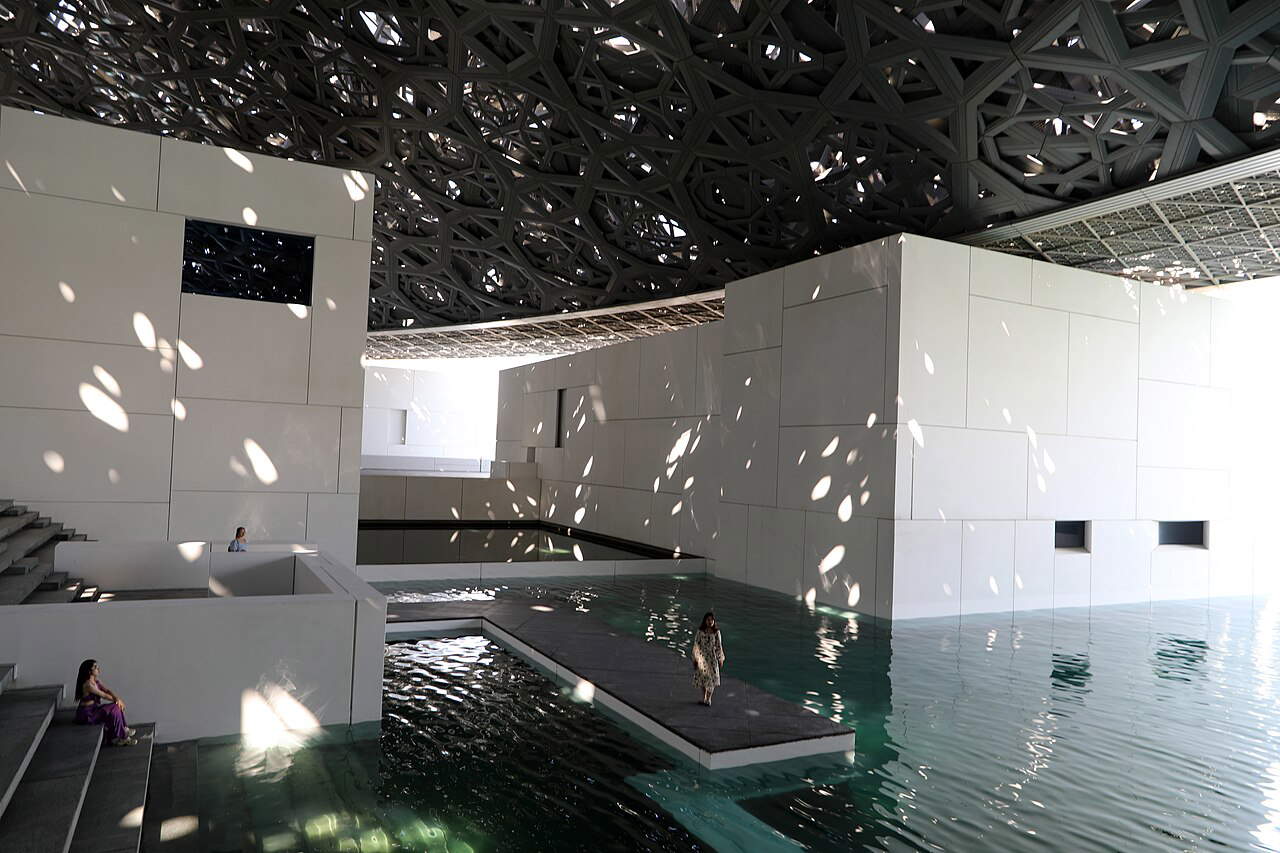
Making the picture even more delicate is the museum’s current context. Again according to Rykner, attendance at the Louvre Abu Dhabi is reportedly in steep decline, with a reduced presence of visitors. A circumstance that fuels further criticism: keeping valuable works in a potentially exposed area, without a real audience, risks appearing to be a choice dictated more by geopolitical balances than by cultural needs.
The security issue is not only about the possibility of a direct attack. An AFP source pointed out that the museum is designed to withstand both human and natural threats. However, the issue shifts to another plane: that of risk management in the context of active conflict. Indeed, the hypothesis of repatriating the works, evoked by several parties, presents significant critical issues. Transporting masterpieces to an area traversed by military tensions would entail risks no less than those associated with their stay there. The idea of an airlift to evacuate the works appears, under current conditions, complex and potentially dangerous.
The case of the Louvre Abu Dhabi thus becomes emblematic of a broader tension concerning the role of global museums in a world marked by increasing instability. On the one hand, the desire to build international cultural networks, capable of transcending borders and fostering dialogue between civilizations. On the other, the need to protect heritages that, while shared, remain tied to national responsibilities. In between are works of art, objects that are both fragile and charged with symbolic value, which inevitably become part of dynamics that transcend them. Their presence in Abu Dhabi is not only the result of an economic agreement, but also the expression of a cultural strategy that aims to redefine relations between Europe and the Middle East. Today, however, that strategy is confronted with an unforeseen reality. The war, with its ability to alter established balances, imposes new questions. To what extent is it possible to guarantee the security of works in a context of conflict? And what should be the limit between international openness and heritage protection? For now, the official line remains that of vigilance without alarmism. But the debate is bound to continue, accompanying the evolution of the crisis and the choices of the institutions involved. At stake is not only the fate of certain works, but the very model of cultural cooperation on a global scale.
|
| War in Iran, fears over French works at Louvre Abu Dhabi |
Warning: the translation into English of the original Italian article was created using automatic tools. We undertake to review all articles, but we do not guarantee the total absence of inaccuracies in the translation due to the program. You can find the original by clicking on the ITA button. If you find any mistake,please contact us.