





It sometimes happens that our dormant art criticism stirs from its slumber and suddenly reasserts its right to exist, especially when there’s no risk involved and it merely seeks the approval of its peers: this time, the miracle of collective mobilization belongs to Campania, which deserves credit for having allowed a fervent discussion to develop—especially on social media (and how could it be otherwise?)—about Jago’s jellyfish and Colbert’s jumbo shrimp. In any case, the real point is that there isn’t much to say about the fact that this year, Campania’s fish-related excesses will likely secure it another nomination for that “summer trash” award it has won multiple times in past years (thanks to the giant fish Vincenzo Trione scattered throughout Naples’ squares as the first warm days arrived: and yet, Pesce’s fish, Pistoletti’s hyper-sculptures, and Jaume Plensa’s pachydermic snouts—a sort of Catalan Rabarama—have always drawn more mockery than objections). So, why be so relentless? Why insist on wanting to become part of the show, to become yet another form of entertainment within that very same system one so despises? To each day its own punishment, to each audience its own art. Let’s not bother those who want to enjoy the new Michelangelo and the new Andy Warhol. Let’s leave in peace the stage sets that the city councilors in charge of economic development—with responsibility for major events—are so fond of. Besides, this time Jago isn’t seeking far-fetched comparisons with the greats of the past: rather, he’s limited himself to securing the unwitting complicity of some venerable figure from the entertainment world who happened to be in Italy on vacation—and what’s more, he’s in his own home (yes, we know the objection: technically, the villa where Jacopo Cardillo has crammed his museum is owned by the Municipality of Capri, but after the City of Florence rented out Piazza della Signoria for months to Thomas Price’s cumbersome collection, any inconvenience caused to the islanders should be classified, at the very least, as a deplorable display of discourtesy). In Pompeii, on the other hand, Philip Colbert’s lobsters number just thirty or so, scattered throughout the ancient city. It’s true that encountering a lobster disguised as a gladiator amid the ruins of a city obliterated by fire and ash offers nothing more than a slightly outdated postmodern spectacle, but Colbert’s arthropods do indeed possess the happiest, most soothing of virtues: transience. In other words, in four months’ time, they’ll have the good sense to return to where they came from, and we’ll forget all about them.
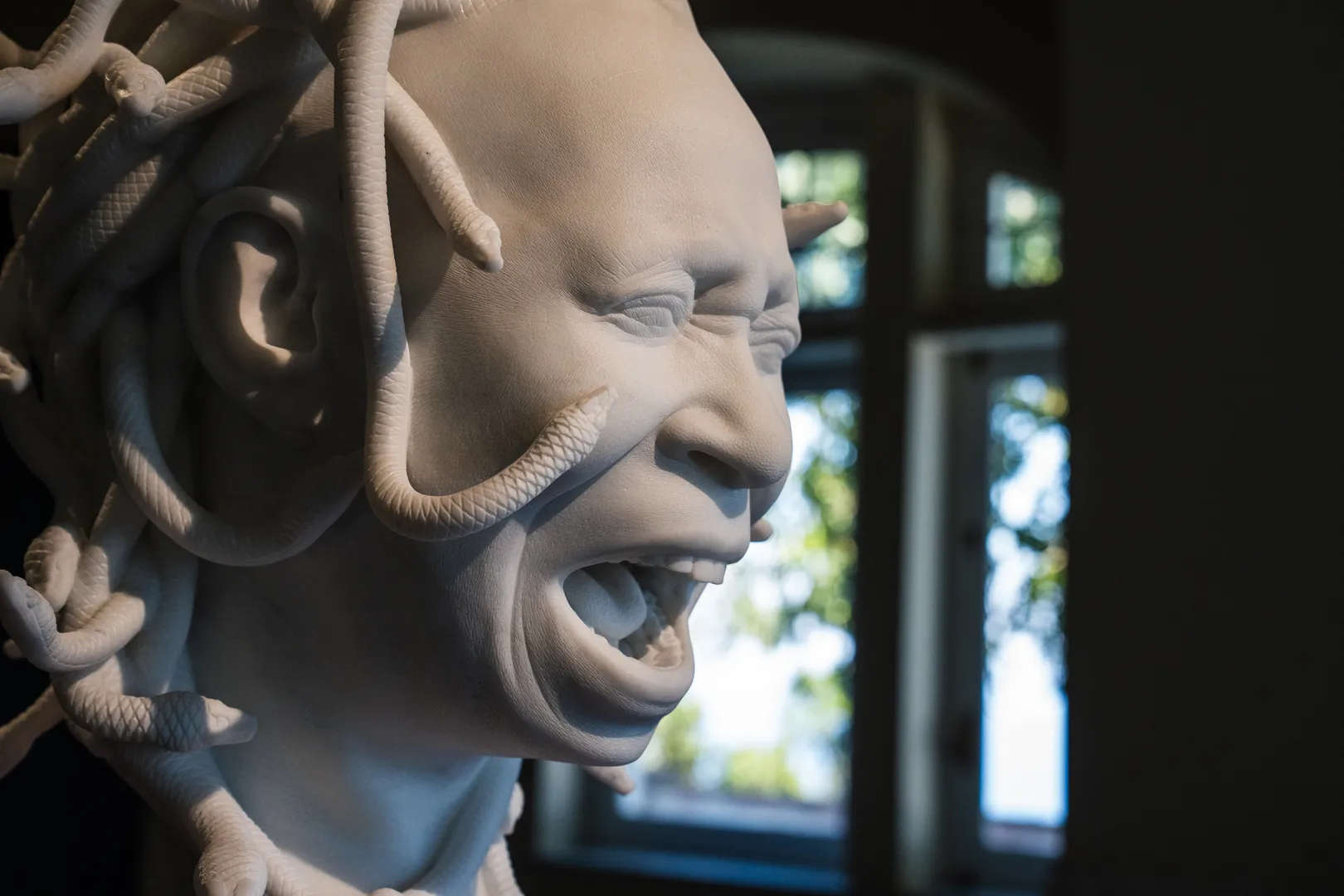
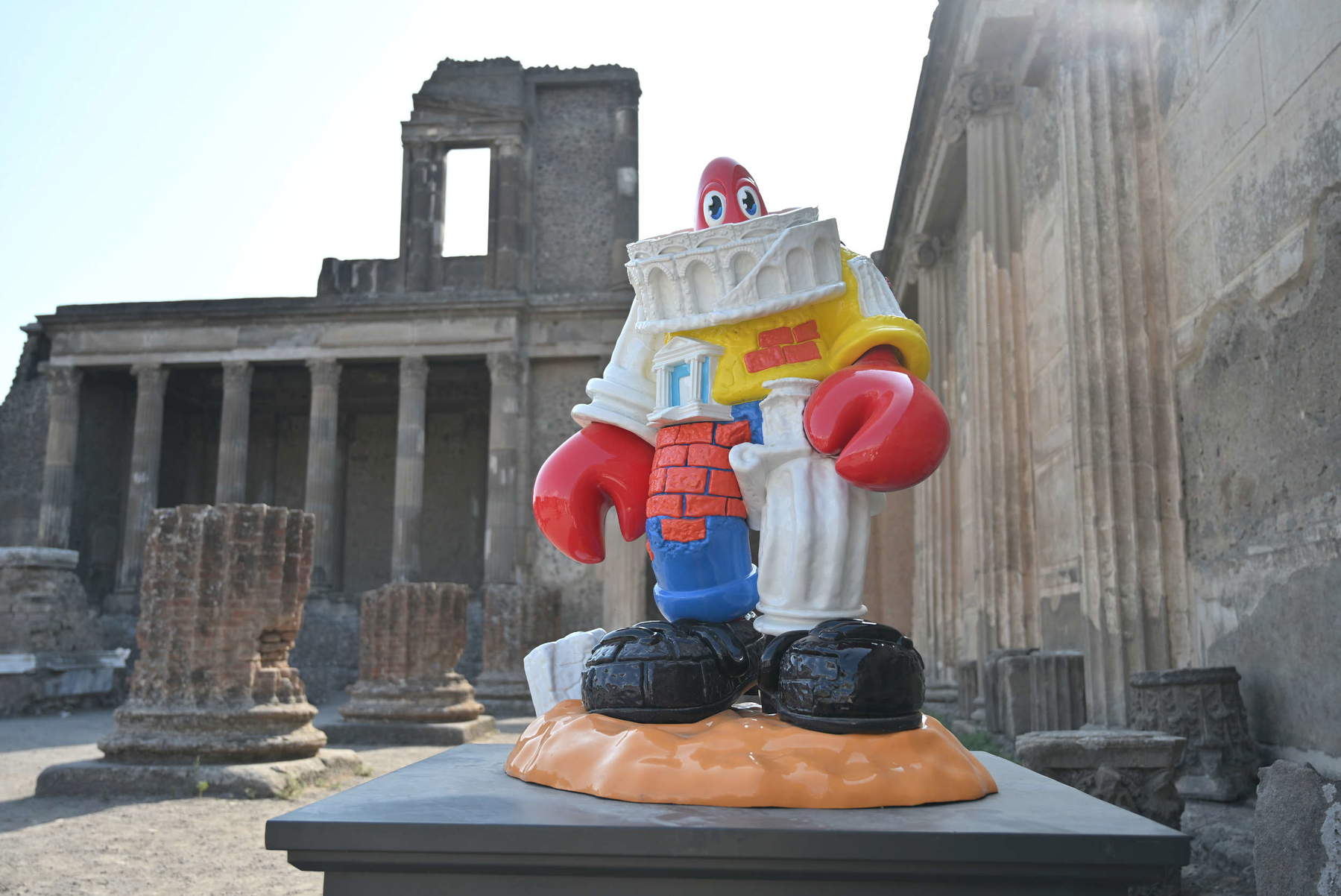
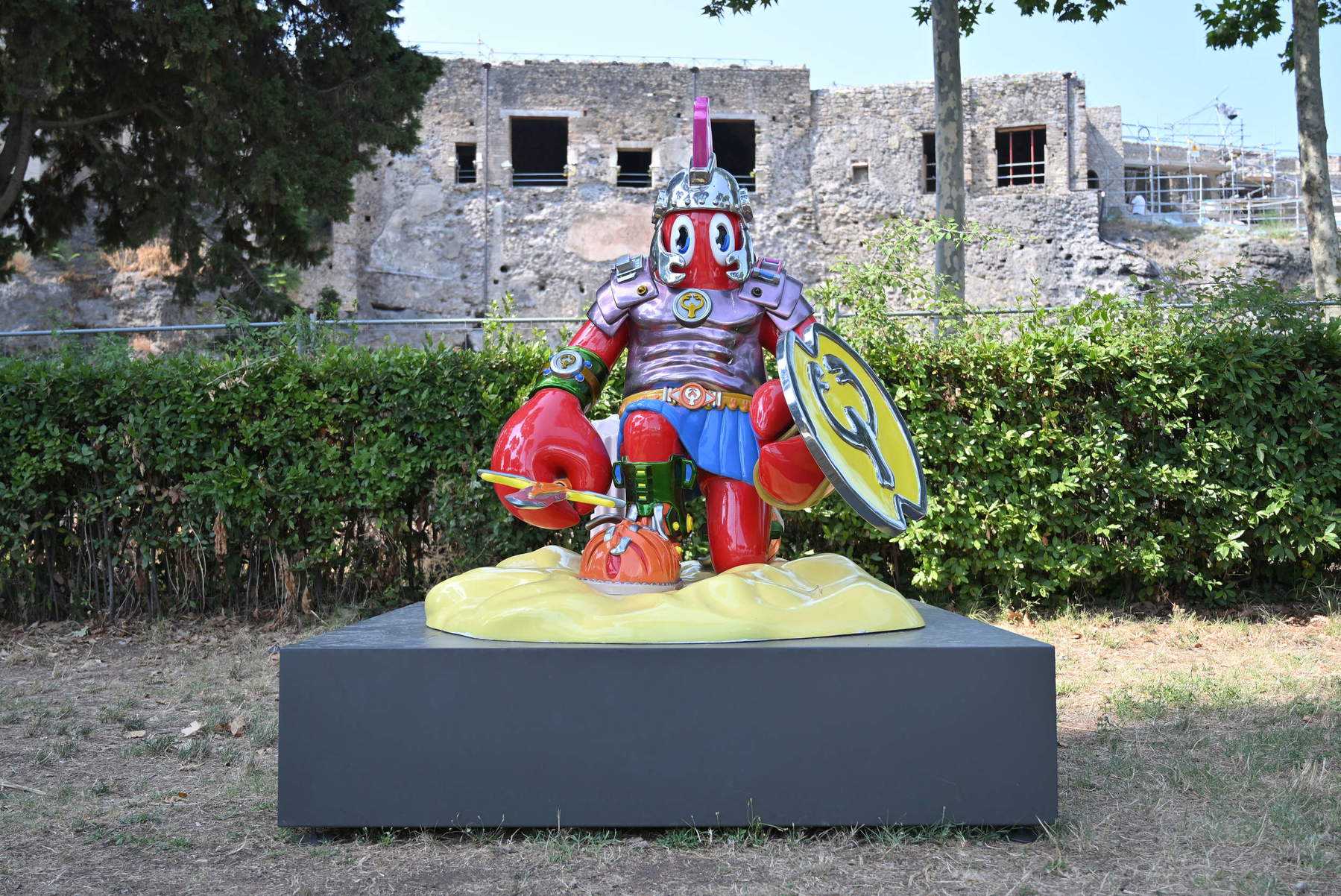
Now, to weigh in with a scathing review would mean adding a marginal note to a text that has already been extensively discussed and that, moreover, has the merit of speaking for itself sufficiently: certainly, it would end up providing some idle, fleeting satisfaction (and hundreds of comments on social media), but the move would be too predictable. It’s the art-criticism equivalent of the bourgeois-bohemian friend who marks his territory by pretending not to know what *Temptation Island* is. In short, it’s a perfunctory act, an exercise in routine administration. When it comes to Jago, or yet another Jeff Koons imitator (who, to make matters worse, has plopped down in the middle of some old junk or ruins), negative criticism has become standard practice; it has become an absolute rule of the game. It’s a bit like the curator-led tour during the press conference, like the city councilmember celebrating the remarkable initiative capable of restoring the museum—the region’s crown jewel—to its rightful place at the center, or like the question about future projects at the end of an interview with the artist. So, perhaps we should thank the various Jagos and Colberts. First of all, because they guarantee us visibility, views, comments, and social media interactions (so of course I’m going to talk about it too—what did you expect? That I’d pass up a double-and-a-half forward somersault with three twists on the topic of the day?). And then they’re perfect screens, impeccable shields that guarantee our disarmed art critics the indispensable comfort of a scathing review that doesn’t inconvenience anyone, doesn’t disturb anyone, doesn’t undermine anything—but offers the priceless advantage of proving that yes, can’t you see that we’re capable of writing scathing reviews?


The author of this article: Federico Giannini
Nato a Massa nel 1986, si è laureato nel 2010 in Informatica Umanistica all’Università di Pisa. Nel 2009 ha iniziato a lavorare nel settore della comunicazione su web, con particolare riferimento alla comunicazione per i beni culturali. Nel 2017 ha fondato con Ilaria Baratta la rivista Finestre sull’Arte. Dalla fondazione è direttore responsabile della rivista. Nel 2025 ha scritto il libro Vero, Falso, Fake. Credenze, errori e falsità nel mondo dell'arte (Giunti editore). Collabora e ha collaborato con diverse riviste, tra cui Art e Dossier e Left, e per la televisione è stato autore del documentario Le mani dell’arte (Rai 5) ed è stato tra i presentatori del programma Dorian – L’arte non invecchia (Rai 5). Al suo attivo anche docenze in materia di giornalismo culturale all'Università di Genova e all'Ordine dei Giornalisti, inoltre partecipa regolarmente come relatore e moderatore su temi di arte e cultura a numerosi convegni (tra gli altri: Lu.Bec. Lucca Beni Culturali, Ro.Me Exhibition, Con-Vivere Festival, TTG Travel Experience).
Warning: the translation into English of the original Italian article was created using automatic tools. We undertake to review all articles, but we do not guarantee the total absence of inaccuracies in the translation due to the program. You can find the original by clicking on the ITA button. If you find any mistake,please contact us.















 IT
IT FR
FR DE
DE ES
ES CN
CN


