



by Andrea Bruciati 24/04/2026



Categories: Works and artists / Disclaimer
In the hyper-digital context, drawing re-emerges as an autonomous cognitive act: no longer a preparatory study, but a tool of knowledge that integrates thought, perception and energy, redefining the relationship between art, science and reality. A reflection by Andrea Bruciati.
In the current landscape of artistic and intellectual production, drawing is undergoing a significant phase of critical resignification that disrupts its traditional role as a merely ancillary or preparatory practice. While historically the graphic act has been confined to the function of a preliminary study for works of greater material complexity, contemporary criticism and recent institutional dynamics now recognize its autonomous epistemological status, identifying it as an accomplished and self-sufficient intellectual act. This brief analysis aims to show how drawing, far from being an obsolete technique, represents a necessary response to the needs of a hyper-digitalized society, reaffirming the value of the bodily trace and the immediacy of the sign as tools of cognitive inquiry.
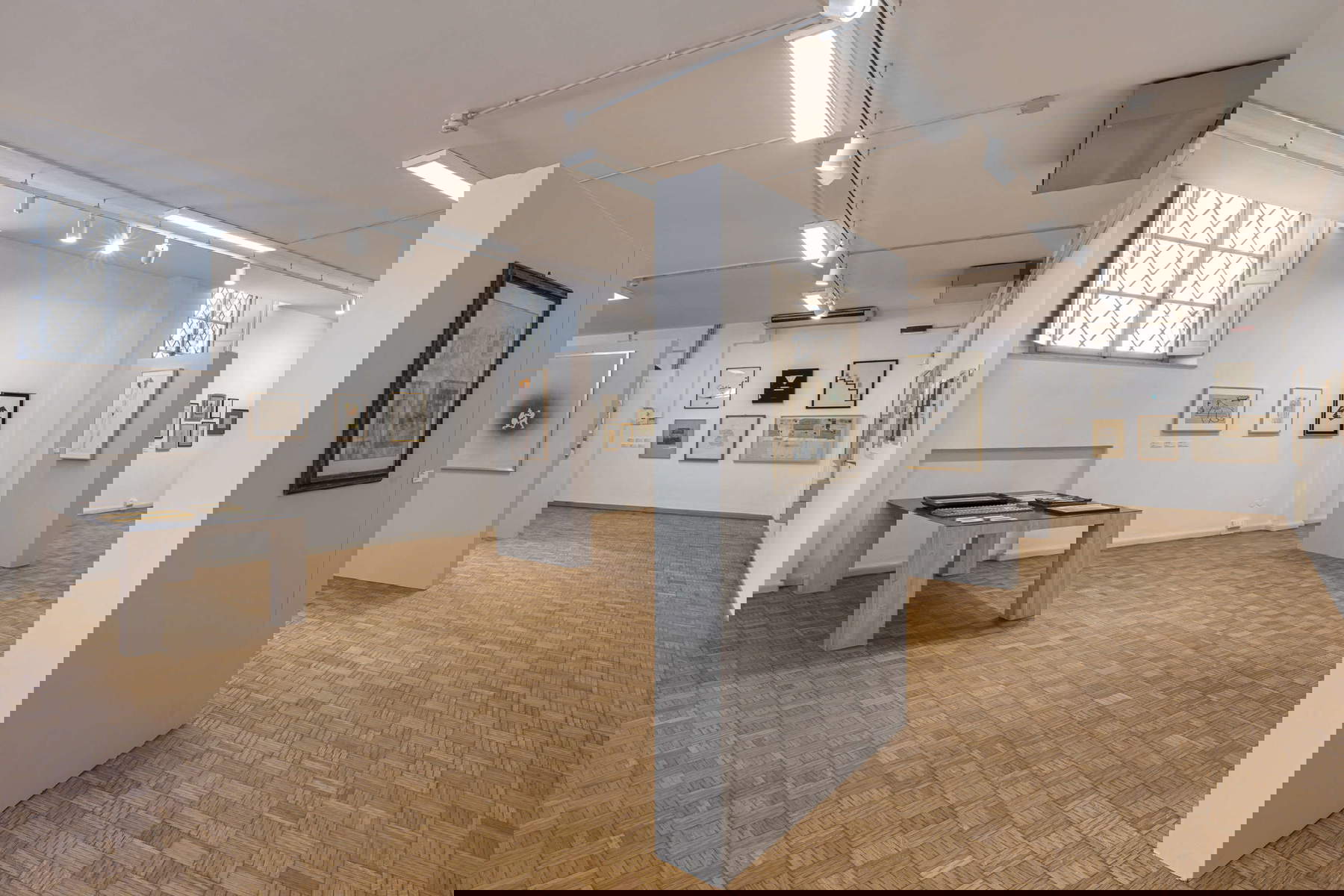
Its theoretical architecture resides in a dynamic field where three coessential dimensions (logos, phenomenon and energy) converge, which, far from being watertight compartments, imply each other in a mutual phenomenological transfiguration. To draw, in this perspective, is not to reproduce the visible, but to establish a reality in which thought takes on carnal densities and temporality is translated into perceptible extension. Through the graphic act, the author operates an analytical synthesis that allows the selection and distinction of elements of reality, translating them into visual codes that foster abstraction and pure thought. This process is also reflected in recent neuroscientific studies on the so-called “drawing effect,” which suggest that the integration of visual, motor and semantic processing enhances memory and understanding of concepts significantly more than textual encoding alone. In this sense, drawing emerges as a universal language capable of transdisciplinary operation, acting as a bridge between the fine arts and the domains of architecture, design and science.


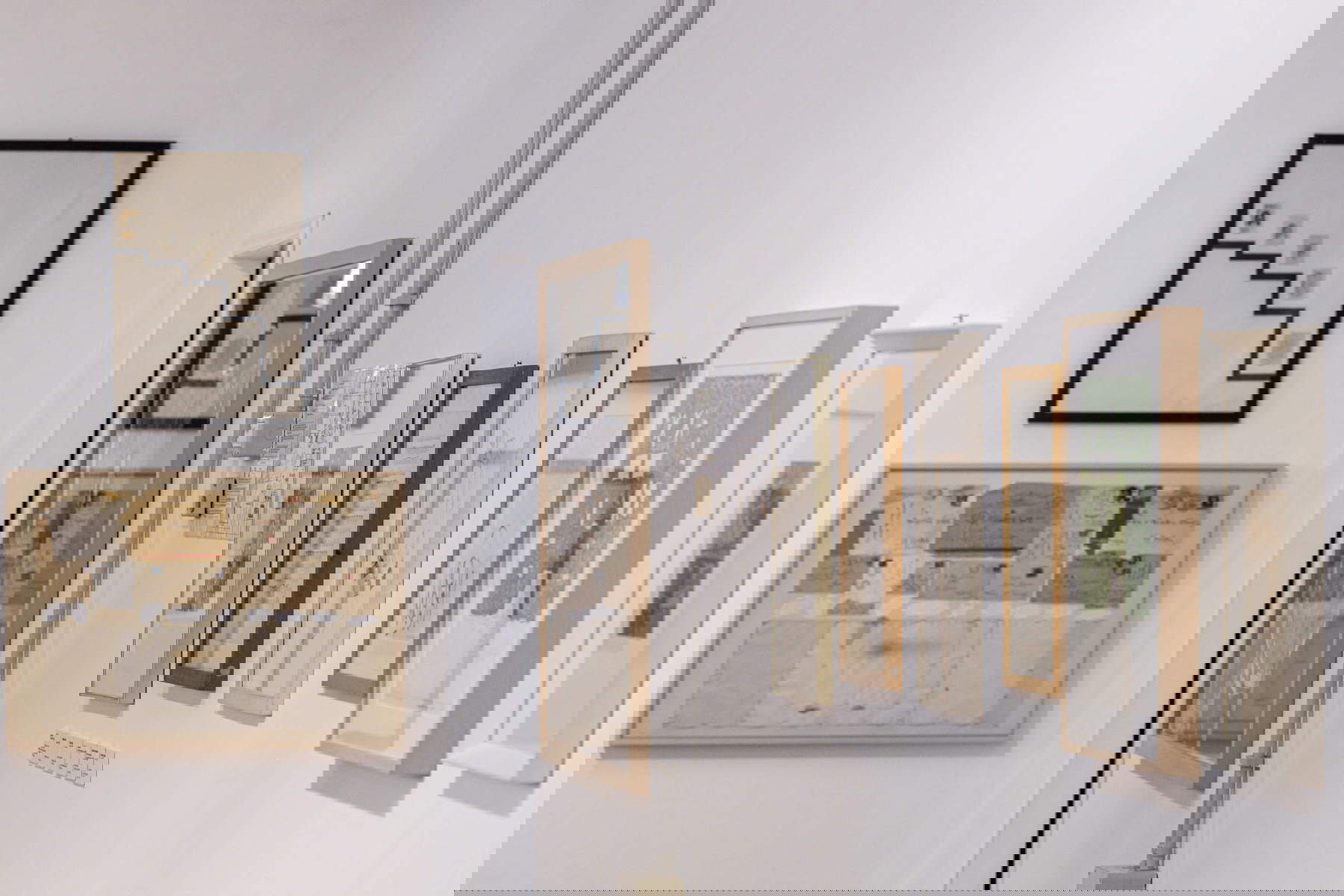
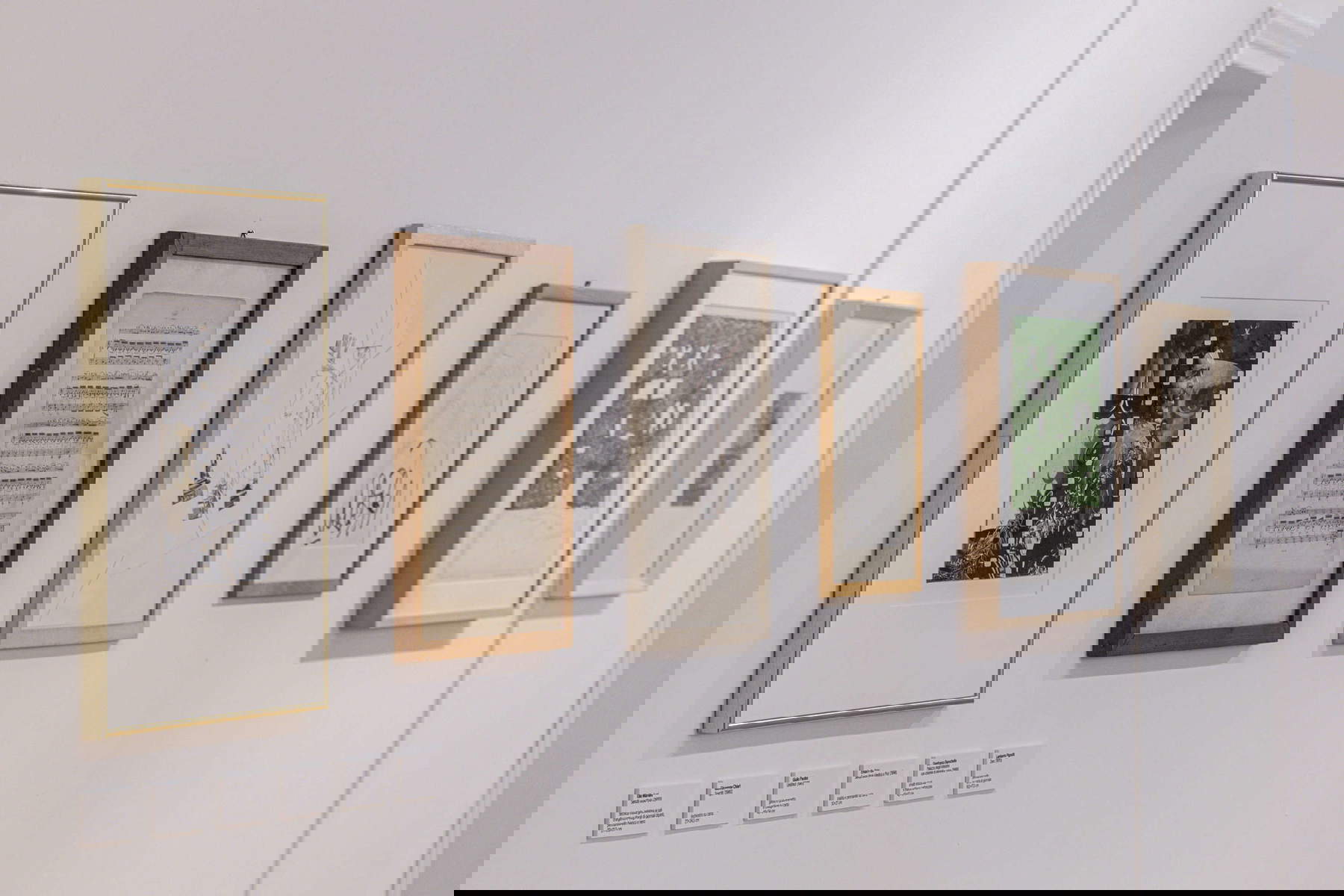
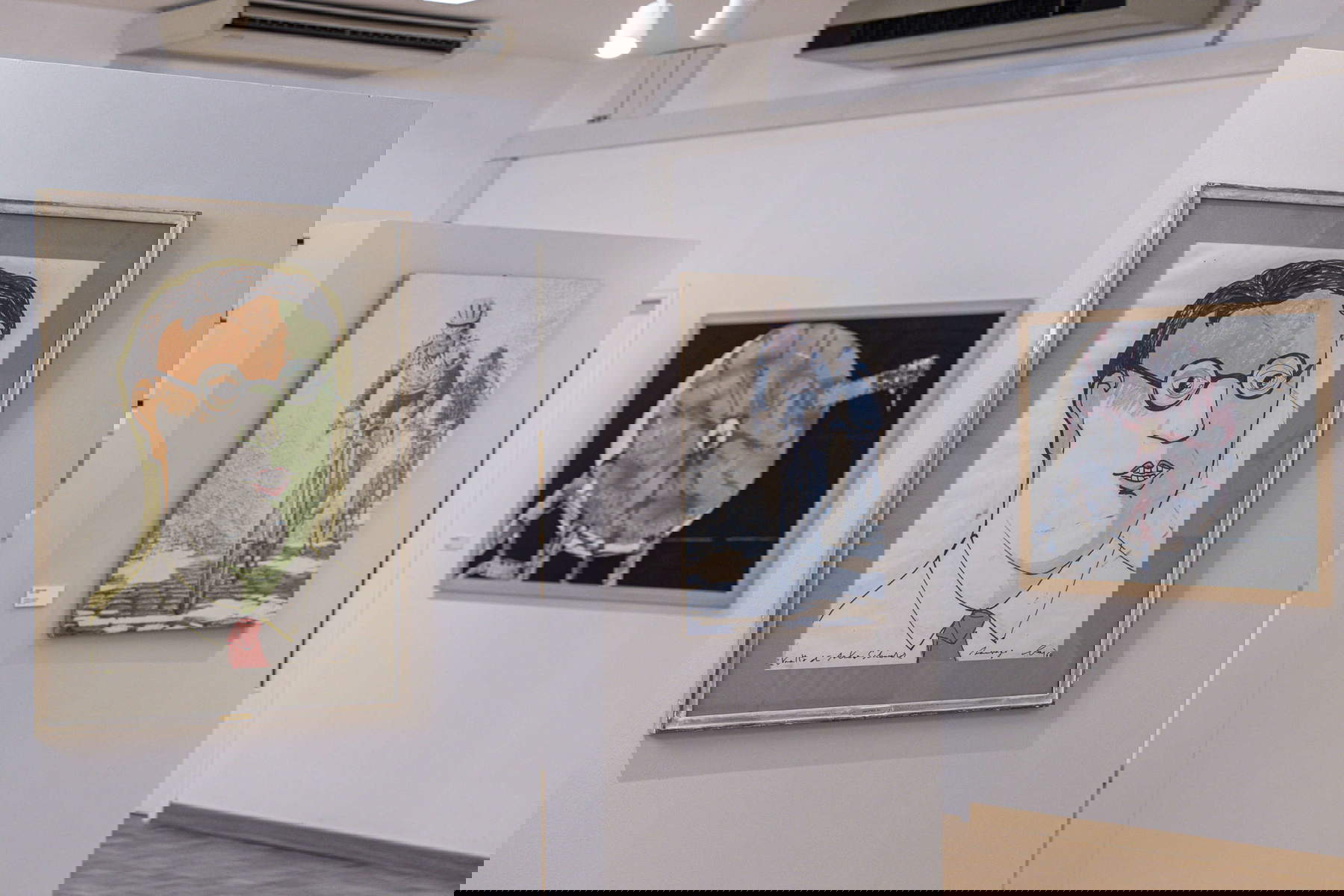
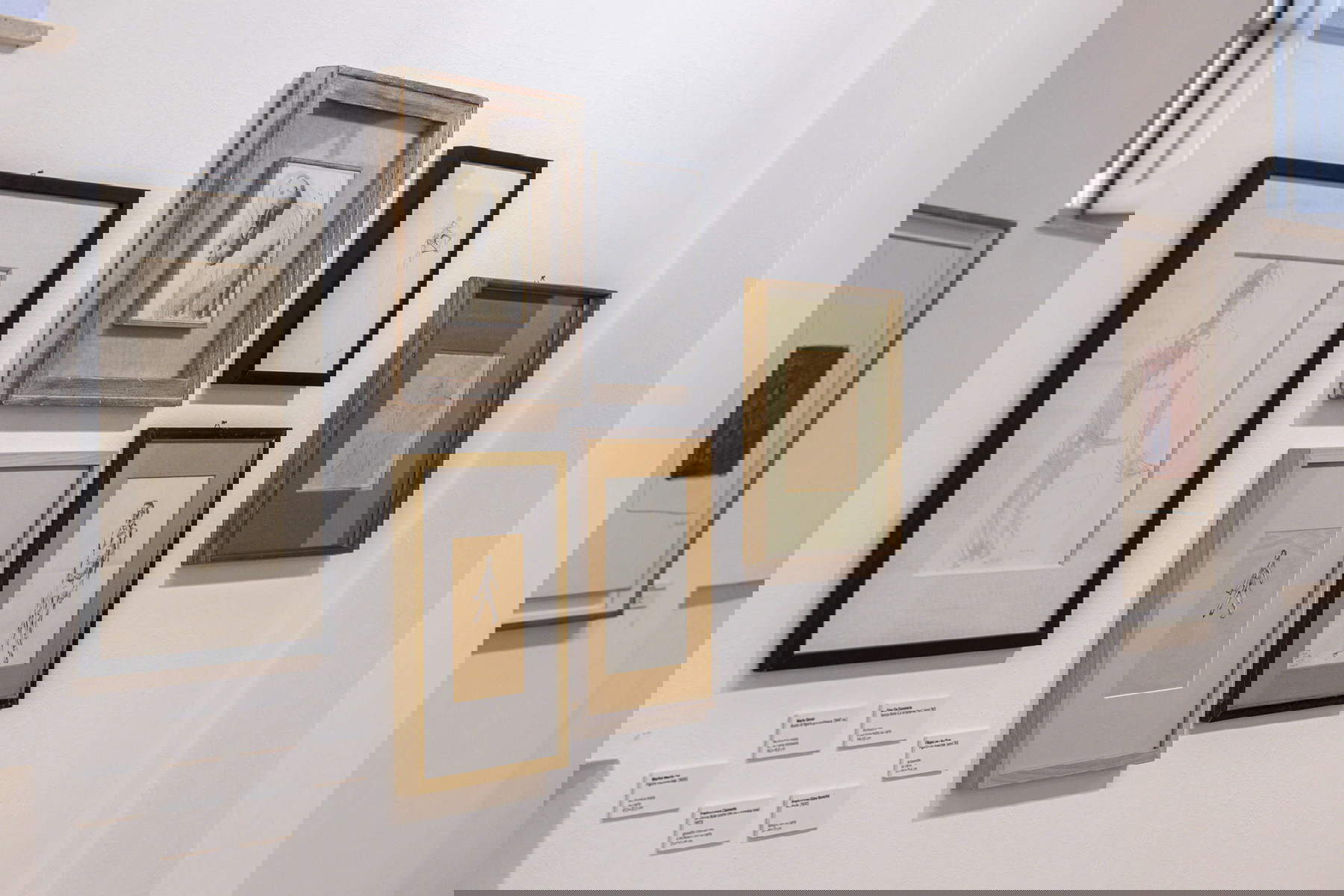
In the dimension of the Logos, drawing rises to an ordering principle, mental eidos and intelligible structure that precedes and underlies sensible manifestation. It is the way of the Crystal: the transparency of an idea that organizes experiential entropy through the rigor of intention. The Mannerist precepts of Federico Zuccari are reactivated here, where the “internal design” constitutes the ideal idea that informs and shapes the material before the hand even touches the support. Such an approach finds a solid anchorage in classical matrix ontology: if Platonic speculation directs art toward the pure archetype, the Aristotelian lesson locates its mission in the extrapolation of the structural necessity and intrinsic meaning of things, since, as he himself wrote in his Poetics, “Art aims at presenting not the outward appearance of things, but their inner meaning.” The Logos is, therefore, the guarantor of the formal coherence of being, the logical framework that allows the world to be thought before it is seen.
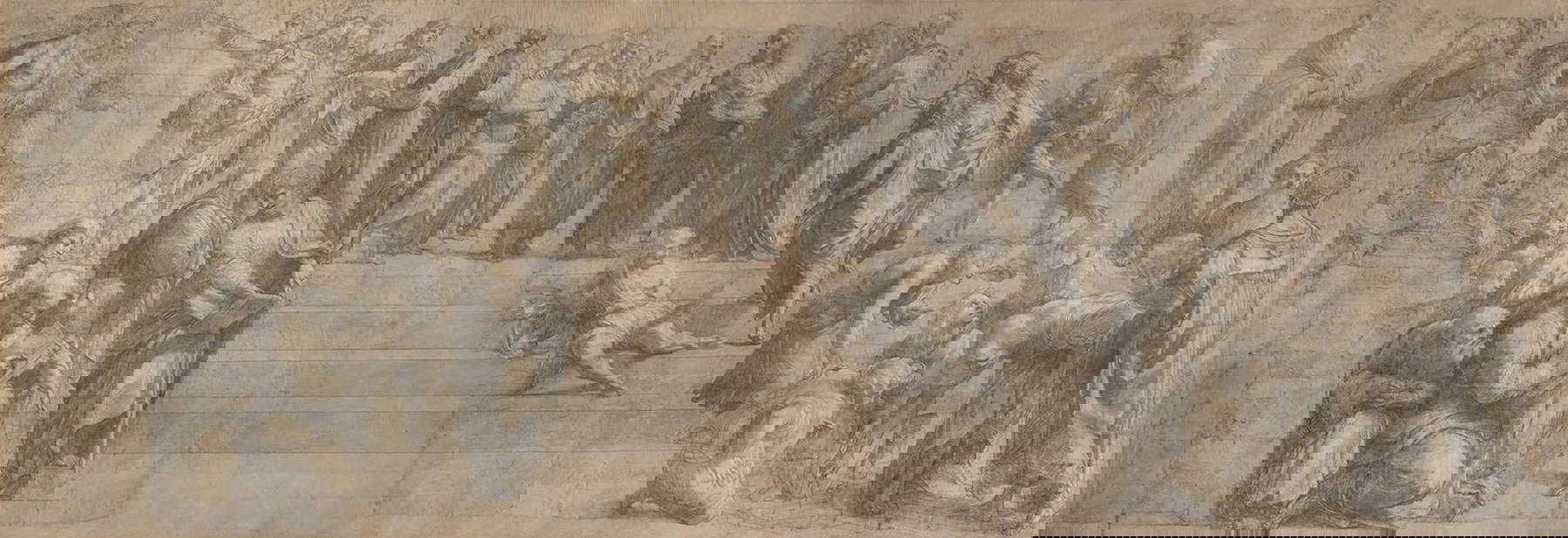
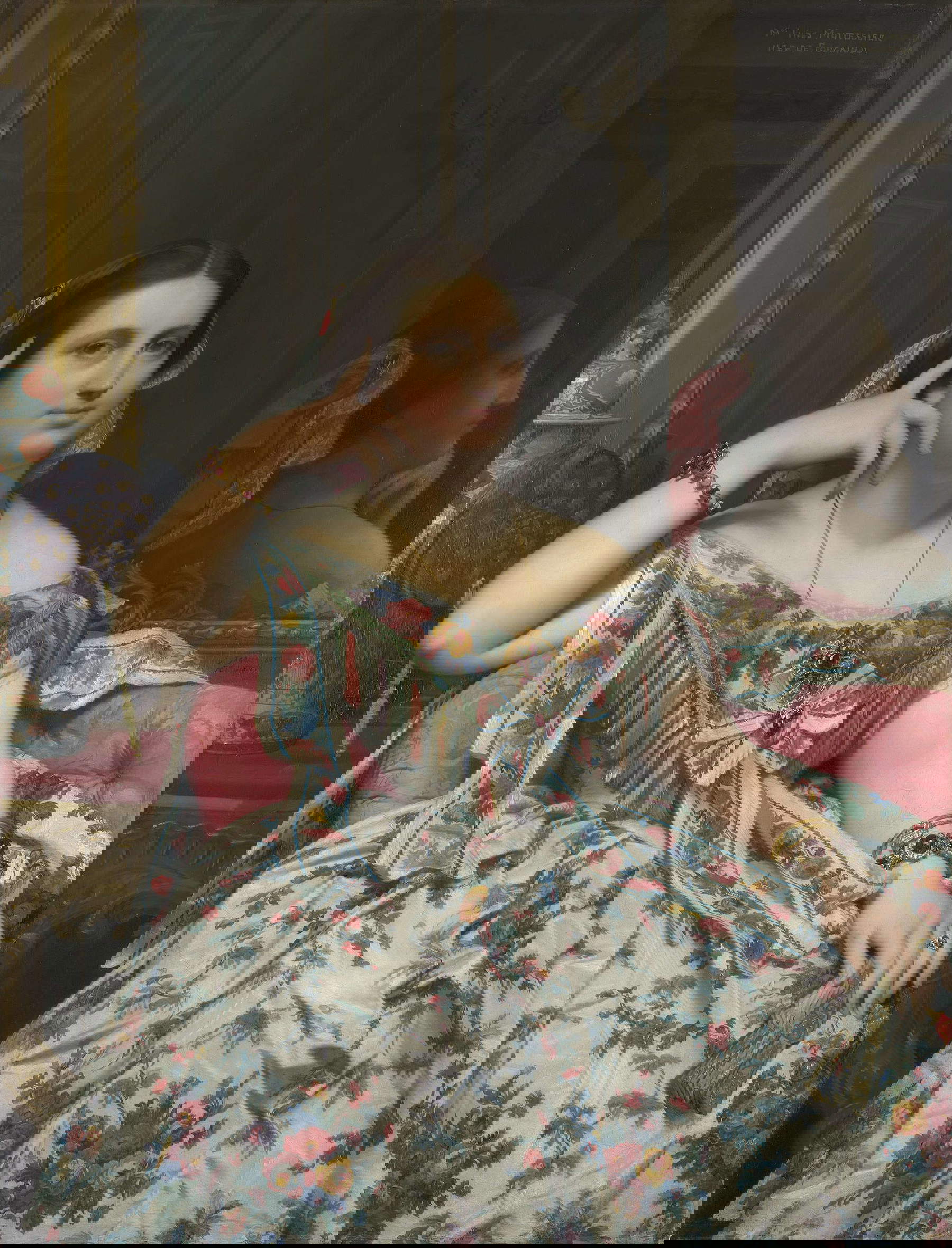
This genealogy of intellectual primacy finds deep roots in the sacred geometry of Piero della Francesca, where the sign is the mathematical measure of the world, as formalized in De Prospectiva Pingendi (c. 1474). In Raphael Sanzio, the Logos manifests itself as concinnitas and proportional perfection: in the Ambrosian cartoon for the School of Athens (1509), sign emends the real through a geometric-speculative order that sublimates nature into ideal form; line is an axiomatic decision that defines the space of ideas before that of bodies. In the 18th century, this quest for ideal beauty found its theoretical apex in Johann Joachim Winckelmann, who in his Thoughts on the Imitation of Greek Works (1755) preached a “noble simplicity and quiet grandeur.” For Winckelmann, drawing should reflect rational compositional canons, pleasing to reason, far removed from the “deformations” of the Baroque. Such analytical rigor finds a further landing place in the linear control of Jean-Auguste-Dominique Ingres, for whom drawing is the “probity of art”: a rational synthesis where the sharpness of outlines in the Portrait of Madame Moitessier (1856) sacrifices the contingent in favor of the essential.
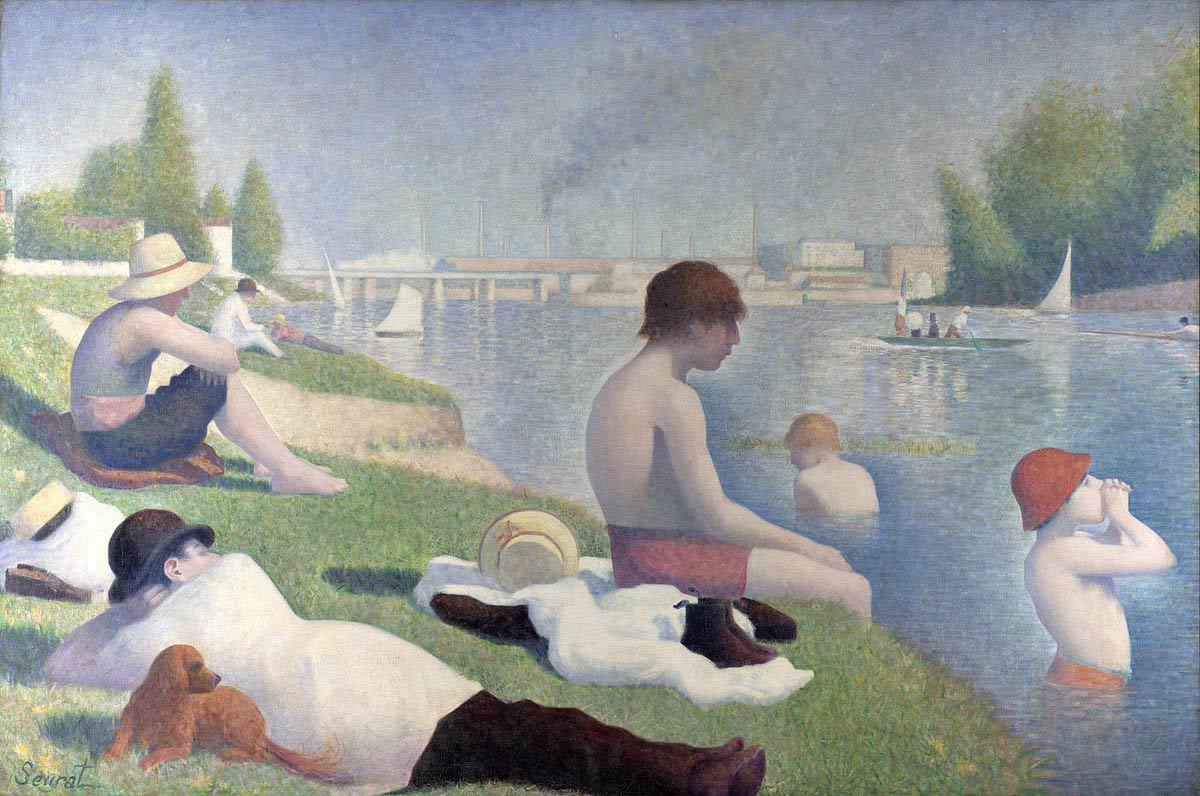
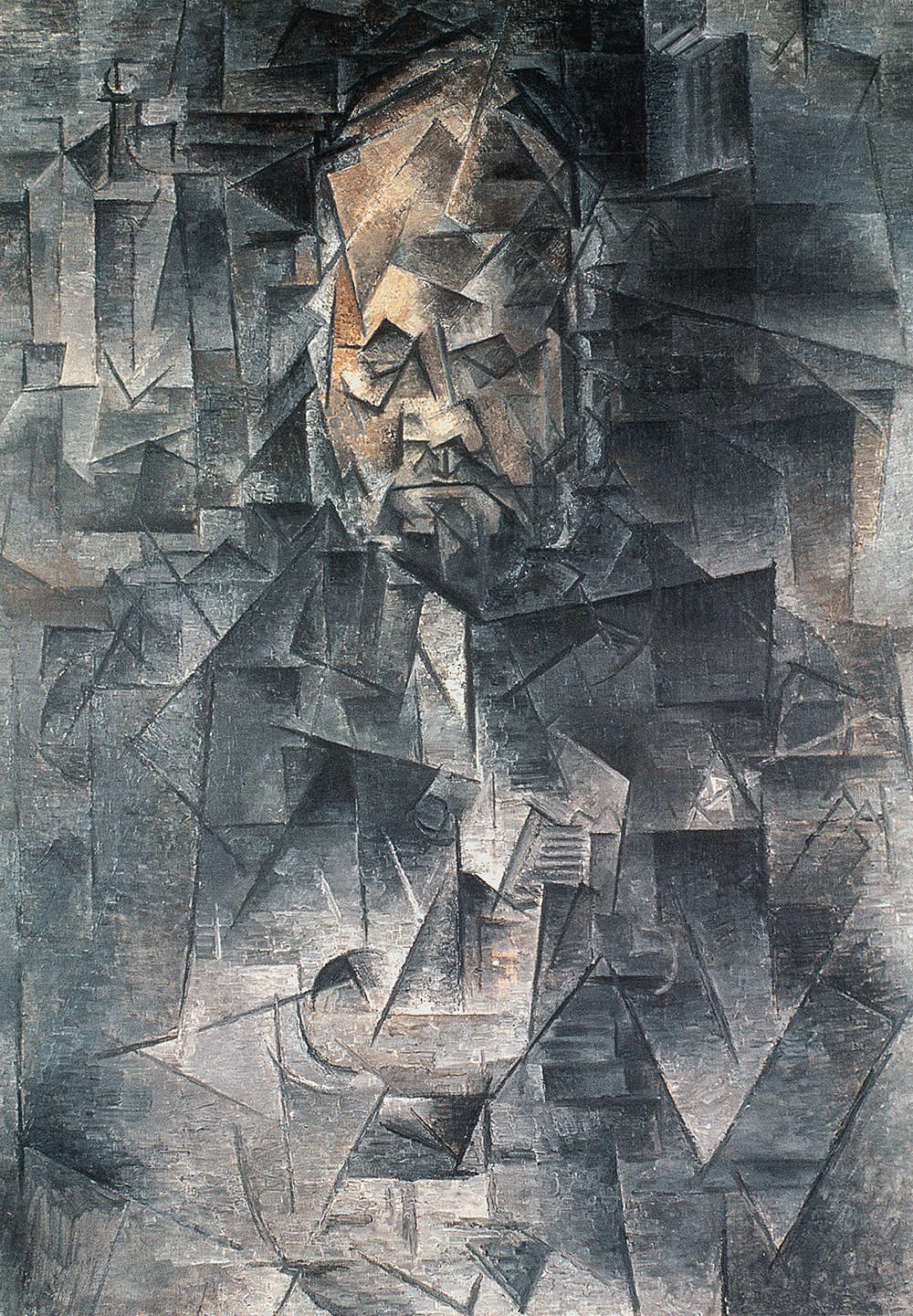
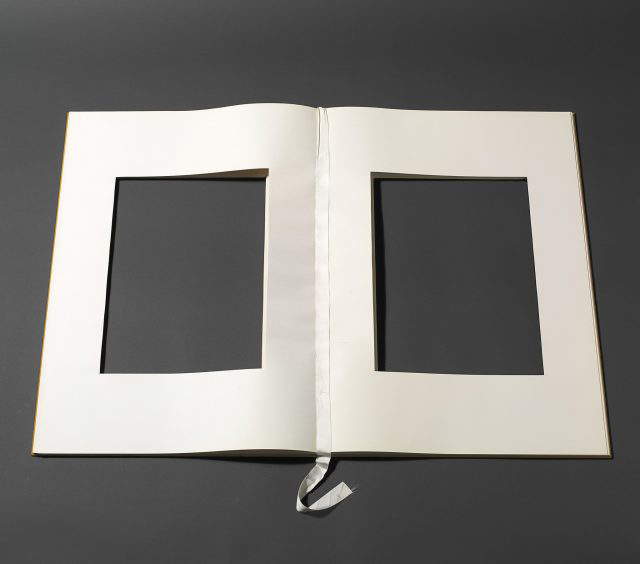
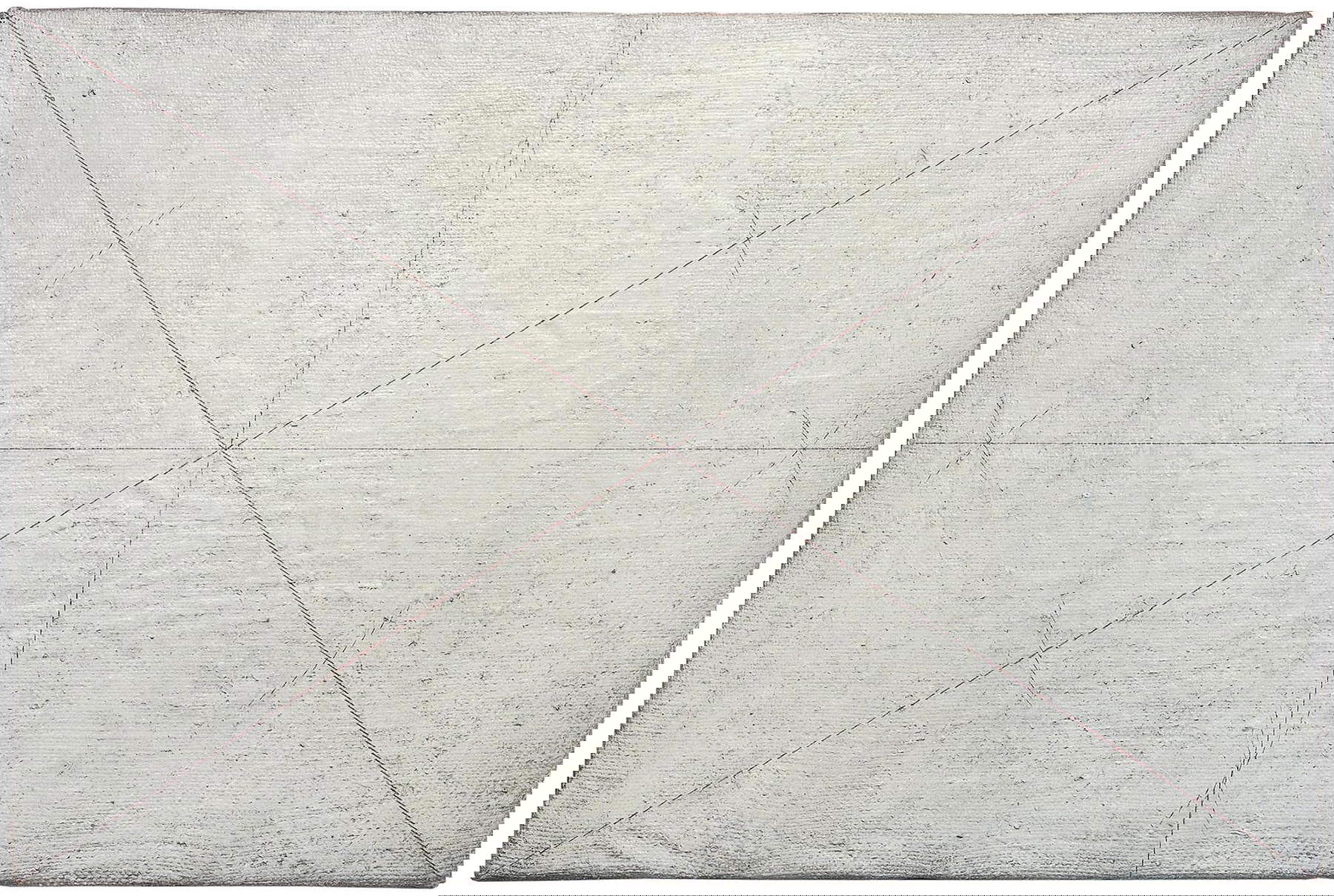
In modernity, Logos undergoes a methodological translation with Georges Seurat, whose Luministic Decomposition (1884) prefigures algorithmic decomposition, and with Pablo Picasso, where in Portrait of Ambroise Vollard (1910) drawing reduces the object to its bare intellectual architecture. But it is in conceptual contemporaneity that the Logos strips itself of all mimetic residue to become pure thought. Vincenzo Agnetti, with operations such as Libro dimenticato a memoria (1969), delves into the heart of the Logos by interrogating the absence and paradox of knowledge: sign here is an operation of subtraction that measures the conceptual universe. Aldo Mondino, in parallel, bends the Logos to a citationist and ironic game, where drawing becomes a metalanguage capable of deconstructing the very history of the image. Finally, Giulio Paolini, in radical works such as Disegno geometrico (1960), elects the canvas as the space of the theoretical premise: the drawing is no longer a trace of an object, but a visualization of the geometric plane that makes every future vision possible. The contemporary pinnacle is represented by Sol LeWitt, who in his Wall Drawings (from 1968) established, “The idea becomes a machine that generates art,” definitively releasing the Logos from the contingency of the hand.
Where the Logos represents the metaphysical structure, drawing understood as Phenomenon constitutes the irruption of the happening in the visual field, the moment when the idea collides with the gravity of existence. It is the way of the Clay: flesh becoming line, an embodied experience in which the act of seeing and the act of generating converge into a single sensitive intensity. This perspective interrogates the phenomenology of Maurice Merleau-Ponty, who wrote in The Eye and the Spirit, “The painter ’lends his body’ to the world. The line becomes a threshold, a perceptual membrane in which interior and exterior continually overturn. To draw is to expose oneself to the world, letting it inscribe its forces in the gesture. It is here that phenomenology becomes practical: no longer a description of experience, but its direct activation. It is in fact by lending his body that the painter transforms the world into painting.” The absolute protagonist of this dimension is Michelangelo Buonarroti, whose art expresses a titanic tension and anxiety about his own limit. His drawings, such as the studies for the vault of the Sistine Chapel (1508-1512), testify to a precision that is not only scientific, but existential: the sign reacts with memory and lived experience, manifesting the incessant struggle between the divine soul and the fragility of organic matter. In Michelangelo, this dynamic takes the form of a true ontogeny of the sign: the figure is not given, but is constituted through a struggle that is both perceptual and ontological. Drawing records the friction between what appears and what insists on not giving itself completely, making visible the unfinished and open-ended character of experience.
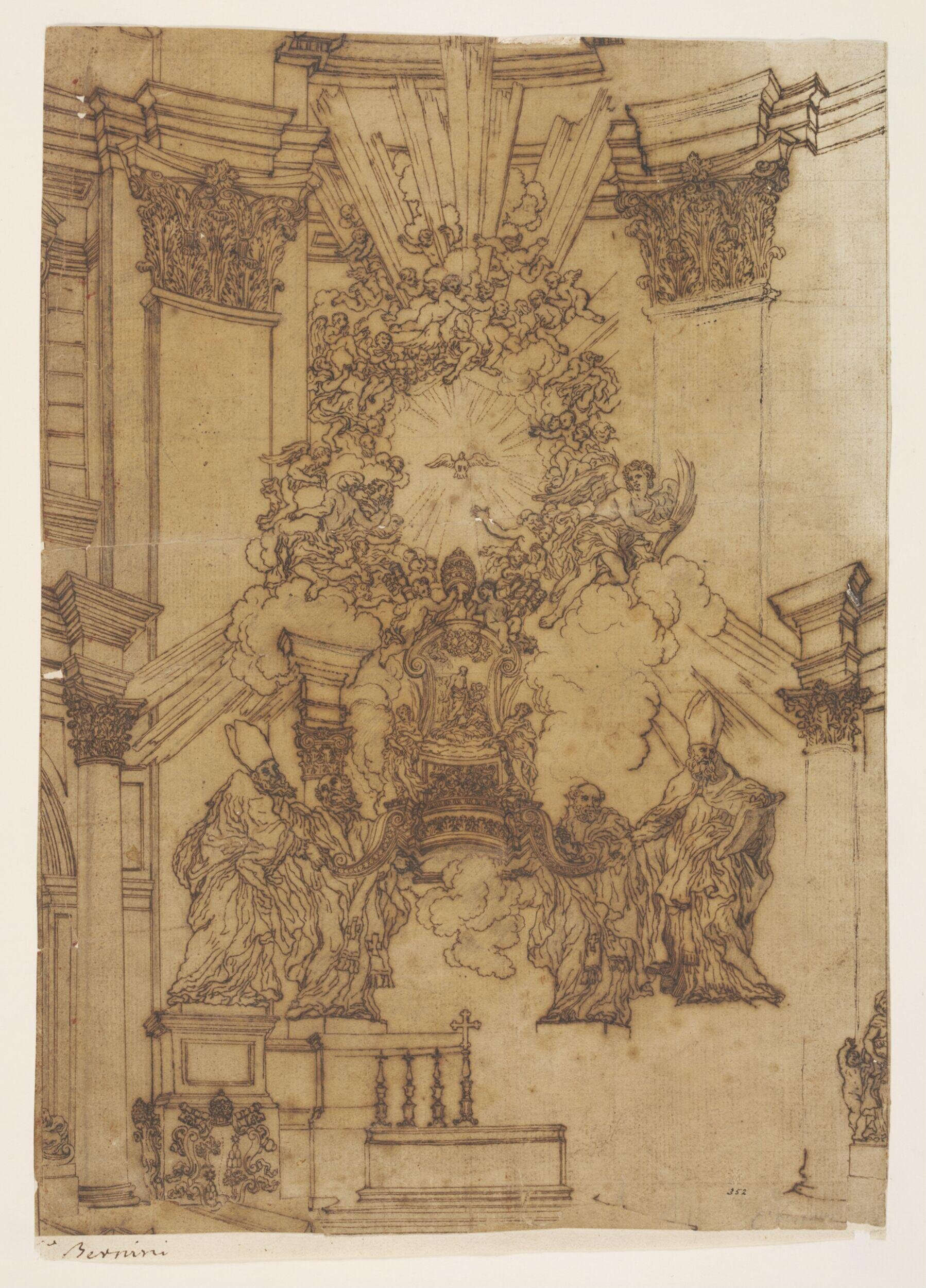
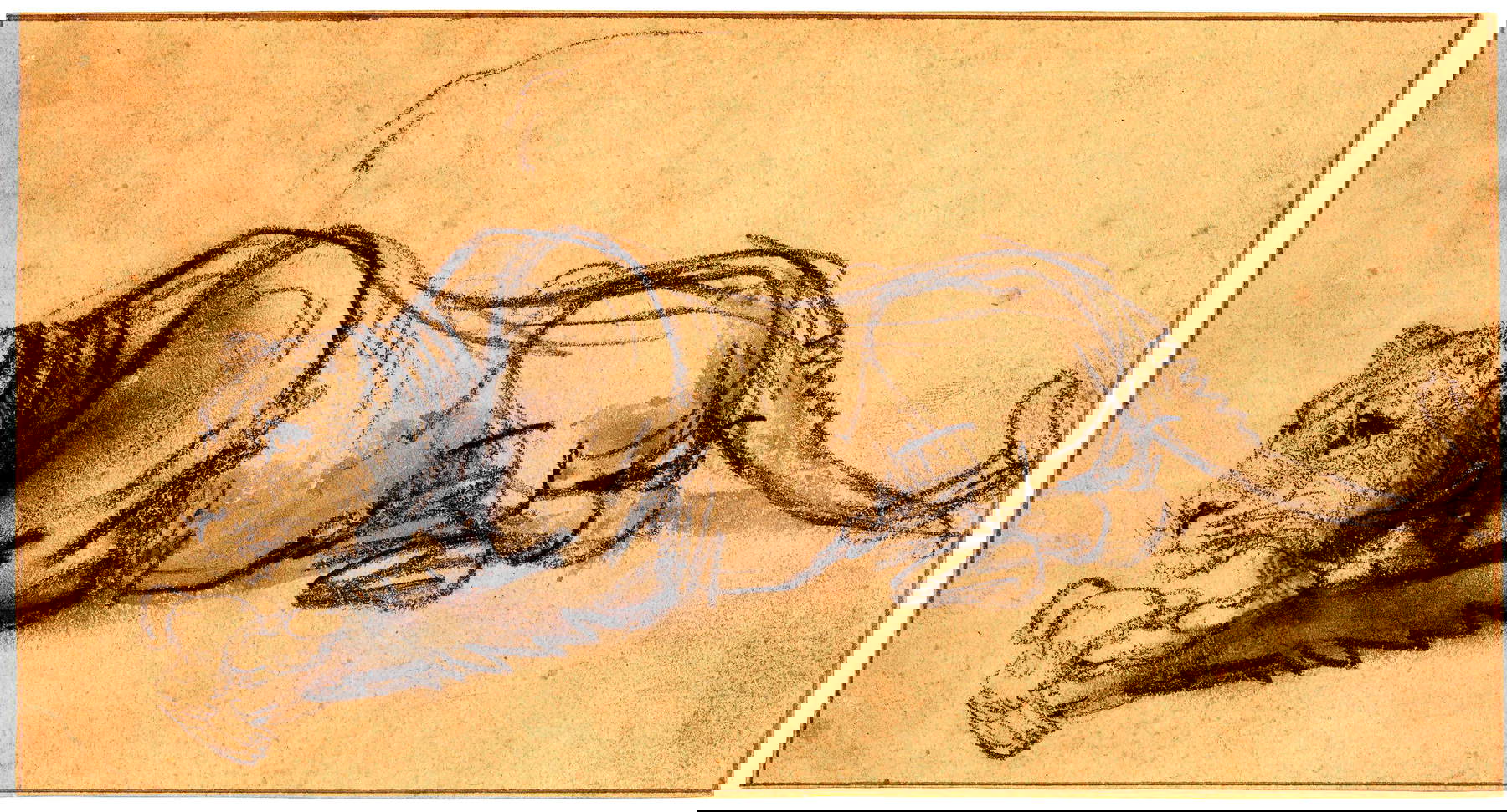
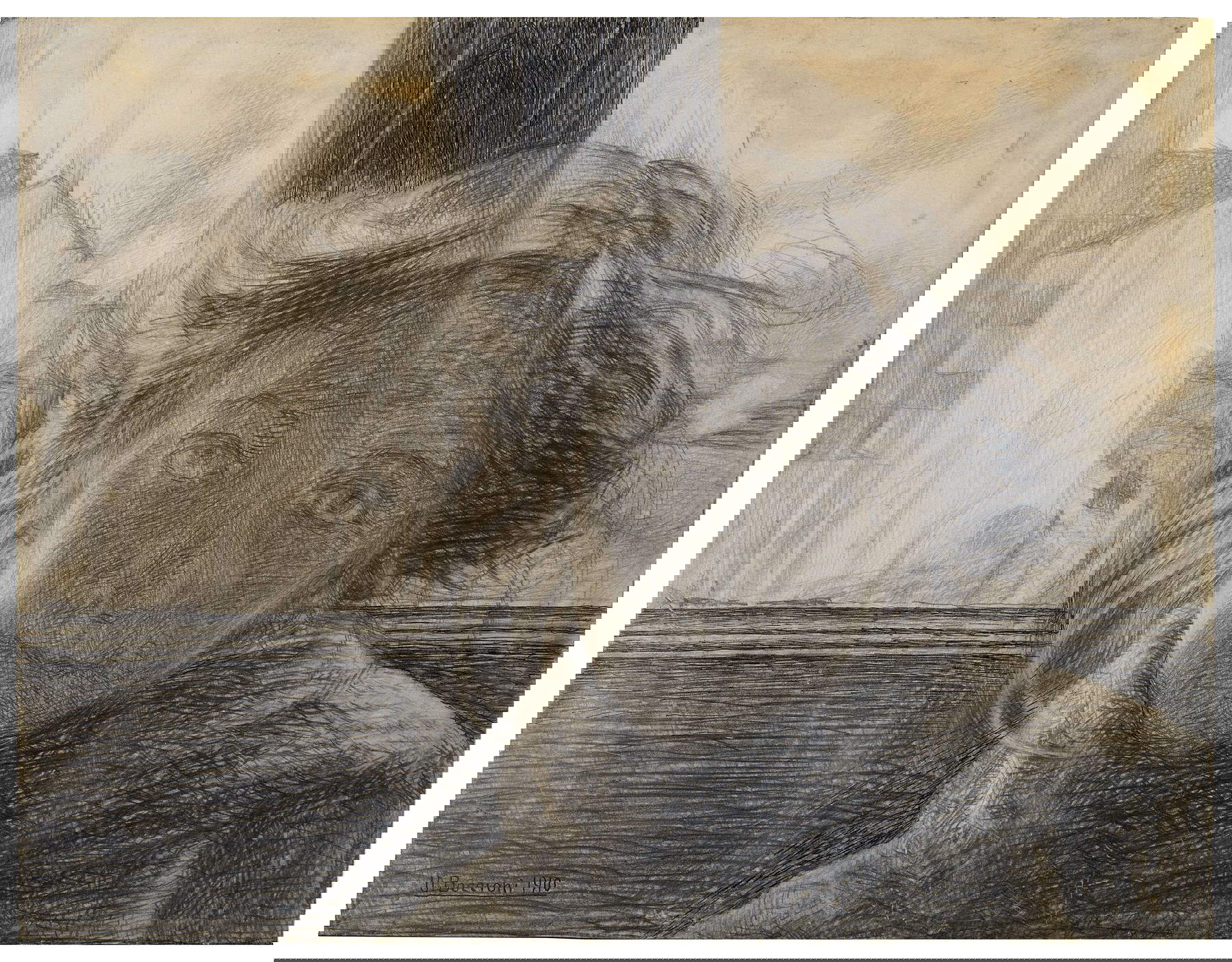
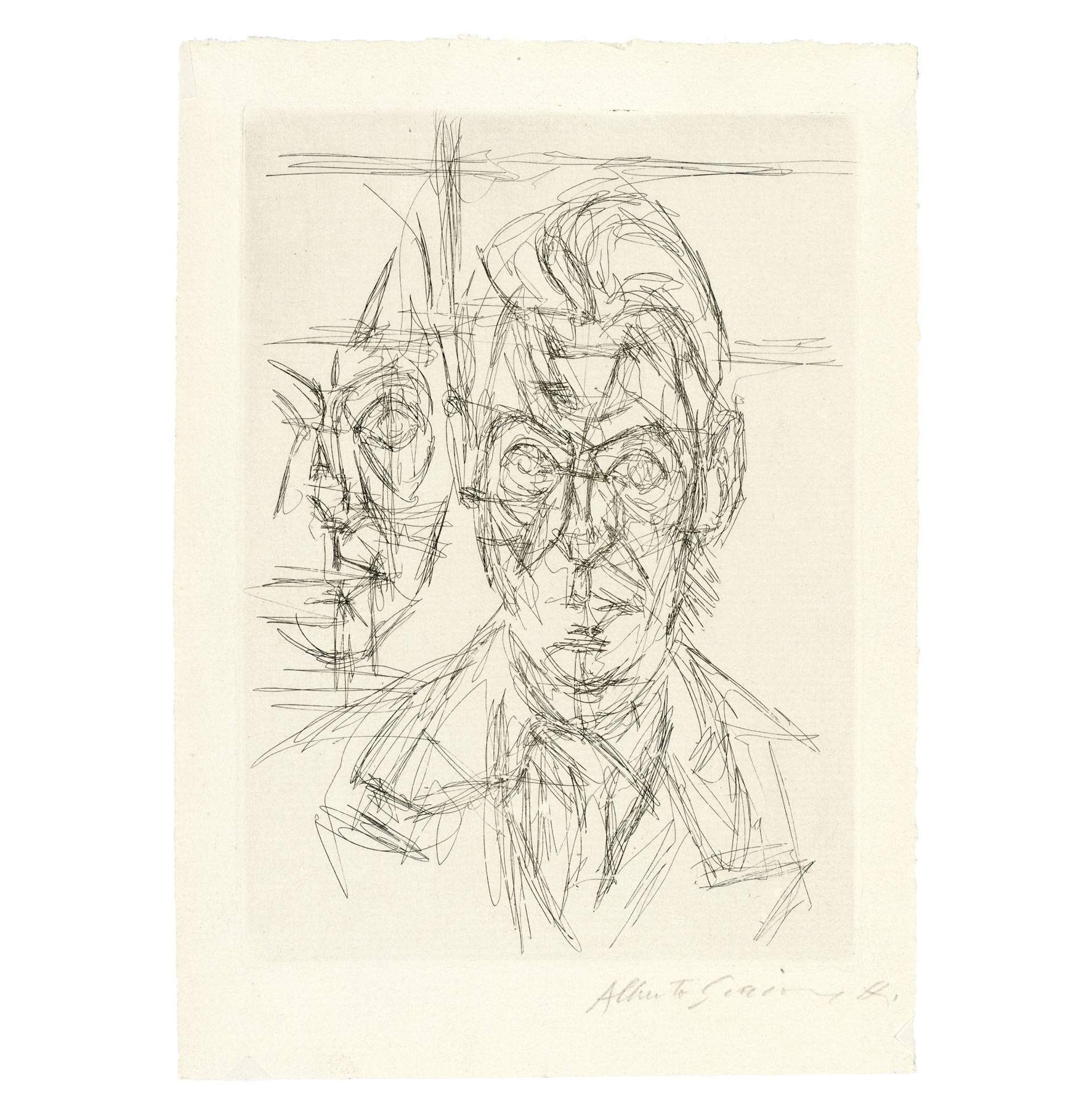
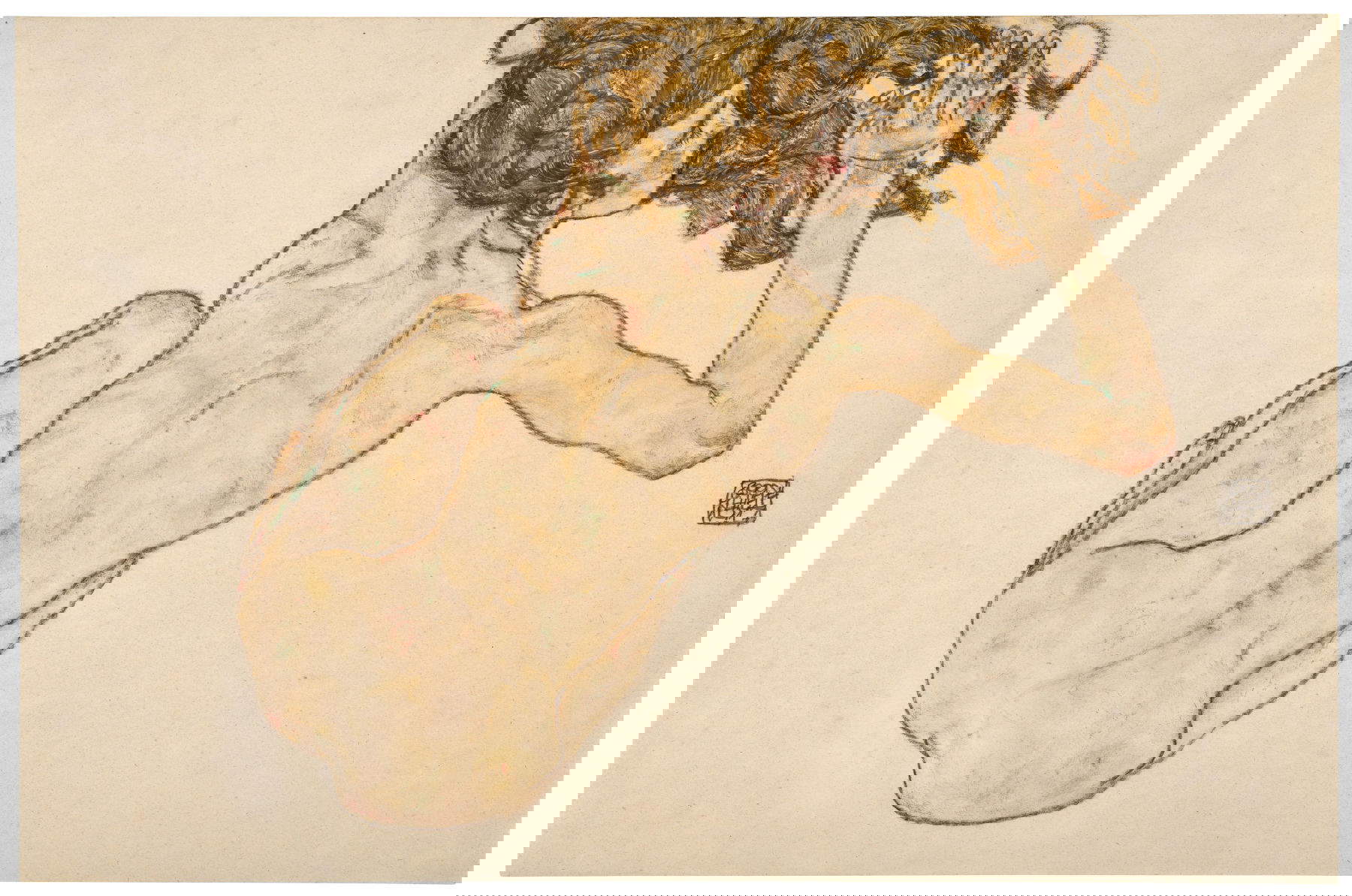
In Tintoretto, drawing is configured as a dramatic event: in the preparatory sheets for the Miracle of the Slave (c. 1548), the line springs from kinetic urgency, drawing the viewer into the “making” of the action. At the same time, in Gian Lorenzo Bernini, graphic praxis is consubstantial with plastic gesture: in the studies for the Chair of St. Peter (1657-1666), the hand infuses graphite with the same ontological density as sculptural material. The phenomenon of sign complicates with the accumulation of suffering in Rembrandt’s sign (c. 1662-1669) and accelerates with Umberto Boccioni (1913), where form dissolves in interpenetration with the environment. The crisis of the 20th century finds a voice in Alberto Giacometti, whose sign is a relentless attempt to capture presence in space (1950s), and in Egon Schiele (1910), where line is shorthand for pain.
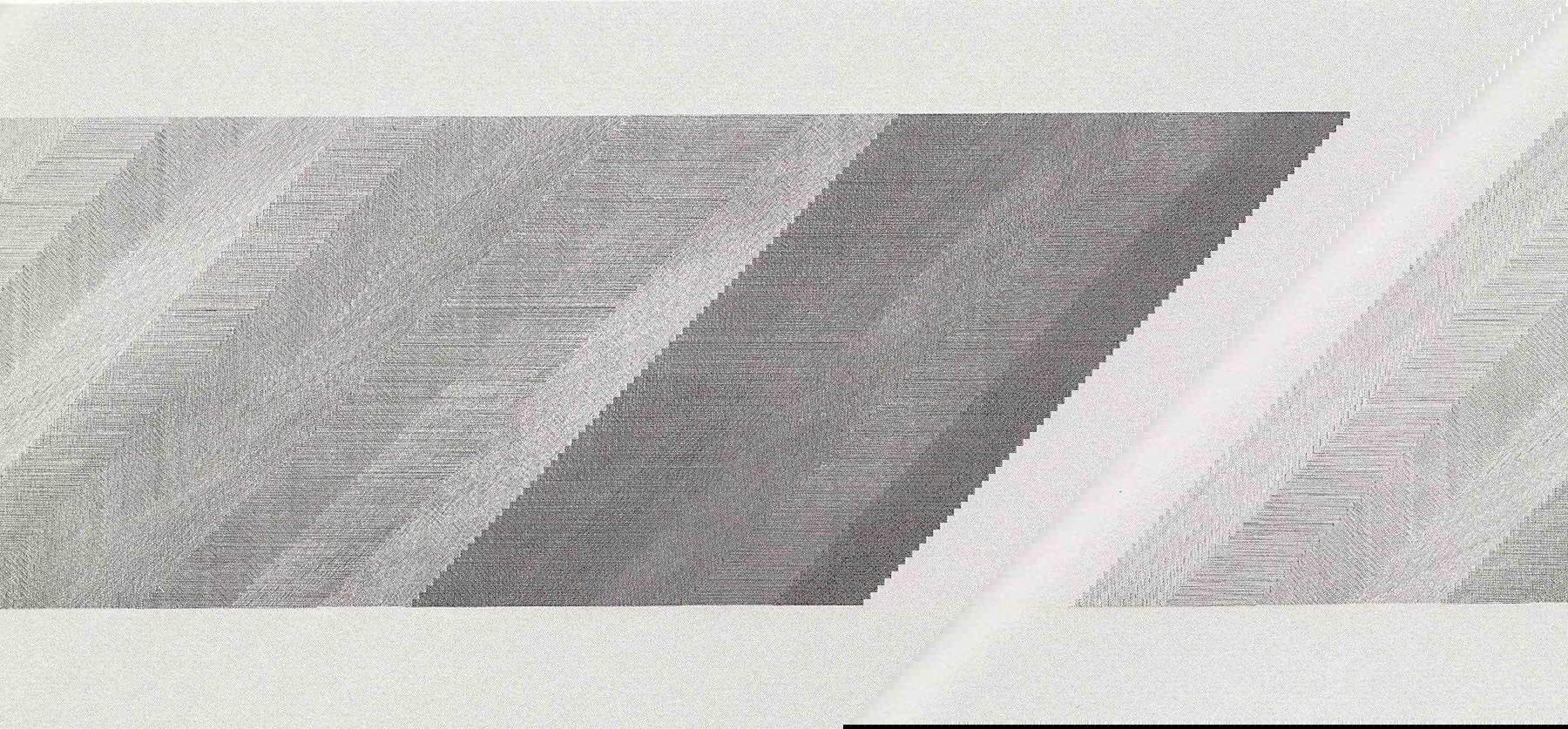
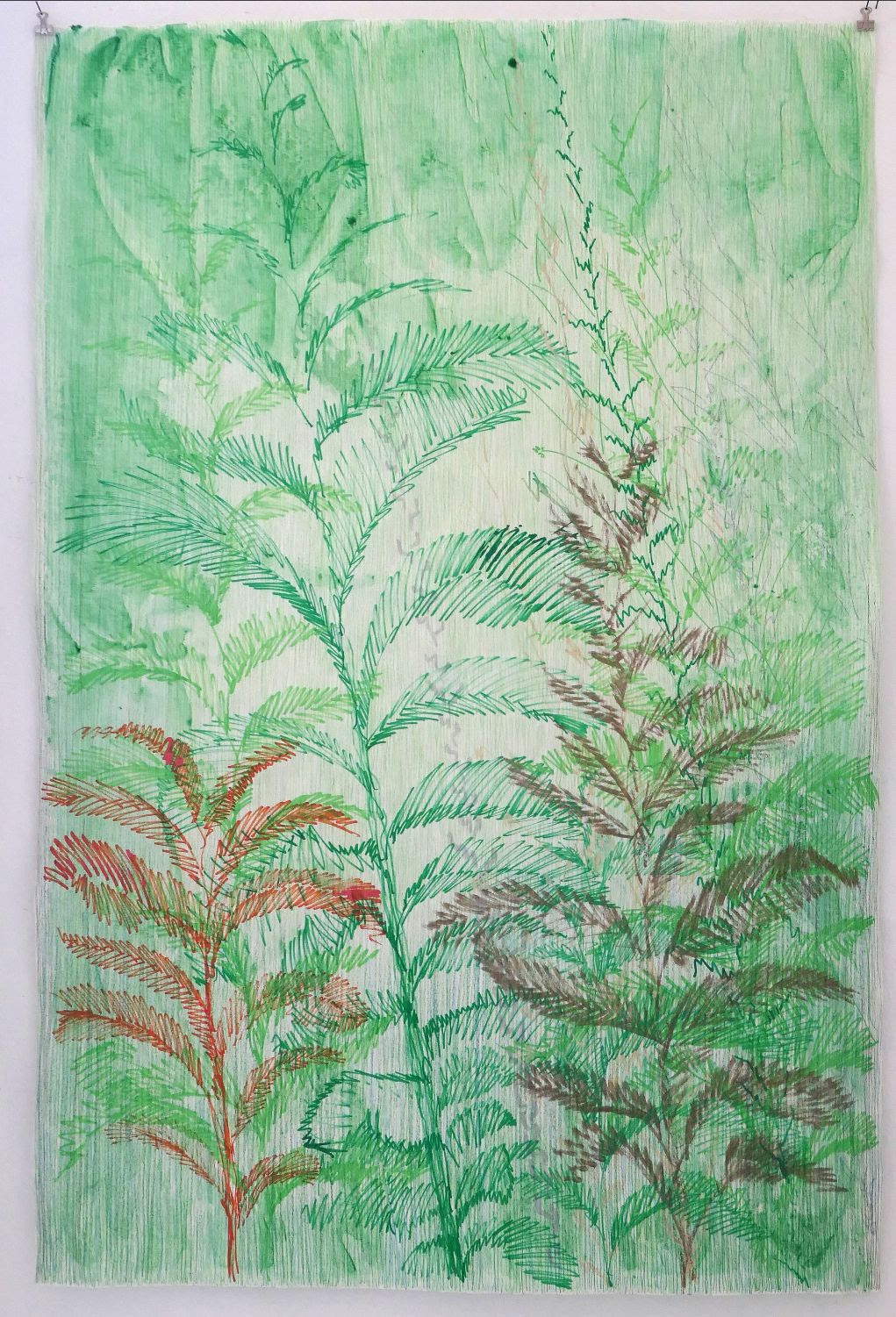
In the Italian panorama of the second half of the twentieth century, the phenomenology of sign becomes more subtle and poetic. Filippo de Pisis captures the phenomenon as a “sparkling” instant of perception, where the sign is an emotional shorthand recording the thrill of encounter. Giorgio Morandi, on the other hand, operates a phenomenology of silence: his drawings and etchings (1940s-1960s) do not describe objects, but investigate the space “between” things, the density of air and the fragility of the sensitive perimeter, making visible the invisible weave that holds the visible together. The sign then becomes a device of attention, a practice of suspension reminiscent of the Husserlianepoché, in which judgment is momentarily bracketed to make room for the pure datitude of the phenomenon. To draw is to pause in the interval, to inhabit the minimal distance between seeing and understanding. Stefano Arienti shifts the phenomenal dimension to the very skin of matter: through processes of manipulation, tracing or perforation, the sign becomes the tactile and transformative experience of a surface that regenerates itself in the time of the artistic gesture, transforming the act of seeing into an exercise of primordial contact with phenomenal reality.
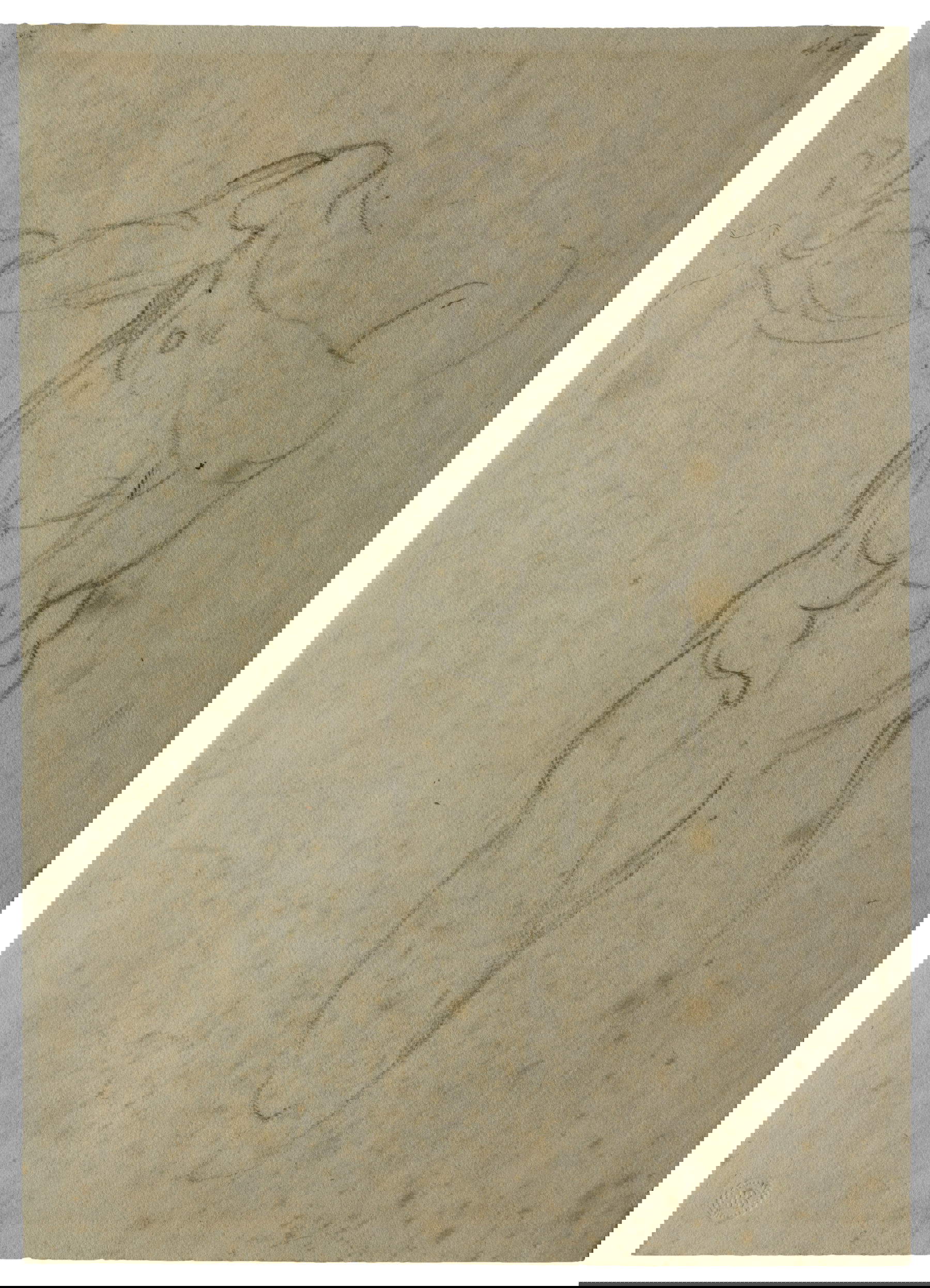
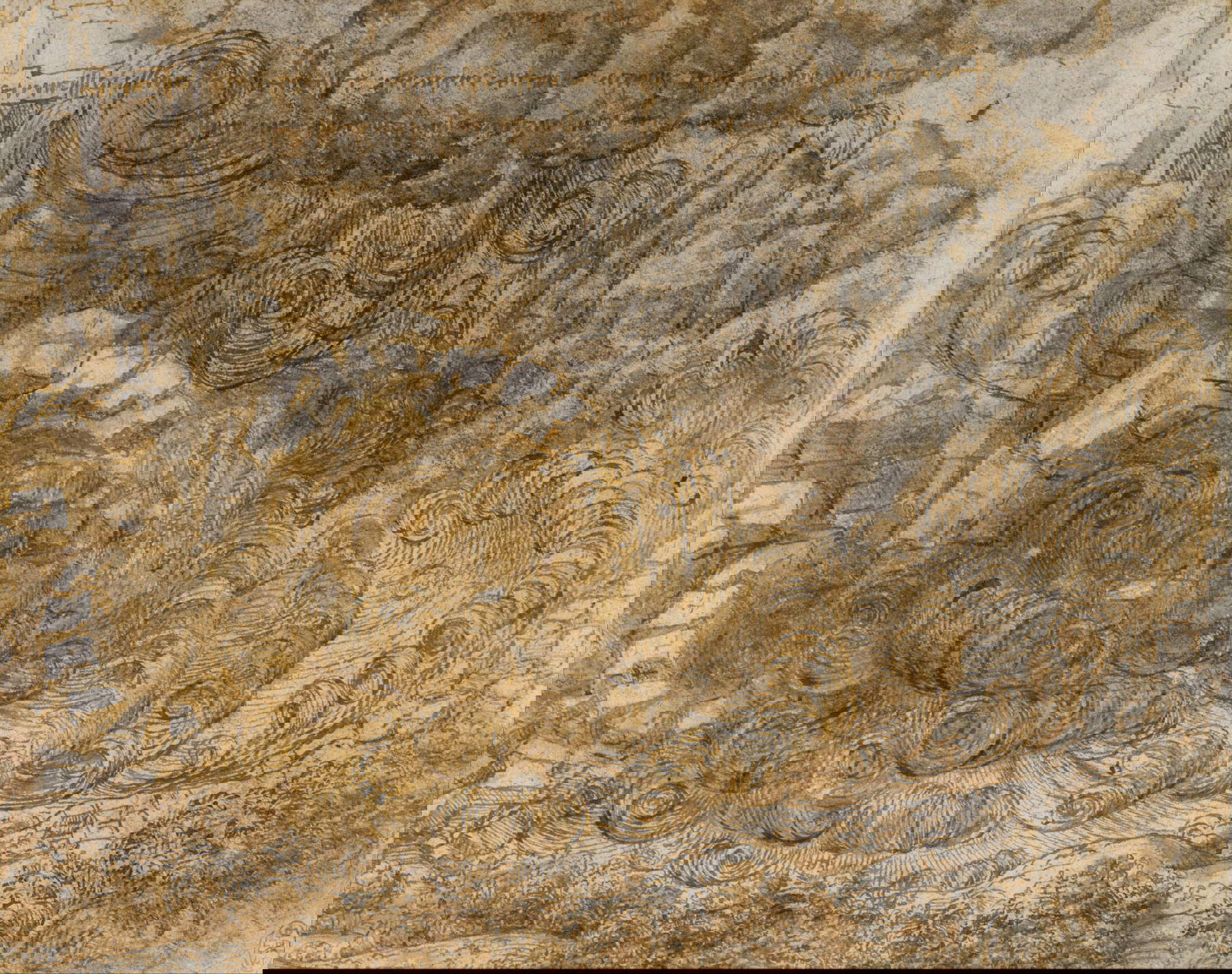
Finally, drawing manifests itself as Energy, a processual force in perpetual becoming that denies the sign any claim to definitiveness. It is the way of Flame: the force that consumes static form to make it vectorial, reflecting Gilles Deleuze’s thought on the “abstract line” that expresses its own vital drive. The energy of drawing should not be understood solely as formal dynamism, but as differential intensity that runs through the sign making it an event. Each line is a vector of invisible forces that are actualized in the gesture, according to a logic that is not representational but generative. In this sense, drawing is configured as a field of tensions in which the visible is only the surface effect of deeper, rhythmic and temporal processes. This conception emerges in Leonardo da Vinci: in his studies on the Diluvi (1517-1518), the sign chases the processes of generation and dissolution of matter in a continuous metamorphosis. Here drawing anticipates a proto-processual conception of reality: there are no stable forms, but transient configurations of energy. The stroke does not delimit, but follows, indulges, intercepts flows. Drawing then becomes an act of synchronization with becoming, a practice that relinquishes total control to adhere to the transformative logic of reality. In this sense, the line definitively eschews any merely descriptive function to assume a generative valence: it does not represent a movement, but is movement; it does not translate an energy, but constitutes its visible actualization. This implies a reconceptualization of the sign as a temporal event, irreducible to a static reading: each trace is the condensation of a duration, the memory of a pressure, the outcome of a trajectory that continues to vibrate even after its completion. This energetic dimension also introduces an element of irreducible instability into the drawing: the form is never definitively closed, but remains exposed to the possibility of its own transformation. The sign, as a vector, constantly exceeds its own limits, opening up the space of representation to a logic of becoming in which the visible is always on the verge of transcending itself. Drawing then becomes an act of synchronization with such dynamics, a practice that does not impose order on the real, but intercepts and extends its lines of force.
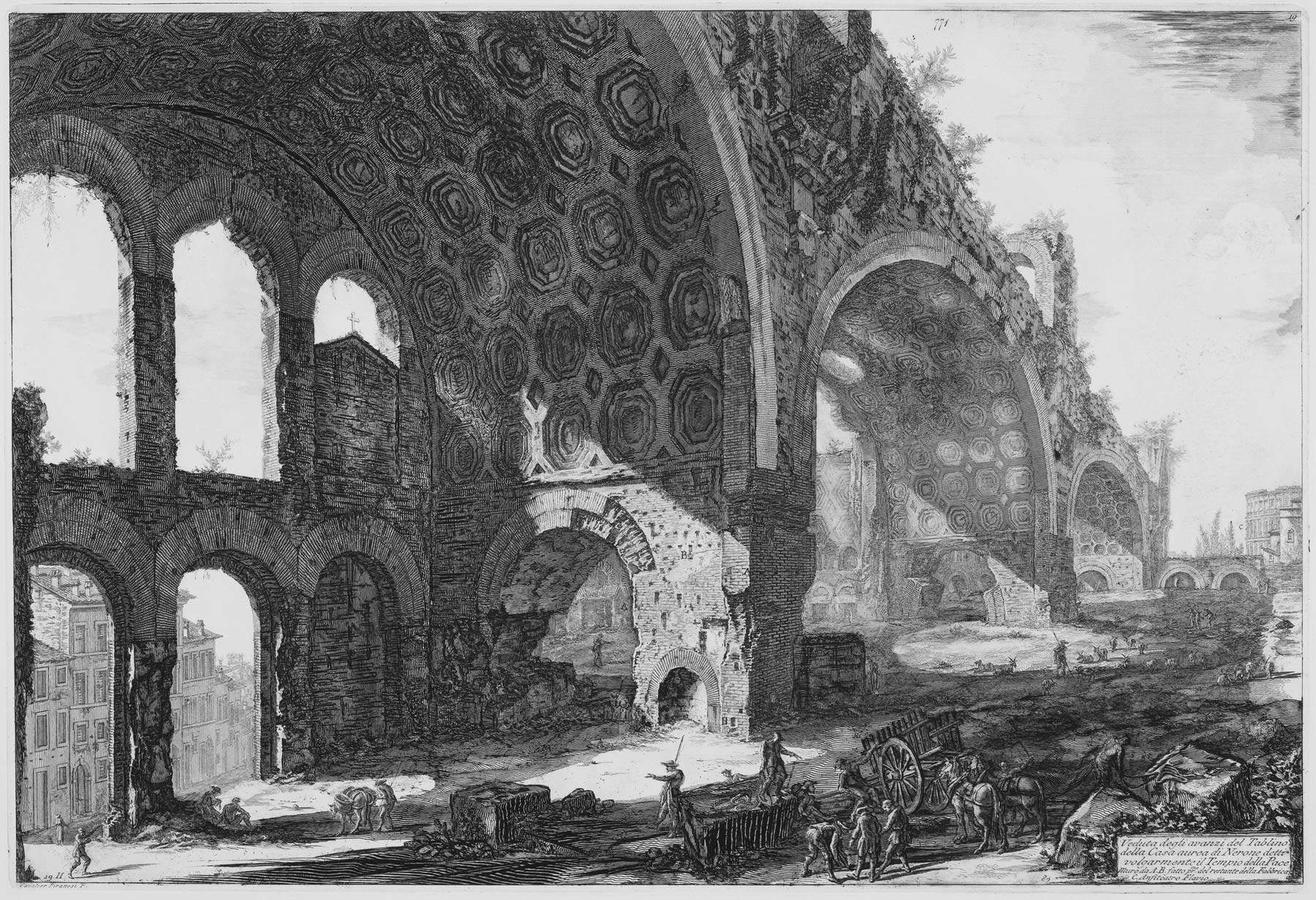
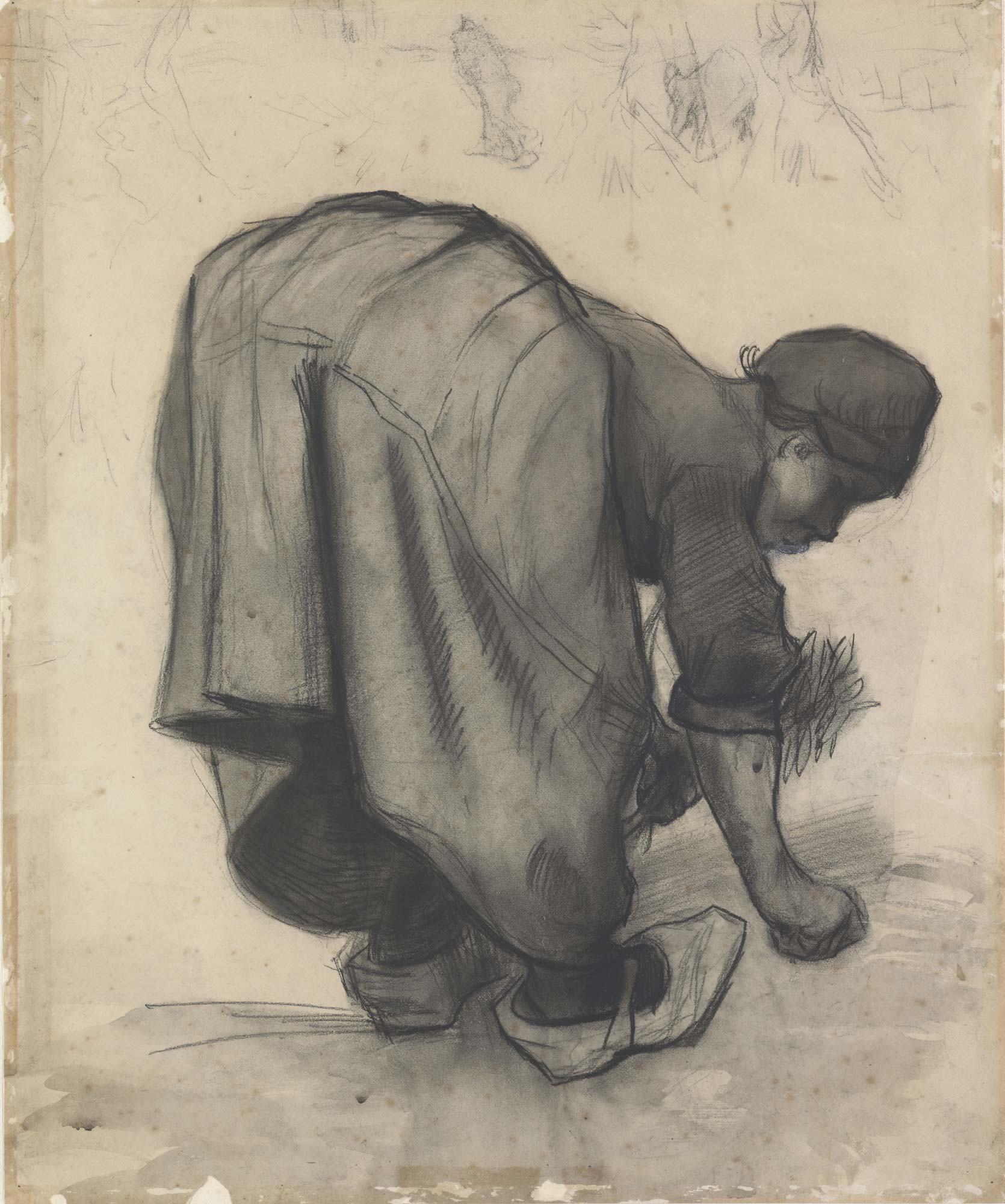
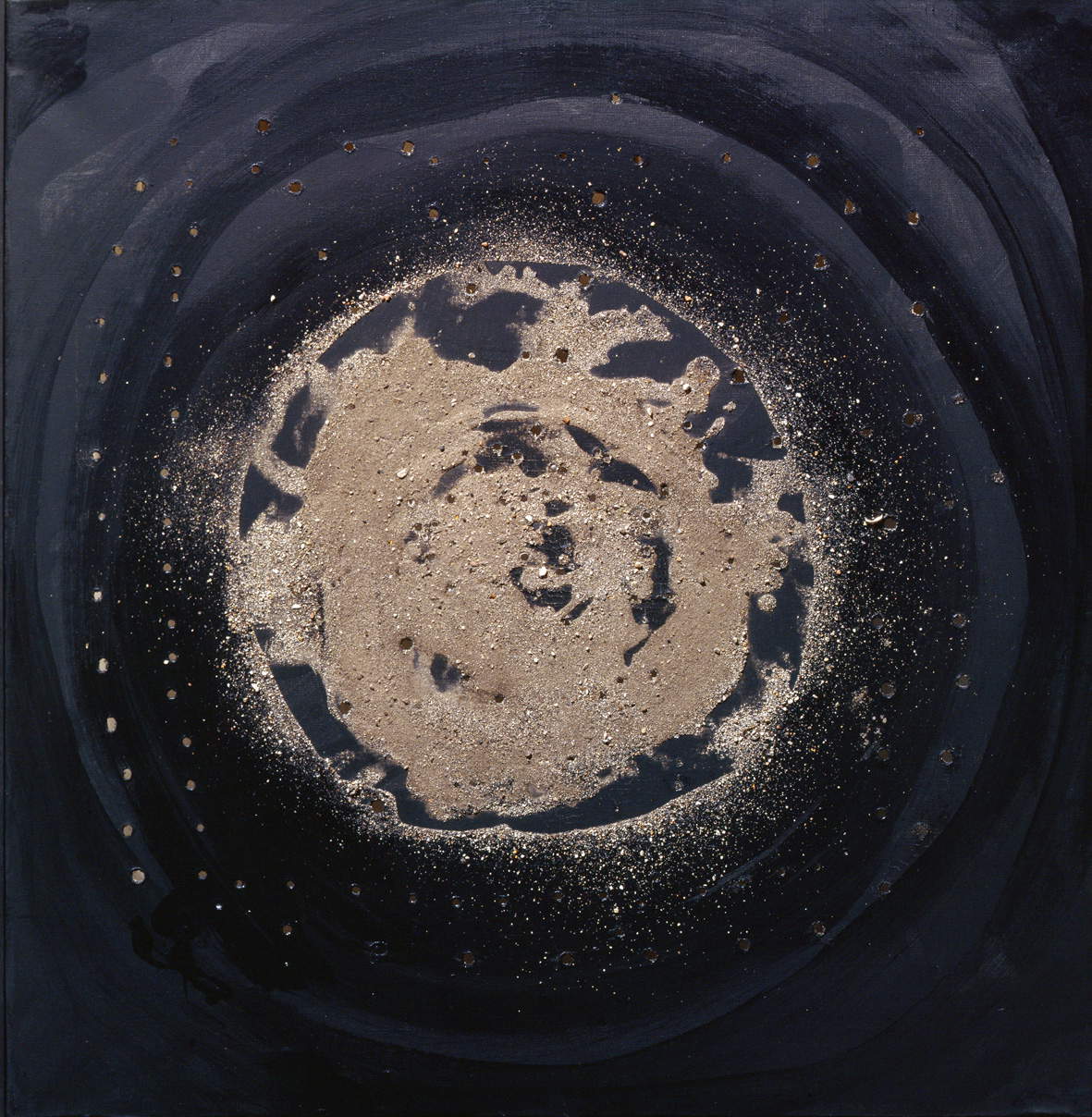
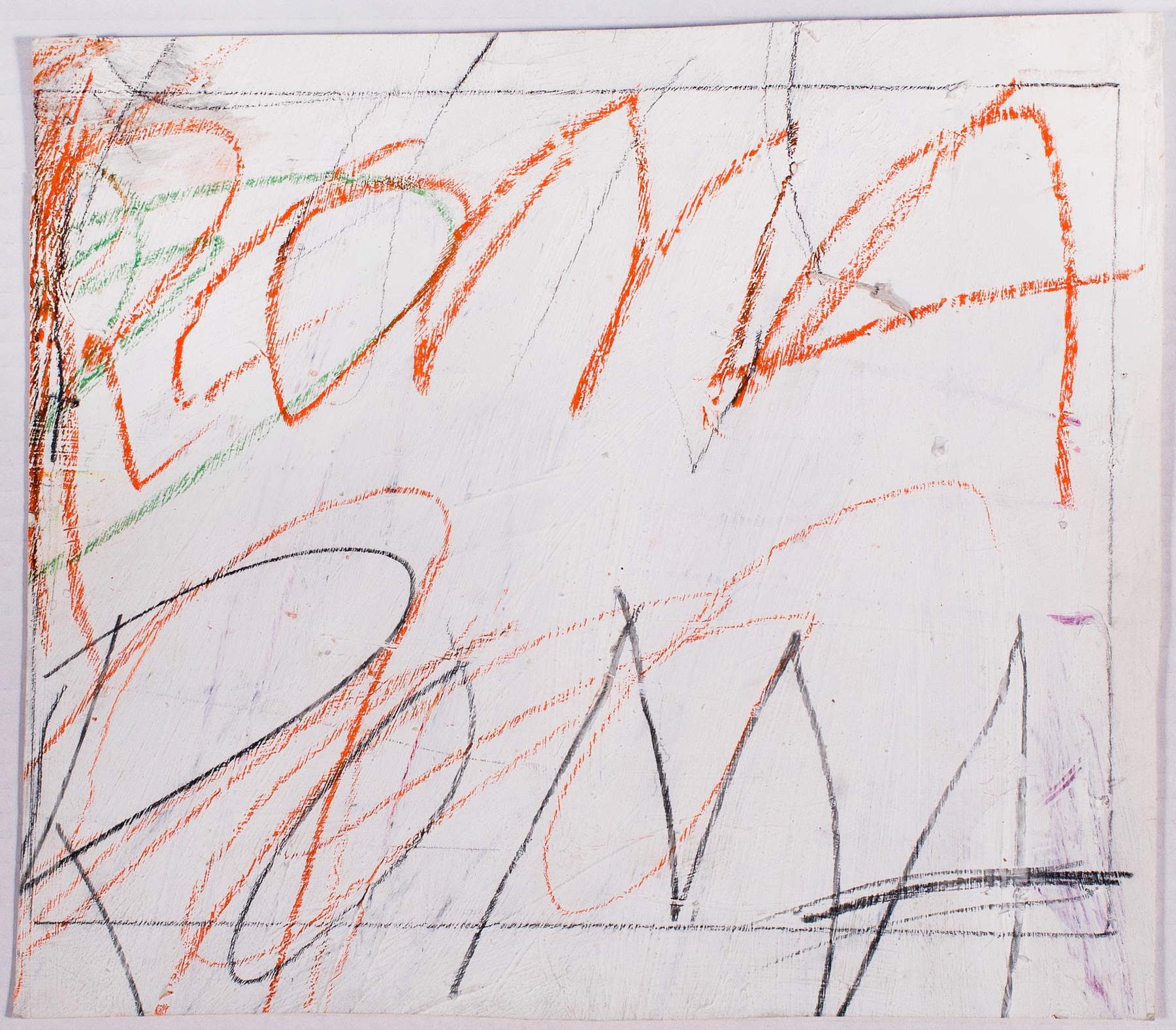
In the eighteenth century, this energy is masterfully embodied in the views of Giovanni Battista Piranesi (1745-1761), where the sign is an explosion of architectural force that disrupts perspective stasis. The energetic becoming finds atmospheric expression in William Turner (1844), becomes paroxysmal in Vincent van Gogh (1889), who wrote that he wanted to show how “this man feels deeply,” and lands at pure speed with Giacomo Balla (1912). This life drive takes on in the contemporary now telluric, now spatial, now conceptual significance. Mario Sironi embodies energy as volume and constructive drive: his sign has the weight of a geological structure, a moral force that shapes space and landscape with monumental density. Lucio Fontana, with his Concetti Spaziali (1950s-60s), makes the ultimate gesture: he releases energy through the physical wound of the support, making the sign an opening to an infinite and “other” dimension. Emilio Prini, a radical figure of Arte Povera, reduces energy to its minimal processual tension: the drawing is a documentation of an action, a seismograph of a force that acts on the world and that often evades final visibility, interrogating the limit between the act and its trace. The ultimate goal of this force can be traced in Cy Twombly’s graphism, where gestural writing transforms energy into an act of ancestral reappropriation of the world.
In design, drawing remains the essential spark that precedes the functionality of artifacts, enabling the resolution of complex problems before their physical materialization. This relevance is confirmed by the growing attention of dedicated exhibition spaces, which highlight how the autographic nature of the sign is now perceived as a guarantee of authenticity in an age dominated by algorithmic reproducibility. Contrary to predictions of obsolescence, the advent of digital has paradoxically emphasized the value of hand drawing as a form of tactile resistance. The three dimensions (Logos, Phenomenon and Energy) should not be interpreted as sequential stages, but as simultaneous aspects of a single ontological act that defines the dignity of drawing. The power of a sign lies in its ability to collapse these categories into a single visual intuition: the Logos without Phenomenon would remain a sterile abstraction; the Phenomenon without Logos would disperse into a directionless chaos; Energy without a formal structure would lack the fulcrum necessary to make it transmissible.
Thus, the full intensity of drawing is achieved in their integration: the idea embodied in experience through a vital becoming thrust. In this perspective, drawing ceases to be an exercise in mimetic reproduction to become an act of radical production of reality. Every line drawn with awareness is, at the same time, thought (decision), experienced (presence) and generated by a force (transformation). The blank sheet of paper ceases to be a passive support and becomes a force field where thought takes shape and energy finally becomes perceptible. Following the lesson of the masters, we rediscover drawing as the purest and most immediate form of knowledge: an act in which the world is not simply shown, but continuously and radically recreated under the tip of the stylus. In conclusion, contemporary drawing emerges as a fundamental multimodal practice for exercising the ability to see beyond simply looking, consolidating itself as the inescapable foundation of all forms of cultural and design production.
Warning: the translation into English of the original Italian article was created using automatic tools. We undertake to review all articles, but we do not guarantee the total absence of inaccuracies in the translation due to the program. You can find the original by clicking on the ITA button. If you find any mistake,please contact us.