





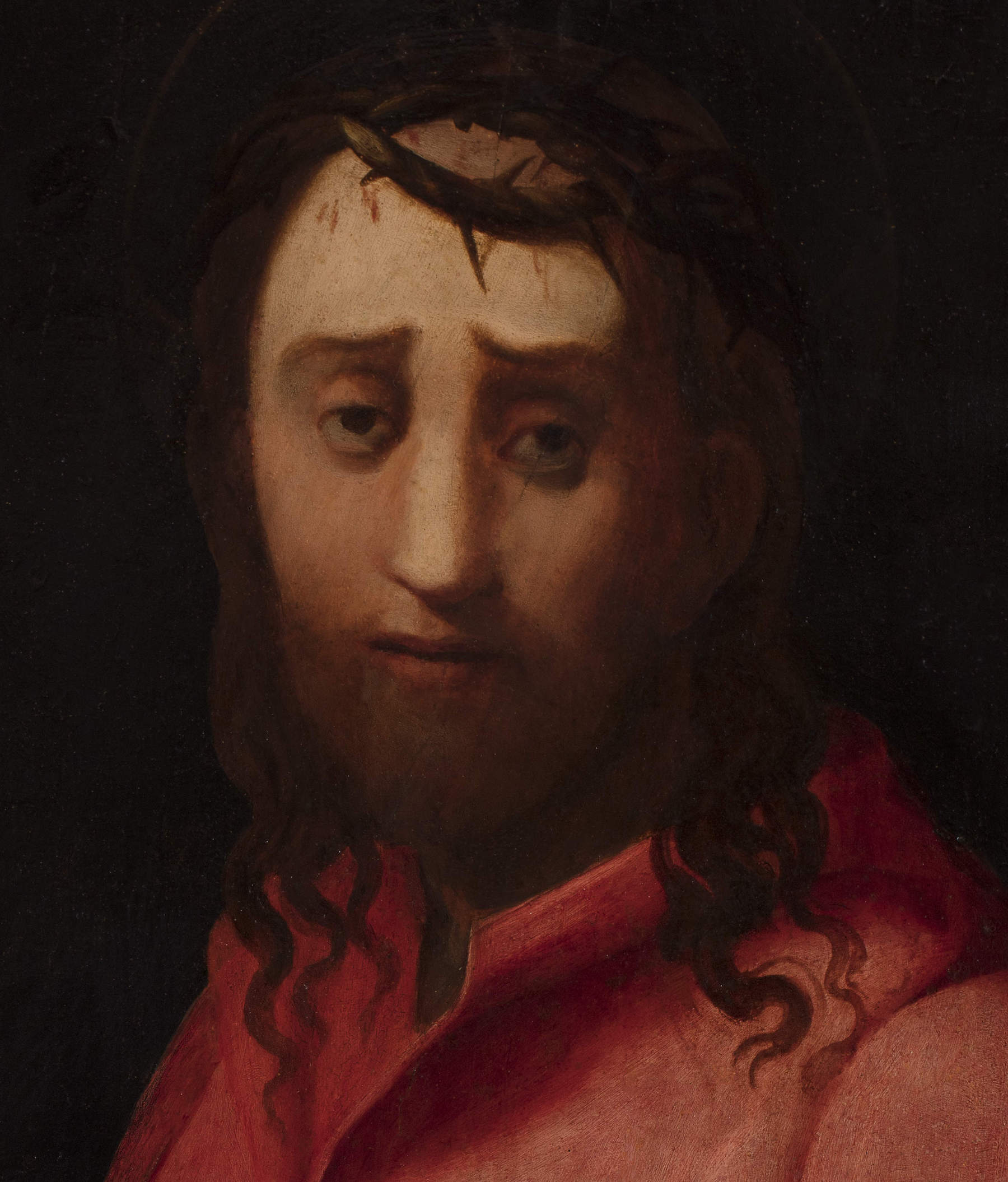
A painting in a private collection in Bologna adds a new piece to the catalog of works by Jacopo Carucci, known as Pontormo (Empoli, 1494 – Florence, 1557). It is a *Vir Dolorum* ( the panel is an oil on poplar wood, and the dimensions indicated in the essay are 66 x 51 centimeters), a devotional image of Christ bearing the marks of the Passion, featured at the center of the volume *Pontormo: Man of Sorrows*. A Rediscovered Work, published by Giammarco Cappuzzo Fine Art (2026, ISBN 9781917976176, 80 pages). The publication reconstructs the critical history of the panel, examines its formal and technical characteristics, and traces the reception of the composition through known replicas and copies. The attribution is supported by Philippe Costamagna, author of the preface and an art historian specializing in 16th-century Italian painting, while Viviana Farina, professor of Medieval Art History, History of Modern Art, and History of Drawing and Printmaking at the Academy of Fine Arts in Naples, delves into comparisons with other works by the painter and proposes a date around 1530.
The issue regarding Pontormo’s work thus concernsthe identification of a painting and the relationship between a possible original model, its derivations, and the physical conditions through which an ancient work has survived to the present day. Over time, the panel has undergone interventions that have partially altered the painted surface, making it necessary to distinguish elements attributable to the original painting from later additions. The recent restoration and scientific investigations provide new data that are evaluated alongside historical documentation and stylistic analysis.
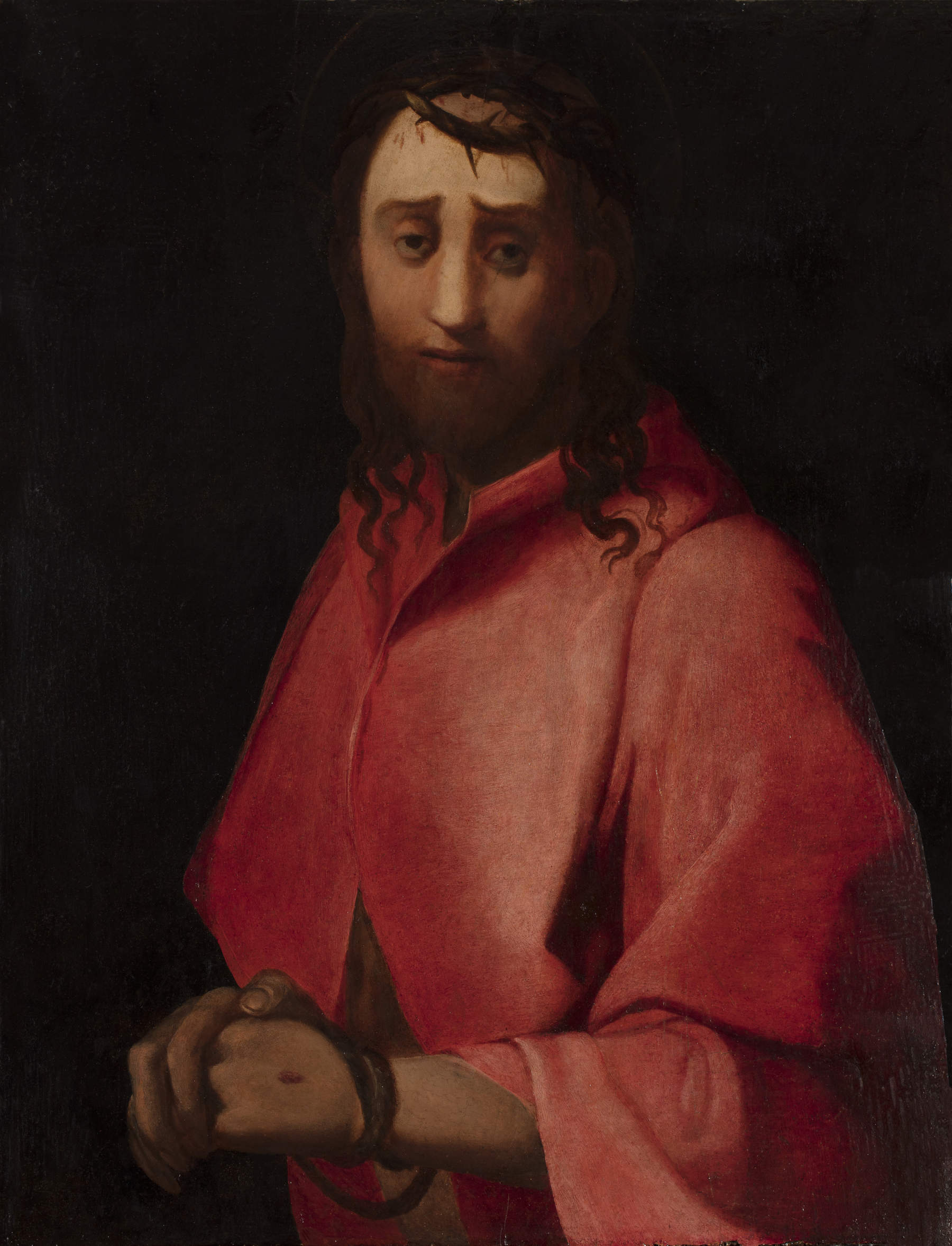
The volume opens with a preface by Costamagna, author of the Pontormo catalog raisonné published in 1994, and continues with a contribution by Farina, titled “A New Pontormo.” The essay addresses the critical history of the composition, its formal interpretation, and the proposed chronology. Another chapter reconstructs the iconographic history of the subject, distinguishing the *Vir Dolorum* fromthe *Ecce Homo* and tracing the spread of these images in Italian and European painting.
Two leading scholars of early 16th-century Florentine painting also contributed to the evaluation of the work. As reported by Giammarco Cappuzzo, Paul Joannides, one of the leading specialists in Italian Renaissance painting, personally examined the painting and confirmed its attribution to Pontormo. The work was subsequently reviewed by Bastian Eclercy, curator of the Städel Museum in Frankfurt and an expert on 16th-century Florentine painting, who reached the same conclusion. Among other projects, Eclercy curated the 2016 exhibition *Maniera: Pontormo, Bronzino, and Medici Florence* and authored two entries on Pontormo for the catalog of the 2013 exhibition held in Hanover.
The story of the painting unfolds through reports and assessments that preceded its recent direct examination. In Cappuzzo’s book, Costamagna recalls the difficulties encountered during the preparation of the 1994 catalog raisonné, when he had to evaluate works previously attributed to Pontormo without being able to examine them in person: in several cases, the available documentation consisted of dated photographs and was therefore not always sufficient to convey the actual condition of the painted surface. Among the works mentioned was a *Vir Dolorum* from a private Florentine collection, published by Roberto Longhi in 1969 in the journal *Paragone*. Longhi had, in fact, linked the work to the frescoes painted by Pontormo at the Certosa del Galluzzo, recognizing a connection to the period when the painter was drawing inspiration from Northern European engravings, particularly those of Albrecht Dürer (during his years at the Certosa, engagement with Northern European printmaking contributed to the transformation of the artist’s visual language, both in the construction of figures and in the expressive intensity of the sacred scenes).
Costamagna recognized characteristics in the painting attributable to Pontormo, but did not consider it possible to confirm its authenticity based on the available reproduction: its state of preservation appeared to have been compromised by restorations that seemed to have significantly altered the original painting, hence the hypothesis that it was a copy derived from a lost original. The possibility of an original by the master, however, was not ruled out: the work photographed by Longhi might preserve traces of an authentic composition that had not yet been identified. The main issue concerned the improper restorations that seemed to have compromised the interpretation of the painting. The challenge, therefore, was to distinguish the artist’s hand from that of a restorer or copyist when the surface had been heavily altered; yet, despite these reservations, the possibility of an original prototype remained open.
Luciano Berti revisited Longhi’s observation less than a decade later. The debate also involvedthe *Ecce Homo* * * at the Musée Massey in Tarbes, traditionally attributed to Pontormo: this painting had entered the collections of the French province in 1855 through a donation by Achille Jubinal, accompanied by an attribution to the master that was subsequently upheld by tradition. Costamagna, however, did not consider it possible to regard it as an autograph work based on the evidence available at the time. The panel, nevertheless, would become significant for comparison with the Bolognese example, particularly in terms of compositional relationships and the iconographic distinction between* Vir Dolorum* and *Ecce Homo*.
A pivotal development, however, occurred during the preparation of the catalog raisonné, when Costamagna received a report from Alessandro Conti regarding a second version of the *Vir Dolorum*, held in a private collection in Bologna. Conti believed this to be Pontormo’s original work, but his death in 1994 prevented him from developing this research in his monograph on the artist. Conti’s volume was published posthumously in 1995 by Jaca Book, without the discovery being included in the text.
It is this Bolognese panel that is now examined in the new publication. Its history allows us to revisit an unresolved issue and to compare the assessments made on the basis of photographs with the findings that emerged from direct observation and technical analysis. The distinction between the painting identified by Longhi and the one seen by Conti is central: the two examples belong to the history of the same composition, but they should not automatically be considered the same object. To investigate the matter further, Viviana Farina consulted Longhi’s archive with the assistance of Paolo Benassai, director of the Longhi Foundation. The research identified three photographs of the composition: two in black and white, cataloged as 0310008 and 0310010, and one in color, cataloged as 0310009. The first two bear a blue stamp on the back with the number “5029” and, respectively, the inscriptions “Pontormo/Private Collection” and “Pontormo.” The color photograph also bears the inscription “Pontormo/Private Collection.” However, none of the inscriptions appears to have been written by Longhi himself. According to the reconstruction proposed in the book, the painting published by Longhi should be considered a work attributable to a more mature Florentine period, while the Bolognese panel corresponds to the example observed by Conti.
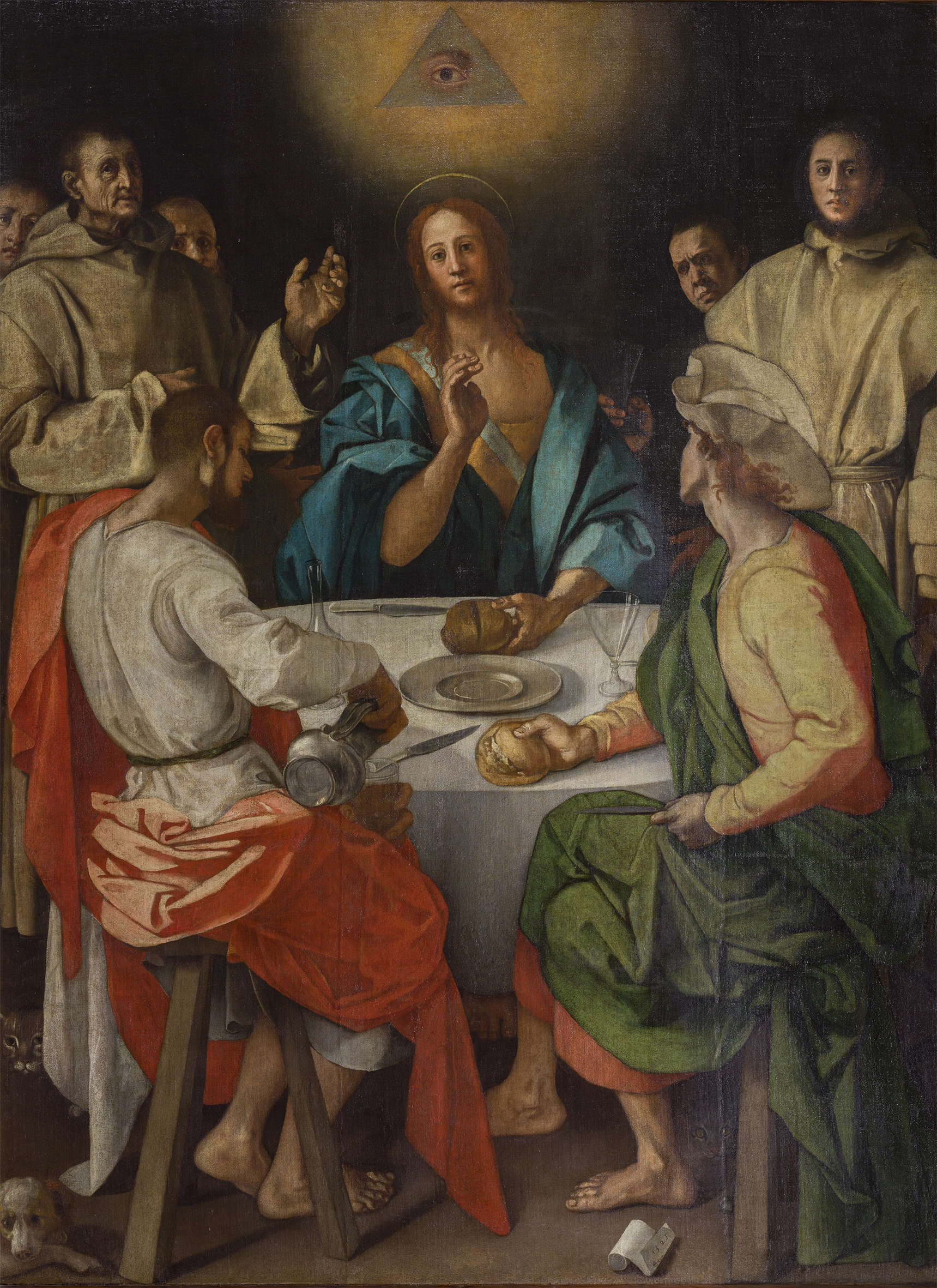
Costamagna supports and confirms the authenticity of the Bolognese panel. While noting the loss of glazes, he identifies certain painterly details that he considers consistent with Pontormo’s hand: the red drapery, the rendering of the hands, the outline of the thumb, and the treatment of the curls framing Christ’s face. This assessment is based on an analysis of details which, despite the alterations to the surface, retain characteristics useful for comparison with other works by the artist. Another factor is the connection to the works produced at the Certosa del Galluzzo: Costamagna specifically cites *The Supper at Emmaus*, now in the Uffizi, noting similarities in the Bolognese panel regarding brushwork and certain anatomical details.
The state of preservation is, in fact, one of the main challenges in studying the artist. The works that have remained in their original locations—such as the altarpieces at San Michele Visdomini, Santa Felicita, and Carmignano—have retained a level of legibility that allows us to trace the evolution of his pictorial language. The situation is different for paintings that entered princely collections and were later transferred to museums, as well as those that entered the antiquities market and underwent subsequent restoration. Among the works preserved in good condition, Costamagna notes the *Madonna and Child with Saint John the Infant*, the *Portrait of Cosimo Pater Patriae*,the Adoration of the Magi, the Martyrdom of the Ten Thousand, and the Portrait of Amerigo Antinori, which are housed in the Uffizi, Palazzo Pitti, or Lucca. Added to these are paintings acquired by Grand Tour travelers, such as the panels depicting the *Story of Joseph* at the National Gallery in London and the *Saint Jerome* at the Niedersächsisches Landesmuseum in Hanover.
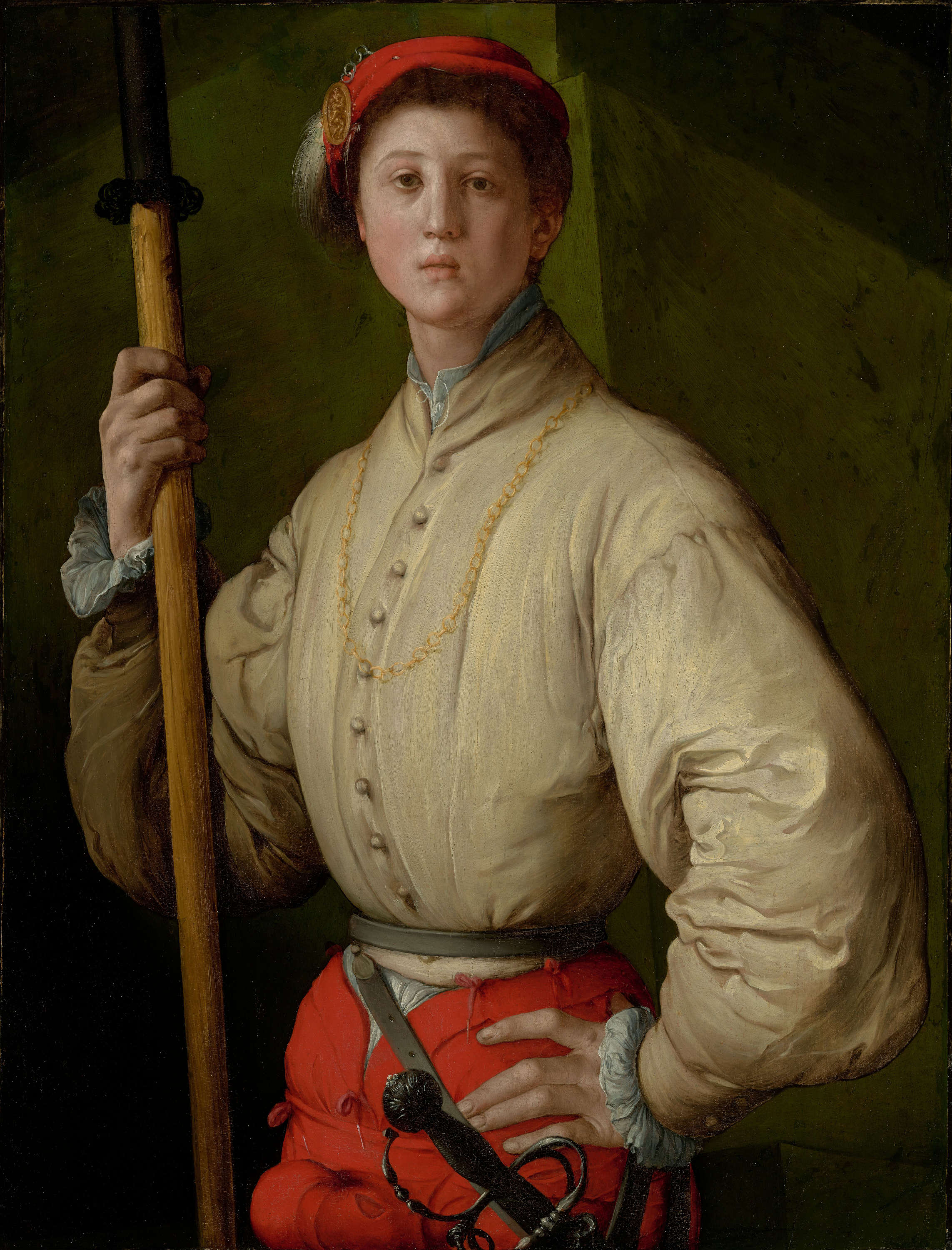
Other works have undergone aggressive cleaning, transfers from wood to canvas, and repainting intended to conceal gaps and abrasions. Among the cases mentioned isthe *Halberdier* at the Getty Museum in Los Angeles, which was transferred from a wooden support to canvas. Other paintings have benefited from recent restorations that have improved their legibility, such as the *Portrait of a Man* from the Cerruti Collection at the Castello di Rivoli and the *Portrait of Giovanni della Casa* at the National Gallery of Art in Washington. However, the *Portrait of Cosimo I in Spanish Attire*, held in a private collection in Seattle, and the *Portrait of Maria Salviati and Cosimo as a Child* at the Walters Art Museum in Baltimore remain difficult to interpret.
The removal of overpainting can reveal important elements for understanding the original painting, but it does not always restore an intact surface. Costamagna cites the *Portrait of a Lute Player* from the Alana Collection in New York and the *Portrait of Francesca Capponi as Mary Magdalene*, held in Seattle, in which the removal of overpainting has allowed for a more precise interpretation of the original composition. In other cases, once the retouching has been removed, extensive gaps emerge that require restoration work.
Similar issues concern the Virgin and Child, once part of the Hester Diamond collection in New York, and the small Saint Sebastian held in a private collection in the province of Imperia, published by Carlo Del Bravo in 1962. In the first case, restoration work resulted in the loss of layers of varnish and the original modeling in some areas of the drapery; in the second, the retouching had just been removed, and the original varnishes were no longer preserved. Despite the difficult conditions, the discernible elements of the Saint Sebastian made it possible to recognize it as a work by Pontormo.
Among the most severely damaged examples, Costamagna also mentions the Sibyl, formerly in the Loeser Collection in Florence and put up for sale by Christie’s in New York on January 31, 2024: the background, the hair, much of the face, and the lower right hand have been repainted, while the pink drapery and the lace on the shirt are heavily worn (the scholar, who had been able to examine the painting firsthand, nevertheless considers it an authentic work by the artist). The Saint Paul in a private collection, on the other hand, features a worn and repainted beard: a more recent restoration was unable to compensate for the loss of glazes, making it difficult to determine whether it is an original work by Pontormo or by his collaborator Jacone. These examples outline the context in which Costamagna situates the Bolognese *Vir Dolorum *. The loss of glazes is evident, but the repainting appears relatively limited. According to the scholar, the preserved paint layers allow for the recognition of Pontormo’s hand and for the work to be dated to the same period as the Certosa frescoes. This is a well-defined position, supported by a reconstruction of the critical history and an analysis of the painting’s physical condition.
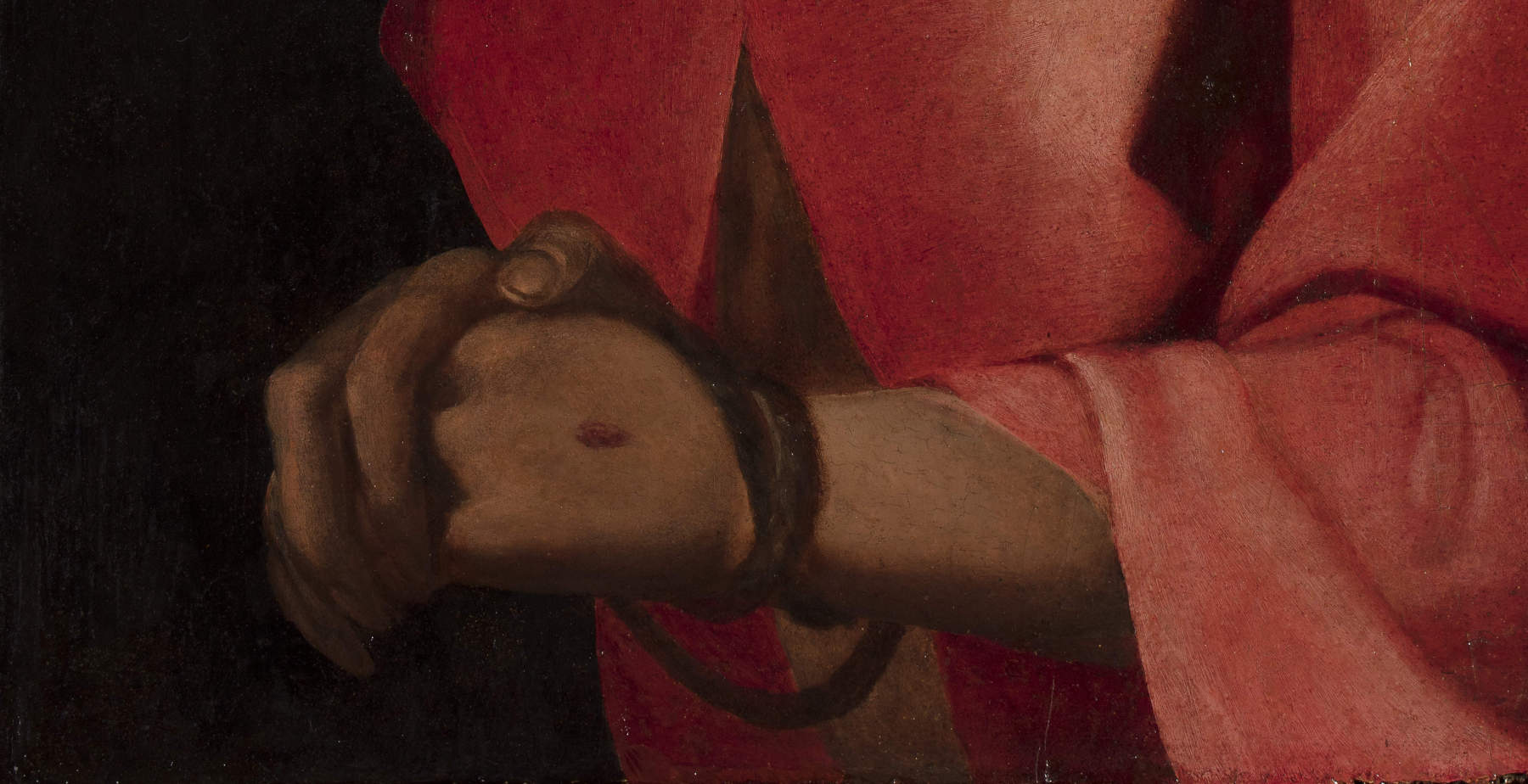
One of the central aspects of Farina’s essay concerns the distinction between the *Vir Dolorum* and the *Ecce Homo*. The Bolognese painting had been presented as an *Ecce Homo*, but the scholar believes it should be interpreted as a *Vir Dolorum*. Both types depict Christ crowned with thorns and bearing the marks of the Passion, but they differ in their theological reference and devotional function.The *Ecce Homo* refers, in fact, to the Gospel account of Christ’s presentation to the people after the scourging, specifically to the passage in the Gospel of John (19:5); the *Vir Dolorum*, on the other hand, does not represent a specific narrative episode but shows the Savior in an image intended for meditation (the wounds, the crown of thorns, and the cloak become symbols of the Passion, while the isolated figure focuses attention on suffering and its salvific meaning). In the Bolognese painting, the decisive detail is the position of the hands. Christ’s wrists are still bound by ropes, and his right hand is clasped over his left, on which the stigmata are visible. It is this element that directs the interpretation toward the Vir Dolorum. For the same reason, the term “Bound Christ,” used to describe the example at the Musée Massey in Tarbes, is considered imprecise: it may encourage the conflation of a moment from the Passion as narrated in the Gospels with the devotional image of the Savior.
The composition features a torso that rotates slightly in space: the left shoulder is lower than the right, while the head, facing forward, is tilted toward the viewer’s right and slightly leaning forward. The figure seems to emerge from the dark background, with a physical presence accentuated by the rendering of anatomical volume. The sunken eyes, gazing toward an undefined point, have a sorrowful and pensive expression; the wavy eyebrows and slightly parted lips contribute to a sense of restrained emotional tension. The absence of a surrounding scene and the centrality of the face make the figure well-suited for individual meditation, in keeping with a sensibility linked to the spread of Devotio Moderna in Flanders and the transformation of devotion in fifteenth-century Europe. The image thus invites reflection on suffering and redemption.
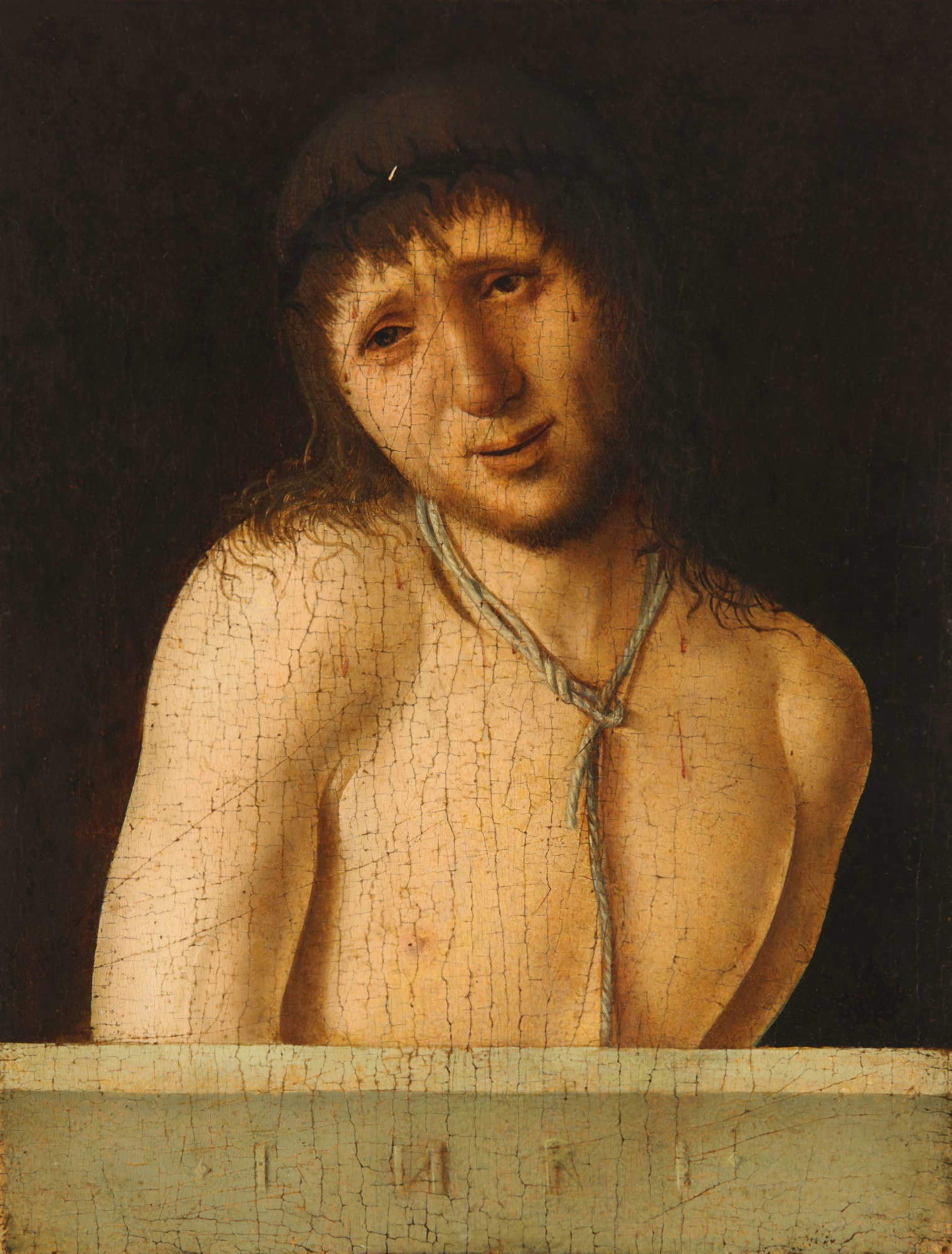
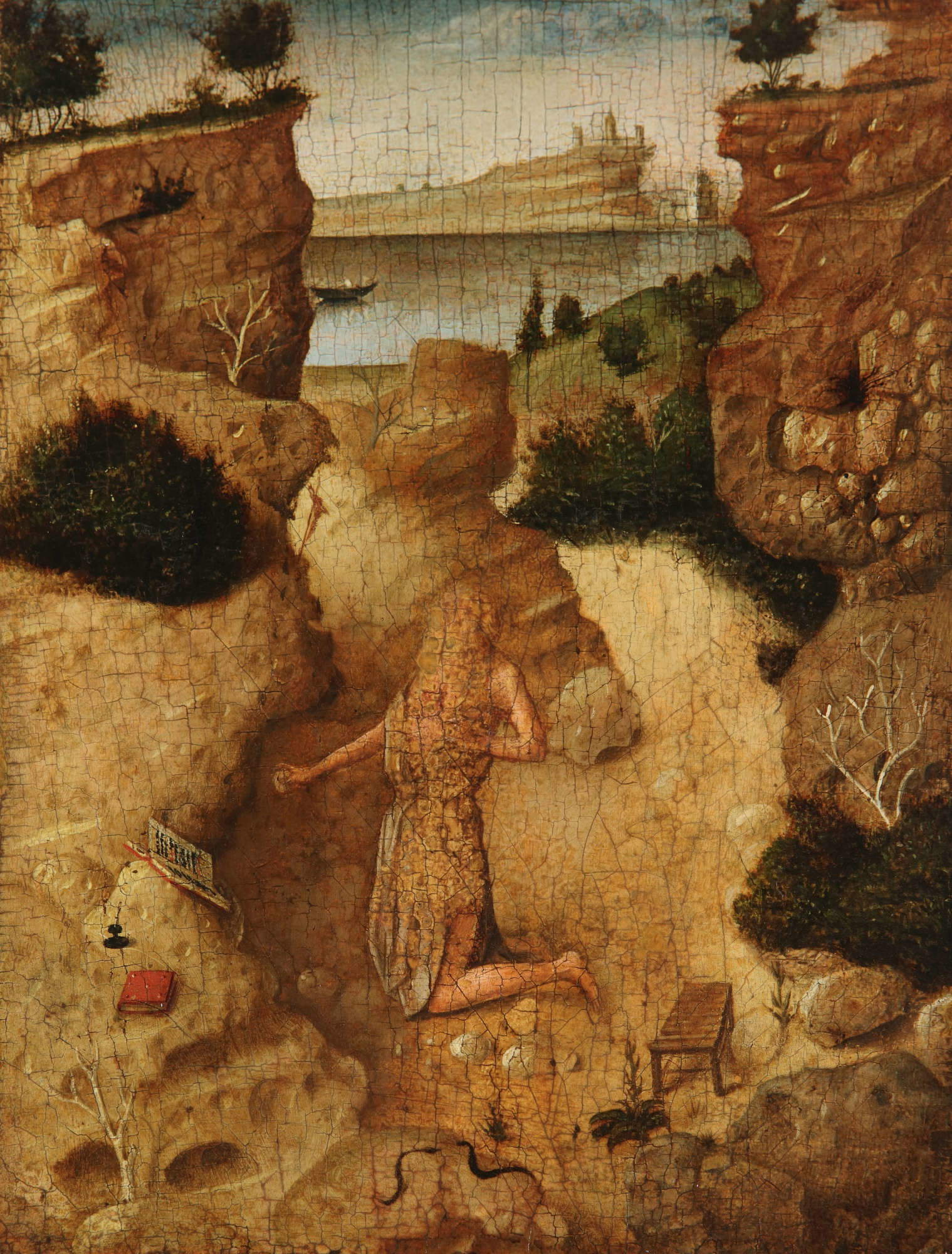
The volumetric construction also evokes a perspective-based tradition that evolved from the explorations of Piero della Francesca to the solutions developed by Antonello da Messina. The body emerges from the background as a solid form, while the head and shoulders are positioned in space with measured precision. The pathos of the image is linked to the transformation introduced by Antonello into Italian painting, through a rendering of the face that combines formal precision with emotional intensity.
Among the proposed comparisons are the Christ at the Column at the Collegio Alberoni in Piacenza andthe *Ecce Homo* painted on the front of a panel measuring 19.5 x 14 centimeters, with a Penitent Saint Jerome on the reverse, formerly in the Wildenstein Collection in New York. Dated around 1465, the latter attests to Antonello’s interest in the optical and perspectival qualities of Petrus Christus’s painting. Another point of reference isthe *Ecce Homo* at the Metropolitan Museum of Art, from the collection of Don Gaspar de Haro y Guzmán, Marquis of Carpio, which Giovan Battista Cavalcaselle considered to date from 1470. Compared to these models, Pontormo’s *Vir Dolorum* stands out for its compositional framing, which includes the hands, and for the absence of exposed nudity. In the Bolognese painting, Christ is depicted with a formal and emotional composure characteristic of the Tuscan tradition, while maintaining a strong expressive intensity.
The Tarbes version also presents conservation issues that complicate the assessment of its execution. The crown of thorns, the beard, the locks of hair, and the shadows on the hands and ropes appear unfinished or faded. Cinzia Pasquali’s restoration report considers the possibility that certain areas rendered in brown pigments may have been stripped away during a previous conservation treatment. Here too, the condition of the surface must be taken into account before drawing conclusions about the quality and authorship of the work. Further evidence of the model’s popularity is a drawing that appeared on the antiquities market, originating from the collection of art historian Paul Oppé (London, 1878–1957) and sold by Christie’s in London in 2006. The sheet, executed in pen and brown ink with brown watercolor on paper, measures 206 x 138 millimeters and bears the inscription “Jacopo da Pontormo” on the reverse. It had been sold by Sotheby’s in 1927 as the work of an anonymous Italian artist and was cataloged in 2006 as a work from the 16th-century Italian school.
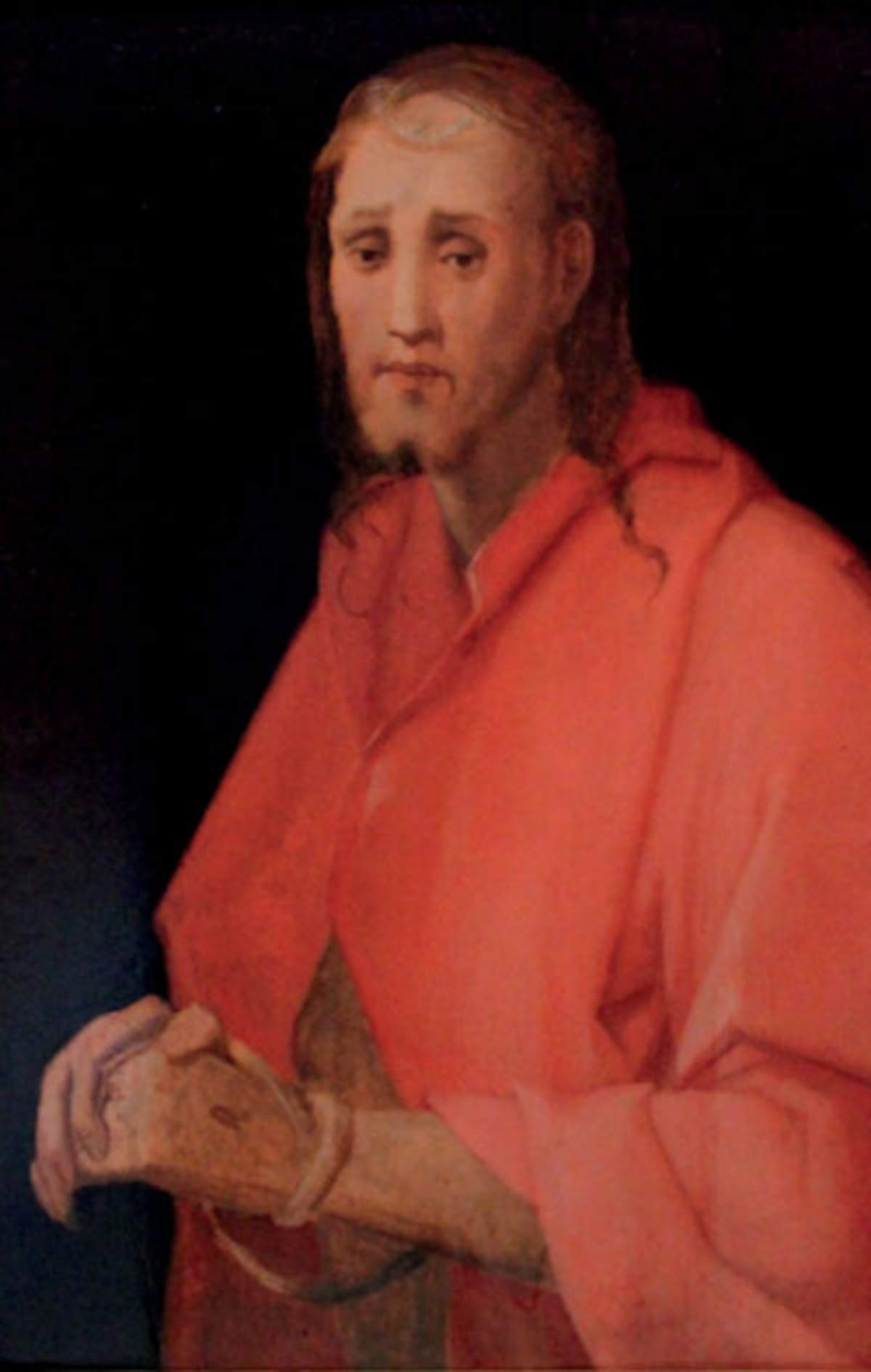
The 2006 auction catalog referenced a previous assessment by Donato Sanminiatelli, who had identified the drawing as an original by Pontormo executed in the style of Dürer. The attribution was not accepted at the time of the sale. The sheet is considered a graphic exercise derived from an unknown prototype—perhaps a cartoon—rather than a direct preparatory study for the two painted panels. The precision of the line work places it within Pontormo’s inner circle, around the mid-16th century.
The reconstruction includes at least four other painted versions held in private collections. An early version, known only through incomplete documentation, depicts the bust of Christ without hands. Another version is an oil on canvas measuring 58.5 x 51 centimeters, possibly dating to the early 17th century. This copy reproduces the Bolognese panel, but the format has been enlarged at the top and along the sides. A second copy on canvas, measuring 64 x 51.5 centimeters, is currently of unknown location. It was auctioned at Sotheby’s in New York on April 7, 1988, with an attribution to the circle of Pontormo—deemed unlikely—but with a correct iconographic title: *Christ as the Man of Sorrows*. The last known version is a replica on panel that can be evaluated only through a photographic reproduction. The available evidence does not support the claim that it is an autograph work. Overall, the existence of numerous versions indicates that the model enjoyed considerable popularity, but it does not automatically allow us to determine which example is the original or to attribute every replica to the master’s workshop.
The chronological question is also addressed through the possible relationship between the face of Christ and Pontormo’s own features. In his monograph on the painter, Alessandro Conti observed that the artist has been depicted in numerous authentic images, invoking the Renaissance motif whereby the painter ultimately represents himself in his own works. This volume takes up this suggestion and explores the possibility that the face of the Vir Dolorum, though characterized by stylized features, reflects the master’s likeness.
The primary cultural reference is Dürer, who depicted Christ on multiple occasions in isolated, devotional images. Examples includethe Manof Sorrows at the Column, engraved in 1509,the *Ecce Homo* in a Landscape with Bound Hands, executed in drypoint in 1512, andthe SeatedMan of Sorrows with the Instruments of the Passion, created in etching in 1515. Added to these works isthe Self-Portrait as Christ Seated in the Passion, a leadpoint drawing on blue-green paper, signed with the artist’s monogram and dated 1522, formerly housed in Bremen and destroyed during the bombings of World War II. The date of the drawing provides a point of reference for understanding the spread of this genre, in which the artist may take on the likeness of the Savior. While it does not demonstrate a direct connection to the Bolognese painting, it places the hypothesis within a context in which the image of Christ and the artist’s self-portrait could overlap on a symbolic level.
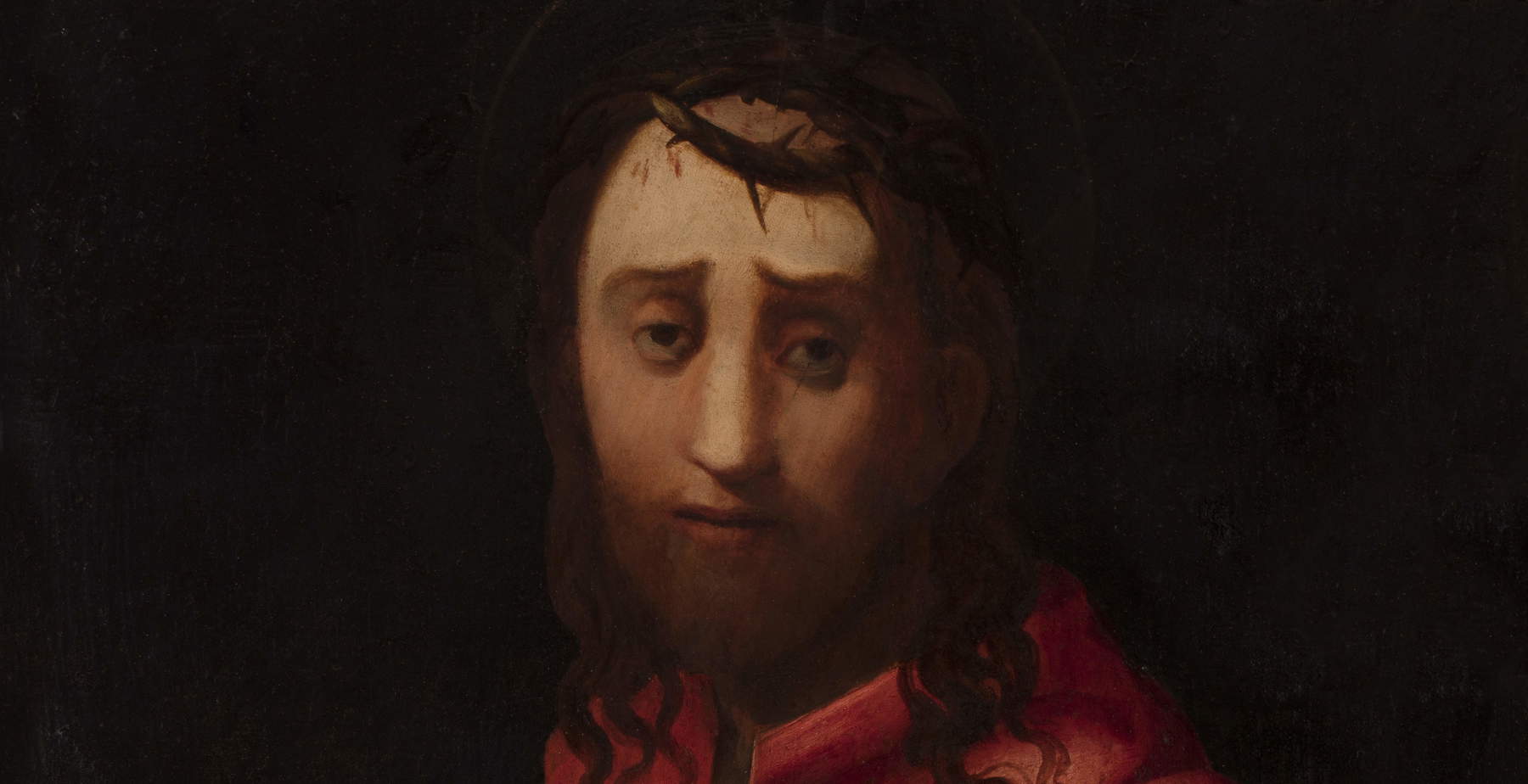
Infrared reflectography of the panel has been compared to several portraits considered to be faithful depictions of Pontormo. The first reference is Cristoforo Coriolano’s woodcut, based on a drawing by Giorgio Vasari, which was used for the portrait of the painter that opens the *Vite* in the Giunto edition of 1568. Possible similarities have been identified in the shape of the eyes, the movement of the eyebrows, and the elongated nose. The comparison continues with the *Bust of a Bearded Man* from the Uffizi’s Department of Drawings and Prints, inventory no. 6719 F, believed to be inspired by the master’s likeness, and withthe *Self-Portrait on Red Stone* housed in the same institution. The latter is a study for the pensive head gazing at the dead Christ in the altarpiece of the Capponi Chapel in Santa Felicita. Luciano Berti was the first to recognize the painter’s features in the drawing.
The resemblance is also linked to the self-portrait painted on the altarpiece and to drawing number 5542 in the Horne Museum in Florence, in which Pontormo gazes at himself in a mirror with a pensive expression. A broad forehead, an elongated nose, and rounded corners of the eyes have been identified in the face of the Vir Dolorum —features consistent with those found in the artist’s known works. The hypothesis, however, remains interpretive and does not constitute independent evidence for attribution: the possible resemblance to Pontormo must therefore be considered alongside stylistic comparisons and the reconstruction of the context in which the painting may have been created. Furthermore, the face belongs to an established iconographic type, in which the representation of Christ adheres to conventions that limit the identifying value of individual features.
The dating to around 1530 is linked above all to the period when Pontormo worked at the Certosa del Galluzzo. In 1523, during the plague that struck Florence, the painter withdrew to the monastery “taking only Bronzino with him,” as Vasari recounts. Between 1523 and 1525, he painted five lunettes in the Great Cloister, each dedicated to a different episode of the Passion: Christ in the Garden of Gethsemane, Christ Before Pilate,the Ascent to Calvary, the Lamentation over the Dead Christ, and the Resurrection. The Crucifixion, which would have completed the cycle, appears never to have been painted.
The frescoes at the Certosa represent a significant turning point in the evolution of Pontormo’s artistic language and in the definition of the Mannerist style. Vasari criticized his adherence to Dürer’s models, while later critics have regarded them as a pivotal moment in the artist’s creative development. The first documented payment for the cycle dates to February 1522, a date to be read as 1523 according to the common calendar. The Carthusians continued to make payments to the painter until 1527, by which time he had long since ceased to reside at the monastery and had already completed *The Supper at Emmaus* for the refectory—now in the Uffizi and dated 1525. The canvas was commissioned by Leonardo di Giovanni Buonafede, depicted in the weathered face of the elderly man on the left. The composition draws inspiration from Dürer’s *Small Passion*, confirming the role of Northern European printmaking in the painter’s artistic development. The connection to the *Vir Dolorum* is also evident in the dark background, which helps create a visual and thematic link between the two works.
This interpretation does not rule out a reference to the thought of Erasmus of Rotterdam, whose influence is cited as a possible element of the cultural context. If Christ’s face were modeled after the artist’s own features, the painting could also represent a form of personal reflection on the Passion. The simplicity of the composition makes stylistic comparisons more difficult. The painting lacks hands with articulated fingers and complex drapery, in which Pontormo often developed the hooked folds characteristic of this period. Some details, however, offer points of comparison. The right sleeve of the Vir Dolorum, with its folds and creases, can be compared to that of Leonardo di Giovanni Buonafede in *The Supper at Emmaus*. The rendering of the right thumb also bears similarities to the hands of Christ and Saint James as they grasp the loaves, while the loose curls echo those framing the face of the blessing Christ seated at the table.
A further comparison concerns the Boy with a Turban, on the recto of sheet 449 F in the Uffizi, a study related to the hairstyles of the Madonnas painted during the same years. The two half-length figures, though facing in opposite directions, share a rotation of the torso and a slight downward tilt of the outer shoulder.
The restoration report by Cinzia Pasquali of Arcanes and the microanalytical investigations conducted by Elisabeth Jägers and Erhard Jägers on April 11, 2024, constitute a significant part of the volume. The examinations describe the support, the ground, the palette, and surface alterations, providing elements to be correlated with the proposed dating. The support consists of two poplar panels, with vertical grain and quarter-sawn cut, joined by a flat joint that is offset from the composition and slightly oblique. The joint is visible on X-rays and under oblique light. On the reverse side is a truncated cone-shaped crossbar, inserted into a horizontal groove to prevent the panel from warping. The edges show no signs of cutting and retain residues from the preparation. According to the report, these elements suggest that the current dimensions are the original ones. The type of support is consistent with the period hypothesized for the work’s creation. The panel is stable, but a severe infestation of wood-boring insects has caused significant damage, including cracks, fissures, and gaps.
The white ground consists of animal glue and calcium sulfate. Above it, an oil paint layer containing orange and black pigments was identified, separating the ground from the subsequent colored layer. Infrared reflectography did not reveal a preparatory drawing; however, the results do not allow us to completely rule out the presence of a drawing made with materials transparent to infrared radiation, such as red chalk. The painting is in oil and combines transparent glazes with thicker, opaque brushstrokes used to define details and highlights. The application appears to have been executed quickly. The color palette is limited and includes lead white, red ochre, cinnabar, brown ochre, umber, yellow ochre, carbon black, and red lacquer. According to experts, the technique is consistent with that observed on other panels by Pontormo.
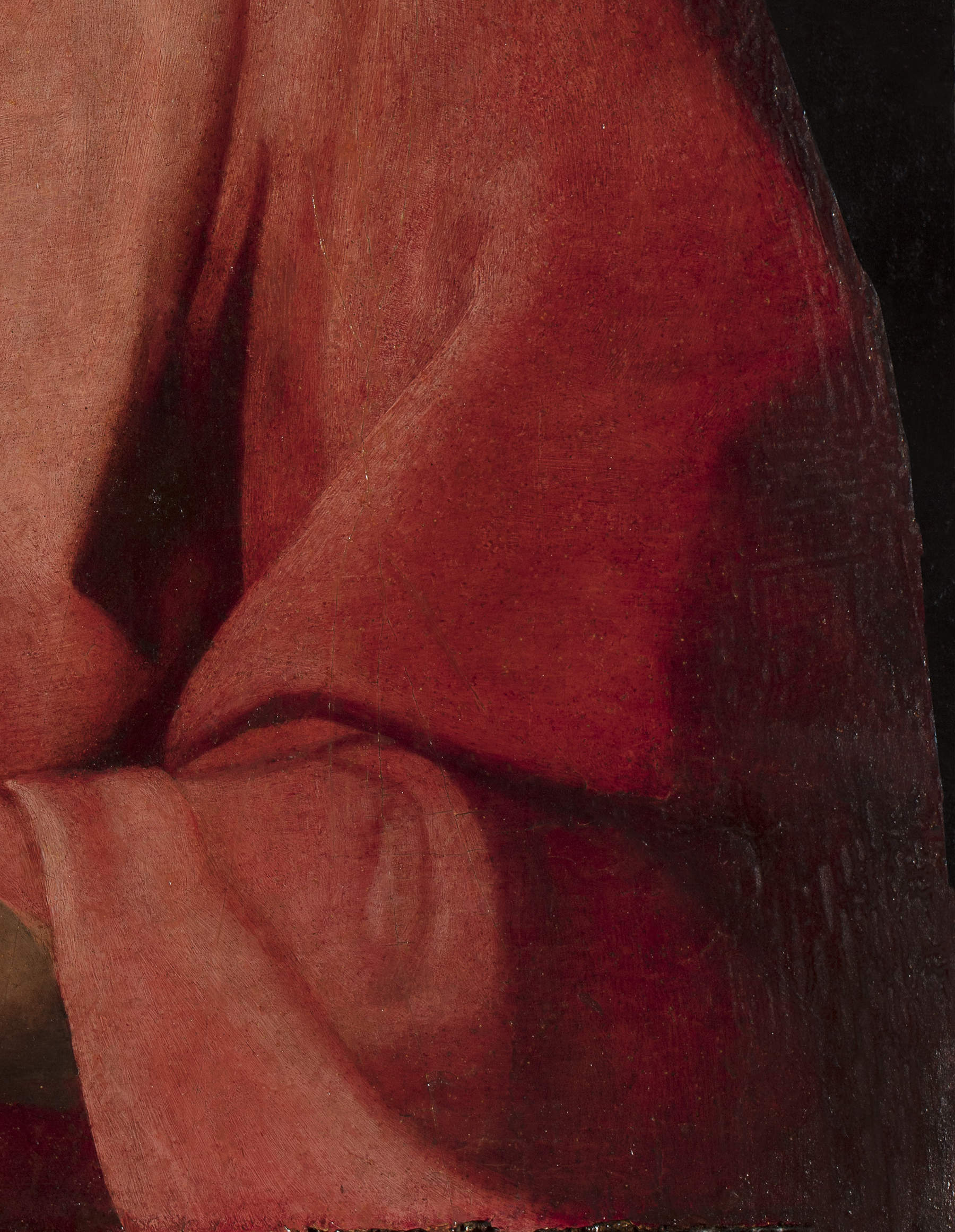
Examination of the surface revealed very fine cracks running along the wood grain, as well as some premature cracking in areas where the paint layer is thicker. The latter have been attributed to a drying defect. There are also depressions and small lacunae. A thick layer of oxidized varnish covers the painting and, under ultraviolet light, exhibits a greenish fluorescence consistent with a natural resin. UV photography revealed numerous retouches, both old and recent, distributed across the entire surface. The restoration also revealed that the ground had been entirely repainted black. This intervention partially covered the red cloak on the right side and may have been carried out to conceal wear on the paint layer, as well as some holes and burn marks in the upper right corner. The red cloak also showed repainting at the edges, especially on the left side.
The additions are distinguished by their excessive thickness and, in some places, by extending beyond the original contours. These alterations have changed the color perception of the image but do not compromise the stability of the paint layer. Even the micro-lacunae and areas of lifting appear stable. The investigations thus allow us to distinguish aesthetic issues from the structural condition of the painting. The surface has undergone interventions that have altered its appearance, but the panel retains a significant portion of the original painting.
The Christus Dolens or Vir Dolorum depicts Christ in his moment of suffering, often in half-length, with visible wounds and a crown of thorns. This type of depiction derives from Byzantine figurative traditions, particularly the Christus Patiens andthe Akra Tapeinosis, but took on a distinctive form in Central and Northern Europe between the 14th and 15th centuries. In Germany and the Netherlands, the figure of Christ is depicted with intense realism, emphasizing the Savior’s wounds and solitude. The term *Vir Dolorum*, linked to Isaiah 53:3, does not refer to a specific episode in the Gospels, but rather to a timeless image in which Christ shows the faithful the signs of the Passion. He is a man despised and rejected. Its devotional character distinguishes this type of image from depictions that illustrate a specific moment in the Gospel narrative.
The volume also addresses the theme ofthe *Imago Pietatis*. According to Erwin Panofsky’s position, shared by Andrea De Marchi, the definition of Christ in Pietà should strictly refer to the micromosaic preserved in the Basilica of Santa Croce in Gerusalemme in Rome, bearing the inscription “The King of Glory,” linked to Psalm 24. The artifact has been associated with the legendary apparition of Christ during the Mass of Saint Gregory. Its origin remains a matter of debate: it could be a Paleologian work that arrived in Italy at the end of the 14th century, or a work from Apulia or Sinai dating to the early 14th century. The spread of this style in the 15th century is linked to the spiritual movements of the Devotio Moderna, which arose from the teachings of Geert Groote (who died in 1384), and to *De Imitatione Christi*, considered the movement’s manifesto.
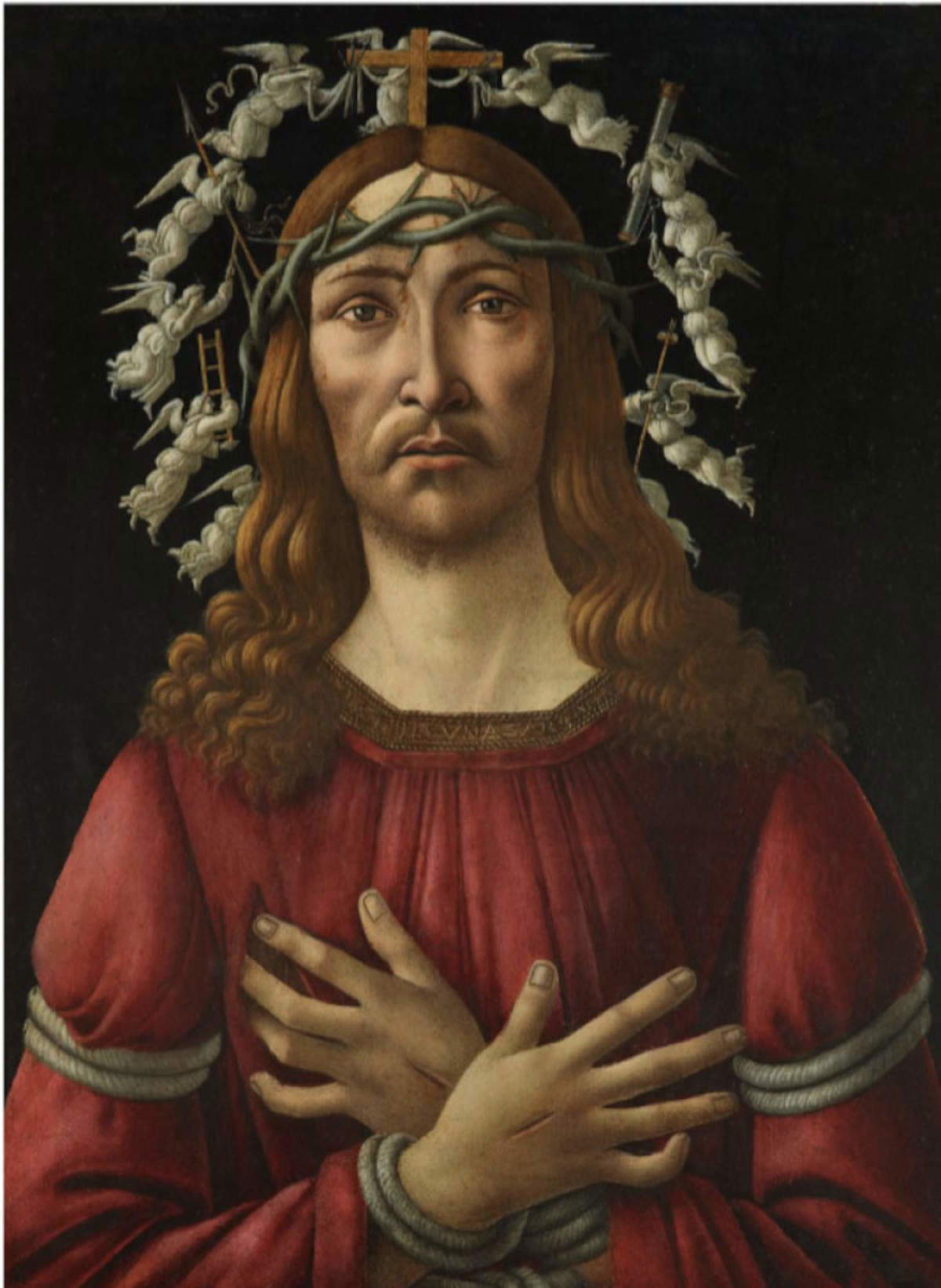
During the Renaissance, the image of Christ of Sorrows was adapted to new sensibilities without losing its devotional function. In numerous Northern European examples, Christ is depicted alone to emphasize his isolation. The blood flowing from his wounds takes on a redemptive meaning and may be collected in chalices, alluding to the Eucharistic mystery. This association gave rise to the German term* Eucharistischer Schmerzensmann* (Eucharistic Christ of Sorrows). The iconographic trajectory also includes the passage from Isaiah 50:4–7 and the use of the instruments of the Passion as aids to meditation: the column, Veronica’s veil, the bundle of rods, and the nails. The volume examines the various approaches experimented with by Dürer, from the Karlsruhe panel of 1492–1493 to the full-length prints, for which some scholars have used the term Lebender Schmerzensmann, meaning “Living Man of Sorrows.”
The distinction fromthe *Ecce Homo* remains fundamental. The latter is rooted in the Gospel account of John and depicts Christ after the flagellation, wearing the crown of thorns, holding the reed as a scepter, and clad in a purple or red cloak. The *Vir Dolorum*, on the other hand, is a devotional image intended for personal meditation, whereasthe *Ecce Homo* illustrates a narrative scene linked to Jesus’s condemnation. This difference helps us understand the function of the Bolognese painting and the role of iconographic identification in the new publication.
In the Florentine context, this genre developed in the fifteenth century through a balance between anatomical realism and idealization. Suffering is depicted directly, but Christ often maintains a composed dignity, influenced in part by the Neoplatonic interpretation of divine beauty. Notable examples include the detached fresco by Masolino da Panicale from the Baptistery of Empoli and the works of Donatello, ranging from the marble slab housed at the Victoria & Albert Museum, dated around 1435, to the bronze relief on the altar of the Saint in Padua.
The influence of Donatello’s approach is evident in Giovanni Bellini’s Dead Christ at the Correr Museum in Venice and in Andrea del Castagno’s lunette from the refectory of Sant’Apollonia—now in San Salvi and dated around 1450. A comparison with the Pietà reveals a difference in the composition of the scene: in the *Vir Dolorum*, Christ is alone, and his suffering is expressed without the mediation of other figures; in the Pietà, however, the suffering is shared with those who support or surround the body.
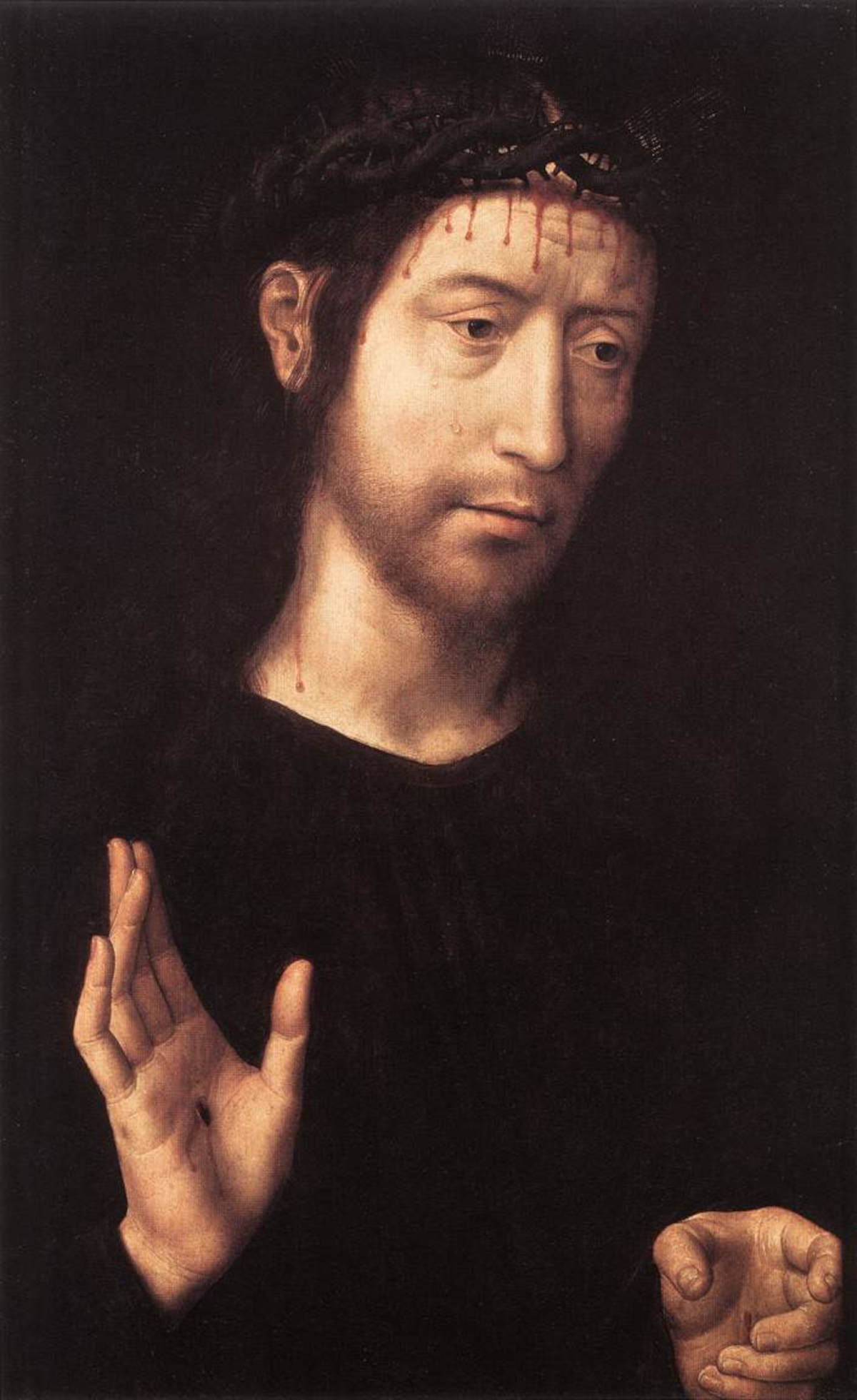
The volume also references the panels by Sandro Botticelli, ranging from the example at the Detroit Institute of Arts—dated to 1485–1490—to the one at the Accademia Carrara in Bergamo, and including the work that returned to auction at Sotheby’s in January 2022. Another point of reference is Hans Memling’s*Man of Sorrows*, housed at the Palazzo Bianco in Genoa, considered a prototype for over a dozen versions, almost all of Italian origin. The motif was also reinterpreted by Domenico Ghirlandaio in the painting now at the Philadelphia Museum of Art. The dark background, the red robe, the crown of thorns, and the halo make Botticelli’s work in Detroit an important iconographic precedent for the Bolognese panel. This comparison allows us to situate the work within the continuity of a figurative tradition that spans the fifteenth century and extends to the paintings of Pontormo.
 |
| A Christ Painting Preserved in Bologna Attributed to Pontormo: The Experts' Study |


The author of this article: Noemi Capoccia
Originaria di Lecce, classe 1995, ha conseguito la laurea presso l'Accademia di Belle Arti di Carrara nel 2021. Le sue passioni sono l'arte antica e l'archeologia. Dal 2024 lavora in Finestre sull'Arte.Warning: the translation into English of the original Italian article was created using automatic tools. We undertake to review all articles, but we do not guarantee the total absence of inaccuracies in the translation due to the program. You can find the original by clicking on the ITA button. If you find any mistake,please contact us.
























 IT
IT FR
FR DE
DE ES
ES CN
CN


