





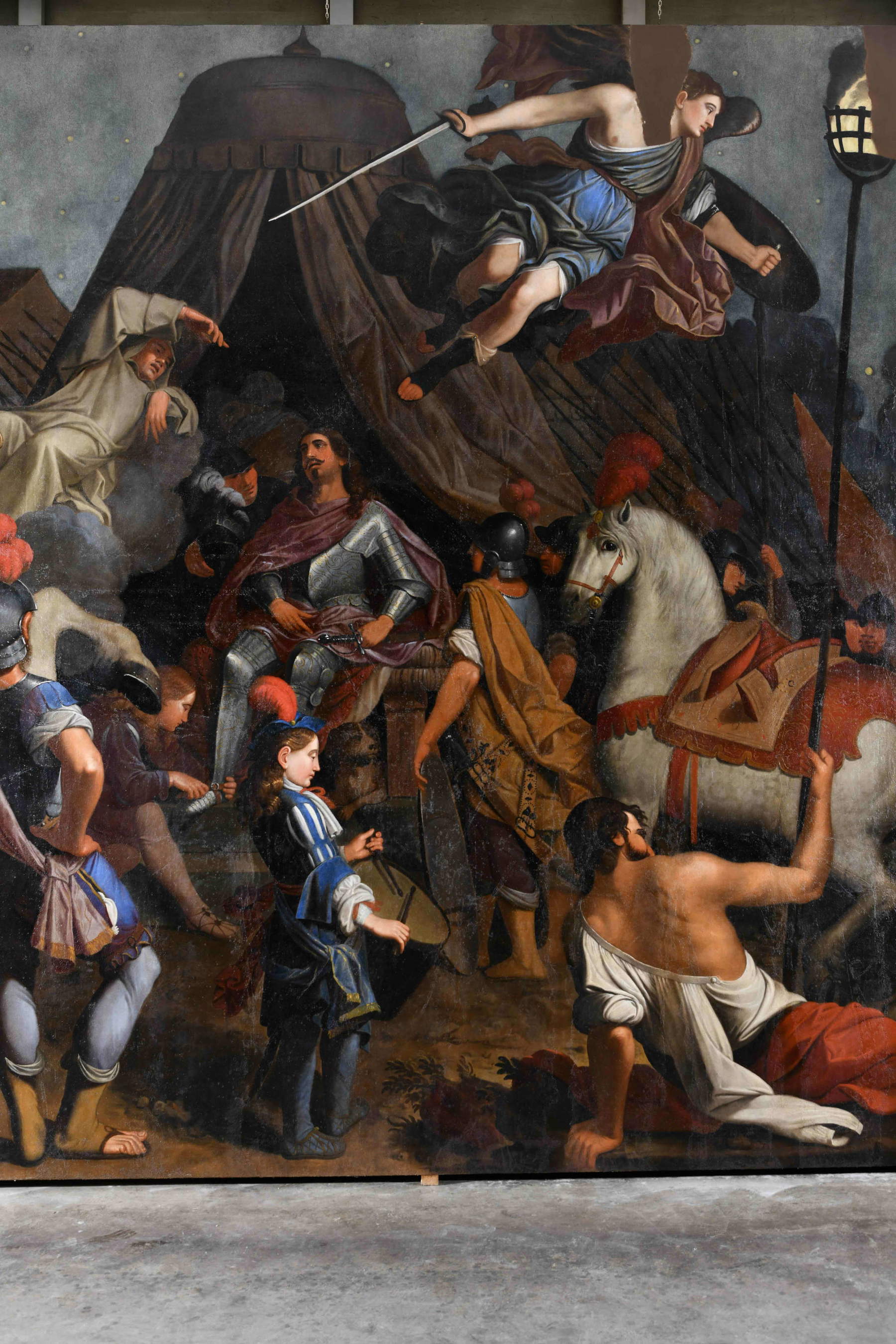
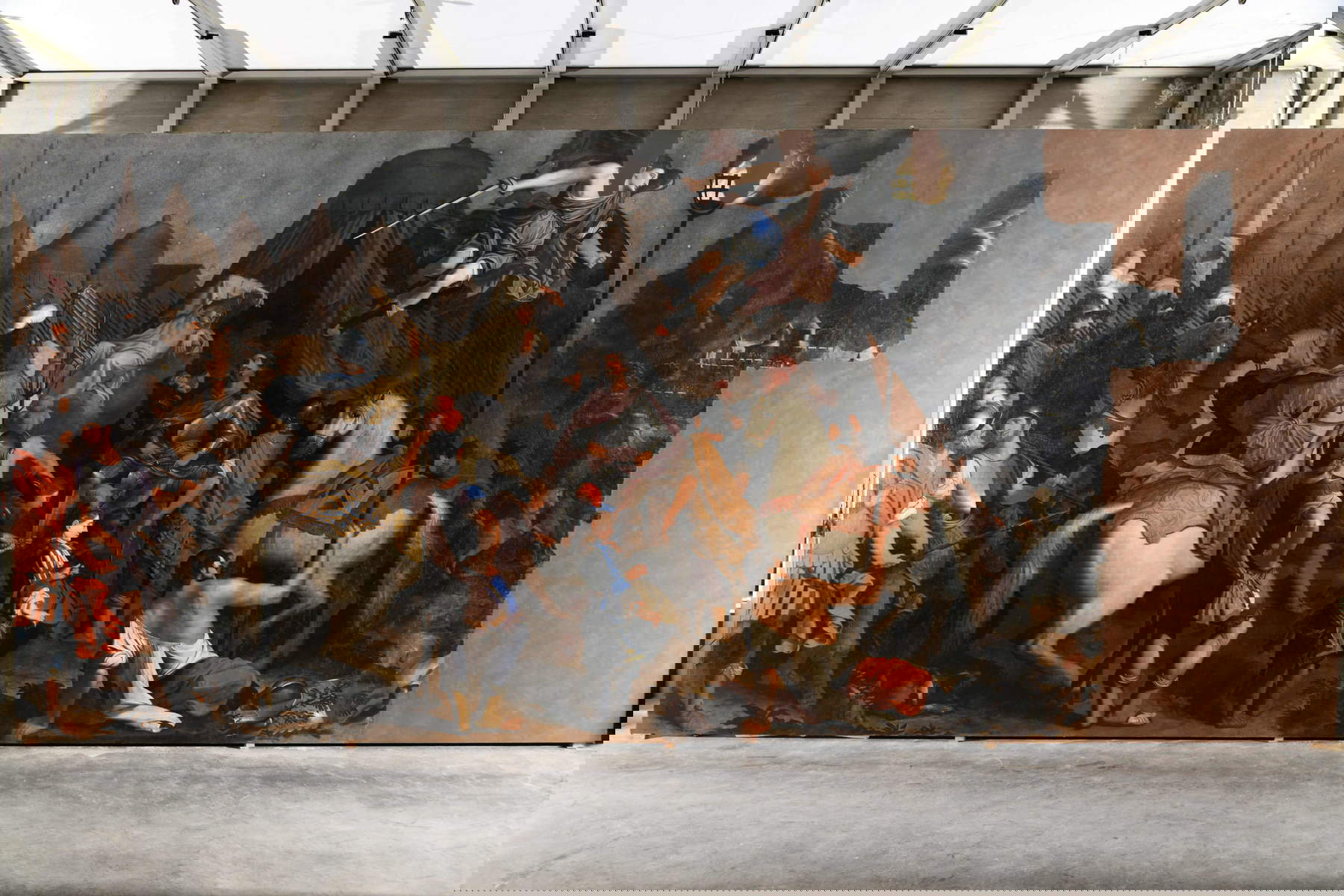
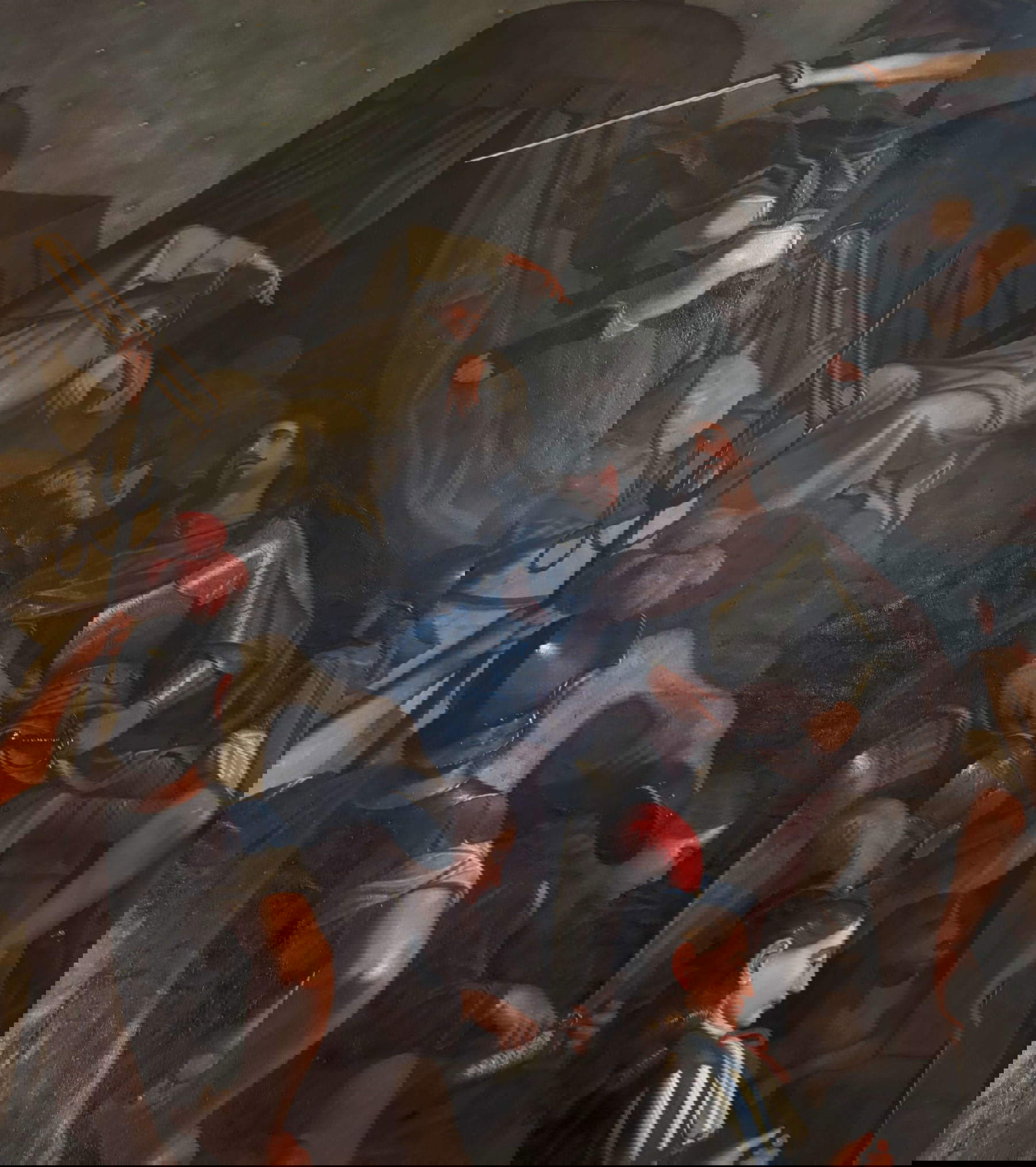
After an absence of more than eighty years, the monumental canvas by Giuseppe Avanzi (Ferrara, 1645 - 1718) returns to the presbytery of the church of San Cristoforo alla Certosa in Ferrara, and the city can thus return to see one of its most significant masterpieces. TheApparition of Saint Bruno to Roger, Count of Sicily before the Battle of Capua, an oil on canvas over thirty square meters in size, with imposing dimensions of 930 by 425 centimeters, was officially presented to the citizenry on February 19, 2026, at the end of a complex and articulated restoration that ended a long season of precarious conservation. The work, commissioned in 1695 by the prior of the Certosa di Ferrara, Daniele Campanini, and documented in the church as early as the following year, constitutes one of the highest achievements of Avanzi’s production. Its return to its original location takes on a value that transcends the strictly artistic dimension, configuring itself as a civic and symbolic gesture, capable of mending a historical rift that opened in World War II.
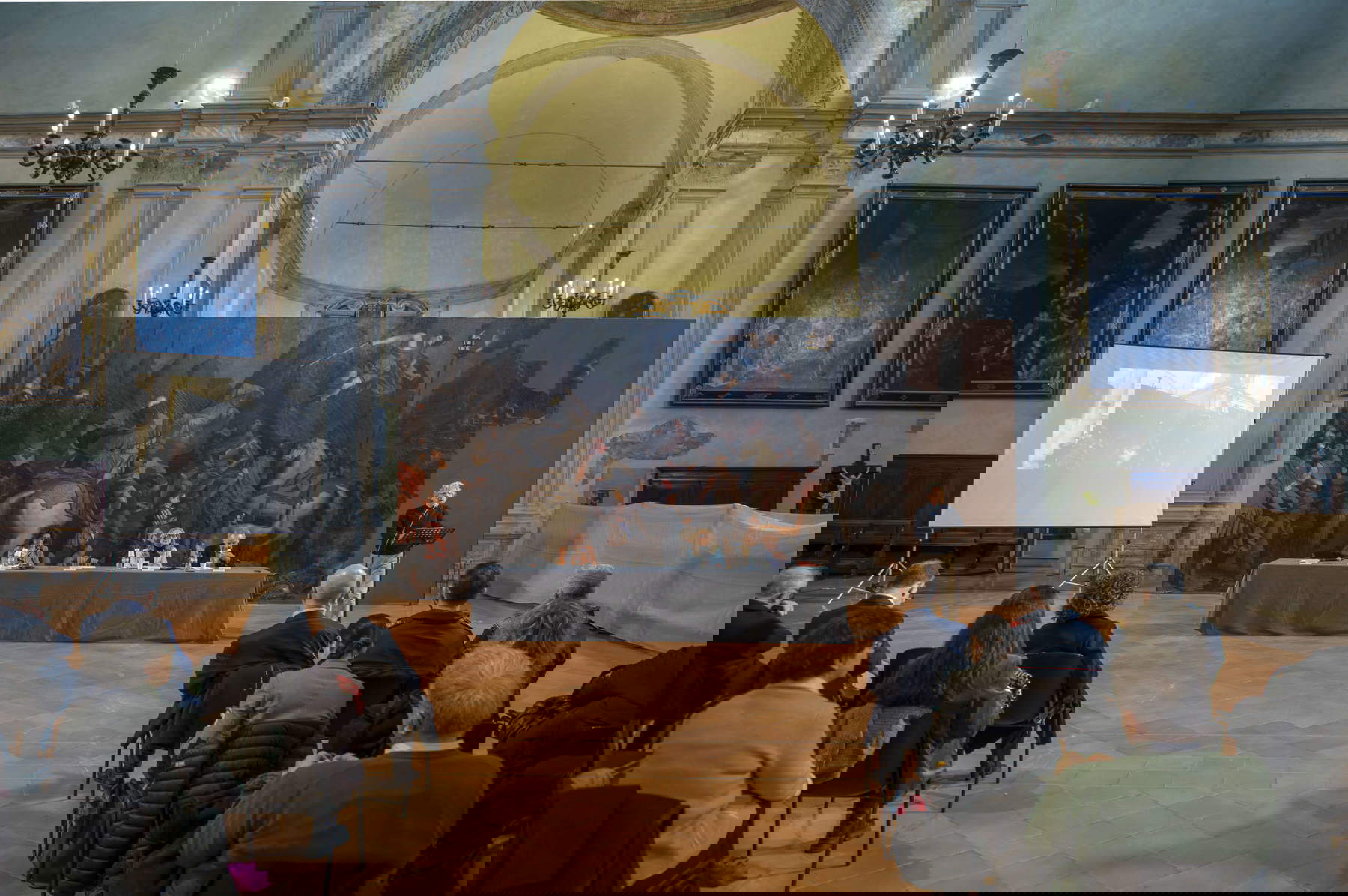
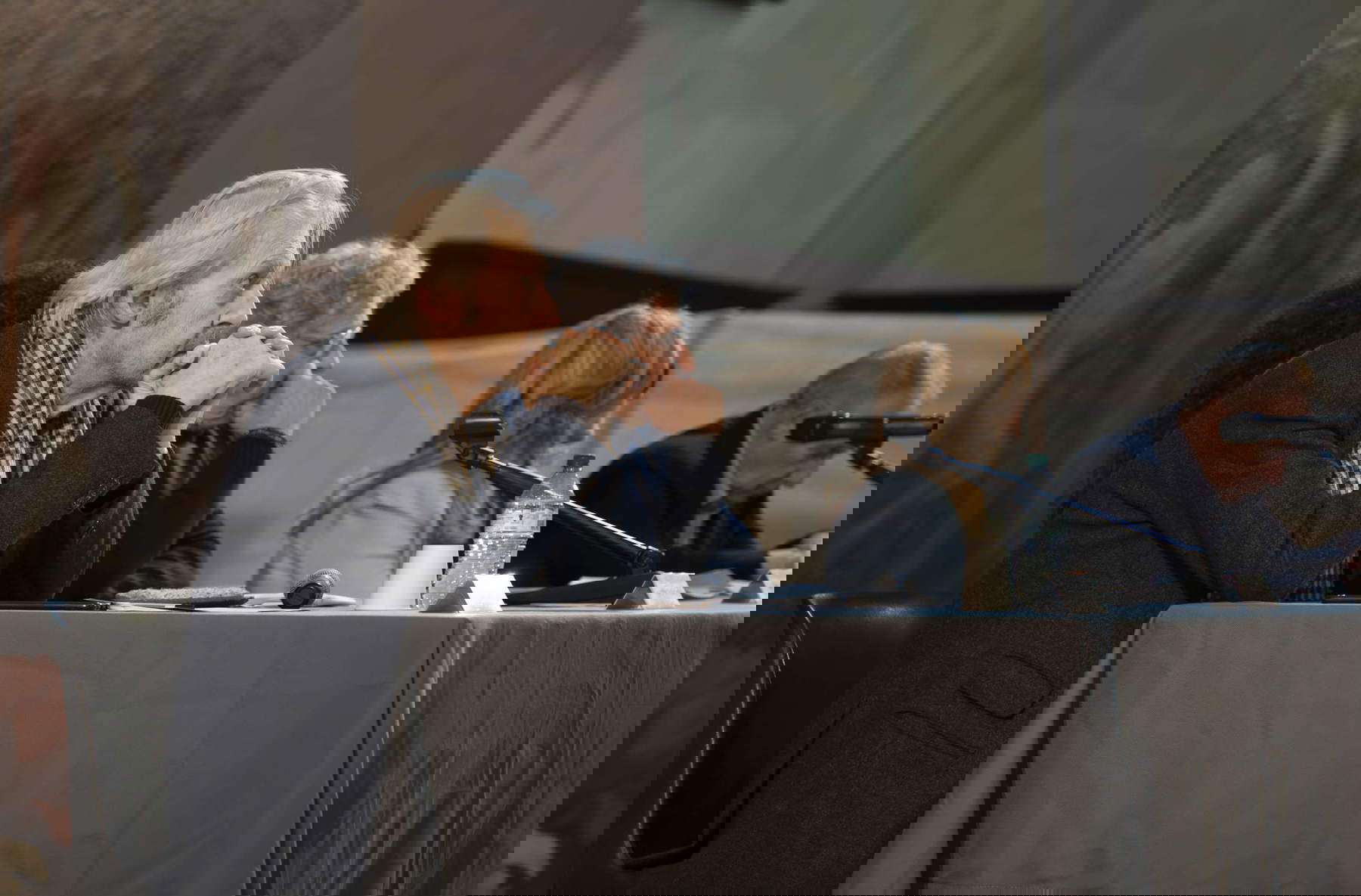
The presentation was attended by Ferrara Municipality Culture Councillor Marco Gulinelli, Culture, Tourism and Unesco Relations Service Director Ethel Guidi, Superintendent for the Metropolitan City of Bologna Francesca Tomba, Emilia-Romagna Region Cultural Heritage Sector Director Cristina Ambrosini and Giovanni Giannelli for Laboratorio Ottorino Nonfarmale Srl of San Lazzaro di Savena, which conducted the restoration. Also seated at the speakers’ table was Vittorio Sgarbi, president of the Ferrara Arte Foundation, making his first public appearance in the city after an absence of more than a year and a half. His entrance was greeted by a long applause and words of gratitude from the institutions.
In his speech, Councilor Marco Gulinelli wanted to thank Sgarbi for continuing to believe in the power of truth and culture even in the most difficult times, calling his presence a sign of hope for those who believe in competence and dignity of thought. Gulinelli himself reiterated the symbolic value of the canvas’ return, recalling how Avanzi’s first major work, the Apparition of the Blessed Virgin and St. Peter to the Companions of St. Brunone, had been relocated in 2023. That return, he emphasized, represented an arrival but also a starting point: “To return,” he said, “is not just a conservative act: it means assuming a responsibility toward the community, mending a historical fracture, restoring meaning to a space and continuity to collective memory.” The canvas, because of its proportions and its role in liturgical architecture, cannot be considered an accessory element, but a structural part of the sacred space, a real painted architecture. The councilor also thanked the Superintendency, the Emilia-Romagna Region and the Nonfarm Laboratory for their cooperation and professionalism.
Superintendent Francesca Tomba also called the intervention a virtuous example of institutional collaboration and heritage enhancement, while manager Cristina Ambrosini spoke of art as a red thread capable of uniting institutions and communities, stressing how the project represented a shared commitment oriented toward collective growth and not just the material recovery of the work.
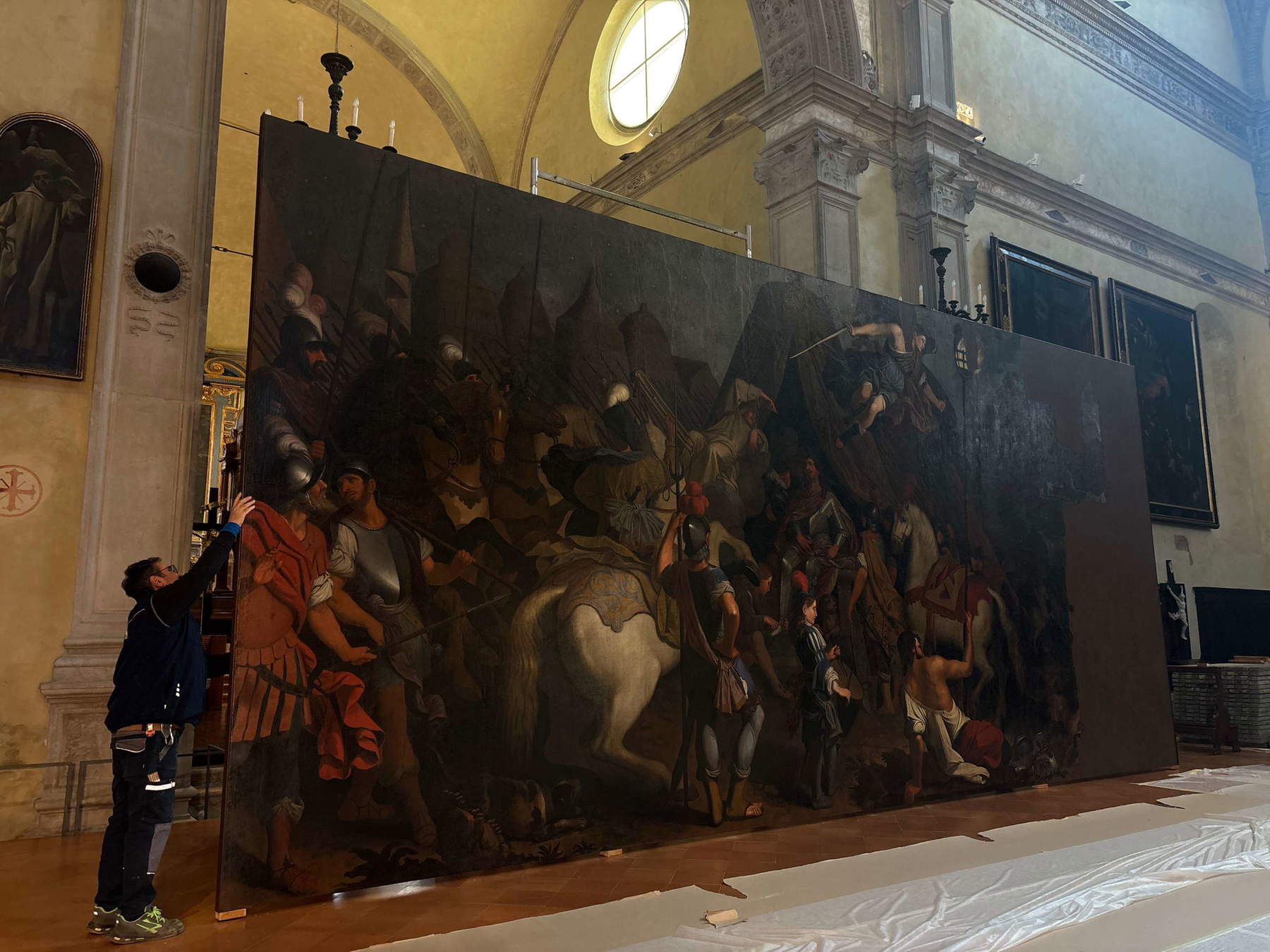
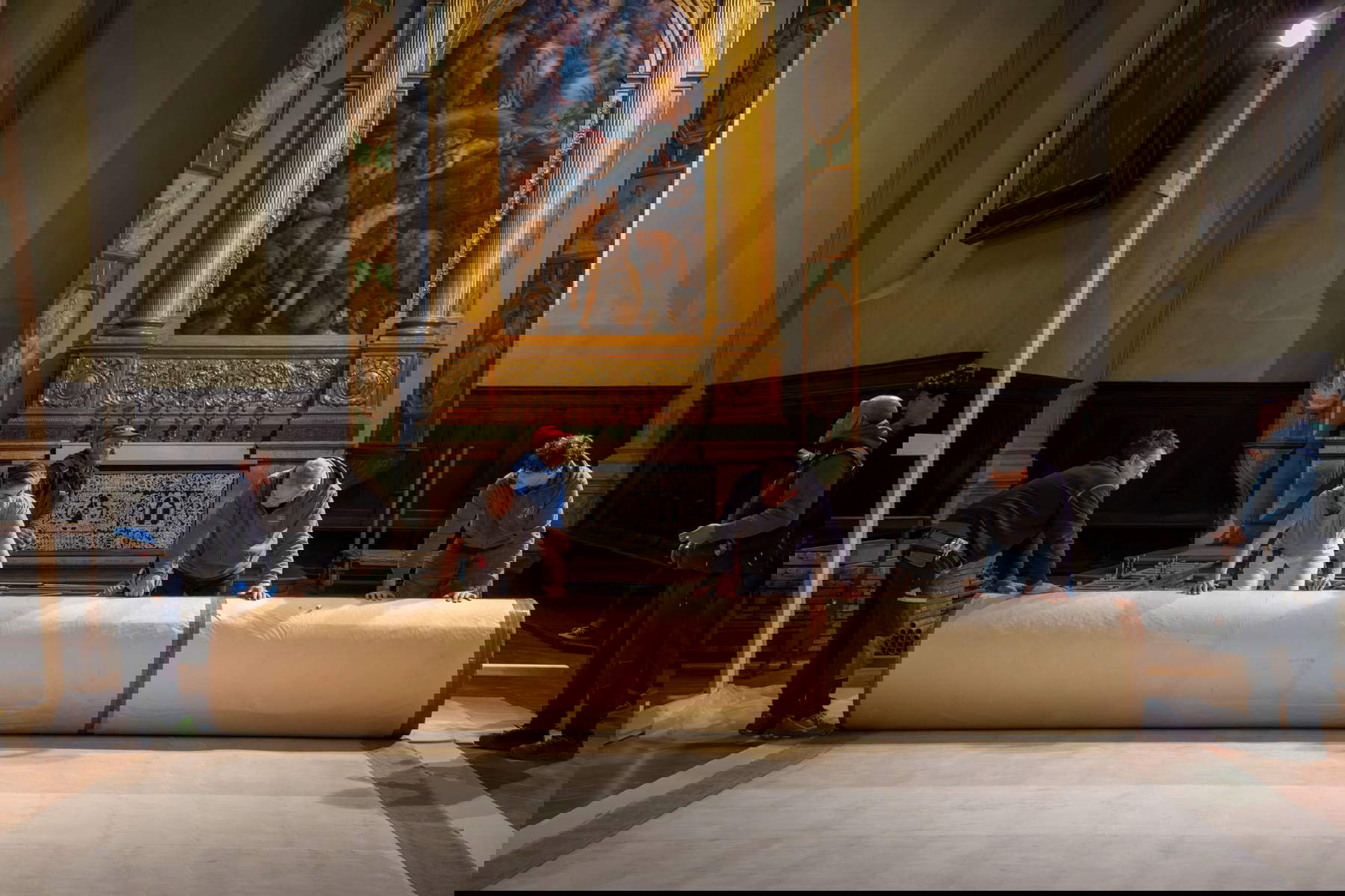
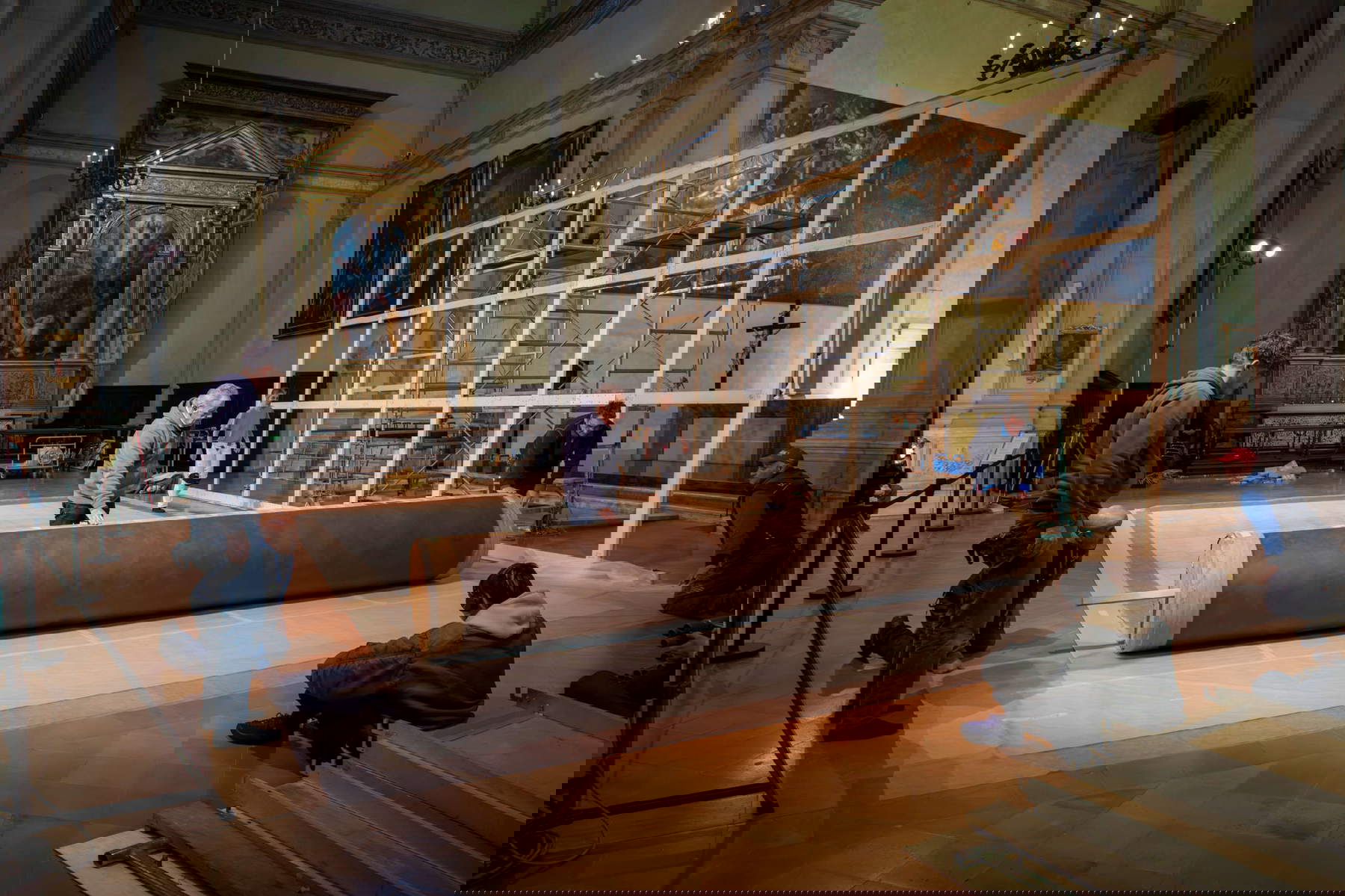
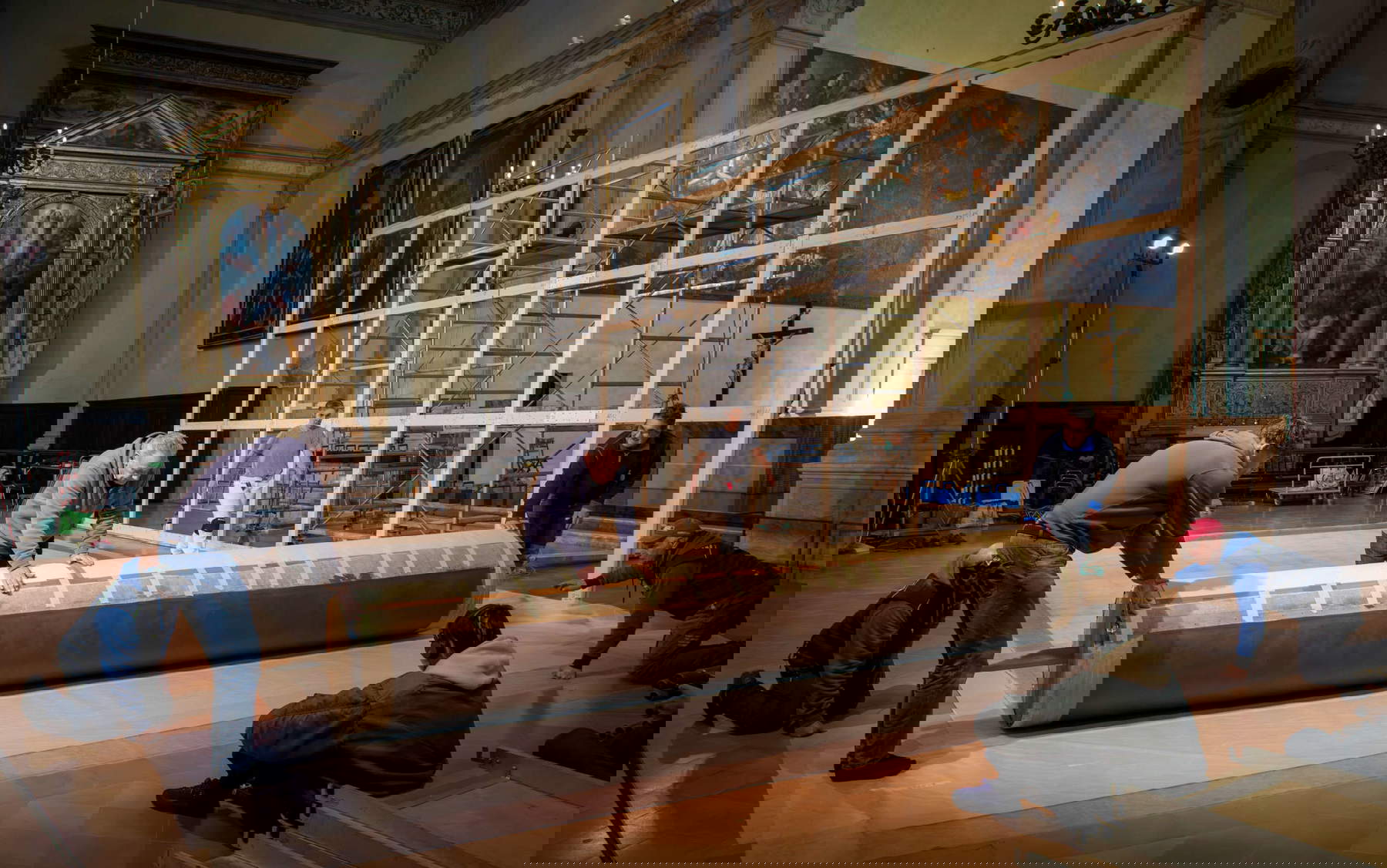
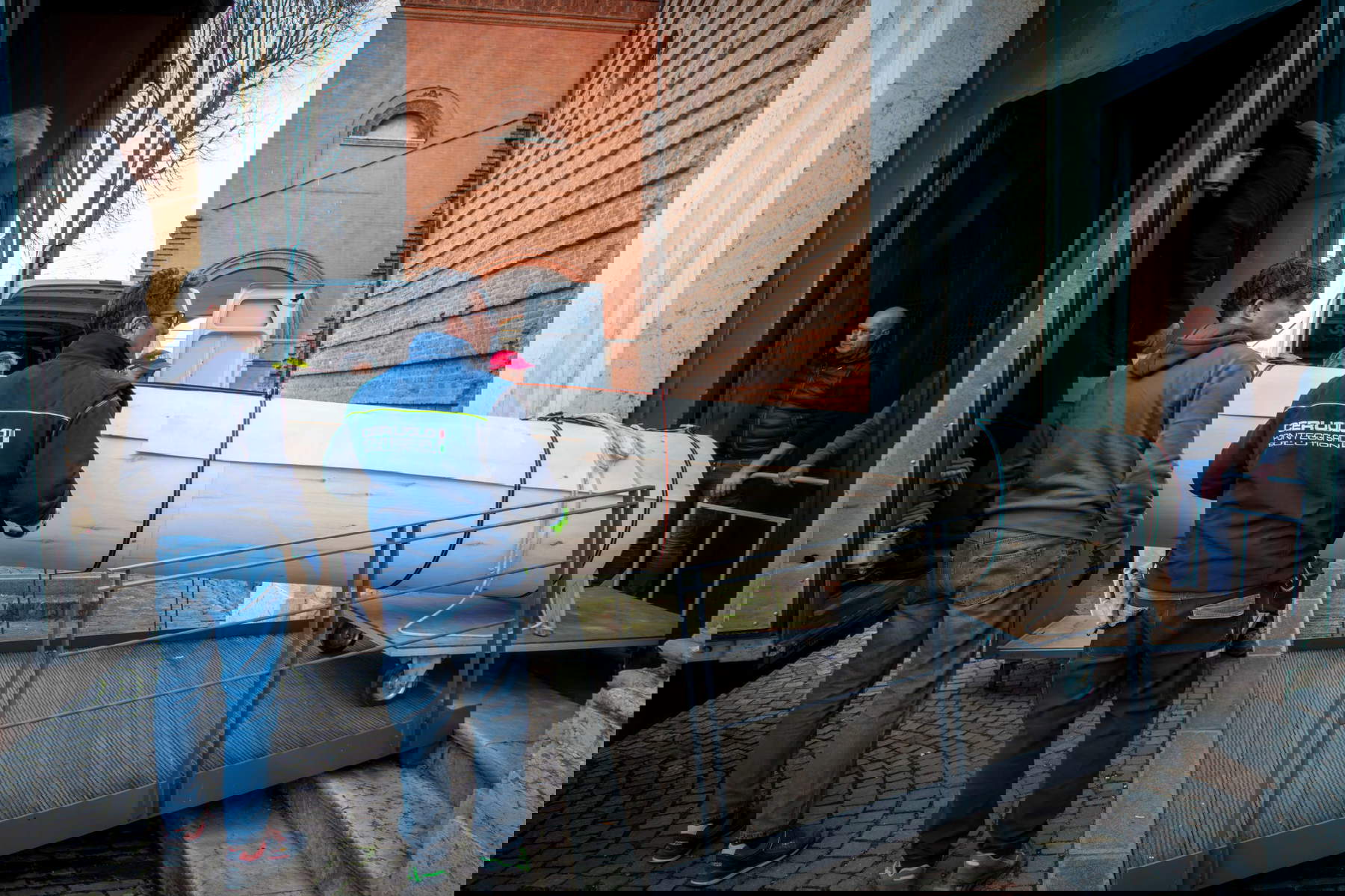
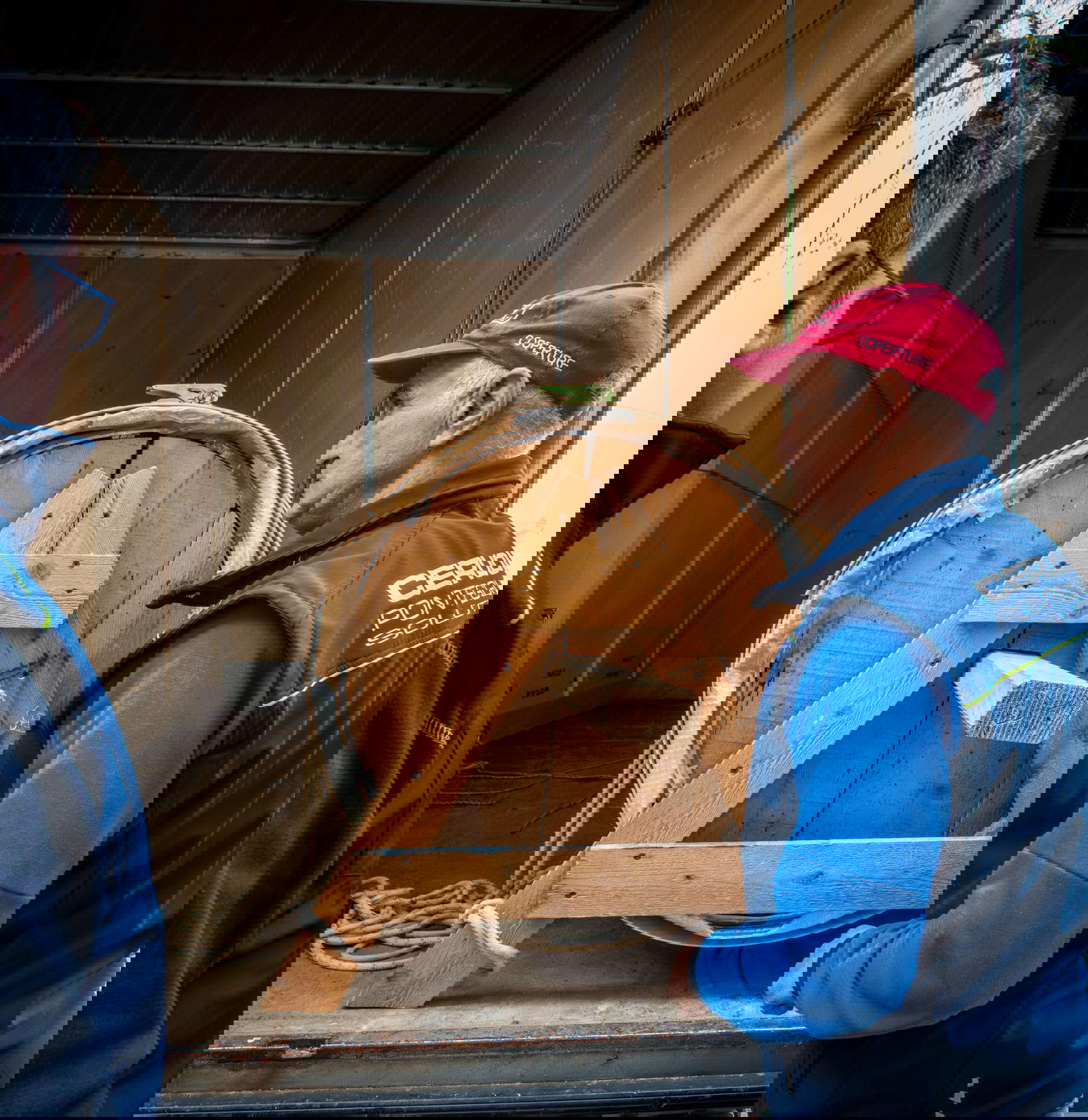
The history of the canvas spans three centuries and dramatic moments. Having survived the Napoleonic confiscations and become municipal property in 1812, it withstood the January 1944 bombing that caused the collapse of the Temple’s domes. The most serious damage, however, occurred in the following months: removed from the frame and rolled up without adequate protection, it remained in extremely precarious condition for decades, with irreversible losses in the parts in direct contact with the ground. It was only in the 1960s that an initial recovery operation was begun, followed by a long period of storage at the Nonfarmale laboratory in San Lazzaro di Savena.
The recent restoration, financed by the Soprintendenza Archeologia, Belle Arti e Paesaggio for the provinces of Modena, Reggio Emilia and Ferrara, together with the complex operation of handling and relocation coordinated and financed by the Municipality of Ferrara, has made possible the return of a masterpiece that for generations had remained known mainly through documentary sources. The intervention required high technical skills, both because of the size of the pictorial surface and the structural criticalities accumulated over time.
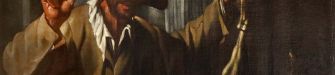
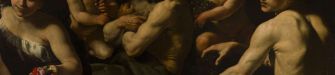
Iconographically, the work depicts one of the founding episodes of Carthusian history in Italy: the miraculous apparition of Saint Bruno of Cologne to Roger, count of Sicily, on the eve of the Battle of Capua. Avanzi builds a monumental and theatrical composition in which the supernatural dimension bursts into the earthly space of the military camp. The saint, wrapped in the order’s snow-white habit, manifests himself to the leader with hieratic composure, while all around soldiers and horses react with excitement to the prodigious event. The scene celebrates the announced victory and the providential link between Norman power and the Carthusian Order, translating a true religious epic into images.
With this canvas Avanzi demonstrates full mastery of history painting, combining devotional instance, institutional celebration and epic ambition in a strikingly scenic layout. The work is the pendant of theApparition of the Blessed Virgin and Saint Peter to the companions of Saint Brunone, relocated in 2023 thanks to the support of the Cultural Heritage Service of the Emilia-Romagna Region. The two large canvases thus return to dialogue in the space for which they were conceived, restoring unity to an iconographic program designed for the Certosa presbytery.
The return of theApparition of St. Bruno to Roger Count of Sicily before the Battle of Capua represents not only the recovery of a work of extraordinary historical and artistic value, but also the reactivation of a place and a shared memory. Citizens are invited to discover the painting through a schedule of free guided tours curated by museum conservators on Feb. 19, 20, 21, 22, 27 and 28 at 3:30 p.m., with reservations required and limited seating. On Feb. 24 and 25, from 8:30 a.m. to 5:30 p.m., it will be possible to witness the delicate phase of placing the work on the wall. On Sunday, March 1, at 10 a.m., the Archbishop of Ferrara Monsignor Perego will celebrate a Holy Mass in the church rediscovered to its historic arrangement. Guided tours can be booked by calling 0532 244949 or by writing to diamanti@comune.fe.it.
|
| Ferrara, Avanzi's 17th-century canvas returns to Certosa after 80 years. And we see Sgarbi in public again |

Warning: the translation into English of the original Italian article was created using automatic tools. We undertake to review all articles, but we do not guarantee the total absence of inaccuracies in the translation due to the program. You can find the original by clicking on the ITA button. If you find any mistake,please contact us.
















 IT
IT FR
FR DE
DE ES
ES CN
CN


