





The Pinacoteca Nazionale di Bologna is preparing to bid a temporary farewell to one of the most celebrated masterpieces held in its collections. Raphael ’s TheEcstasy of Saint Cecilia (Urbino, 1483 - Rome, 1520) will in fact be the protagonist of an overseas trip that will bring the work to the halls of the Metropolitan Museum of Art in New York, where it will be exhibited as part of the international exhibition Raphael: Sublime Poetry, scheduled from March 29 to June 28.
The loan will offer the American public the opportunity to admire one of the most representative paintings of the Italian Renaissance and, in particular, Raphael’s Roman season. With this participation, the Pinacoteca Nazionale di Bologna is contributing to an exhibition project that aims to deepen the production of the Urbino master and the poetic value of his painting, bringing overseas a work that has been a landmark in the history of art for centuries.
Created in 1518, TheEcstasy of Saint Cecilia is considered one of the pinnacles of Raphael’s mature classicism. The painting was executed for the chapel of Elena Duglioli in the church of San Giovanni in Monte in Bologna, in a religious and cultural context that recognized art as a powerful tool for spiritual expression. The scene depicts Saint Cecilia in the moment of mystical ecstasy. The saint, the patron saint of music, is depicted looking upward, enraptured by the vision of an angelic choir that manifests itself as an emanation of divine love. The earthly dimension seems to dissolve in the face of spiritual revelation: in fact, abandoned musical instruments can be glimpsed at the feet of the main figure, a symbol of the pleasures and joys of the earthly world that lose their value in the face of the experience of the divine.
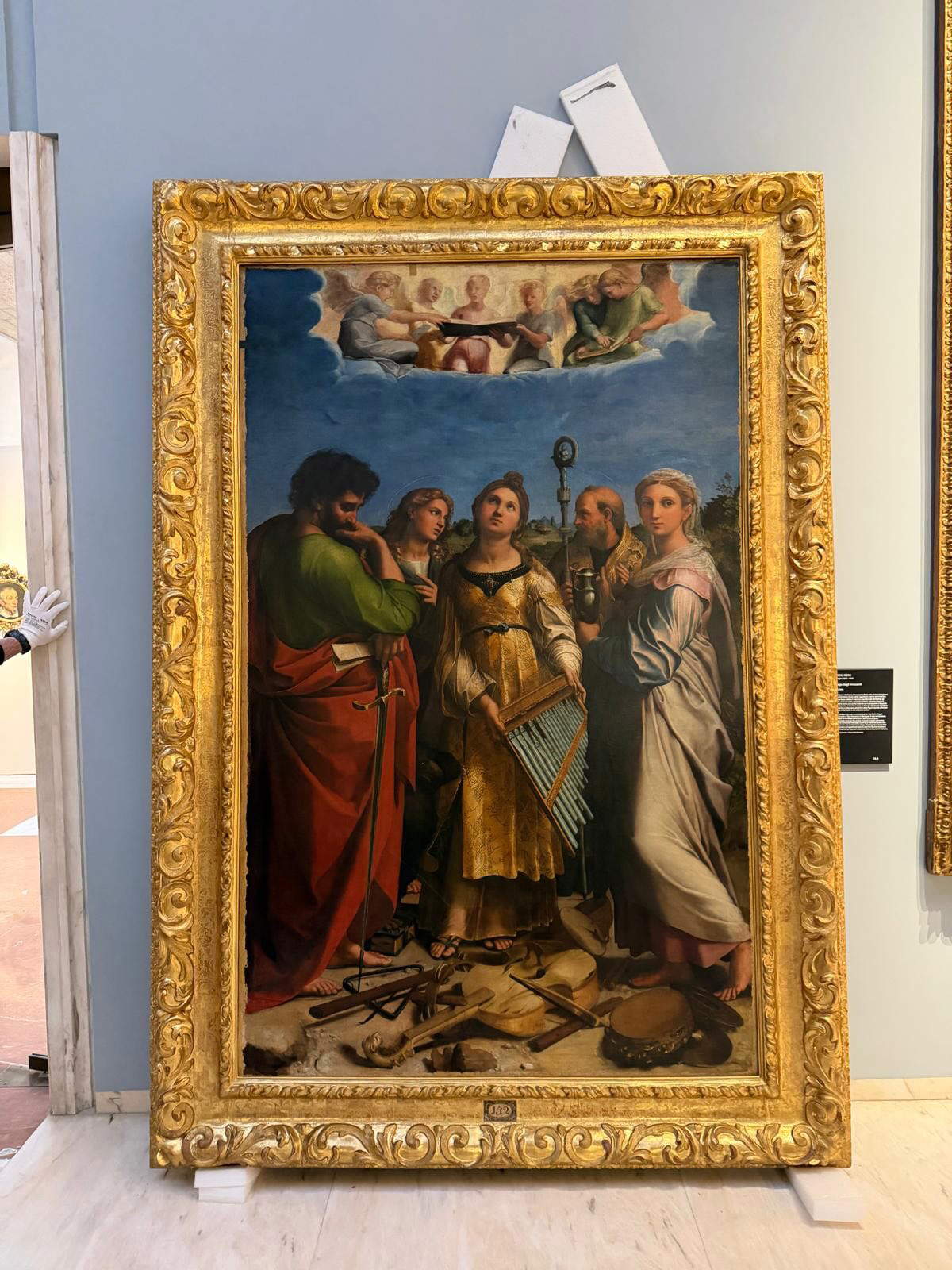
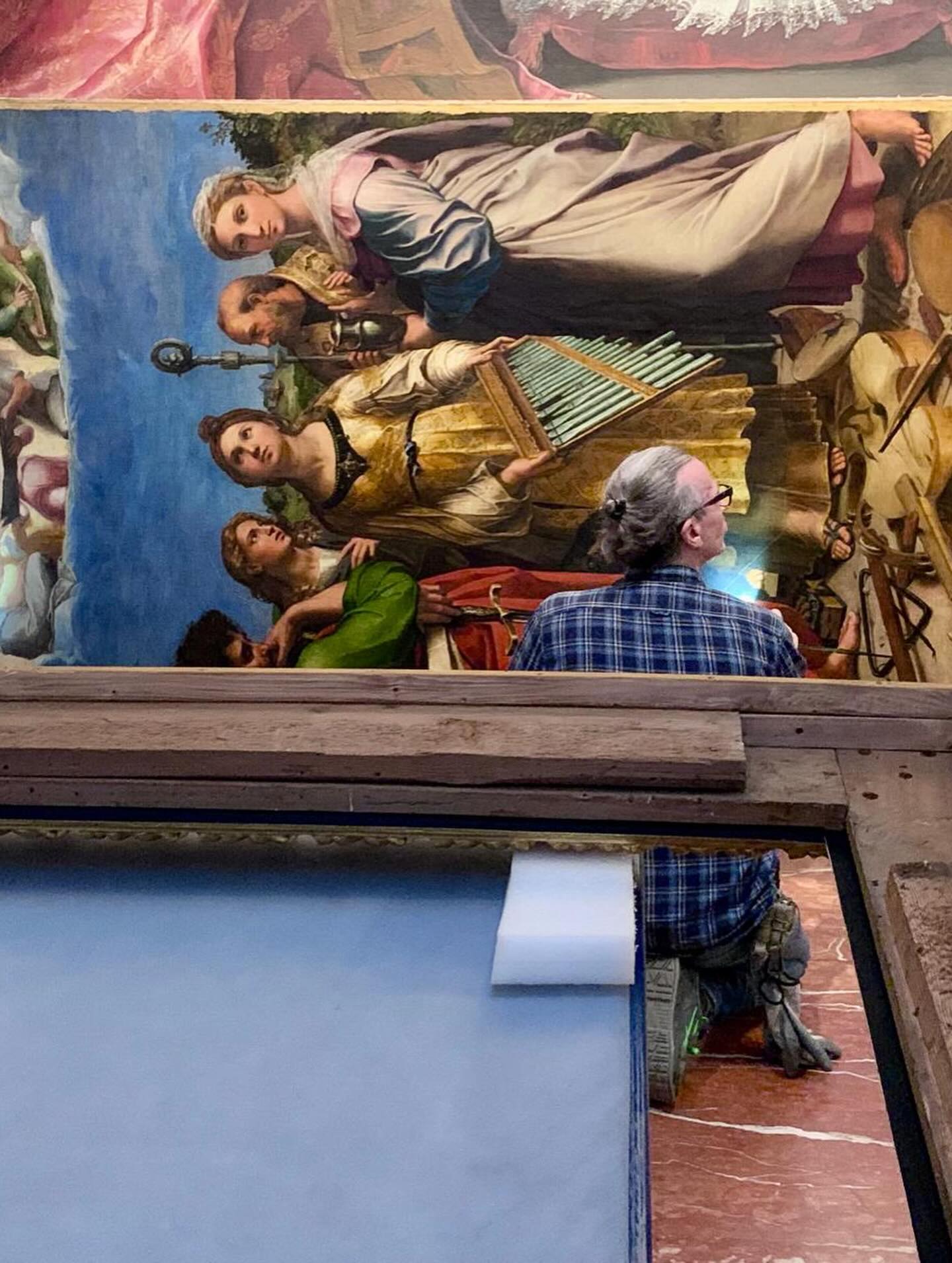
Among the most striking elements of the work is precisely the depiction of the musical instruments, rendered with extraordinary precision and pictorial sensitivity. Their execution is attributed to Giovanni da Udine, a pupil and trusted collaborator of Raphael, who contributed numerous decorative and naturalistic details in the master’s works.
The painting is distinguished by its perfect compositional balance and the harmony of the figures, elements that make it one of the most significant examples of the so-called golden classicism of Raphael’s production. The formal order, serenity of expression and clarity of pictorial language translate into images an ideal of beauty and spirituality that characterizes the artist’s Roman phase.
However, the work’s history is also marked by complex events related to its preservation and the circulation of works of art in Europe in the late 18th and early 19th centuries. In 1798, during the Napoleonic spoliations that affected many Italian territories, the Ecstasy of Saint Cecilia was stolen and sent to Paris along with many other valuable works.
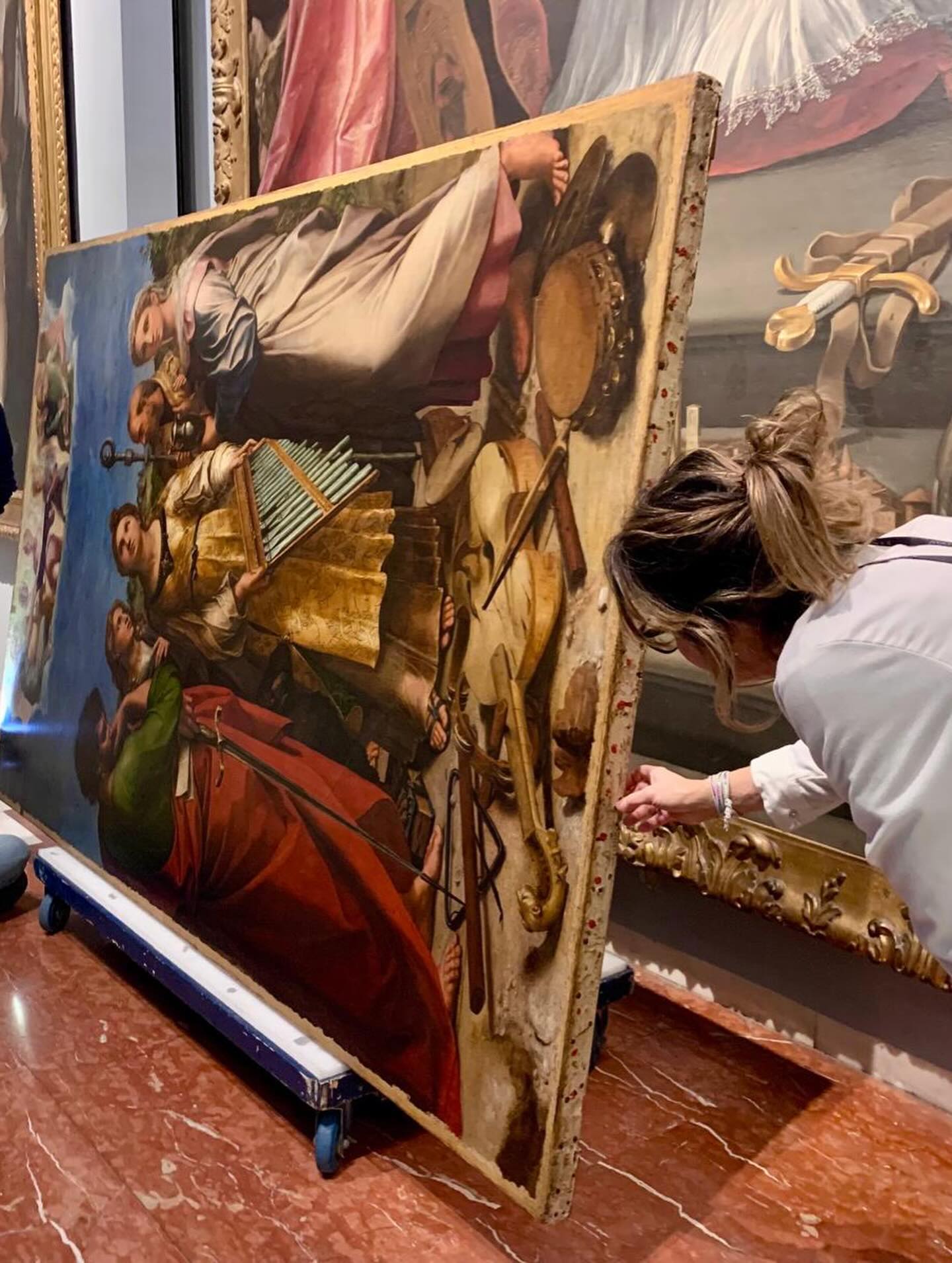
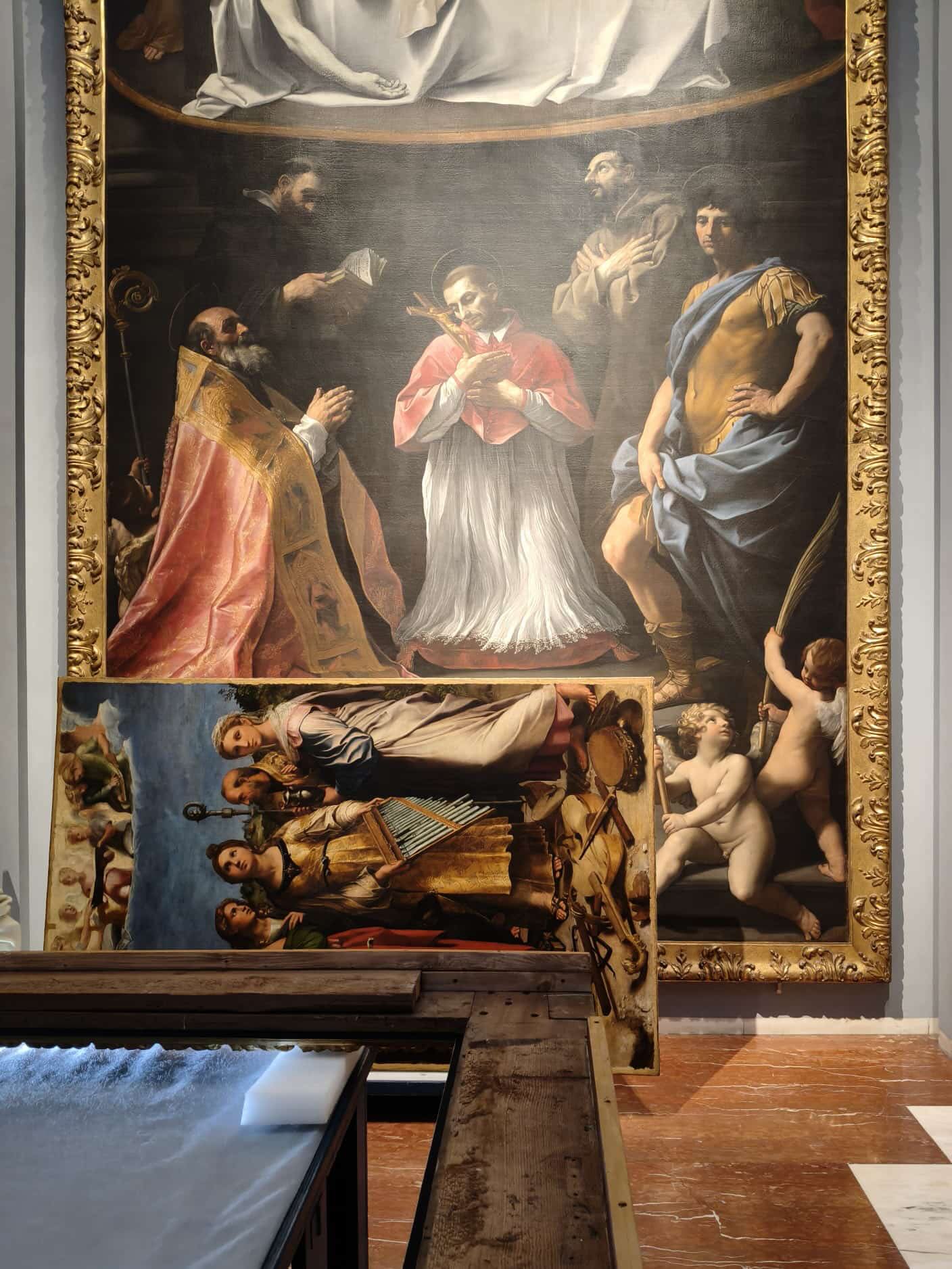
In 1801, restorers at the Louvre decided to intervene on the painting with an operation that they considered useful for improving its conservation. The paint film was then transferred to canvas through a process of detachment from the original wooden support. The intervention involved the gradual removal of the wooden layer, destroyed layer by layer until the painted surface was completely separated.
This operation, now considered extremely invasive, caused significant damage to the original structure of the work and resulted in the definitive loss of the wooden support on which the painting was made. Despite this, the work managed to survive and retain much of its expressive power intact.
The return to Italy occurred in 1815, when numerous masterpieces stolen during the Napoleonic period were recovered thanks to the diplomatic and cultural efforts of Antonio Canova. The sculptor played a key role in the negotiations that led to the return of many Italian works of art stored in French museums. TheEcstasy of Saint Cecilia thus reentered the national artistic heritage, later finding its place in the Pinacoteca Nazionale in Bologna, where it is now considered one of the most important works in the entire collection.
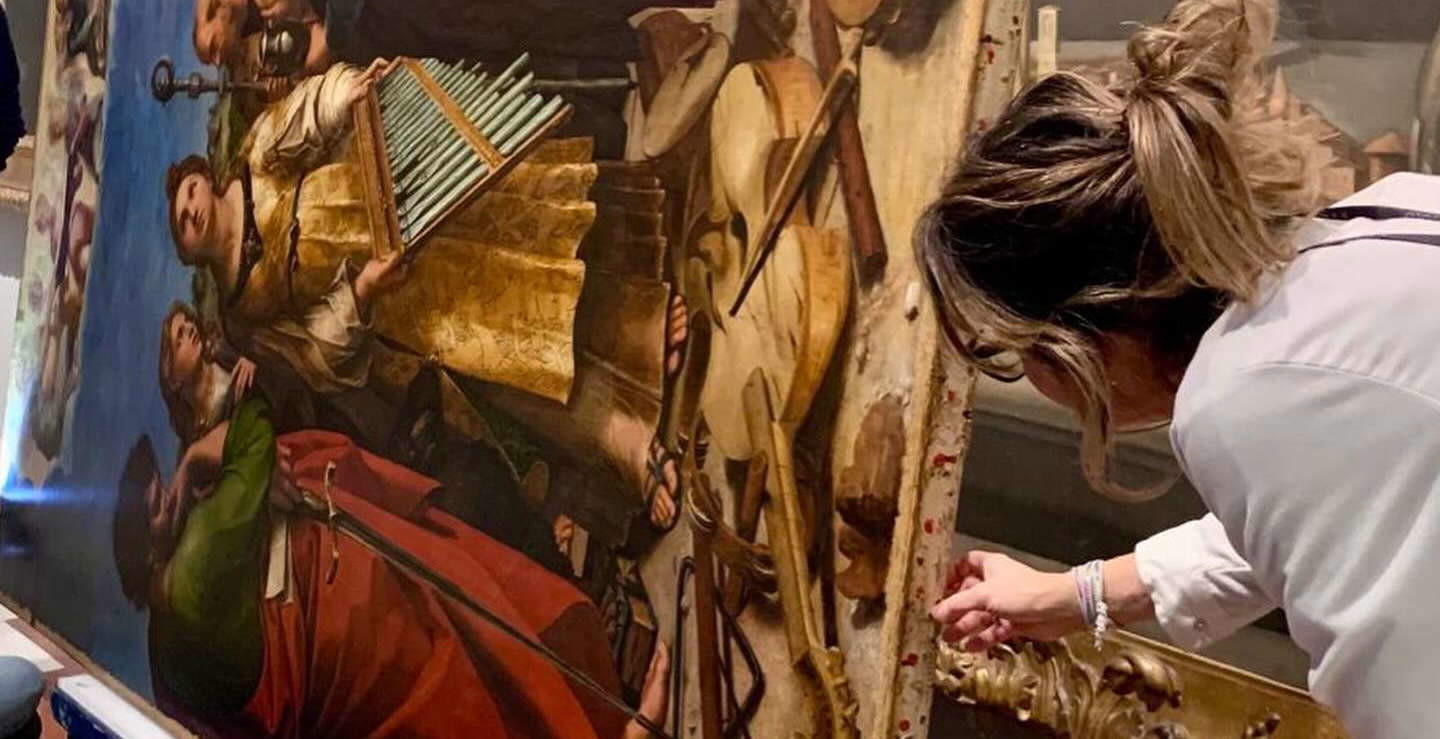 |
| Raphael's Ecstasy of St. Cecilia flies from Bologna to the Metropolitan in New York |

Warning: the translation into English of the original Italian article was created using automatic tools. We undertake to review all articles, but we do not guarantee the total absence of inaccuracies in the translation due to the program. You can find the original by clicking on the ITA button. If you find any mistake,please contact us.






















 IT
IT FR
FR DE
DE ES
ES CN
CN


