





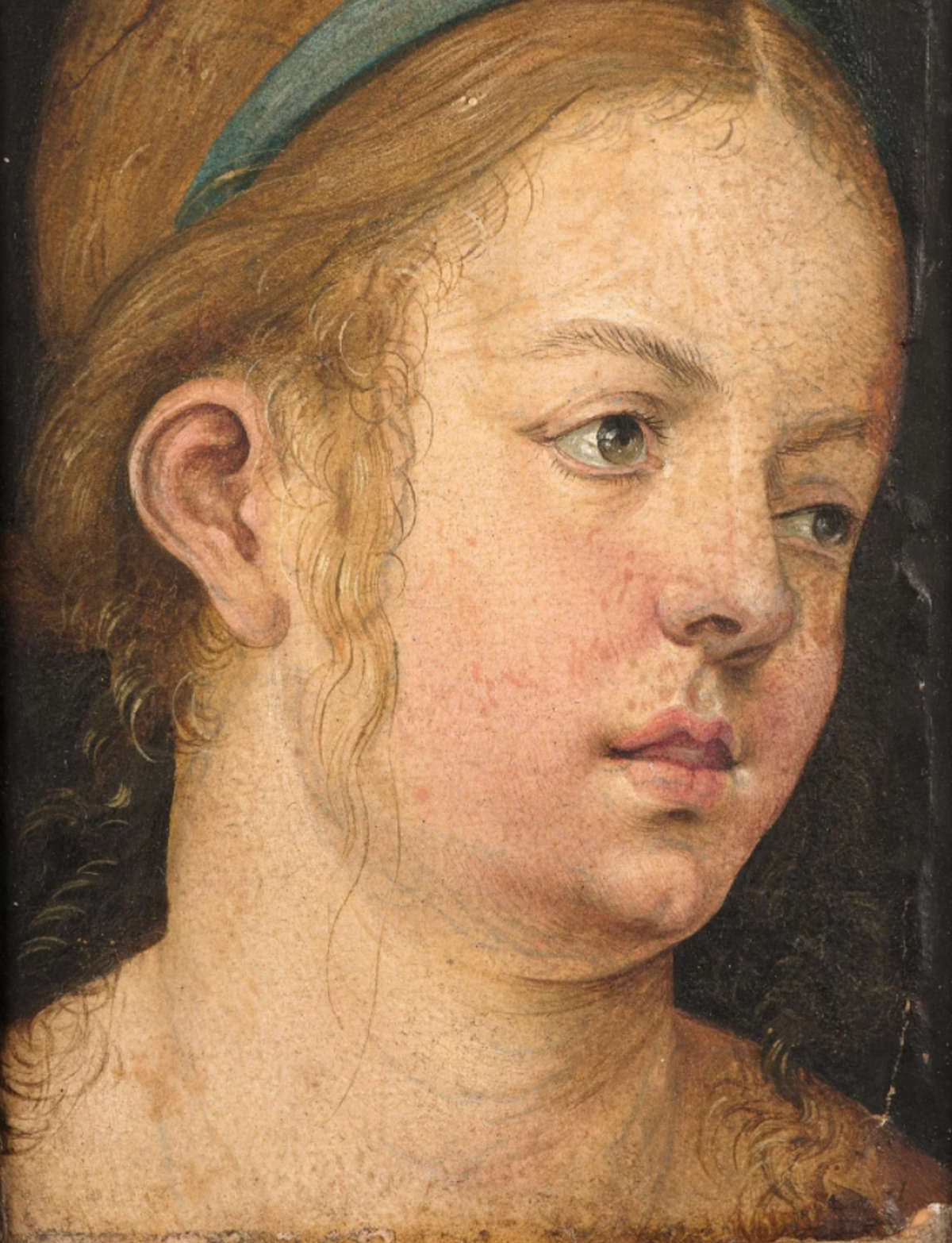
A rare study of a woman’s head by Hans Süss von Kulmbach (Kulmbach, c. 1480 - Nuremberg, 1522), a contemporary of Albrecht Dürer, has been discovered and will be presented at auction by Giquello at Hôtel Drouot in Paris on March 31, 2026, with an estimate of between 200,000 and 300,000 euros. The work, a sheet of paper (probably parchment) applied to panel, measuring 14.4 x 10.5 cm, was identified by the Cabinet Turquin, which confirmed its authenticity and historical value.
Hans Süss von Kulmbach was born in Kulmbach, Upper Franconia, around 1480. His training remains partly obscure, but before 1503 he seems to have frequented the circle of Lucas Cranach the Elder. Like many young artists from secondary towns, Kulmbach soon moved to Nuremberg, then the preeminent artistic center of the Empire, where cultural and commercial vitality fostered the emergence of new talent. By about 1500, Nuremberg was a free imperial city, politically, legally and economically autonomous, and a strategic junction on the trade routes between northern Italy, the Netherlands and central Europe. This position contributed to a rich and cultured environment in which goldsmiths, smelters, engravers, cartographers and painters coexisted, fueling a lively artistic and intellectual ferment. The emergence of Albrecht Dürer, who was born in the city, further consolidated Nuremberg’s role as a leading cultural center in northern Germany.
Influenced by his travels to Italy and the German craft tradition, Dürer introduced the principles of perspective, proportion, and the scientific study of the human body to Nuremberg, making his workshop a center of artistic dissemination with a European reach. Under his leadership, Nuremberg developed an original synthesis of the late Gothic tradition and Italian Renaissance innovations, becoming a cultural laboratory where art, science, and technique combined.
Süss von Kulmbach entered Dürer’s atelier probably around 1507, after the artist’s second Venetian trip, and was regarded by Joachim von Sandrart as one of his principal disciples. Together with Hans Léonard Schaufelein and Hans Baldung Grien, Kulmbach became one of Dürer’s most important collaborators, learning the techniques of panel painting, retable decoration, and portraiture. In 1511 he assumed the name Hans Süss and probably opened his own atelier. As the number of commissions directed to Dürer declined, Kulmbach aspired to win his own fame and conduct major projects independently, producing painted and sculpted altars, sometimes based on the master’s drawings. Important works include the triptych for Lorenz Tucher in St. Sebald’s Church in Nuremberg in 1513 and several commissions for Krakow between 1511 and 1516.
Around 1517, Kulmbach took the art of stained glass to its zenith, collaborating with Dürer on the stained glass windows of the Emperor and Margrave in the same St. Sebald’s church. It is therefore possible that the subject of the present study of a woman’s head was employed as a model for the Virgin and Child. The collaboration with Dürer reflected the collective model of the Renaissance atelier, in which the master conceived compositions and assistants executed specific parts, including studies of heads and hands.
The auction of this study represents a rare opportunity for collectors and enthusiasts to acquire a work that testifies not only to Kulmbach’s talent, but also to his fertile interaction with Dürer and the artistic environment in Nuremberg in the early 16th century. The work embodies the synthesis of German craftsmanship precision and Italian Renaissance influences, offering valuable insight into the training of the great Nordic masters and their approach to female portraiture. The study will thus take center stage at Giquello’s auction at Drouot next March 31, 2026, with the opportunity for the international market to confront a rare masterpiece, linked to the German artistic tradition and the great legacy of Albrecht Dürer, offering a piece of Northern European art history of extraordinary aesthetic and cultural value.
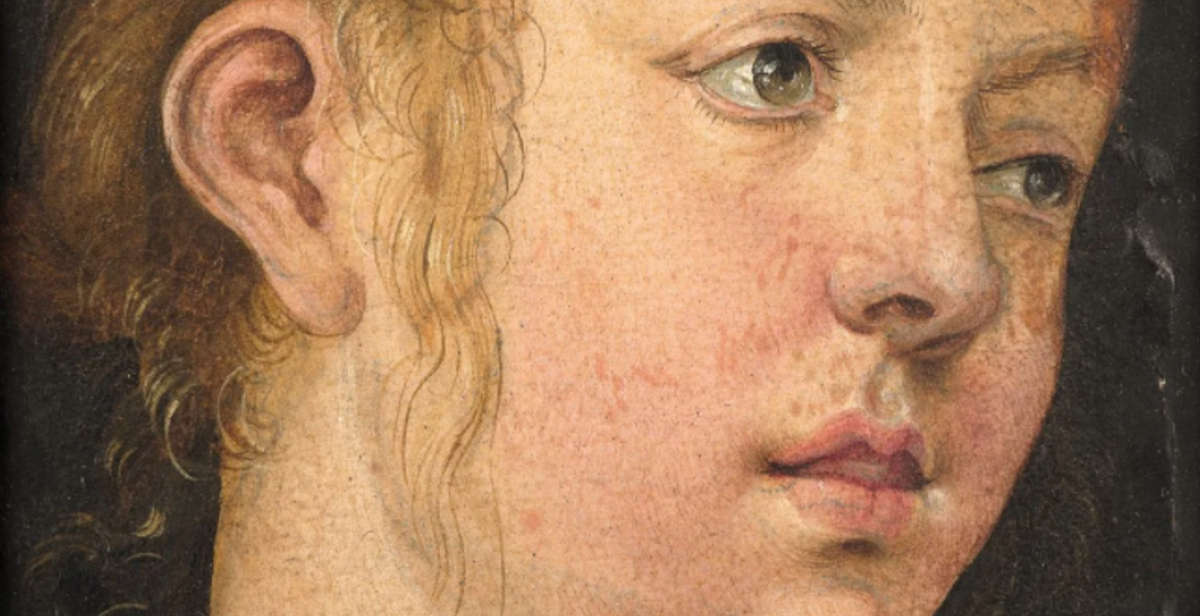 |
| Rare head study by Hans Süss Von Kulmbach discovered: at auction at Giquello's for 200.00 euros |

Warning: the translation into English of the original Italian article was created using automatic tools. We undertake to review all articles, but we do not guarantee the total absence of inaccuracies in the translation due to the program. You can find the original by clicking on the ITA button. If you find any mistake,please contact us.























 IT
IT FR
FR DE
DE ES
ES CN
CN


