





Who finished the First Christ of Minerva left unfinished by Michelangelo due to a defect in the marble? This is the knot that scholar Adriano Amendola of the University of Salerno has tried to untangle with a new and detailed study of his own, the results of which were previewed in February at a conference(All Statues Start in Rome. Baroque Sculpture between Center and Periphery) held at the Camillo Caetani Foundation in Rome. Amendola’s study focused on the hand that completed the first version of the Christ of Minerva, a work begun by Michelangelo Buonarroti and then abandoned, whose identity only resurfaced in 1997 thanks to research by Silvia Danesi Squarzina inside the sacristy of San Vincenzo Martire in Bassano Romano. This sculpture, which has long remained in oblivion, represents a fundamental piece for understanding not only the execution practice of the Tuscan genius, but also the change in sensibility between the Renaissance and the Baroque era. Adriano Amendola’s study thus makes it possible to precisely reconstruct the stages of this affair, arriving at a new attribution for the finishing intervention that brought the marble to its current arrangement: in particular, according to Amendola it would have been Pompeo Ferrucci (Fiesole, 1565 - Rome, 1637) who was responsible for completing the work. But let us go in order.
It all began on June 14, 1514, when Michelangelo signed a contract with Metello Vari and other patrons for the creation of a statue depicting a life-size, nude Christ clutching a cross in his arms. Although the artist’s reputation was already established, the execution of this work encountered an insuperable obstacle in the very nature of the material. During the workmanship, a black vein emerged in the block of statuary marble extracted from the Polvaccio quarries in Carrara, a natural flaw that furrowed the very face of Christ and could not be foreseen in advance. That dark line, still visible today as a kind of thunderbolt that runs across the temple, eyelid, nostril and down to the beard and neck, was judged by Michelangelo to be incompatible with the ideal of purity and perfection he sought in his creations. For an artist who had an almost visceral relationship with stone, that sign represented a technical and formal failure that prompted him to abandon the work and begin a second version, the one now preserved in Santa Maria sopra Minerva.
This setback in Michelangelo’s career was almost completely ignored by Giorgio Vasari in his Lives. In conceiving his historiographical system, Vasari placed Michelangelo at the apex of a pyramidal parabola, describing him as a divine artist capable of overcoming all difficulties through superhuman ingenuity. To tell of a block of marble discarded because of an error in the evaluation of the material would have cracked thatimage of infallibility that the Aretine historiographer wanted to pass on. Vasari therefore preferred to gloss over the first version, limiting himself to briefly mentioning the statue of Minerva among the works of the master’s youth. However, epistolary sources confirm that Metellus Vari was well aware of the defect; in a 1521 letter, the patron recalled how the artist had not wanted to deliver the first figure precisely because of that black line that emerged on the face.
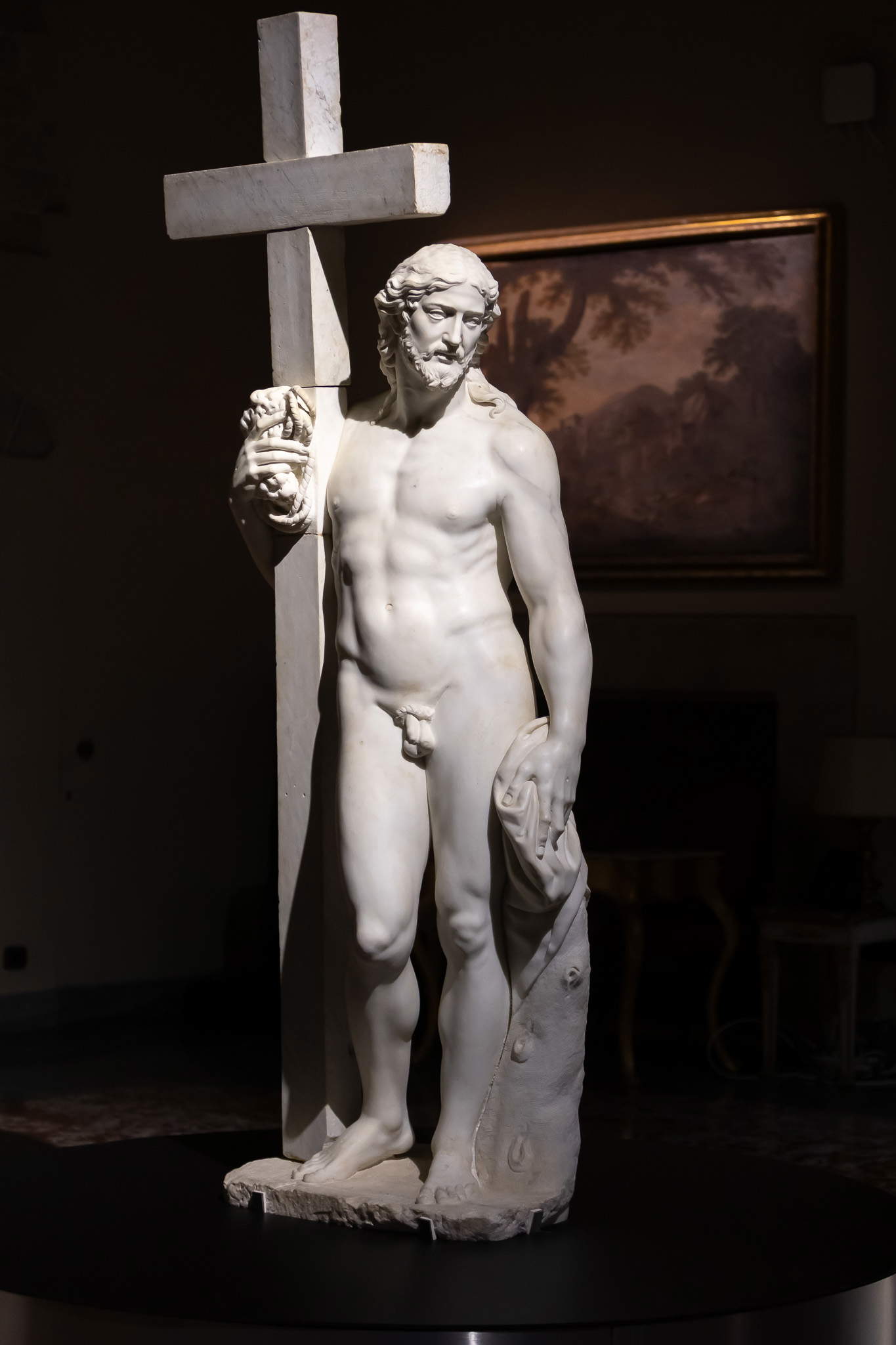
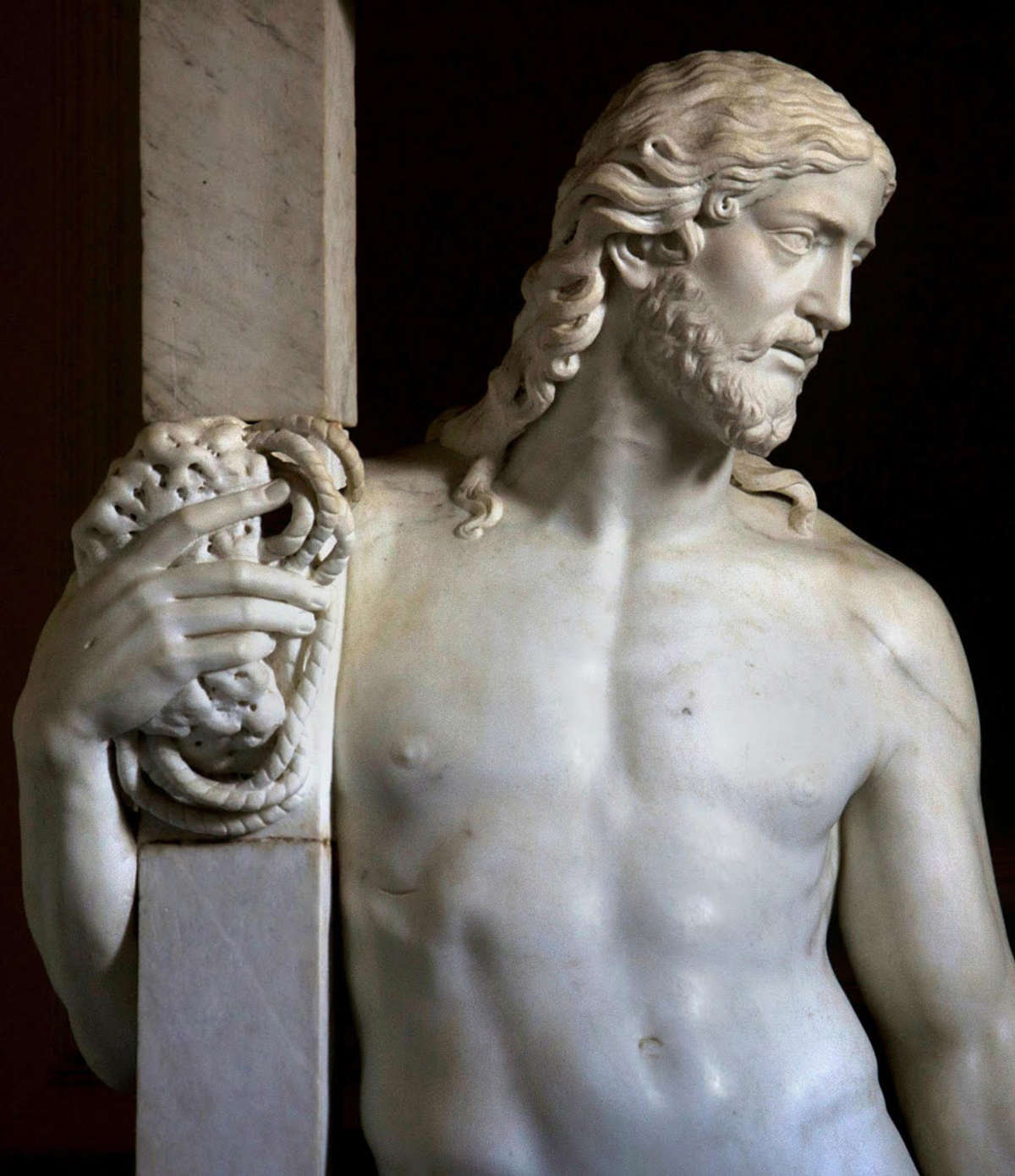
After remaining unfinished for several years, the statue was finally donated by Michelangelo to Metello Vari in 1522, despite the contrary opinion of the artist’s collaborators who distrusted the generosity of Roman patrons. For about a decade, the rough-hewn marble remained on display in a courtyard of Vari’s home near the church of Minerva, where it was described by Ulisse Aldovrandi in the mid-16th century as an unfinished work because of the vein discovered in the marble. Traces of the sculpture were then lost in the folds of hereditary passages, until it reappeared on the Roman antiquities market in the early seventeenth century, arousing the interest of descendants of Michelangelo himself.
A crucial moment in Amendola’s research focuses precisely on this chronological passage, analyzing the epistolary exchange that took place in 1607 between Francesco Buonarroti and his brother Michelangelo the Younger, both of whom were Michelangelo’s nephews. Francesco, then living in Rome, informed his brother of the possibility of acquiring what he described as a hand sketch of their illustrious ancestor, describing it as similar to the Christ of Minerva but in a different position. In these letters, the involvement of prominent figures such as the painter Passignano and his colleague Ludovico Cardi, known as Cigoli, emerges, who were called upon to provide an opinion on the work’s authorship and value. Passignano noted that the marble, although a draft comparable to the Prigioni or the San Matteo, appeared already touched by other hands. Despite their initial interest, the two Tuscan artists advised against the purchase because the price had risen to 300 scudi, a figure considered excessive for a work that was not entirely autograph and marked by controversy over its success. “At the time,” Amendola writes, "a sculpture of similar size could be paid even more than 300 scudi depending on the author, and in my opinion it was not the price that determined Cigoli’s decision to abandon thedeal, as much as the fact that it was not believed to be entirely by the hand of the master and at the same time was not such a significant work of his career, even in light of the controversy over the success of the second version of the statue, which had not garnered much appreciation, as already mentioned. The most obvious confirmation was the unenthusiastic words contained in Vasari’s Lives."
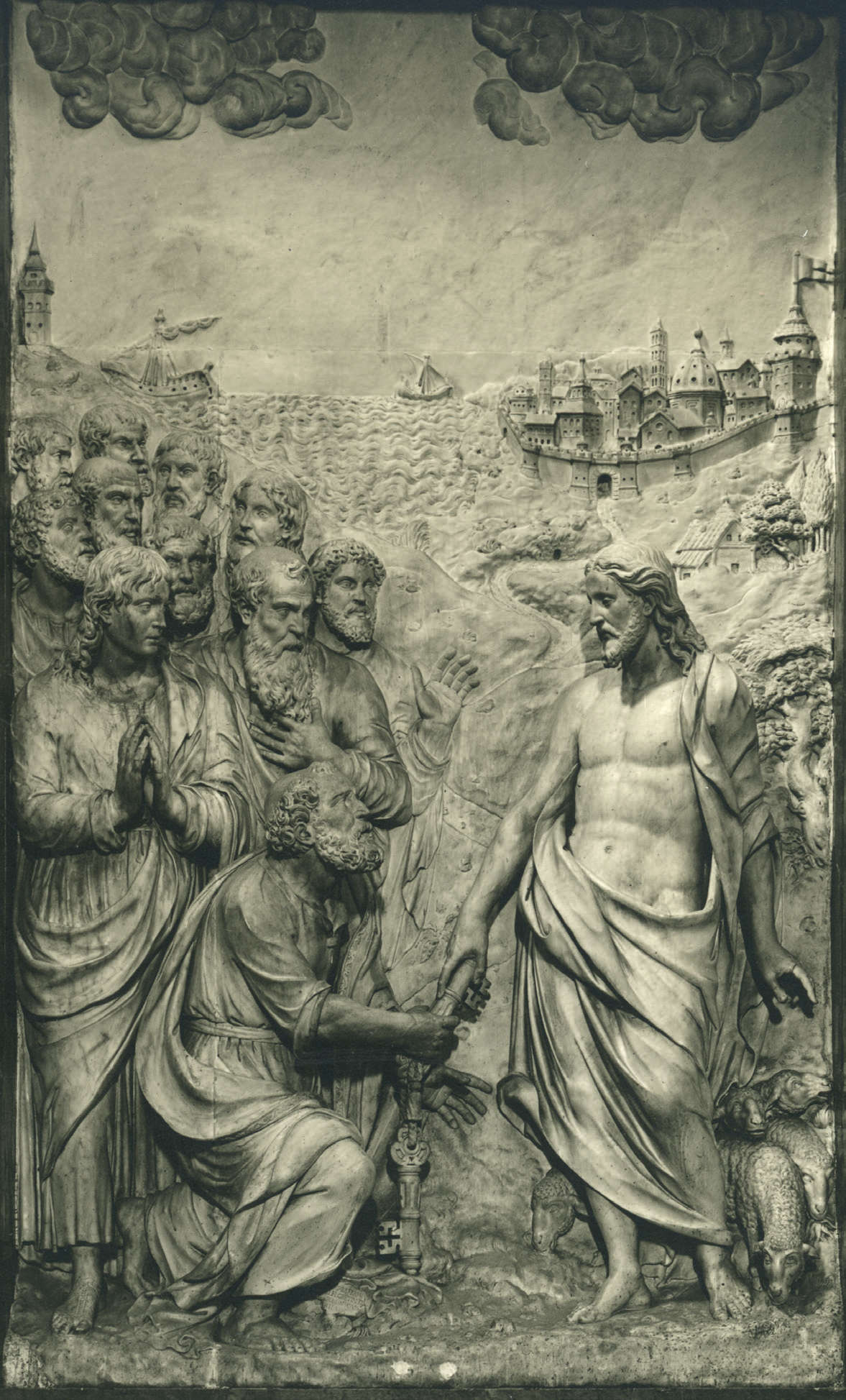
The exclusion of Gian Lorenzo Bernini’s intervention, hypothesized in the past by some scholars on the basis of a letter from Maffeo Barberini dated 1618, is another cornerstone of the study. According to Amendola, the letter from the future pope Urban VIII that speaks of “a statue begun by Michelangelo” more likely refers to the Palestrina Pietà (of which the Barberinis were owners), leaving open the question of who had actually completed the Bassano Christ. It is in this context that the figure of Pompeo Ferrucci, a Fiesole sculptor active in Rome under the pontificate of Paul V Borghese, emerges. Ferrucci, described as a pious artist faithful to academic models, possessed the technical expertise necessary to confront Michelangelo’s rough draft without distorting its setting.
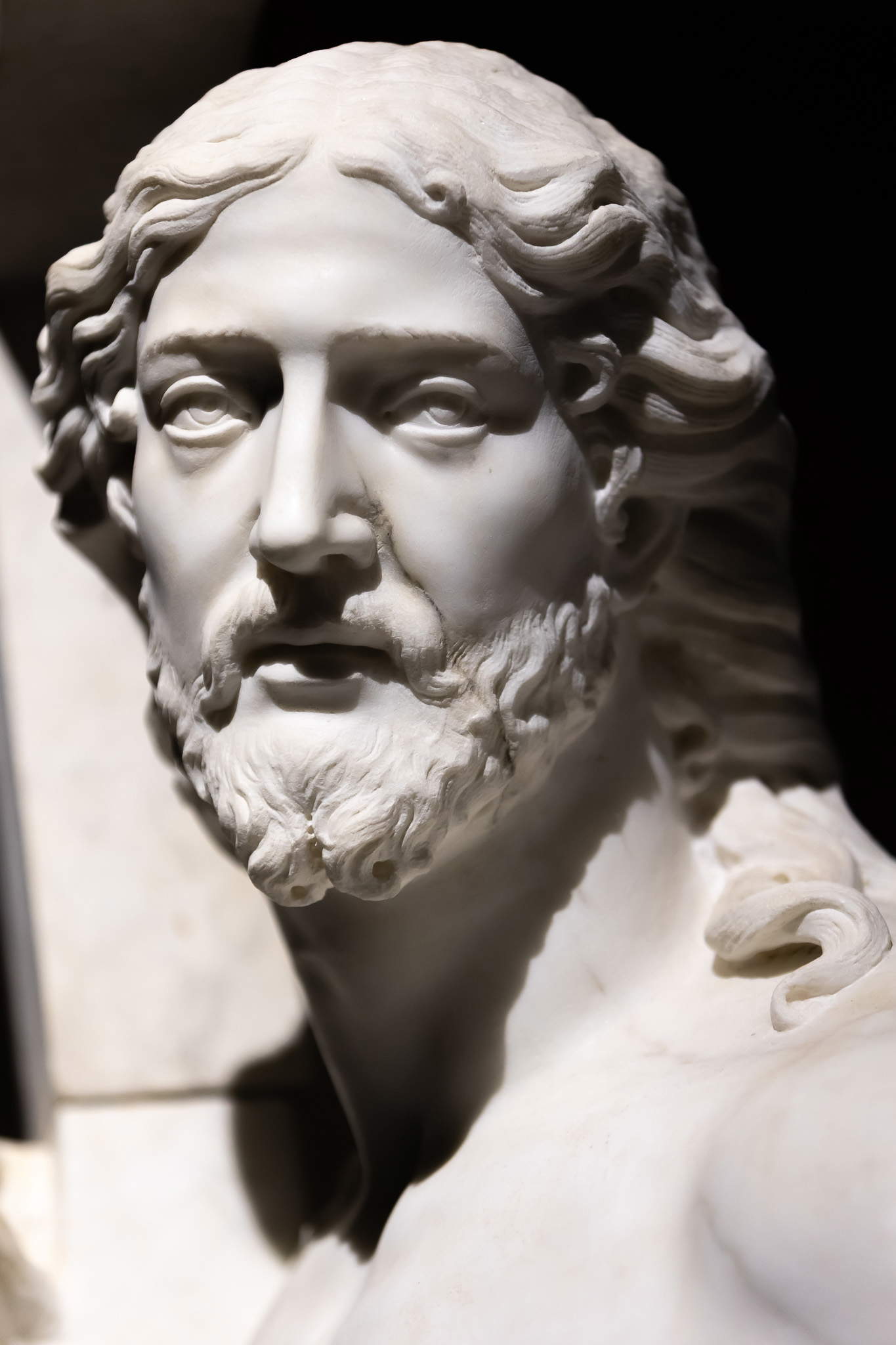
Amendola’s stylistic analysis reveals similarities between the Christ and certain works by Ferrucci, such as the high relief in Frascati Cathedral dated 1613. In the face of Christ we find the same crystallization of forms, the old-fashioned course of the locks of hair and a slight opening of the mouth that characterize the figures of the Fiesole sculptor. Particularly revealing is the technical comparison between the Christ’s curls and those found in the bust of Pietro Cambi, made by Ferrucci around 1630, where the use of the drill to define the volumes and the bifurcation of the beard shows a hand identical to the one that finished the Bassano marble. This finishing intervention, datable between 1630 and 1637, was intended to make the work acceptable for religious devotion by camouflaging the black vein by making it coincide with the naso-labial groove. “On closer inspection of the Christ of Bassano Romano,” according to Amendola, “only certain parts belong to Michelangelo, such as the left leg and arm, part of the left side of the torso, and more generally the setting of the figure. At the same time, however, there is a general academic veil that contains under an apparent patina the forms, which show no particular vitality and tension and in which the material returns to become heavy, heavy stone. The figure in his hips appears uncertain on the right side, as does the left hand that holds without any anatomical strength the rope and sponge attached to a small portion of the trunk of the Cross, on which to graft the other parts of the instrument of martyrdom. Even the severely frozen expression of the face does not give much away, and the slightly disclosed mouth does not seem to be a diriment element in the interpretation of the statue, which has also been proposed in the light of the critical words, already mentioned, expressed by Vincenzo Giustiniani on the Minerva Christ. Such difficulties in restoring the forms are to be ascribed to the sculptor who intervened later on the draft of the Christ, which must still have had some areas left in a rough state, I am thinking for example of the portion around the left leg where a soft and decorative antique-style trunk will be carved, as well as near the shoulder on the same side where traces of the dark vein can be seen, on the face, head and more generally the rear part of the figure.”
The sculpture’s entry into Vincenzo Giustiniani ’s collection probably occurred shortly before 1638, the year in which the work appears in the marquis’ post-mortem inventory. Interestingly, Giustiniani, despite being a refined connoisseur, never mentioned the Christ in his theoretical writings, perhaps out of a certain coldness toward a work that he felt was distant from the vividness of classical models or nature. The fact that the arms of the cross were still disassembled in the inventory suggests that the statue had only recently arrived at Palazzo Giustiniani and that its final arrangement had not yet been completed. It was not until 1644 that the heir Andrea Giustiniani decided to transfer the sculpture to Bassano Romano to adorn the high altar of the church of San Vincenzo Martire, a building whose austere architecture is now attributed to Giacomo Pacifici.
The decision to place Christ in a rural church may have been dictated by practical necessity, due to the failure to deliver a statue of the Virgin commissioned years earlier from François Duquesnoy. In this peripheral context, the work took on a deep theological significance related to the theme of fulfillment, understood as the act of bringing the divine plan to perfection through sacrifice. Bassano’s Christ is depicted as a Risen One, alive and victorious over death, flaunting with dignity the instruments of martyrdom. The full nudity, initially censored by modern metal cloth and rediscovered only with recent restorations, emphasized precisely Christ’s identity as a New Man redeeming original sin.
This artistic affair effectively illustrates the transition from the Renaissance model of solitary genius to the collective practice of the seventeenth century, where the completion of an unfinished work acquired an autonomous cultural and spiritual value. While for Michelangelo the imperfection of matter was an insurmountable limit, for later generations it represented an opportunity to rework the past and integrate the master’s work into a new aesthetic vision. The concept of perfection, which for Vasari was a divine attribute, became a codified allegory in the 17th century, as demonstrated in Cesare Ripa’sIconologia, where Perfection is depicted as a woman drawing a circle, a symbol of an end achieved through diligence and charity.
The rediscovery of Pompeo Ferrucci’s hand behind the finishing of the Bassano Romano Christ obviously does not diminish the importance of the statue, but enriches its history, transforming it into a living document of the dialogue between different eras. What began as a flawed marble, marked by a dark vein that seemed to have defeated the greatest sculptor of all time, has become, through the centuries, an example of how art can overcome the limits of matter to achieve a form of universal completeness. The sculpture of Bassano Romano remains a silent and powerful testimony to this story today.
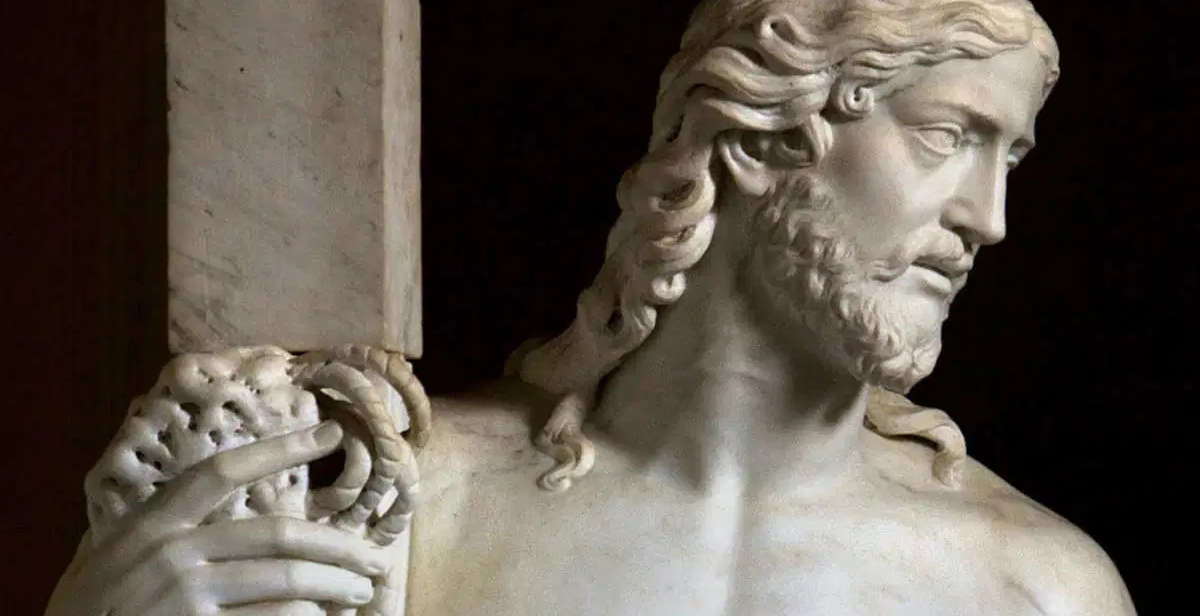 |
| Who completed Michelangelo's first Christ of the Minerva? There is a proposal for attribution |

Warning: the translation into English of the original Italian article was created using automatic tools. We undertake to review all articles, but we do not guarantee the total absence of inaccuracies in the translation due to the program. You can find the original by clicking on the ITA button. If you find any mistake,please contact us.
























 IT
IT FR
FR DE
DE ES
ES CN
CN


