





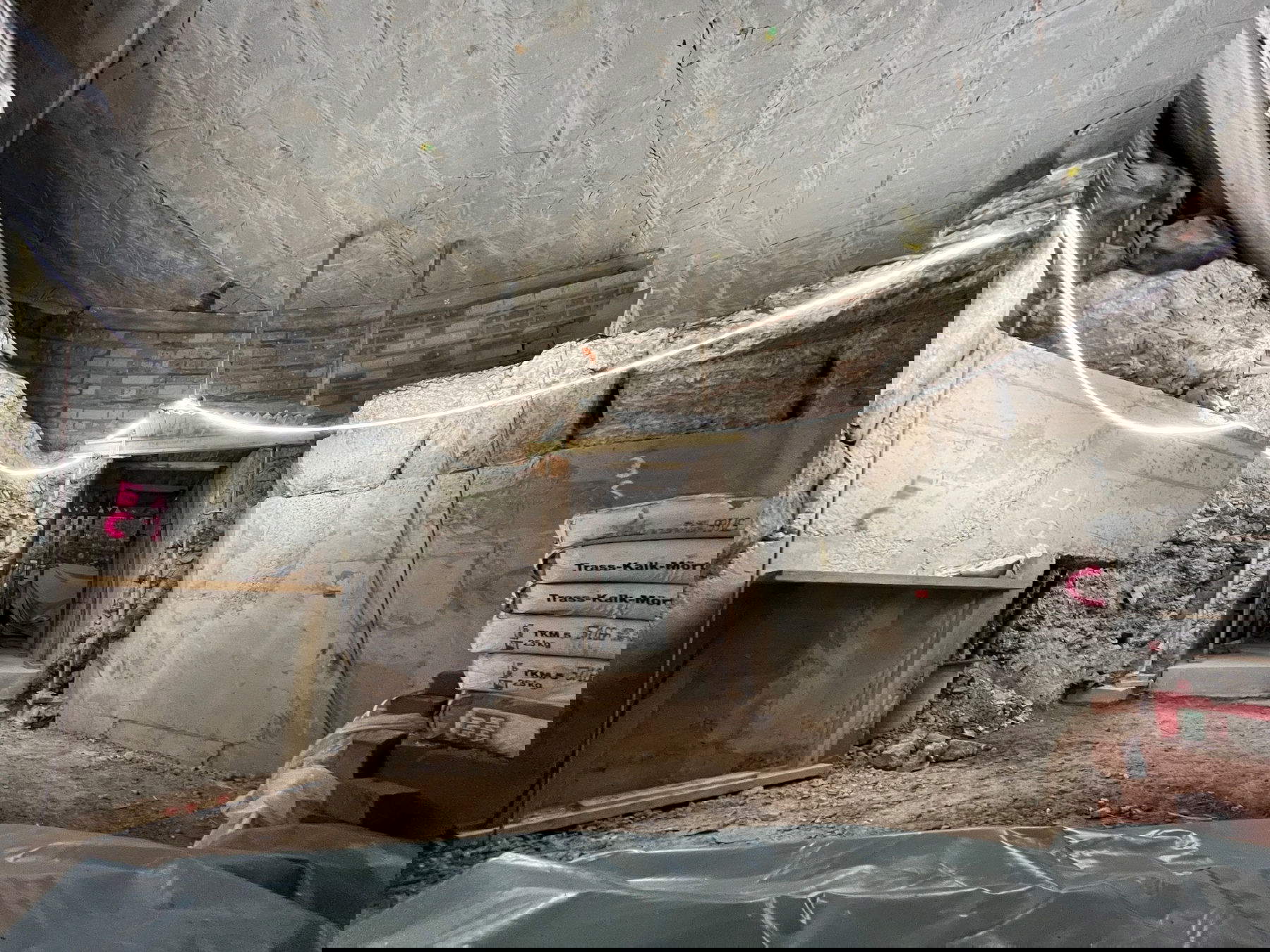
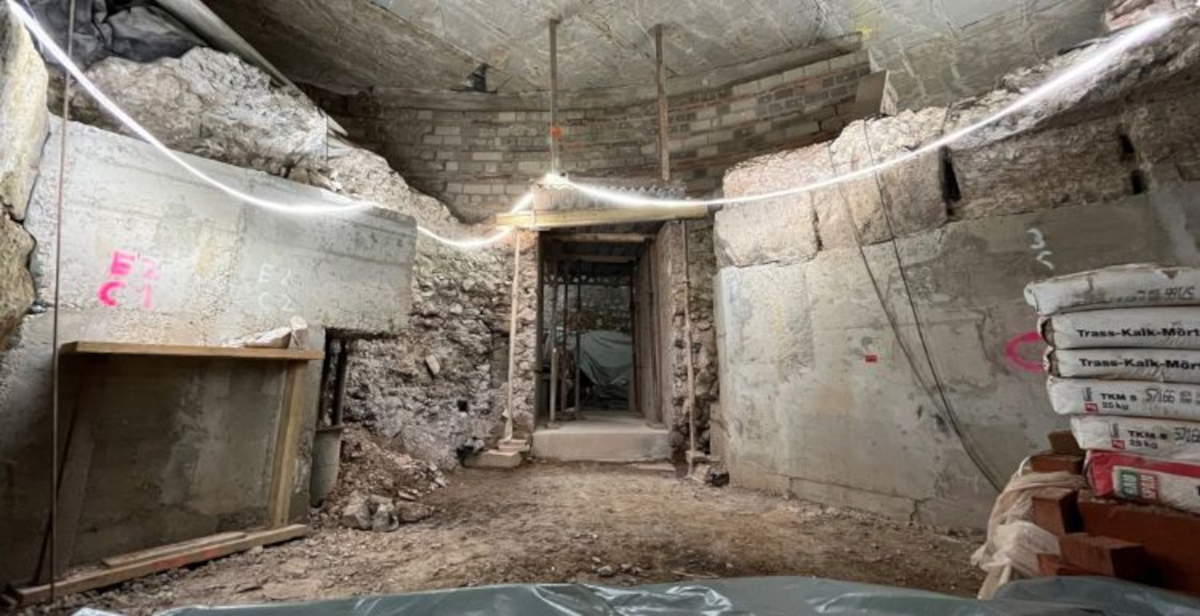
During preparatory work for the new underground route of MiQua, the Jewish Museum and Archaeological Quarter in Cologne, Germany, archaeological excavations conducted in recent months have uncovered exceptionally important Roman artifacts. The particularly deep location of the route has made it possible to preserve building traces that do not normally stand the test of time, as they have been destroyed by later interventions. In this case, the Roman remains had been covered since antiquity by soil accumulations along the bank of the Rhine, ensuring their preservation. Among the most notable finds are the remains of the apse of a multi-aisled Roman basilica dating back to the 4th century. Analysis of the soil cut allowed us to understand that the structure was not made of Roman concrete(opus caementicium), but built with layers of tufa, basalt, and limestone bound by a strong and durable mortar containing brick fragments and gravel. The area, once visible only as a slight depression on the square in front of the Rathaus, Cologne’s historic town hall, is now open to the public.
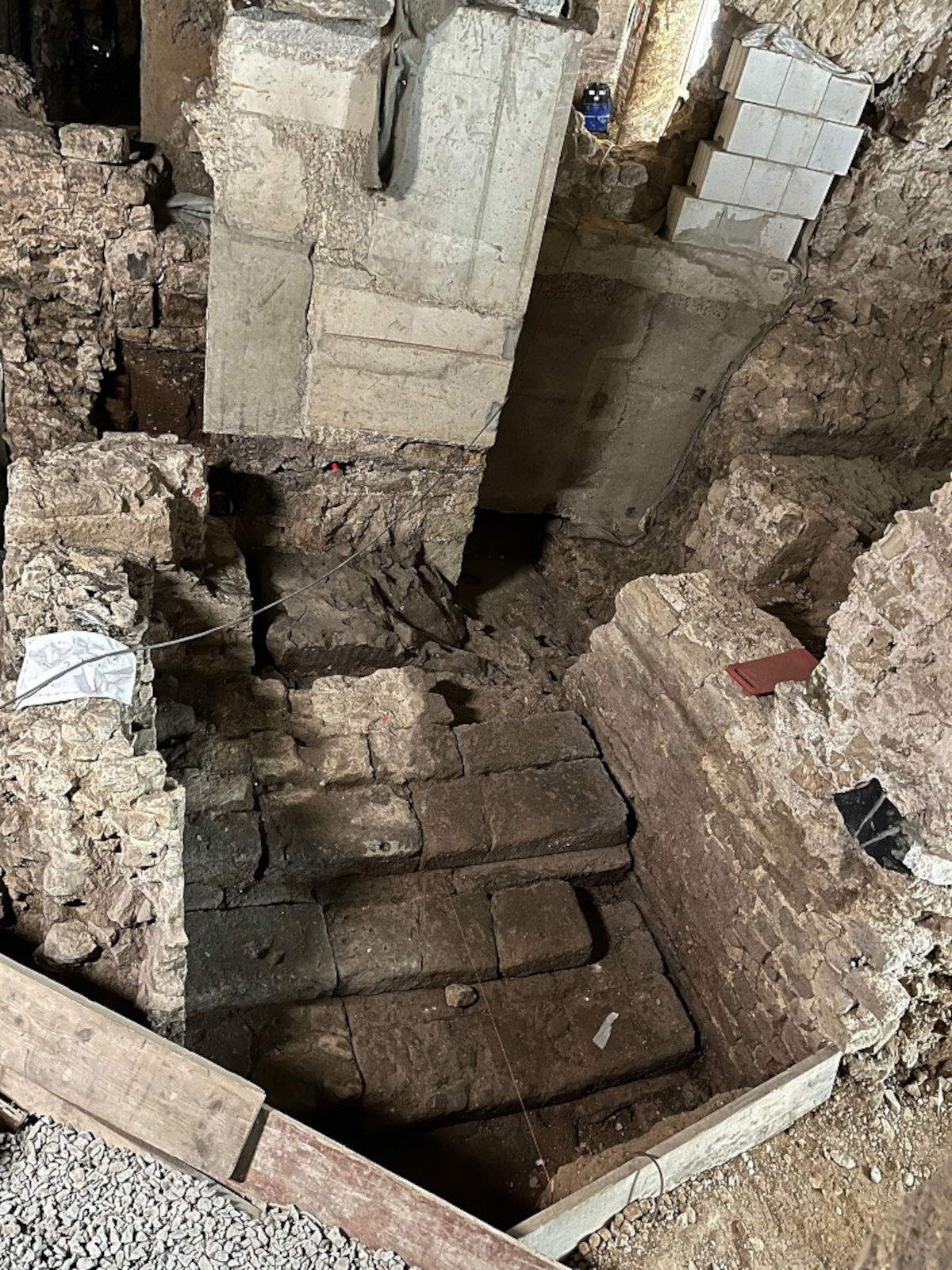
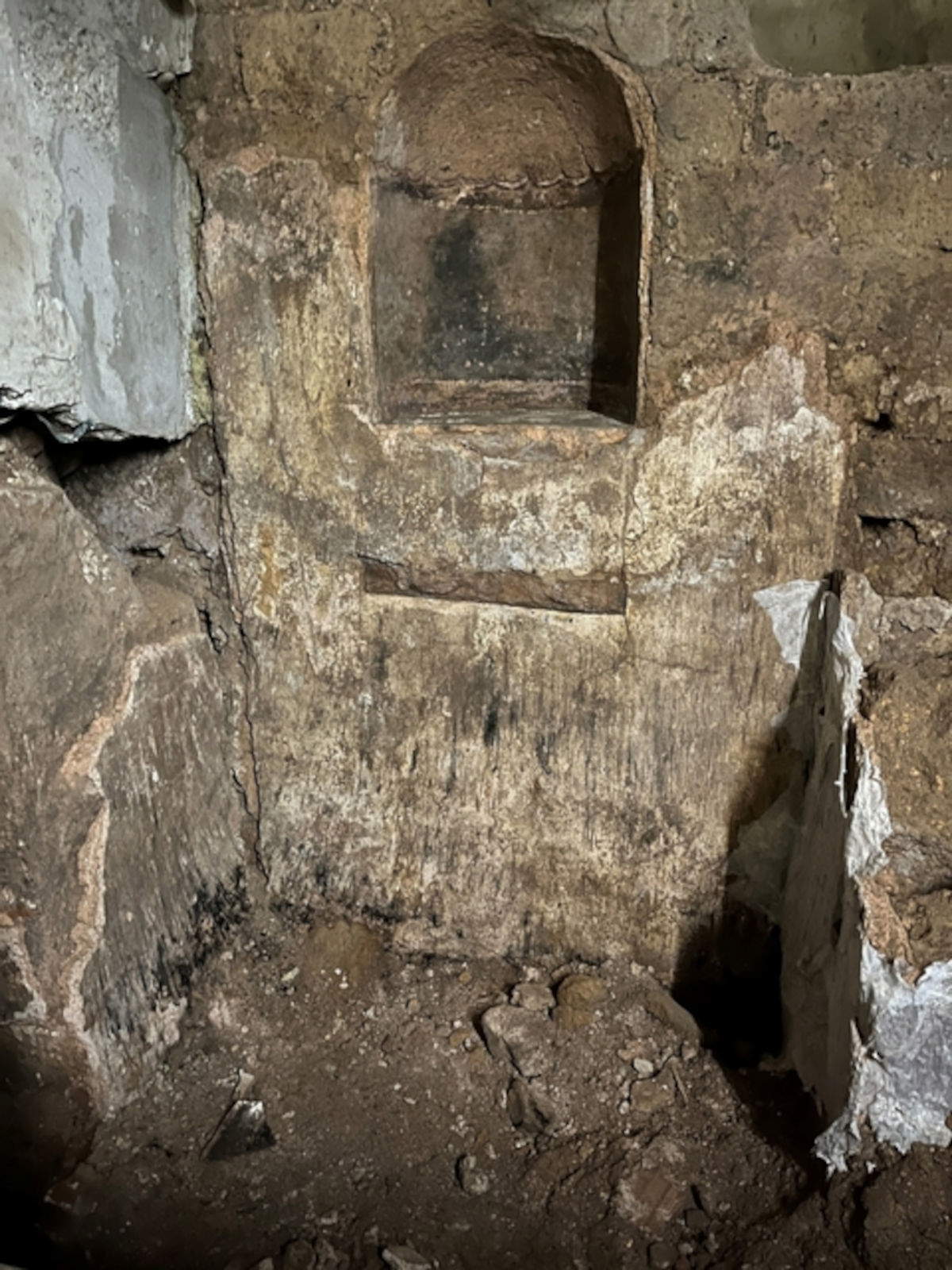
Another discovery was a late first-century staircase, found during excavations, that connected a deep level toward the Rhine to a higher area of the Praetorium, the Roman governor’s palace. The staircase represents a rare find for the archaeology of Cologne, where usually only the foundations of buildings are preserved. Particularly favorable topographical conditions, combined with ancient land fills, allowed its preservation. An additional find is a 2nd-century lararium, a domestic altar within the Praetorium dedicated to the Lari, patron deities of the house. The niche housed figures of the Lares, next to whom food offerings and ritual objects were laid. Traces of nails above and beside the niche indicate the presence of hanging garlands, while a broken edge below the niche indicates the original location of the altar table, found during the excavation and intended to be restored and repositioned. Remnants of painting inside the niche and side wall projections suggest an intricate decorative frame. The find represents a unicum north of the Alps; comparable examples are known only in Vesuvian cities such as Pompeii.
 |
| Germany, Roman basilica, staircase and altar resurface in basement of Cologne's MiQua |


The author of this article: Noemi Capoccia
Originaria di Lecce, classe 1995, ha conseguito la laurea presso l'Accademia di Belle Arti di Carrara nel 2021. Le sue passioni sono l'arte antica e l'archeologia. Dal 2024 lavora in Finestre sull'Arte.Warning: the translation into English of the original Italian article was created using automatic tools. We undertake to review all articles, but we do not guarantee the total absence of inaccuracies in the translation due to the program. You can find the original by clicking on the ITA button. If you find any mistake,please contact us.





















 IT
IT FR
FR DE
DE ES
ES CN
CN


