





A ritual altar with human remains and offerings was discovered near the archaeological zone of Tula, in the state of Hidalgo, Mexico, during archaeological salvage work related to the construction of the Mexico City-Querétaro passenger rail line. The discovery occurred as part of activities coordinated by the Secretaría de Cultura of the Government of Mexico and conducted by specialists from theNational Institute of Anthropology and History (INAH), and could help clarify the urban organization of the ancient capital of the Toltecs.
According to INAH reports, the structure identified is a momoztli, i.e., an altar, probably dating to the Tollan phase of the pre-Hispanic city, datable between 900 and 1150 AD. The altar was located near the area known as Tula Chico, within the Tula Archaeological Monument Zone, about 300 meters beyond the perimeter of the heritage site. The discovery occurred during registration and excavation operations along the right-of-way of the so-called Front 5, in an area identified as Site 17, in the territory of the Tula municipality. The Secretary of Culture for the Government of Mexico, Claudia Curiel de Icaza, stressed that the find confirms the value of preventive archaeology activities in the heritage protection process.
“Every discovery like this,” said Claudia Curiel de Icaza, “expands our knowledge of one of the great civilizations of Mesoamerica and reinforces a cardinal principle of our cultural policy: the archaeological heritage of Mexico is the memory of our people, and the state assumes the responsibility to study it, safeguard it and transmit it to present and future generations.”
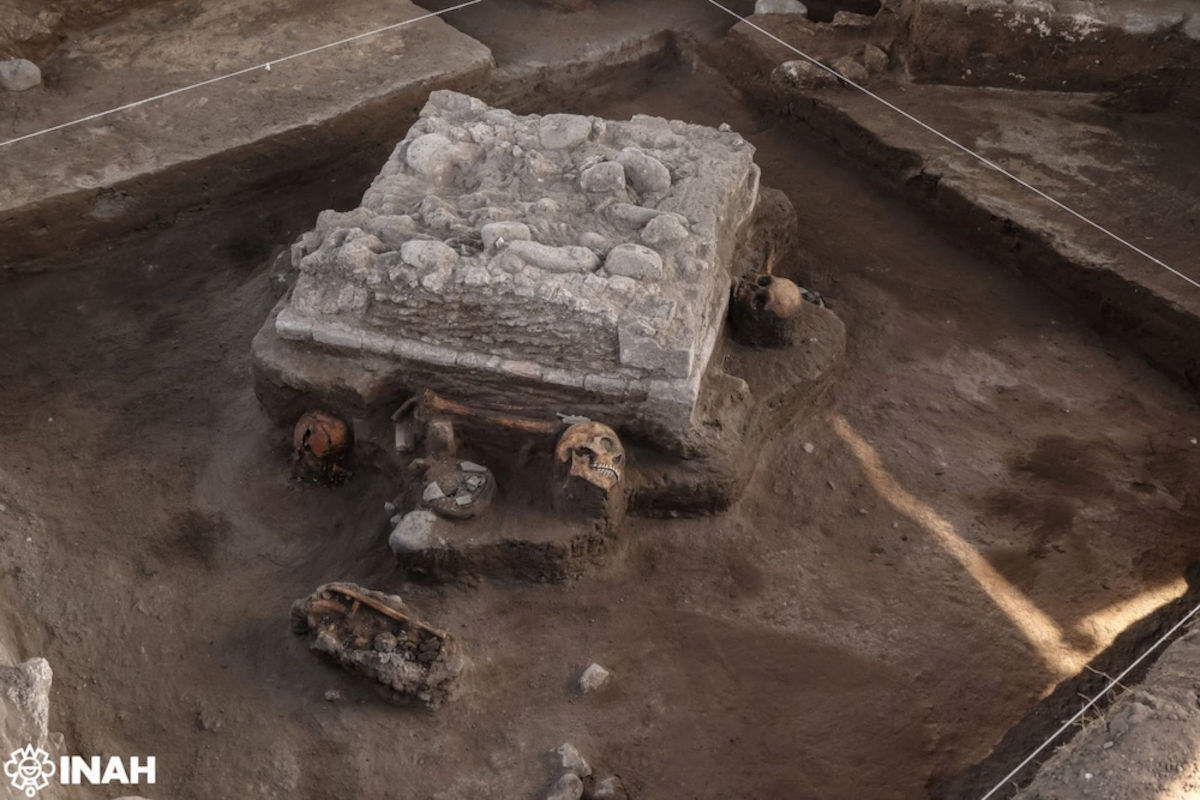
The coordinator of the archaeological salvage project, Víctor Francisco Heredia Guillén, explained that the altar measures approximately one meter on each side. The structure has a base made of squared stones and must have originally included at least three low bodies without stairs. The first level consists of a stone base, probably andesite, composed of blocks that do not exceed ten centimeters on the outer face. The second body has a series of modular slabs of the same material, while the upper part appears to be finished with pebbles and basalt stone.
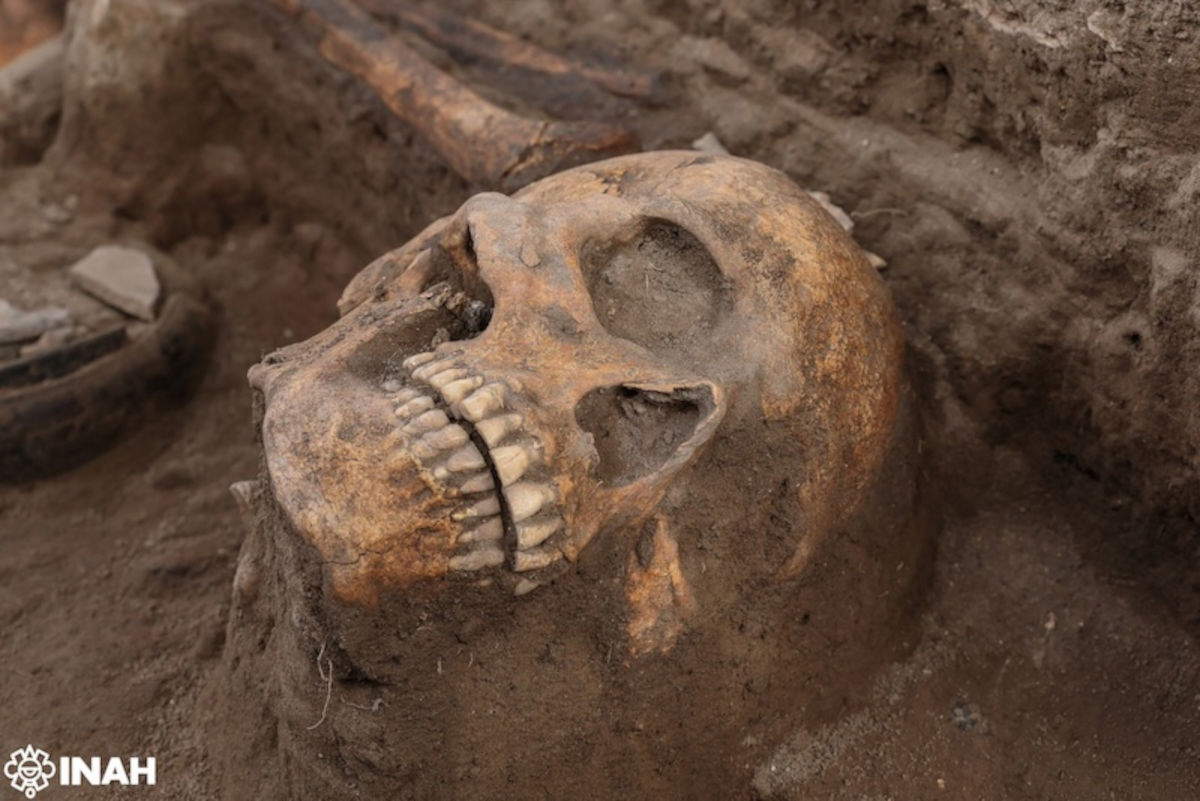
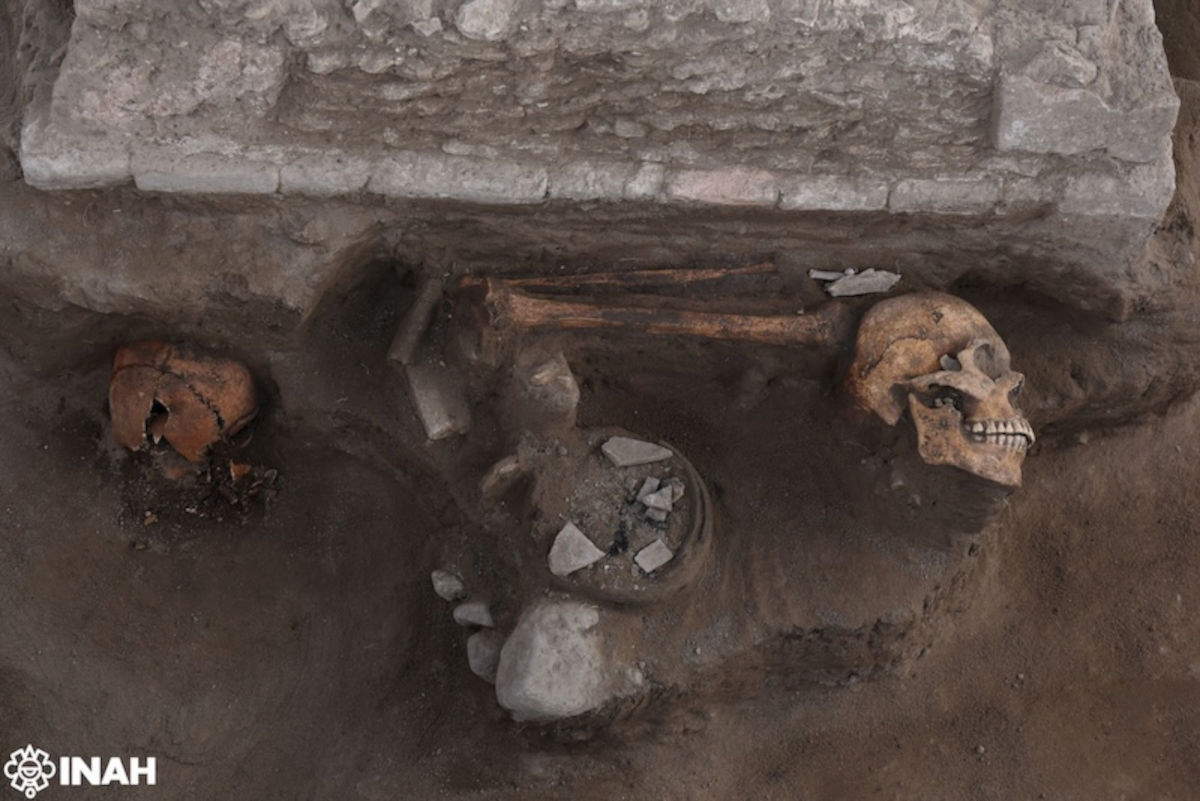
Around the lower level of the structure, offerings composed of human bone remains were found on three of the sides of the altar. In particular, four skulls and some long bones, probably femurs, were found. Archaeologists speculate that the fourth side may also contain similar remains. Several objects associated with ritual practices were also recovered in the context, including ceramic vessels, including a black-colored bowl with another inside it, obsidian fragments, and blades.
During excavation operations, two skulls were found at the base of the altar: one facing the top of the structure and another facing southwest. Continuing with the removal of layers, archaeologists identified a compacted soil layer with a plastered surface, probably composed of lime and sand. Below this layer, two more incomplete bones emerged, along with some pottery. According to Heredia Guillén, the likelihood of finding complete skeletons seems unlikely, as it is possible that only parts of the bodies were deposited in rituals. Once documented, the remains will be transferred to the project’s physical anthropology laboratory in the state of Mexico, where they will be analyzed to determine age, sex and any bone pathology. Scholars will also try to determine whether the individuals were decapitated: one of the skulls, in fact, still appears to be connected to the spine.
The excavations also unearthed ruins ofwalls, the attachments of which are in the same level as the first compacted layer. This element suggests that the altar may have been in the center of a patio. Archaeologist Emmanuel Hernández Zapata pointed out that the structure has already been documented through graphic surveys and photographs taken with drones. The material collected will now be digitized to produce an initial plan and allow for the gradual removal of the identified elements.
“In a test pit, one square meter in area,” explained Zapata, archaeologist in charge of excavations for Front 5, “we immediately identified a small compacted layer, and by extending the excavation, we found one of the corners of the altar and the other vertices. In this case, although metalworking was already in use in the post-classical period, we know that decapitations were still performed here with obsidian or flint knives, leaving cut marks on the bones. We hypothesize that these were rooms or elements belonging to an elite context, or to high-ranking groups, remnants of palaces that perhaps stood on the site. We know that on the outskirts of Tula were quarters inhabited by the upper and middle classes, and much further away, those of the people.”
The ceramic vessels will be transferred to the laboratory specializing in ceramic materials in Tepeji del Río de Ocampo, in the state of Hidalgo, where they will be stored and subjected to further analysis. As for the altar, several options are being evaluated to ensure its preservation. Over the course of recent weeks, the excavation area has also returned other dispersed materials, including ceramic artifacts, lithic elements, and malacological remains (mollusk remains) that will be studied to identify their species of origin. The recovered objects also include spinning spindles, bone awls and blades, tools that hark back to the activities of daily life of the people who inhabited the ancient city.
 |
| Mexico, Toltec altar discovered with human remains near Tula archaeological site |


The author of this article: Noemi Capoccia
Originaria di Lecce, classe 1995, ha conseguito la laurea presso l'Accademia di Belle Arti di Carrara nel 2021. Le sue passioni sono l'arte antica e l'archeologia. Dal 2024 lavora in Finestre sull'Arte.Warning: the translation into English of the original Italian article was created using automatic tools. We undertake to review all articles, but we do not guarantee the total absence of inaccuracies in the translation due to the program. You can find the original by clicking on the ITA button. If you find any mistake,please contact us.




























 IT
IT FR
FR DE
DE ES
ES CN
CN


