





In November 2024, a wreck of exceptional historical interest was identified at the bottom of Lake Neuchâtel in Switzerland. The discovery, documented by the Octopus Foundation website, was made as part of the Vulnerable Wrecks of Lake Neuchâtel project, launched in 2018, and carried out by external collaborator Fabien Droz for the Canton Neuchâtel Department of Archaeology (OARC) in collaboration with Octopus Foundation. The recovered cargo included perfectly preserved pottery, weapons, tools and equine harnesses dating from between 50 B.C. and 50 A.D., placing it between the end of the Roman Republic and the beginning of the Empire.
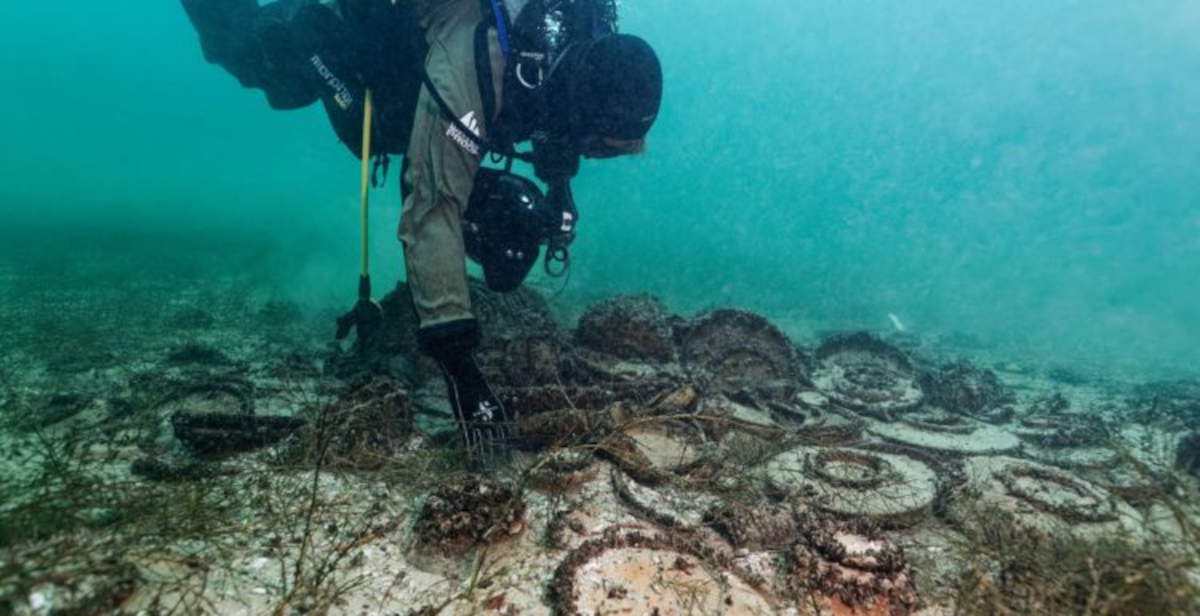
The first analyses, conducted between November 2024 (by the archaeologist in charge of the lake territory of the canton of Neuchâtel, Fabien Langenegger, and Julien Pfyffer, president of the Octopus Foundation) and March 2025, confirmed the presence of several hundred ceramic pieces, many of them intact, including plates, bowls, cups and trays. Some samples were sent to specialists for in-depth evaluations, while a wooden sample from the load was subjected to carbon-14 dating. The recovery also yielded two large fragments of amphorae intended for transporting oil and wine, a wicker basket containing six different ceramic pieces, various metal objects for domestic use, tools and harnesses for horses, four chariot wheels made of wood and metal, and several personal items of the legionnaires, including fibulae, buckles, pioneer pickaxes, and two complete swords, one of which is still in its wood and metal scabbard.
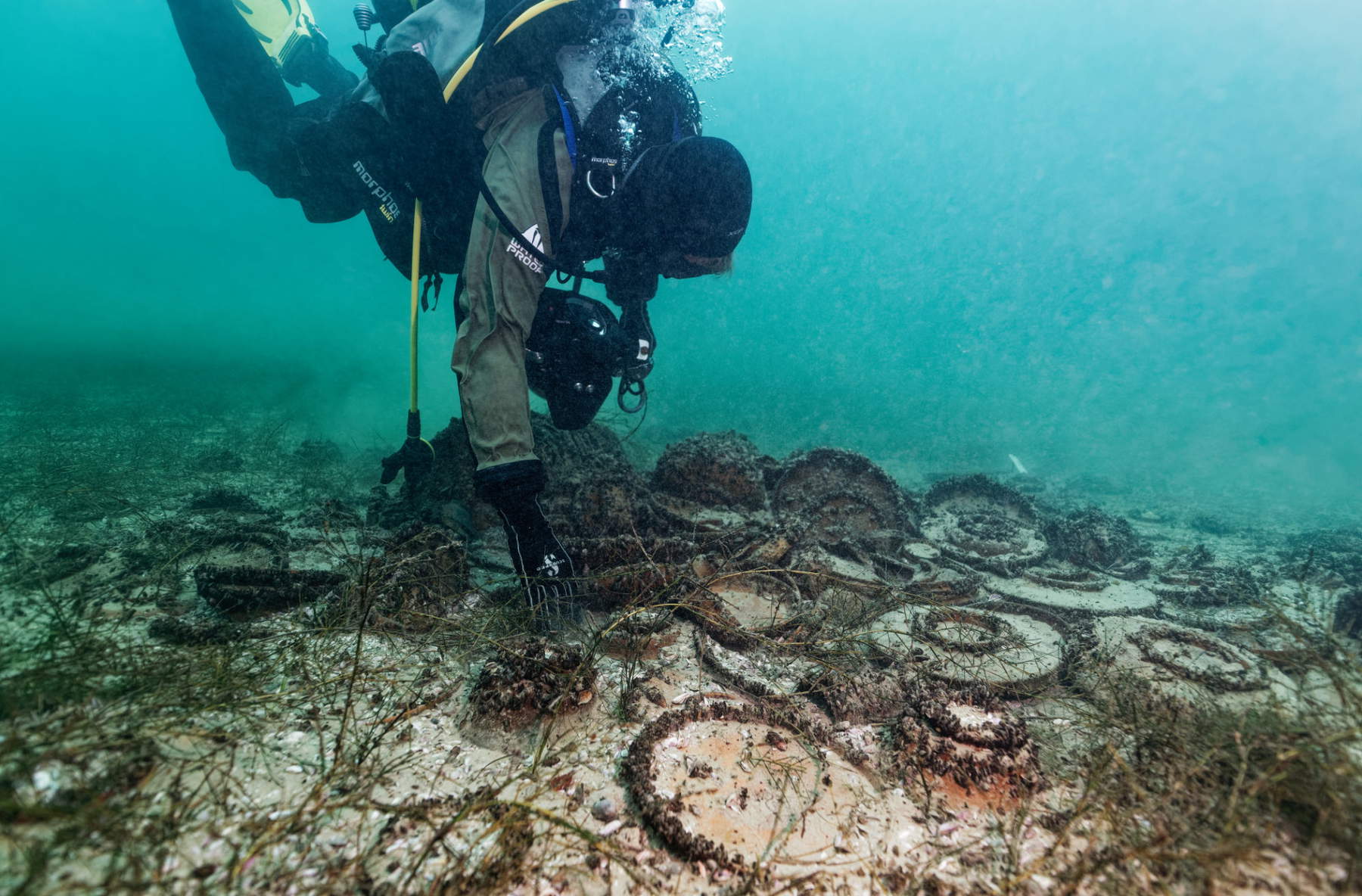
The variety and state of preservation of the finds offer rare evidence of military life and transportation in the Alpine area during the first century AD. The cargo, originally buried under lake sediments, had become exposed following two water regulation interventions in the 19th and 20th centuries, with the risk of being dispersed or looted. As a result, archaeological authorities decided to proceed quickly to recover and preserve the materials. The military items and harnesses found indicate that the cargo was probably escorted by legionnaires and may have been intended for an entire court, or perhaps a complete legion, to supply troops along the Rhine to protect against Germanic peoples. The fibula, which appeared in Tiberius’ reign, and the dendrochronological dating of a table placed under the pottery set a terminus post quem at 17 CE.
One working hypothesis links the cargo to the 13th Legion (Gemina), stationed at Vindonissa (present-day Windisch in Aargau) in A.D. 16 with the task of guarding the borders and preventing Germanic peoples from advancing to the Helvetian plateau and controlling the Alpine passes. Supplies could have arrived in Yverdon (Eburodunum in Roman times), loaded onto boats bound for Vindonissa via lakes and canals, while the shipwreck would have occurred at the entrance to the Thielle Canal, probably due to a gust of wind. No remains of the ship were found, leaving open the possibility that the cargo got separated from the main transport vehicle or that the ship sank elsewhere. The Vulnerable W recks project has already enabled the complete excavation of three wrecks and the partial analysis of two Neolithic and Bronze Age lake villages, thanks to close cooperation between the Octopus Foundation and the archaeological office of Canton Neuchâtel. The work on the Neuchâtel wreck reinforces the importance of the lake as an archaeological site and contributes to the understanding of the logistics of the Roman Empire in the transportation and distribution of supplies along its northern frontiers.
 |
| Switzerland: Lake Neuchâtel returns perfectly preserved Roman cargo |


The author of this article: Noemi Capoccia
Originaria di Lecce, classe 1995, ha conseguito la laurea presso l'Accademia di Belle Arti di Carrara nel 2021. Le sue passioni sono l'arte antica e l'archeologia. Dal 2024 lavora in Finestre sull'Arte.Warning: the translation into English of the original Italian article was created using automatic tools. We undertake to review all articles, but we do not guarantee the total absence of inaccuracies in the translation due to the program. You can find the original by clicking on the ITA button. If you find any mistake,please contact us.























 IT
IT FR
FR DE
DE ES
ES CN
CN


