





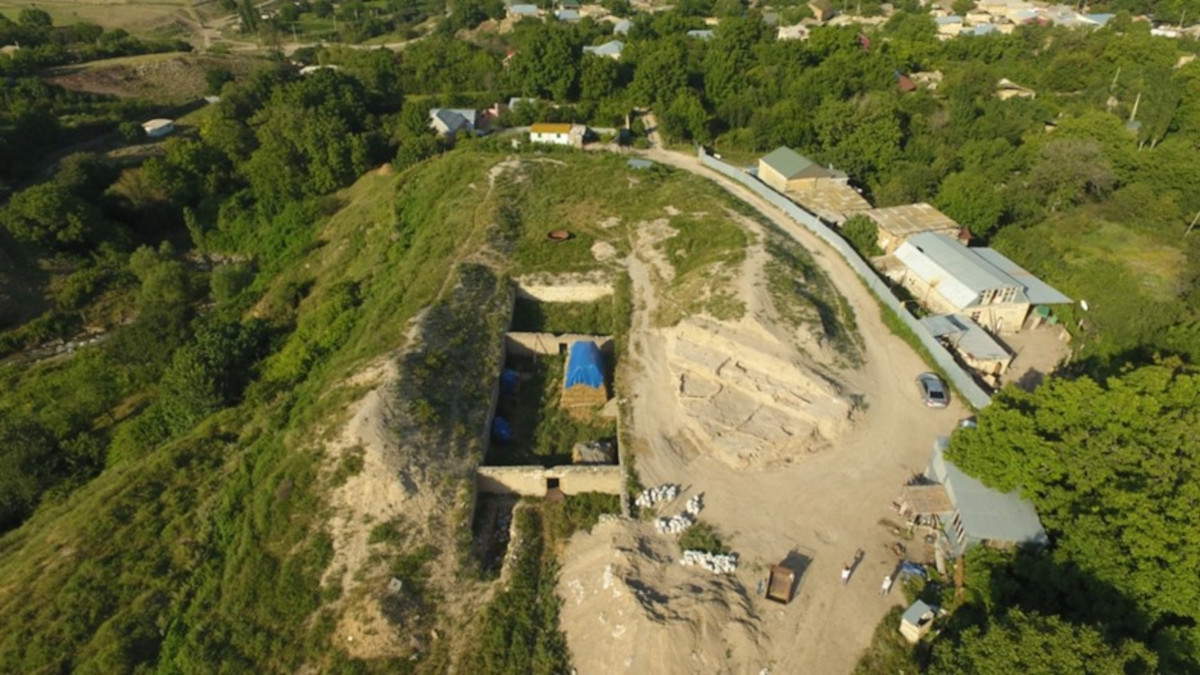
International research, in which theUniversity of Bari Aldo Moro took part, has made it possible to reconstruct the dietary habits and culinary techniques of communities belonging to the Kura-Araxes culture, which lived in the South Caucasus about 5,000 years ago. The results were published in the scientific journal Proceedings of the National Academy of Sciences and are the result of a collaboration between the University of Bari and the University of Bonn, along with several European research institutions, including the Institute of Archaeology and Anthropology of the National Academy of Sciences of Azerbaijan, the Austrian Academy of Sciences and the Centre National de la Recherche Scientifique. Contributing for the University of Bari was Giulio Palumbi, professor of Prehistoric and Protohistoric Archaeology and head of the international KUR(A)GAN project, who led the investigation of the Qaraçinar site in Azerbaijan. As the scholar points out, “pottery represents one of the most distinctive expressions of Kura-Araxes culture, and its use in practices related to food consumption probably had a central role in the processes of social integration and cultural transmission of these communities.”
The study is based on the analysis of 52 ceramic vessels from the very site of Qaraçinar, located on the slopes of the Lesser Caucasus and dated between 2800 and 2600 BCE. The research combined technological analysis, study of usage traces, and advanced biomolecular investigations of organic residues, complemented by botanical and faunal data. According to biomolecular archaeologist Maxime Rageot of the University of Bonn, this multidisciplinary approach has enabled a detailed reconstruction of how food was prepared and consumed in Kura-Araxes communities.
The extraordinarily well-preserved organic residues revealed the presence of dairy and ruminant fats, including the processing of milk into derivatives, fruit and grape products (both fermented and unfermented), vegetable oils and waxes, as well as conifer resins probably used as flavorings and preservatives. Analyses also indicate consumption of grape-based beverages, likely wine, sometimes flavored with resins. Unlike in coeval Mesopotamian contexts, this type of consumption does not appear to be reserved for elites, but spread more widely and non-hierarchically within the community.
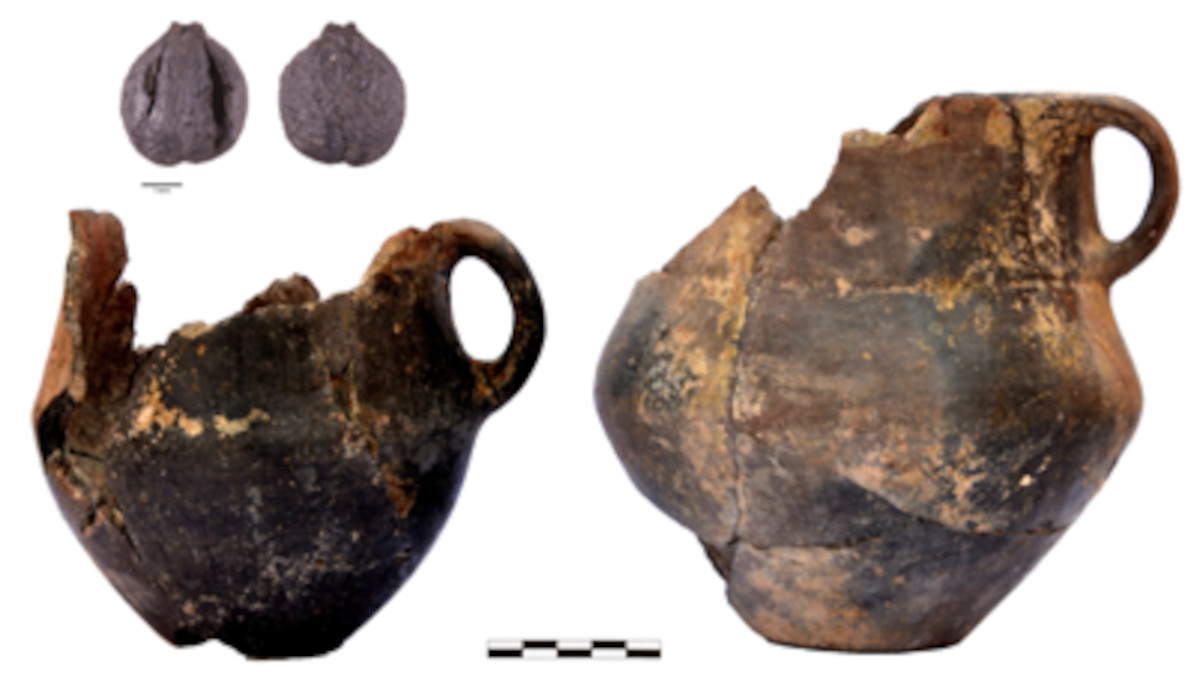
A functional distinction between different ceramic types also emerges for the first time: monochrome ones were mainly intended for cooking, while red and black burnished vessels were used for consuming uncooked dairy products and fruit and grape drinks. The use of fruit also in cooking and storage vessels suggests multiple culinary uses, such as flavoring, food sweetening, and possible functions in cheese-making processes. Another significant finding concerns the identification of millet in ceramic residues, which testifies to contacts with Central Asia, an area where this cereal was already cultivated, but so far not documented so early in the South Caucasus.
Overall, the study offers new insights into the daily life and food traditions of Kura-Araxes communities, suggesting that their expansion into Anatolia, Iran and the Levant also involved the spread of culinary practices originating in the South Caucasus.
The research was funded by the Agence Nationale de la Recherche and the Deutsche Forschungsgemeinschaft under the KUR(A)GAN project, as well as by the French Ministry of Europe and Foreign Affairs.
|
| What was eaten in the South Caucasus 5,000 years ago? An international study reveals |

Warning: the translation into English of the original Italian article was created using automatic tools. We undertake to review all articles, but we do not guarantee the total absence of inaccuracies in the translation due to the program. You can find the original by clicking on the ITA button. If you find any mistake,please contact us.




























 IT
IT FR
FR DE
DE ES
ES CN
CN


