





The history of the city of Dortmund, the major center of the Ruhr industrial region, is closely connected to the history and career of one of rock music’s most famous bands, Pink Floyd. It was in Dortmund, in 1981, that eight spectacular concerts of Pink Floyd’s world tour, The Wall, were held, which exclusively covered only four cities worldwide: Dortmund, London, Los Angeles and New York.
Just in Dortmund, at the Dortmunder U, from last September 15 until February 10, 2019, it is possible to visit the traveling exhibition entirely dedicated to Pink Floyd. The multimedia and interactive exhibition was curated mainly by the Victoria and Albert Museum, which already in 2013 mounted the fascinating and engaging exhibition dedicated to David Bowie, David Bowie Is, which came to MAMbo in Bologna in 2016 (those who had the good fortune and pleasure of visiting it know exactly what I am talking about). On the wave of the same success as the latter, the exhibition dedicated to one of the British bandsthat changed the history of rock, after being based at the V&A in London and MACRO in Rome, lands in Germany, in the heart of Europe.
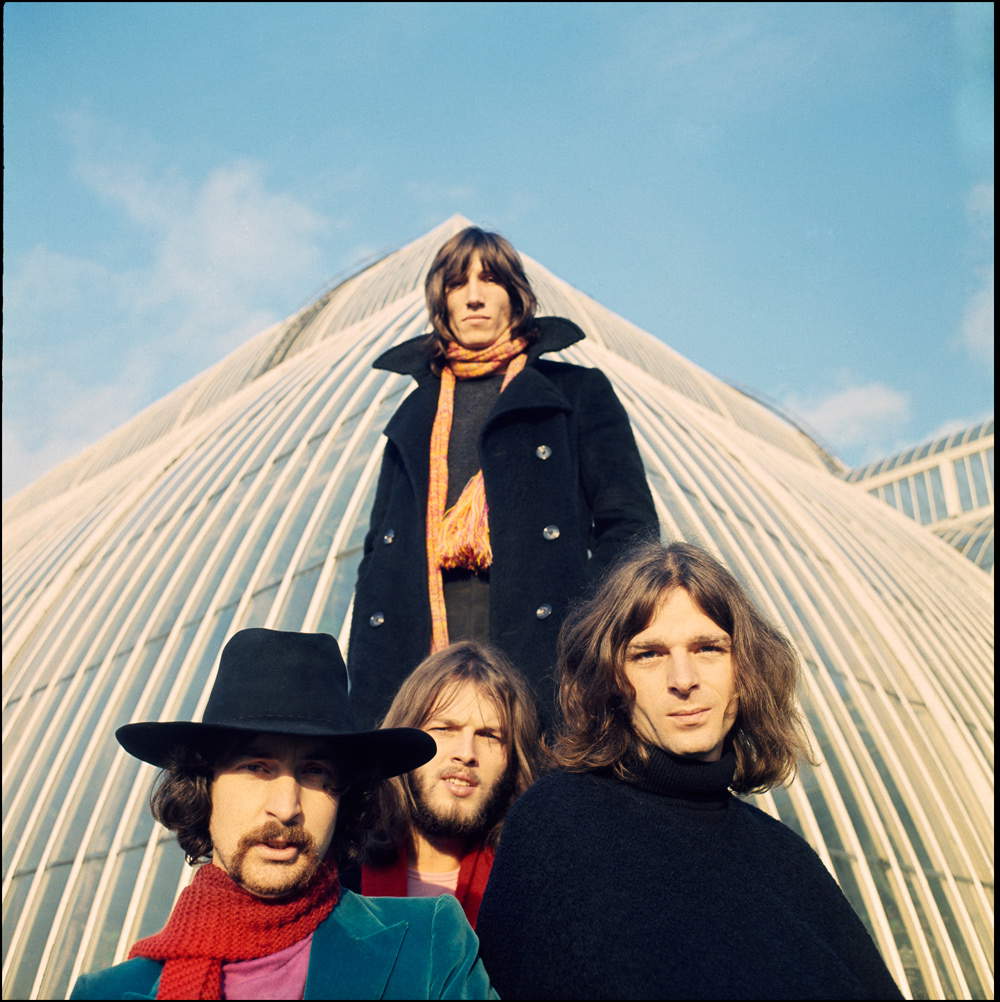 |
| Pink Floyd. Courtesy of Pink Floyd. Their Mortal Remains. |
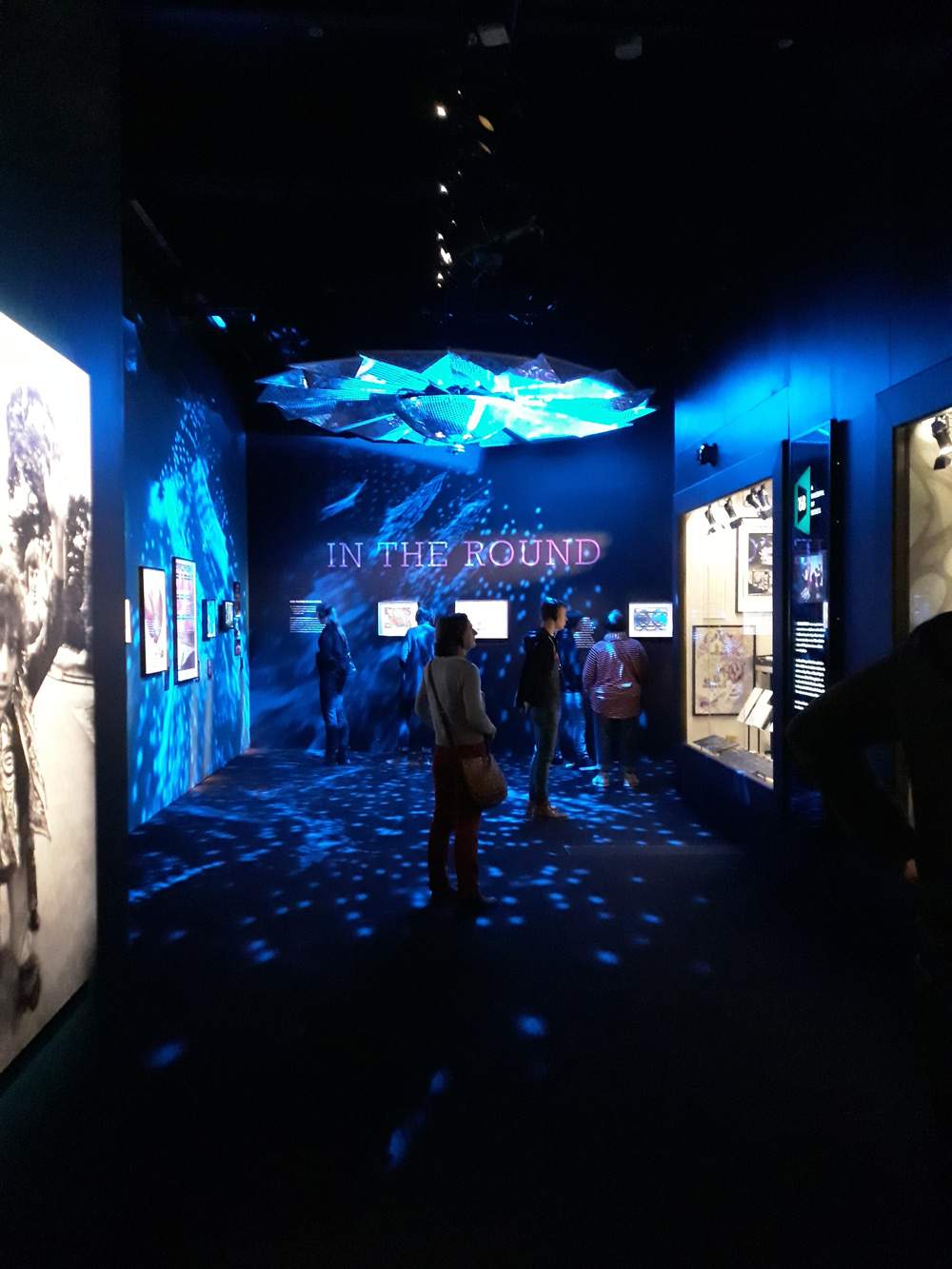 |
| Images from the Pink Floyd Exhibition: Their Mortal Remains exhibition in Dortmund. Ph. Credit Francesca Della Ventura |
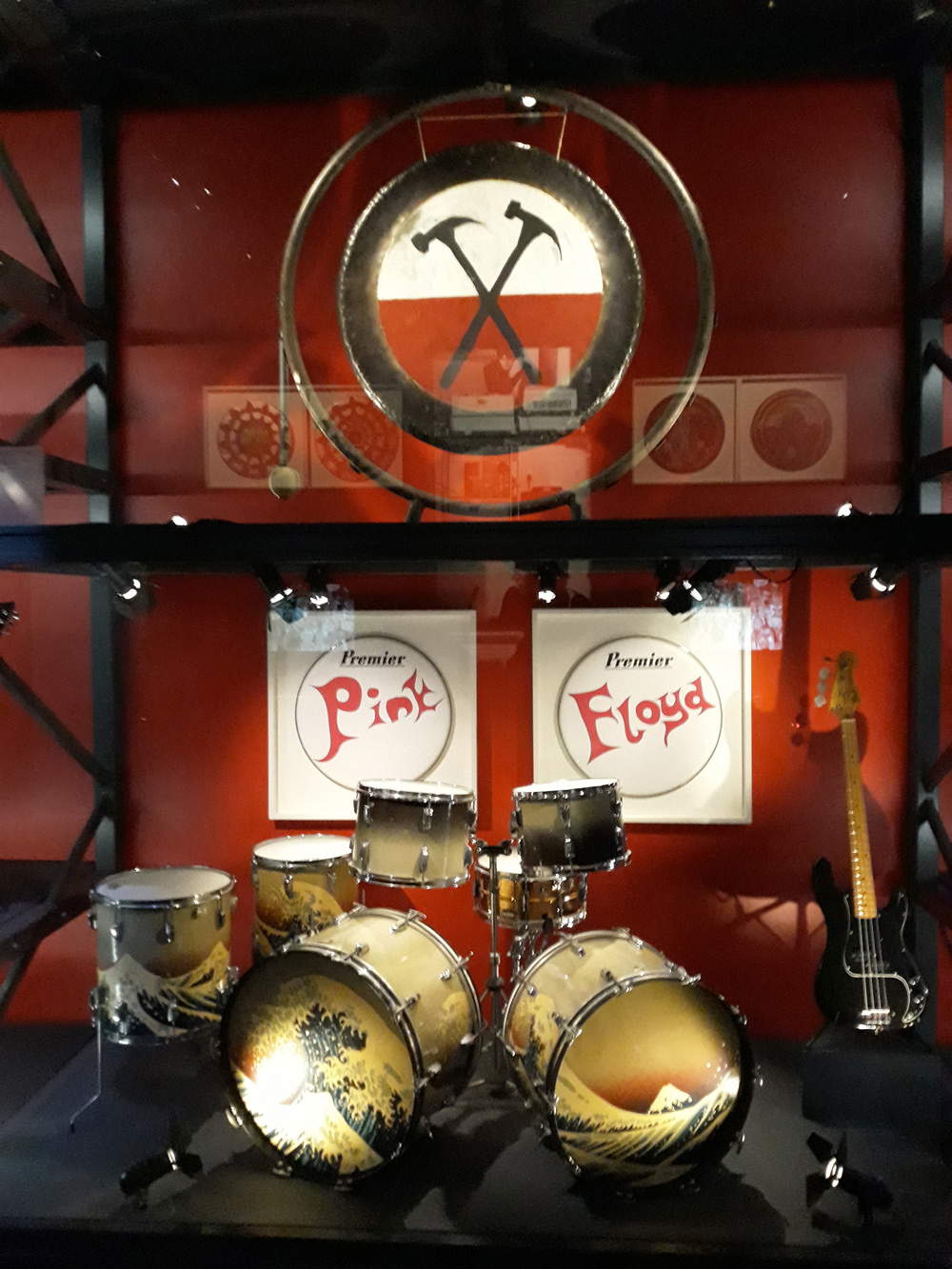 |
| Images from the Pink Floyd Exhibition: Their Mortal Remains exhibition in Dortmund. Ph. Credit Francesca Della Ventura |
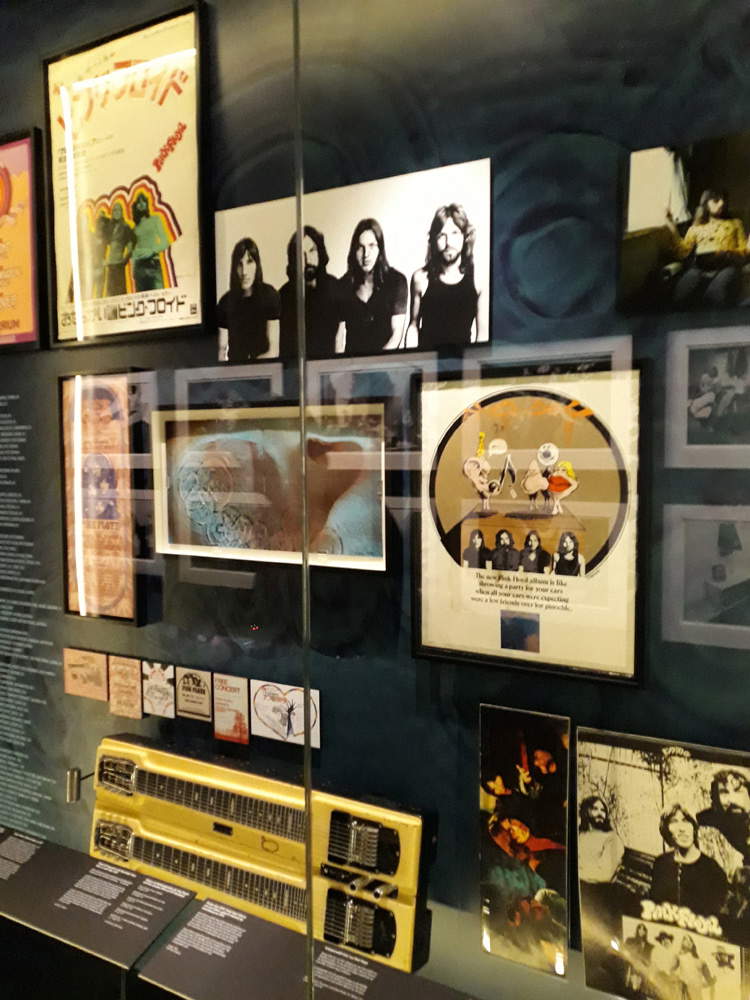 |
| Images from the Pink Floyd Exhibition: Their Mortal Remains exhibition in Dortmund. Ph. Credit Francesca Della Ventura |
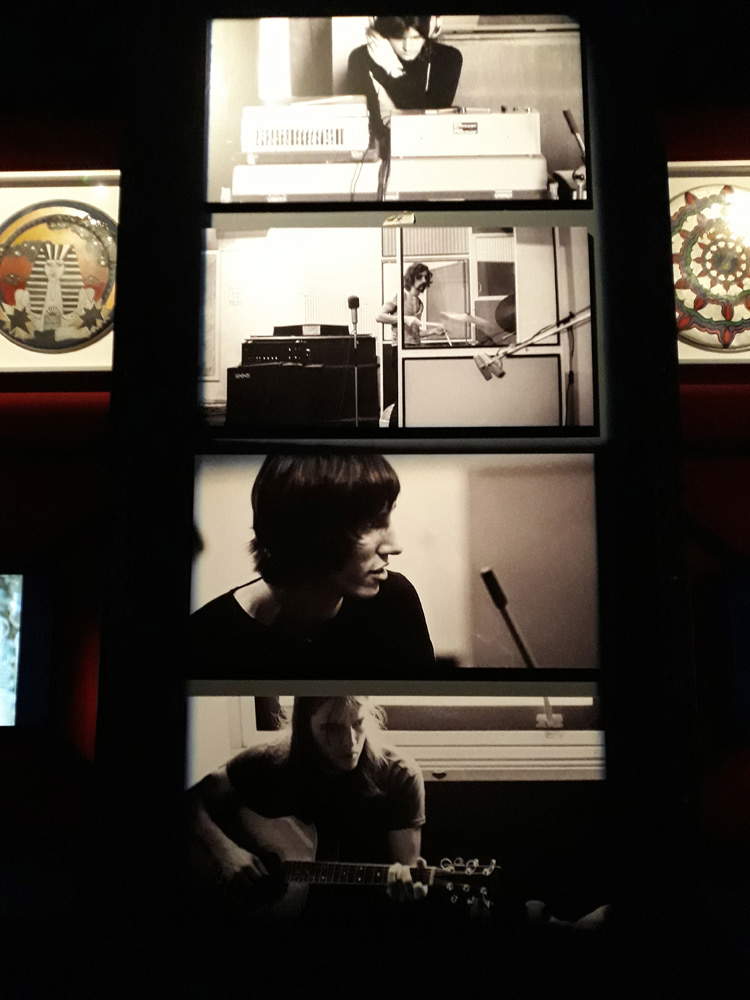 |
| Images from the Pink Floyd Exhibition: Their Mortal Remains exhibition in Dortmund. Ph. Credit Francesca Della Ventura |
The retrospective The Pink Floyd Exhibition: Their Mortal Remains traces, according to a 360-degree chronological and audio-visual exhibition, the history of the group formed in 1965, thanks to the genius of Syd Barrett (replaced in 1968 by David Gilmour), Roger Waters, Richard Wright and Nick Mason. As many as three hundred and fifty objects (musical instruments, photos, drawings, sheet music, posters, newspaper articles,...) and video-audio installations tracing the fifty-year musical history of the British band are arranged in one thousand square meters.
The band’s name comes from two blues musicians, “Pink” Anderson and “Floyd” Council, whose albums were part of Syd Barrett’s collection. The latter, referred to as a “mad genius” by Gilmour, signed almost all the tracks on the first album ,The Piper At The Gates of Dawn, only to leave the band (probably due to mental problems and drug use) in 1968, when he was succeeded by guitarist David Gilmour. 1968 also saw the release of their second album, A Saucerful of Secrets, most of the tracks of which were, however, composed by Roger Waters. The exhibition then follows chronologically the course of Pink Foyd’s career, from the 1969 album Ummagumma to 1979’s The Wall, via the historic The Dark Side Of The Moon (1973), Wish you Were Here (1976), the latter dedicated specifically to Syd Barrett, and 1977’s Animals, a socially critical album inspired by George Orwell’s Animal Farm. The last part of the exhibition is devoted to the post-Waters albums: in 1985, Rogers left the band, and in his place Richard Wright entered again. The exhibition ends with a 3D audio experience that leads the visitor to be sonically “submerged” (thanks in part to the 20-meter video screen) by the reproduction of thelast concert in which David Gilmour, Roger Waters, Nick Mason, and Richard Wright played together at Live 8 in 2005.
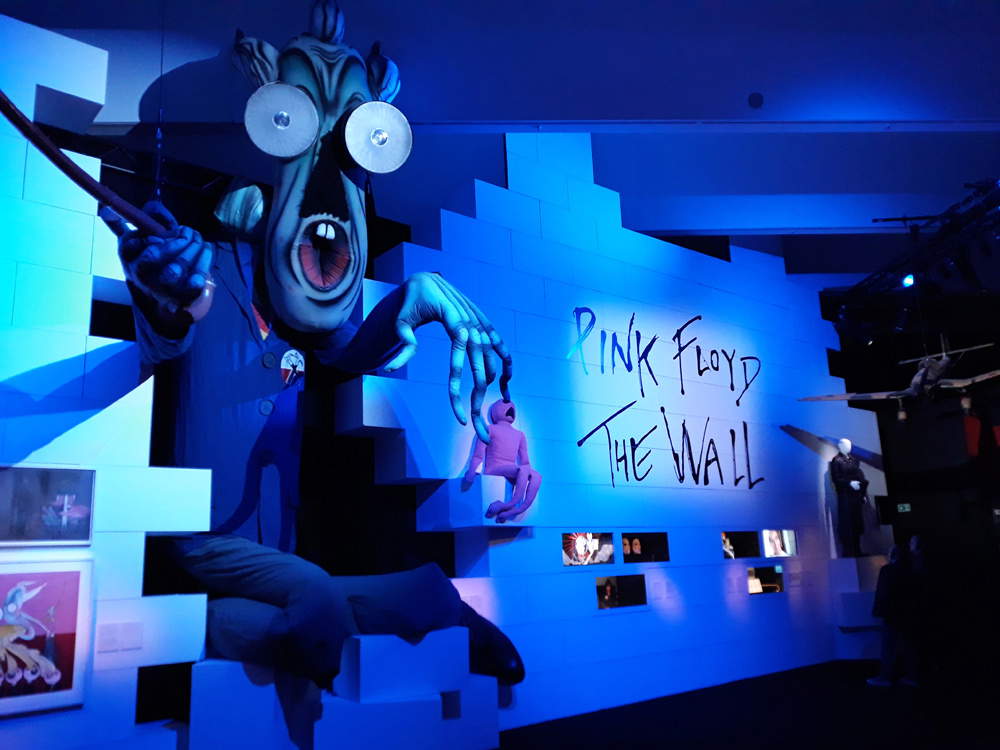 |
| Images from the Pink Floyd Exhibition: Their Mortal Remains exhibition in Dortmund. Ph. Credit Francesca Della Ventura |
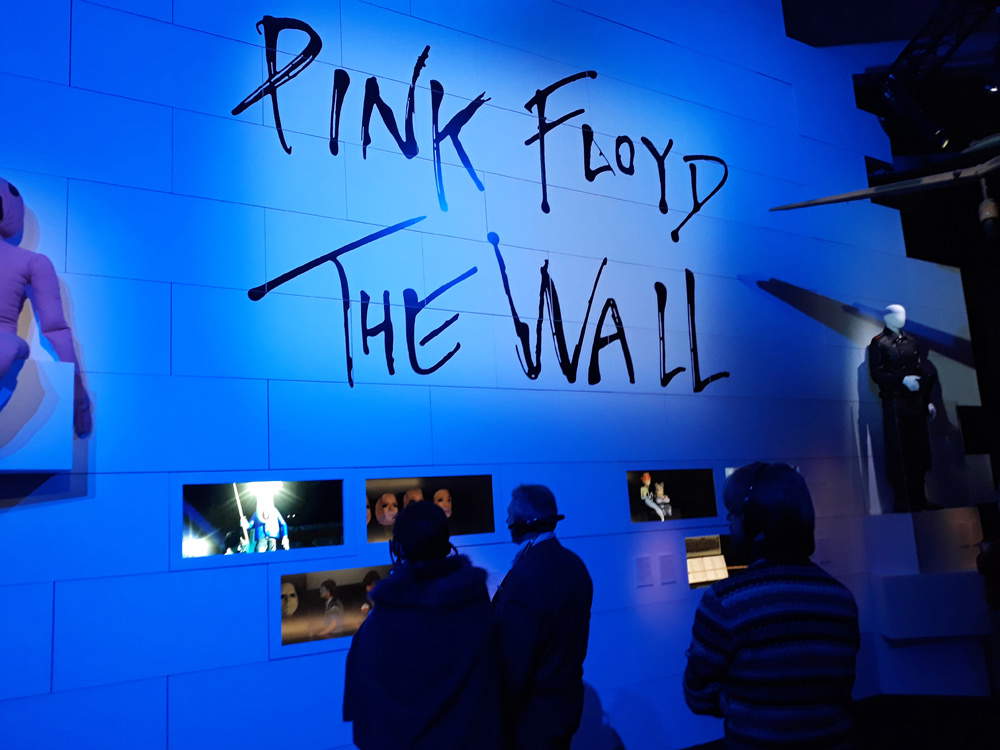 |
| Images from the Pink Floyd Exhibition: Their Mortal Remains exhibition in Dortmund. Ph. Credit Francesca Della Ventura |
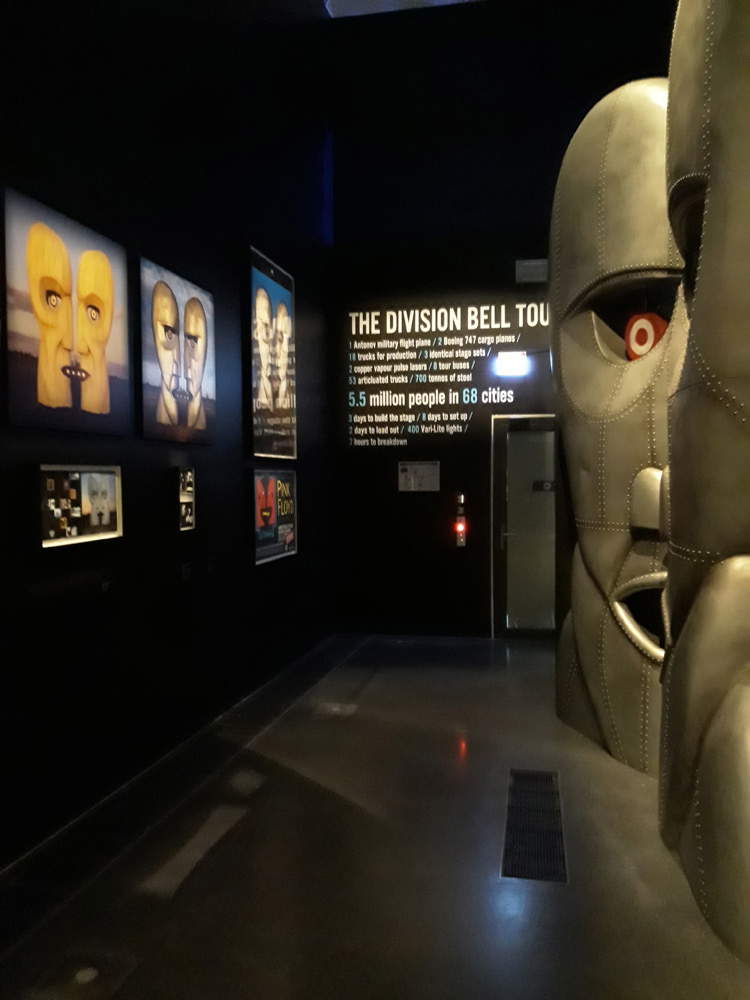 |
| Images from the Pink Floyd Exhibition: Their Mortal Remains exhibition in Dortmund. Ph. Credit Francesca Della Ventura |
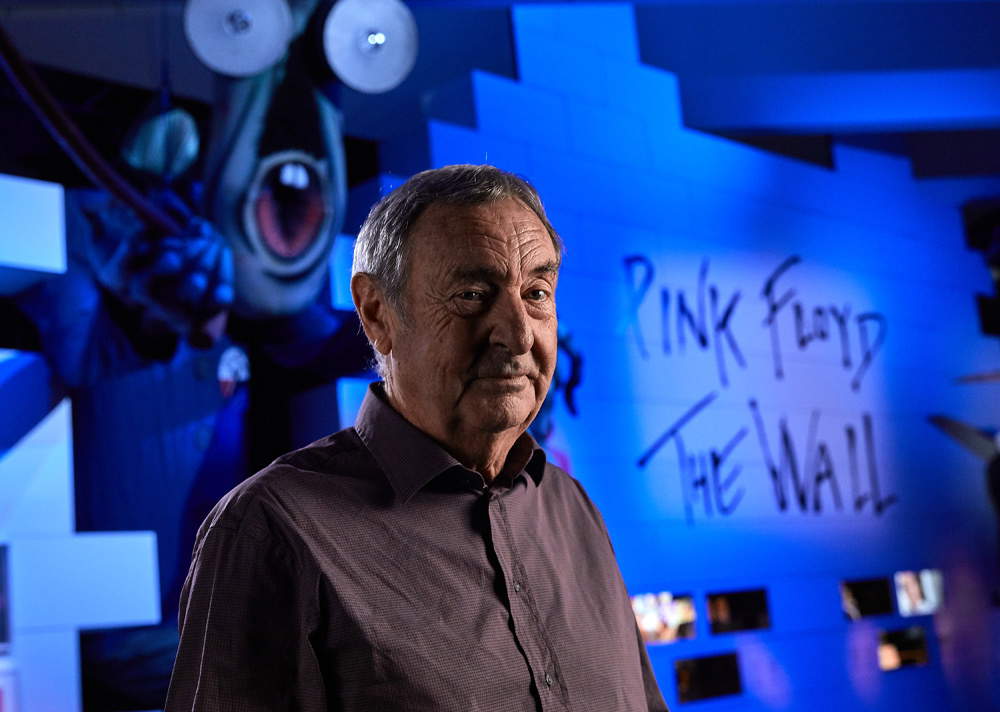 |
| Nick Mason at the exhibition opening press conference. Ph. Credit Roland Baege |
Pink Floyd has been defined by the “Rock and Roll Hall of Fame” as the architects of the two major musical movements (psychedelic rock and blues-based progressive rock). They were the first to experiment, as early as 1967, at the May Games concert at London’s Elizabeth Hall, with surround sound, fabricating sounds that enveloped the listener 360 degrees. The greatness of these musicians was precisely in the live performances, where pyrotechnic effects, lights, film clips, psychedelic projections, inflatable sculptures and aerial equipment recreated a unique universe that readers who were fortunate enough to attend will surely remember.
Despite the little publicity it received during its Roman venue at MACRO (a pity, given the high quality and interest of the exhibition route itself), the exhibition stands as one of this year’s cultural highlights not only in the North Rhine-Westphalia region but also in Germany as a whole. The Pink Floyd Exhibition: Their Mortal Remains is a collaboration between the members of the band, especially in the figure of Nick Mason, and curator and creative director, Aubrey “Po” Powell, with additional curatorship by Victoria & Albert Museum staff Victoria Broackes. A visit by fans and nostalgics of the British band who are passing through Dortmund until February 10, 2019 is, therefore, almost a must.


The author of this article: Francesca Della Ventura
Ha studiato storia dell'arte (triennale, magistrale e scuola di specializzazione) in Italia e ha lavorato per alcuni anni come curatrice freelancer e collaboratrice presso il Dipartimento dei Beni Storici, Artistici ed Etnoantropologici del Molise (2012-2014). Dal 2014 risiede in Germania dove ha collaborato con diverse gallerie d'arte e istituzioni culturali tra Colonia e Düsselorf. Dallo stesso anno svolge un dottorato di ricerca in storia dell'arte contemporanea all'Università di Colonia con una tesi sul ritorno all'arte figurativa negli anni Ottanta in Germania e Italia. Nel 2018 è stata ricercatrice presso l'Universidad Autonoma di Madrid. Ha scritto sull'identità tedesca e italiana nell'arte contemporanea e nella politica, sul cinema tedesco e italiano del dopoguerra e grazie a diverse borse di studio D.A.A.D. ha presentato la sua ricerca a livello internazionale. Attualmente i suoi temi di ricerca riguardano l’arte degli anni Ottanta, in particolar modo quella femminista. Dal 2020 è entrata a far parte del gruppo di ricerca dell’Universitá di Bonn “Contemporary Asymmetrical Dependencies” con un progetto di ricerca sulla costruzione dei nuovi musei e delle condizioni di dipendenza asimmetrica dei lavoratori migranti nell’isola di Saadyat ad Abu Dhabi. Nell'ottobre 2020 ha fondato inWomen.Gallery, galleria online, sostenibile e per artiste. Dal 2017 lavora come giornalista d'arte per la rivista online e cartacea Finestre sull'Arte.Warning: the translation into English of the original Italian article was created using automatic tools. We undertake to review all articles, but we do not guarantee the total absence of inaccuracies in the translation due to the program. You can find the original by clicking on the ITA button. If you find any mistake,please contact us.

























 IT
IT FR
FR DE
DE ES
ES CN
CN


