





The book Bellezza Italia. A User’s Manual for the Tourism We Want (Primamedia Editore, 172 pages, 16 euros), a volume in the form of a dialogue between a tourism operator and a cultural operator, namely Roberto Guiggiani (professor of Tourism Markets and Trends at the University of Pisa, former director of the Pisa Tourism Agency) and Gianluca De Felice (secretary of the Opera della Primaziale Pisana), with a preface by Federico Giannini. The purpose of the book is to analyze, through an in-depth study of topics such as marketing, heritage enhancement, overtourism and destination management, the challenges facing cultural tourism. An important economic sector for our country, which generates employment and wealth, but which also causes problems and contrasts, especially considering that the dialogue between tourism and culture has often not been the easiest, on the contrary. The book was born precisely to try to understand how these two souls can meet for a proper and creative management of cultural heritage. Federico Giannini interviewed the two authors: we publish today the interview with Gianluca De Felice.
FG: How can a tourism operator properly approach cultural heritage?
GDF: In many ways. First, of course, by getting to know it and trying to understand what the institution can present of its collections. This is very important to segment the demand, and having done that, he can certainly interact with the management of the institution or the museum to figure out how to create diversified paths through more or less articulated insights with respect to the user who comes to visit the institution. It is a dialogue that should be constant. Instead, it is often lacking, if not absent. And I find this to be one of the main problems: the dialogue between the world of culture and the world of tourism is lacking.
Why do you think it is lacking?
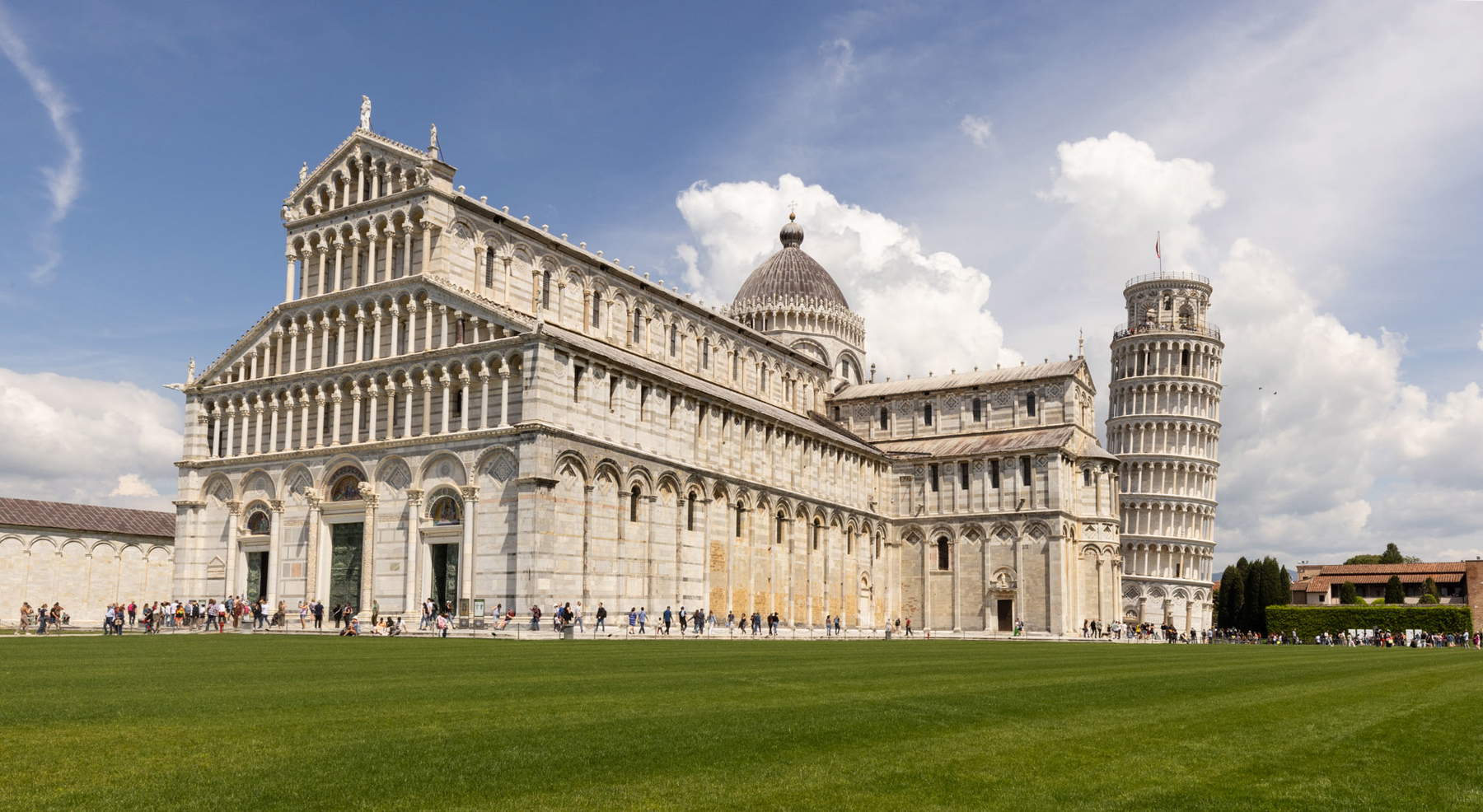
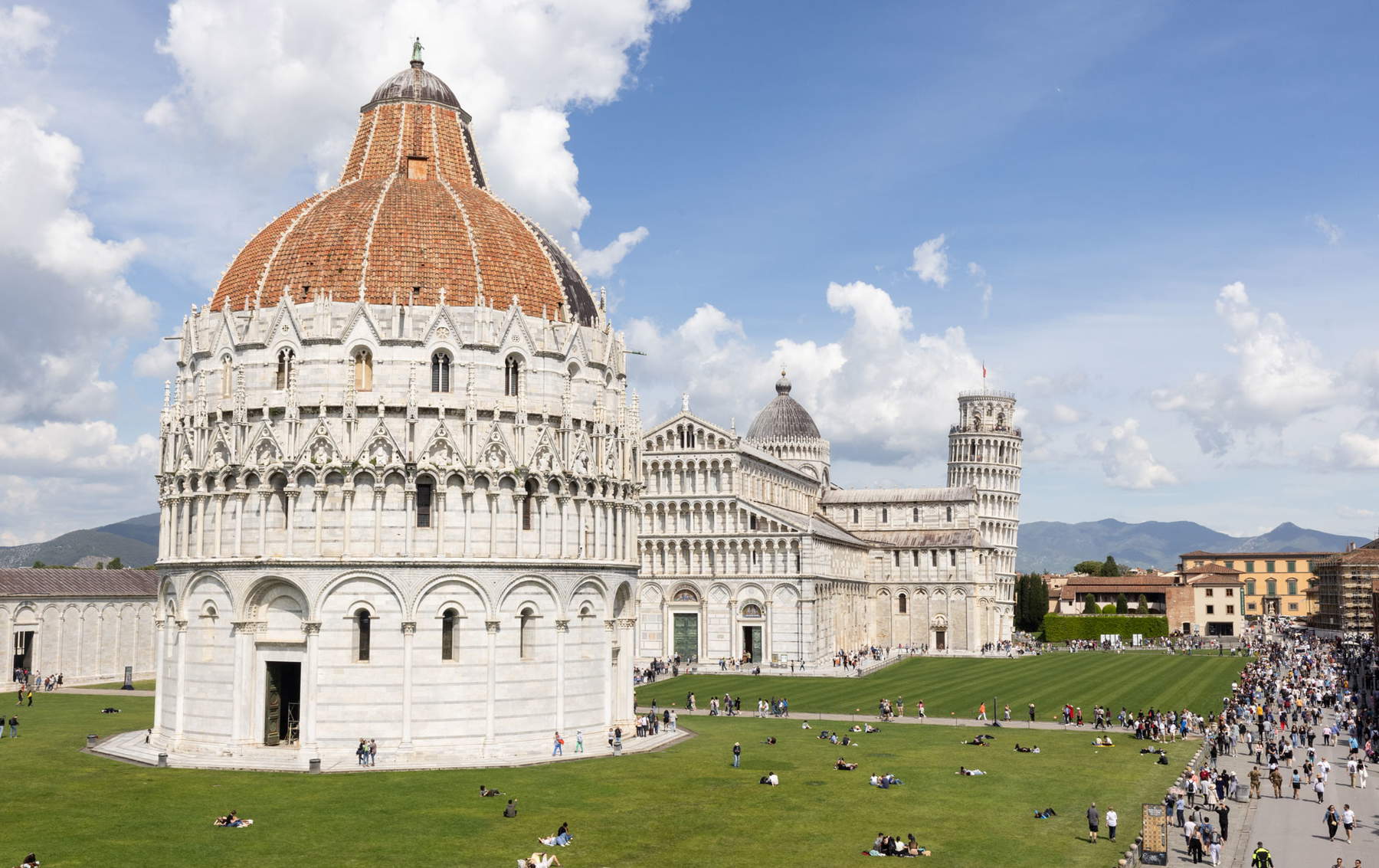
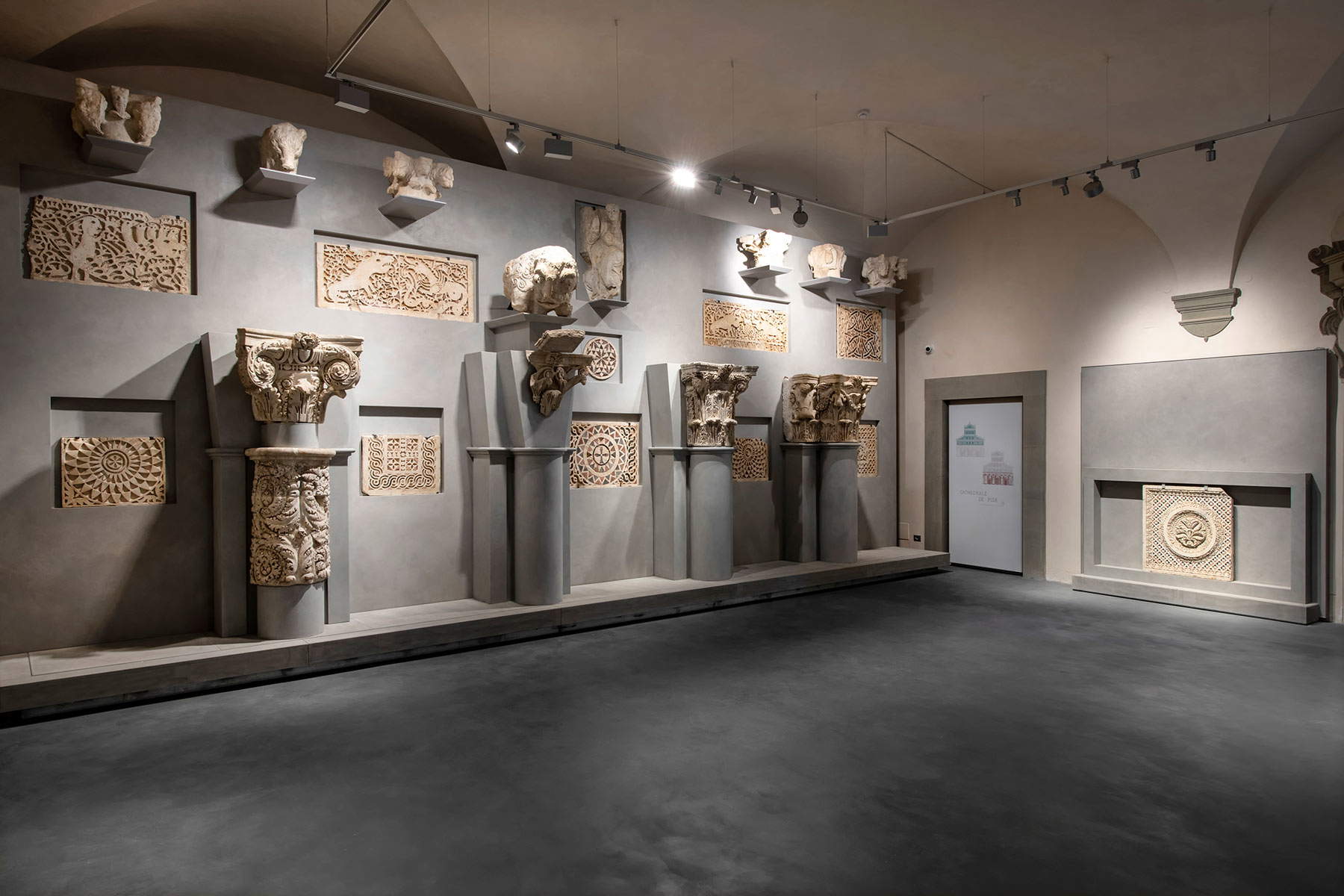
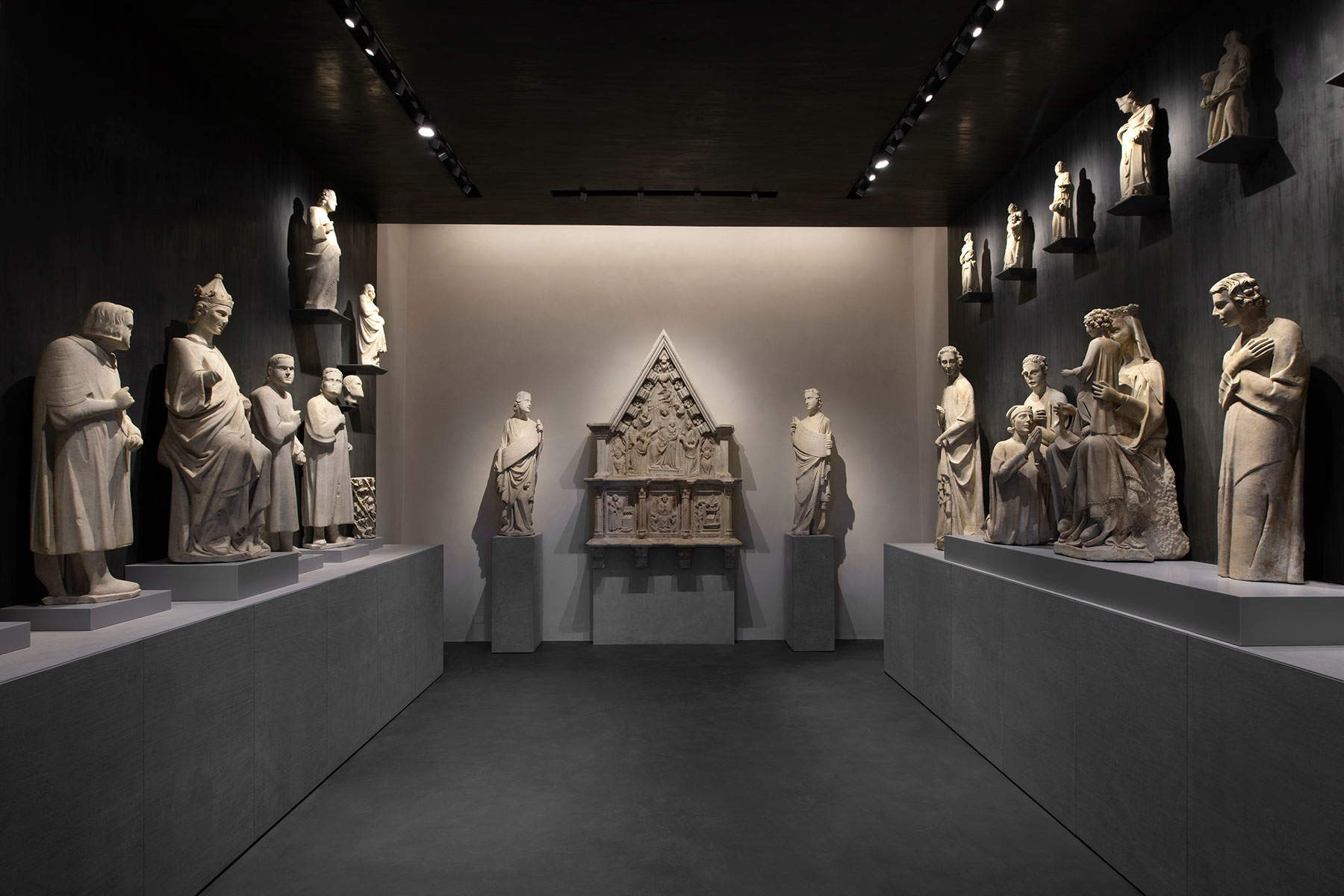
It is deficient because often the tour operator is not attentive to the cultural need, and vice versa, the cultural institution is often not attentive to the needs of the tourist. It is assumed that we have a visitor who is always cultured, always attentive and ready to spend. Instead, this is not the case. There are very different motivations for visiting, and therefore the reception system must also be diversified. In Cathedral Square, of course, the bell tower is the best known and most popular monument to visit. Actually, in recent years we have also had an increase in visitors to the rest of the monumental complex, especially to the two museums: to the Museo dell’Opera del Duomo, which collects the works of the Cathedral and the Baptistery, and to the Museo delle Sinopie, which houses this collection of preparatory drawings of the frescoes. Here, the connection that these works have with the square and the bell tower monument leads more and more visitors to enter, to learn about these environments. So this certainly is a strong element that needs to be made known to tour operators and agencies as well. Another key element is the care of the arrangements. Today we have extremely fascinating museum displays, which lead visitors to enter with even greater awareness within the tour.
How do you judge the current state of cultural communication in Italy? Are we on the right track?
The communication of culture has certainly improved in recent years. In Italy, the number of professionals who deal with it has grown, the need and demands of the visitor for more and more information has grown. There is still much to be done, however, because this communication does not always reach the user clearly, precisely. So the road taken is definitely the right one, but the path, the journey, is still very long.
You say in the book that one of the problems with museums is that they don’t convey emotion, which can sometimes seem counterintuitive. What do you mean by that? And how could they accomplish that?
Museums often do not convey emotion. They are an important conservation box that has allowed works of art to be preserved over time, but they have not always been set up in an emotional way. This is a fundamental thing to allow the tourist to be able to fully appreciate the work of art. If we think about the very large number of exhibitions that have been held in recent years in the country, if those resources had been at least partly used to set up museums with the great designers working in this country, with the technologies that we have today, we would probably have much more attractive museums than those that open their doors to visitors today.
But isn’t this likely to be a problem especially for smaller museums, which have fewer resources? How can they afford investments in scenic displays while maintaining regular openings?
Small museums do not have this problem. Let me explain: the economic aspect of keeping museums open is basically related to staffing. Not having such a large number of visitors that the museum has to be kept open every day throughout the year allows the museum to quota openings at certain times or times. That does not mean that you cannot make an investment in that museum to set it up. They are two very separate concepts. One is creating a pleasing exhibit that has a certain setting and ability to convey the meaning of the work. The other is keeping the museum open all the time. They are two very different concepts, from an economic and management point of view.
What is your position on the issue of fees in museums, a topic that is addressed in the book and has long been discussed and continues to be discussed? Do you think museums should be free or is it fair to charge an entrance fee?
The issue of museum fees has been debated for years now, and I personally believe that the museum should offer free admission to all those who are engaged in study and in-depth activities. Then the museum absolutely has to open up not only its exhibition spaces, but also its archives and its repositories, so that scholars, researchers, and the great enthusiasts can deepen and learn more and more about the themes that the museum offers. What is different is the visitor. I really struggle to understand how a ticket in a cinema, in a theater, in a playground can be considered acceptable, while in a museum it cannot. Actually that ticket is absolutely necessary, not only to cover totally or partially the fixed costs of the museum, but probably also to have resource recoveries that allow extraordinary restoration and research activities. So the ticket is absolutely not a scandal. Of course, it must then be commensurate with the museum’s scientific and promotional activities. Here, good accountability shown to the community, putting the budget online on its website, I find it an element of transparency that justifies why a visitor pays a ticket.
Speaking of museum didactics, we often associate it mainly with schools and children, sometimes with adults, but you seem to suggest a broader approach in the book: so can you explain more about the concept of “didactics for tourists”?
Didactics for tourists is a broad concept. We close our eyes and think of didactics, schools, kids, in some context the elderly. Actually, didactics, if we think about it, is a concept that is good for everyone. Everybody needs to grow, to understand, to go deeper through workshops, through specialized guides that technically make us understand how an artist thought and designed that work. That is telling the beauty, telling why a work of art was made, what are the motivations, the technical skills that allowed the achievement of that result. Some experimentation has led us to understand that this is a way forward and welcome not only to the age groups of children or adults, but to everyone. The museum was born as a container to preserve works and, I say, fortunately it was born for that reason. Then it has the goal of carrying on the activity of research, of teaching, of study. But today, fortunately, it is also conceived as a place of entertainment. In almost every museum there are stores, there are bars, restaurants, and often there are recreational activities organized: wine tastings, or I have seen in some contexts even fashion shows. All this is growing, improving, but there is still some resistance, some fear in opening up to a playful world, precisely.
In the book, you say precisely that in Italy culture is still considered a subject for elites. From this point of view, in your opinion, are we improving or is there still much to be done?
I still find that there is a resistance in this regard, as if people are afraid to open these boxes and that they might be ruined in some way by these activities. Well, that is not the case. And what are the attempts to bring even more museum life open to different logics? Well, innovative projects. I saw that, at the Pinacoteca di Brera, Armani exhibited his clothes in an absolutely very beautiful and very pleasant context. That is definitely an opportunity to analyze. It is true that that is an exhibition and it is not a playful evening activity, but the combination of those things certainly leads us to see the museum as an open place and not as a closed place.
"Enhancing culture," you say, means involving the whole city. What does that mean?
The museum is often open to visitors, to tourists, to art lovers. Actually, it would be very nice if the museum was open first to the city, the city experiencing the museum spaces together with the tourist. This would greatly enrich the visit, but also the awareness that the heritage housed in that museum is a heritage of the city. Which doesn’t mean, of course, that the resident should necessarily experience these spaces with his own free ticket, but he should do it simply as when he walks through non-museum realities, that is, having the intuition to spend a few hours in a very beautiful environment where he can not only experience the works but serenely spend a few moments. And I’m sure that would give the tourist a different view.I’ve been saying for years that the tourist appreciates what the resident does, what the citizen normally does in his recreational activities. Here, the museum is a recreational activity for the resident as well.

The author of this article: Federico Giannini
Nato a Massa nel 1986, si è laureato nel 2010 in Informatica Umanistica all’Università di Pisa. Nel 2009 ha iniziato a lavorare nel settore della comunicazione su web, con particolare riferimento alla comunicazione per i beni culturali. Nel 2017 ha fondato con Ilaria Baratta la rivista Finestre sull’Arte. Dalla fondazione è direttore responsabile della rivista. Nel 2025 ha scritto il libro Vero, Falso, Fake. Credenze, errori e falsità nel mondo dell'arte (Giunti editore). Collabora e ha collaborato con diverse riviste, tra cui Art e Dossier e Left, e per la televisione è stato autore del documentario Le mani dell’arte (Rai 5) ed è stato tra i presentatori del programma Dorian – L’arte non invecchia (Rai 5). Al suo attivo anche docenze in materia di giornalismo culturale all'Università di Genova e all'Ordine dei Giornalisti, inoltre partecipa regolarmente come relatore e moderatore su temi di arte e cultura a numerosi convegni (tra gli altri: Lu.Bec. Lucca Beni Culturali, Ro.Me Exhibition, Con-Vivere Festival, TTG Travel Experience).
Warning: the translation into English of the original Italian article was created using automatic tools. We undertake to review all articles, but we do not guarantee the total absence of inaccuracies in the translation due to the program. You can find the original by clicking on the ITA button. If you find any mistake,please contact us.






















 IT
IT FR
FR DE
DE ES
ES CN
CN


