





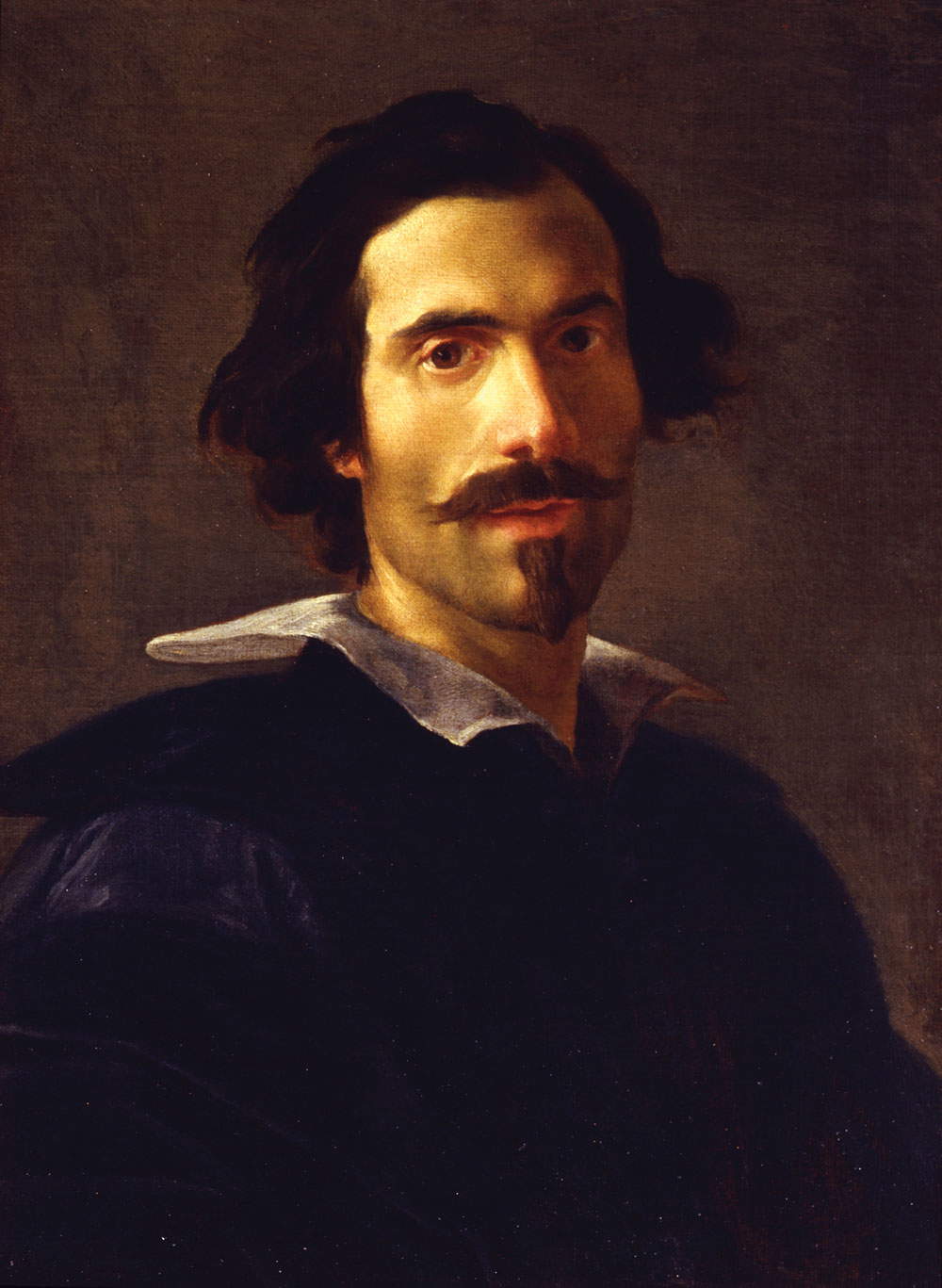
From March 21 to July 31, 2026, the Imperiali Castle in Francavilla Fontana (Brindisi) will host the exhibition Baroque and Neo-Baroque from Rubens to Fontana, an exhibition project that puts works from different eras, from the seventeenth century to the contemporary, in dialogue. Among the works on display is Gian Lorenzo Bernini’s famous self-portrait, preserved at the Uffizi Gallery in Florence and known to the general public for being reproduced on Italian 50,000 lire banknotes issued between 1984 and 2002. the project enjoys the scientific curatorship of Pierluigi Carofano and takes its cue from the essay L’età neobarocca published in 1987 by Omar Calabrese. The exhibition is organized by Micexperience Puglia Rete d’Imprese in collaboration with the City of Francavilla Fontana, the Regional Directorate National Museums Puglia and the Region of Puglia.
The exhibition develops as a confrontation between languages and sensibilities that are distant in time. On the one hand, central figures of the European Baroque season appear, such as Rubens,Anton van Dyck, Bernini himself, Pietro da Cortona and Guido Reni; on the other hand, works linked to twentieth-century and contemporary research, with authors such as Lucio Fontana, Giorgio de Chirico and Mario Schifano. The stated intent is to show continuity and resonances between the theatricality and dynamism of Baroque aesthetics and some later artistic trends, up to the contaminations of informal language and contemporary practices. The exhibition occupies the spaces of Castello Imperiali, a building of medieval origin transformed over time into a noble residence and now used as a cultural venue.
The first section is dedicated to the Protobaroque and includes works attributed to Ludovico Carracci and Guido Reni, among others, placed in dialogue with more recent artistic experiences such as those of Franco Angeli (1935-1988). A second nucleus addresses the relationship between history and myth and presents works by artists such as Guercino, Solimena and Rubens, juxtaposed with works by Giorgio de Chirico.
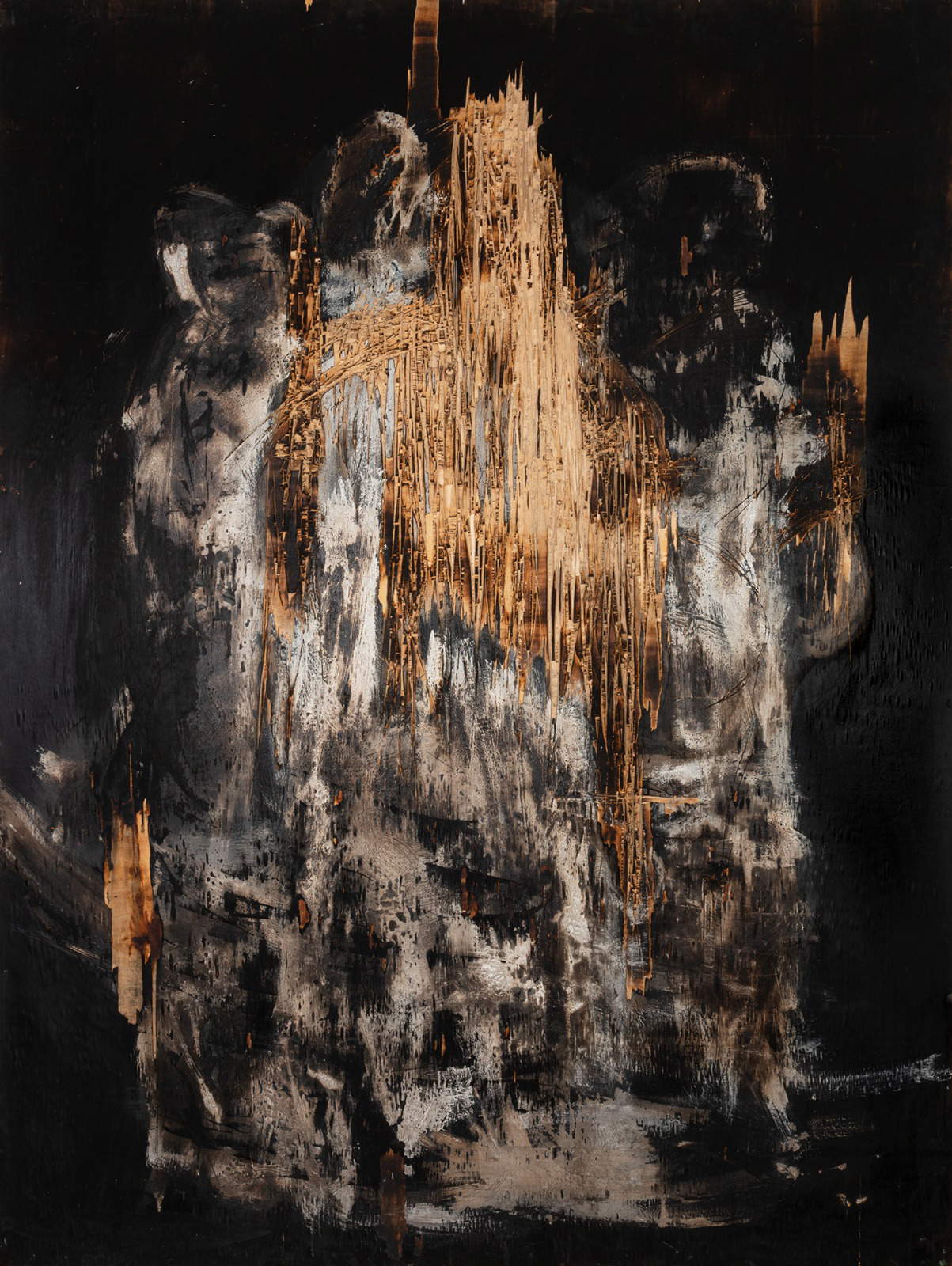
The section devoted to the triumph of the Baroque includes works by Pietro da Cortona and Gian Lorenzo Bernini along with works by sculptor Adolfo Wildt (1868-1931). Still life, on the other hand, is represented by paintings related to the Flemish tradition, with works attributed to Jan Brueghel the Elder, alongside contemporary research such as those by living artist Giuseppe Barilaro (1988). Another section is devoted to landscapes and battle scenes and includes works by Aniello Falcone and two works by Flemish painter Hendrik Frans van Lint (Antwerp, 1684 - Rome, 1763). The tour concludes with a section devoted to the Sacred Baroque, in which works by Giaquinto, Finoglio and Fontana, among others, appear.
Among the works presented is Pietro da Cortona’s Guardian Angel. The painting depicts the angelic figure while accompanying a child by the hand, a scene that recalls the theme of spiritual protection typical of Baroque devotion. The gesture takes on a symbolic value and represents moral guidance that transcends the earthly dimension. The angel, enveloped in a diffuse and dynamic light, dominates the composition without obscuring the vulnerability of the child figure. The ascending movement suggests a path toward virtue made possible by the intervention of divine guidance.
Special attention is given to Gian Lorenzo Bernini’s self-portrait, one of the most recognizable loans in the exhibition. The work presents the artist at a mature age with a direct and penetrating gaze, an element that restores the image of an author aware of his position in the artistic context of seventeenth-century Rome. The pictorial rendering appears essential and focuses attention on the expressive intensity of the face and the vitality of the gaze. The itinerary also includes an in-depth study of the figure of Adolfo Wildt, one of the most singular sculptors of the early 20th century in Italy. His production lies between symbolism, expressionism and a personal reinterpretation of classicism. Wildt’s sculptures are recognizable by the luminous whiteness of the marble and highly stylized forms, characterized by a clear spiritual tension. Self-taught and from a family of modest origins, the artist developed a personal language in which technical precision is combined with an intense emotional dimension. As a teacher at the Brera School, Wildt influenced several artists of the next generation, including Lucio Fontana.
The museographic project includes a tour accompanied by bilingual panels, extended captions and a catalog that delves into the contents of the exhibition.
“This is a great opportunity for the entire Apulian territory, for which we intend to continue to spend ourselves, strong in the experience gained over the years in proposing beauty and especially in ensuring its enjoyment,” said the creator of Micexperience, Pierangelo Argentieri. "The Great Exhibition is being proposed in Francavilla Fontana, because the public-private relationship at the basis of the Puglia Walking Art protocol sees the nodes of a network widening, which is being extended by containing within it locations that are identical and well-known far beyond the Apulian and sometimes national borders. It can well be said that the Great Exhibition of Francavilla Fontana raises the bar of excellence so far proposed even higher and can boast of a new organizational success, consisting of the collaboration with the Uffizi Gallery: this collaboration, together with the others already established with public institutions and with private collections open to the public says the validity and seriousness of the planning so far proposed. The Castello Imperiali of Francavilla Fontana, an authentic Baroque jewel, becomes the stage for an experience that blends art, history and innovation, offering the public a sensory journey between light, matter and spirit. This is why the exhibition will be declined within an immersive setting enriched by bilingual panels, extended captions and an official bilingual catalog-guide. The Baroque and Neo-Baroque exhibition consolidates Puglia’s vocation as a land of culture and hospitality, enhancing the territory’s architectural and artistic heritage and strengthening the public-private network that supports Puglia Walking Ar initiatives."
“We are about to start setting up the rooms of Castello Imperiali, which will host the exhibition,” said the mayor of Francavilla Fontana, Antonello Denuzzo. “We are trying to ensure the event, a very high scientific value: the important canvases, some very important, that will arrive, we also want them to find a suitable environment and, within that environment, we also want to welcome the visitors, who we hope will be many and who will experience the event and who will preserve, then, a positive image of the Great Exhibition itself and of the castle itself. The connection of the Baroque theme with the city remains very interesting. It expresses these values in art, in which frankly we are immersed here in Francavilla Fontana, just considering its architecture, expressed in the main monumental cultural assets. I think of the churches, and there are many very beautiful ones here, but I also think of the more or less valuable and privately owned cultural assets. This is also why we have started a path of involvement of the citizenship, because we want this exhibition to be a shared experience, a collective experience, meanwhile for the citizens of Francavilla Fontana. That’s why we want the involvement of city associations and productive activities. Somewhat trivially, we want this exhibition to make everyone feel good and feel good. At the same time, we want to offer a pleasant experience of enjoying the city for those who will come from outside, and we also want to find in the exhibition a reason for pride, a reason of our belonging to this community and the destiny we have in common. At the idea of the exhibition being held at Castello Imperiali, I am very curious and also hopeful. Over time we have protected this place, we are aware of its historical value and the fact that it deserves to be visited in itself. The exhibition can further enhance it, allowing the castle to be included in a circuit of cultural places of national significance. We chose the Baroque theme for the exhibition because we wanted the connection with the city, with its architecture, to be evident. On the other hand, we trust that this event will also be good for the local economy. I am grateful to Micexperience and in particular to Pierangelo Argentieri for all the support and extraordinary work, I am happy to face this beautiful challenge with them.”
 |
| Bernini from the Uffizi in Francavilla Fontana (Brindisi) for the exhibition "Baroque and Neo-Baroque from Rubens to Fontana" |

Warning: the translation into English of the original Italian article was created using automatic tools. We undertake to review all articles, but we do not guarantee the total absence of inaccuracies in the translation due to the program. You can find the original by clicking on the ITA button. If you find any mistake,please contact us.

























 IT
IT FR
FR DE
DE ES
ES CN
CN


