




by Redazione 15/05/2026



Categories: Exhibitions / Disclaimer
From May 16 to Nov. 15, the Crypt of Siena Cathedral will host "SIBYLS," a photographic project by American artist Bill Armstrong dedicated to the Sibyls of the cathedral's famous marble floor. Blurred images transform the Renaissance figures into unstable, contemporary visions.
The Sibyls of the floor of Siena Cathedral become unstable images, suspended between appearance and fading, in the photographic project SIBYLS by American artist Bill Armstrong, staged from May 16 to Nov. 15 in the spaces of the Crypt of the Monumental Complex of Siena Cathedral. The exhibition, promoted by the Opera della Metropolitana di Siena and the Archdiocese of Siena-Colle di Val d’Elsa-Montalcino and organized by Opera Laboratori, offers a direct confrontation between contemporary photography and one of the most famous decorative cycles of the Italian Renaissance.
At the center of the project are the figures of the Sibyls depicted in the marble floor of the Sienese cathedral, reinterpreted by Armstrong through a photographic practice based on blurring and altering sharpness. The images produced by the artist intervene on the very perception of the figure, transforming the ancient prophetesses into mobile and ambiguous presences. Faces and bodies seem to dissolve, split, and vibrate in the space of the image, while definition gives way to a visual language built on uncertainty and fragmentation.
The project stems from a dialogue with the floor of Siena Cathedral, considered one of the absolute masterpieces of Italian art history. The Sibyls, figures of ancient origin linked to the oracular tradition, were also reinterpreted over the centuries from a Christian perspective as heralds of higher truths. Armstrong takes that symbolic layering and translates it into images that renounce visual stability. The figures are presented as open enigmas, traversed by continuous oscillations between presence and disappearance.


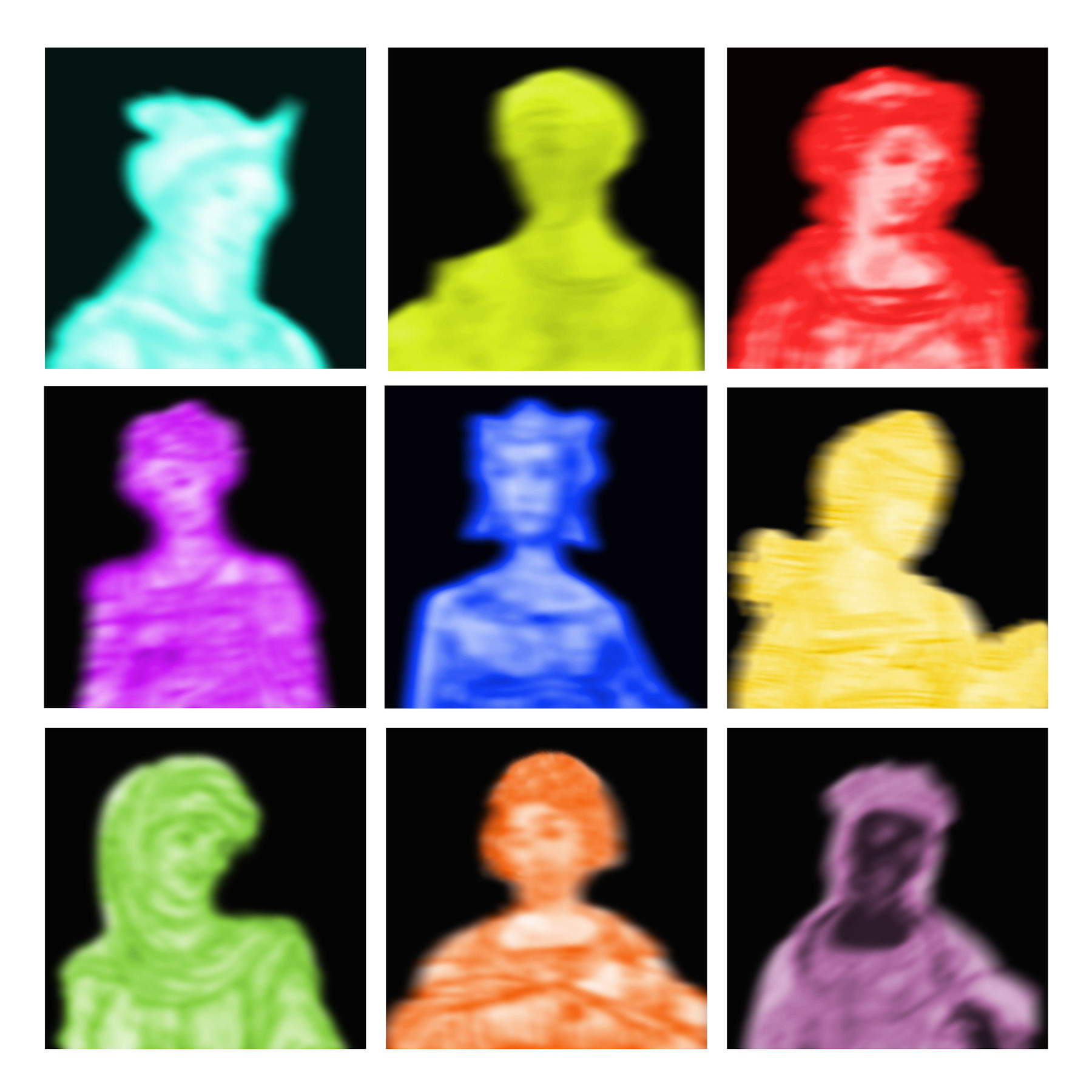
The American artist’s research has long focused on the mechanisms of perception and the relationship between image and memory. In SIBYLS, blurring becomes the main tool through which to question the possibility of a definitive vision. The contrast between the solidity of Renaissance marble and the fragility of the photographic image thus produces a continuous tension between permanence and instability, between matter and visual dissolution. The sign engraved in the floor dialogues with diffuse color fields without defined contours, generating a direct confrontation between the historical language of the work and that of contemporary photography.
The project is part of the research path developed by Armstrong in recent years. The artist had already worked on the relationship between historical heritage and photographic image in the Sistine Gestures cycle, created in the Vatican Museums in dialogue with Michelangelo Buonarroti’s Last Judgment. Another significant stage in his production is represented by the series Infinity, in which blurring is used as a means to interrogate the ways in which the gaze constructs the real. With SIBYLS, the reflection extends further. The photographs multiply the possibilities of reading. In this sense, the floor of the Cathedral of Siena, defined by Giorgio Vasari as “the most beautiful, great and magnificent ever made,” is transformed into a field of confrontation between past and contemporary, in which historical heritage appears as a surface open to new interpretations.
Statements
“The particularity of the Sienese Sibyls,” stresses Cardinal Augusto Paolo Lojudice, archbishop of Siena-Colle di Val d’Elsa-Montalcino, “unlike the Michelangelo’s, is also that of reporting the texts of their vaticinis, albeit reread in the light of the Christian faith: they are expressions of elevation and contemplation, of hope and confidence in the future, which certainly do not lose their relevance today. Warmest congratulations therefore to artist Bill Armostrong, who through his contemporary works makes us rediscover significant languages of our past. Cordial thanks to the organizers of the exhibition, for bringing diversity into dialogue is not taken for granted, but always bears fruits of human and spiritual growth. To all the wish of the most famous of the Sibyls, the celebrated ’Cumana’ quoted by Virgil: Nova progenies caelo demittitur alto, ”a new lineage descends from the heights of heaven.“ Let it be the generation of peace that comes from Christ, who welcomes and exalts those who seek goodness and beauty as the way to God.”
“At the center of the project,” says Carlo Rossi, rector of the Opera della Metropolitana di Siena, “are ten female figures who have traversed the desire for knowledge and who, today, create a bridge to contemporaneity. Made by the major exponents of the Sienese Renaissance in the 1580s. The Sibyls of the floor of Siena Cathedral represent a fundamental element in the narrative of the entire sculptural work.”
“Bill Armstrong’s work does not simply reinterpret the floor of Siena Cathedral, but questions its very perception. Through blurring, the Sibyls again become unstable figures, suspended between vision and mystery. It is precisely in this tension that heritage is reactivated, becoming contemporary experience and not just memory,” says Beppe Costa, president and CEO of Opera Laboratori.
“If in the Sistine cycle,” explains Tommaso Casini, professor at Iulm University, “the dissolution invested the body, here it focuses on the prophetic vision: the Sibyls are presented as images in transit, traversed by a tension between revelation and loss. The blur thus becomes a cognitive device, capable of visually restoring the indeterminacy of oracular knowledge. Armstrong’s work is situated in an intermediate space of original visionary reinterpretation of art history and contemporary abstraction, reactivating images of the past not as objects to be contemplated, but as open fields of interpretation.”
Practical information
CRIPTA HOURS:
April 1 to October 31, November 2026 10 a.m. - 7 p.m.
Nov. 1 to Dec. 24, 2026 10:30 a.m. - 5:30 p.m.
Last admission half an hour before the Museums closing time.
PRICES:
FULL - 01/01 - 26/06; 01/08 - 17/08; 16/11 - 31/12: € 14.00
During the uncovering of the Floor (27/06 - 31/07; 18/08 - 15/11): € 16.00
REDUCED - (CHILDREN FROM 7 TO 11 YEARS OLD) 01/01 - 31/12: € 3.00
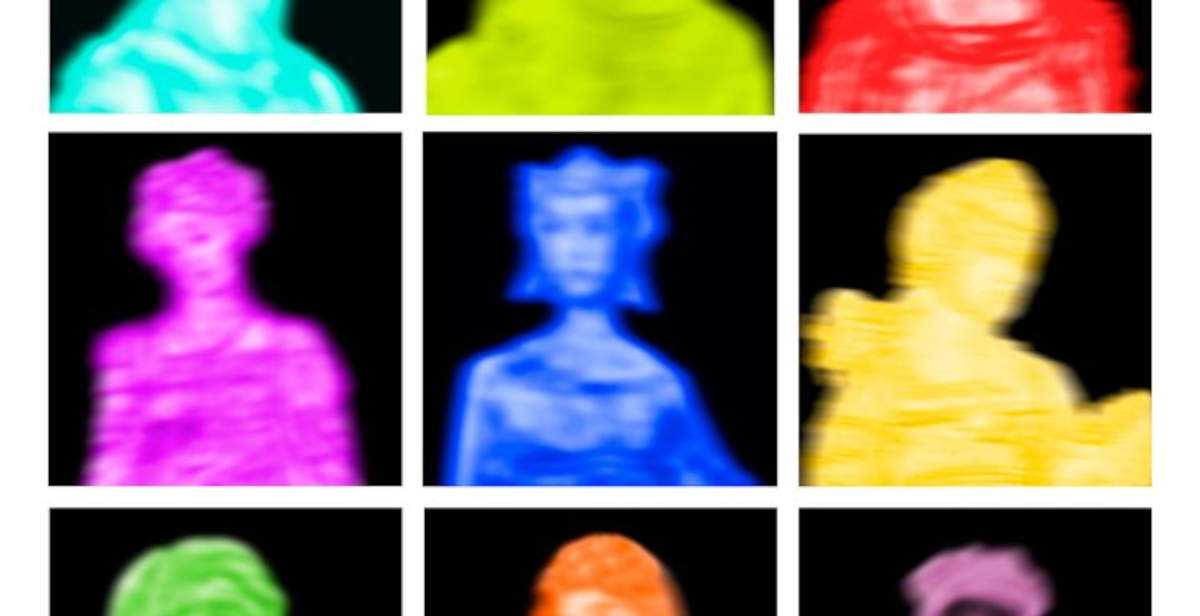 |
| Bill Armstrong reinterprets the Sibyls of Siena Cathedral in the Crypt |
Warning: the translation into English of the original Italian article was created using automatic tools. We undertake to review all articles, but we do not guarantee the total absence of inaccuracies in the translation due to the program. You can find the original by clicking on the ITA button. If you find any mistake,please contact us.