





The Museum of Contemporary Art in Cavalese, in the province of Trento, is inaugurating a new exhibition project that aims to redefine the role of the museum space as a place of production, encounter and experimentation. In fact, from April 15 to May 3, 2026, the first edition of Performa Cavalese, an initiative curated by Elsa Barbieri and promoted by the Municipality of Cavalese with the support of APT Fiemme Cembra and Cassa Rurale Val di Fiemme, will be active. The project is explicitly inspired by the New York biennial Performa, dedicated to the performing arts, and aims to introduce in the museum context a more dynamic mode of fruition, based on the interaction between artists and the public.
The setting of the project includes a precise time scanning that takes place over three consecutive weeks. Three artists from Trentino have each been invited to present three works or installations, which will remain on display for one week, from Wednesday to Sunday. Each weekly cycle will also feature a public moment set on Saturday, during which the artist will be present in the museum to activate a direct confrontation with visitors through workshops, talks or performances. The stated intent is to transform the museum into an open device, capable of producing situations of exchange and participation.
The artists involved in the first edition are Leonardo Panizza, Johannes Bosisio and Angelo Demitri Morandini. Panizza will open the program from April 15 to 19, followed by Bosisio from April 22 to 26 and Morandini from April 29 to May 3. The three figures represent different declinations of contemporary research in Trentino, while sharing a common interest in the contamination between visual languages, technologies and performance practices. The initiative was created with the aim of becoming recurrent over time, progressively building a mapping of emerging artists in the territory. In this perspective, Performa Cavalese is configured as a project of continuous observation of the local art scene, with a focus on new generations and hybrid practices.
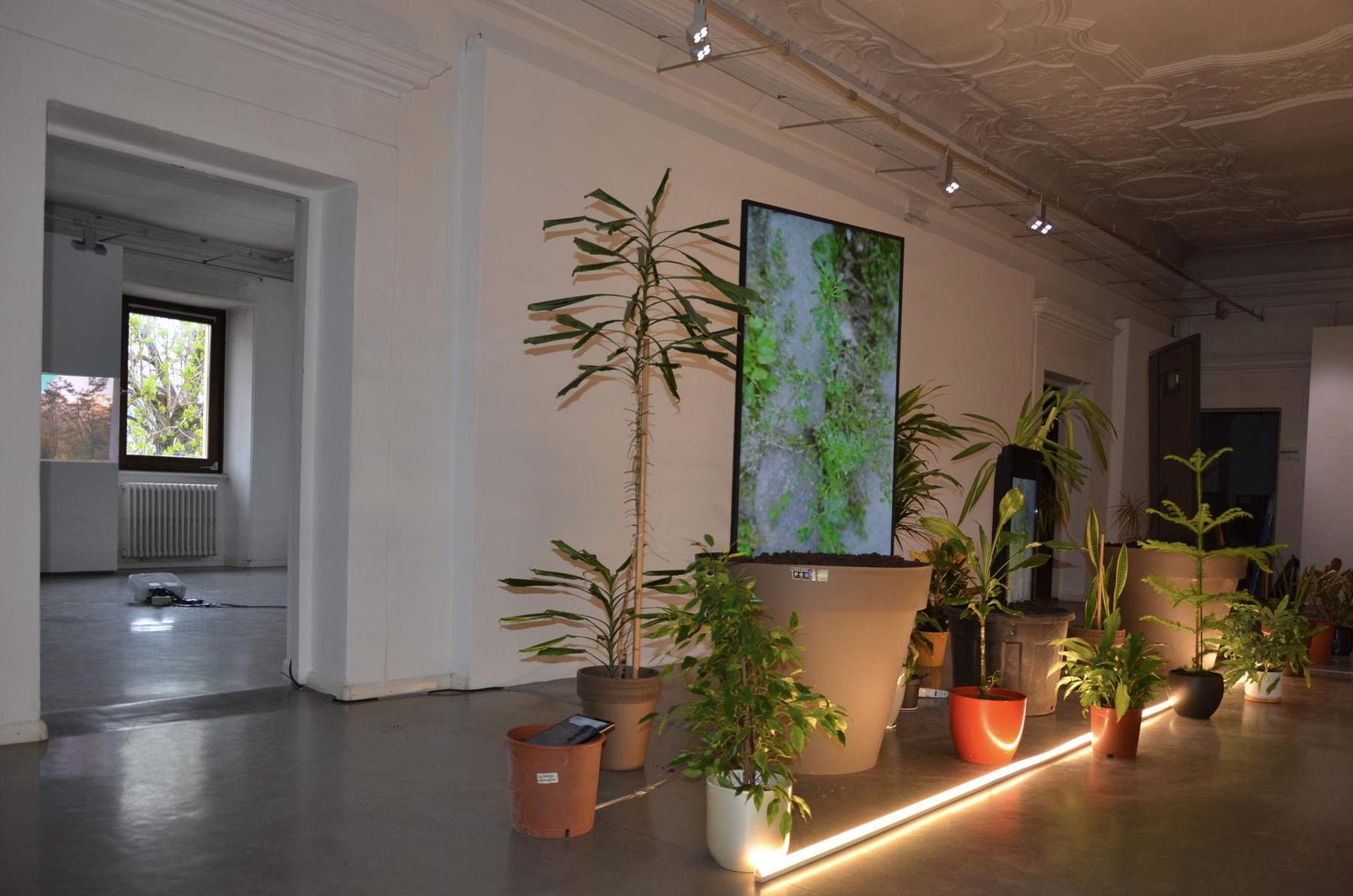
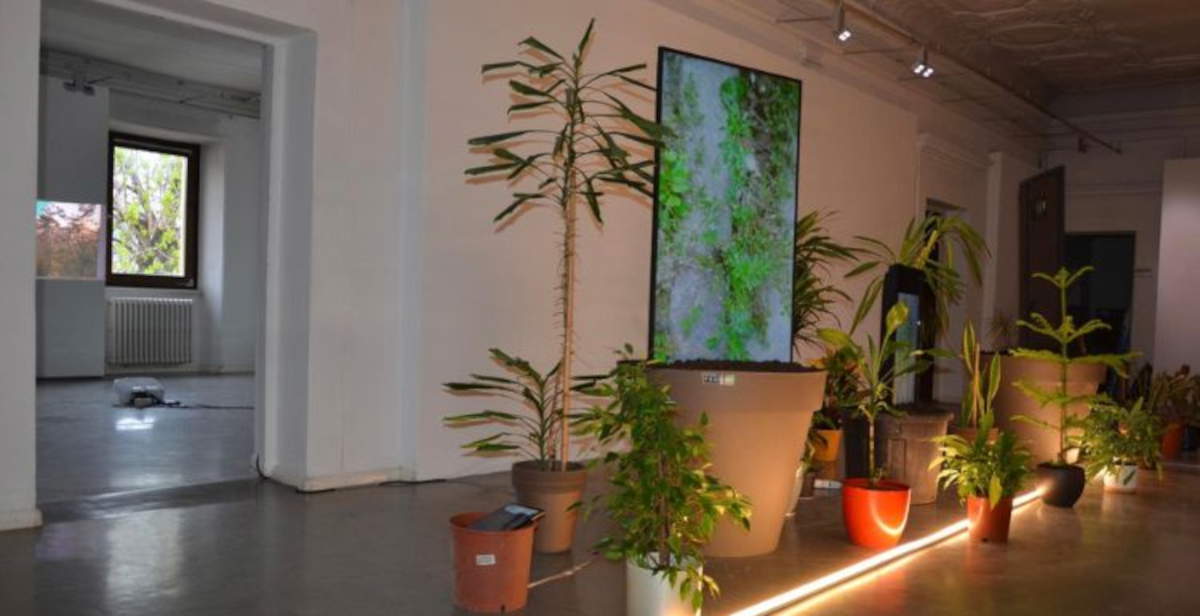
The exhibition opens with the work of Leonardo Panizza, who focuses his research on the relationship between nature and man-made space. The works presented occupy the second floor of the museum and are developed around an installation composed of pots and plants, also from loans from local residents and the Fioreria Tondin in Cavalese. Some plant elements are used as video projection devices, in which nature appears in tension with the urban context, emerging between cemented surfaces and infrastructure.
Next to the main installation, the two-channel Venice-Mestre video introduces a reflection on the relationship between tourism, urban landscape and industrial memory. Made with waste material from the film Marsarà, the work will premiere at the Trento Film Festival on April 26. The work interweaves two parallel narratives: on the one hand the Venetian sojourn of a biologist, and on the other the presence of two mountaineers engaged in the exploration of a disused industrial area near the petroleum canal.
Also as part of the exhibition, Paesaggio a Grizzana, winner of the Morandi Prize, confronts the pictorial legacy of Giorgio Morandi through a series of digital reworkings of window views of the Grizzana landscape. The work introduces a reflection on the gaze and the relationship between observer and observed subject, questioning the stability of visual perception.
The path continues with two additional video works,leafing - leafing through and islands, which broaden the field of inquiry toward a more explicitly ecological and symbolic dimension. Leafing - leafing through, made with Léna Ng, is set in the woods of Trentino and follows the movement of a female figure through an initially hostile natural environment. The work describes a progressive transformation of the relationship between body and landscape, culminating in a physical immersion in the natural setting. Islands, made with Taru Rutanen, on the other hand, takes place in the Canary Islands and stages a female figure emerging from the water and confronting her identity through a process of dispossession and redefinition. The work investigates the relationship between nature, the body and the social construction of identity through an essential and symbolic visual narrative.
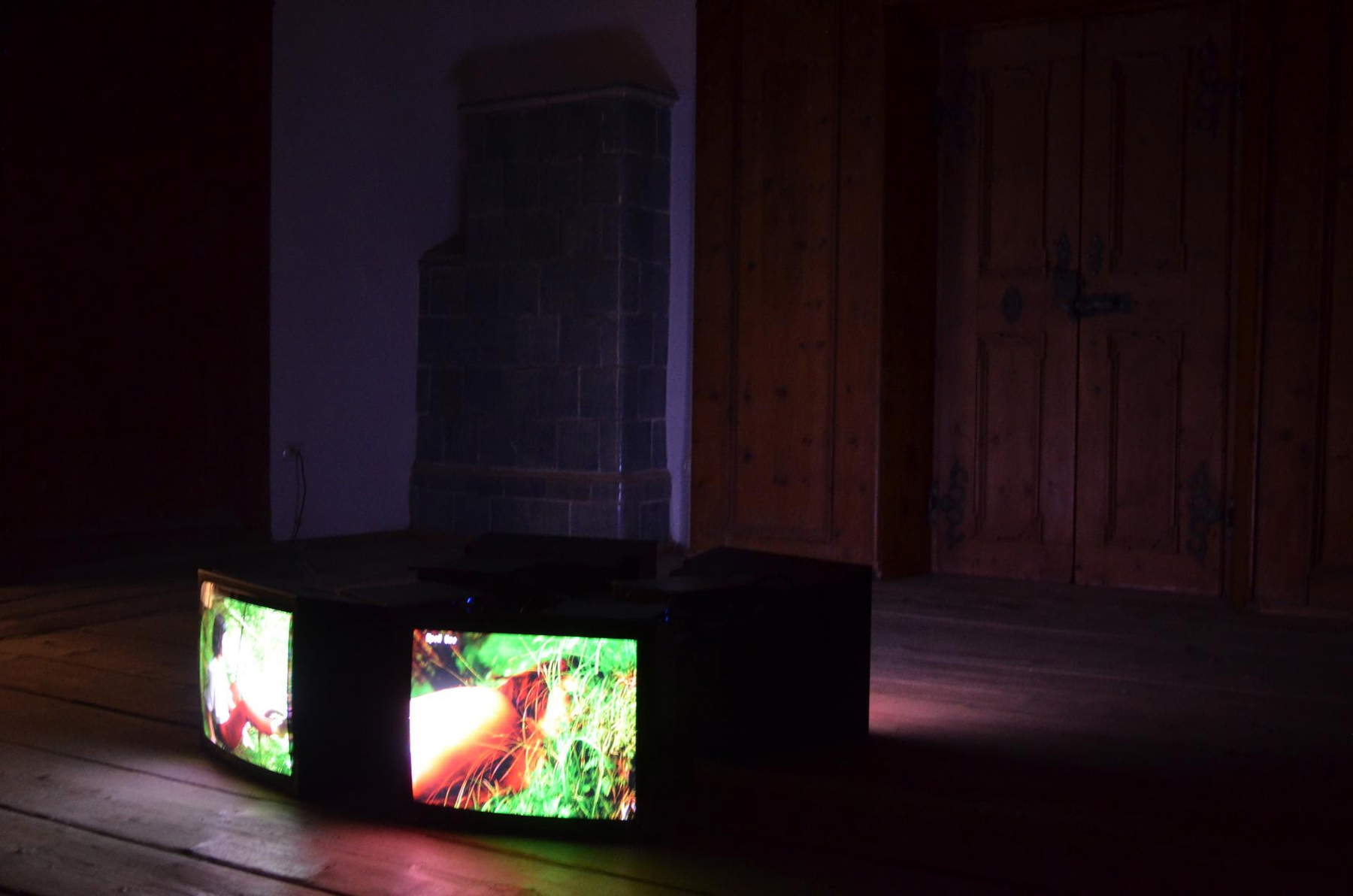
The two works are presented on four monitors and are offered as a conceptual diptych focusing on the processes of deconstruction and reconfiguration of the relationship between human and non-human. The exhibition device reinforces the immersive dimension of the project, highlighting the tensions between culture, environment and perception.
Finally, the top floor of the museum hosts maPPare PeRe, a video made by Panizza together with Simon Sartori and Giovanni Moscon. The project stems from research on Trentino’s territory and local biodiversity, with a focus on ancient varieties of apples and pears and centuries-old trees. The work takes the form of narrative mapping that interweaves naturalistic observation and encounters with local communities. As part of the program of Performa Cavalese, Panizza also offers a public action scheduled for April 18 at 4:30 pm. The artist will lead the public on a walk from the Museum to the Parish Park, during which a viewer designed by the artist himself and made by a local artisan will be used. The experience focuses on observing environmental details normally overlooked, with the goal of activating a more attentive and relational perception of space.
The Museum of Contemporary Art in Cavalese, home of the project, is housed in the historic Palazzo Rizzoli and was established in 2001. Its initial collection was formed thanks to the nucleus of works that belonged to physician Giancarlo Baccoli, also including works by Bruno Munari and other artists of the Italian 20th century. Over the years, the institution has developed an ongoing exhibition activity, with a focus on both the contemporary scene and dialogue with the Alpine region. Today the museum is configured as a space that integrates research and fruition, thanks in part to the La Collezione Vive project, which has expanded the possibilities of reading the works through new exhibition modes.
Hours
01/01 - 31/05 | Wednesday - Sunday 3 p.m. - 7 p.m.
01/06 - 30/09 | Tuesday - Sunday 3:30 p.m. - 7:30 p.m.
01/10 - 31/12 | Tuesday - Sunday 3 p.m. - 7 p.m.
Other hours by appointment. Open in the morning for booked groups
Admission
Full price ticket: 5€
Reduced ticket: 2.50€ (students 19 - 26 years old, over 65)
 |
| Cavalese Museum launches Performa: three weeks of performance art and research |

Warning: the translation into English of the original Italian article was created using automatic tools. We undertake to review all articles, but we do not guarantee the total absence of inaccuracies in the translation due to the program. You can find the original by clicking on the ITA button. If you find any mistake,please contact us.



















 IT
IT FR
FR DE
DE ES
ES CN
CN


