









On April 15, 2026, Fondazione Sandretto Re Rebaudengo in Turin will inaugurate an exhibition cycle with four solo exhibitions by international artists Diego Marcon, Xin Liu, June Crespo, and Lenz Geerk. The openings will be accompanied by a talk entitled Framing Problems / Biennial Technology, in which Patrizia Sandretto Re Rebaudengo, Guido Saracco, Massimiliano Gioni, Hans Ulrich Obrist, Xin Liu and Diego Marcon will participate.
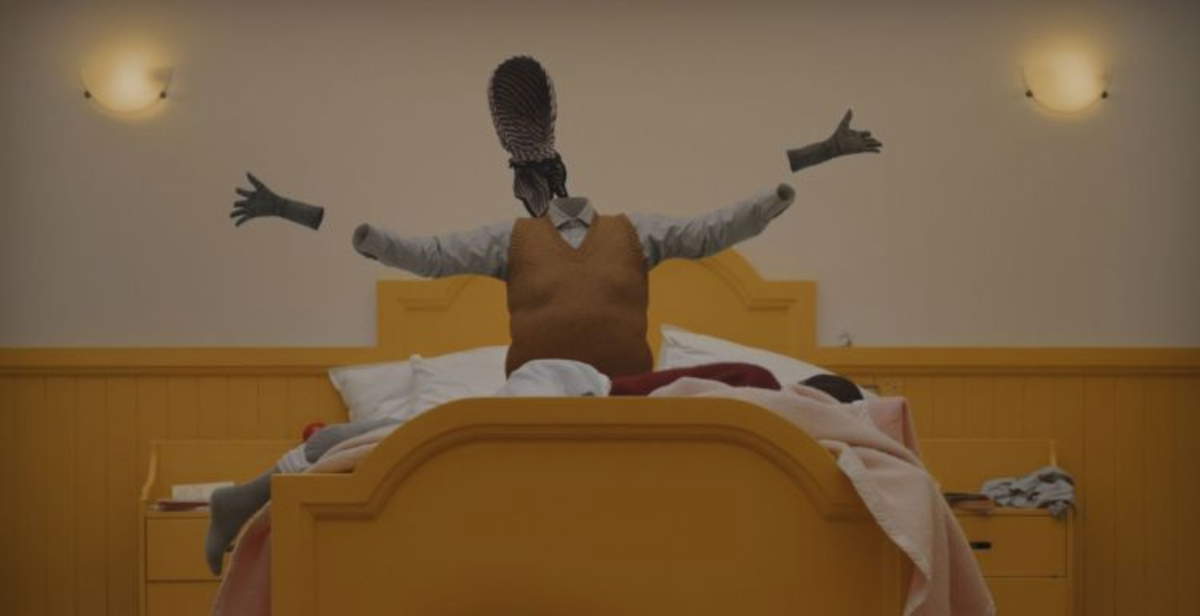
The first work on display is Krapfen by Diego Marcon, which can be seen until Aug. 2, 2026. This is the first production created thanks to the New Futures Production Fund, a collaboration between Fondazione Sandretto Re Rebaudengo and the New Museum in New York aimed at supporting the creation of major new works. Marcon, among the most internationally recognized Italian artists, develops an investigation of film language, combining space, moving image and sound. His research draws on classic genres such as horror, musicals, slapstick comedy and melodrama, integrating references ranging from structural to entertainment cinema.
Krapfen stars Violet Savage, a young boy with an ambiguous gender, and four garments, gloves, scarf, pants and sweater, that animate a musical choreography composed by Federico Chiari. The opera takes on a musical-like structure, drawing inspiration from American Golden Age animation and Italian opera theater. The childlike atmosphere is accompanied by a disturbing register, in which a sweet becomes a pretext for evoking emotions of terror and annihilation. The work was produced in collaboration with Lafayette Anticipations, New Museum, The Renaissance Society and The Vega Foundation, with support from Sadie Coles HQ London and Galerie Buchholz in Berlin, Cologne and New York.
![Diego Marcon, Krapfen (2025; [Film] digital video, color, sound duration: 4 min 44 sec, looped) Photo credits: © Diego Marcon. Courtesy of the artist, Sadie Coles HQ, London, and Galerie Buchholz, Berlin/Cologne/New York. Produced by Fondazione Sandretto Re Rebaudengo, Lafayette Anticipations, New Museum, The Renaissance Society, The Vega Foundation](https://cdn.finestresullarte.info/rivista/immagini/2026/fn/diego-marcon-krapfen.jpeg)
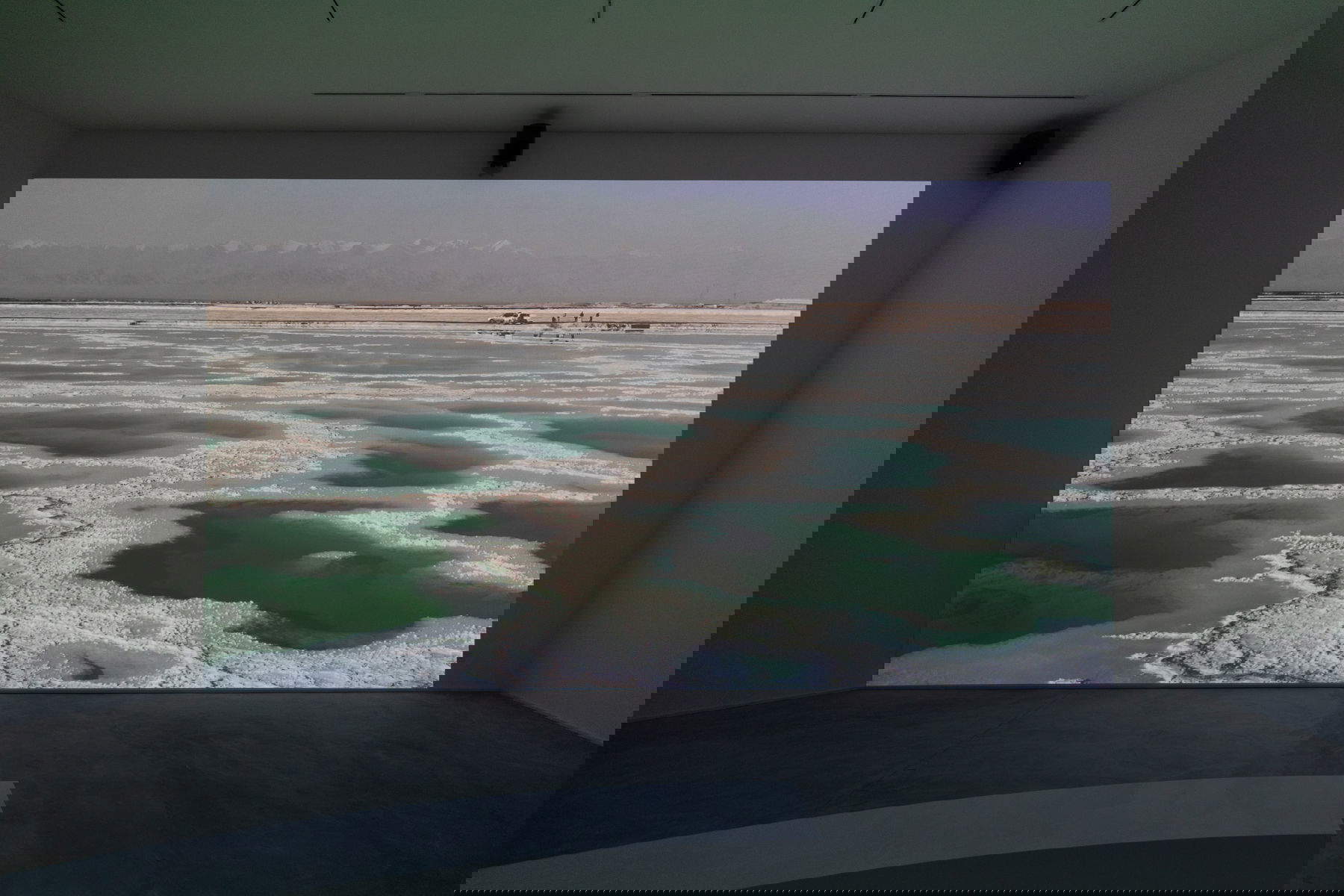
The second exhibition, EXHAUST by Xin Liu, will be on view until October 11, 2026. The London-based Chinese artist’s first solo exhibition in Italy, presented with curatorial support from Hans Ulrich Obrist and in collaboration with K11 Art Foundation in Hong Kong, investigates the consequences of technological and scientific aspirations through the residue generated by progress. Liu explores spatial debris, degraded materials, codes and altered organisms, transforming obsolescence and waste into generative possibilities.
The EXHAUST project includes works such as The White Stone (2021), a twenty-minute film set in the near future that follows the search for rocket debris among deserts and remote villages in western China. During the filming, the artist documented uninhabited landscapes and recovered fragments before they were removed by authorities. The Map: Karamay (2026) is a tapestry made of Vivomer, a bioplastic made from waste biomass that is in the process of degradation, which maps the artist’s hometown in Xinjiang, imagining its evolution as living soil subject to erosion and degradation. Finally, The Lab serves as an operational archive, containing texts, diagrams and models illustrating the transformation cycle of materials and the concept of cosmic metabolism, the guiding principle of the exhibition.
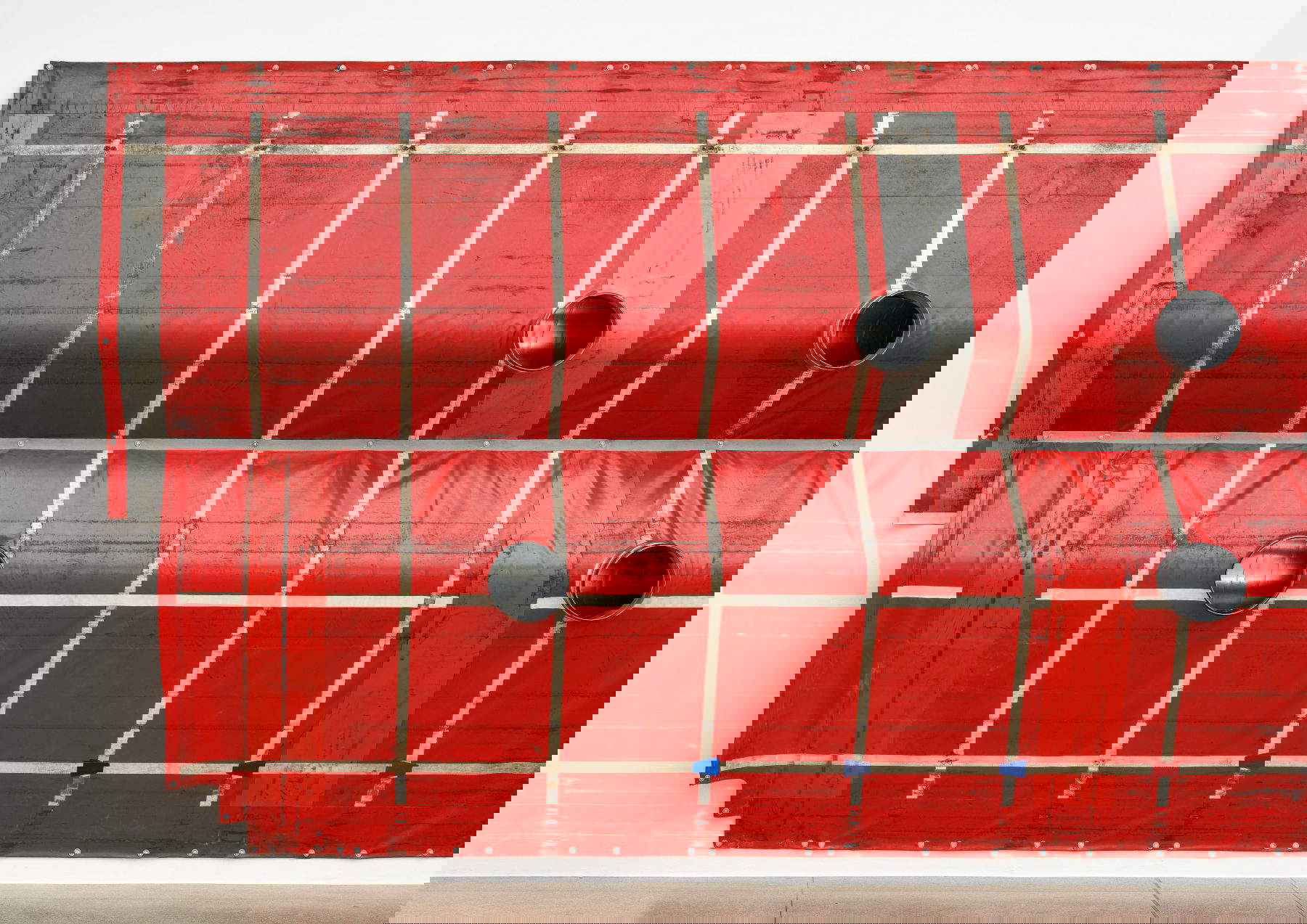
June Crespo is the protagonist of the third exhibition, Danzante, which can also be visited until Oct. 11. The Spanish artist’s first Italian institutional solo exhibition, curated by Bernardo Follini, brings together sculptures and installations that interact with visitors’ bodies and perceptions. The works draw inspiration from iris and bird of paradise flowers, but without naturalistic intent, and privilege surfaces and textures over painting. Crespo conceives of the materials as autonomous agents and defines himself as an assistant to his work, constructing visceral experiences that engage the visitor in the spatiality and corporeality of the objects.
Crespo’s works, made in plaster, bronze, concrete and through 3D scans, combine organic elements with industrial materials and personal textiles, creating a dialogue between nature and technology. Major works include Molar (2024), which interweaves bronze, steel and fabric; The Dancing Column II (2025), composed of nested concrete pillars; and TW, TG 2025 III (2025), a grid of industrial tarpaulins perforated by pipes. The repetition and spatial choreography of the objects stimulate movement and observation of the audience, encouraging dynamic and non-prescriptive interaction. June Crespo’s exhibition Danzante was created and co-produced in collaboration with the Secession in Vienna, the Fondazione Sandretto Re Rebaudengo in Turin, and MO.CO. in Montpellier.
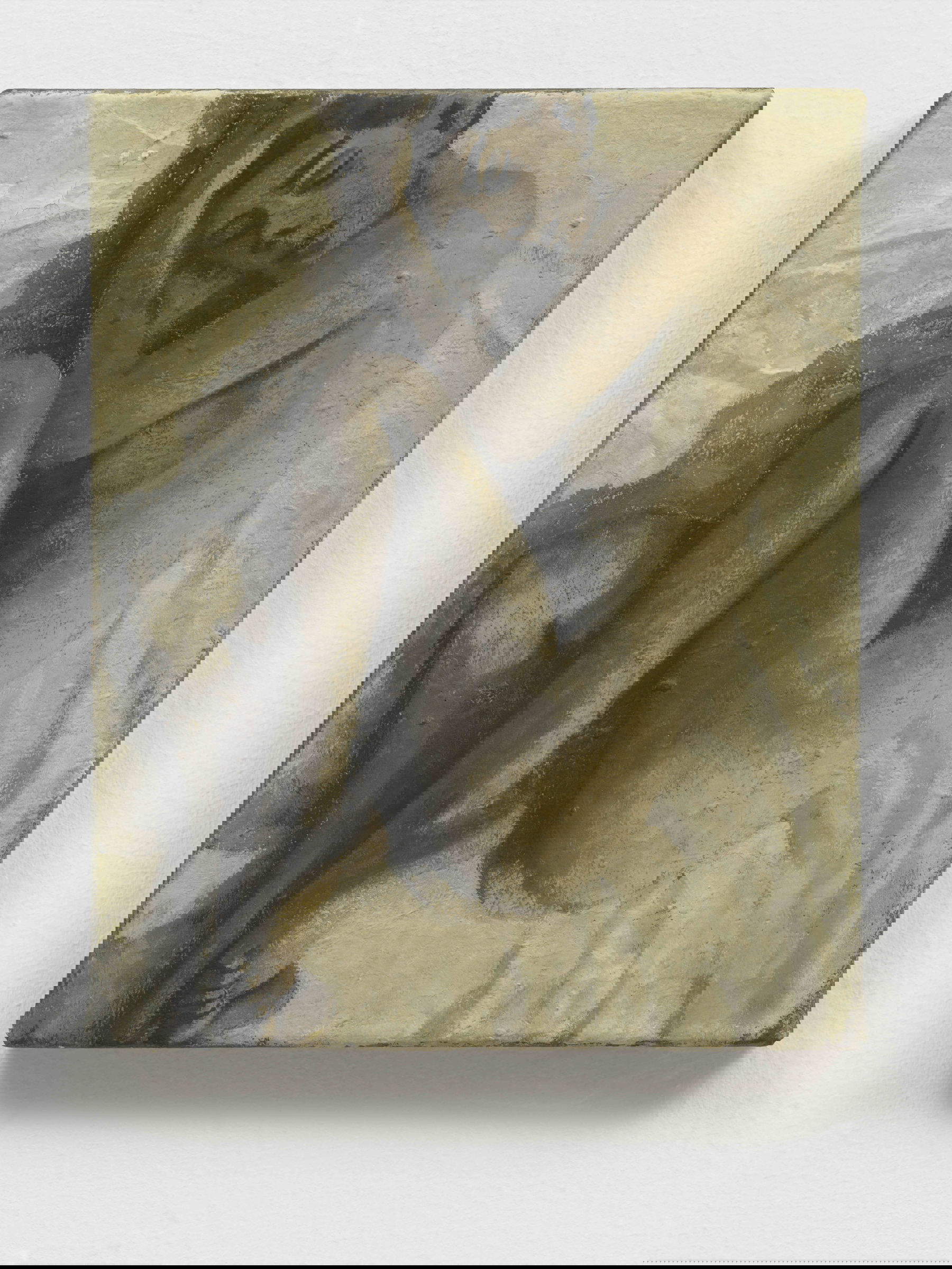
Finally, Lenz Geerk’s Theatre of the mind, on view through Oct. 11, 2026, constitutes the first solo exhibition in Italy dedicated to the artist’s painting. Geerk develops figures, objects and landscapes in silent and introspective atmospheres, where meaning emerges from subtle emotional tensions rather than explicit narratives. Geerk’s painting favors mellow colors and controlled hues, constructing suspended and dreamy images. The works present bodies and still lifes placed in psychologically dense spaces, evoking intimate moments and thresholds between presence and absence.
Through portraits, still lifes and recurring landscapes, Theatre of the mind documents Geerk’s disciplined and evocative research focused on the complexities of seeing and making. The exhibition offers a comprehensive view of his approach, in which each element contributes to the representation of sensory and psychological experiences, configuring painting as an ongoing process and as a form of recording time and the human condition.
 |
| Fondazione Sandretto Re Rebaudengo: four exhibitions of experimentation and new productions |

Warning: the translation into English of the original Italian article was created using automatic tools. We undertake to review all articles, but we do not guarantee the total absence of inaccuracies in the translation due to the program. You can find the original by clicking on the ITA button. If you find any mistake,please contact us.














 IT
IT FR
FR DE
DE ES
ES CN
CN